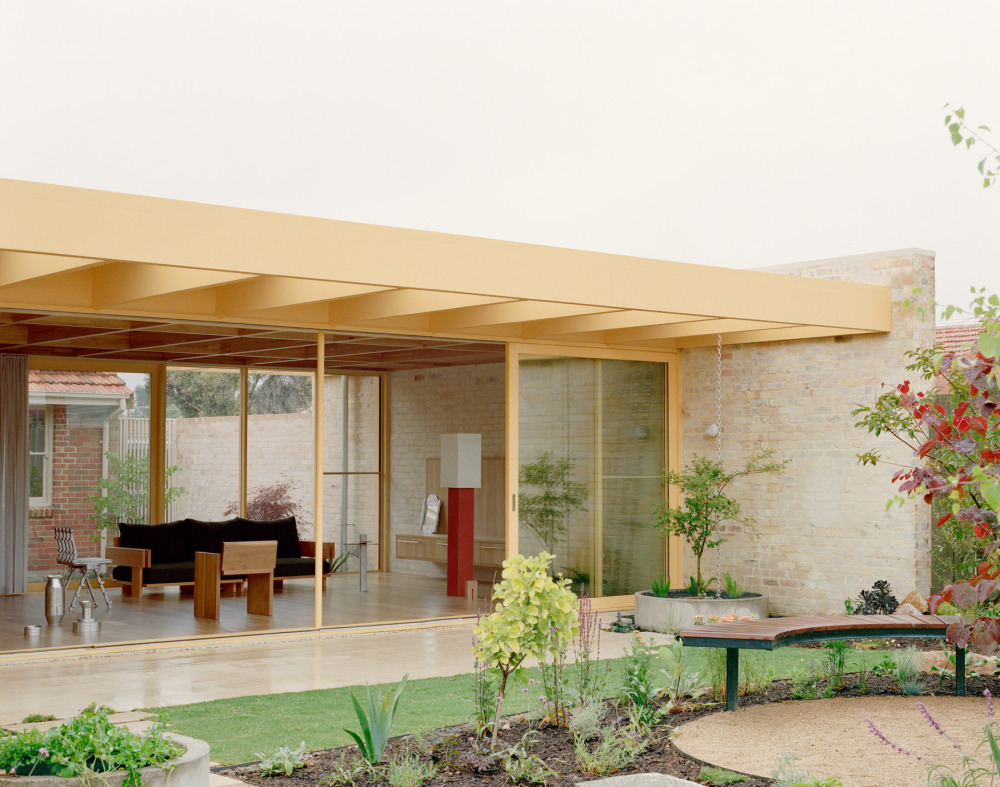
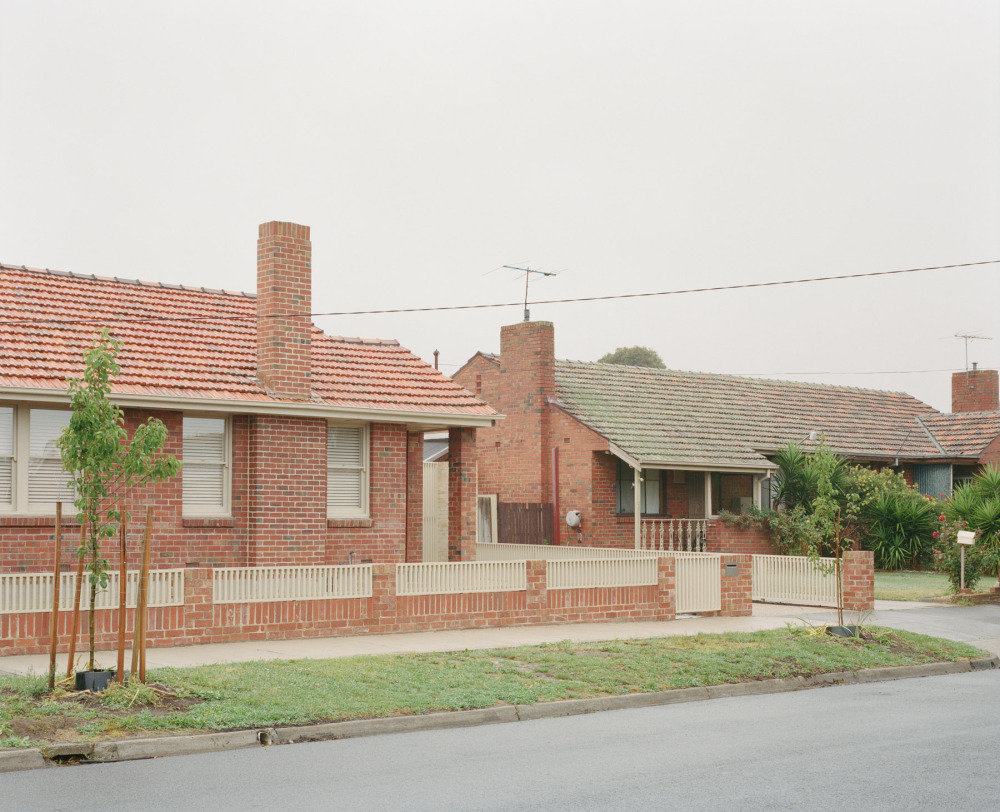
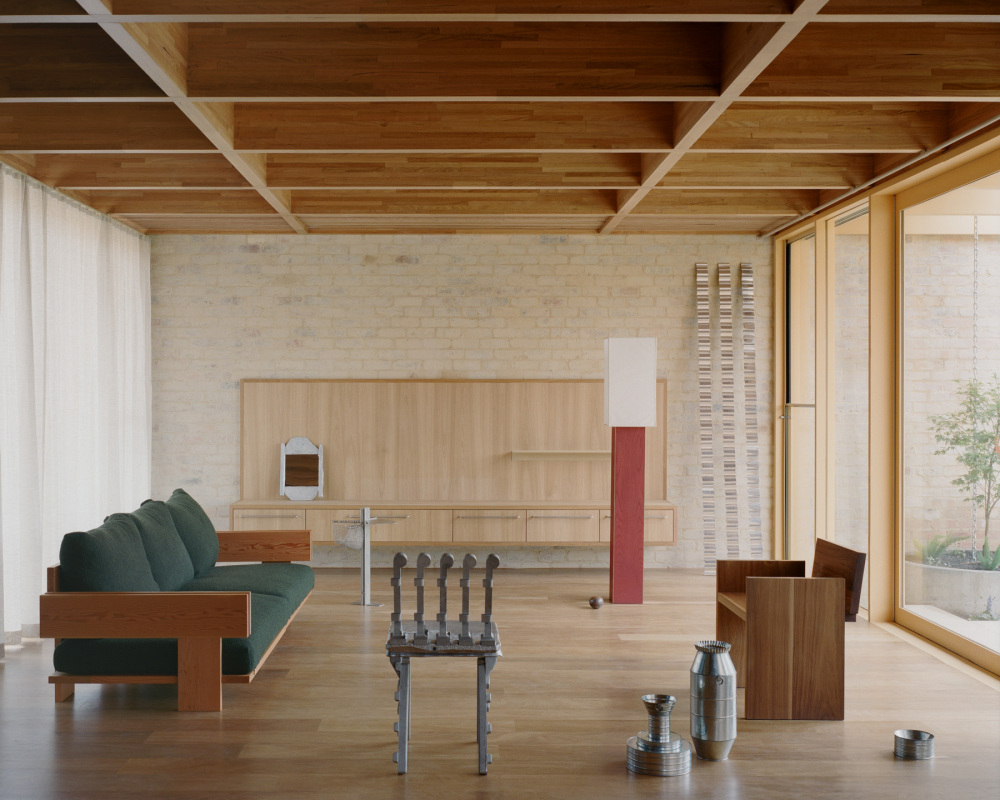
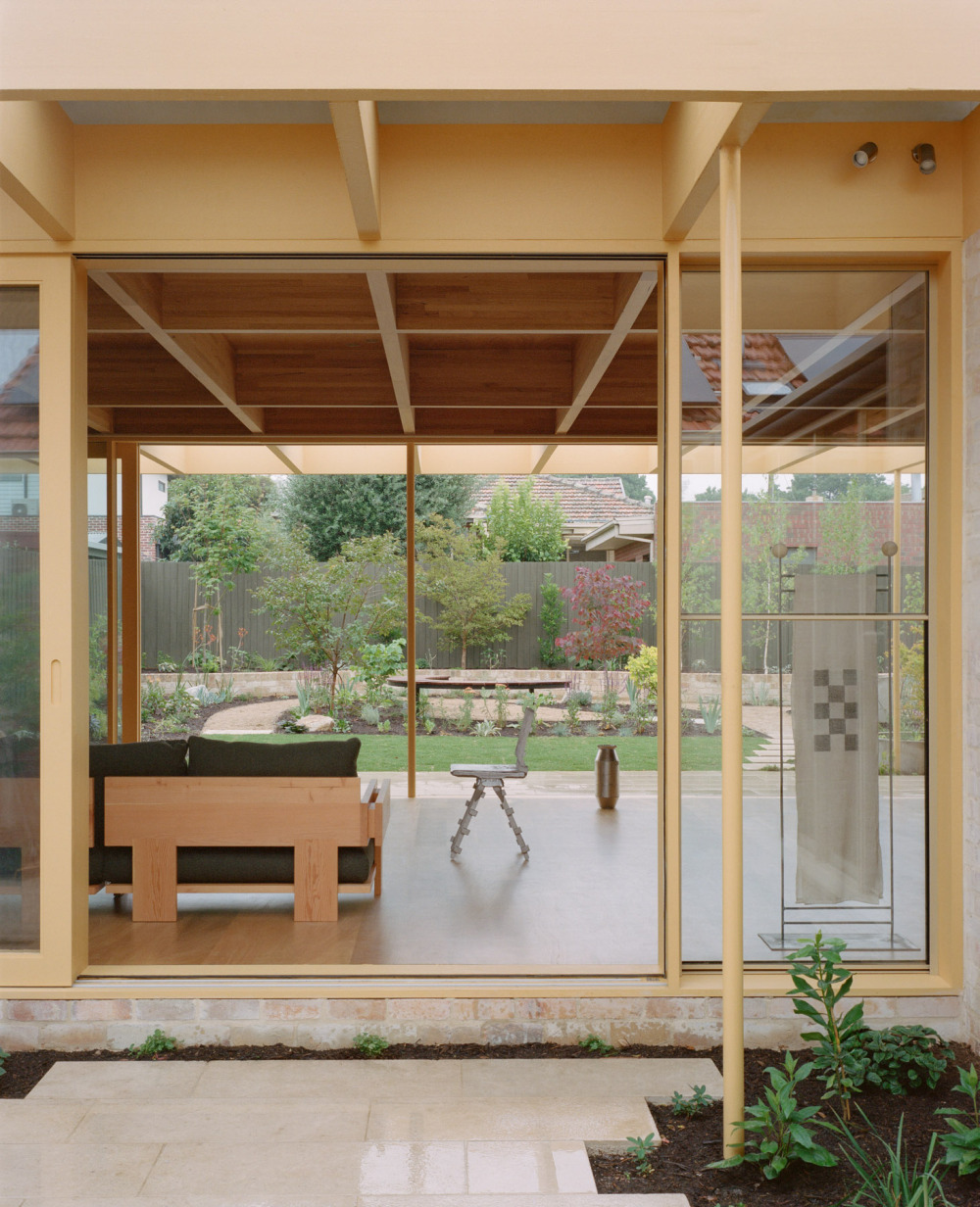
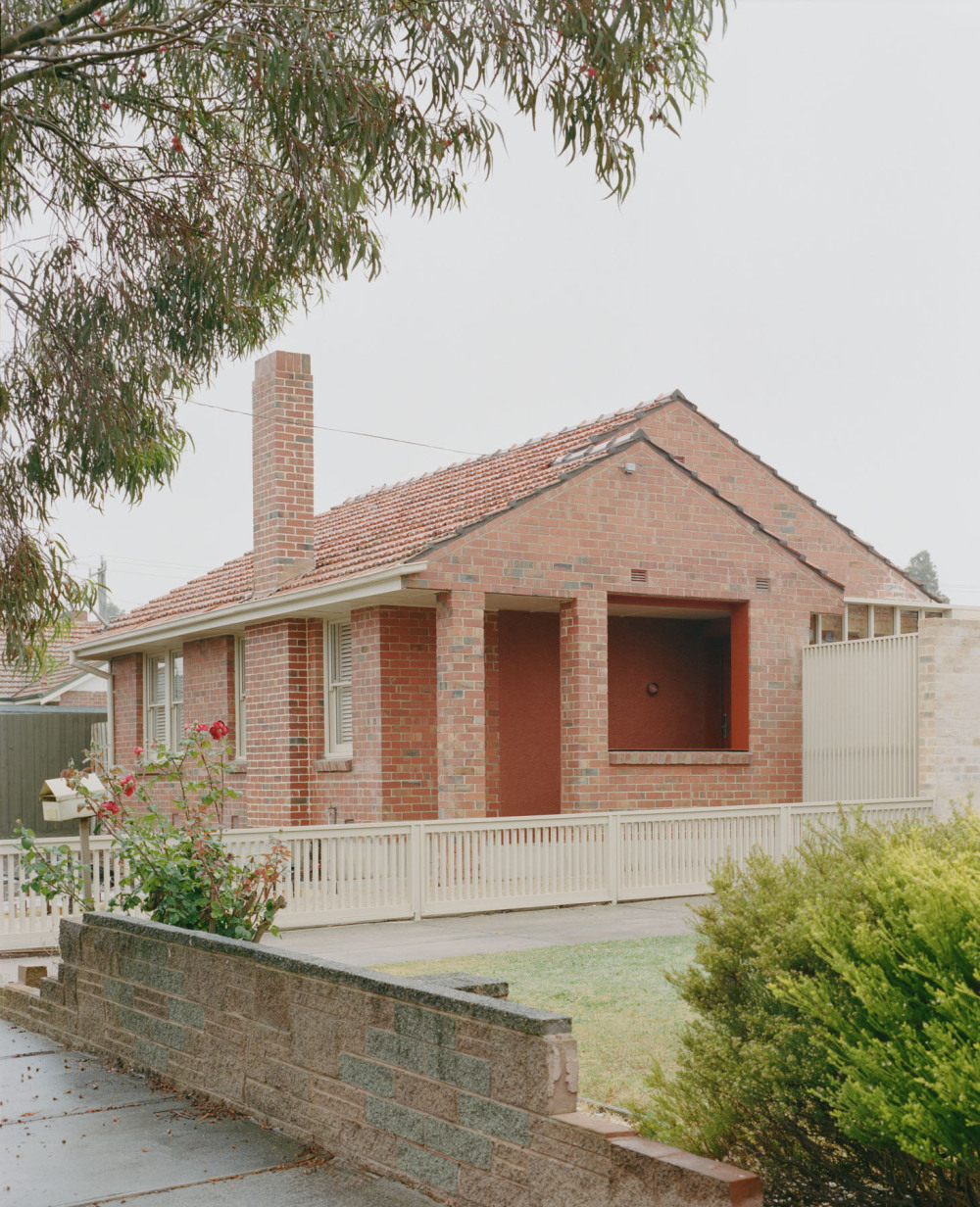
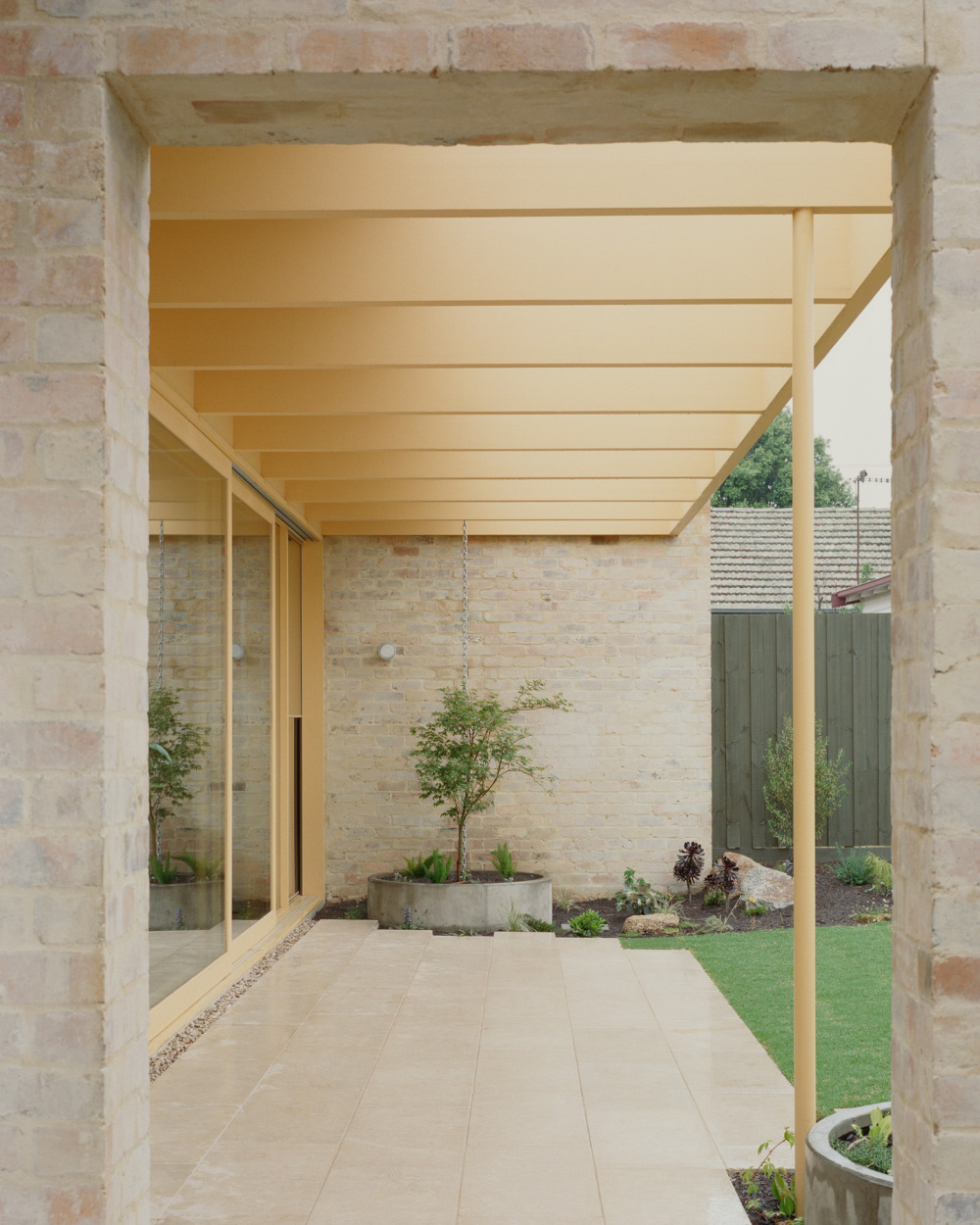
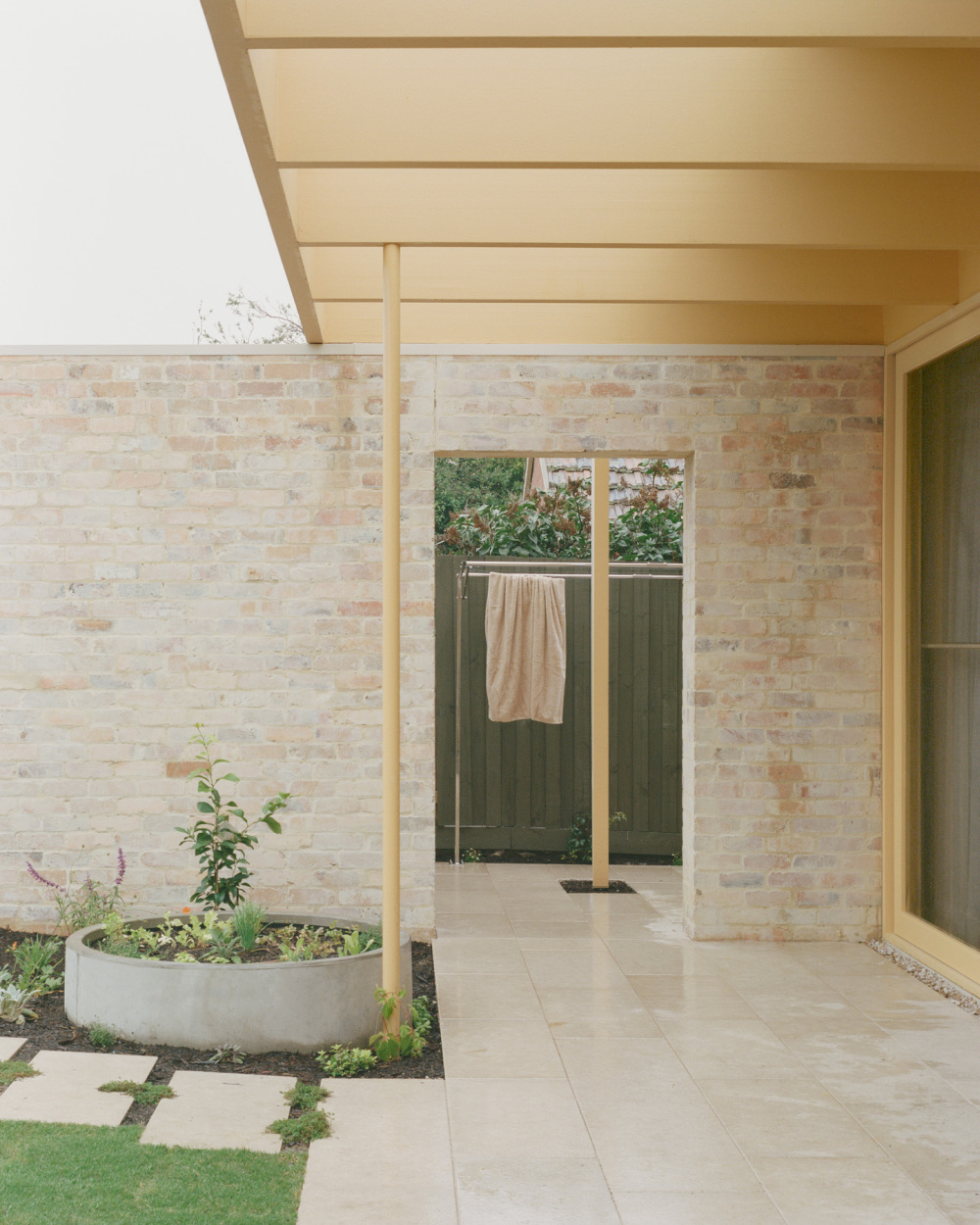
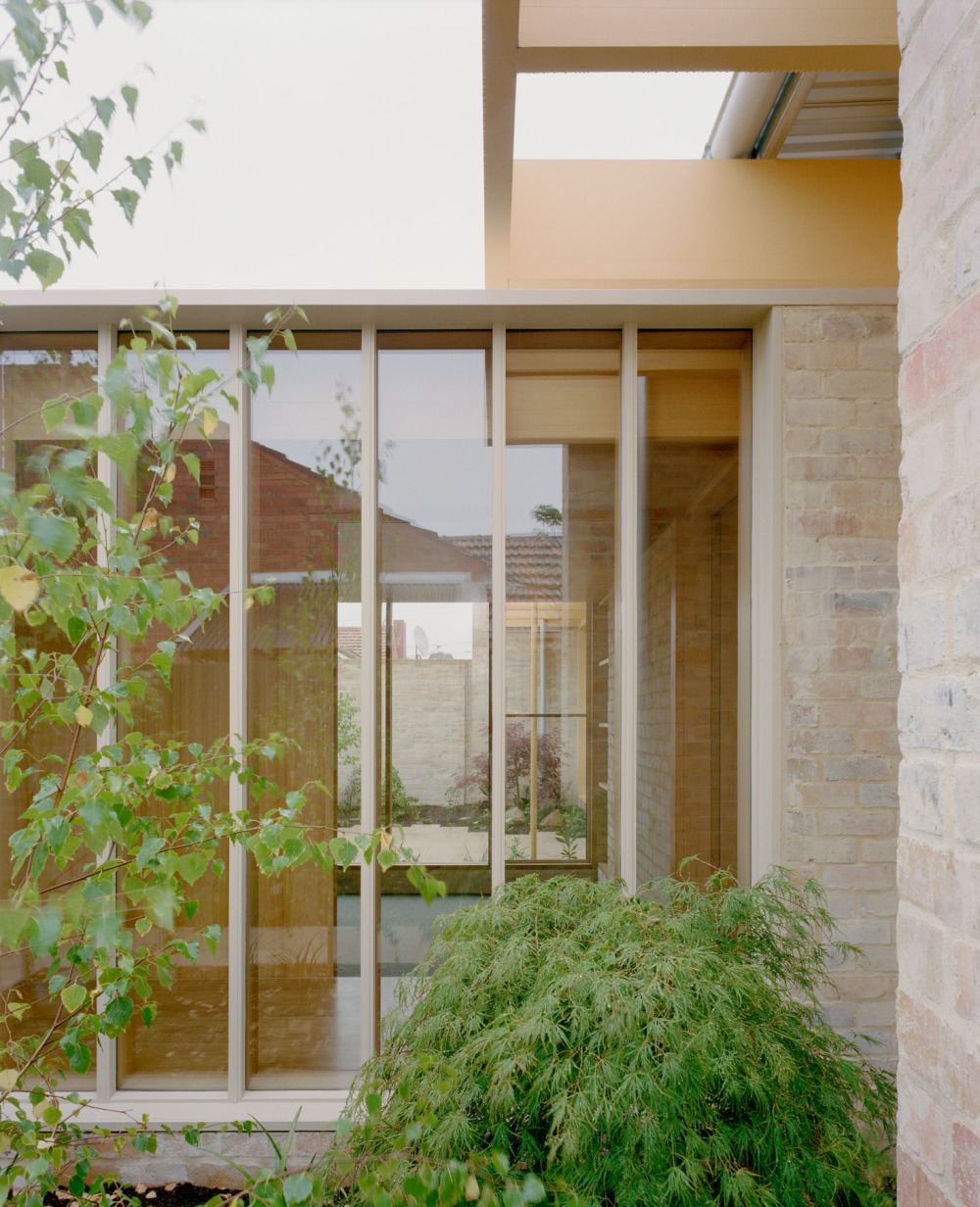
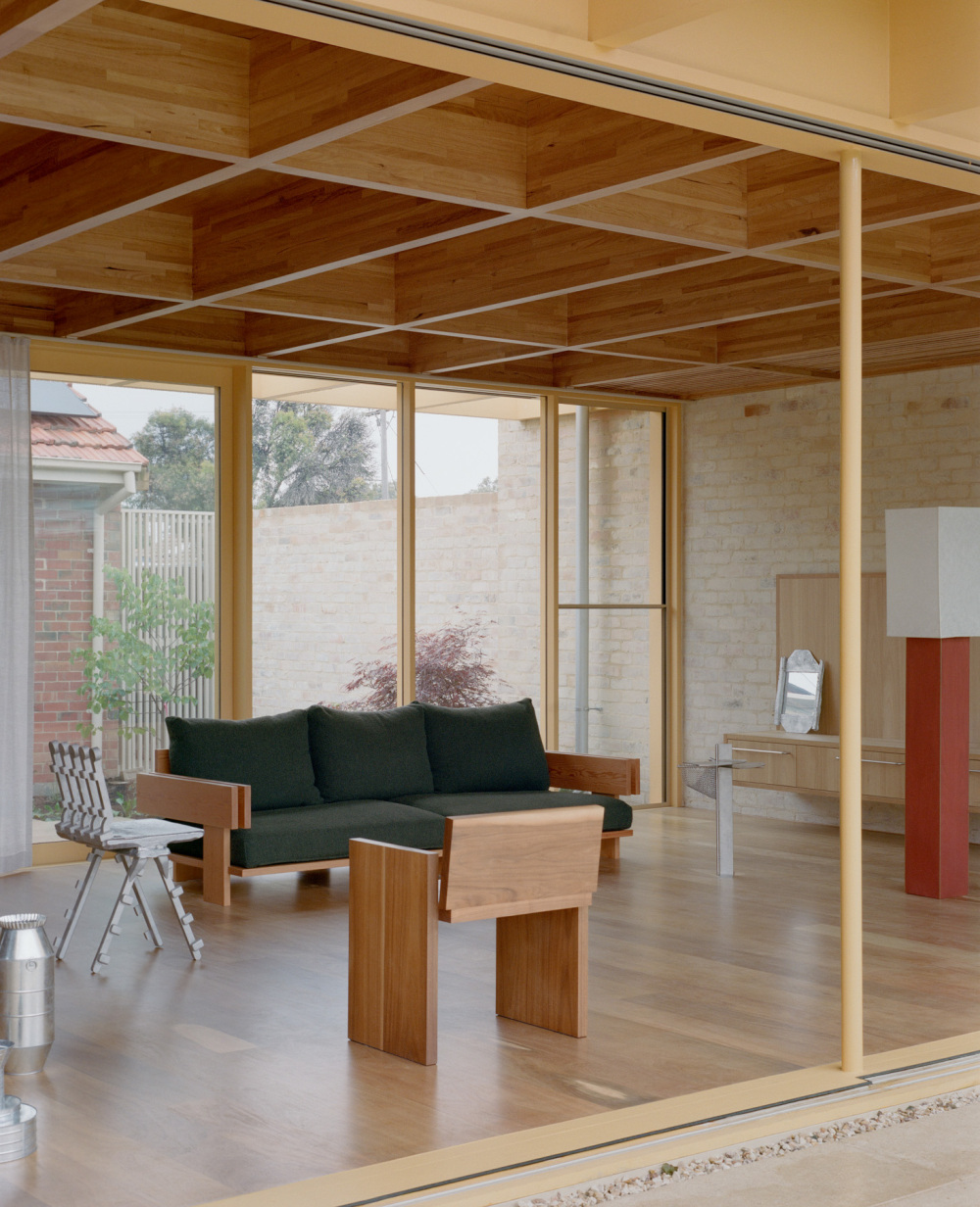
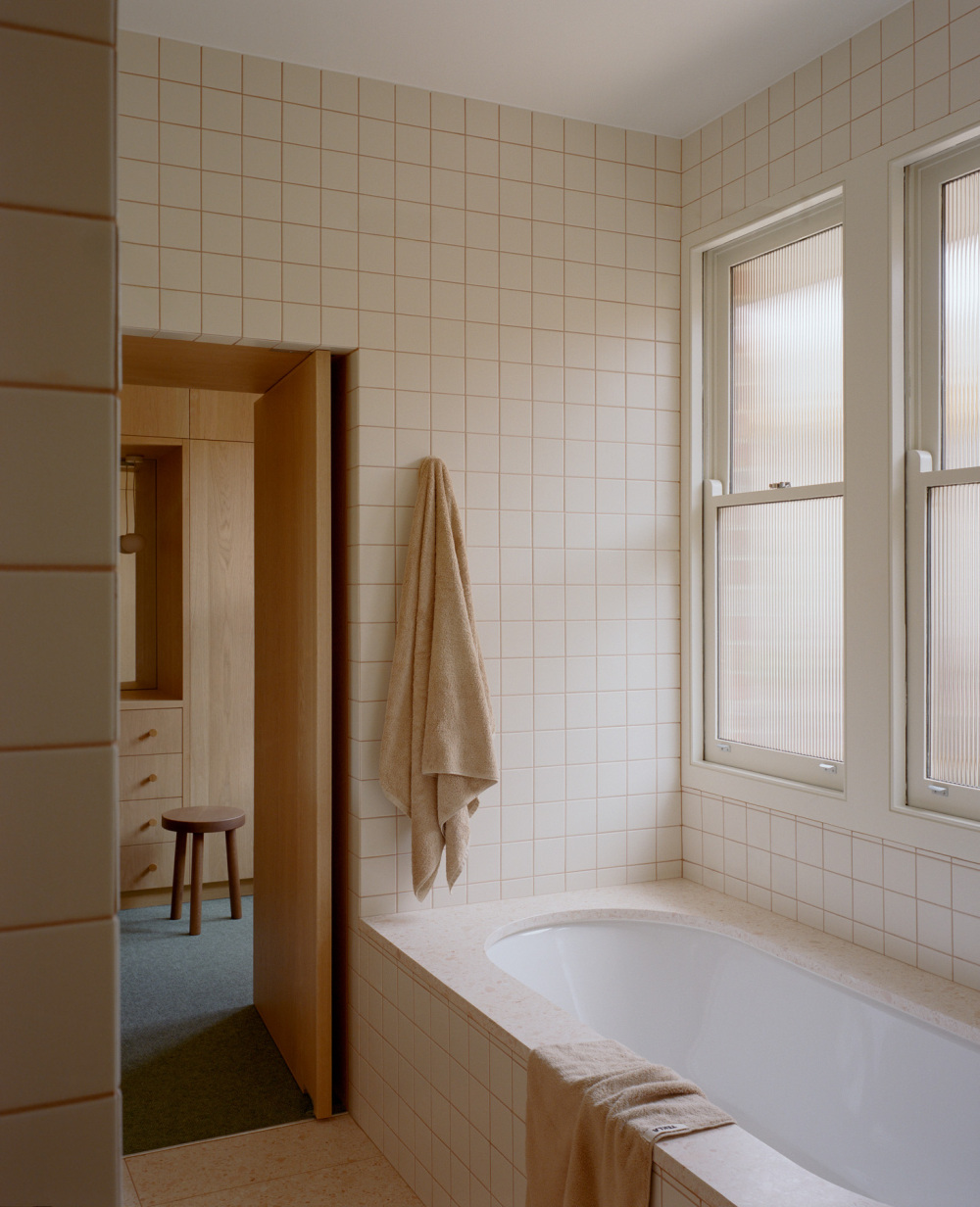
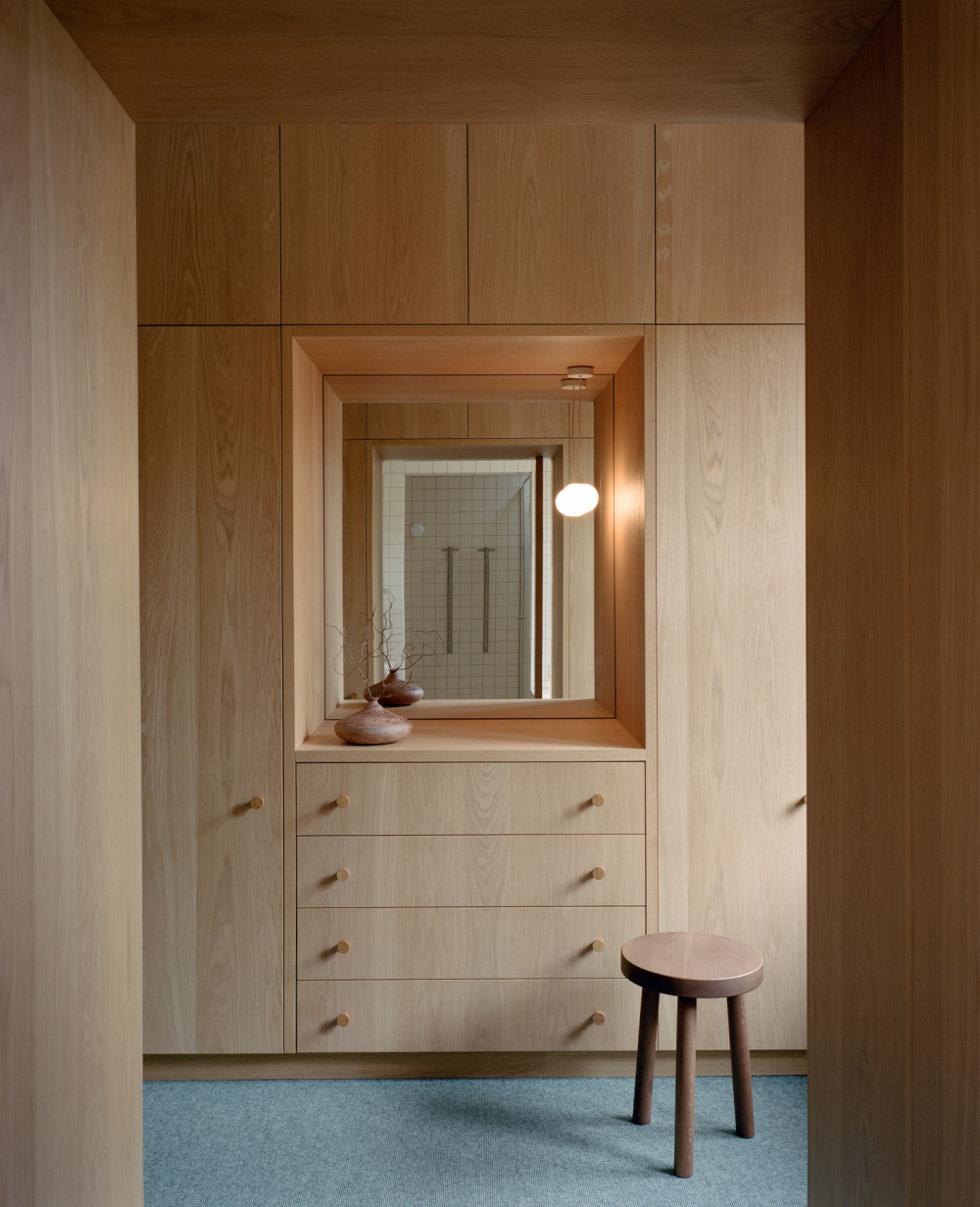
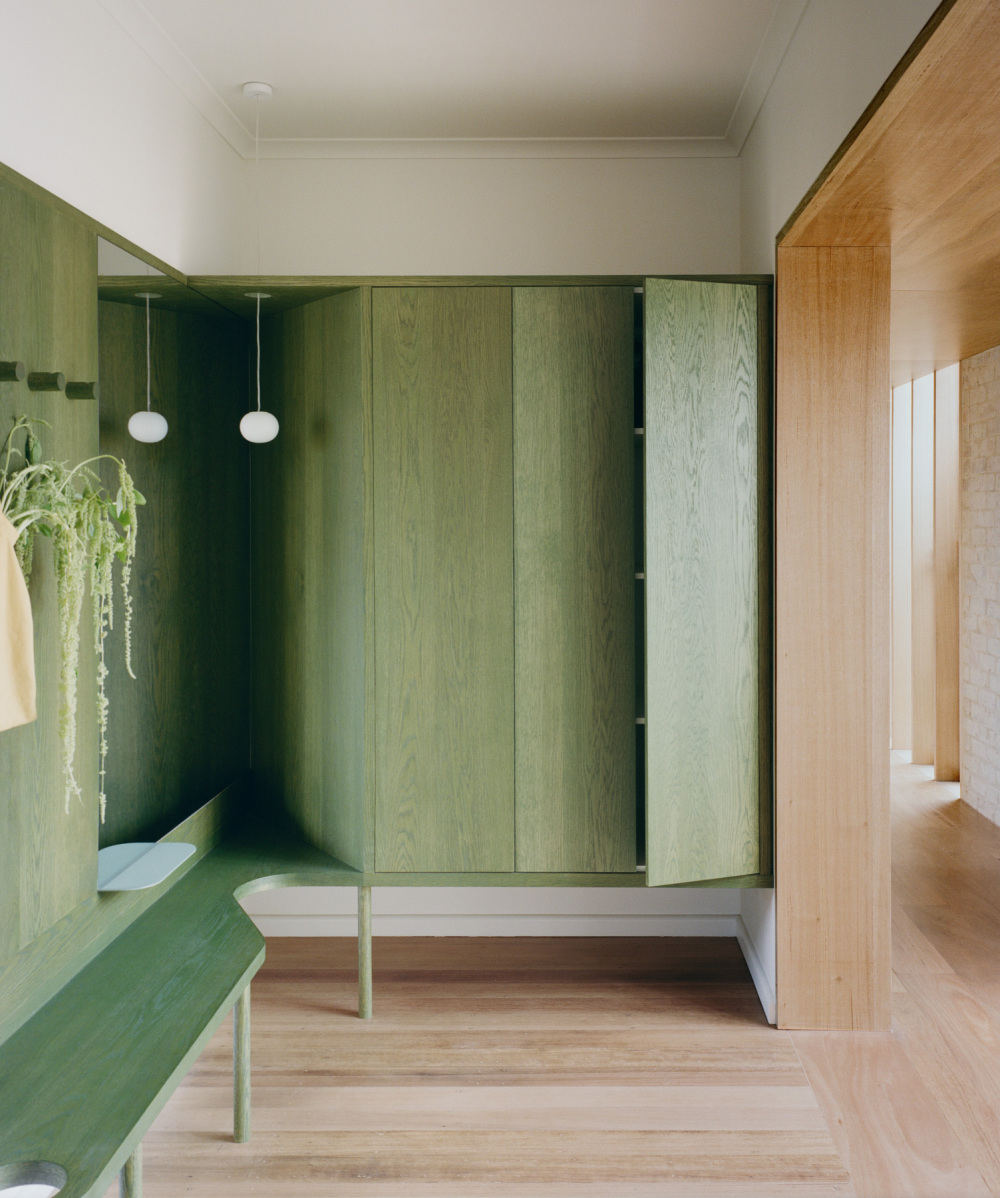
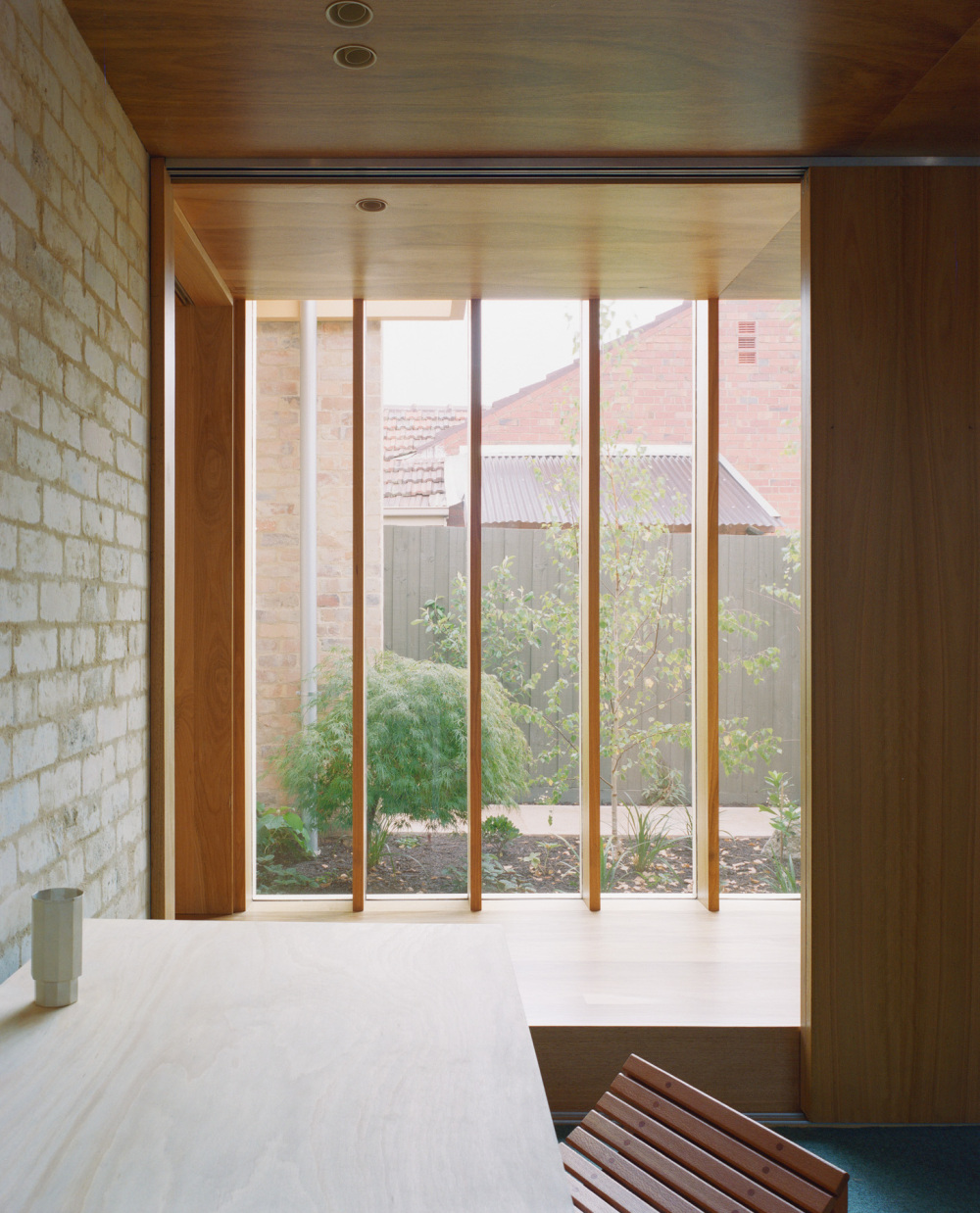
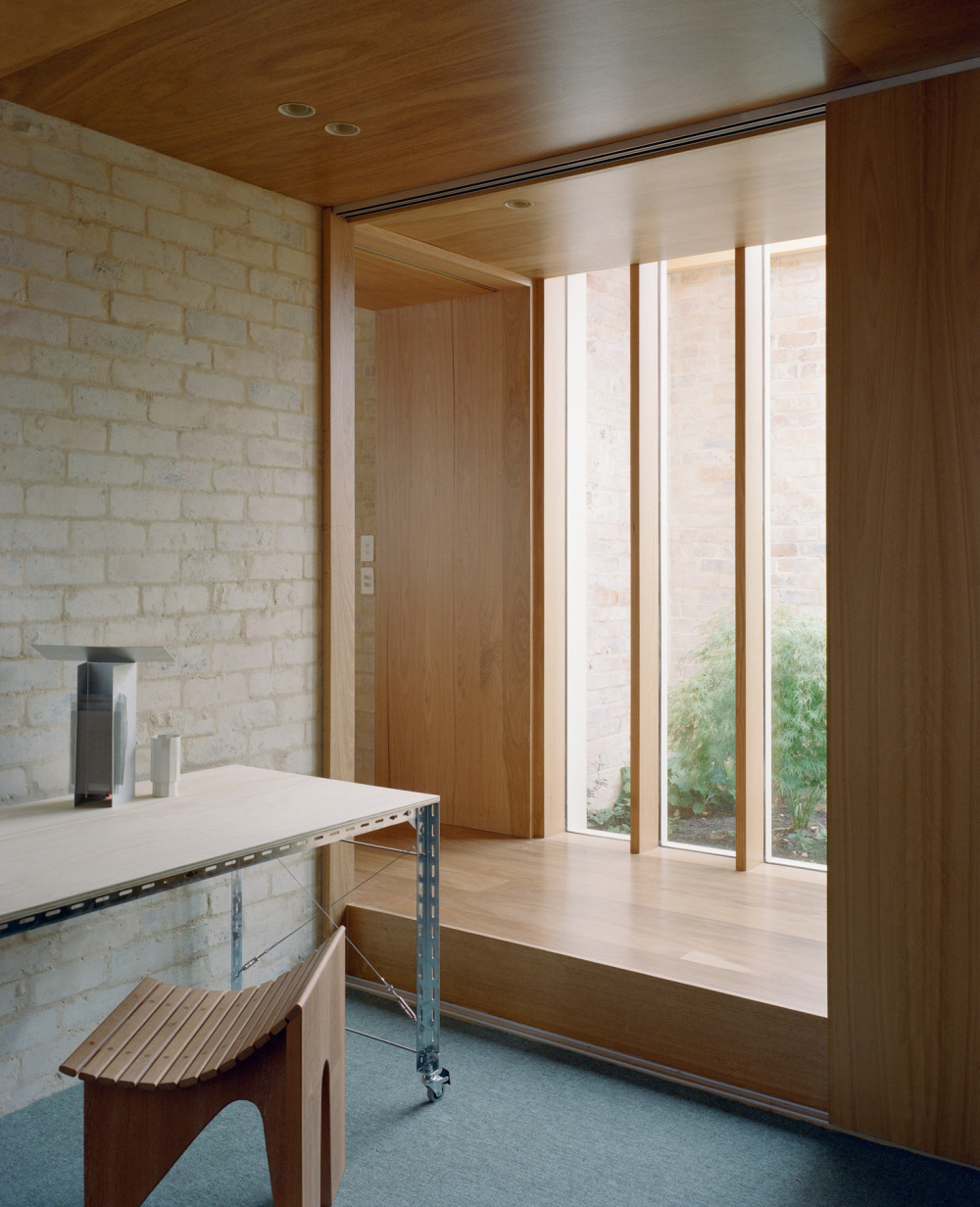
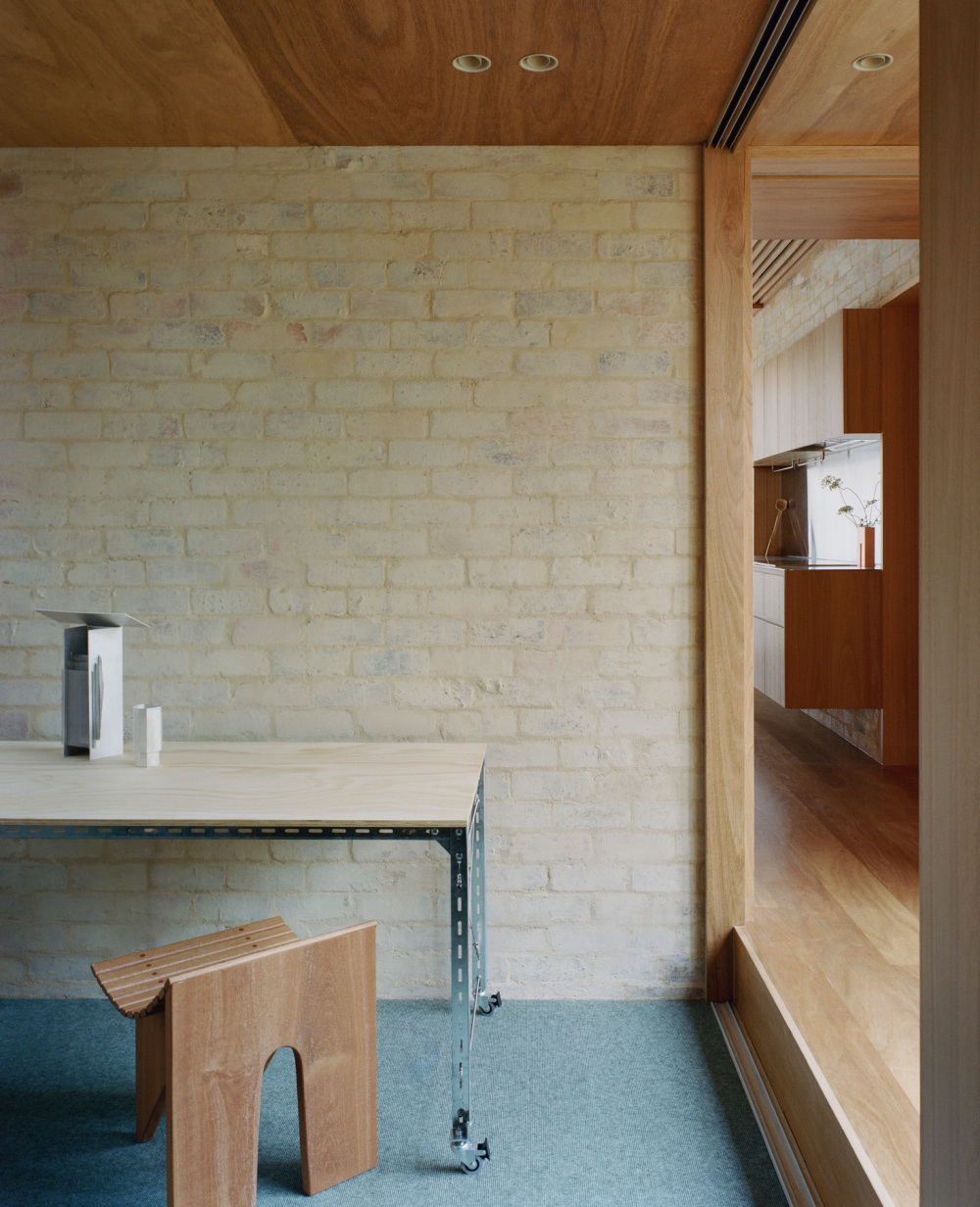
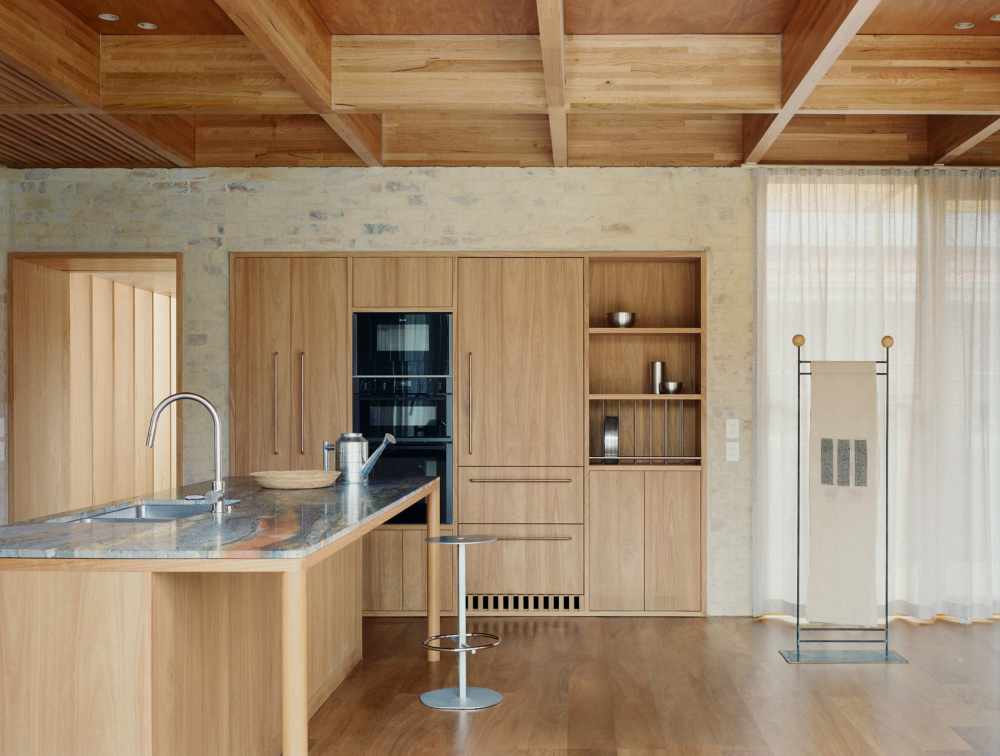
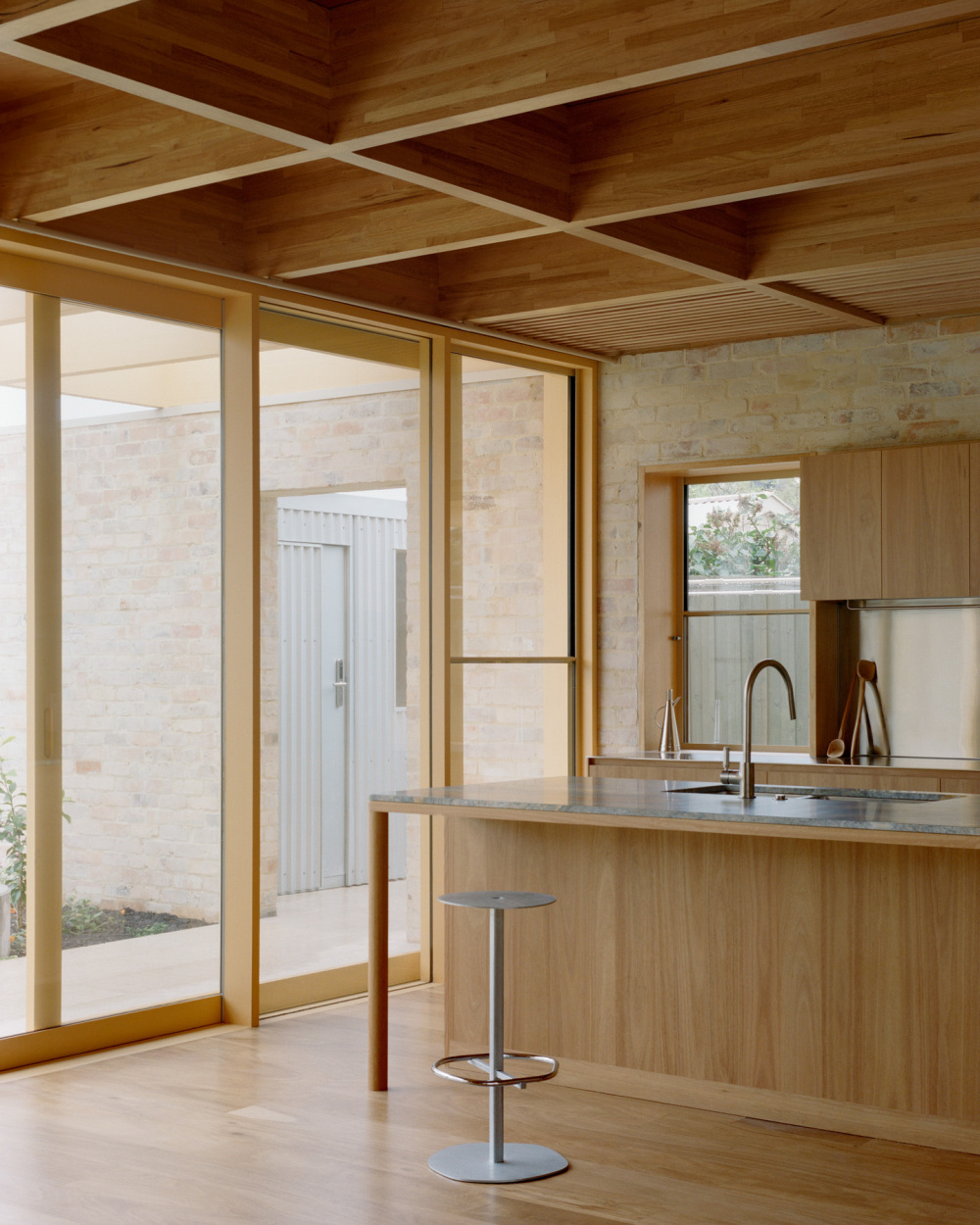
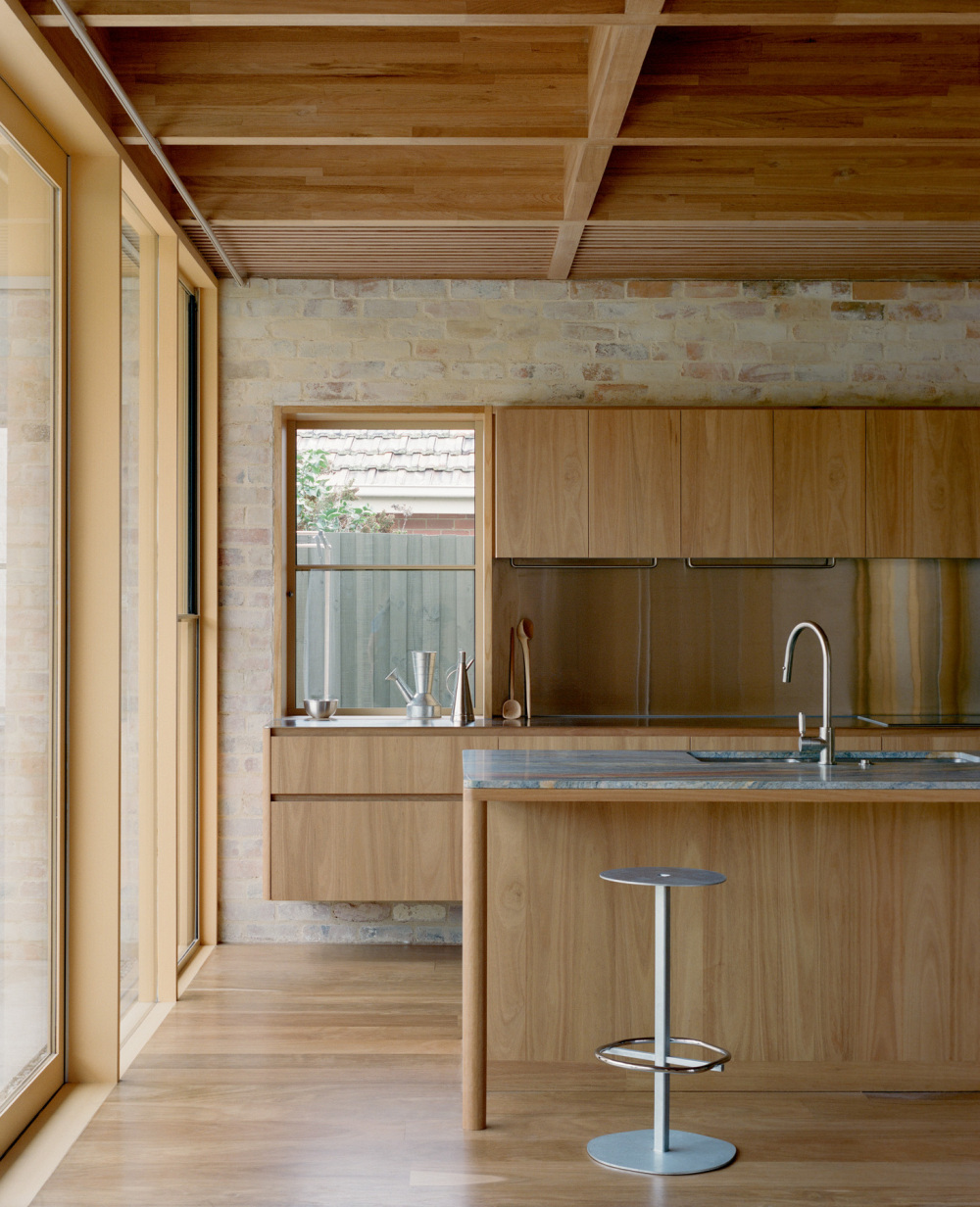
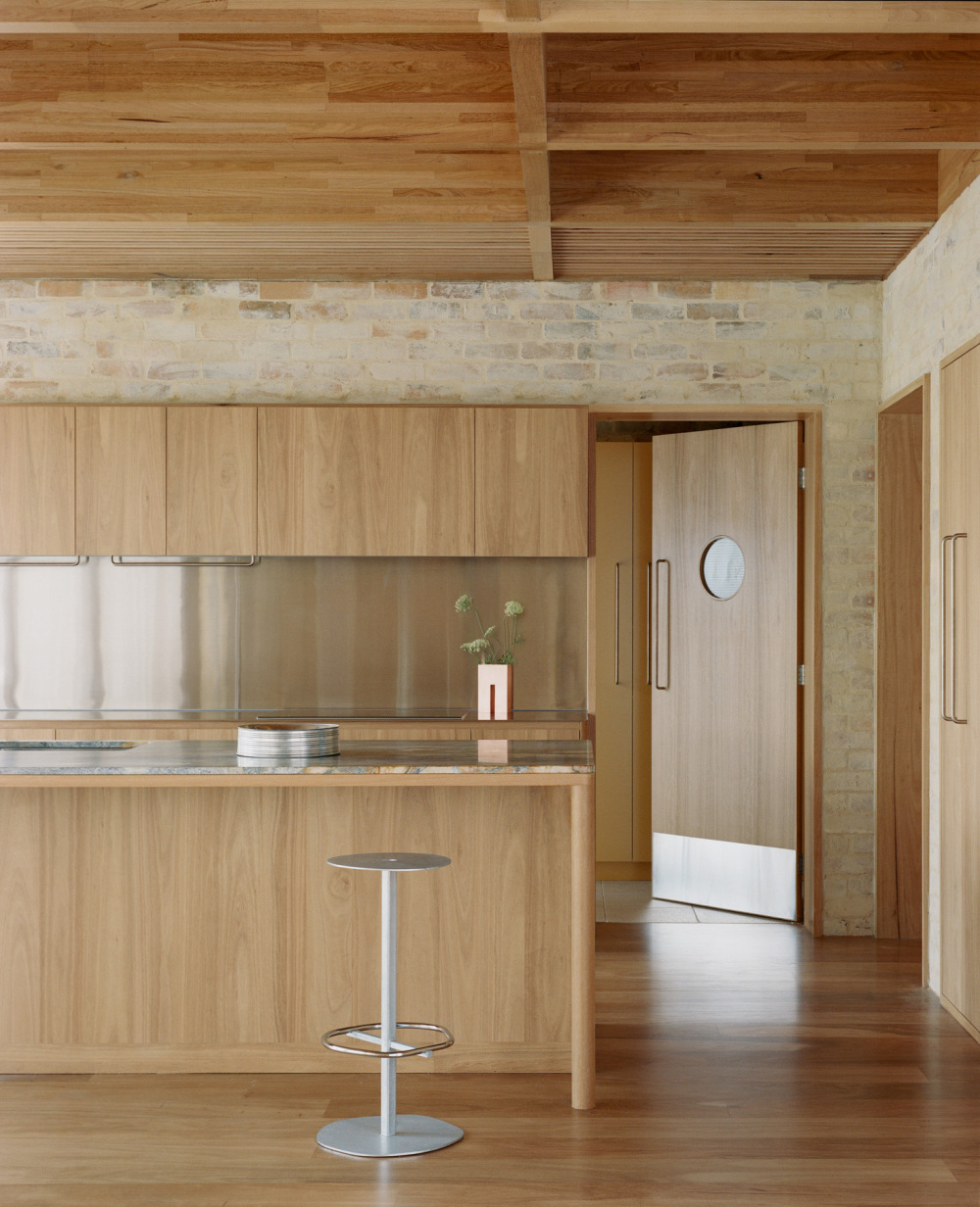
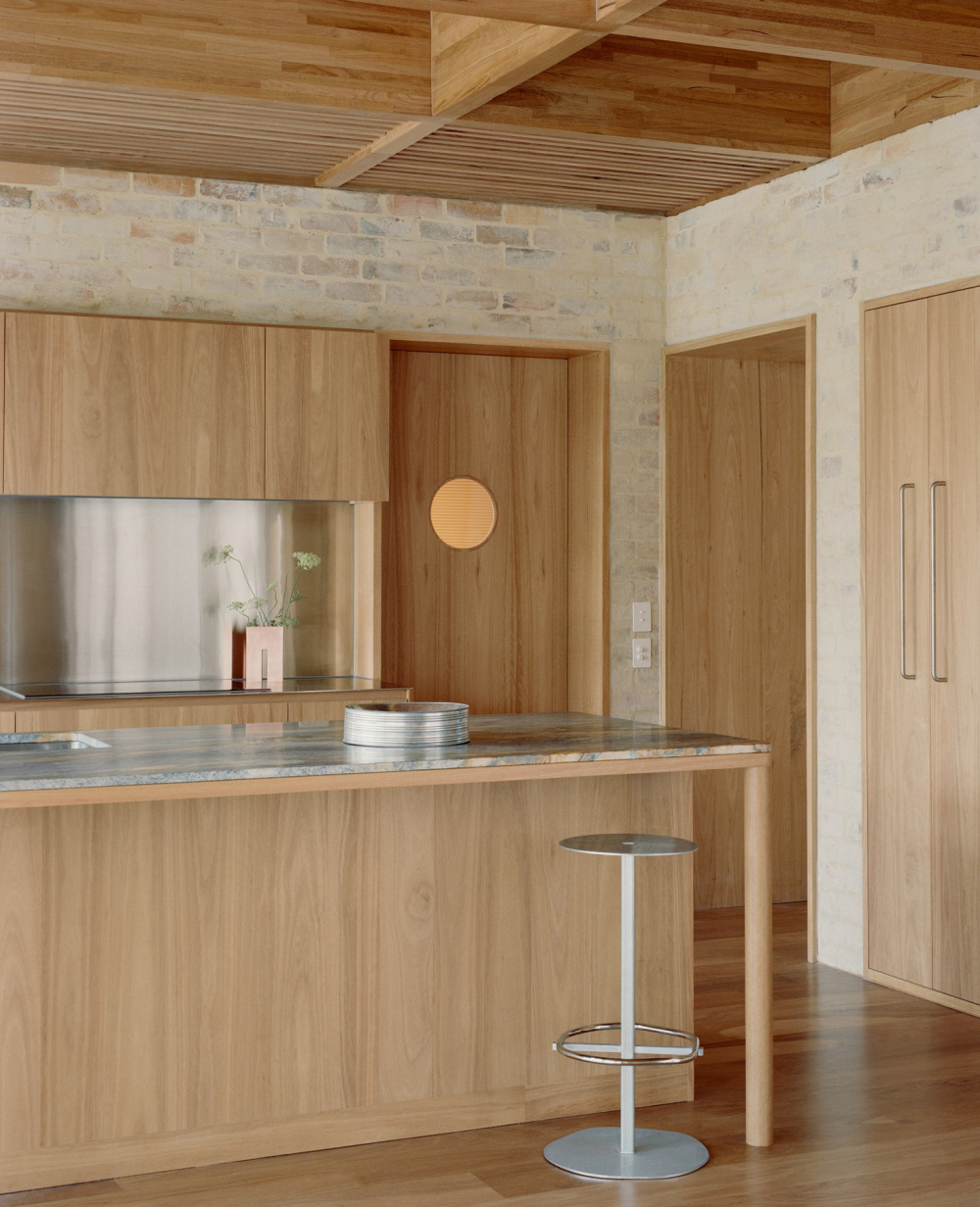
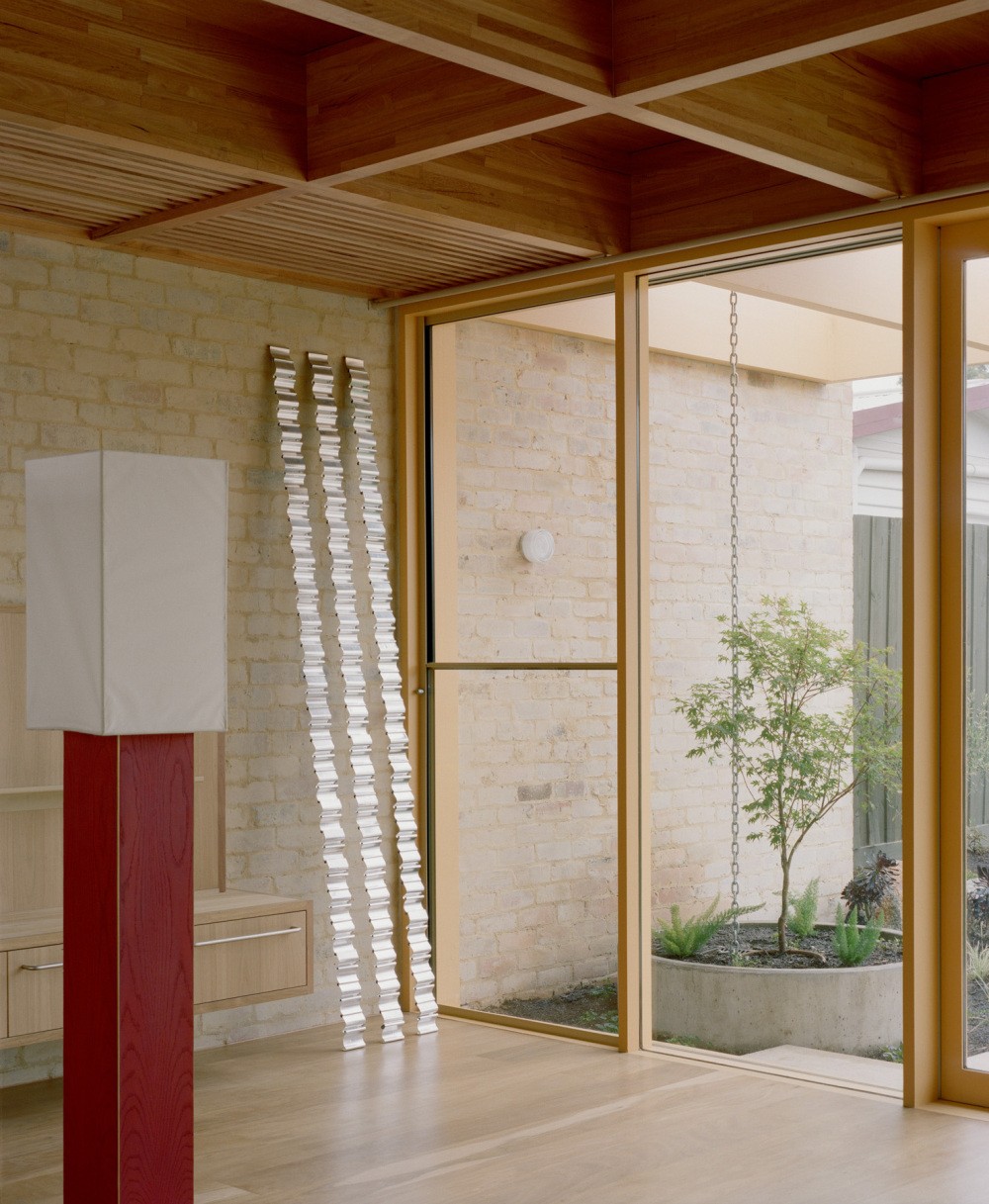
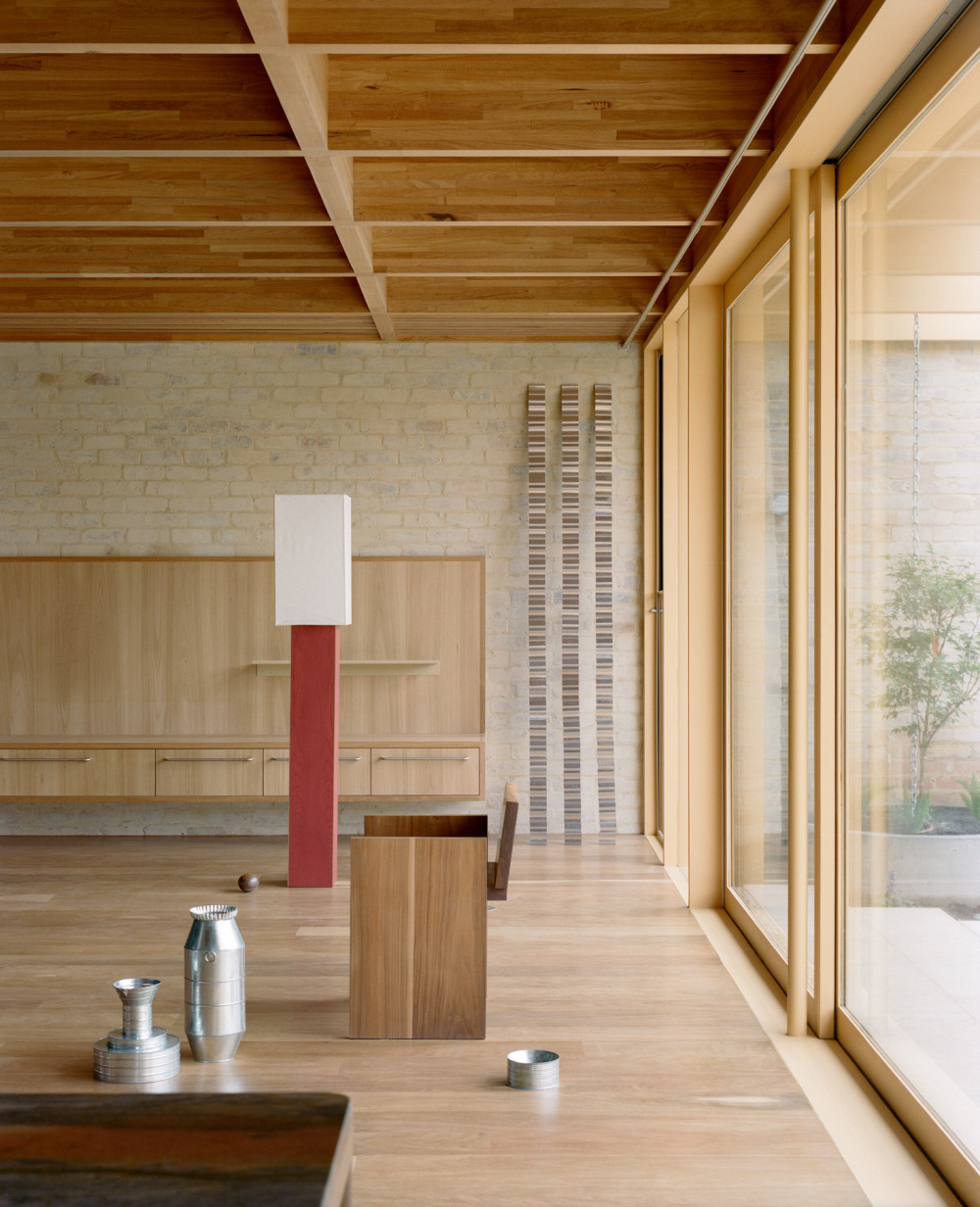
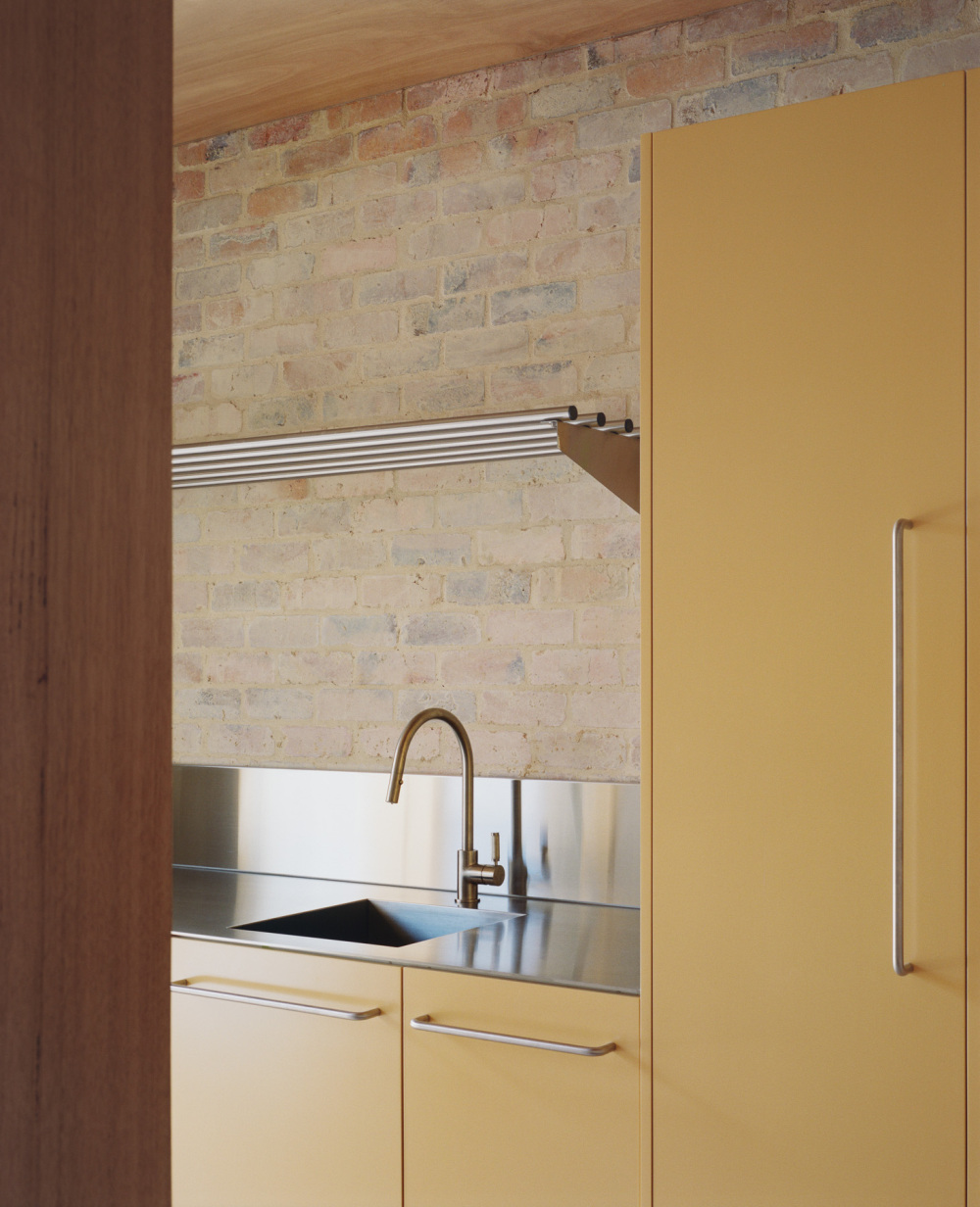
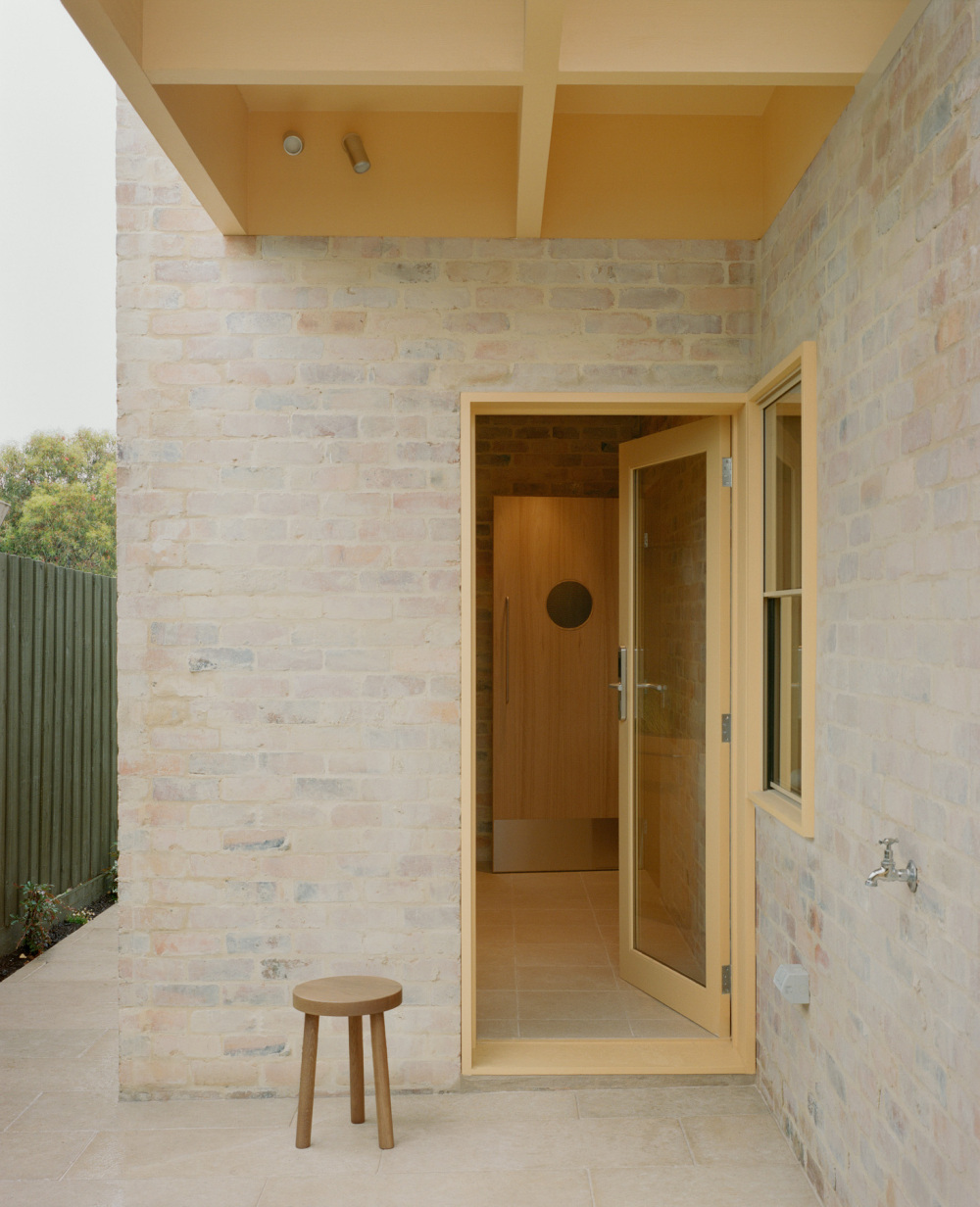
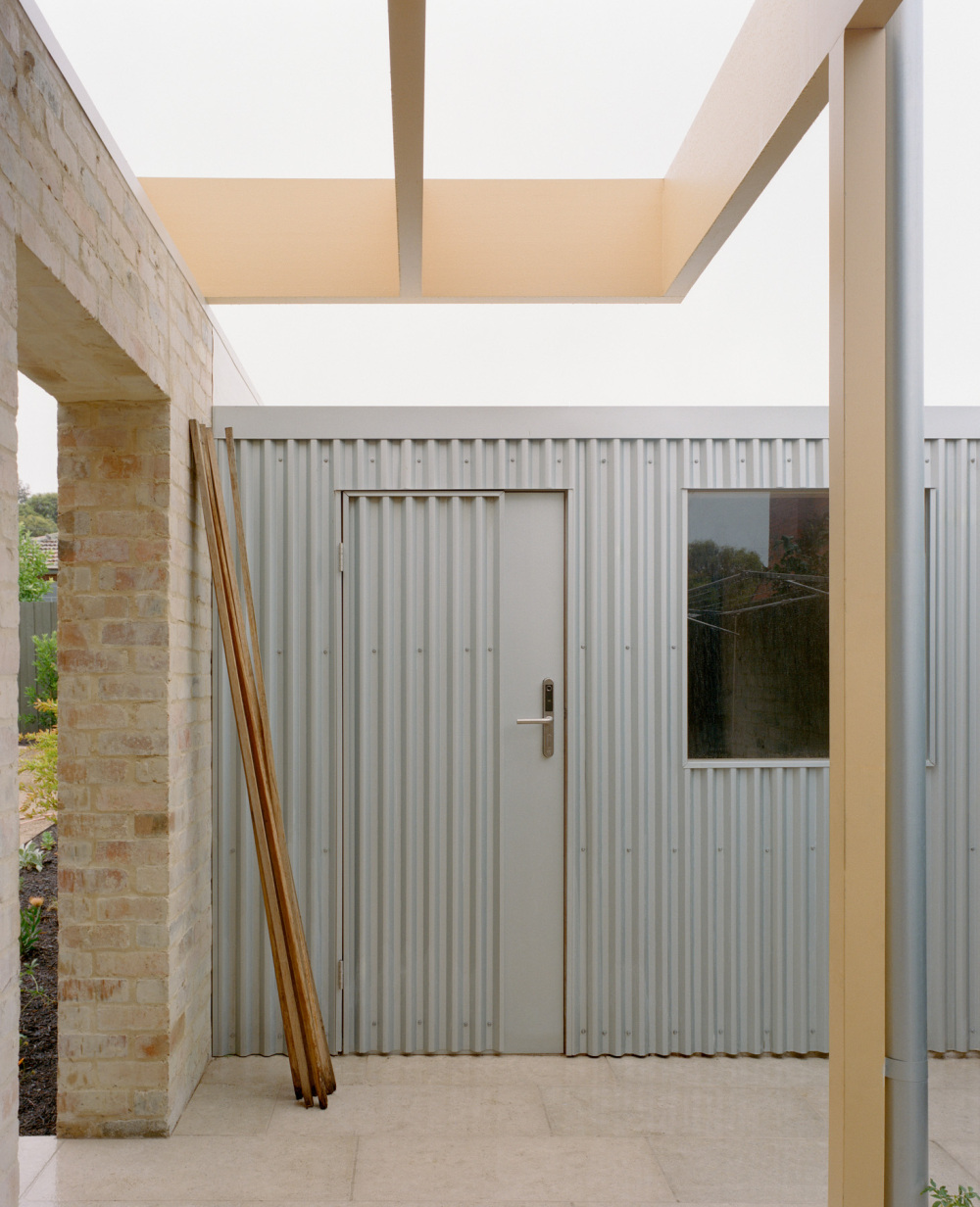
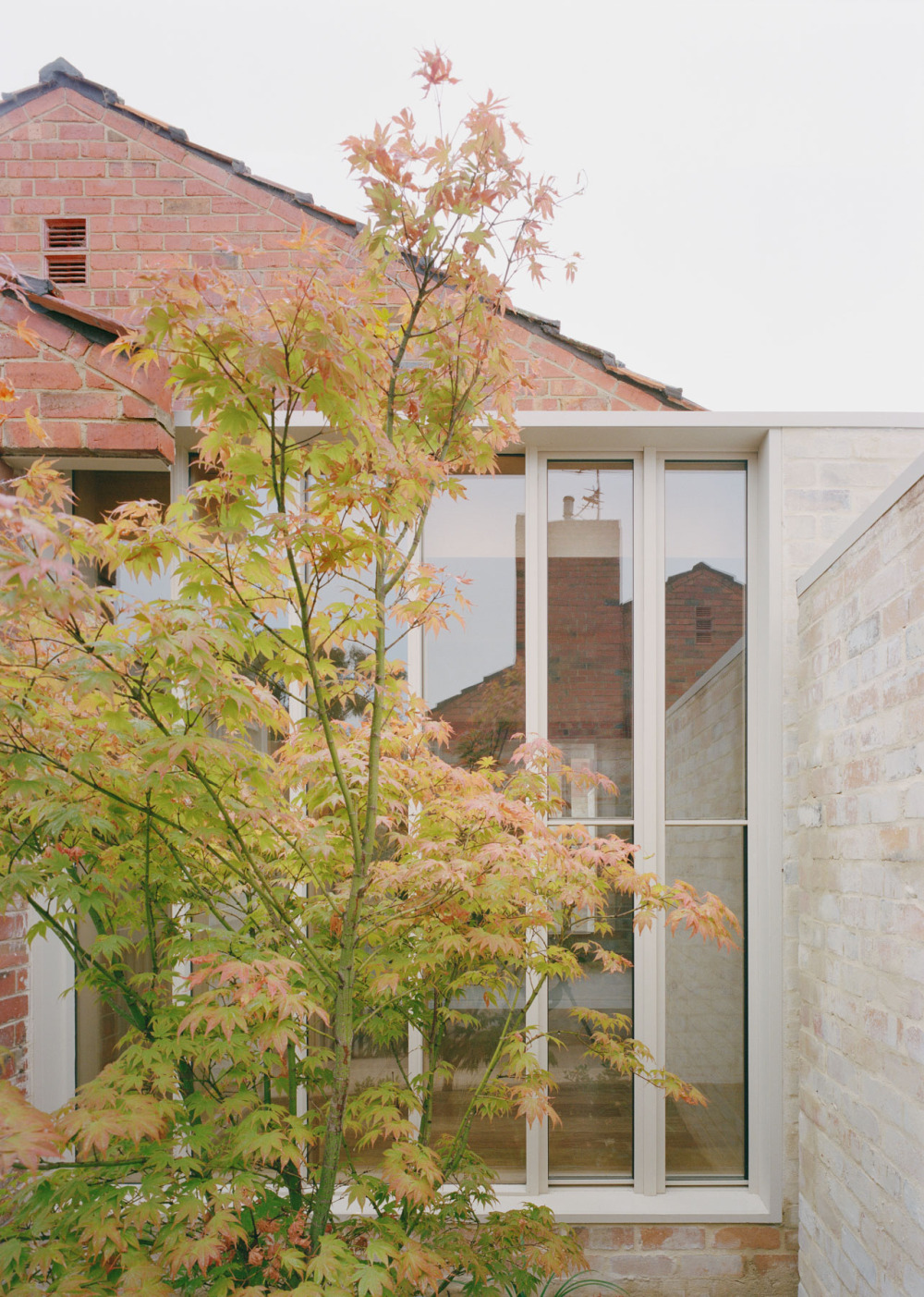
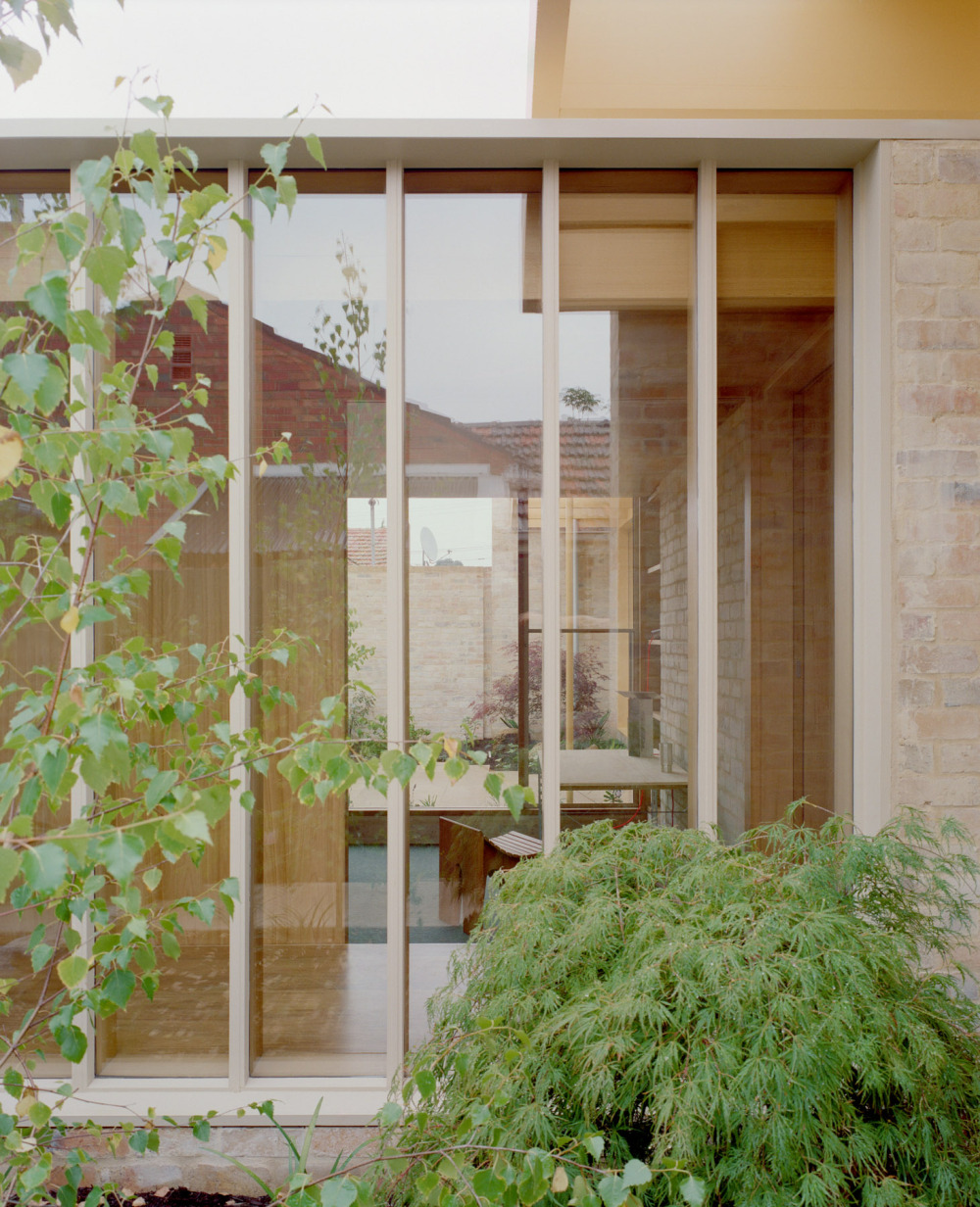
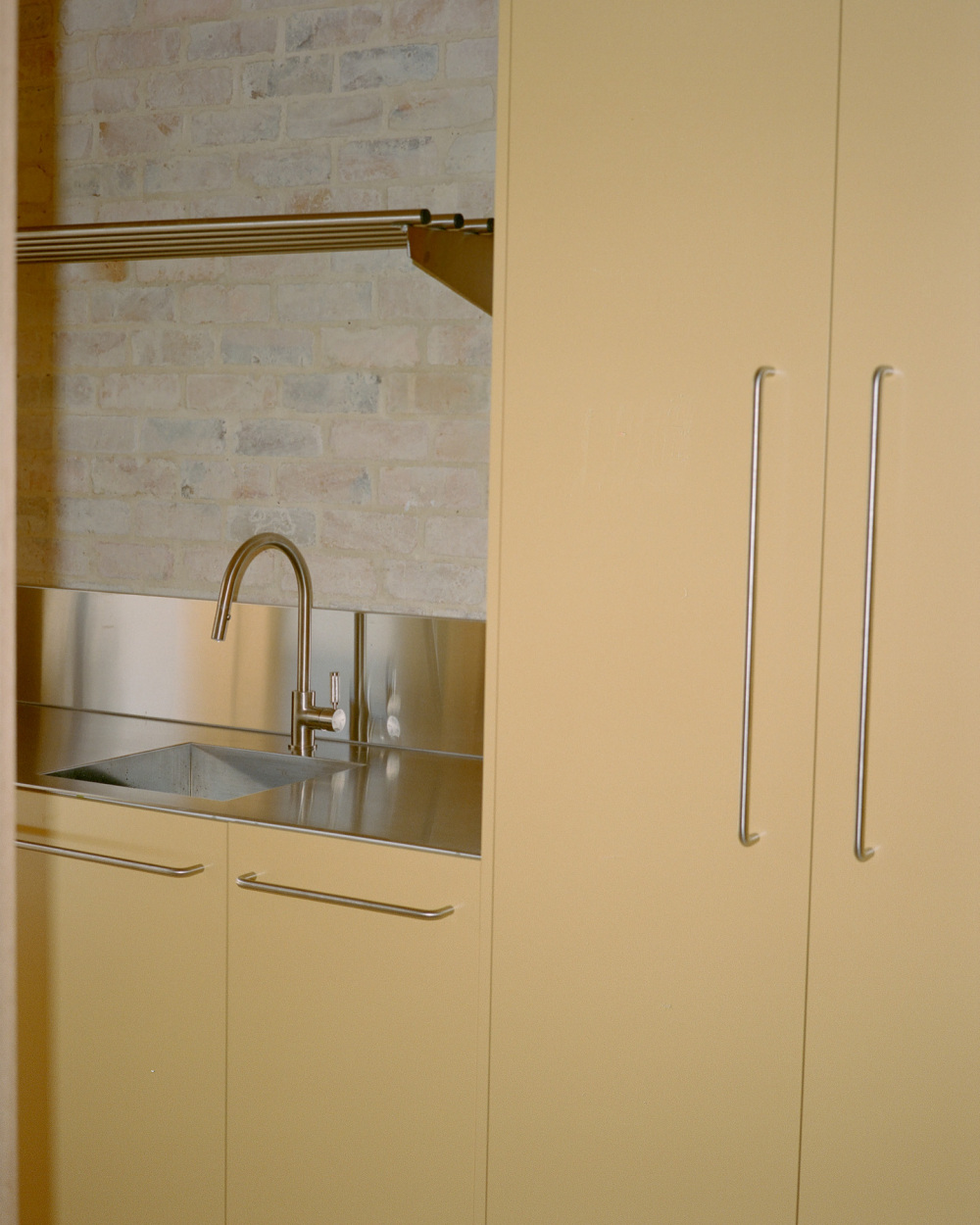
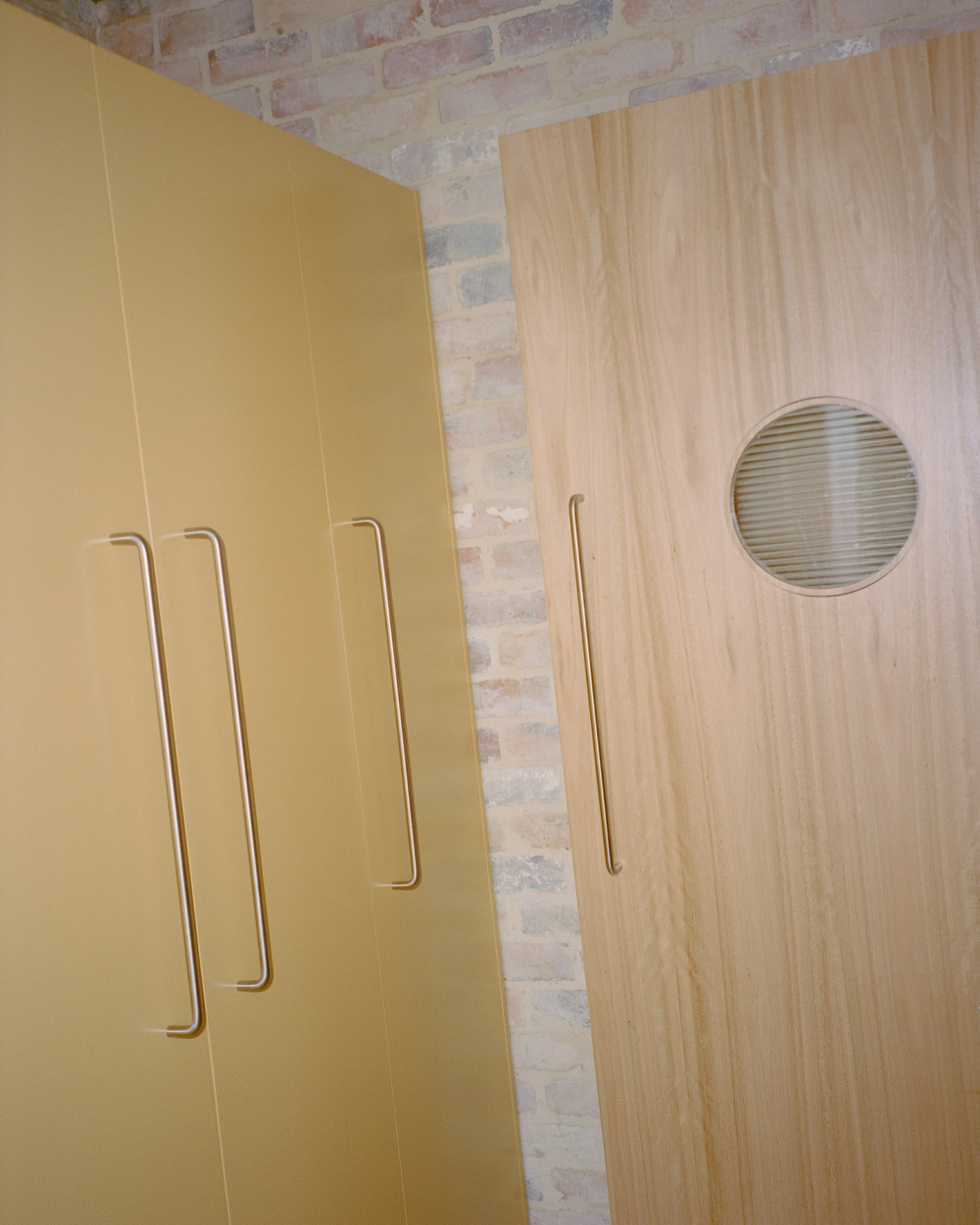
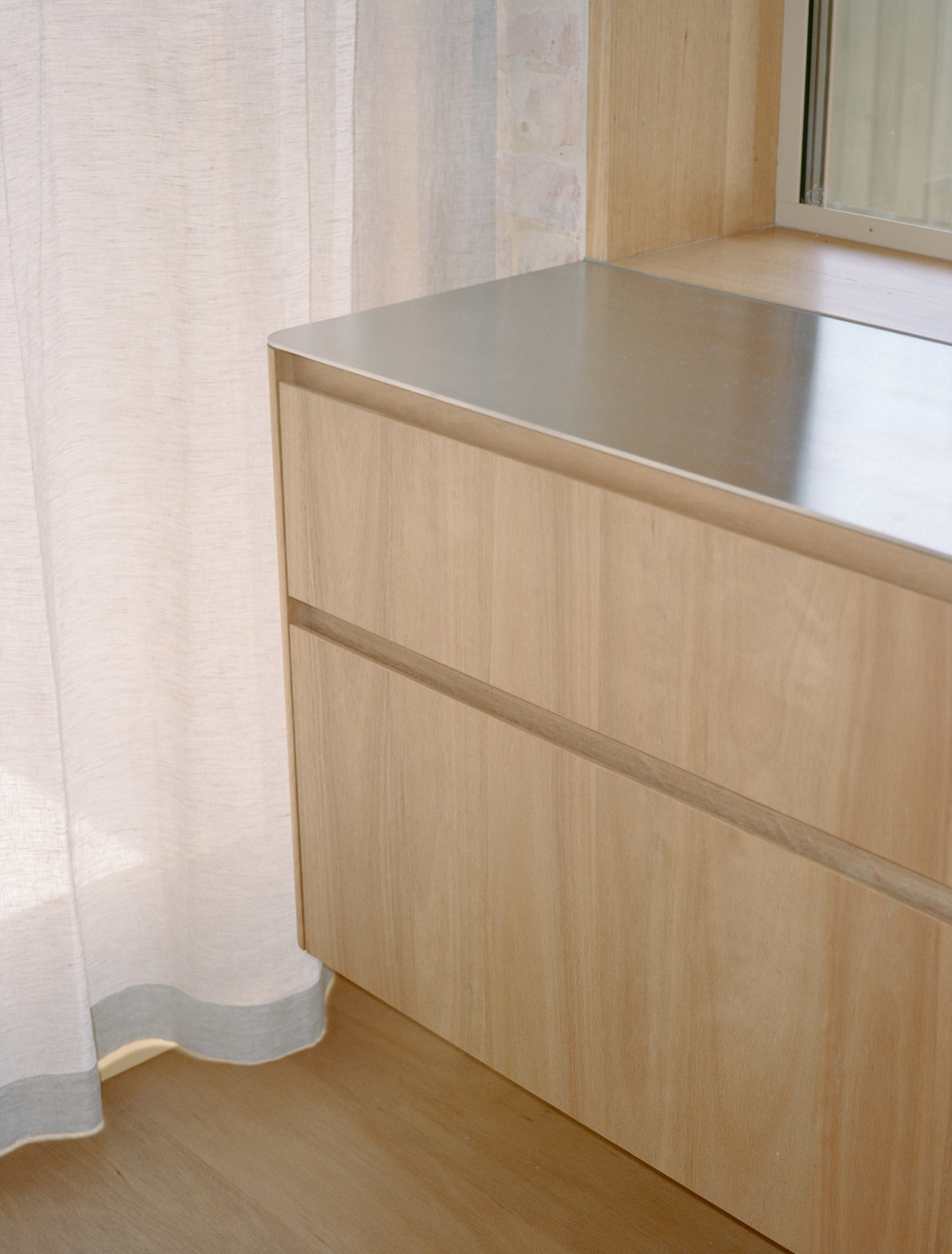
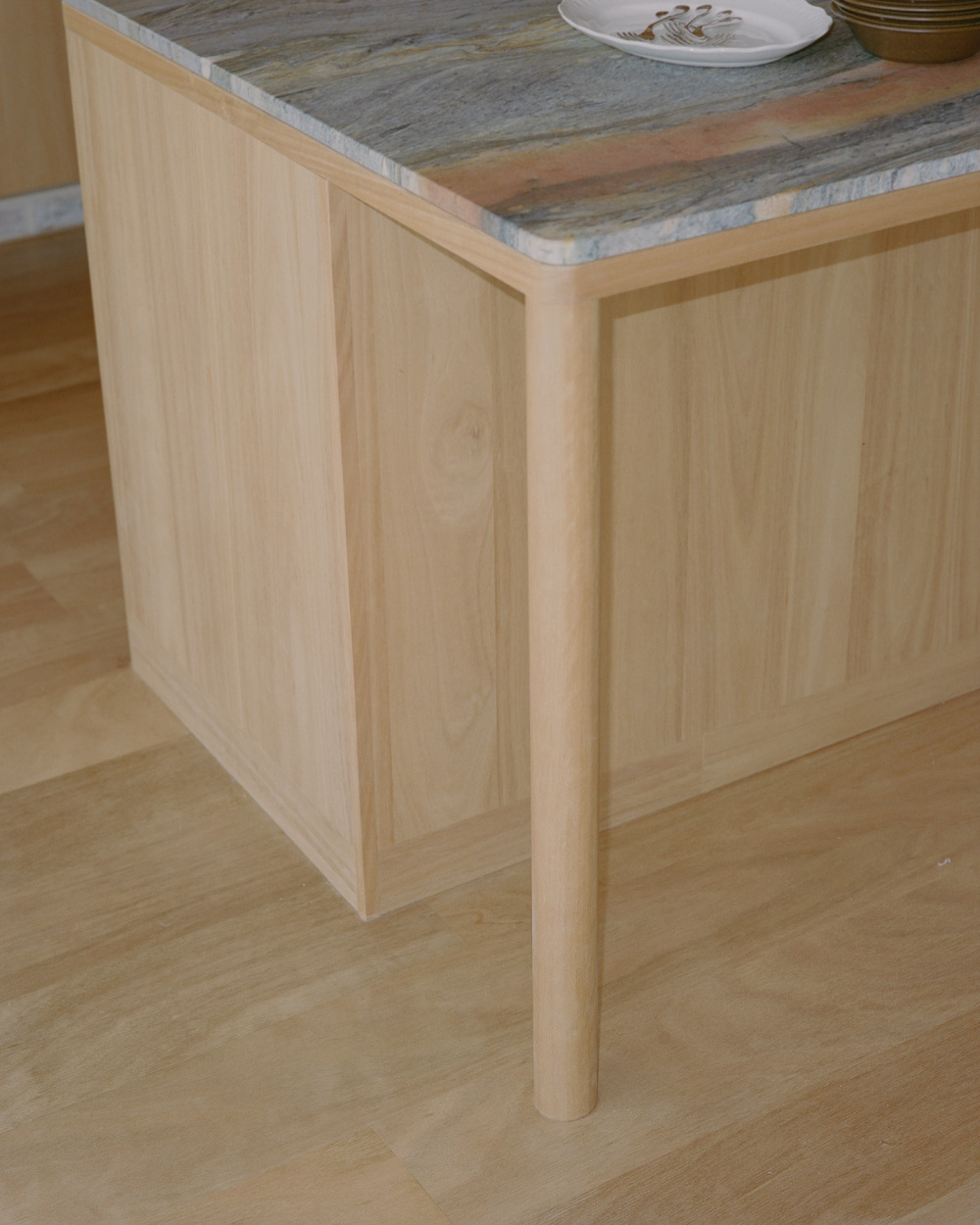
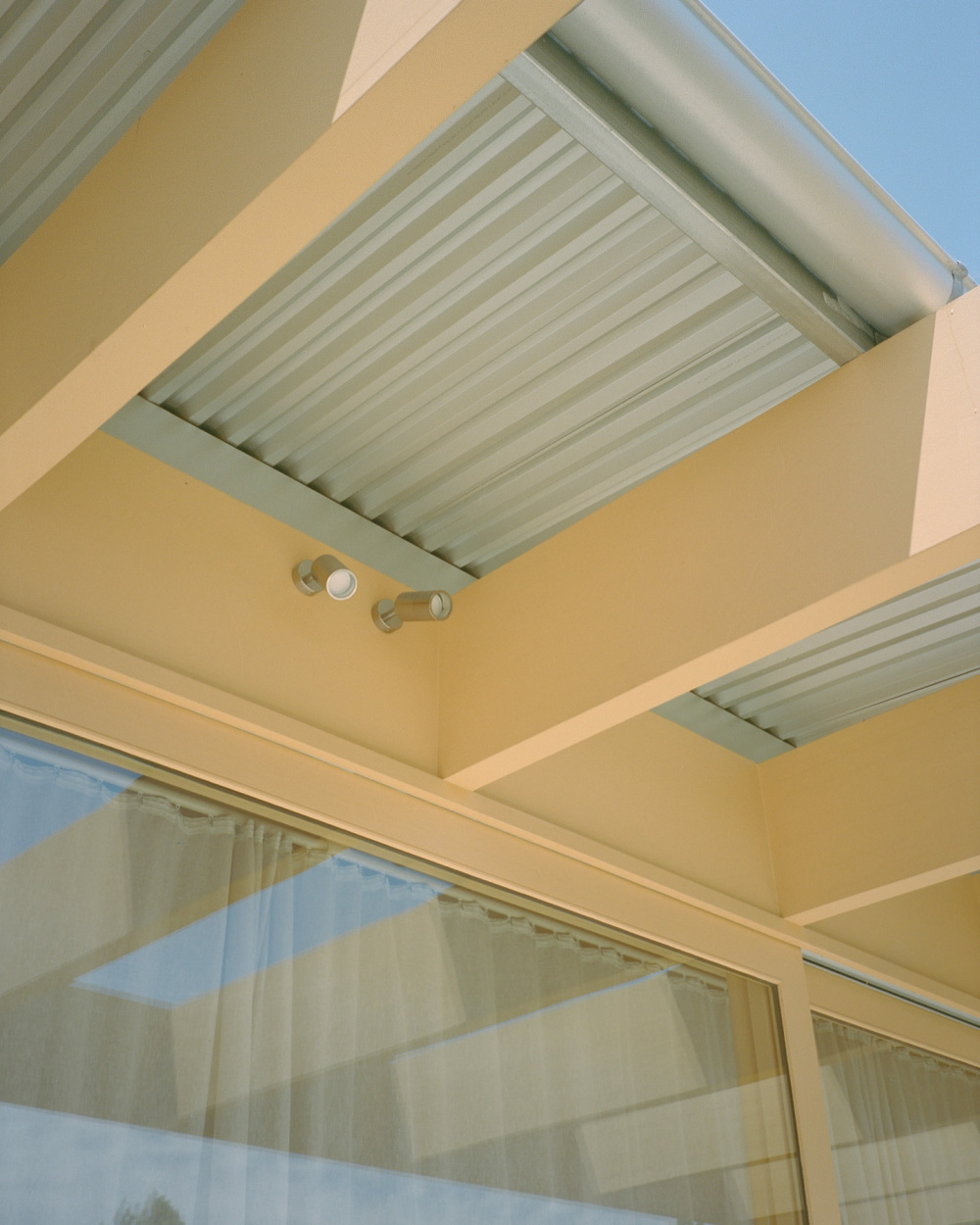
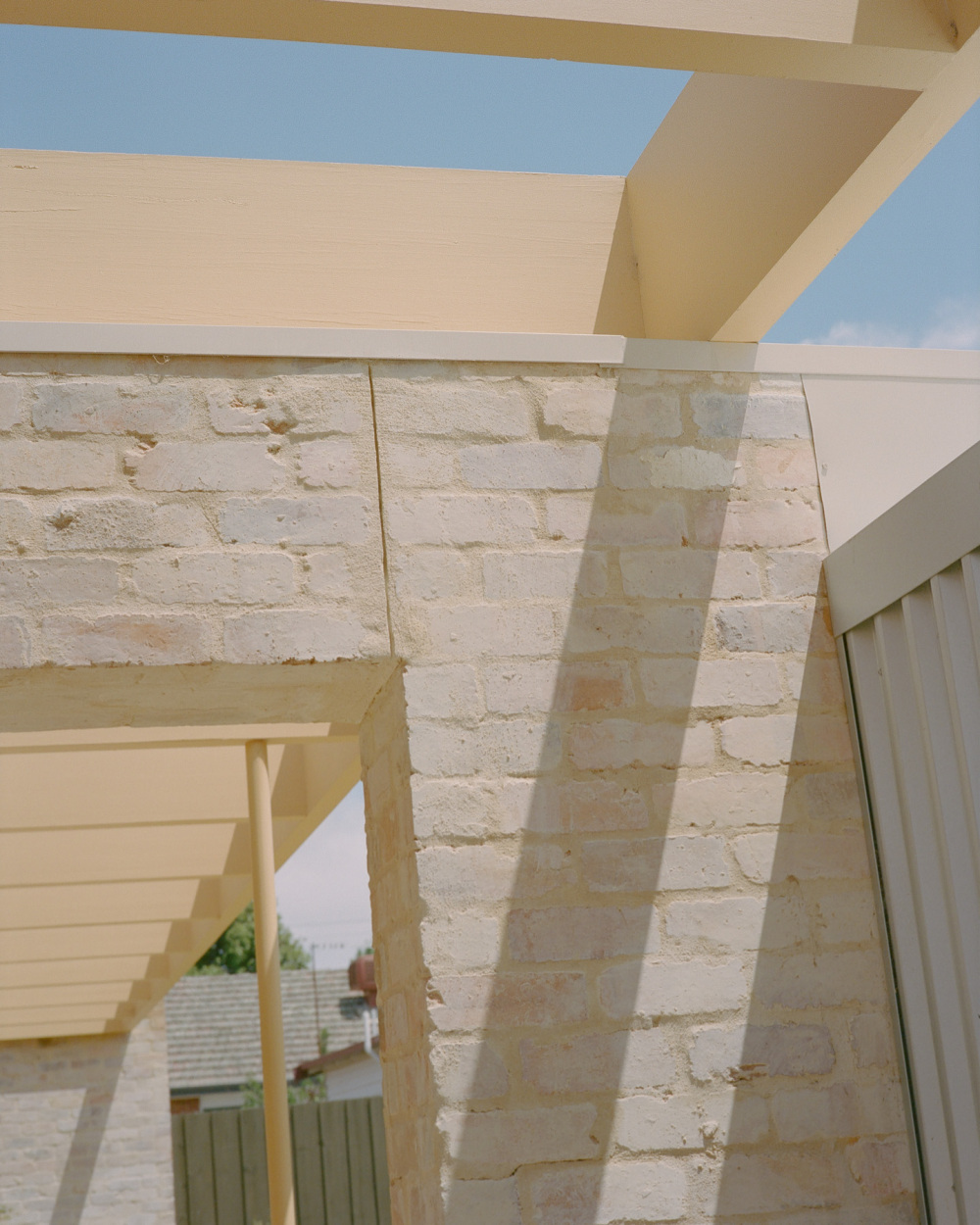
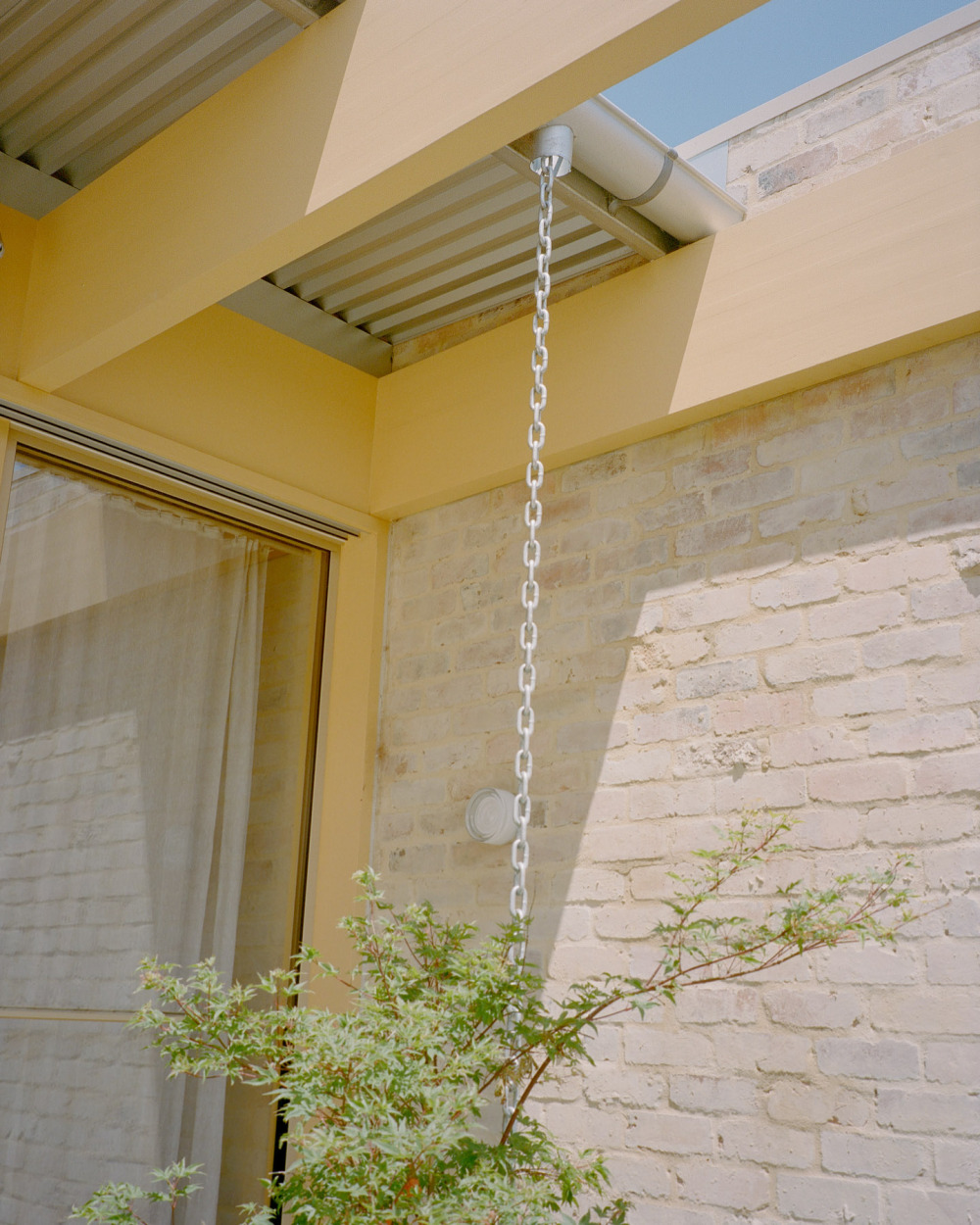
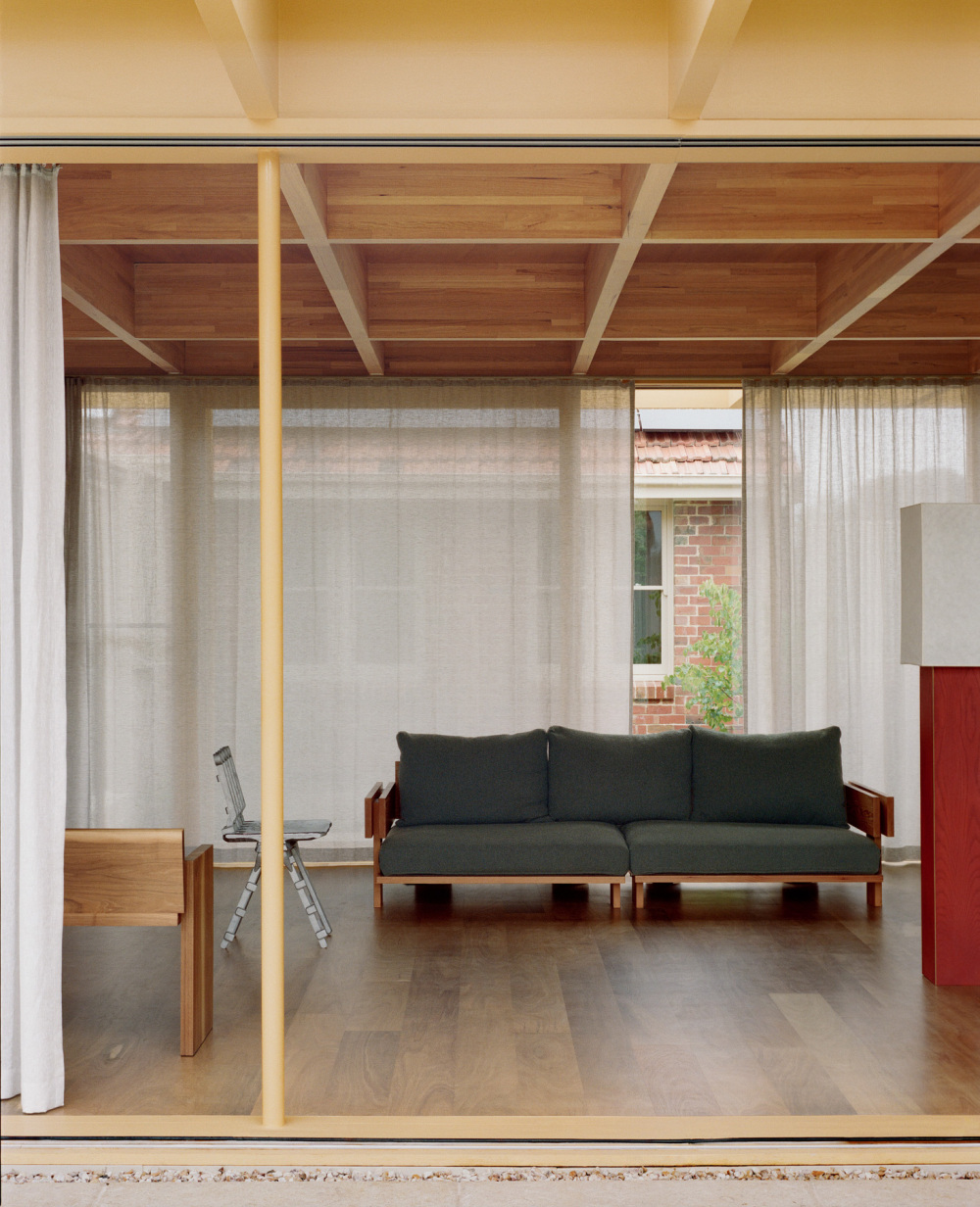
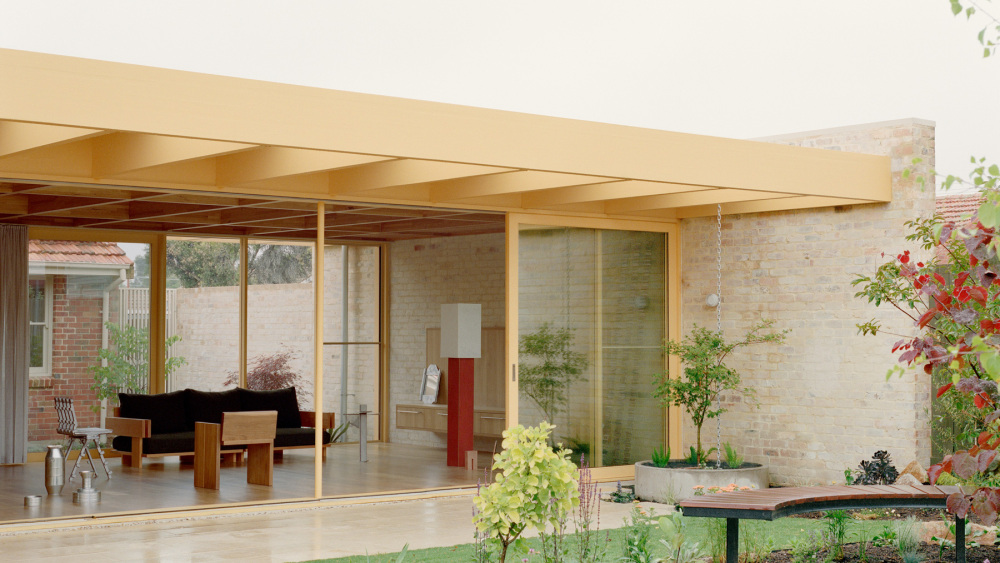
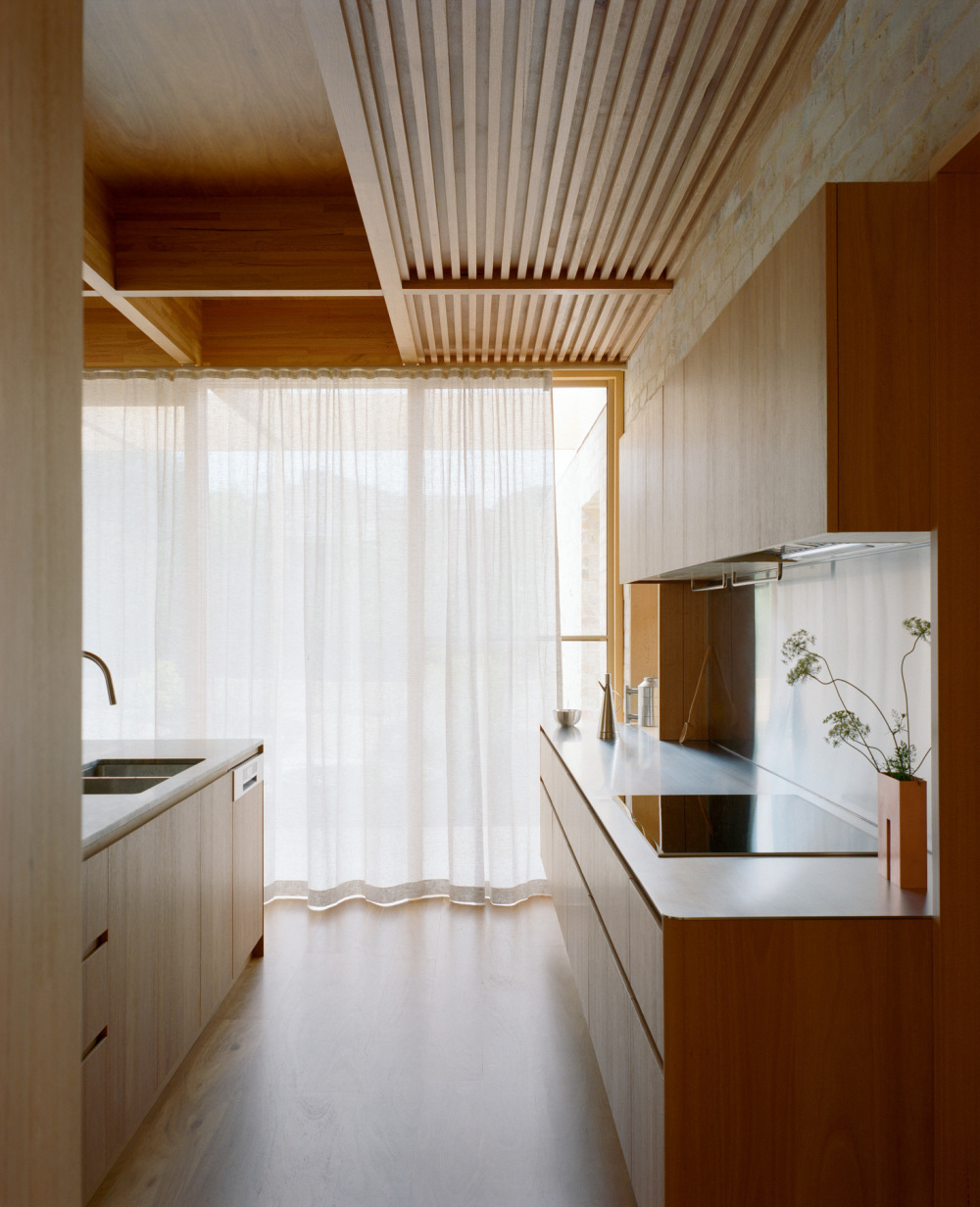
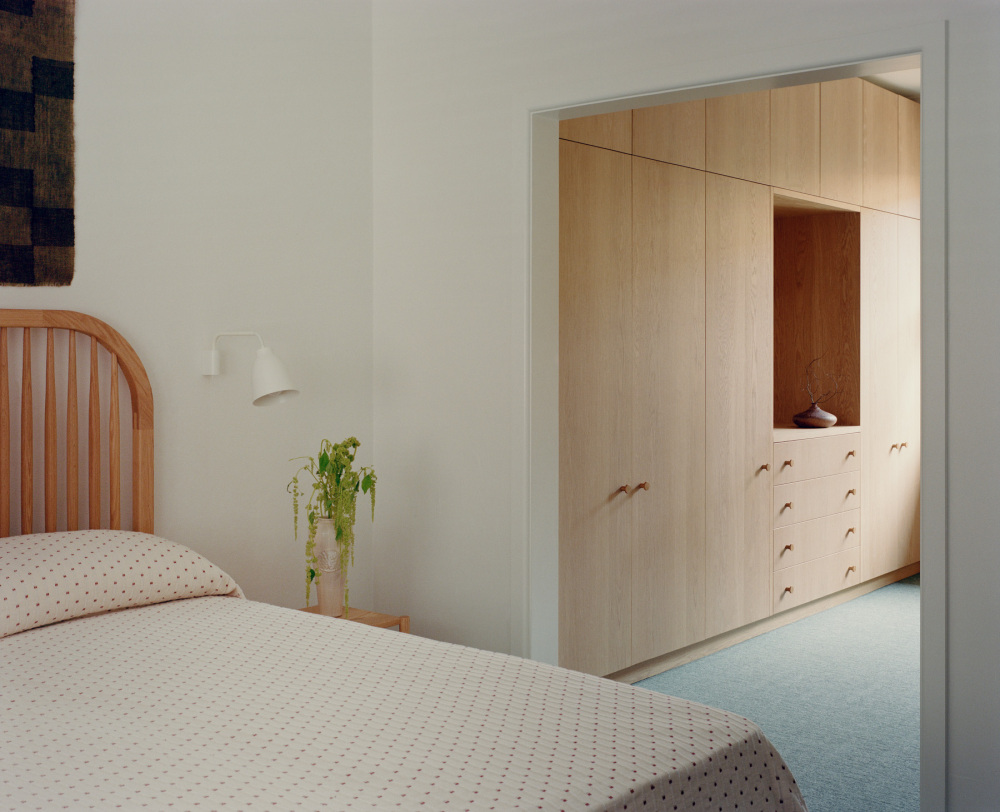
From the front door, residents step into a warm-toned entryway, complete with tall timber storage and an integrated bench. Beyond lie the original bedrooms, new walk-in wardrobe and primary ensuite, followed by the hallway. “The hallway is an interesting part of the project,” says de Hoog. “It connects the existing house to the new pavilion. We kept the height purposefully low to create a feeling of compression before residents arrive at the expansive living areas.” A sunken study is positioned at the midpoint to offer a more intimate environment in proximity to the courtyard. Nonetheless, the residential experience is consistent: visual links are maintained across spatial boundaries and no room feels isolated.As the clients prefer pared-back architecture, the pavilion is built according to the modernist tradition. Low and rectilinear, the structure extends from beneath the existing roof and features floor-to-ceiling glass panels, barely discernible from the street. “We used a lot of timber to frame the windows and we knew this needed to be protected – we saw it as a great opportunity to introduce a paint finish,” says de Hoog. “We landed on a yellow tone that reflects the warmth of the timber, brickwork and complementary materials. It allows light to enter the home even on an overcast day.” Inside, the ceiling showcases a grid of oversized beams that combine supportive functionality with a clean expression.