Claremont | WOWOWA | 2025 | 澳大利亚
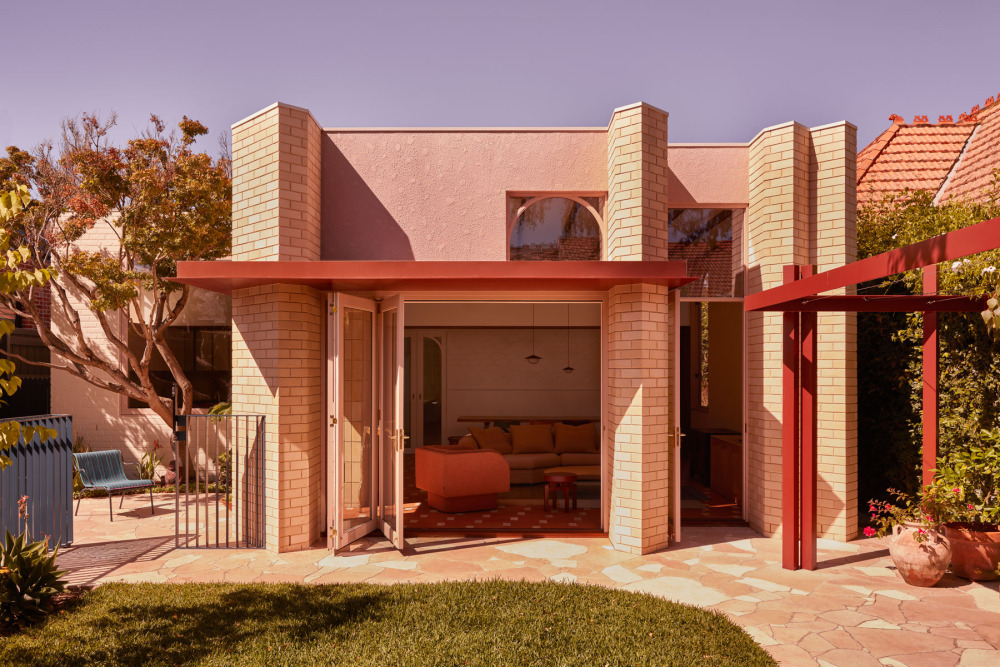
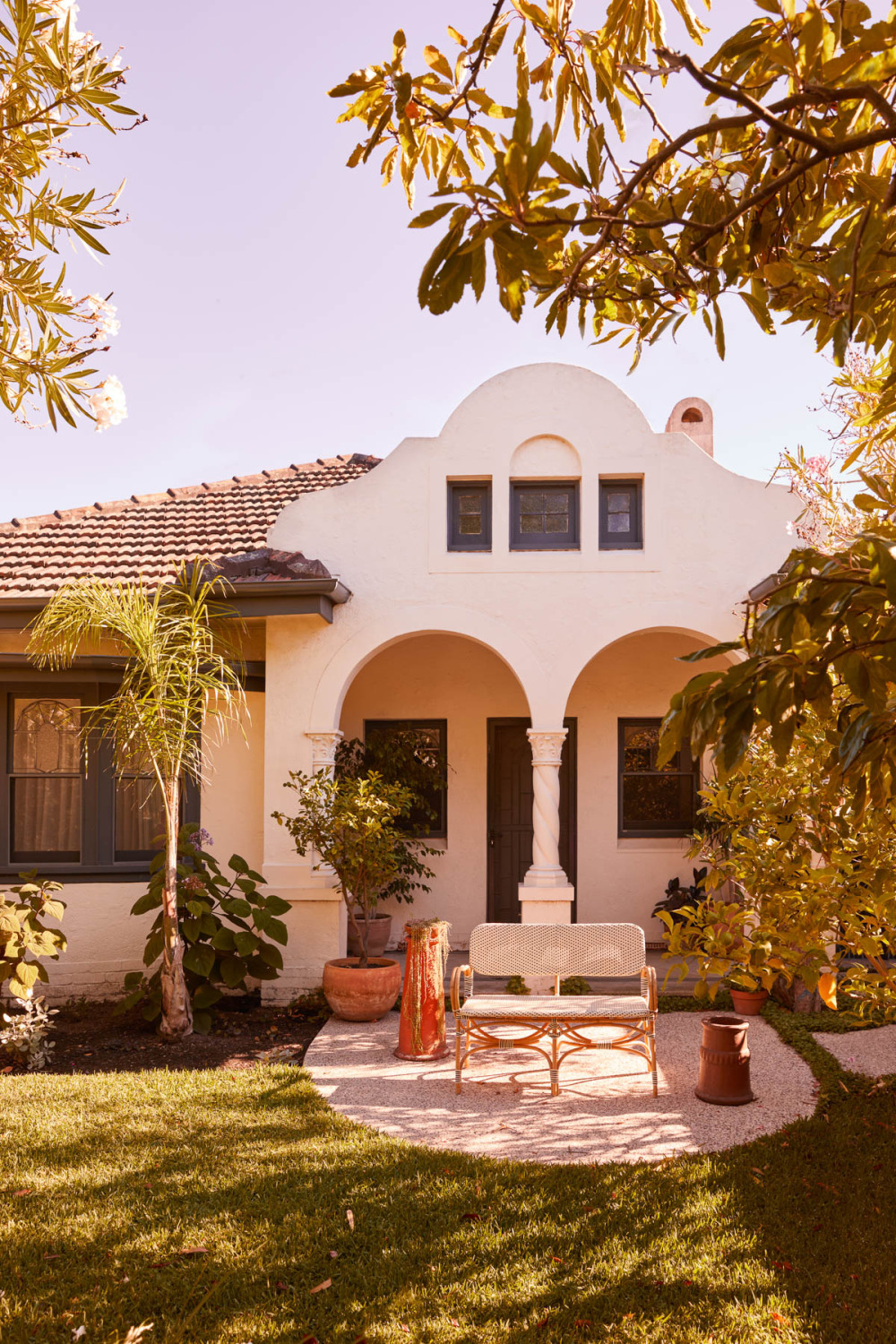
Tucked behind a Spanish Mission facade, Claremont unfolds as a carefully orchestrated celebration of joy, legacy and architectural delight – each gesture honouring the past while embracing the unexpected. The residence highlights nostalgia and tactile warmth, where ornamentation is not an afterthought but the very essence of the design.WOWOWA principal and creative director Monique Woodward describes the home as “a gift back to the original” – a phrase that beautifully frames the firm’s ethos. “We mine the ornament of the era that a home finds itself in,” she says. “In this case, it was Californian Spanish Mission in origin, deliciously Deco yet grounded and earthy.” The home became a love letter to that style, a continuation rather than a contradiction.
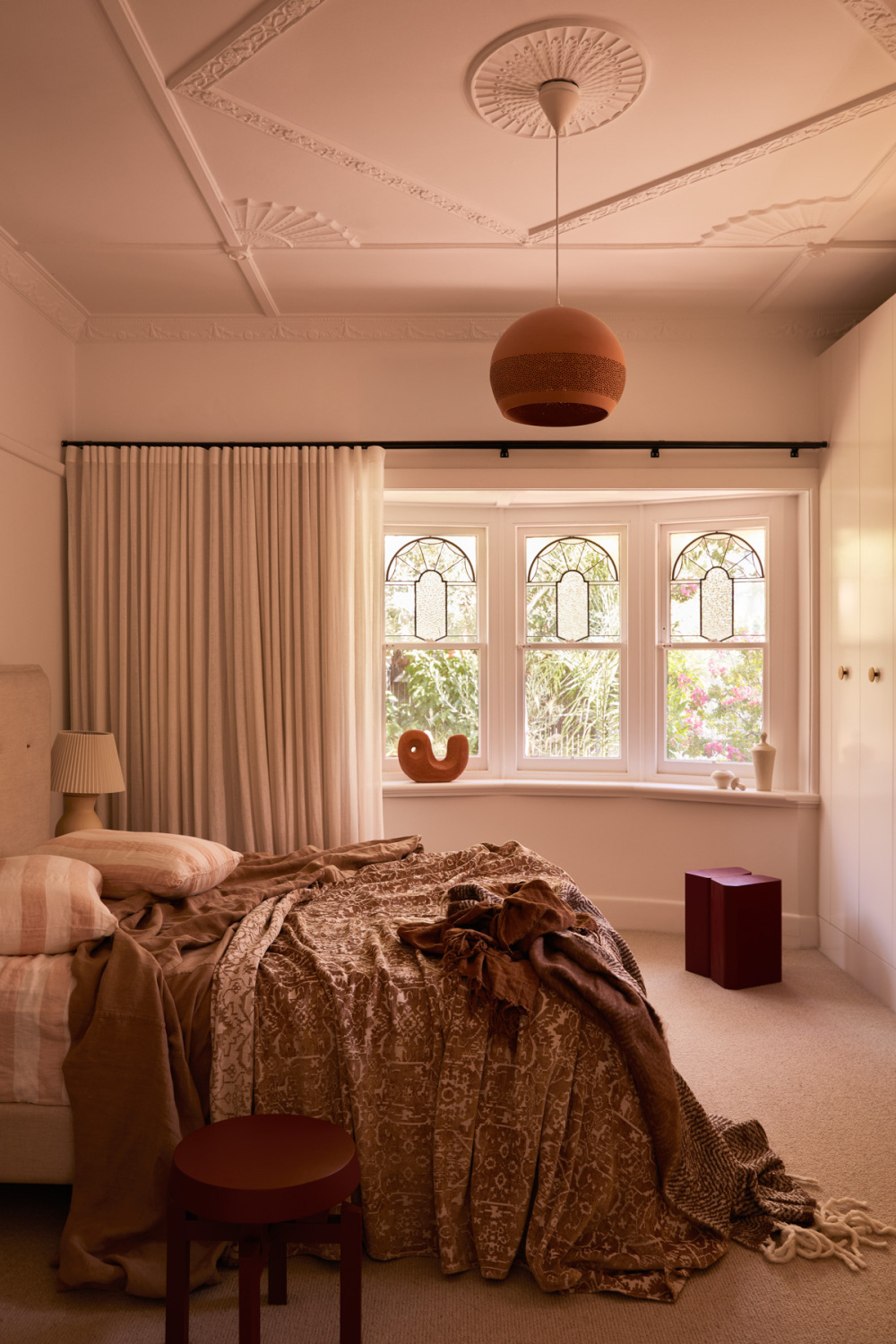
The renovated house, with its decadent render and tall ceilings, harks back to the original. Rather than juxtapose the old with a starkly contemporary rear addition, the team leaned into the arcades, textures, softness and idiosyncrasies of the Spanish Mission style and the dwelling’s subtle Moorish influences. “The brief was quite modest – a rustic and highly detailed home for four people, but the design ambition was to honour and elevate what was already there,” says Woodward.While WOWOWA is known for its use of colour, Claremont’s palette is defined by restraint. Here, white is not a blank canvas but a deliberate statement. “Spanish Mission homes are fundamentally white. So, for us, it was about finding the play between that base tone and where colour, texture and form could sneak in without dominating.”
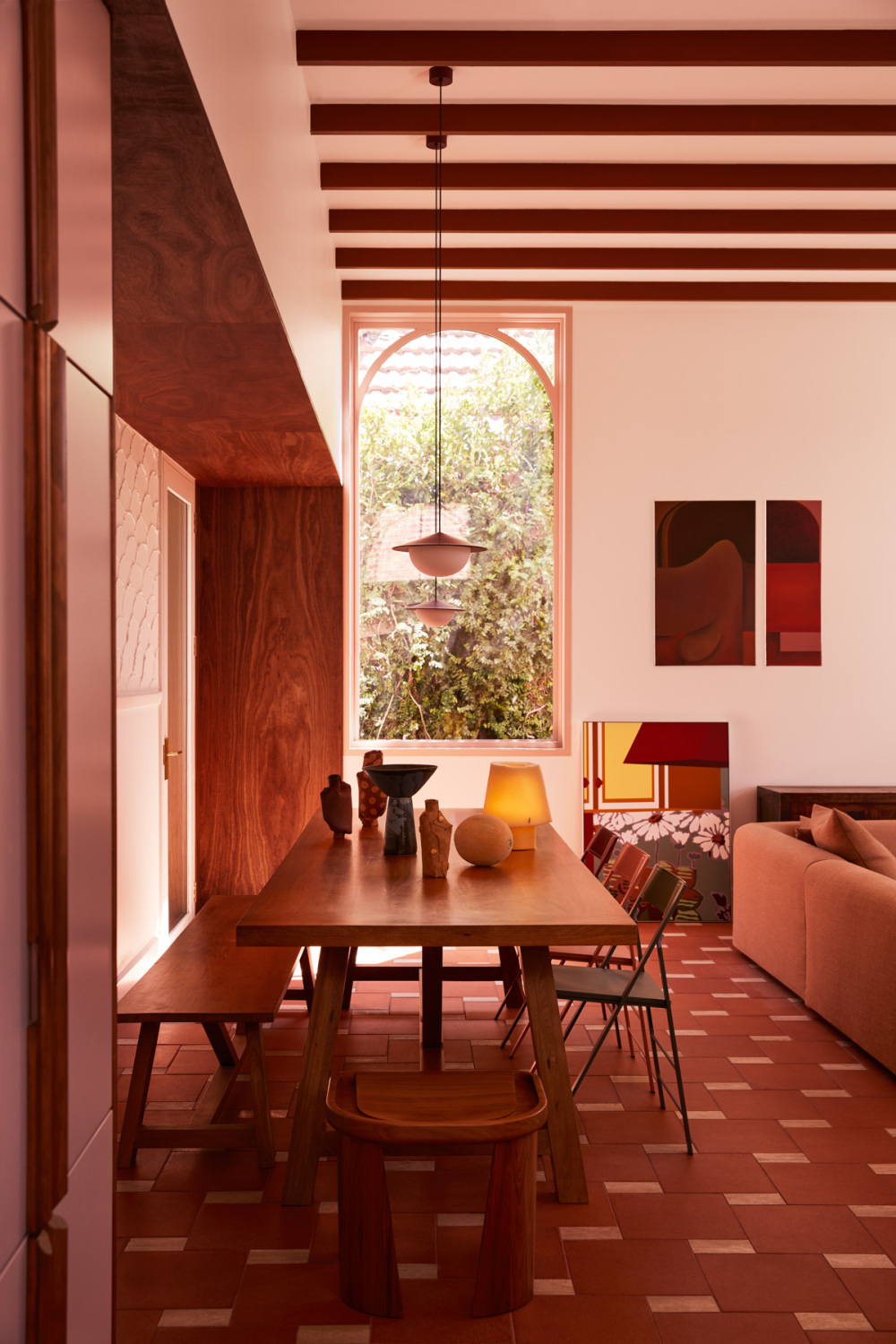
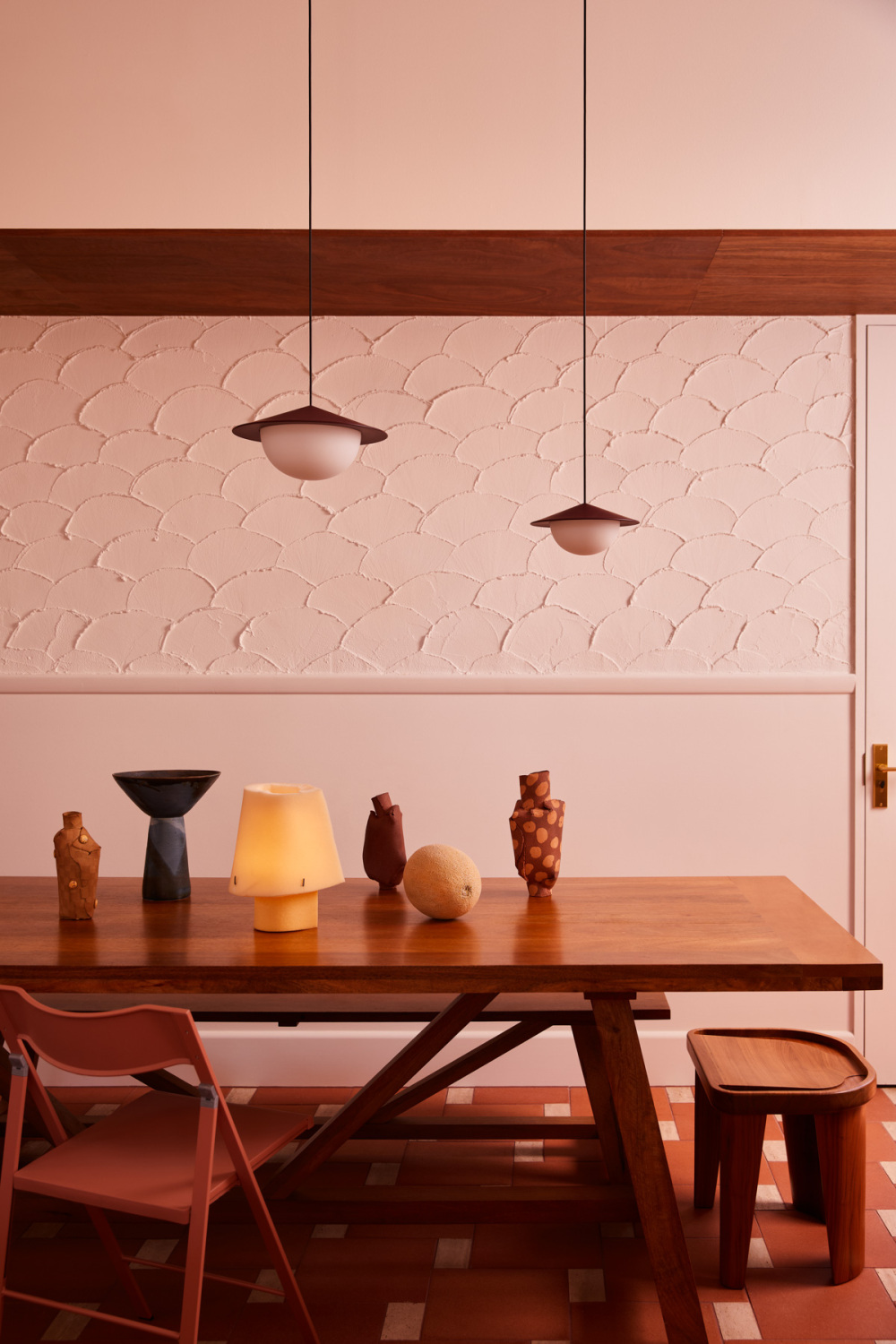
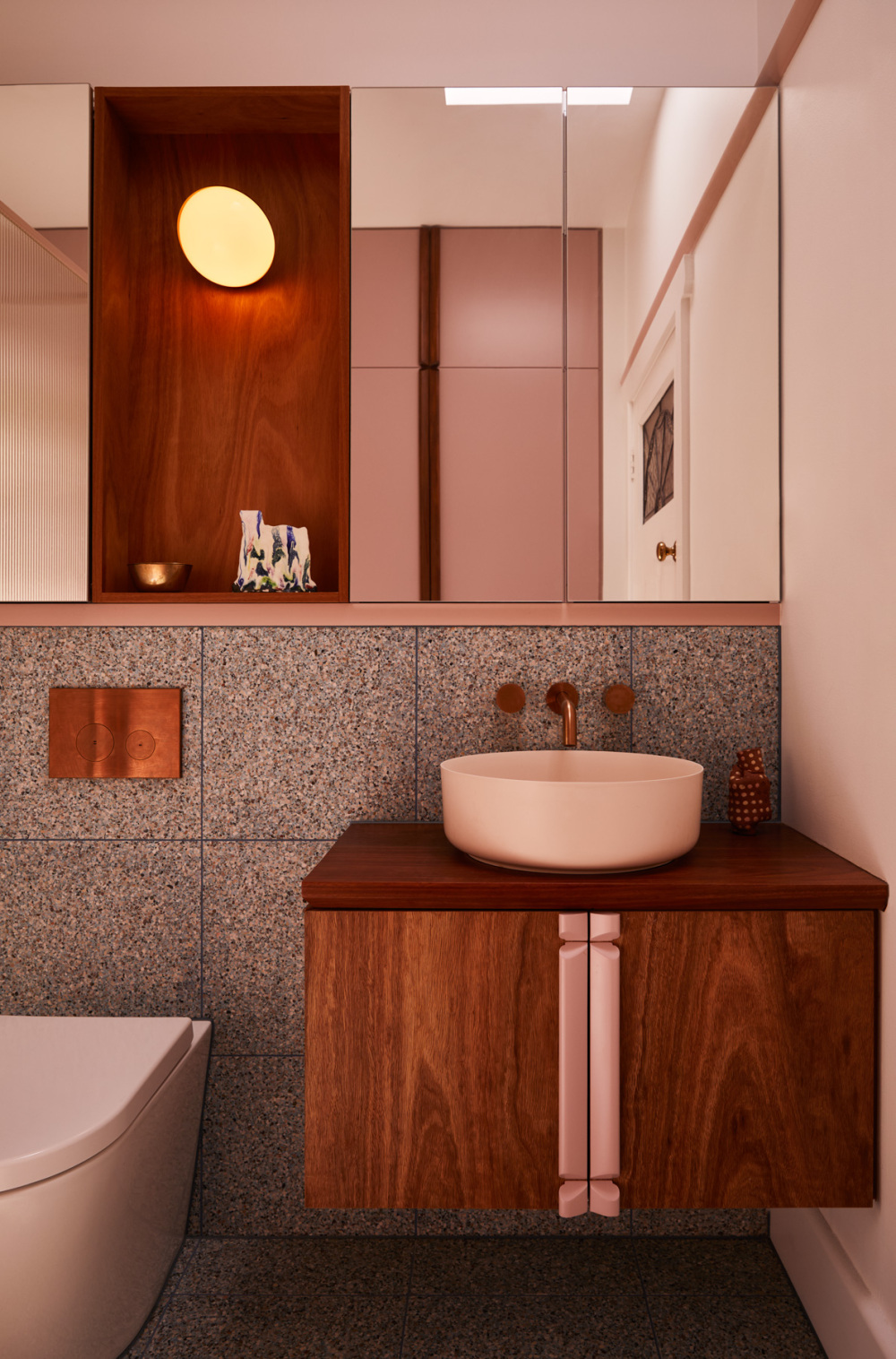
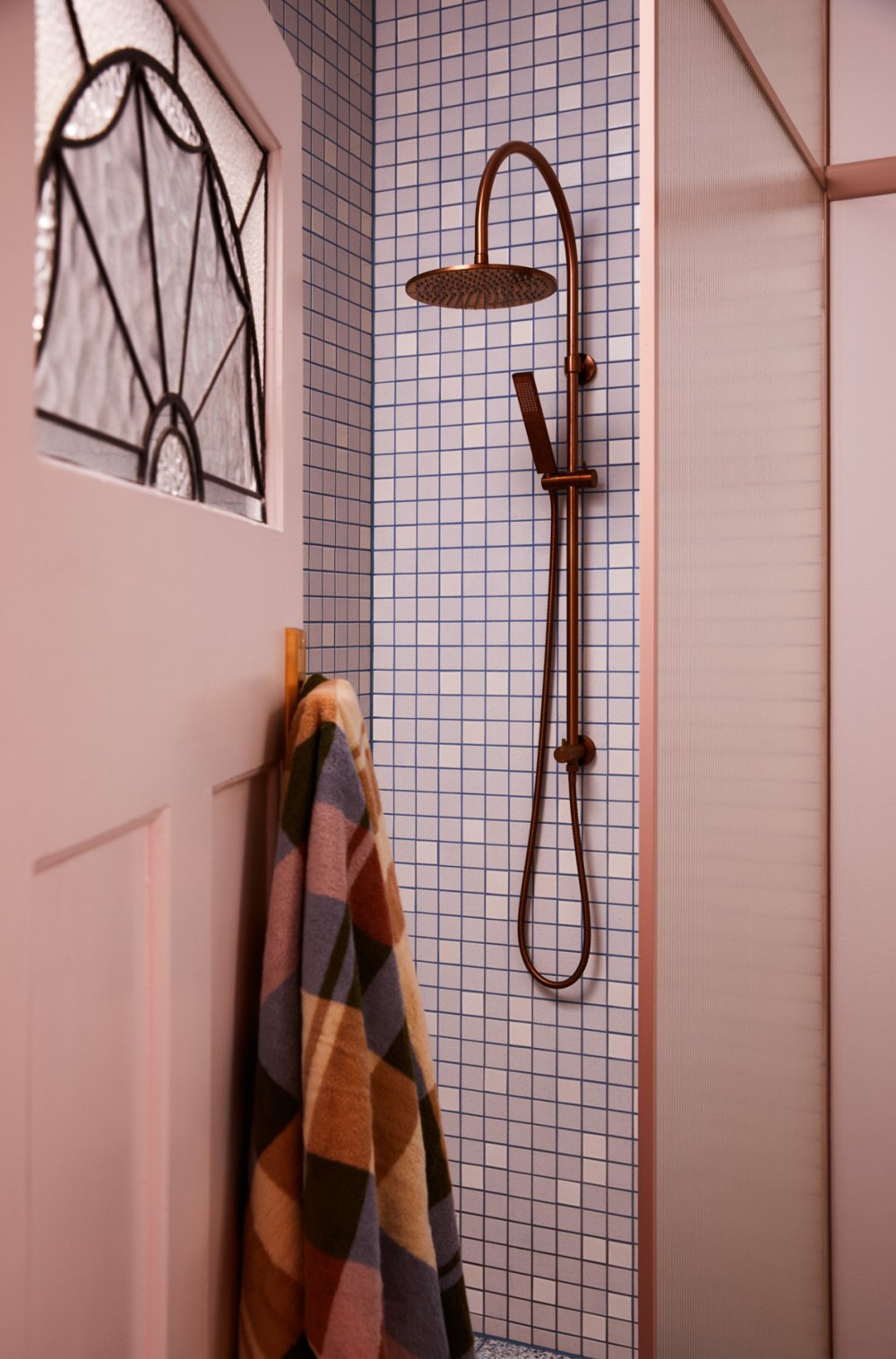
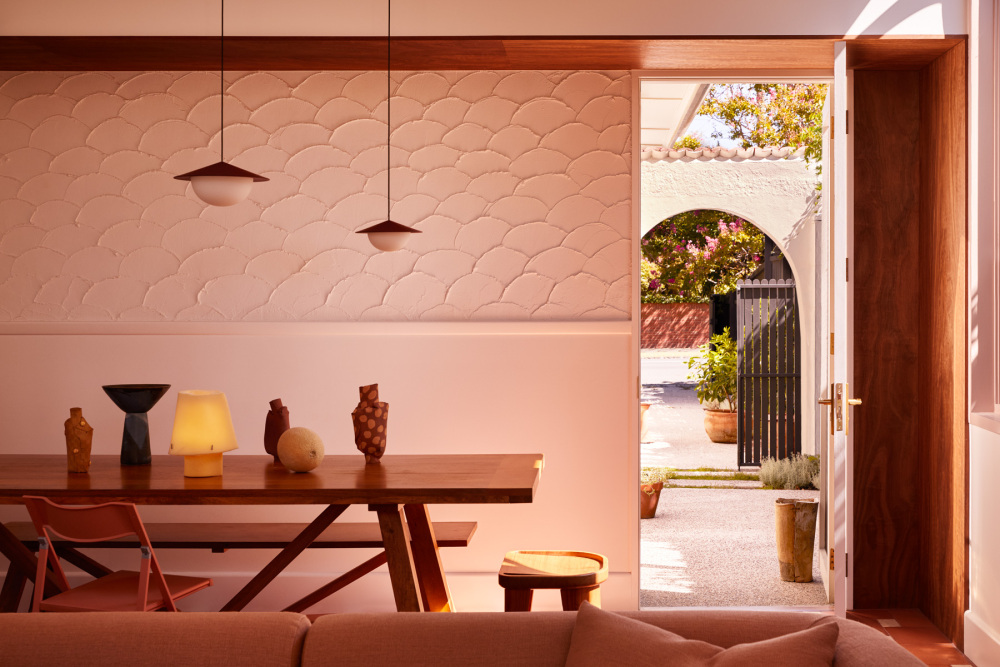
Inside, warmth radiates from a series of details that help to create an air of nostalgia and facilitate an undercurrent of storytelling. A rendered wall is sculpted to show uneven scallops, referencing the curve of a terracotta roof tile – an homage to traditional tiles once shaped by hand upon the maker’s thigh. “It’s a human gesture, a reminder that homes are made by hands,” explains Woodward. “The render in the dining room isn’t just aesthetic – it invites you to touch, to feel its imperfection. It’s a celebration of what happens when we get our hands dirty.”Throughout the home, tactility is a form of communication. Walnut timber detailing, used generously, offers a counterpoint to the otherwise creamy palette. It appears across cabinetry, windows and joinery, sometimes carefully cut on angles to form unexpected love hearts – one of Woodward’s favourite details. “They’re in the fridge joinery, in the bathrooms. It’s subtle but speaks to the house being a loving place. That sort of whimsical gesture is exactly the kind of joy architecture should offer.”
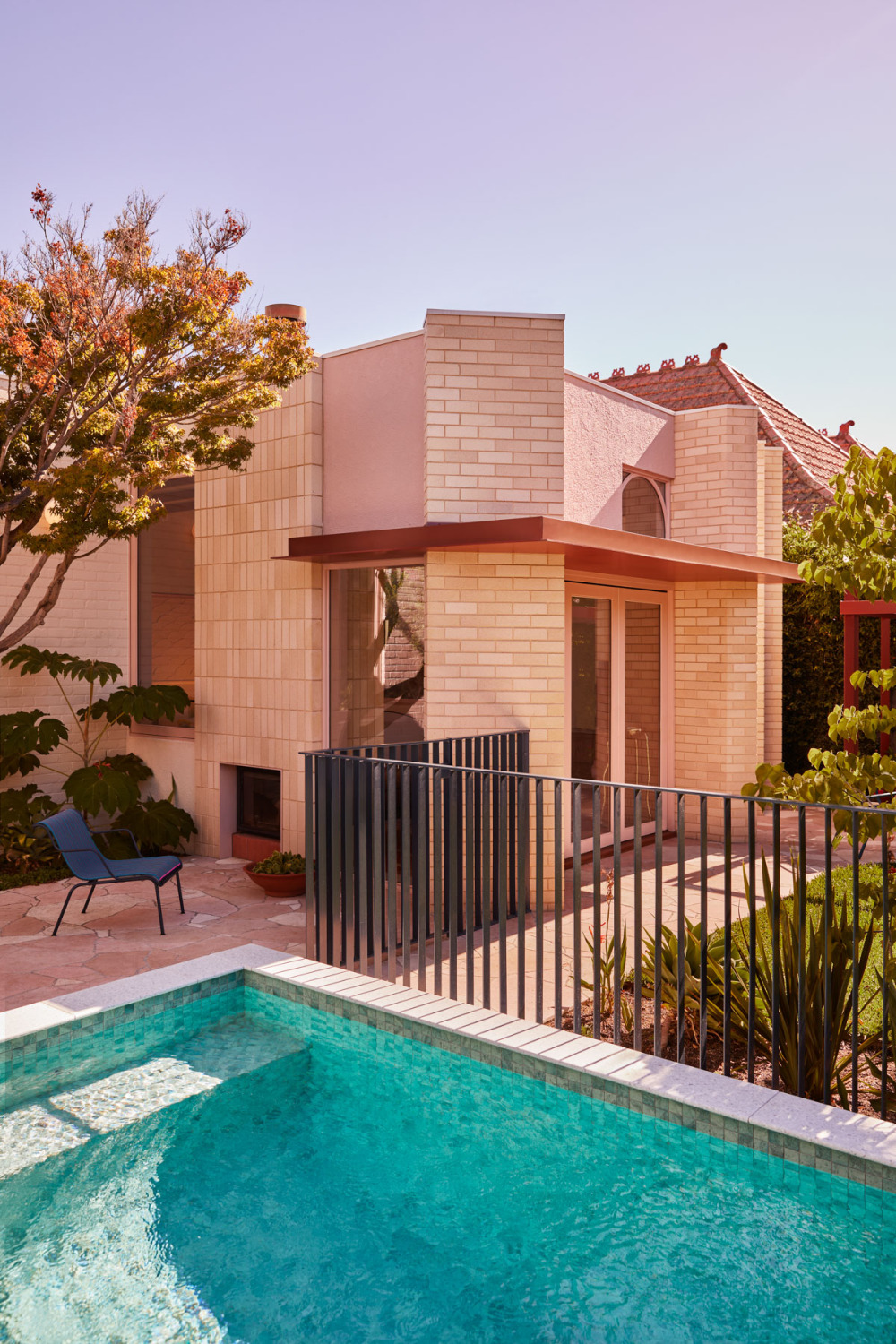
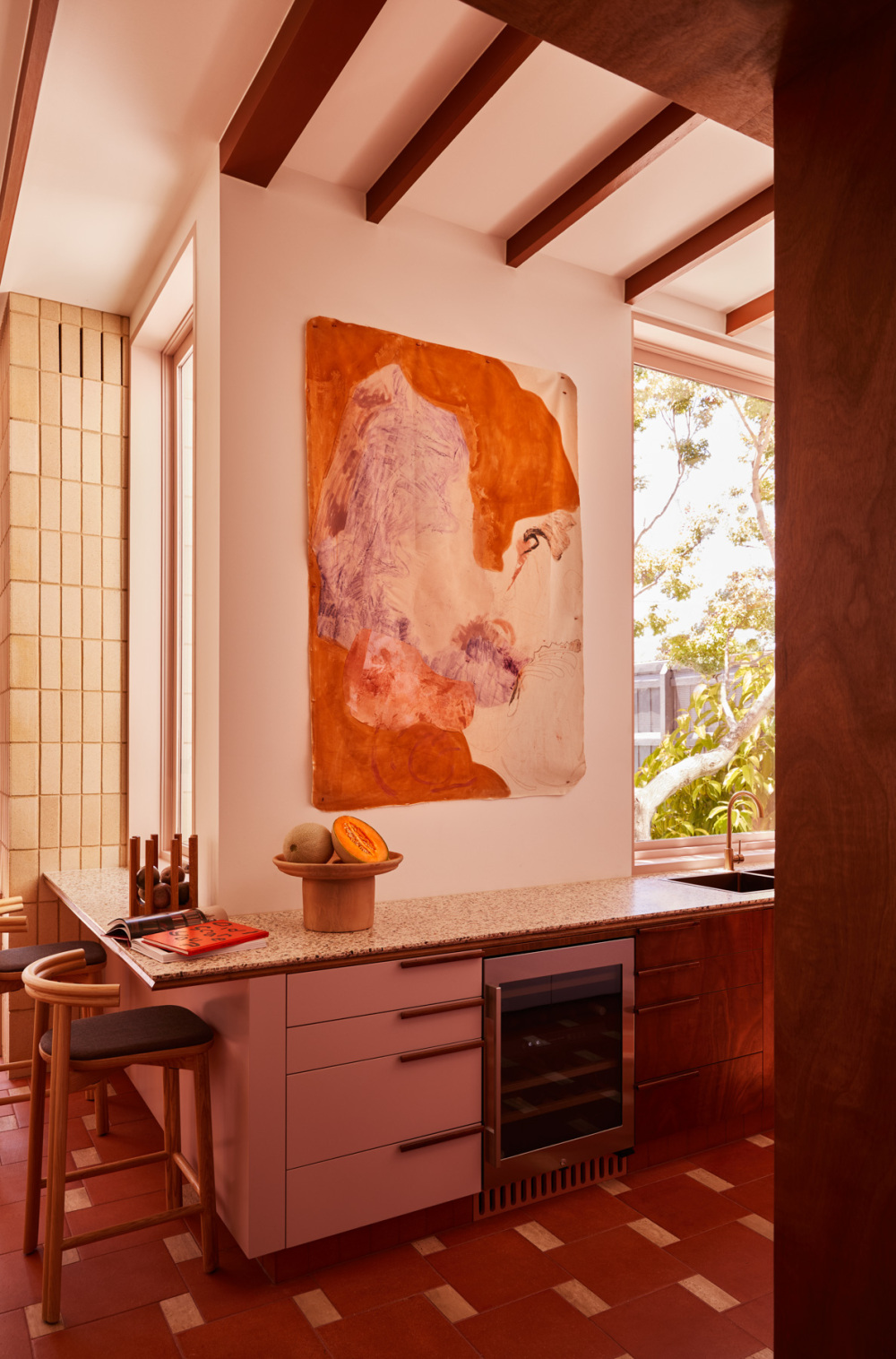
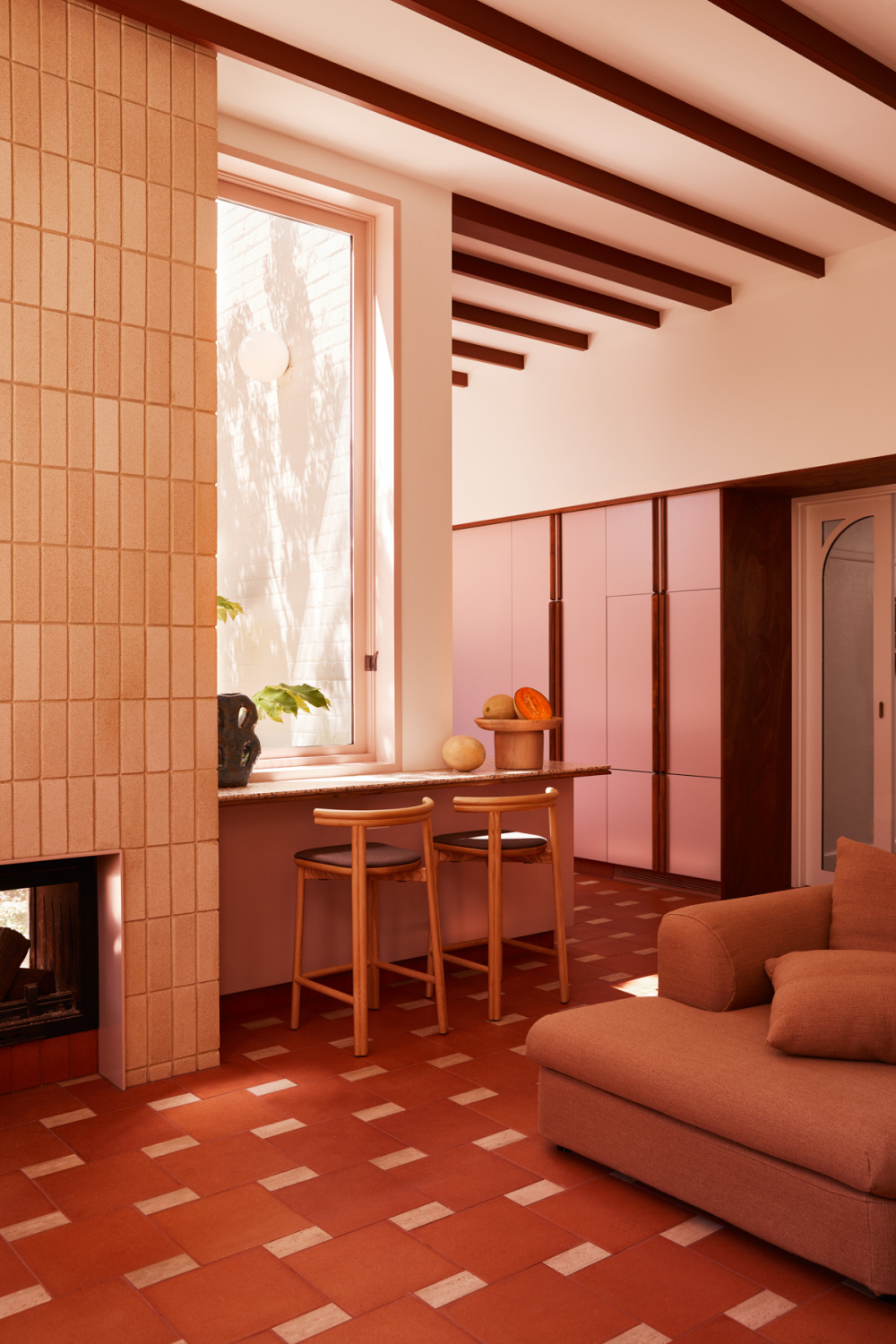
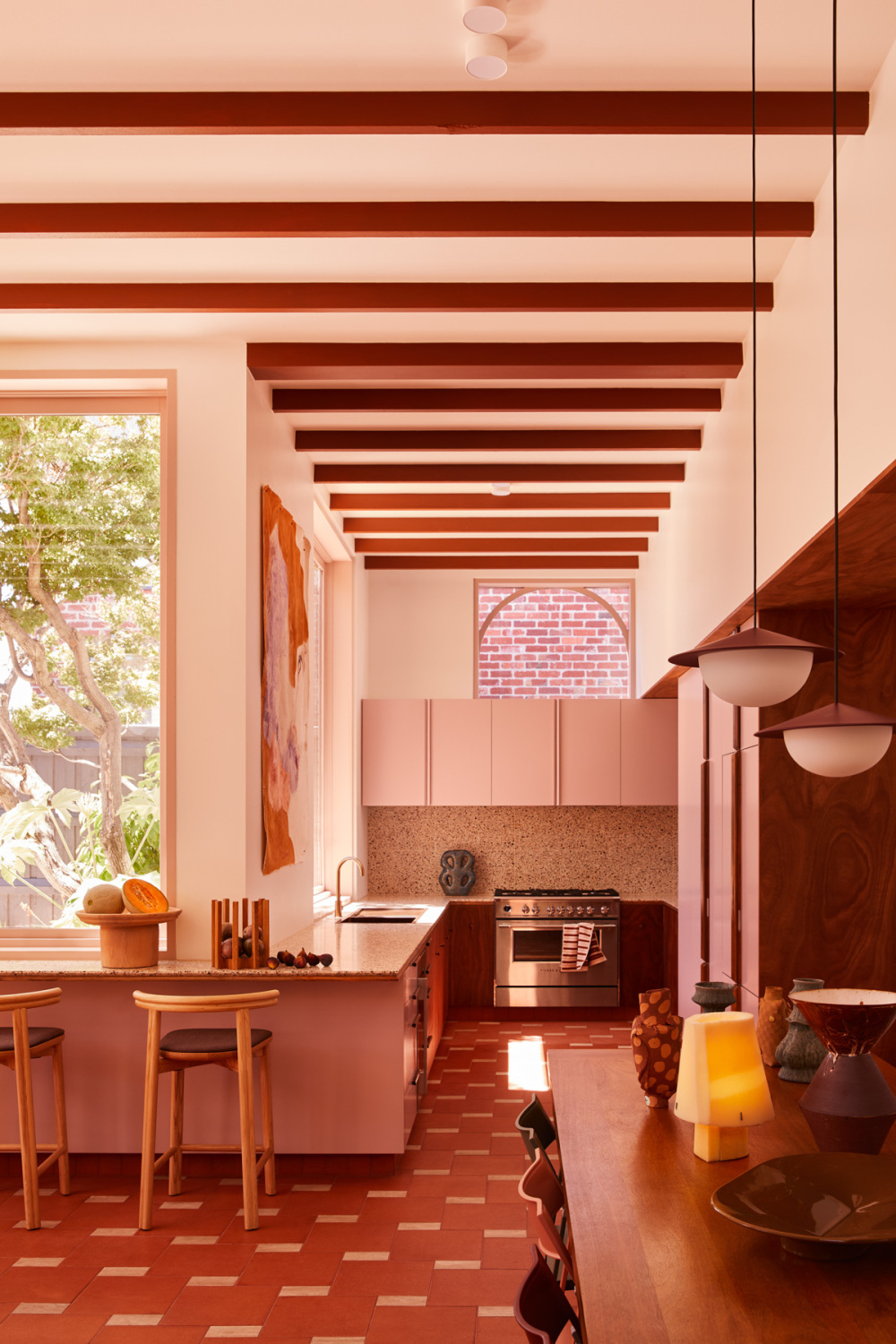
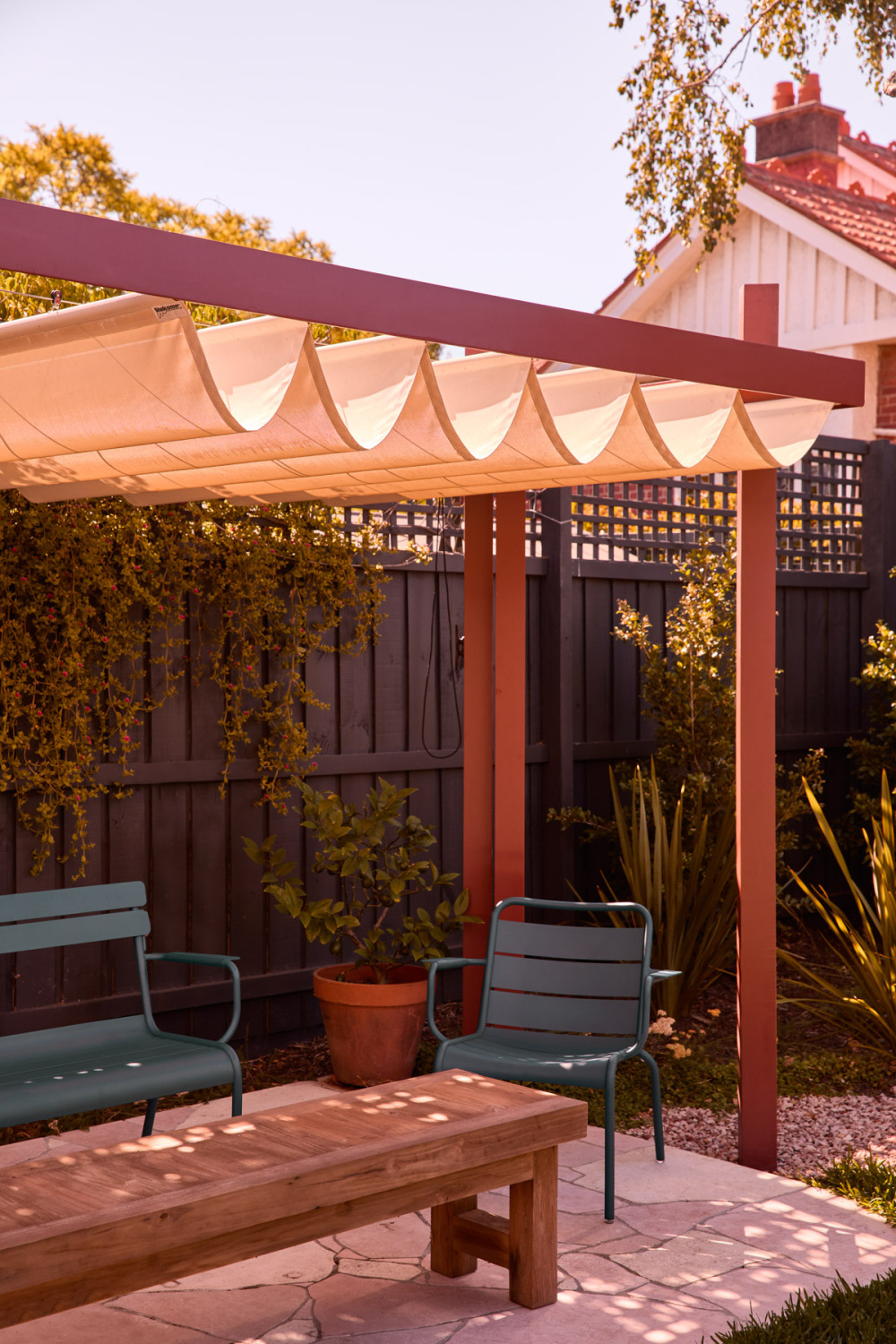
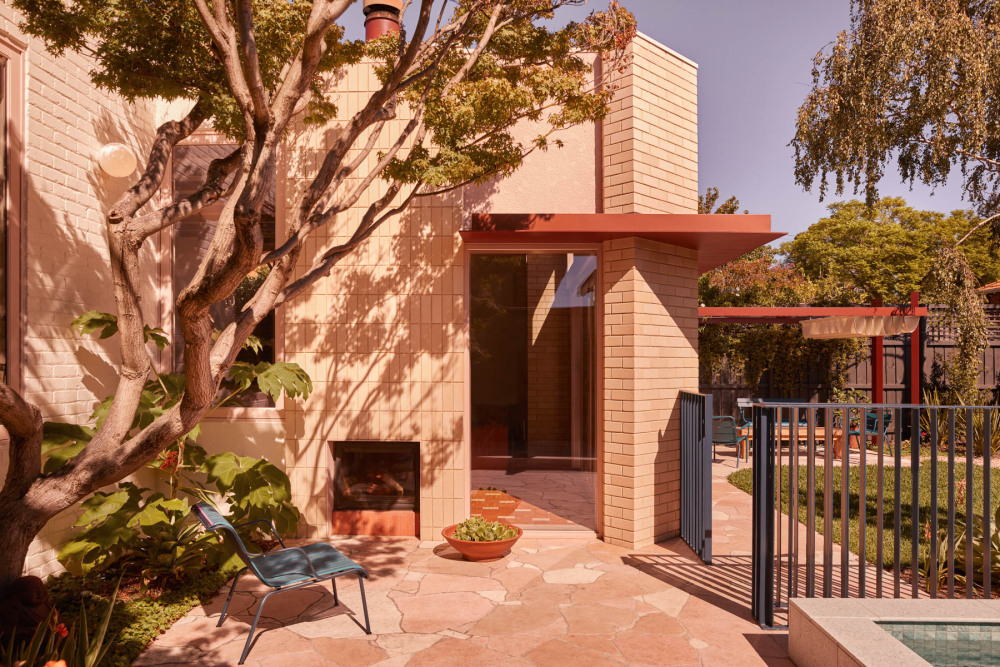
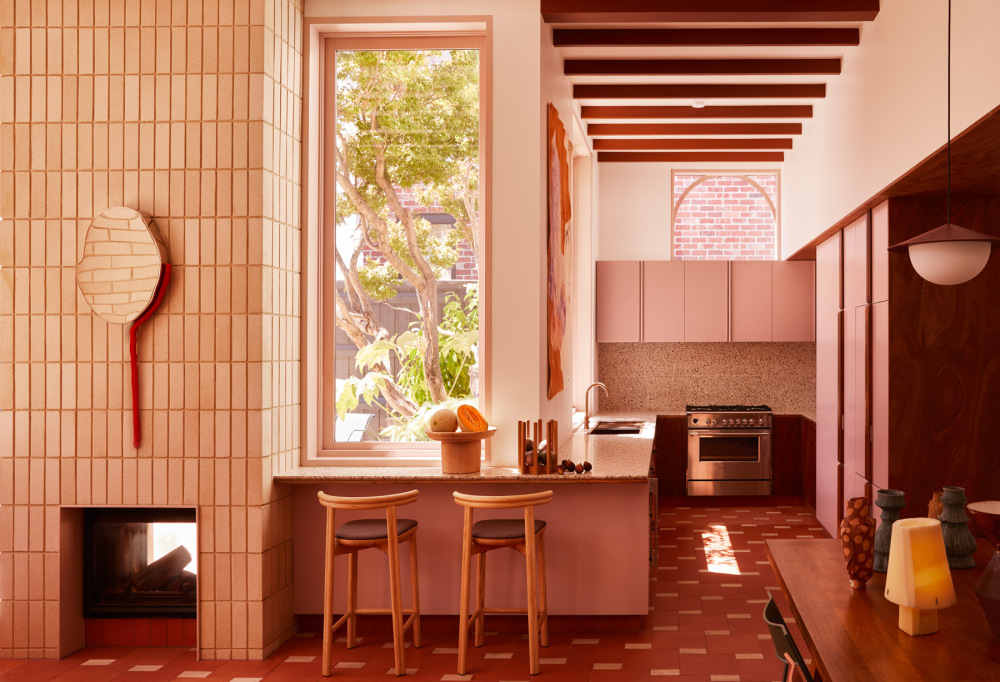
In contrast, there is order beneath the whimsy. The home’s organisation is tight, its programming efficient. Given the compact site, every corner of Claremont is purposeful and every gesture is intentional, such as the courtyard built around a tree that most would have removed. “We chose to keep the tree, and I’m so glad we did. It informed the galley-style kitchen and was partly the basis of the outdoor area next to the pool and the two-way fireplace.”This thoughtful responsiveness extends into the interior planning. Vaulted ceilings amplify a sense of scale, a signature of the practice. “It feels an incredible size on the inside.” The site is dwarfed by double-storey neighbours, but by bringing in light and enhancing the perceived volume by dragging the eye upwards, the home has been made to feel generous without expanding outwards. “A classic WOWOWA trick is to make the ceilings really tall.”
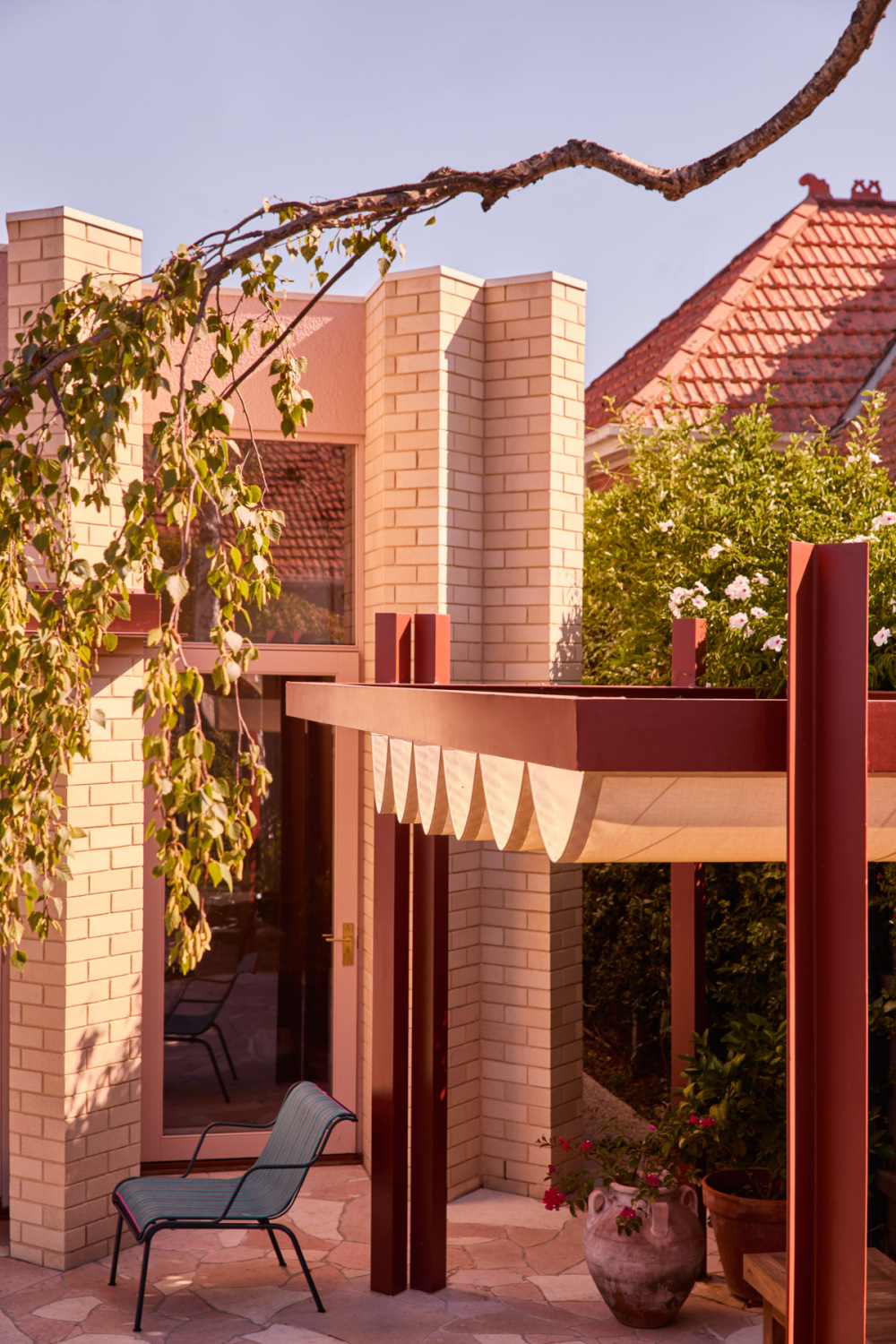
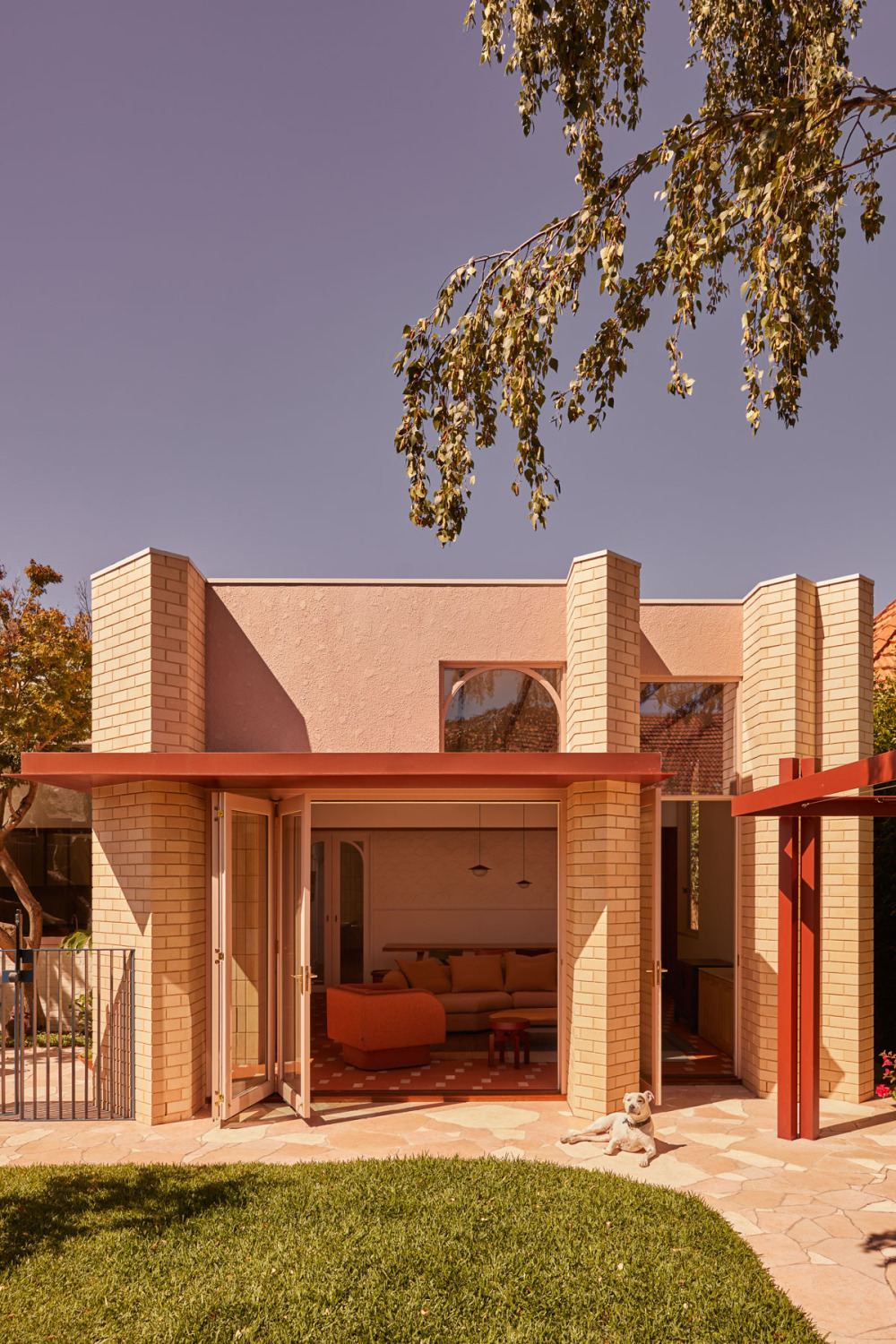
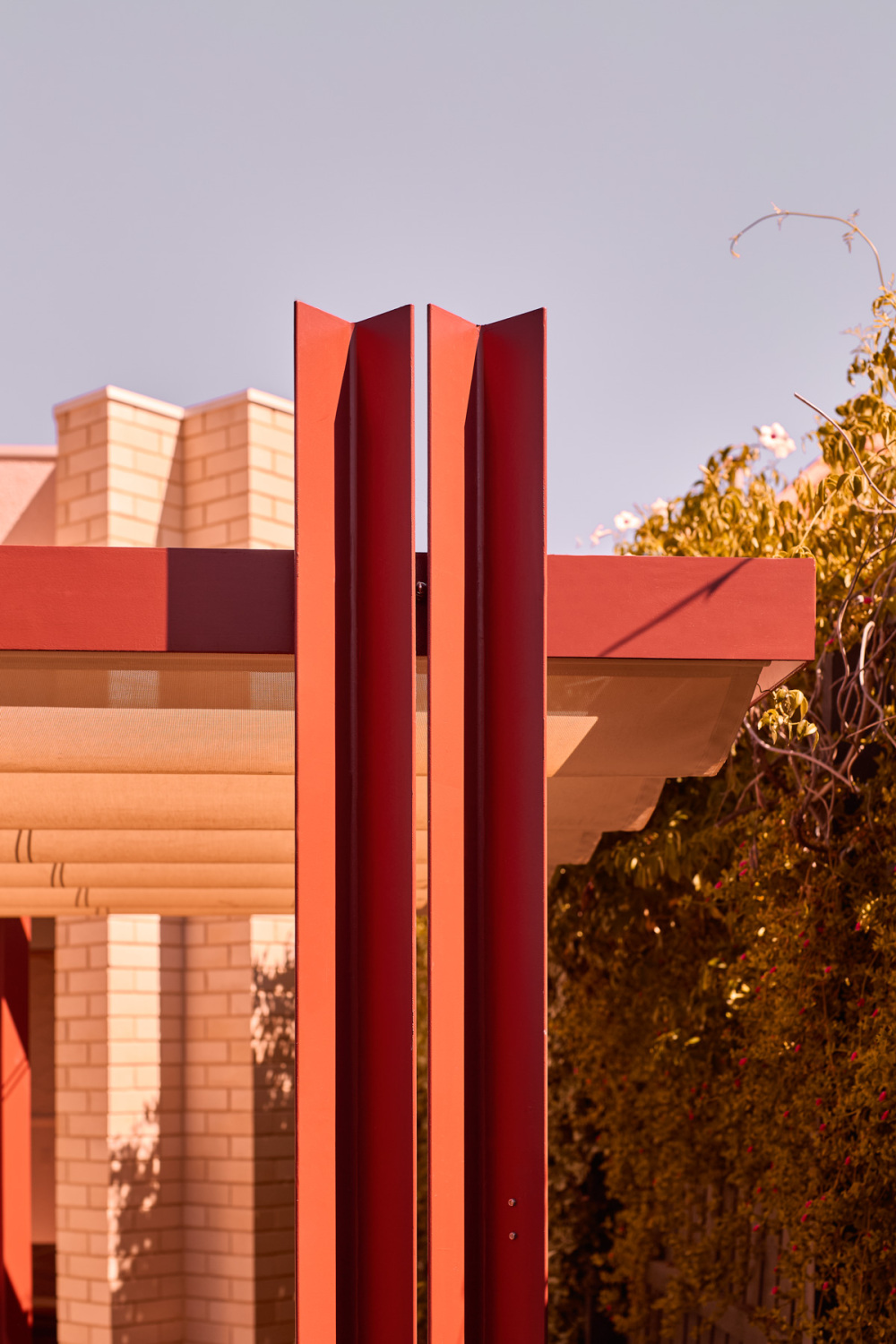
True to the firm’s ethos, Claremont is also a collaborative result. “We don’t want our homes to look like us – they should look like our clients,” says Woodward. “We ask them to show us who they are, and this family wanted soft blues and mauves, terracotta and travertine … We always say that if we were just designing for ourselves, the result would look the same, when, actually, the magic comes from it being a true collaboration.”There is a rich harmony in Claremont, where textures speak louder than patterns and materials flow effortlessly between the interior and exterior. The use of scalloped brickwork – which appears in homes that the studio affectionately refers to as its ‘Borromini series’ – continues a design tradition seen in earlier projects such as Tiger Prawn and The Ponds. “We like to use squints and off-the-shelf bricks that do something unusual. It’s ornamentation in the horizontal, reflecting and reinterpreting the vertical arches of the original front.”
Despite its layered richness, Claremont is not a statement of physical grandeur. It’s proof that a well-proportioned, joy-filled home can be achieved with conviction, not just capital. “Designing this home was an example of working with clients who believed in the architecture. They had an unwavering commitment to their own joy, and that’s always noble.” From afar, Claremont barely announces itself. “You can’t even see it from the street. It’s a little secret oasis … We want it to be a quirky contribution to the built environment, read in the same way that we read any product of the sociopolitical state of the world, and it will be studied as such one day by someone.”Perhaps that’s the spirit of Claremont: a romantic reimagining that never loses sight of where it came from. It’s not nostalgic in the derivative sense, but in the emotional one – it’s a home that looks forward just as fondly as it reflects back. As Woodward says, “We just try to engage with joy. Life is messy. Homes should be a haven. This one is a hug disguised as architecture.”
Architecture by WOWOWA. Build by Clearform Builders. Landscape design by Loam. Joinery by Colonial Cabinets. Artwork by Esther Stewart, Julia Trybala and Jan Vogelpoel.
- 项目文案:Chantelle Fausset
- 项目摄影:Martina Gemmola
- 摄影布景:Bea + Co
- 转载自:The Local Project
- 图片@The Local Project
- 语言:英语
- 编辑:序赞网
- 阅读原文
|
|