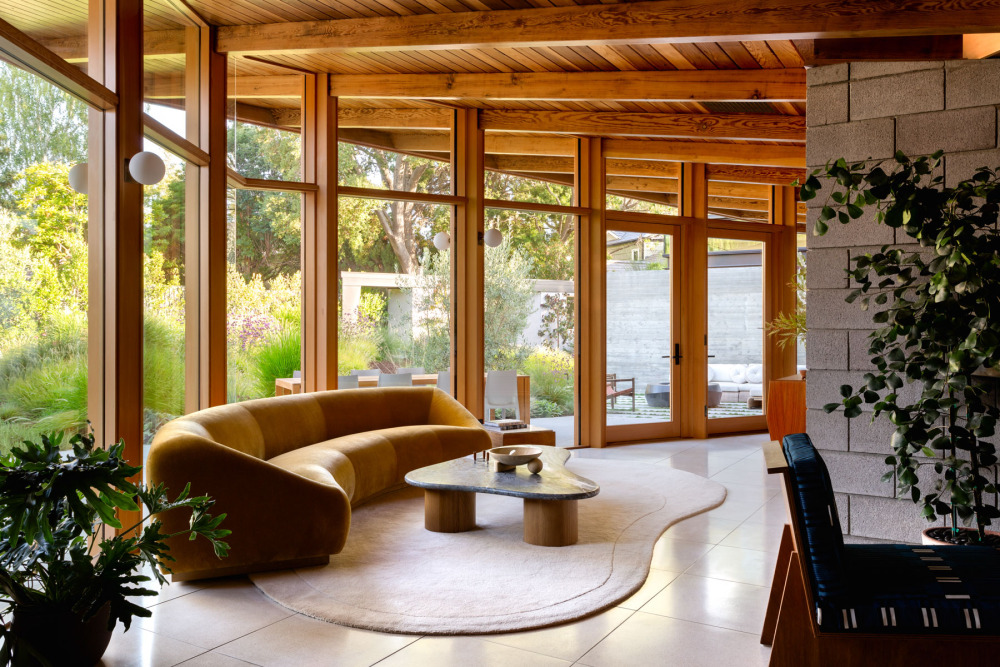
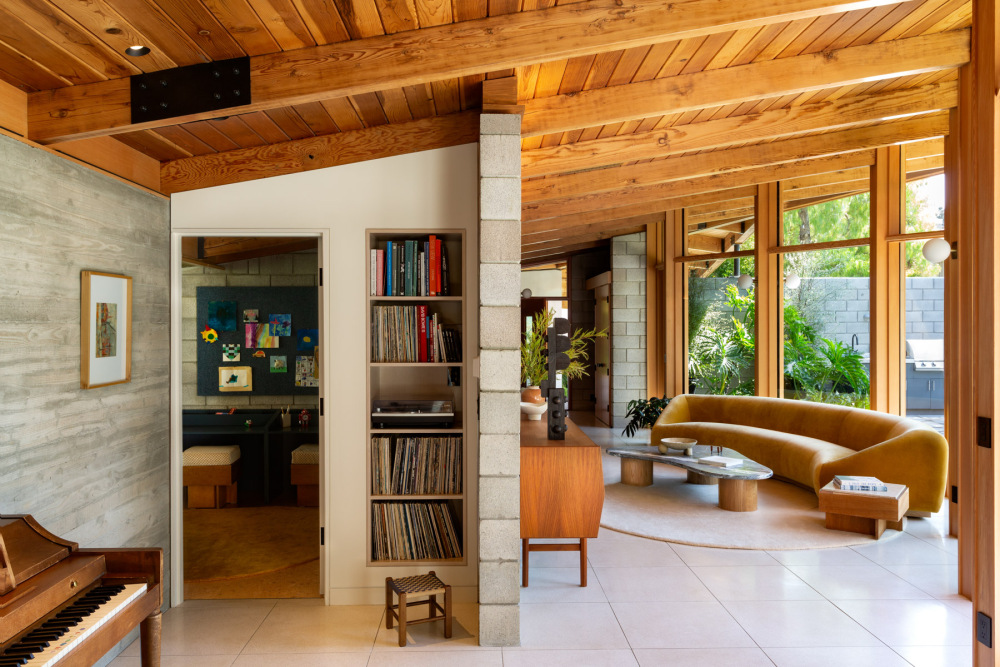
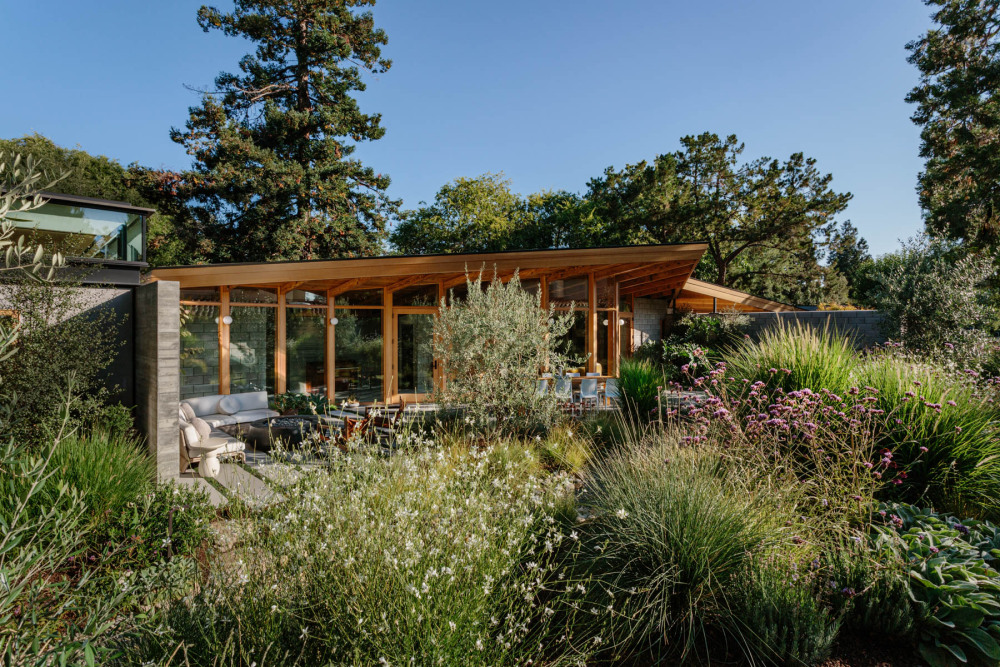
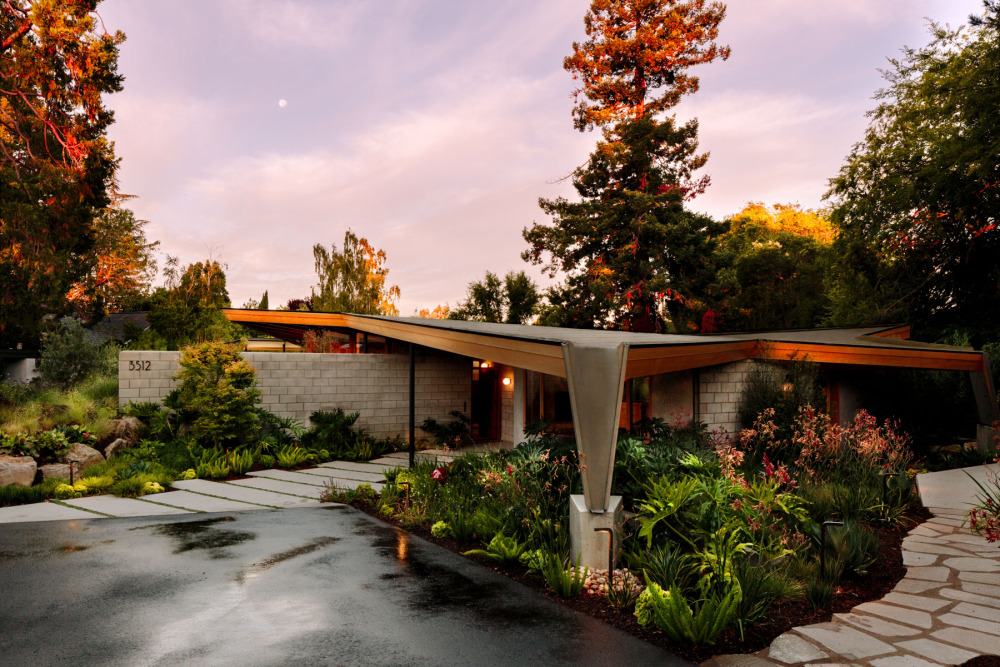
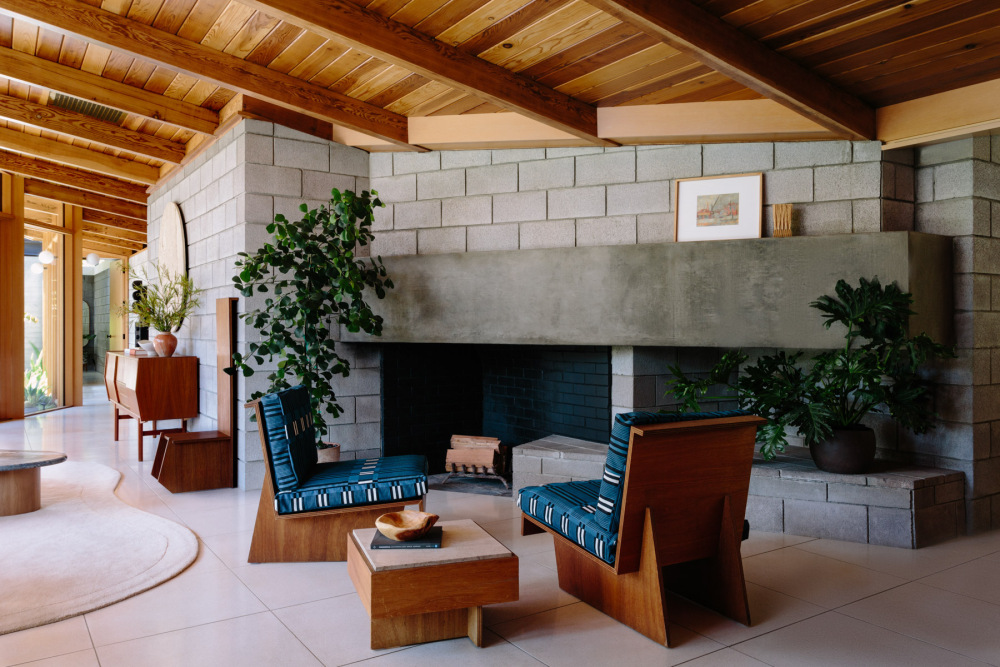
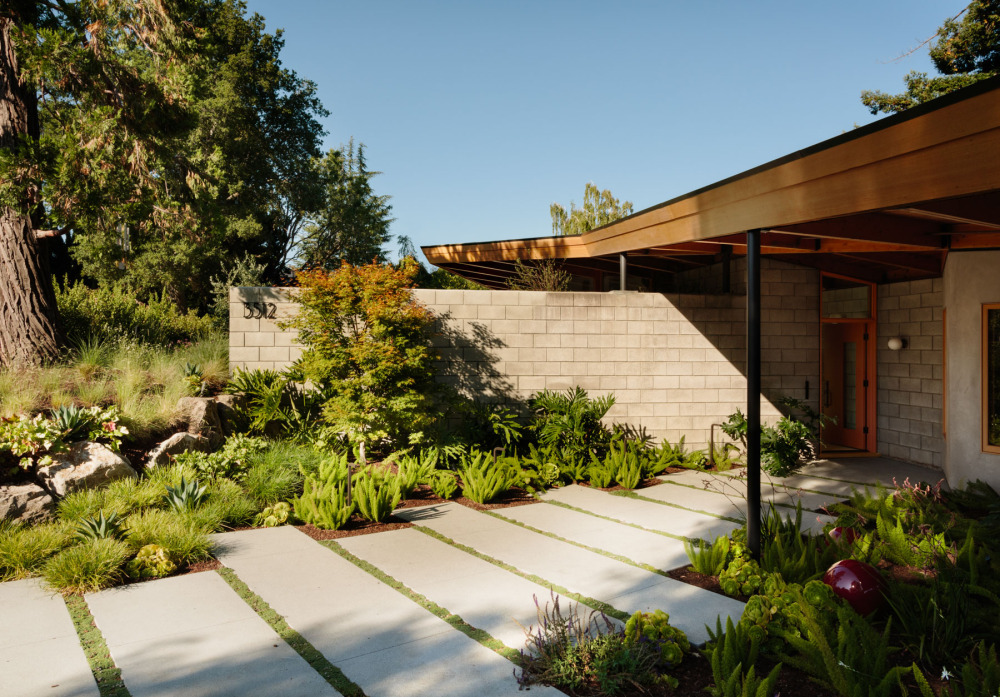
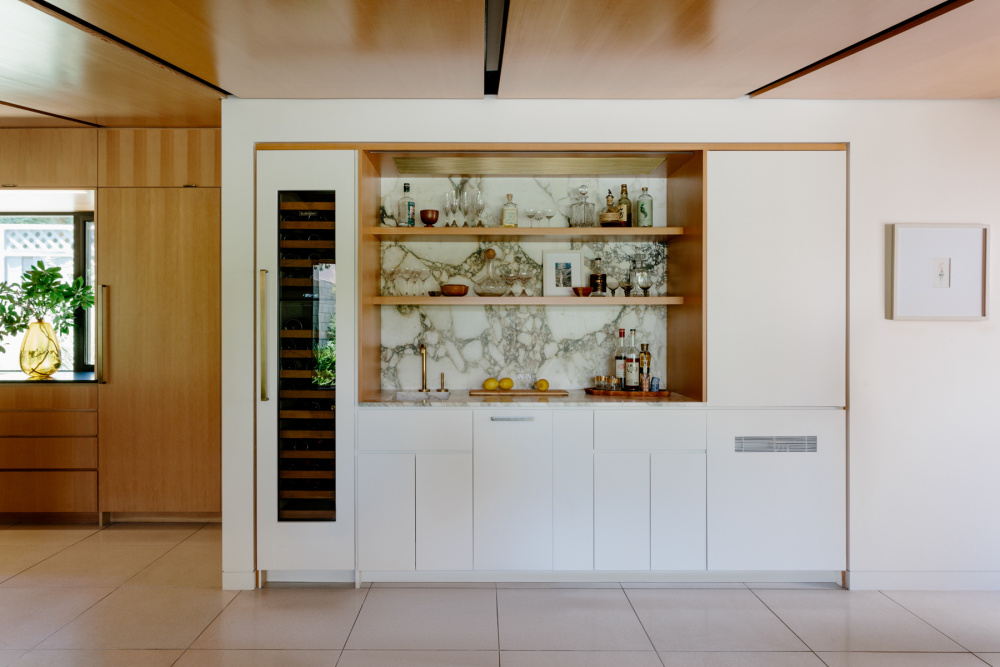
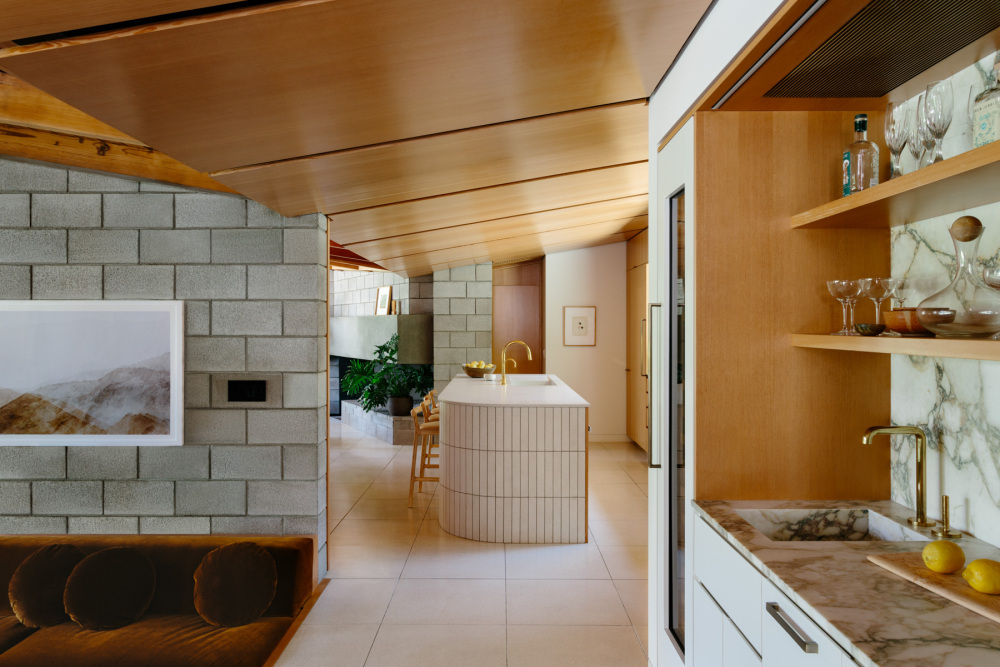
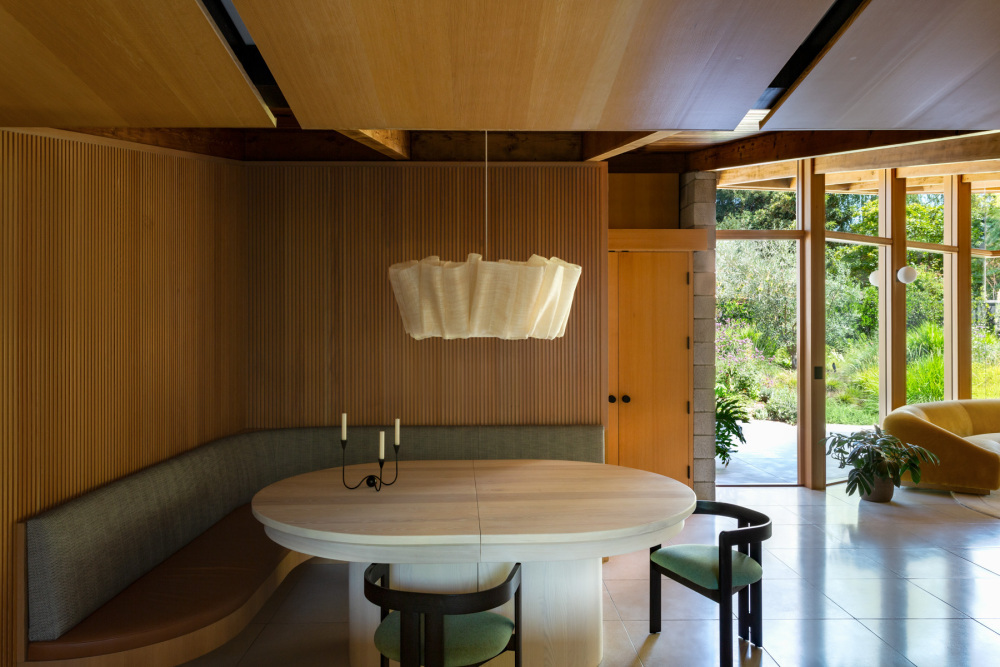
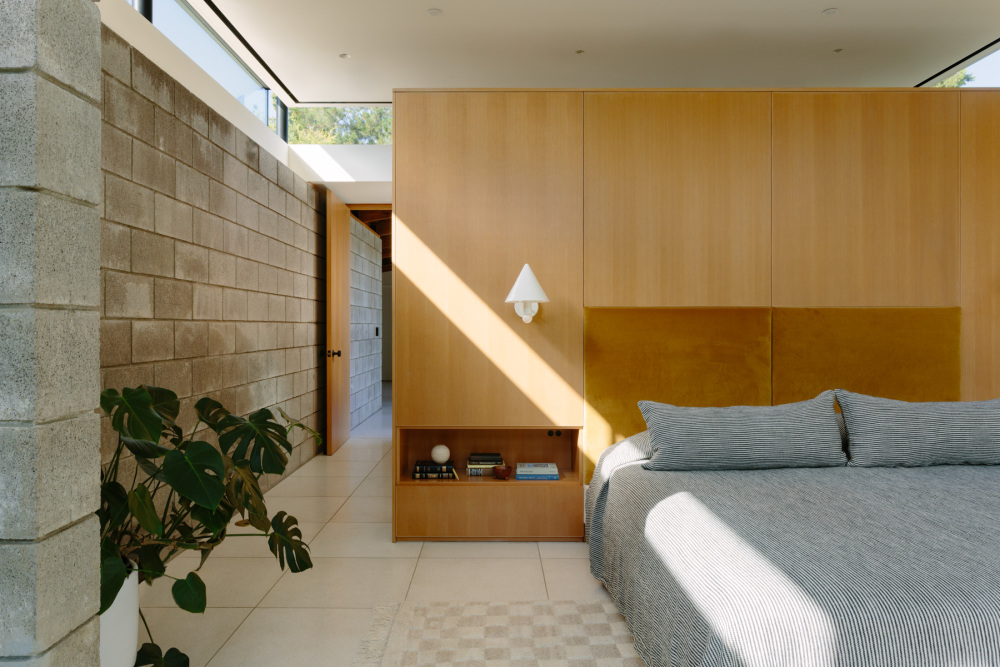
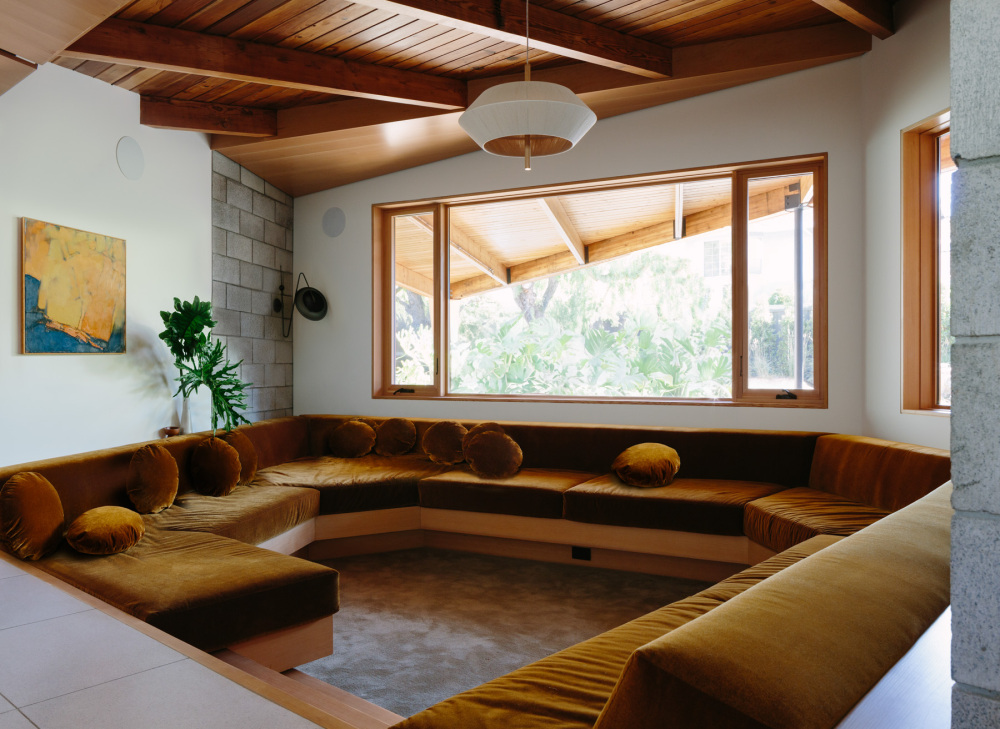
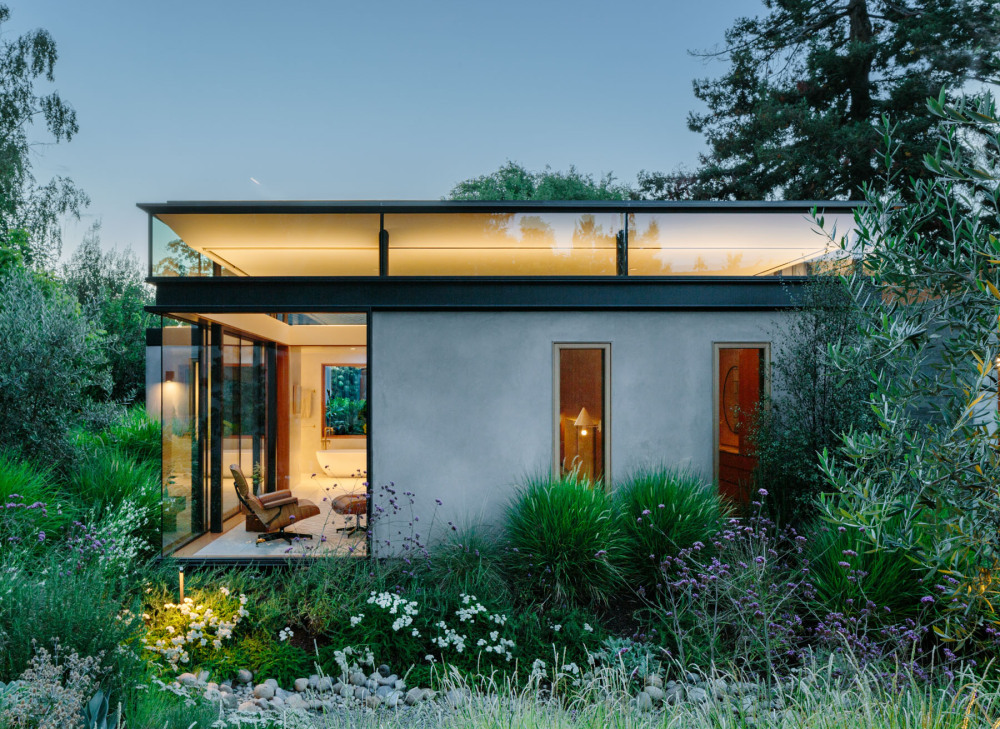
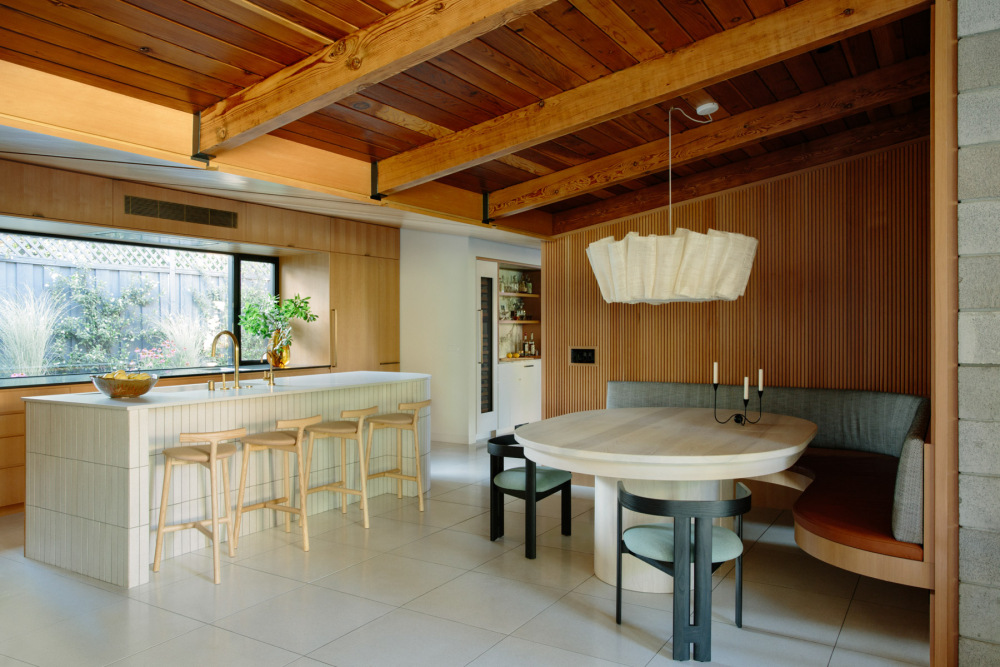
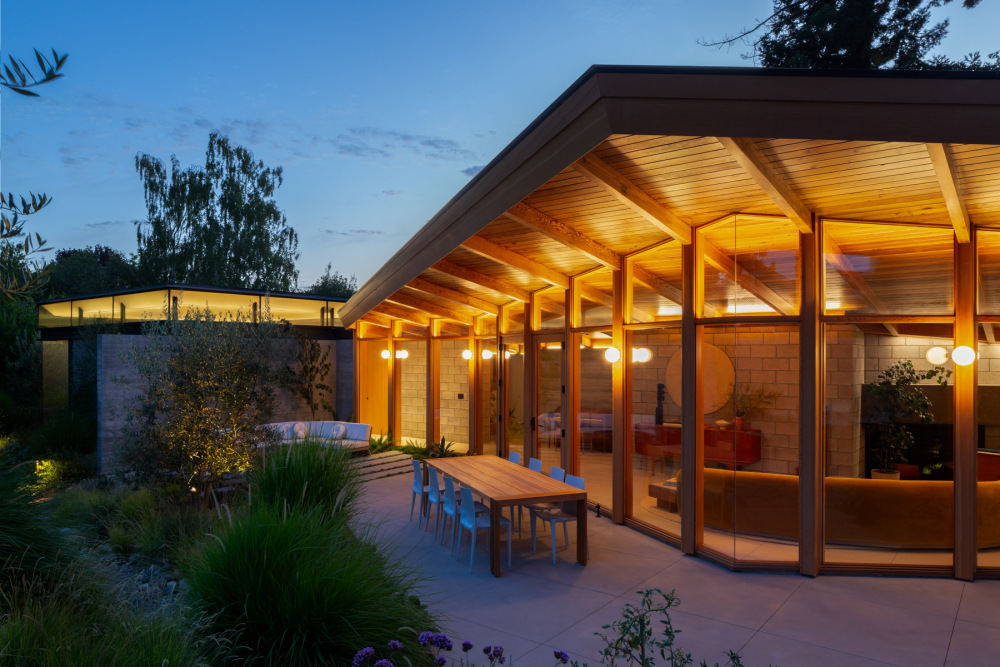
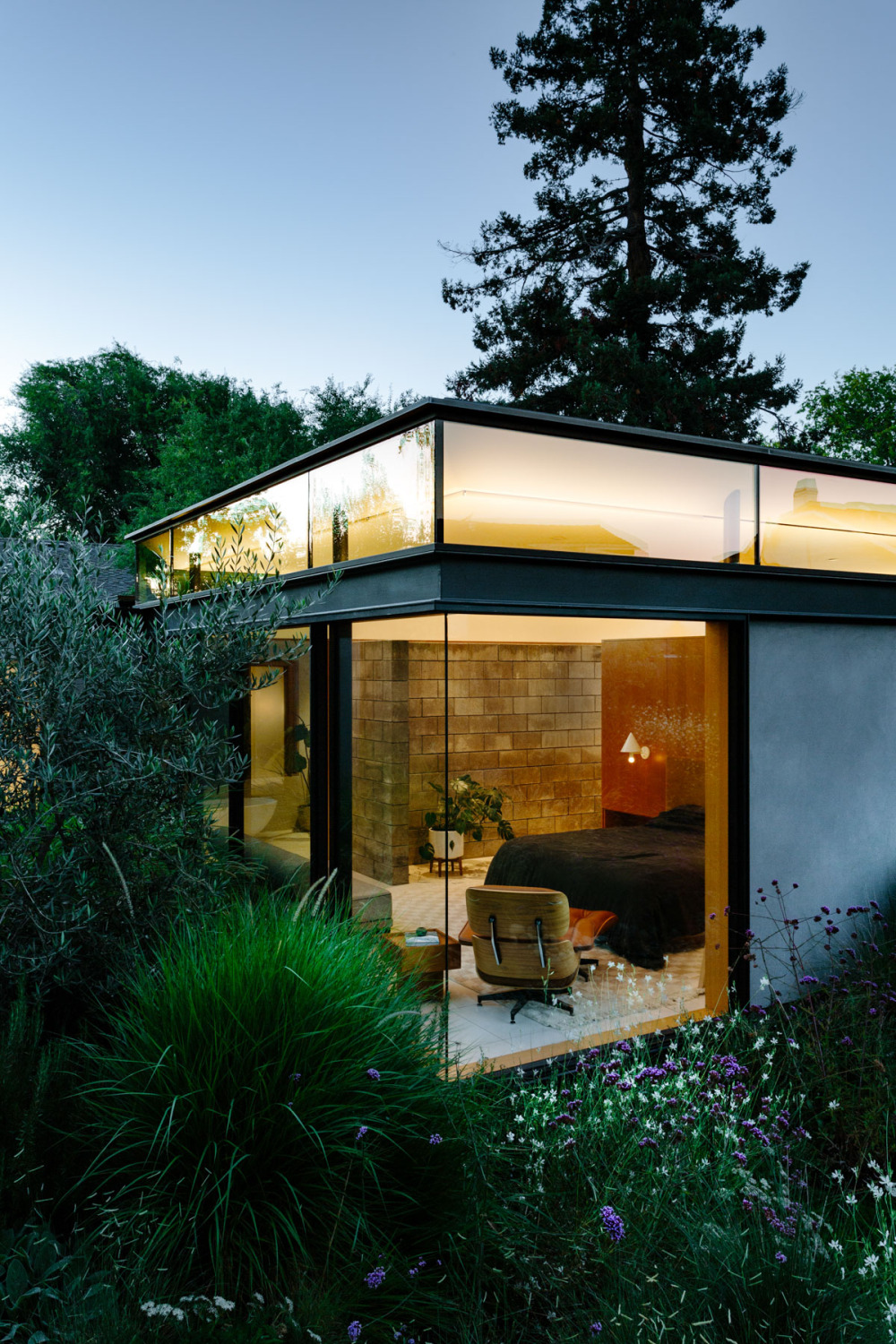
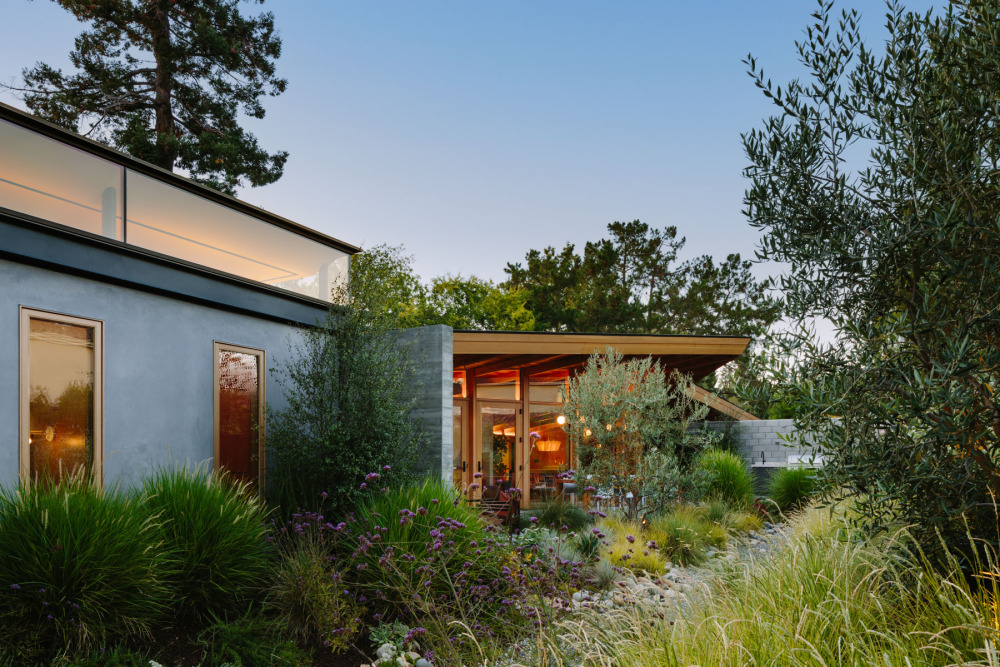
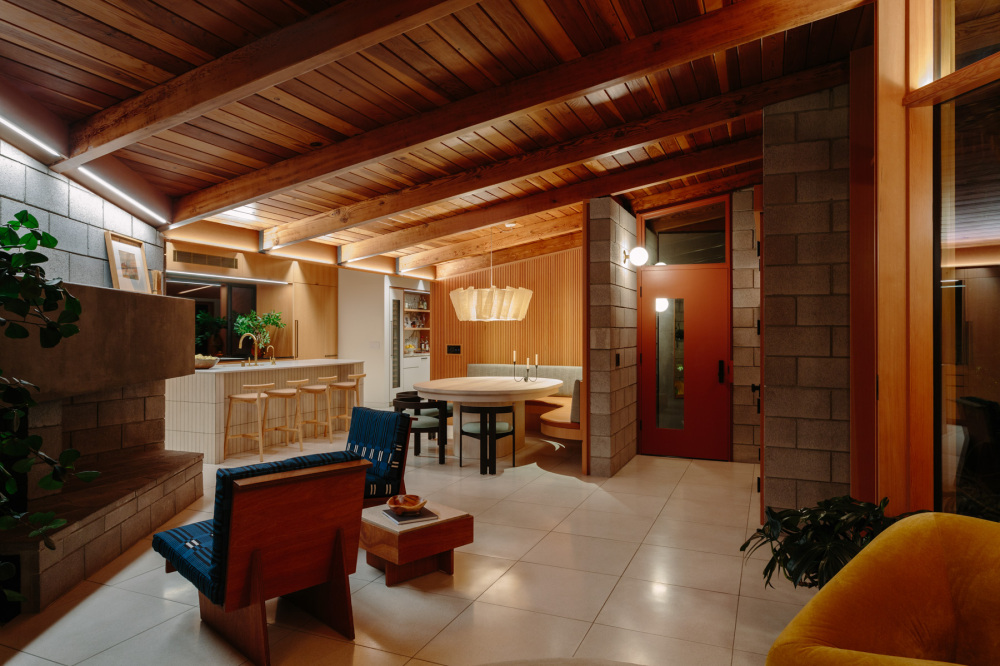
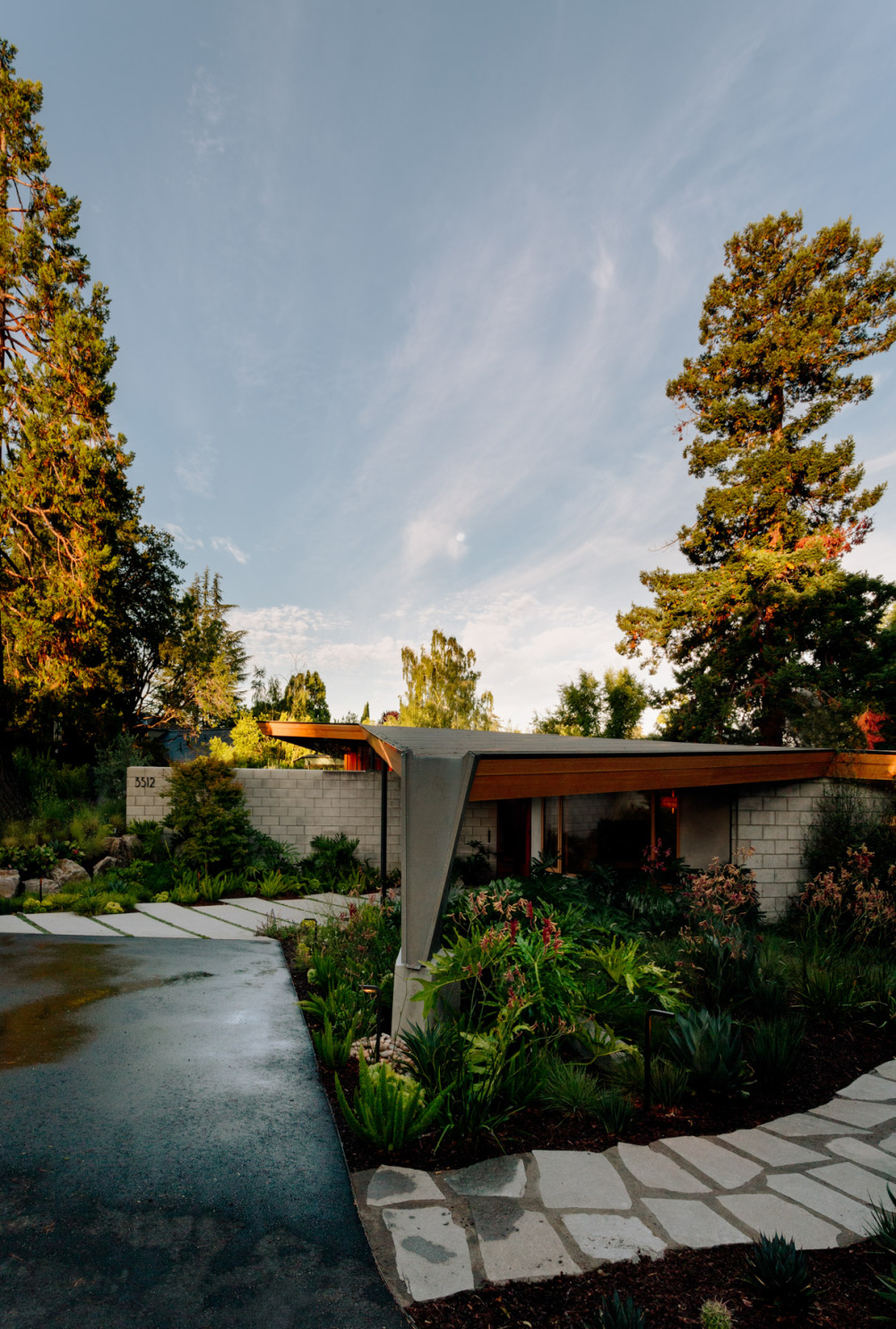
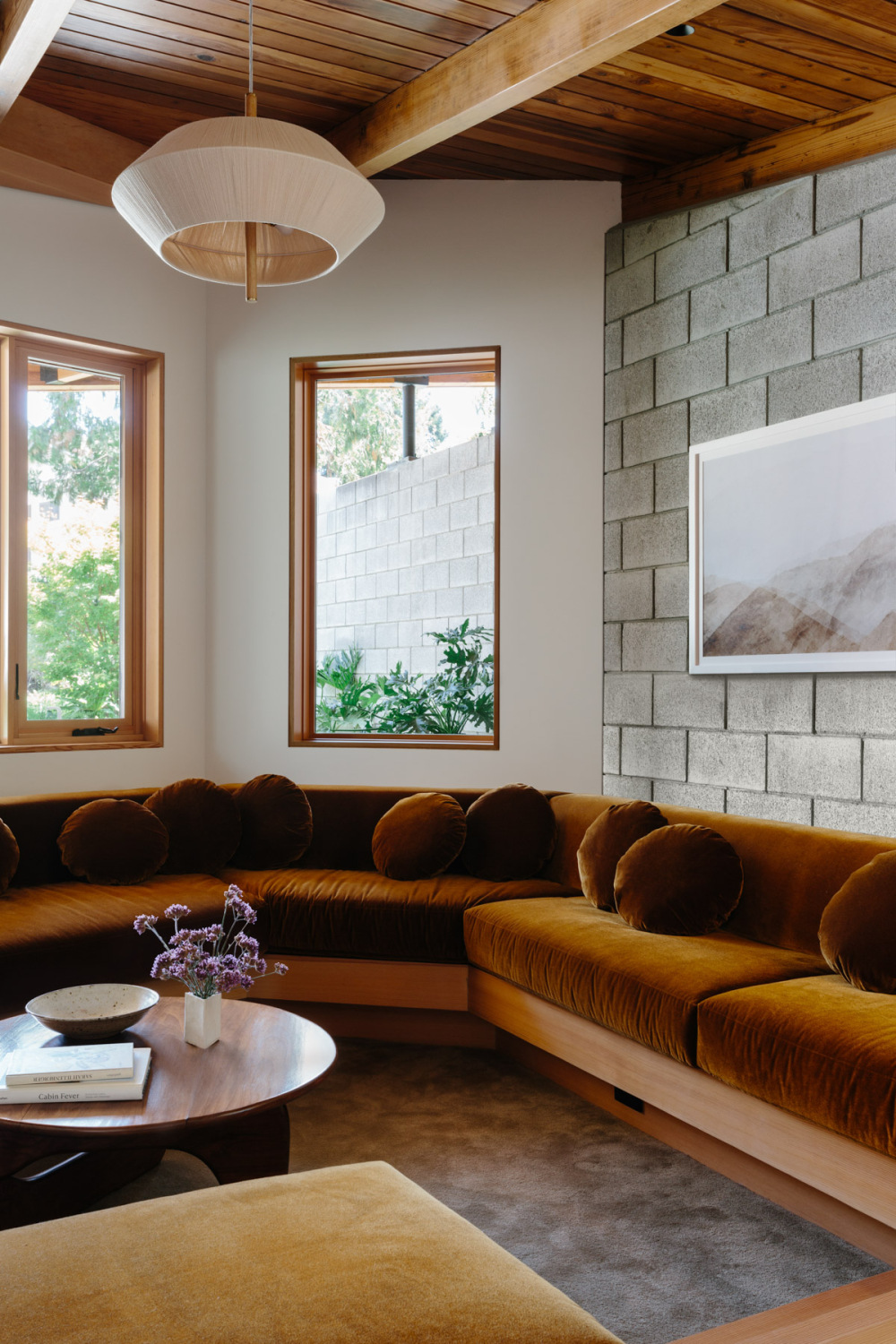
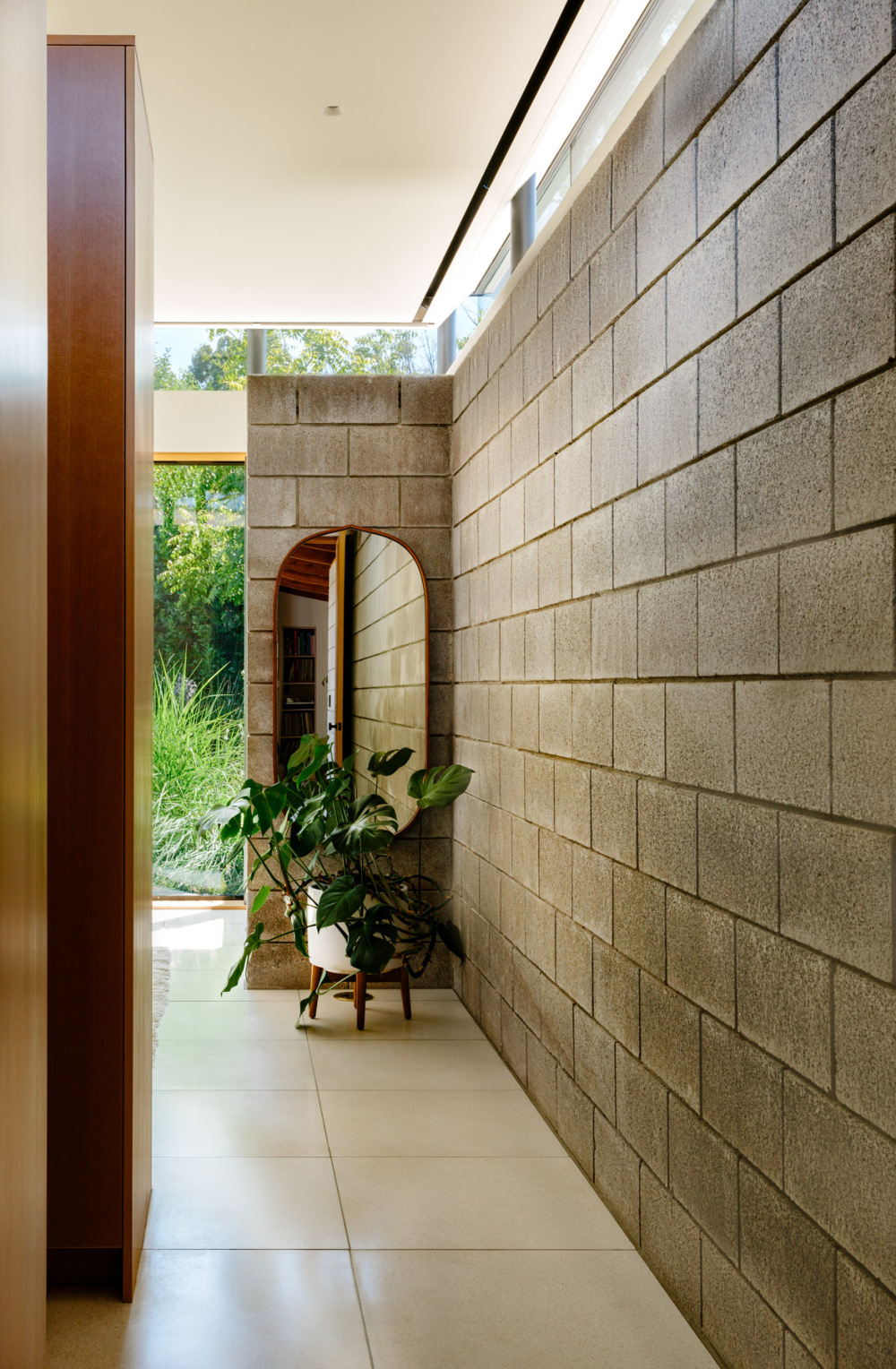
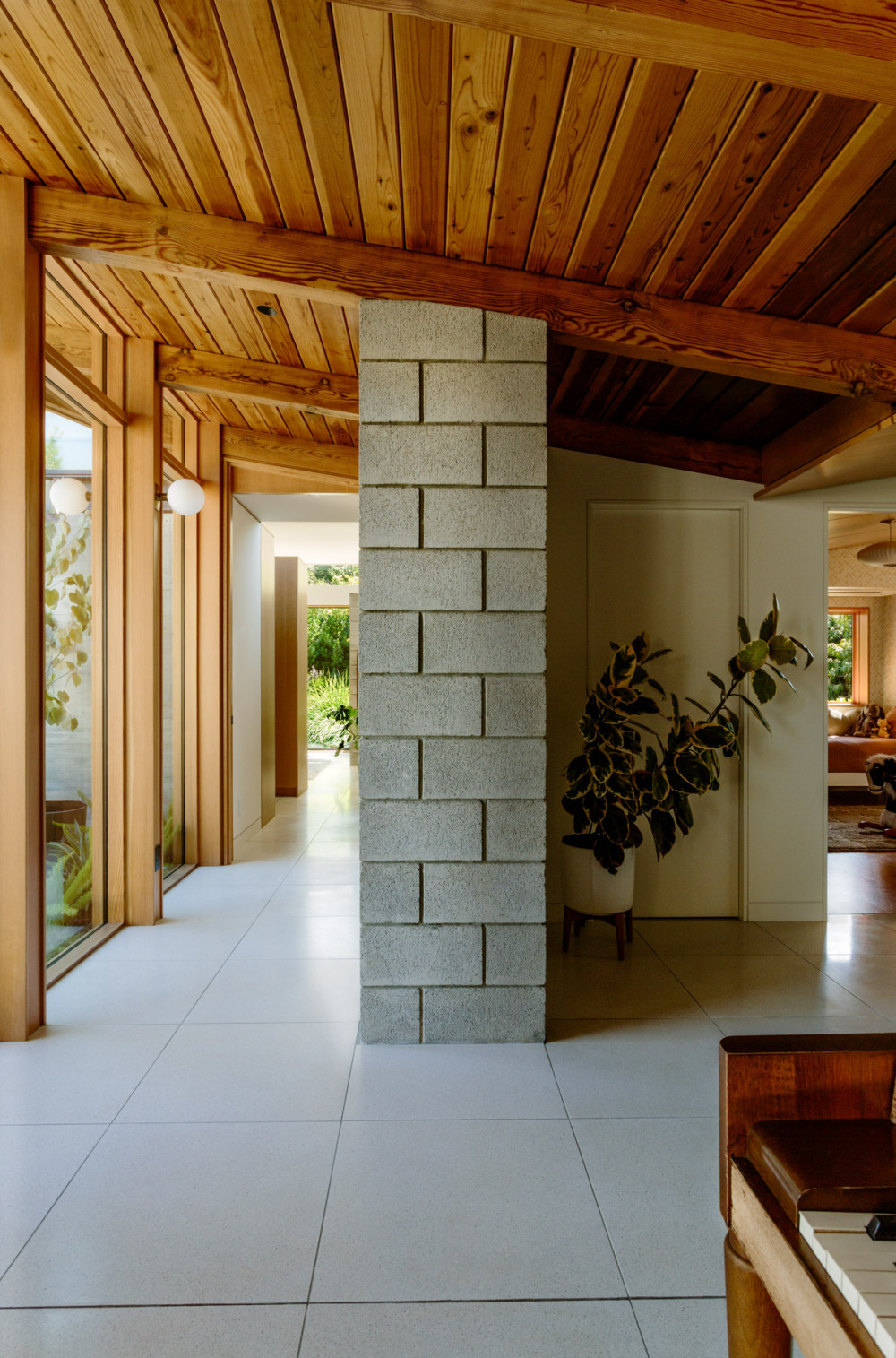
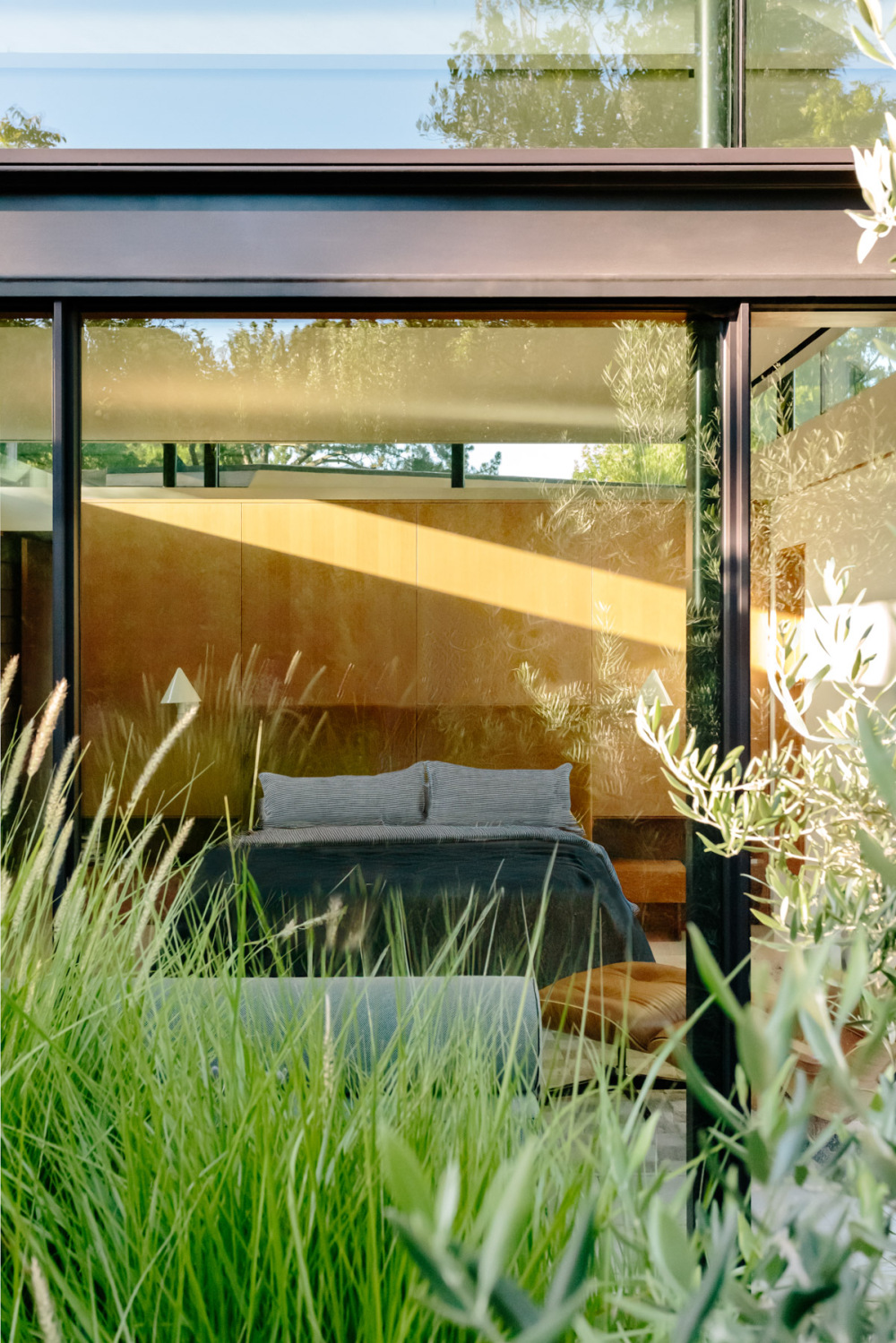
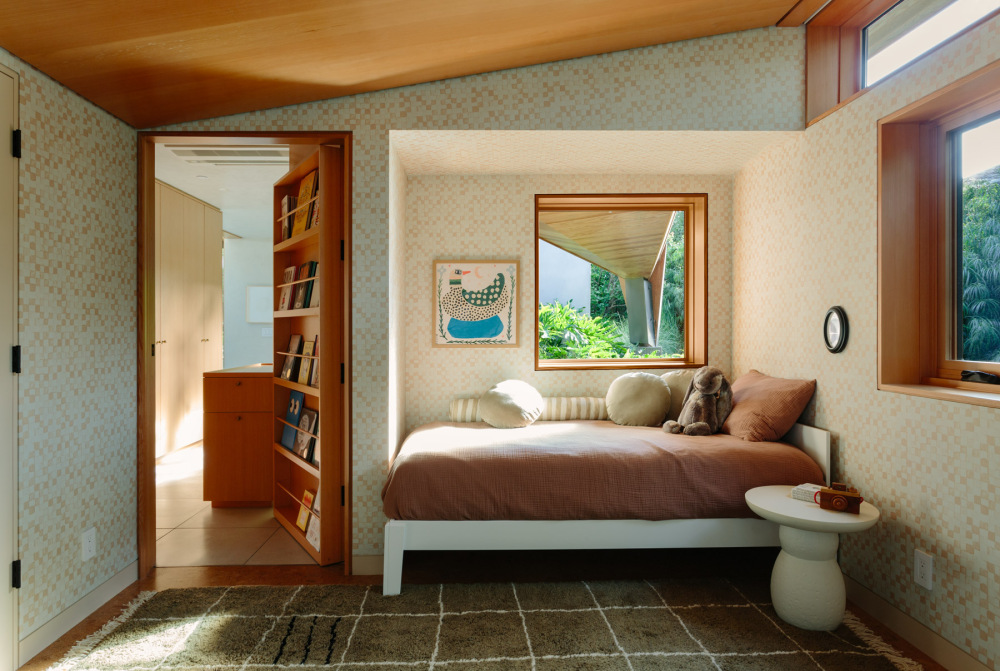
In this way, the layout of the house was updated carefully rather than completely overhauled. “There would be no way to do what we would call a ‘gut’ renovation… and maintain its character,” he notes. The garden side’s iconic glass wall was also considered “sacrosanct”. They kept the original spatial organisation, expanding the dated, dark and small kitchen and bedrooms along the spine, adding the primary suite at the end of the house and linking spaces with hidden connections such as the door between the dressing room and nursery.A stand-out feature is the sunken lounge, located in what used to be the carport, which was now out of compliance for height by modern standards. “Since it no longer could be used… we enclosed the space under the roof and kept the floor level at grade,” he explains. Instead of raising the ceiling, they embraced the sunken design to create an intimate family living space out of sight of the more formal areas.