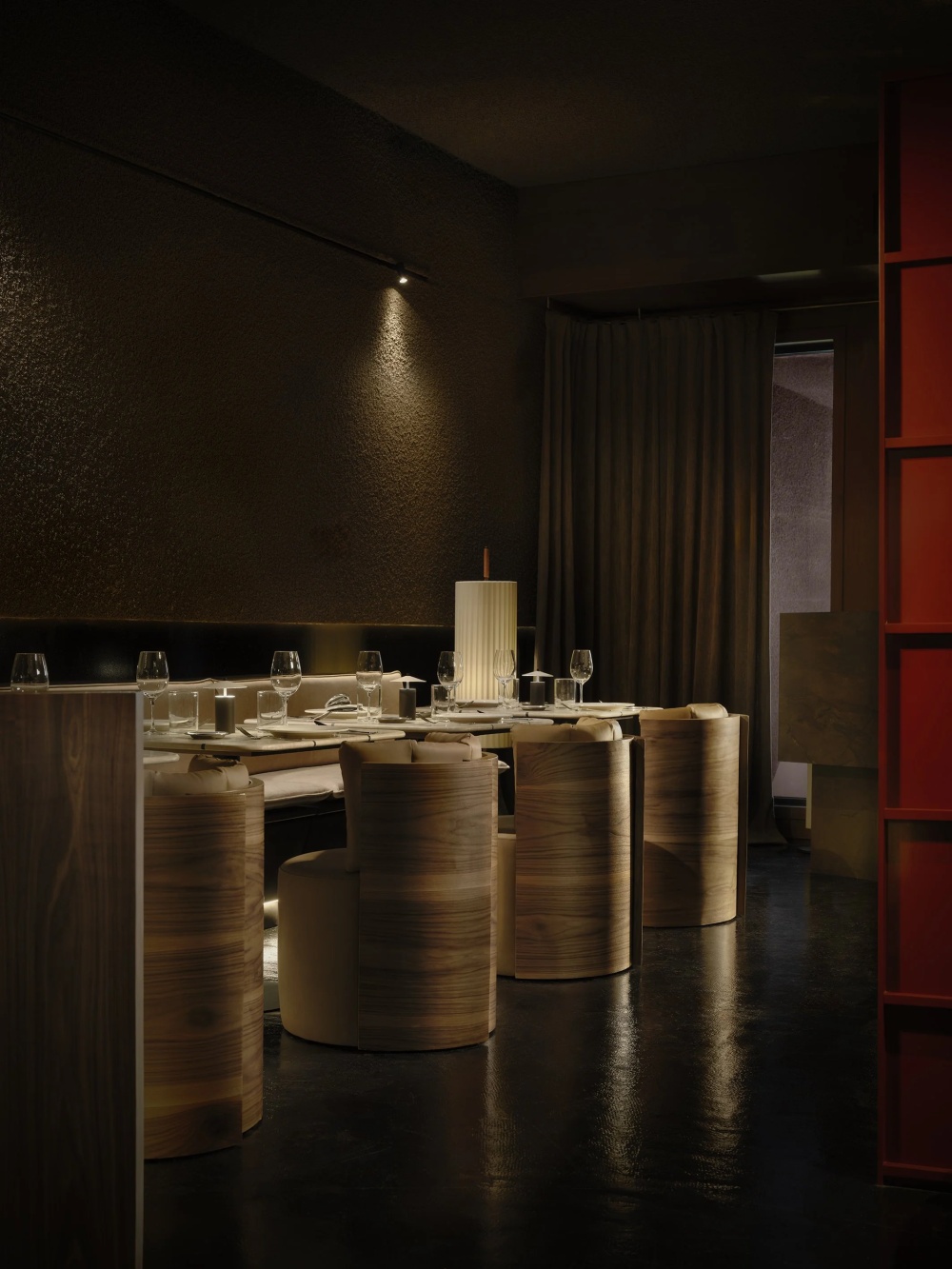
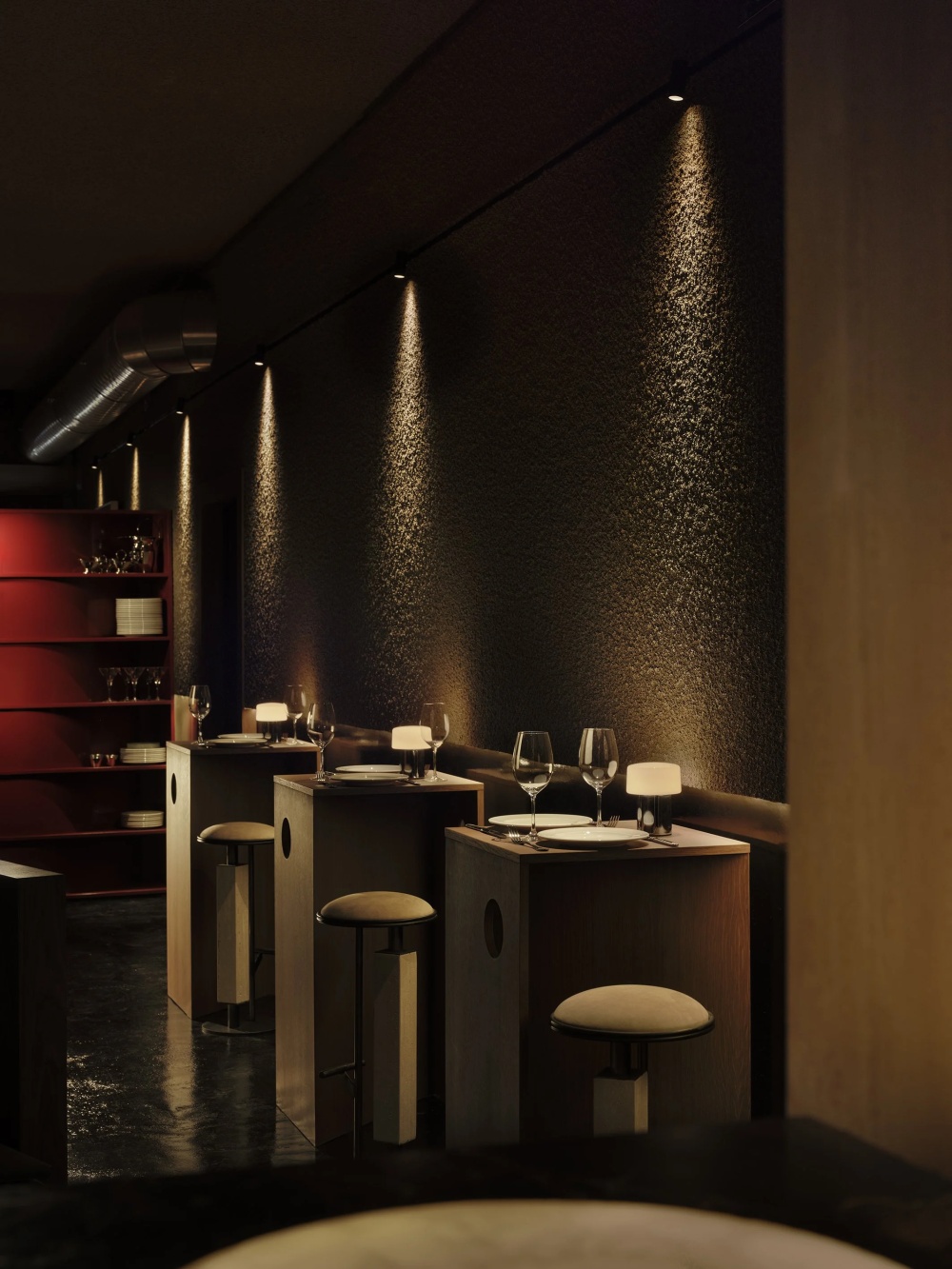
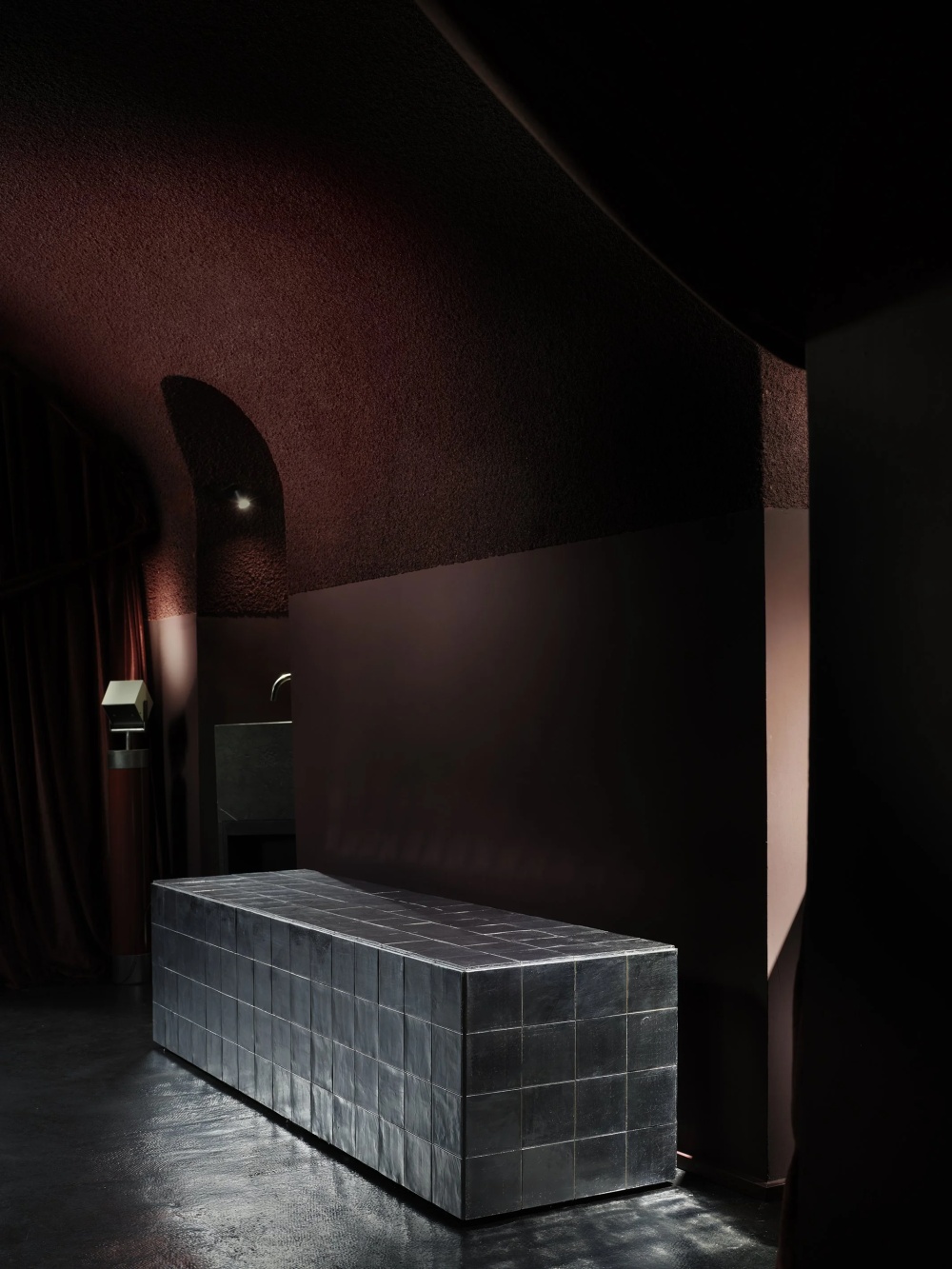
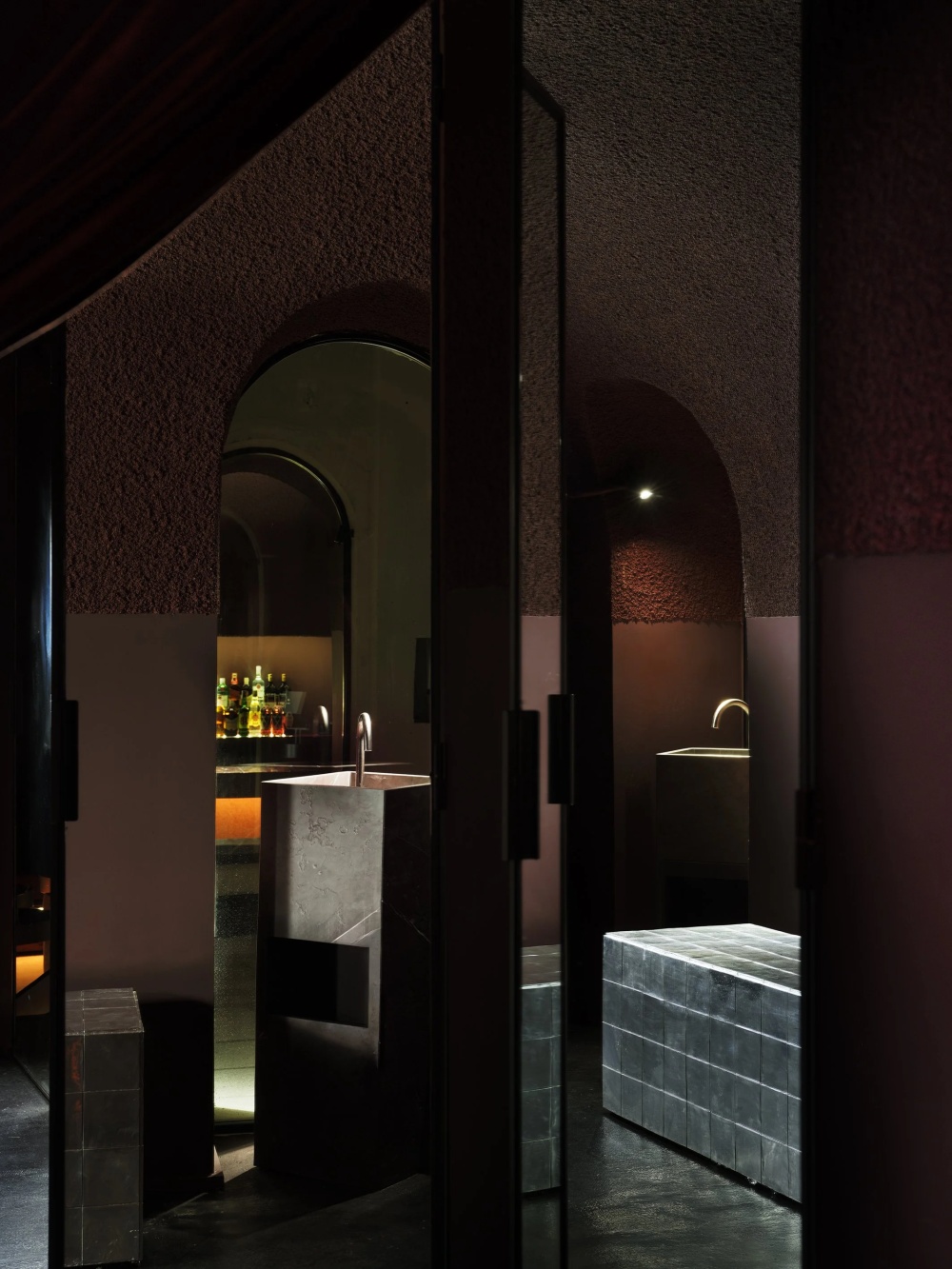
Conceived in close dialogue with an existing structure that combines a simple rectangular ground floor with a basement of unexpected geometry, the project draws its character from what was already there: a place that feels intimate, contained and quietly self-assured.
From the outset, the building guided the intervention. A modest street presence gives way to a transitional entry room that acts as a pause between the city and the interior world beyond. Materials, colour and lighting are introduced gradually, allowing the identity of Chitón to surface without immediacy. This measured progression reflects the brand narrative developed by Luis Muelas, where subtlety and restraint shape both atmosphere and experience.
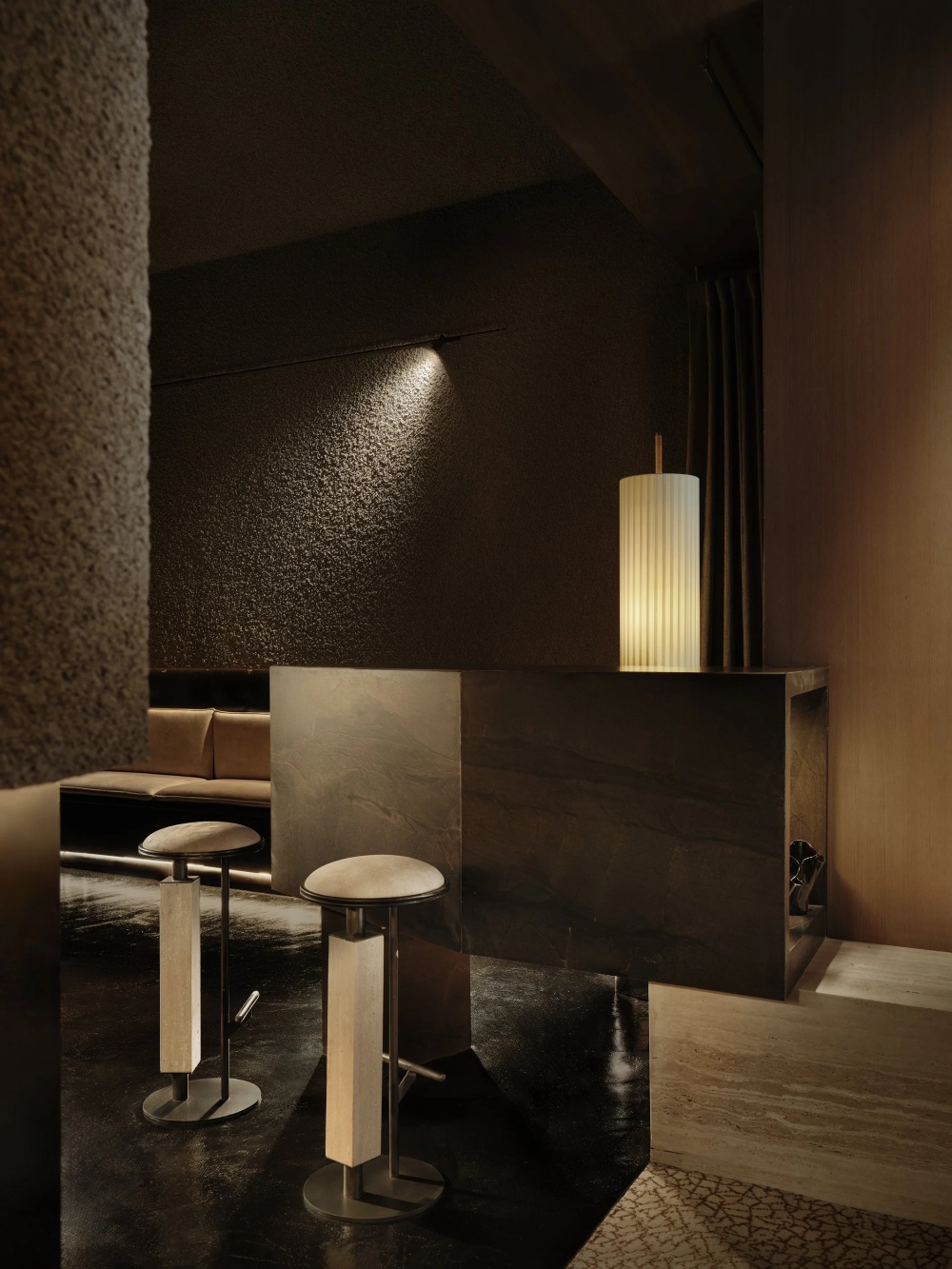
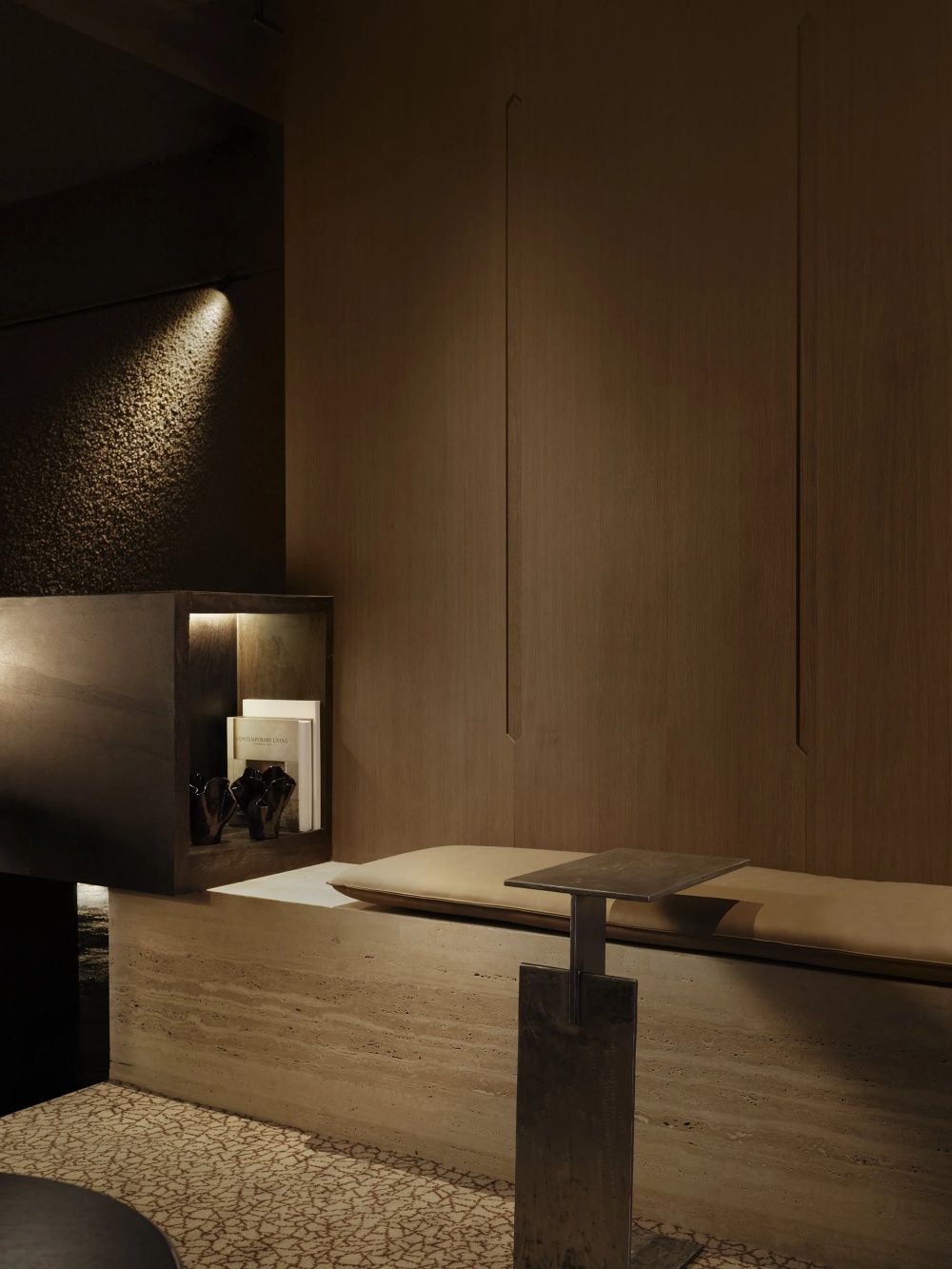
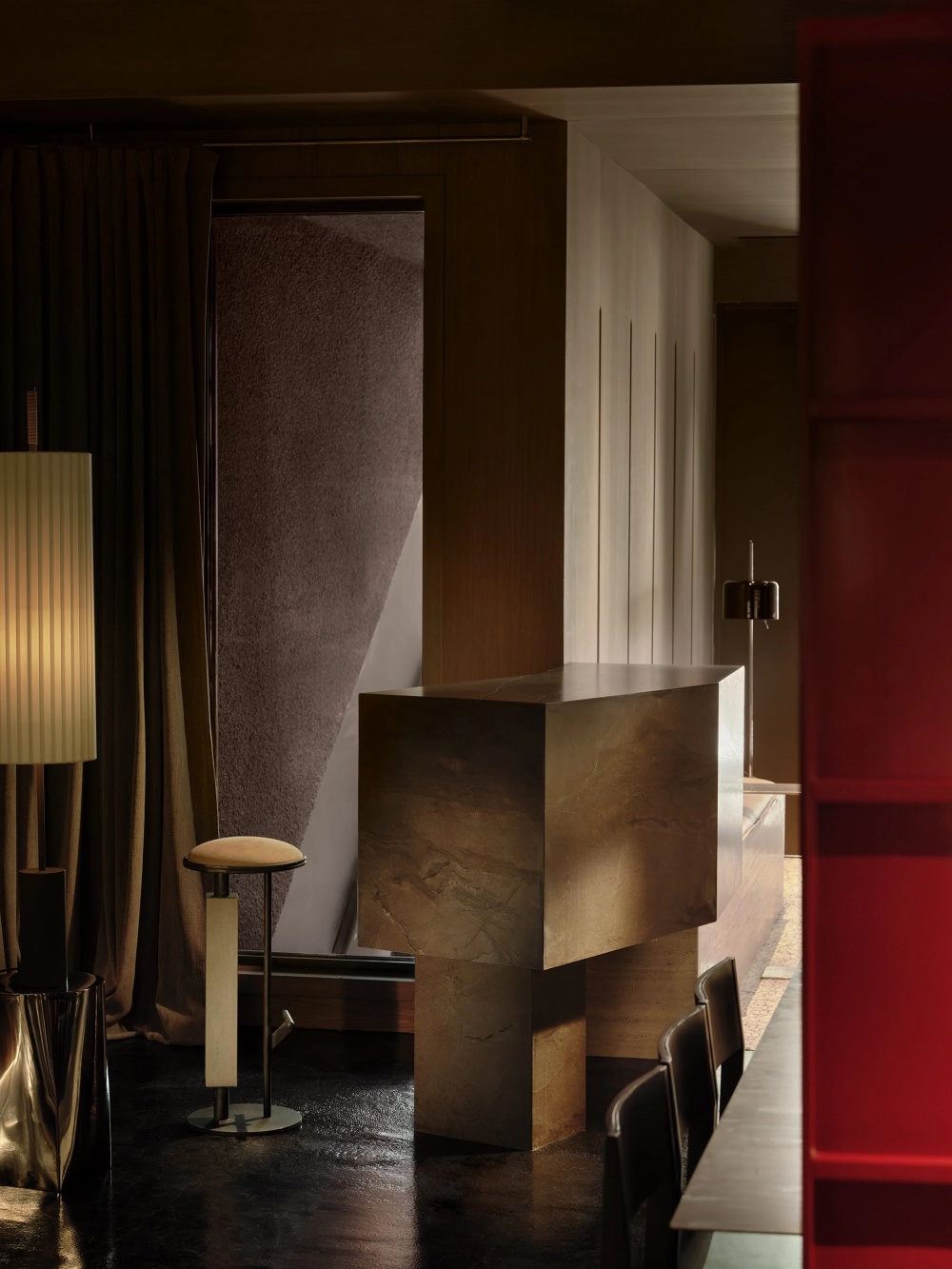
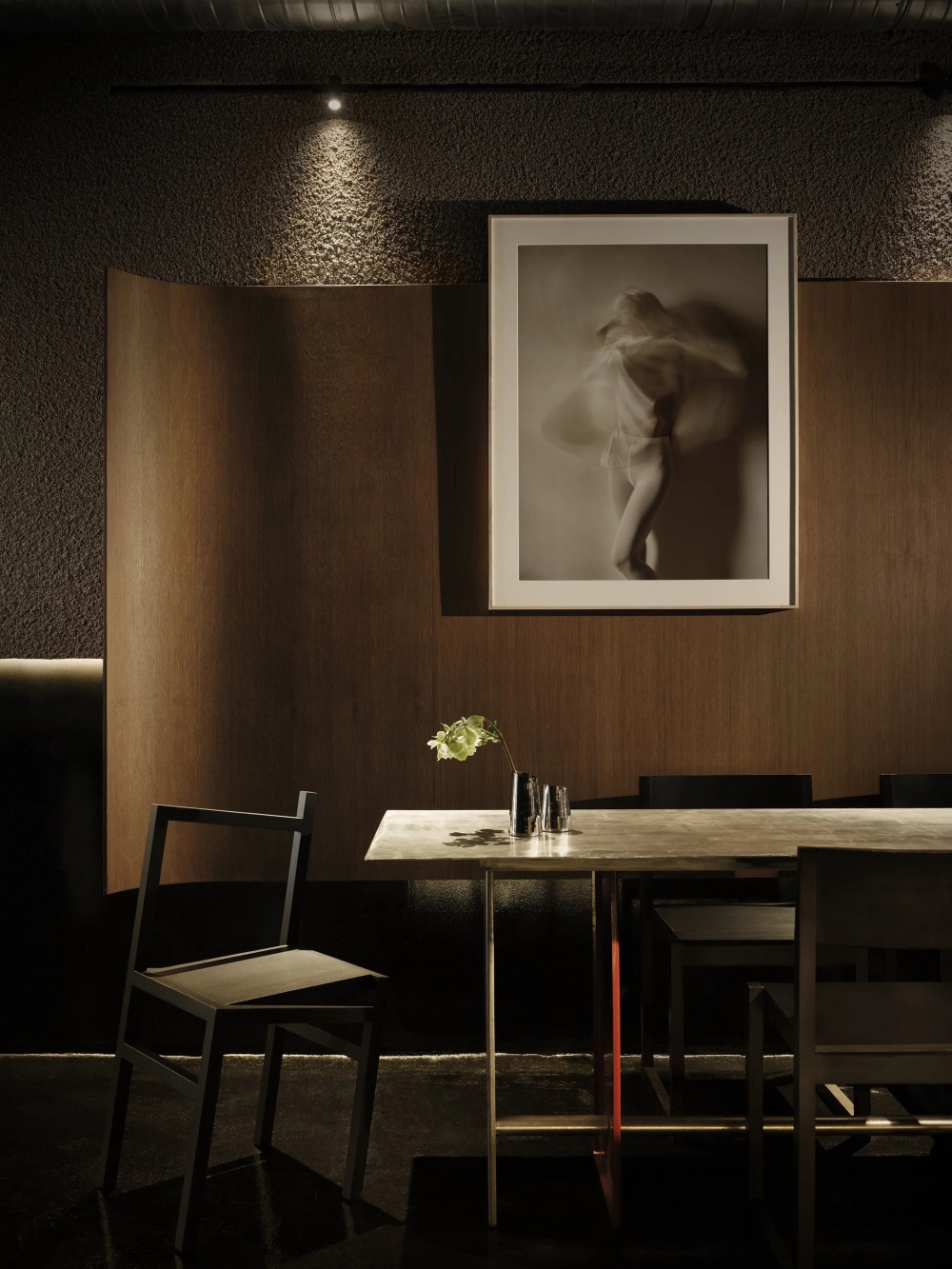
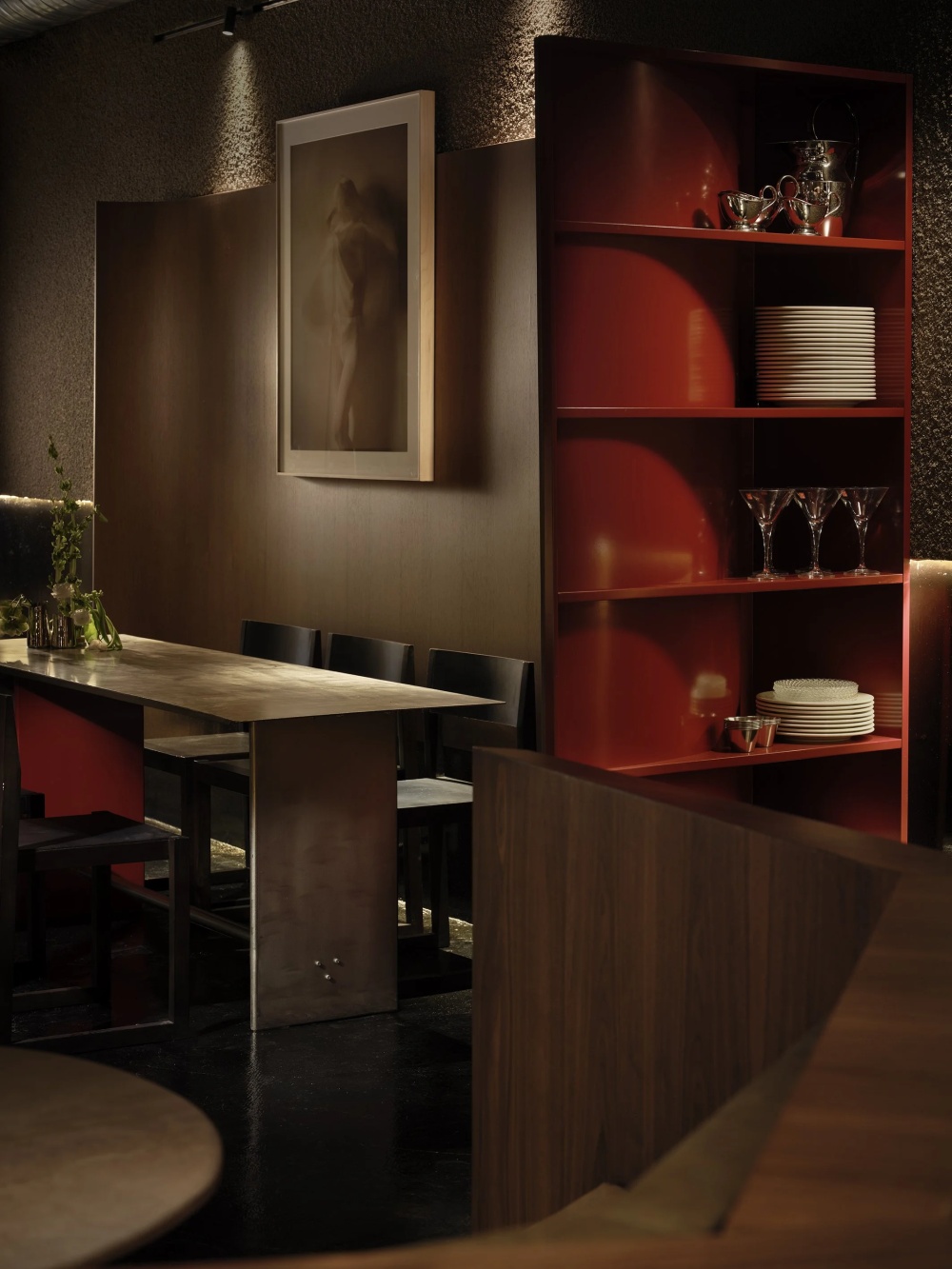
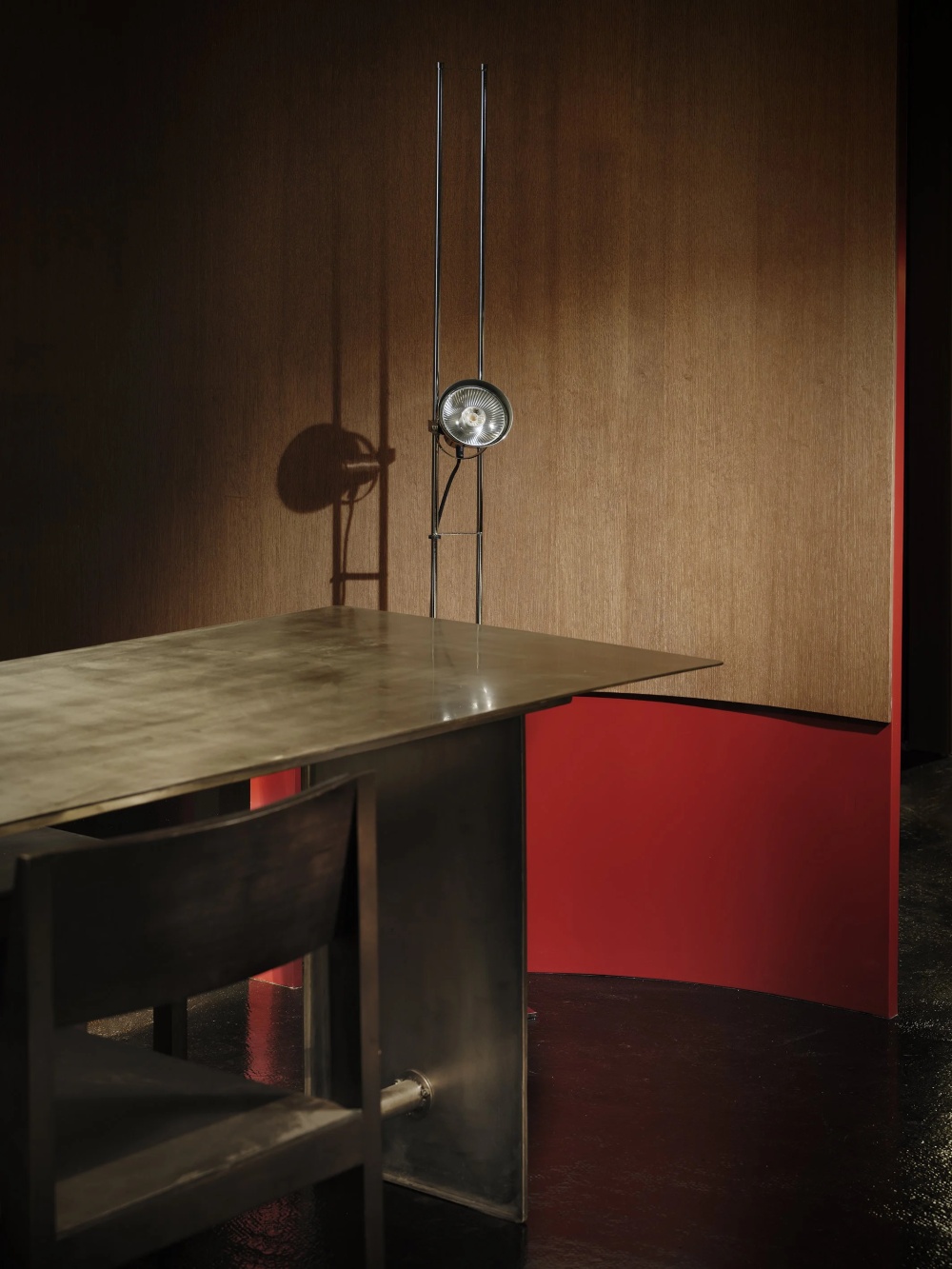
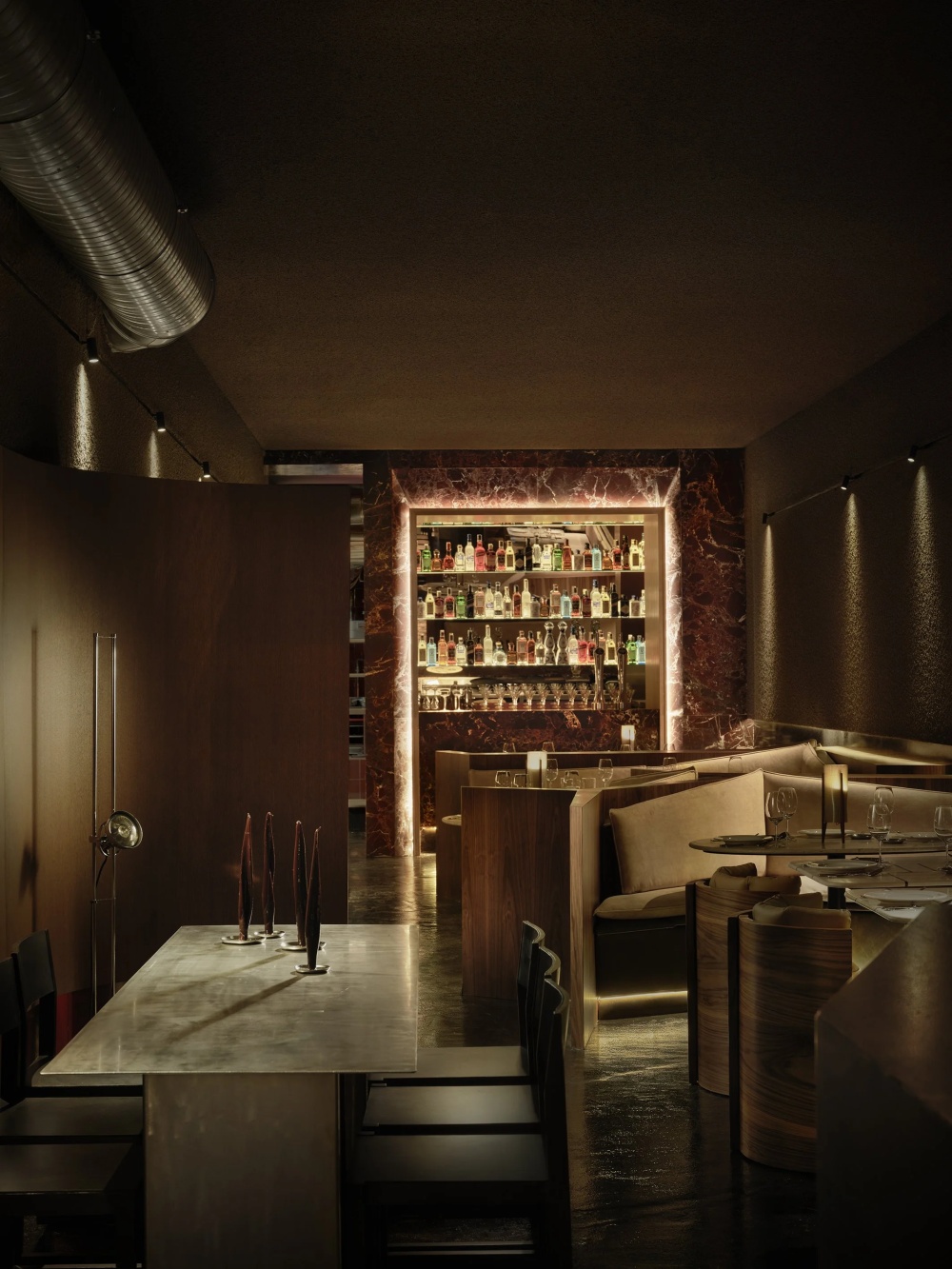
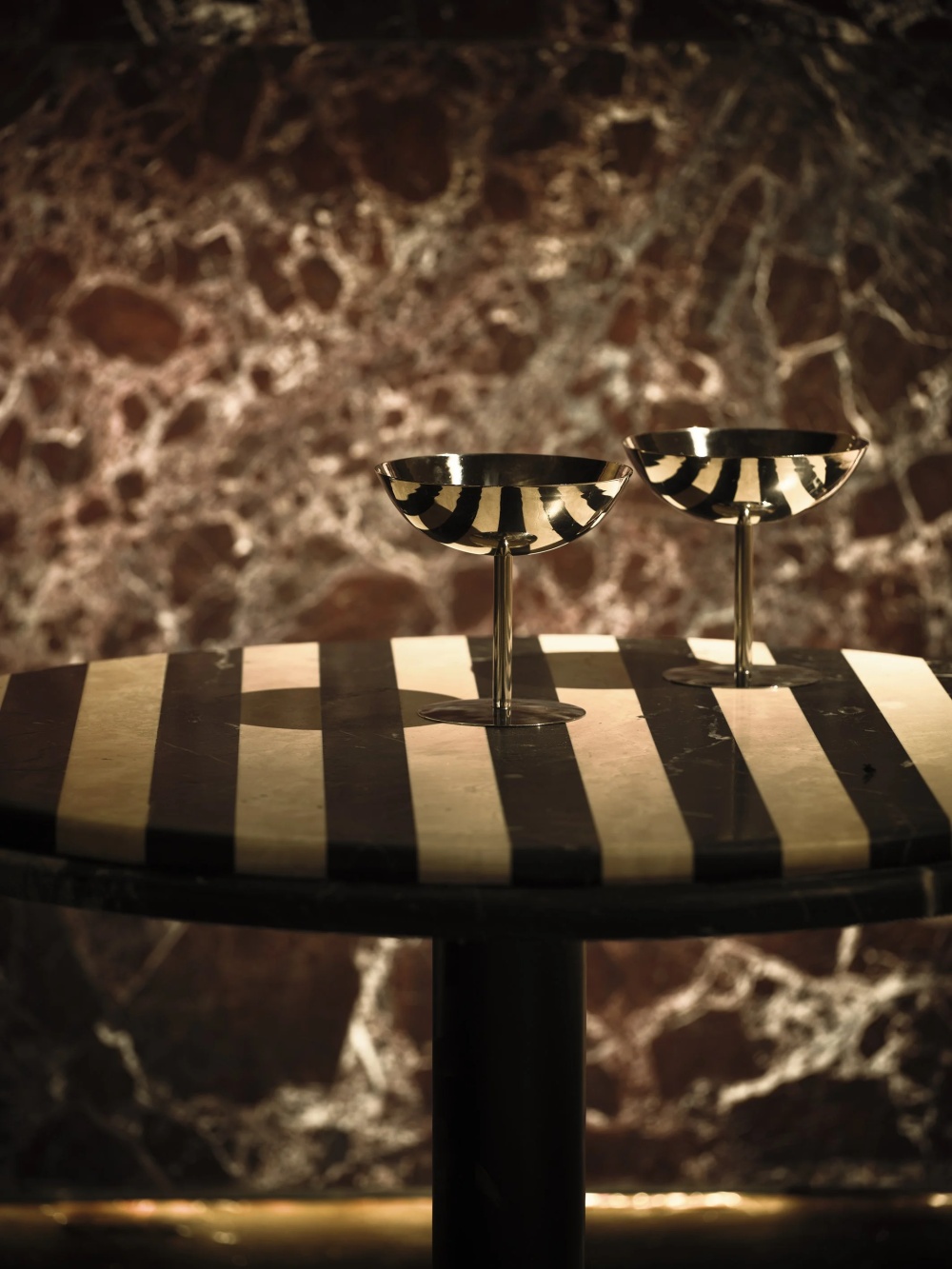
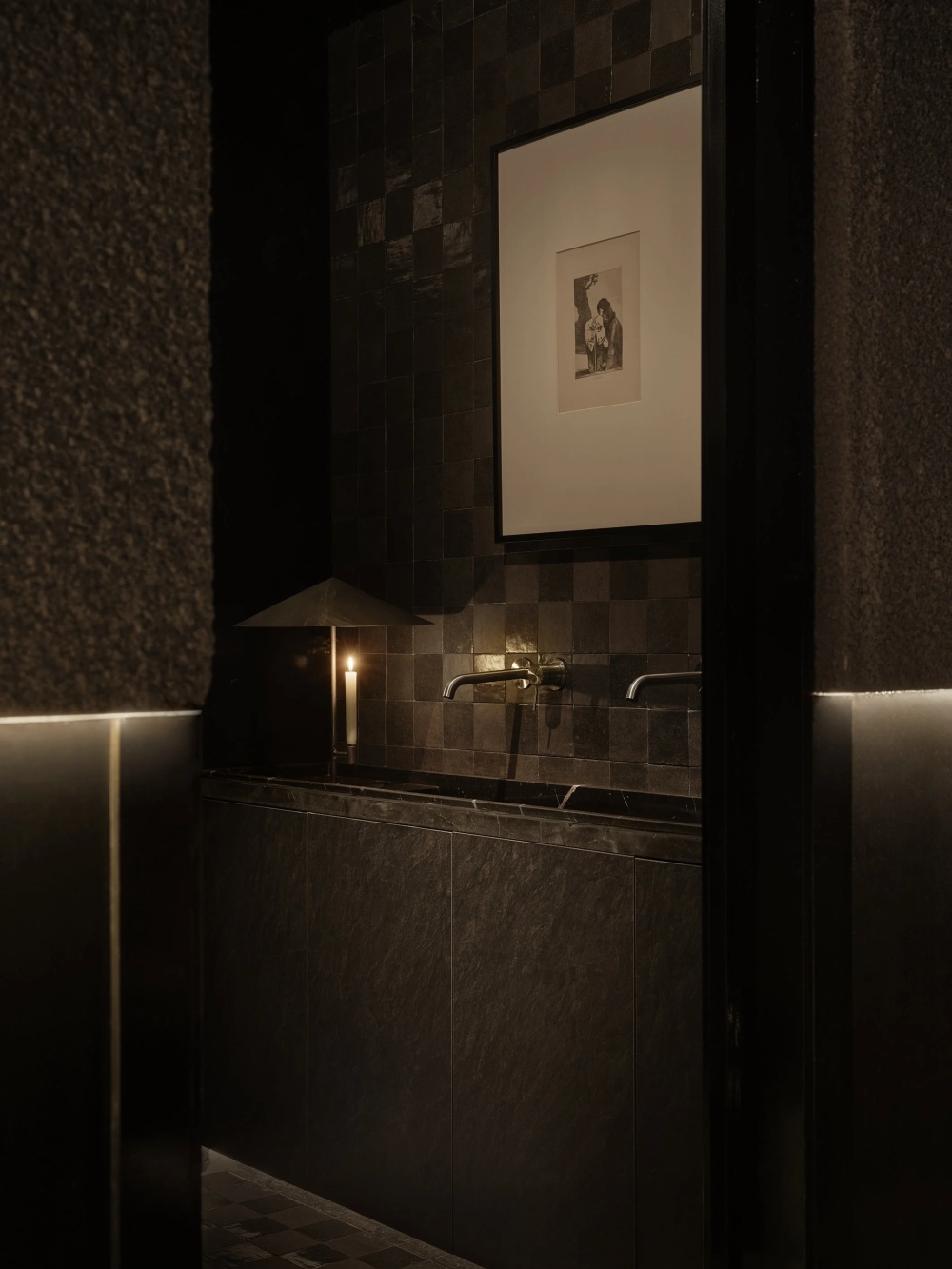
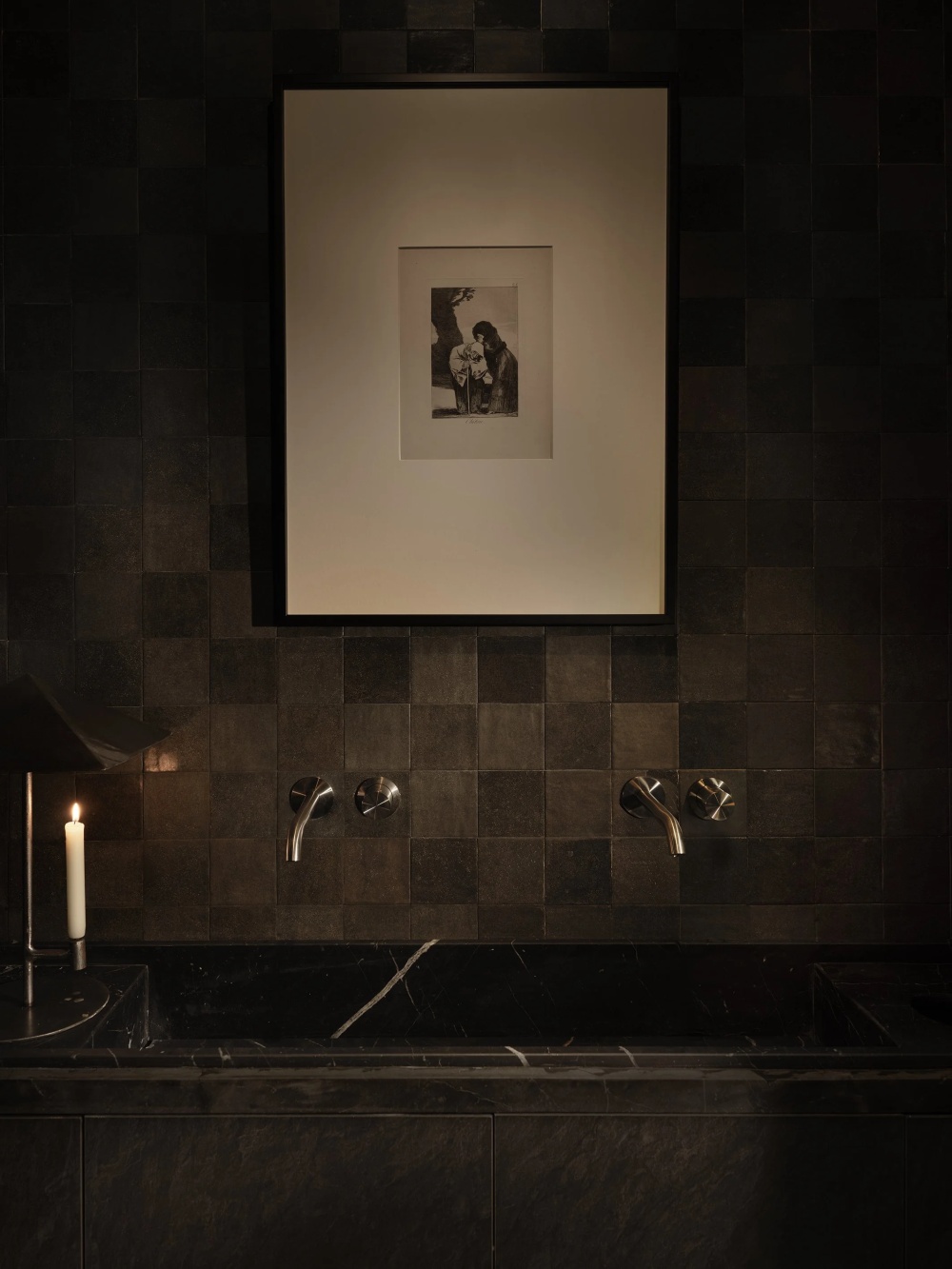
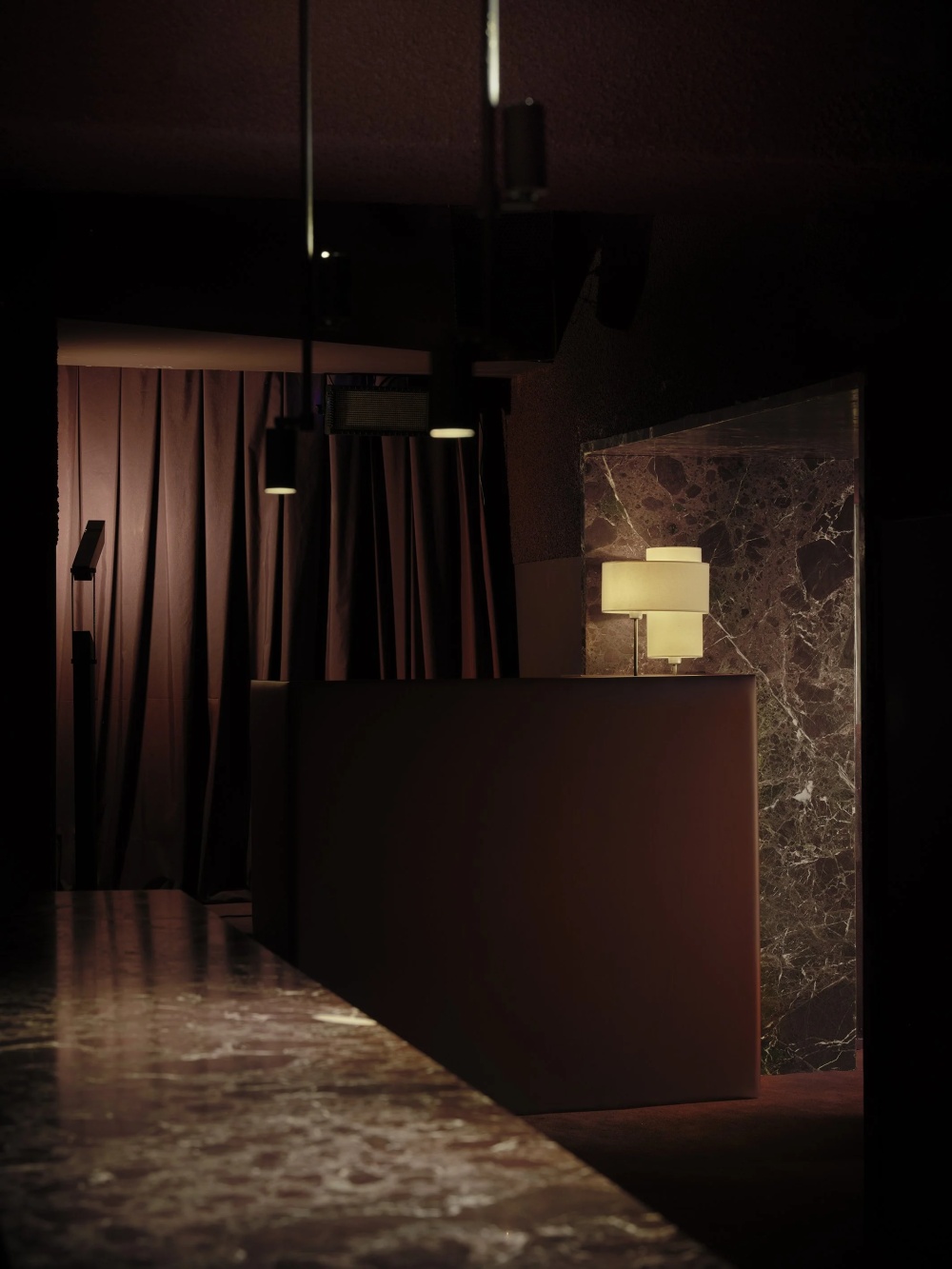
The ground floor accommodates the restaurant, articulated through a sober palette and calm architectural language. Custom furniture and carefully calibrated lighting contribute to an environment that feels composed rather than performative. At the rear, a Rosso Levanto marble bar anchors the room, operating as a sculptural element that plays with volume and perspective. Nearby, the restroom departs from convention, becoming an introspective enclave defined by dark tones, candlelight and a reproduction of Goya’s Chitón etching in place of a mirror, reinforcing the cultural reference behind the venue’s name.
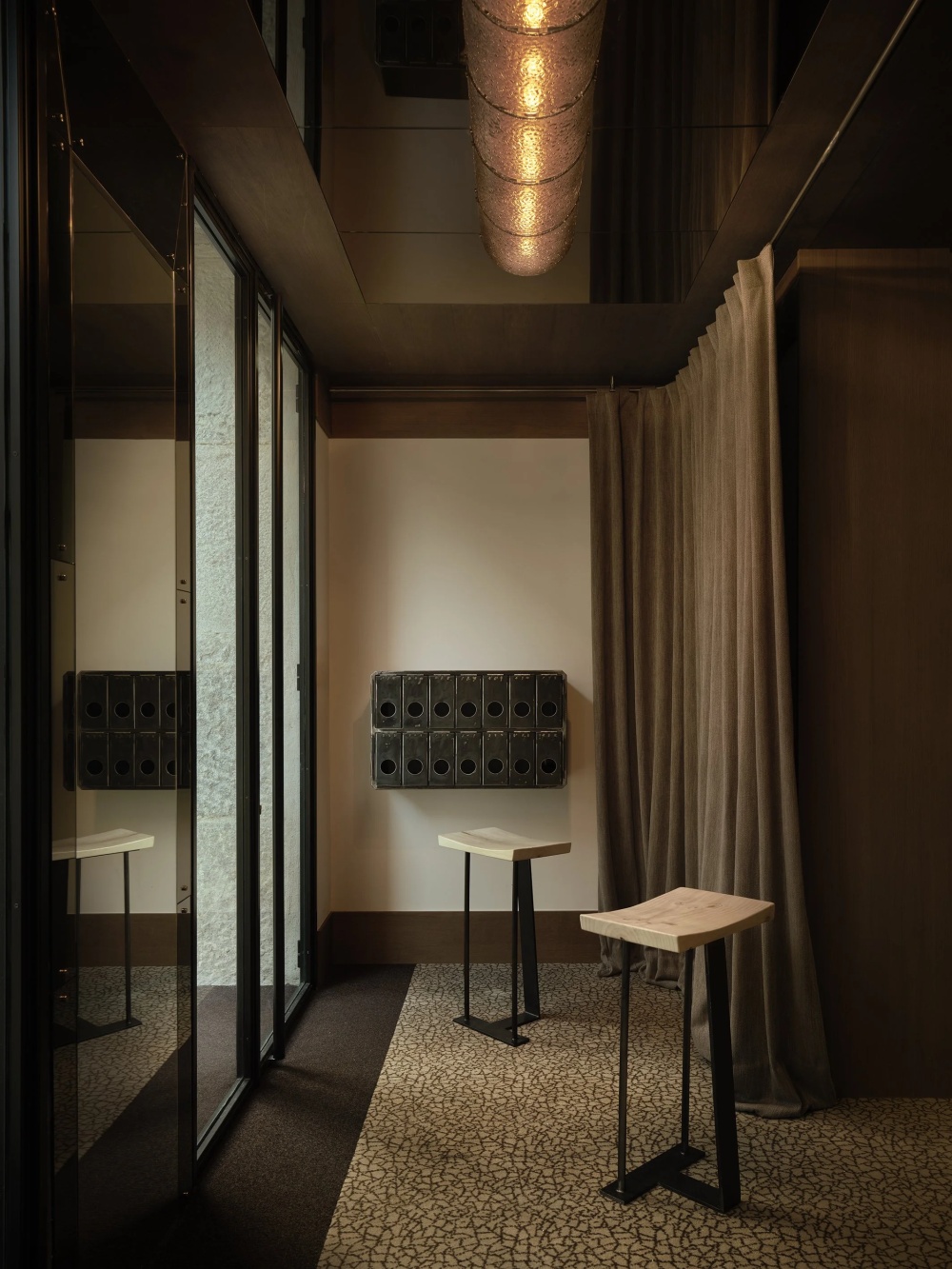
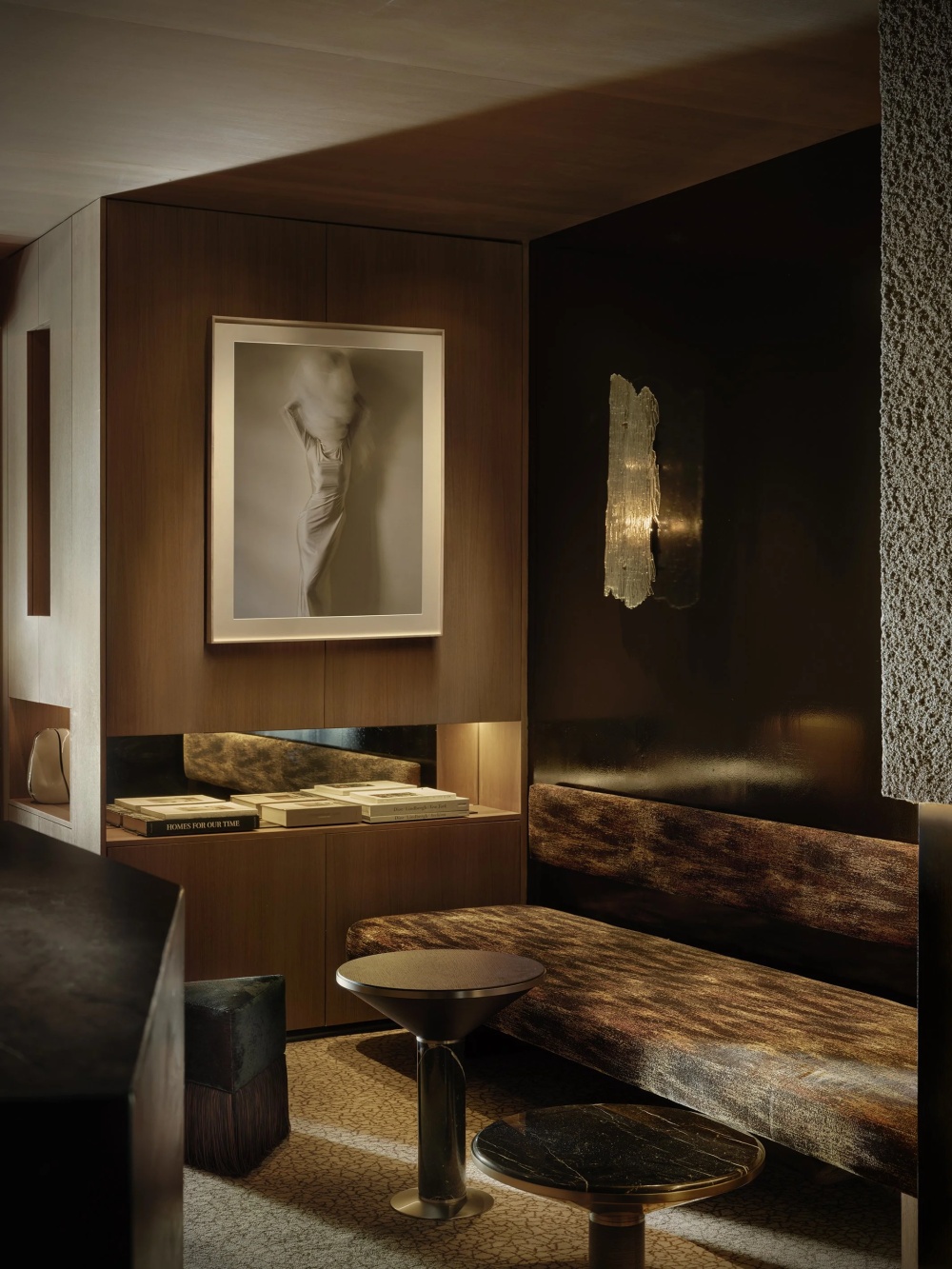
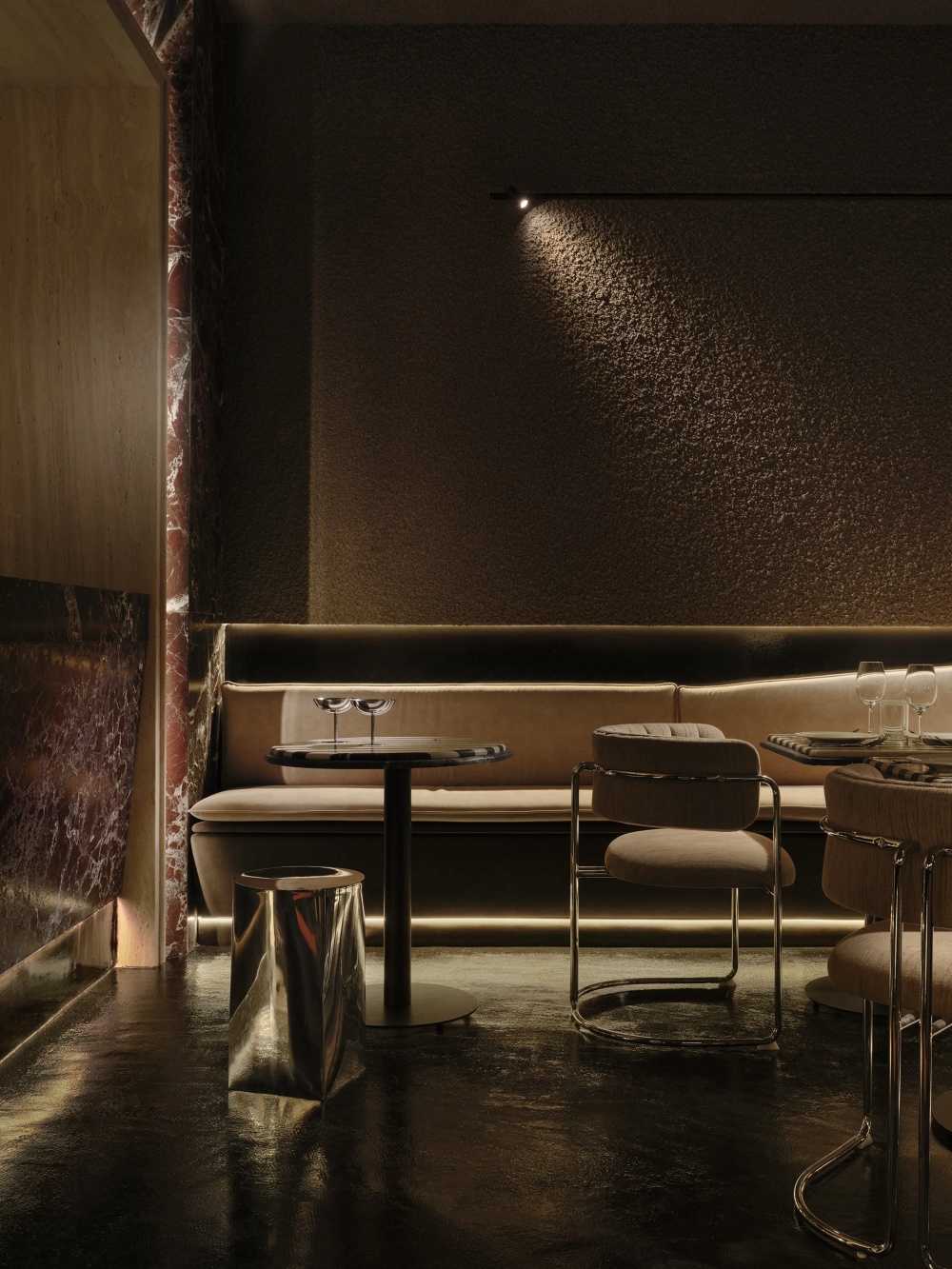
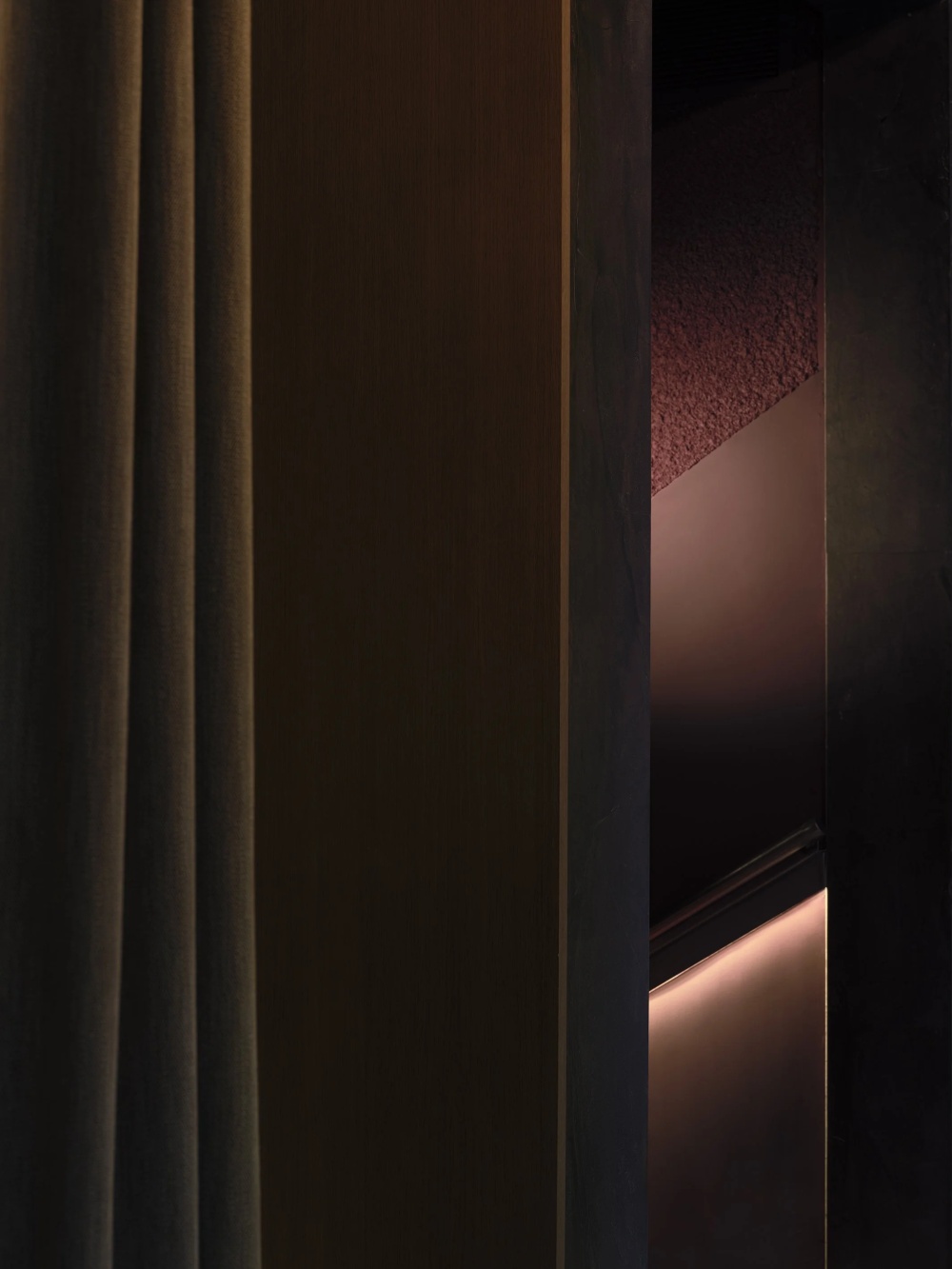
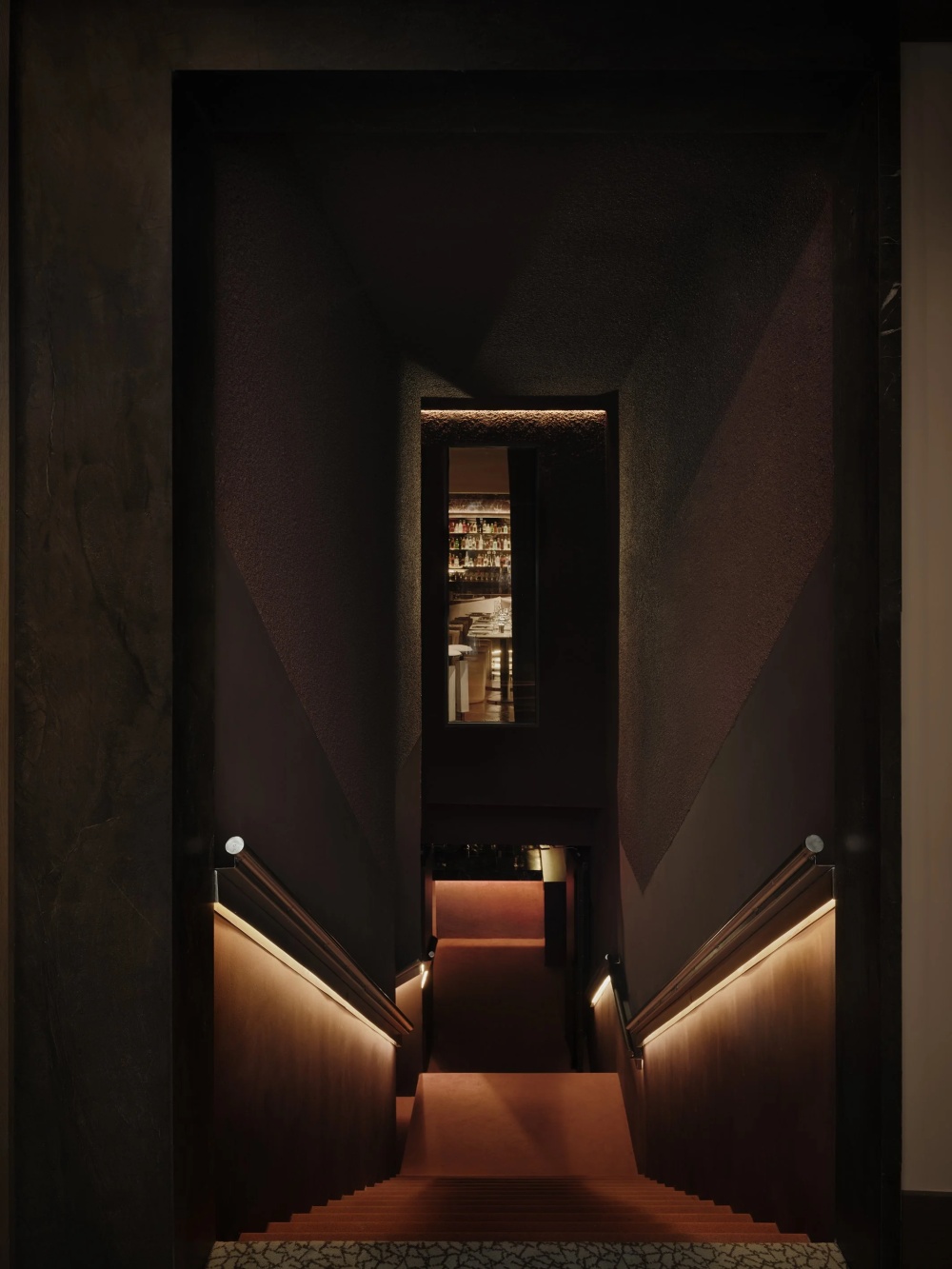
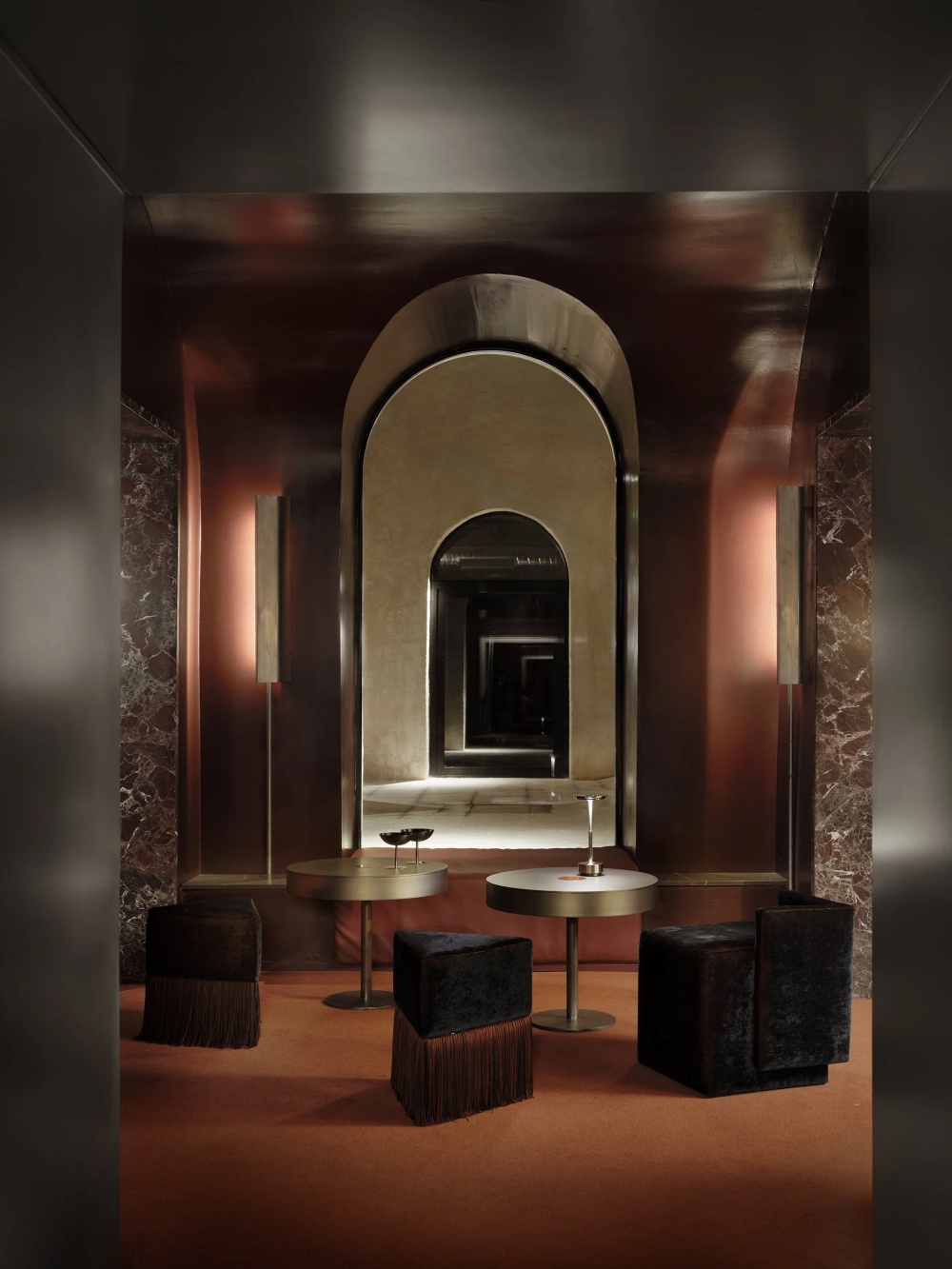
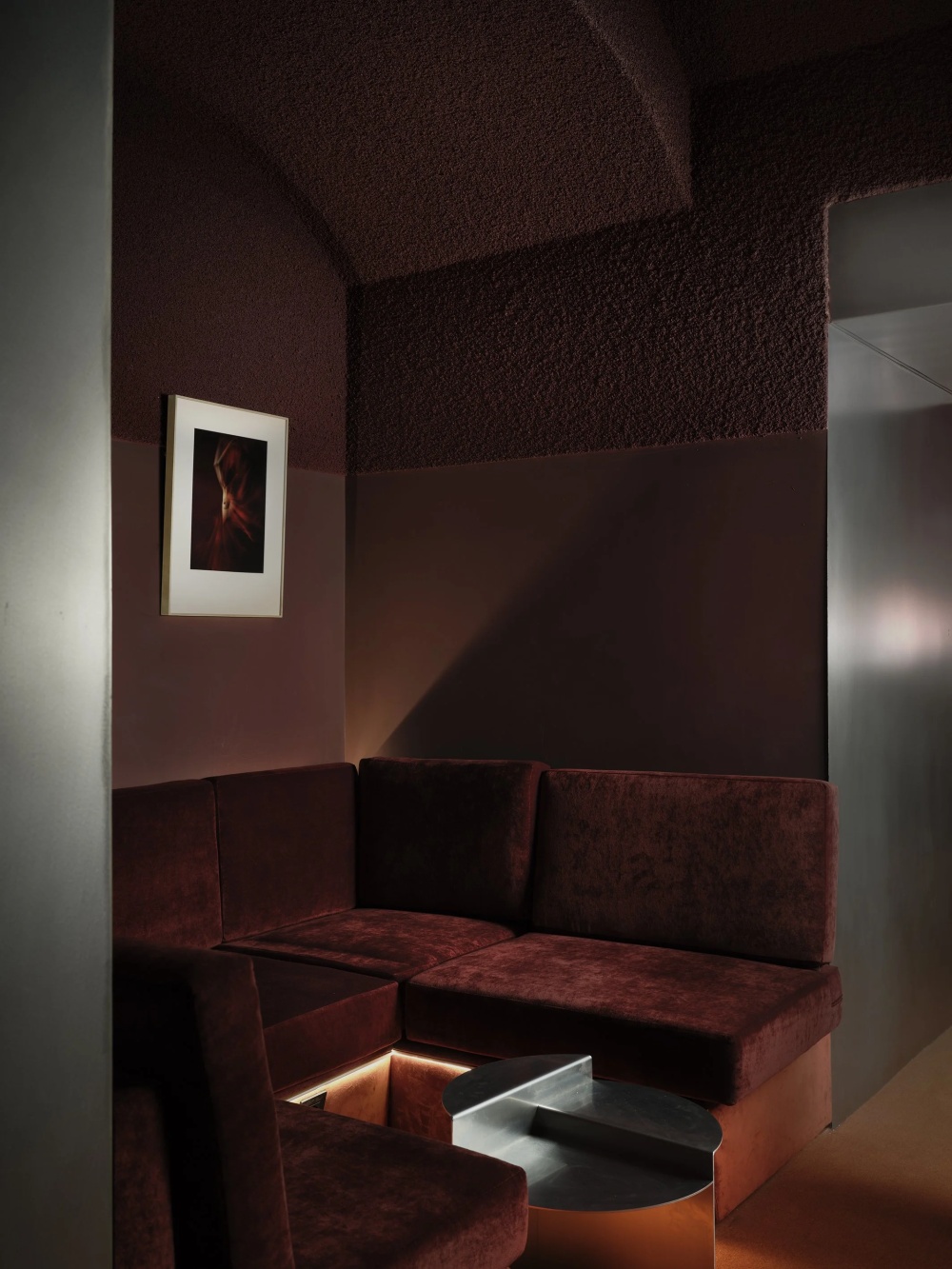
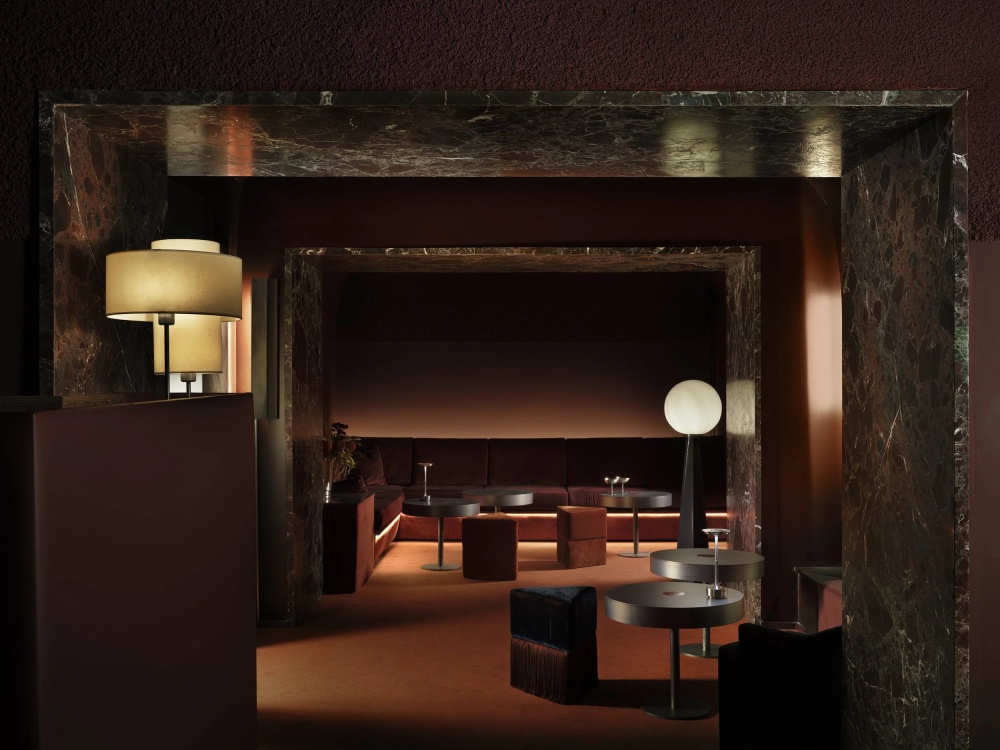
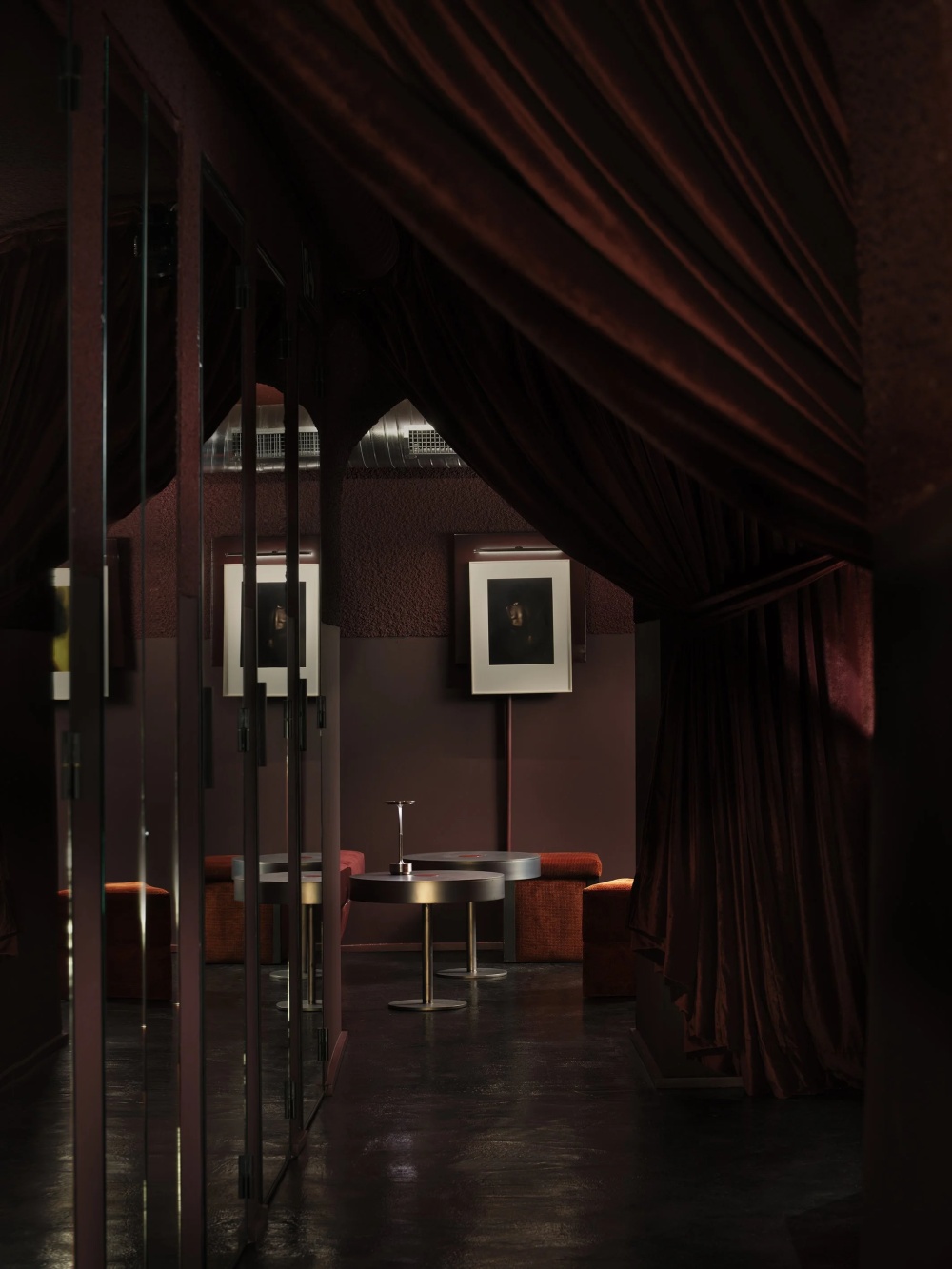
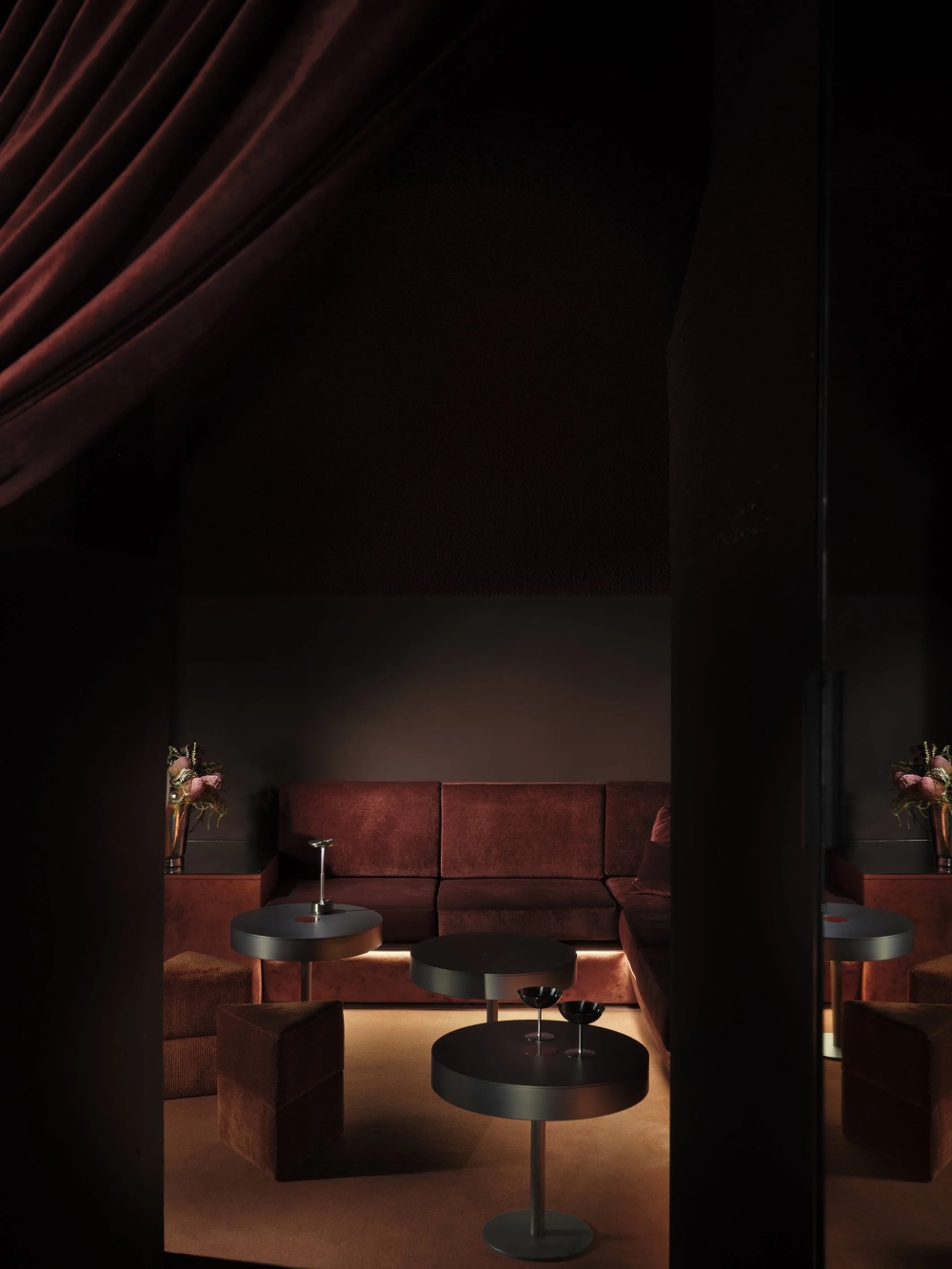
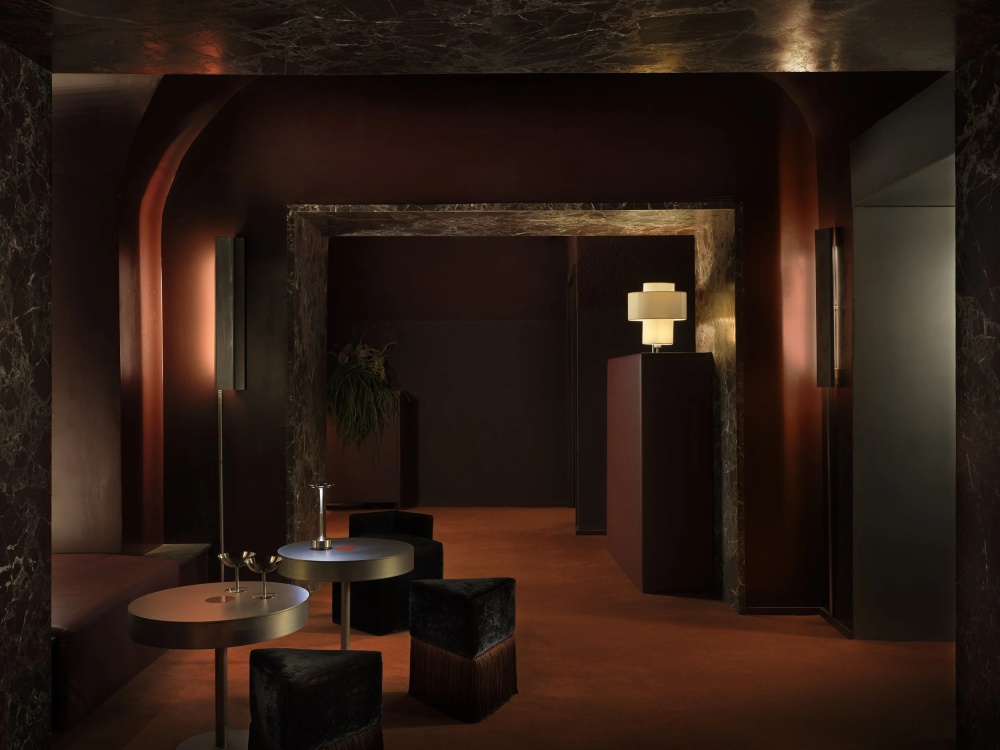
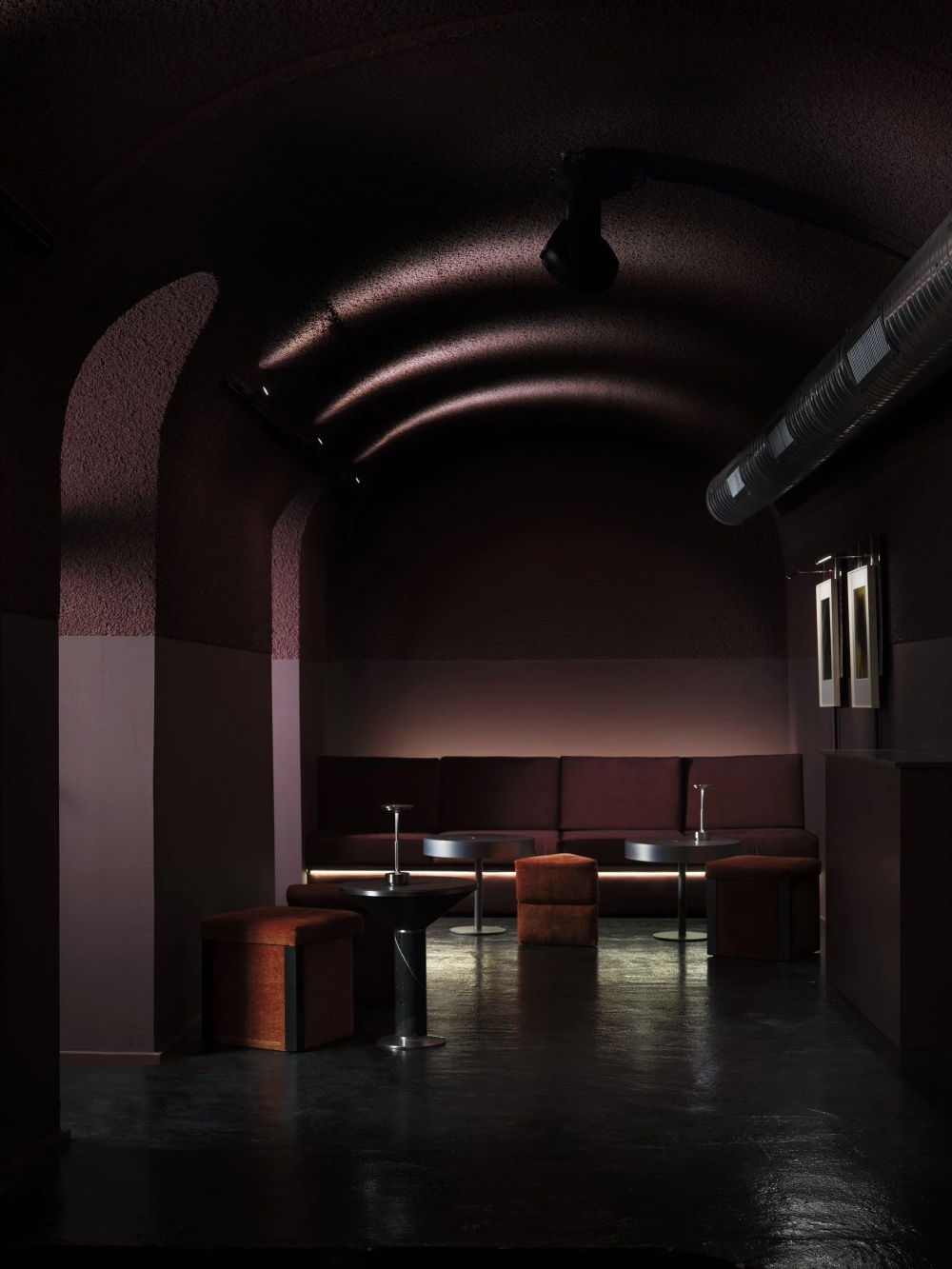
A stone Amarula frame signals the descent to the basement, marking a shift in mood. Below, the project adopts a warmer, more immersive character aligned with night-time use. A gallery-like corridor opens onto views of an interior courtyard, now repositioned as both structural anchor and emotional centre. Circulation wraps around this void, encouraging movement and discovery through a series of interconnected rooms.
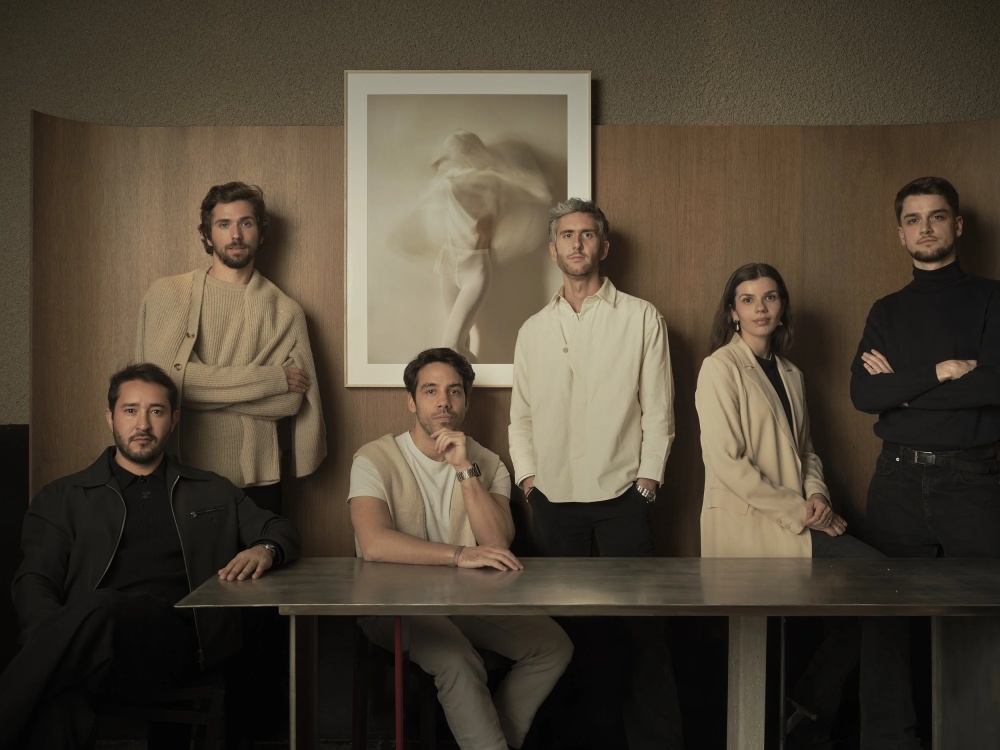
In Madrid, De la Villa Studio brings a restrained, atmospheric approach to Chitón, a restaurant and club shaped as much by its architecture as by its sense of discretion.