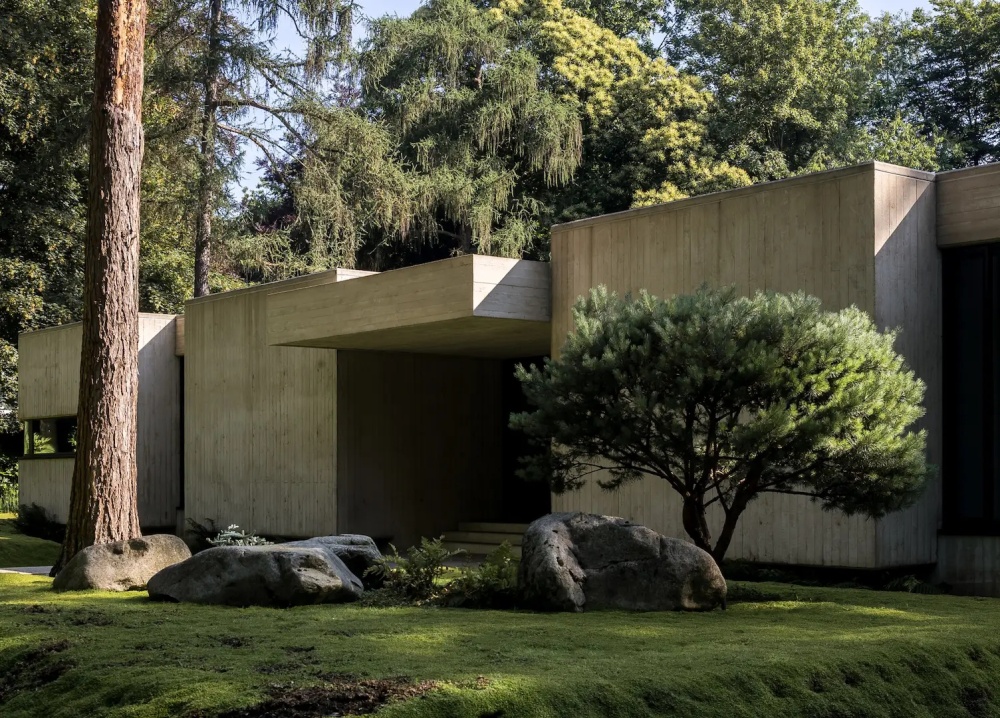
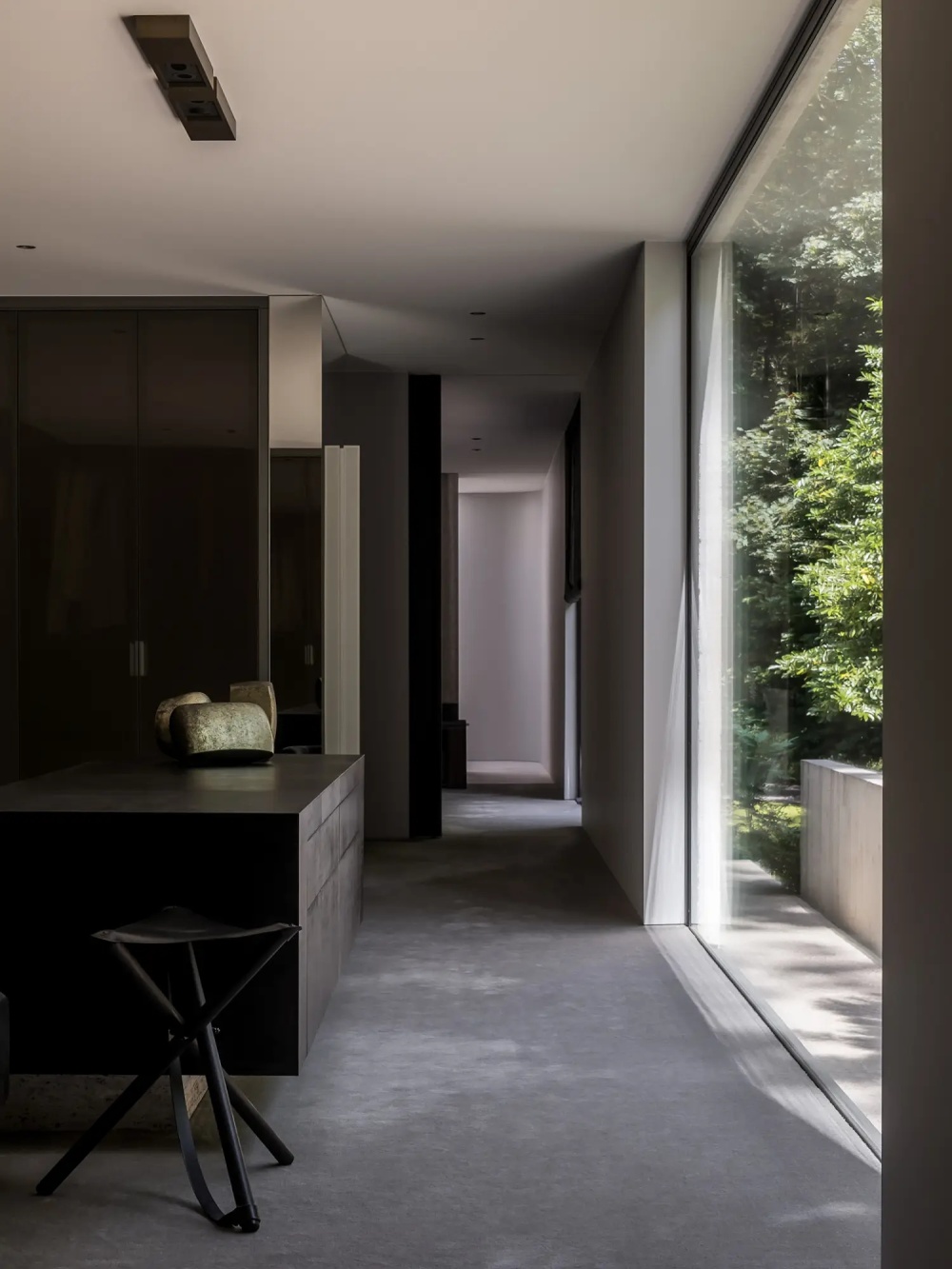
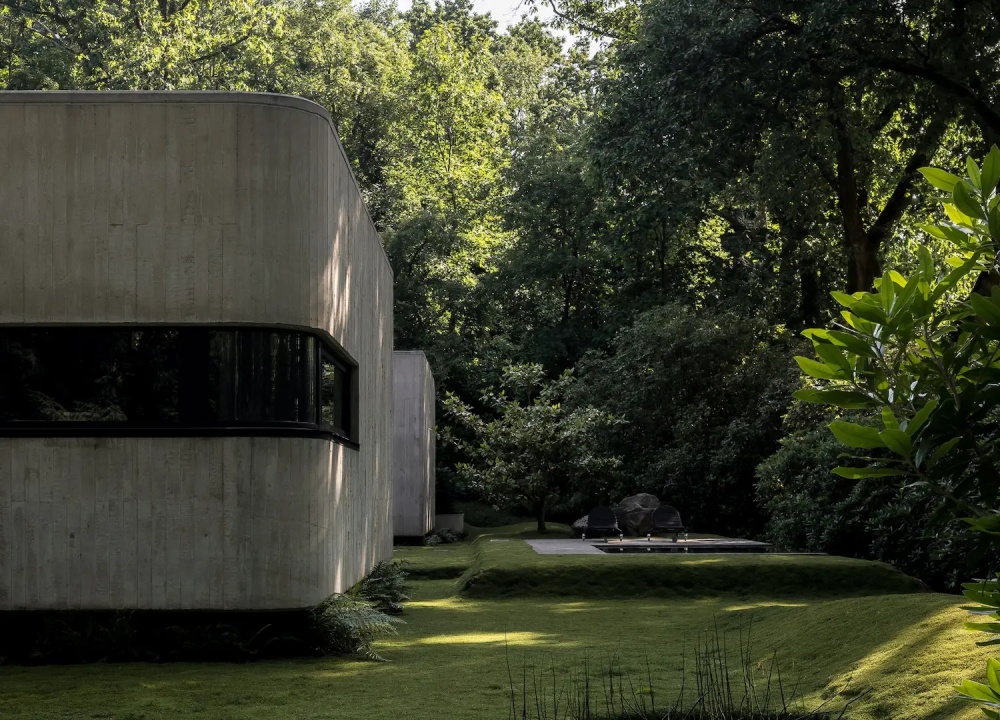
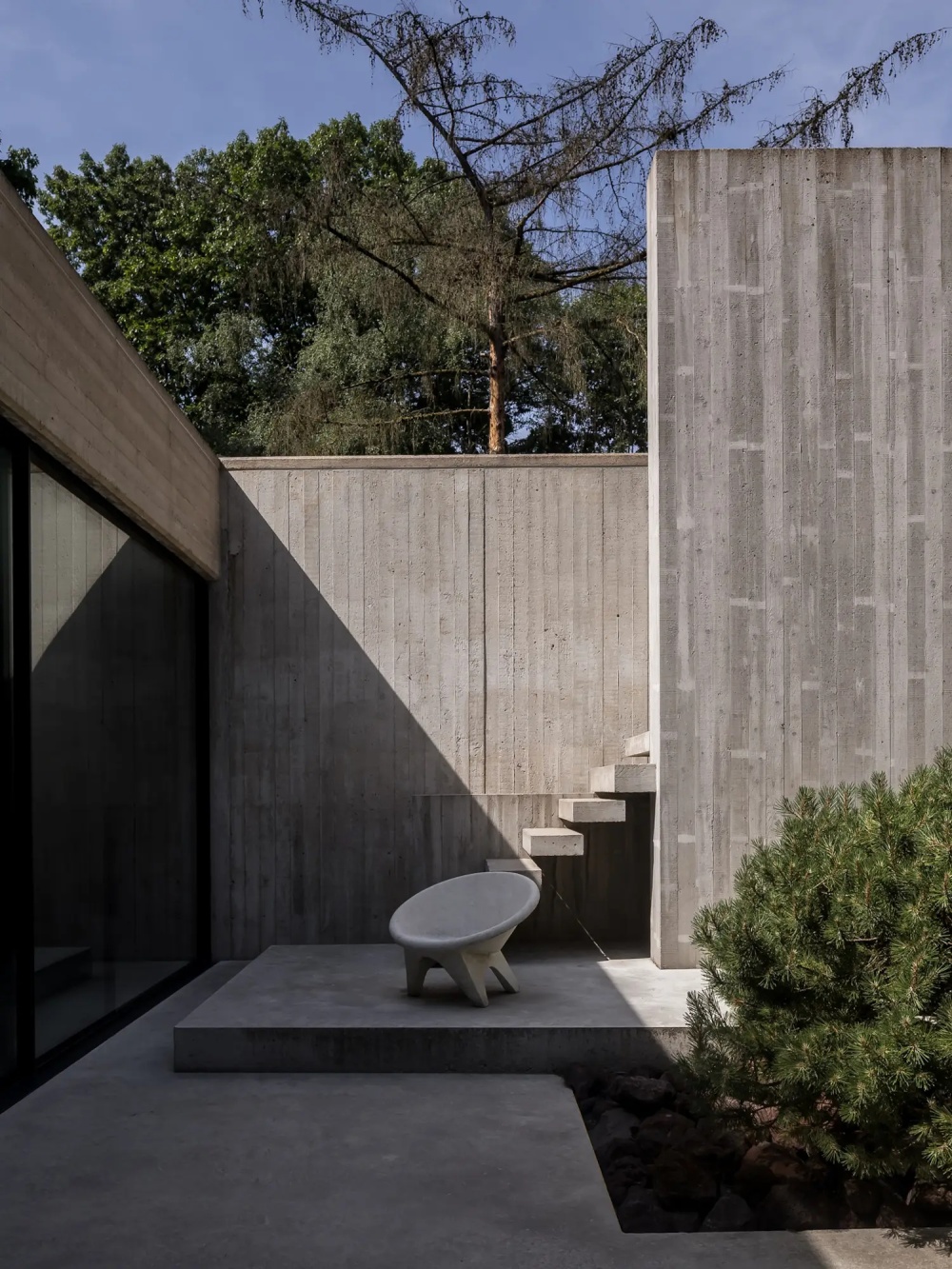
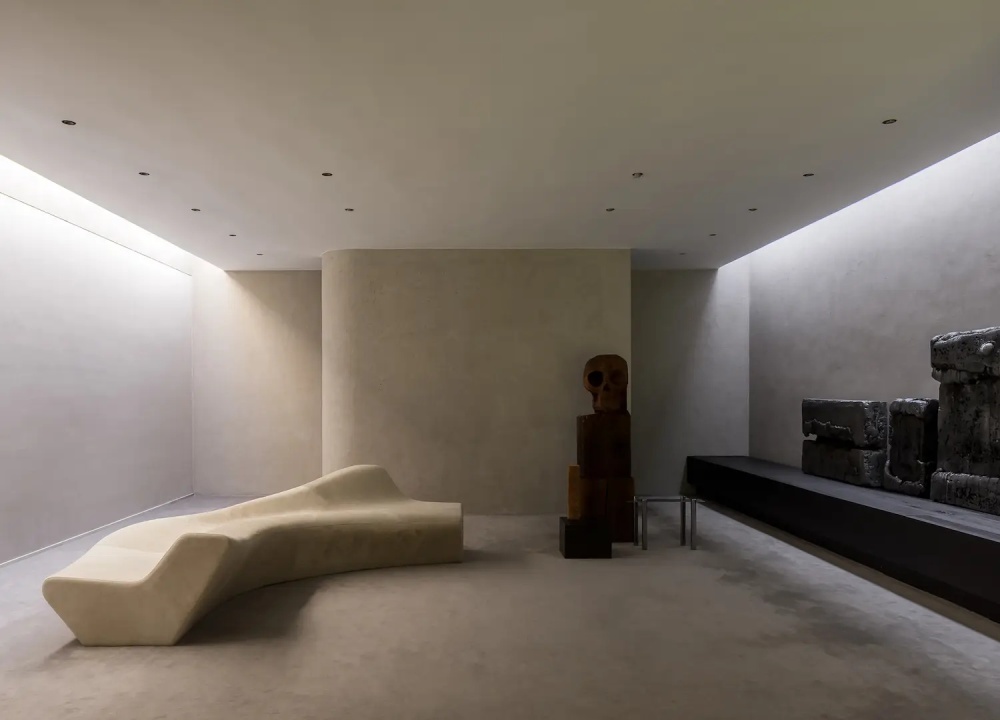
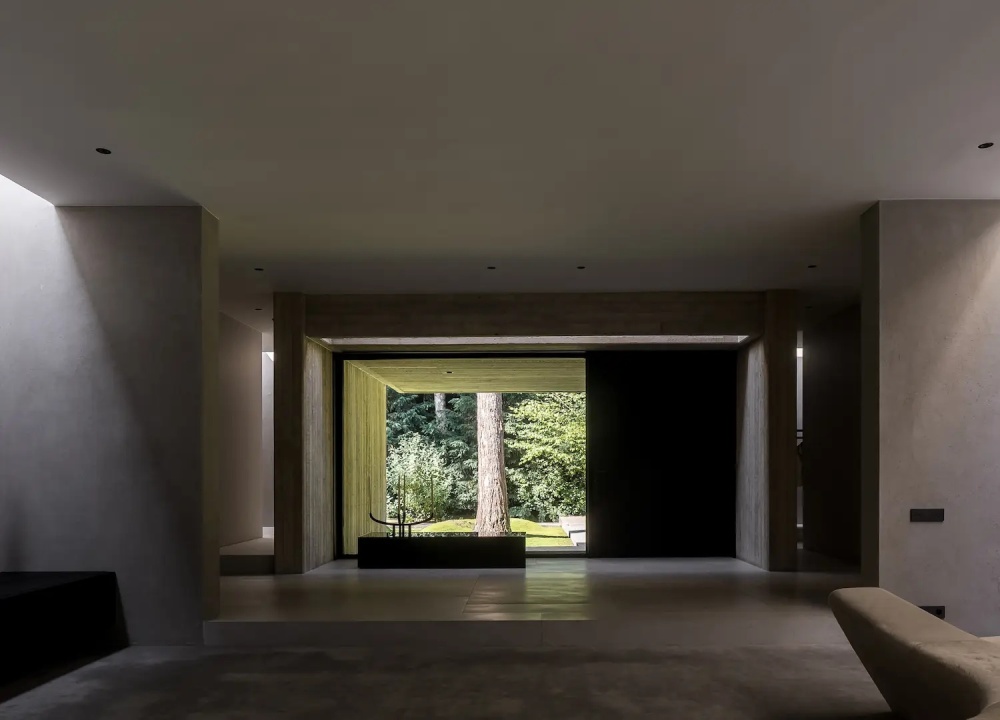
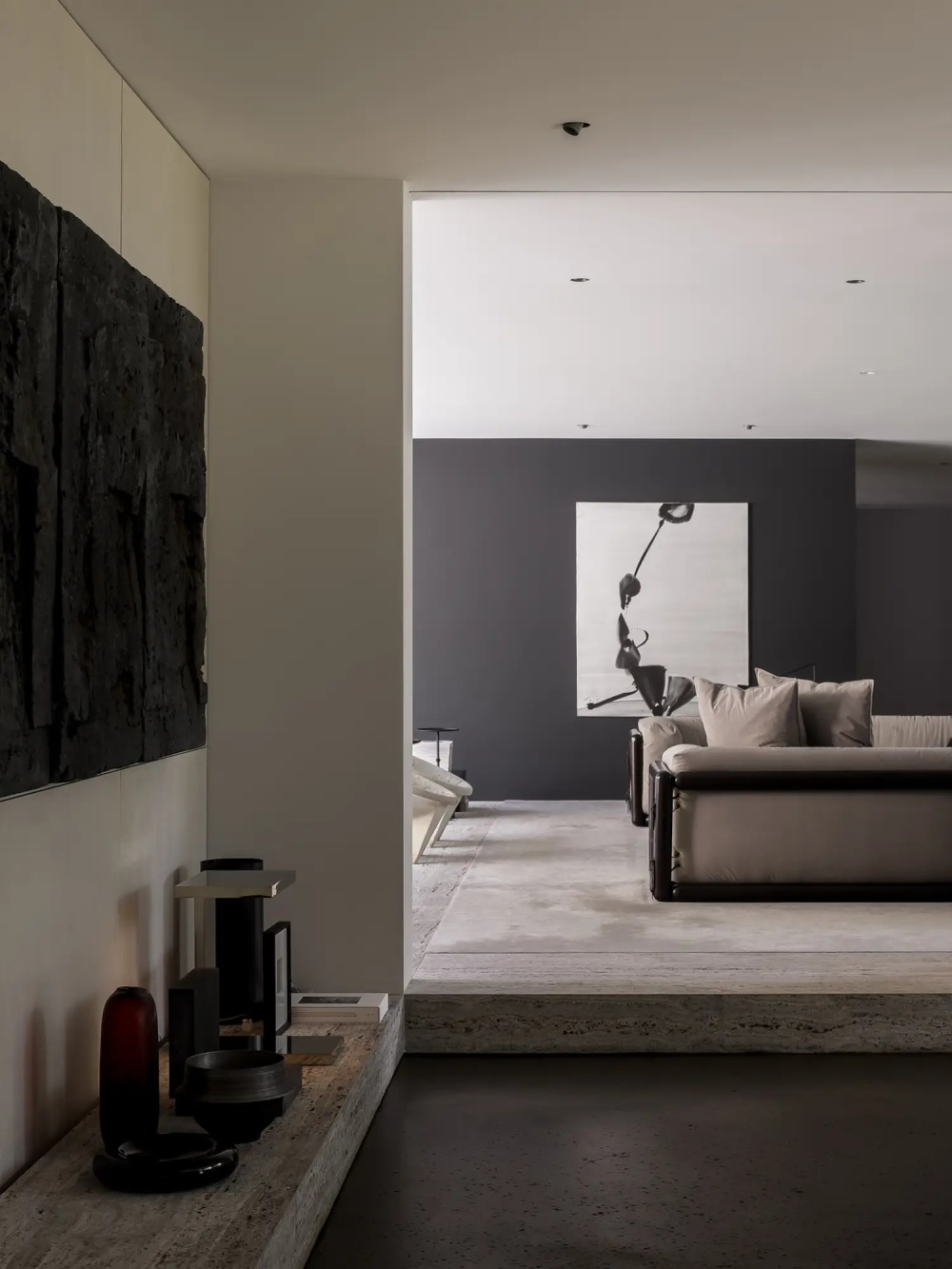
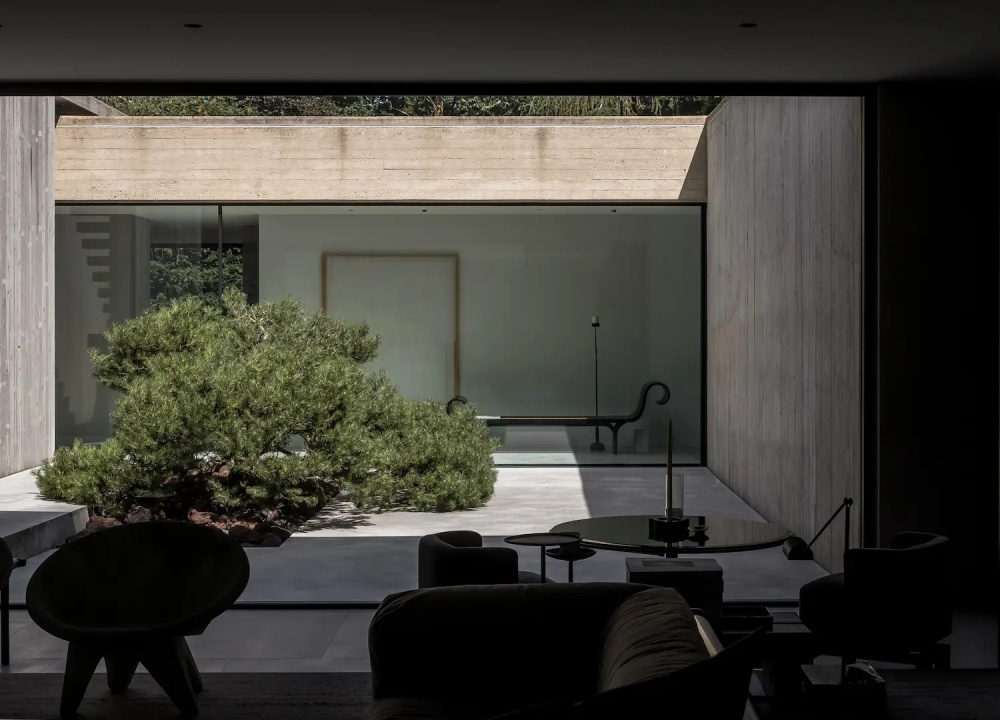
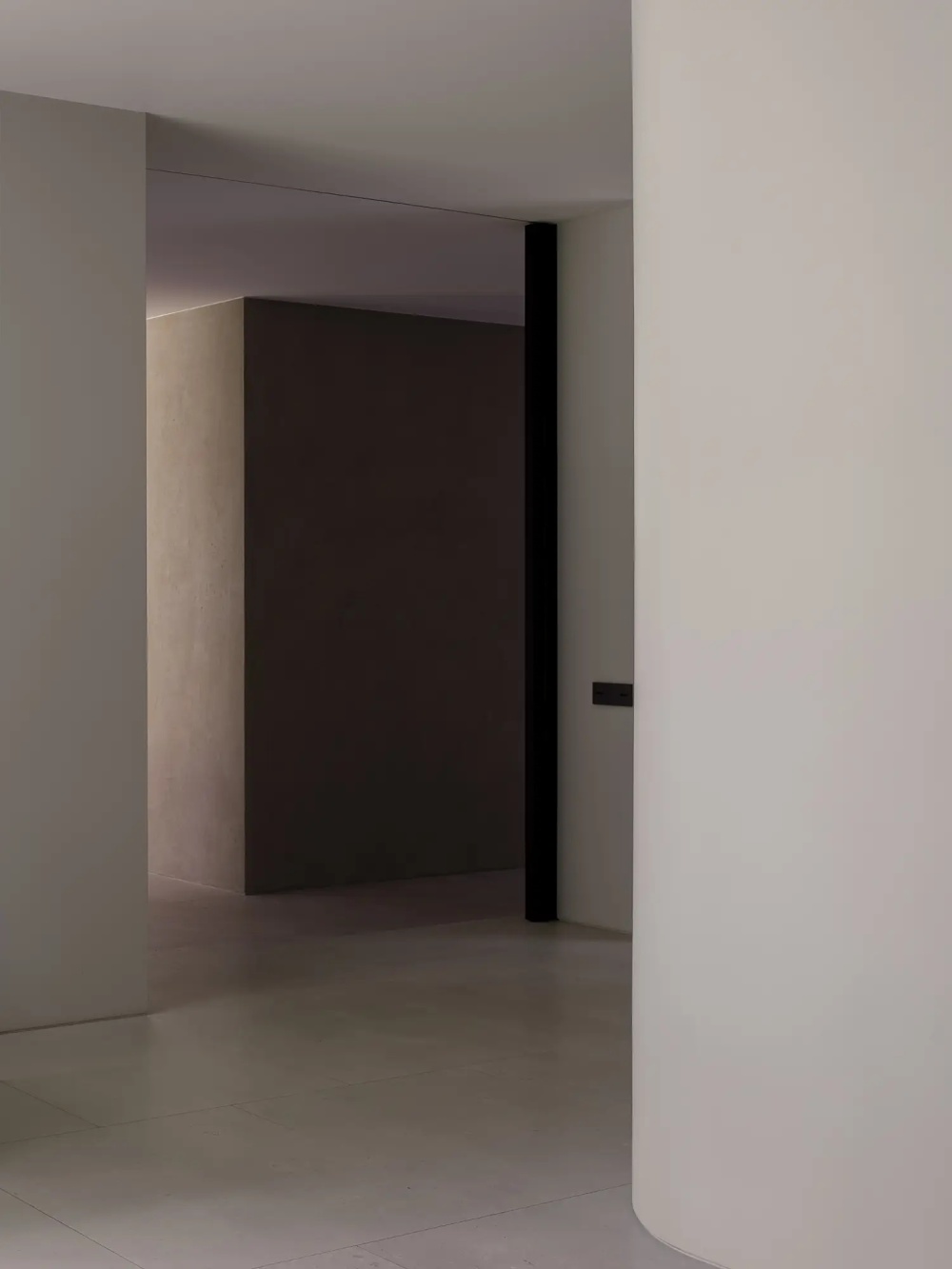
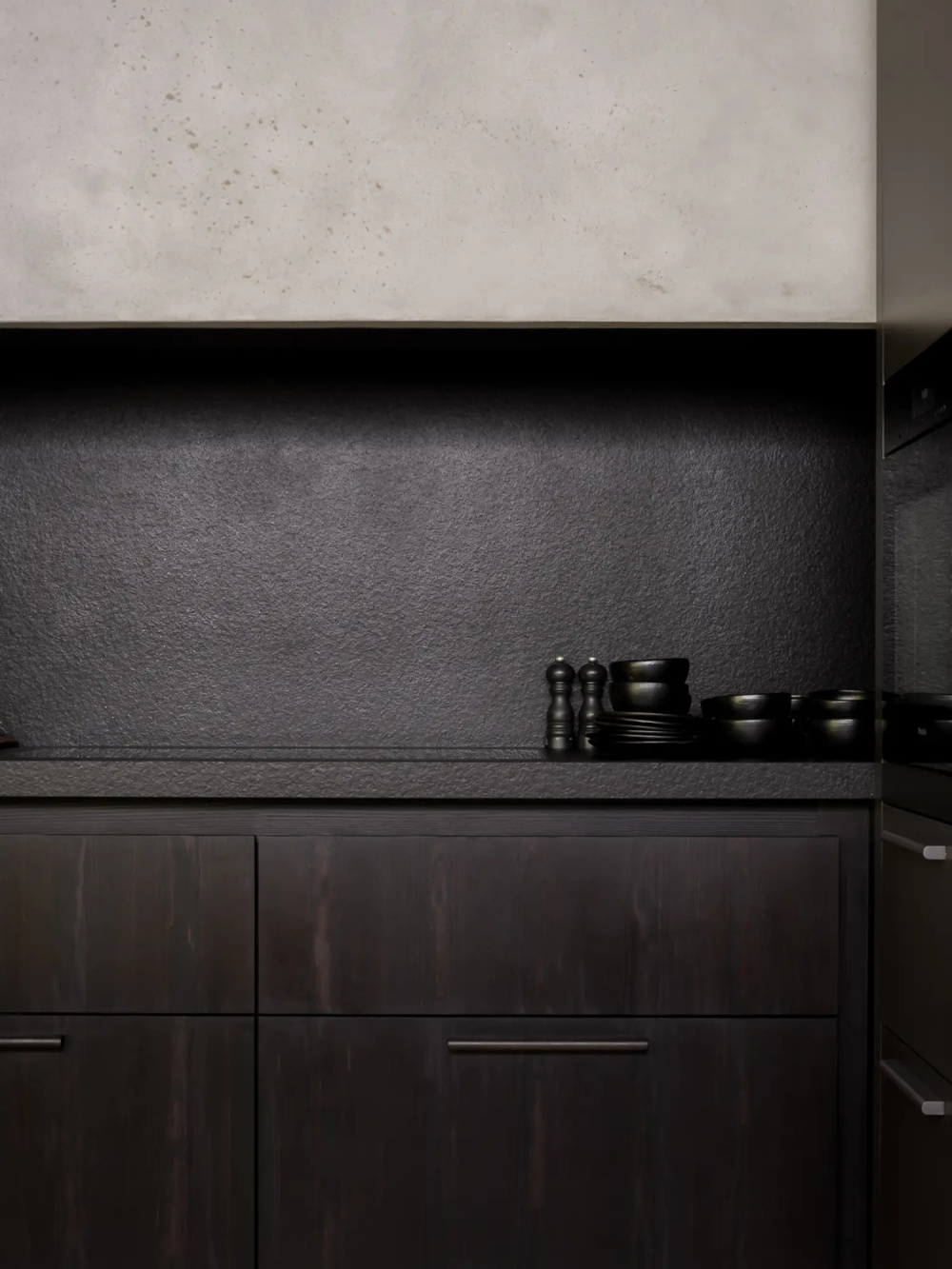
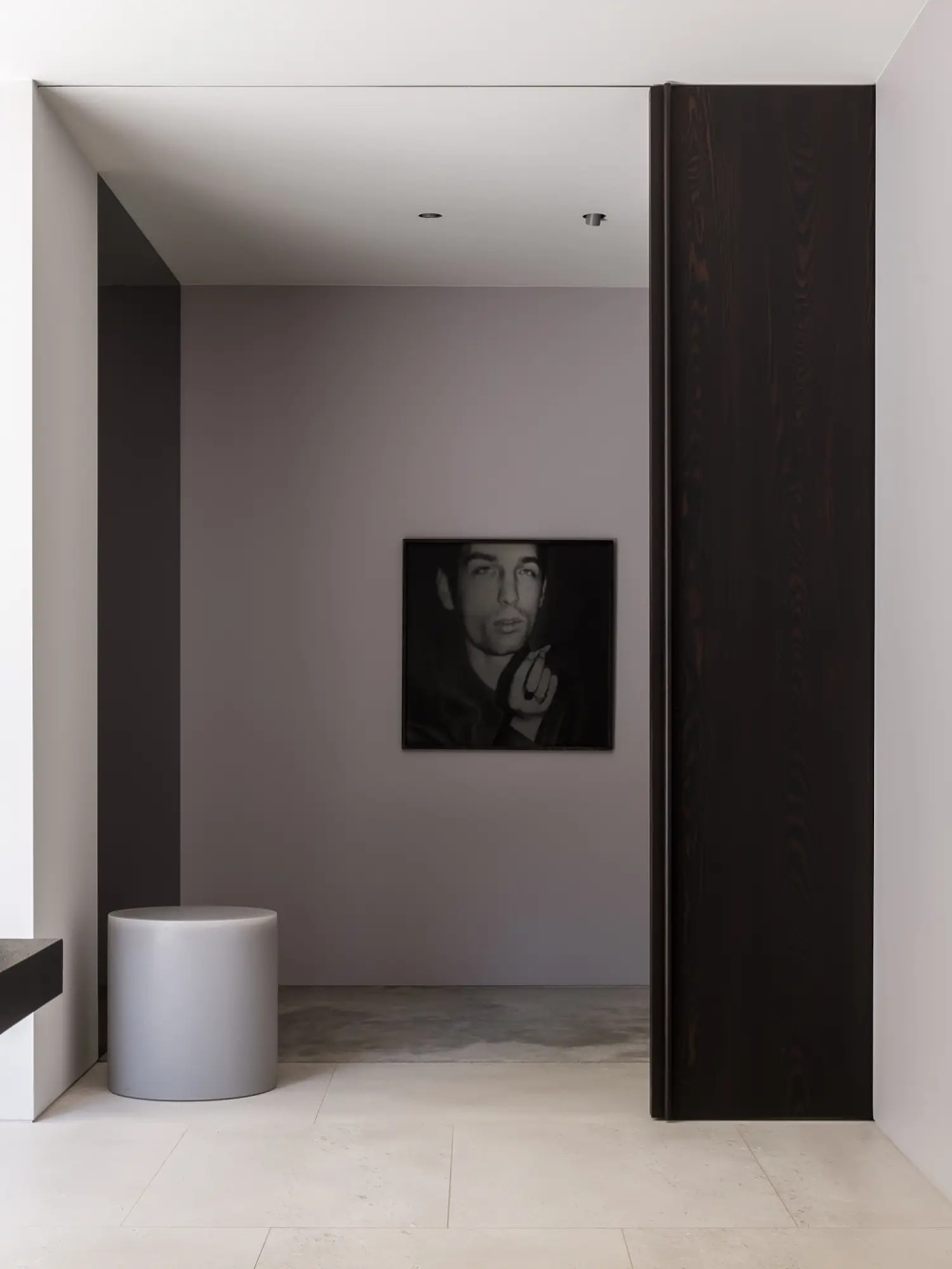
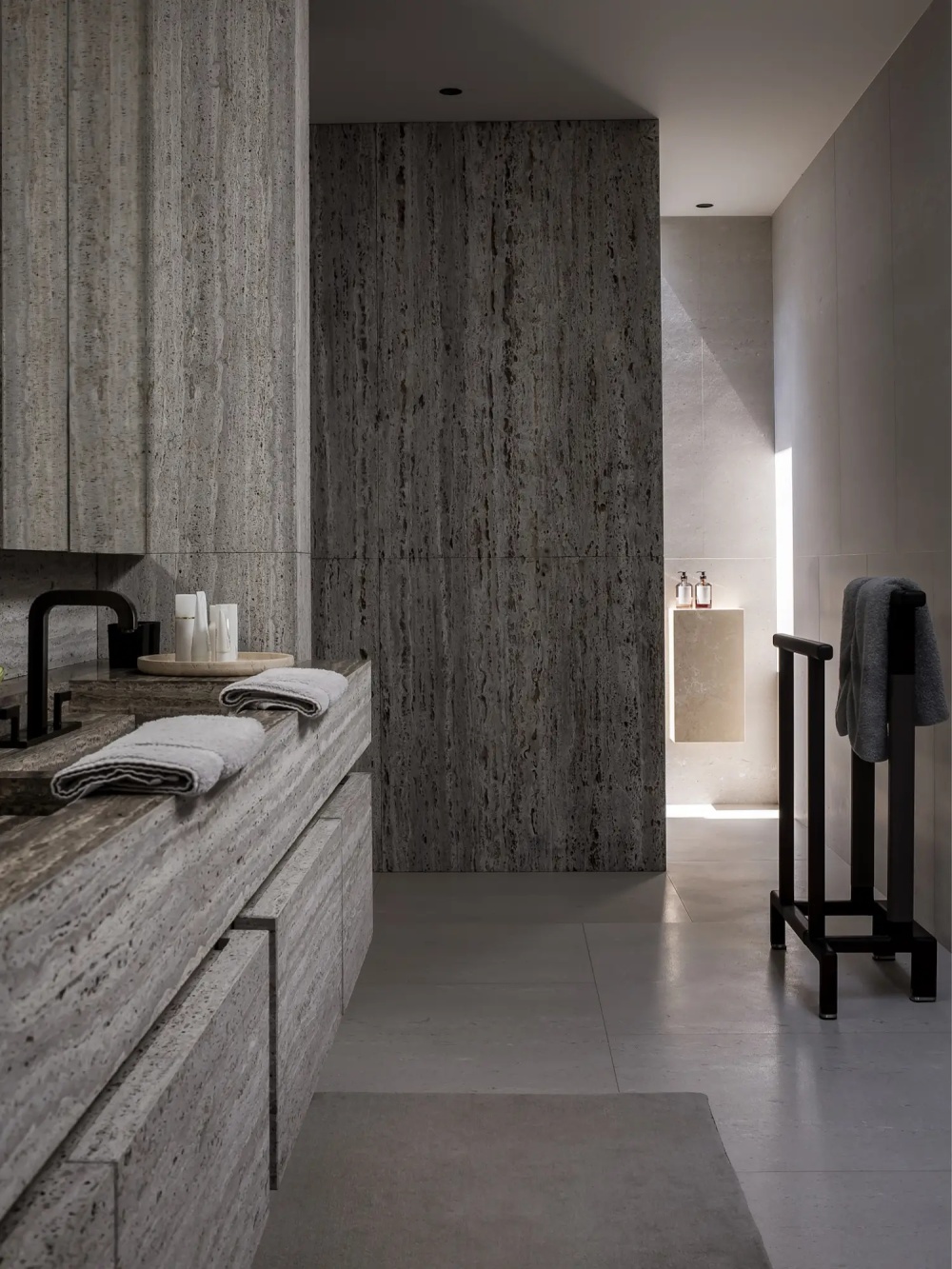
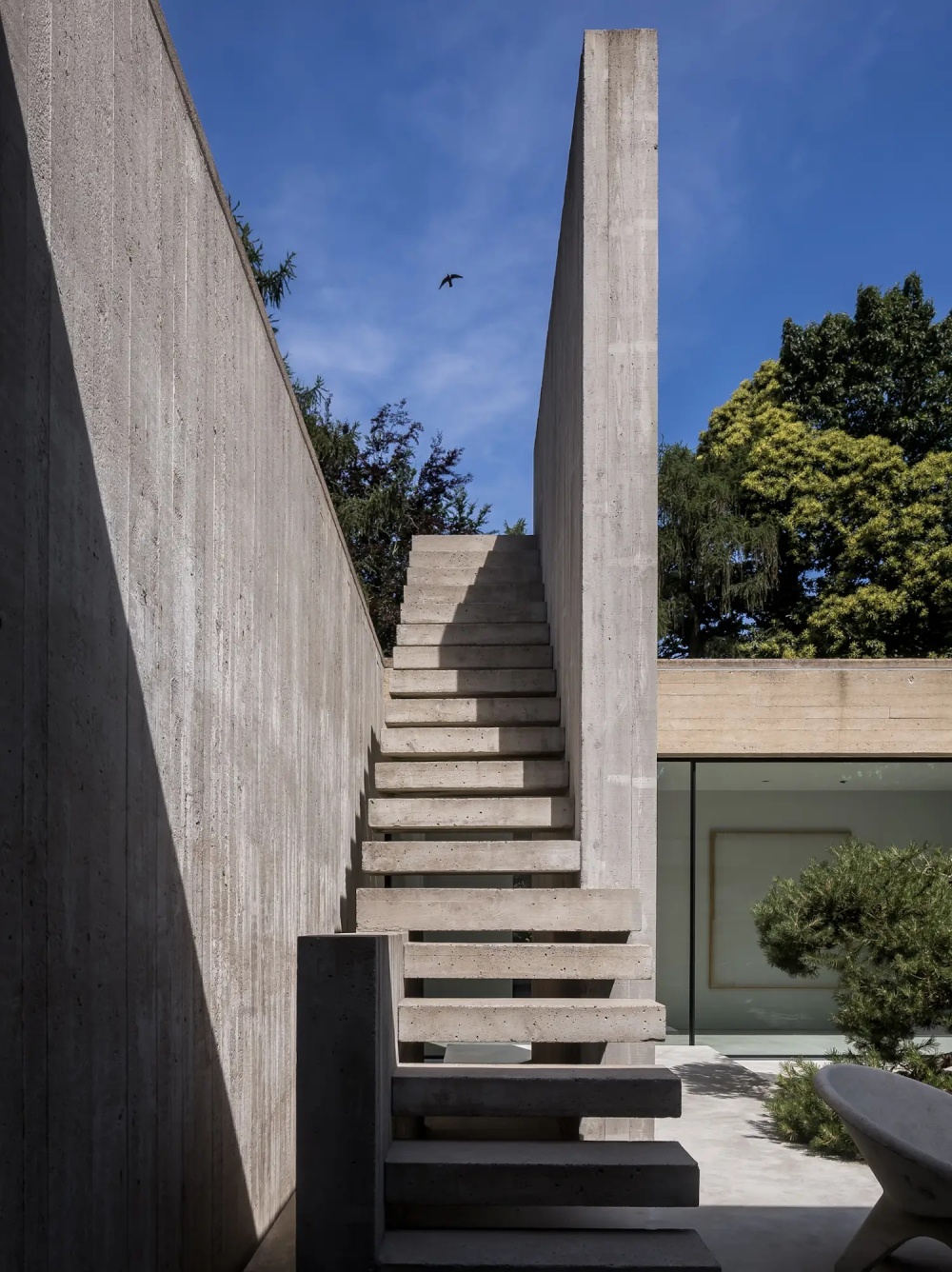
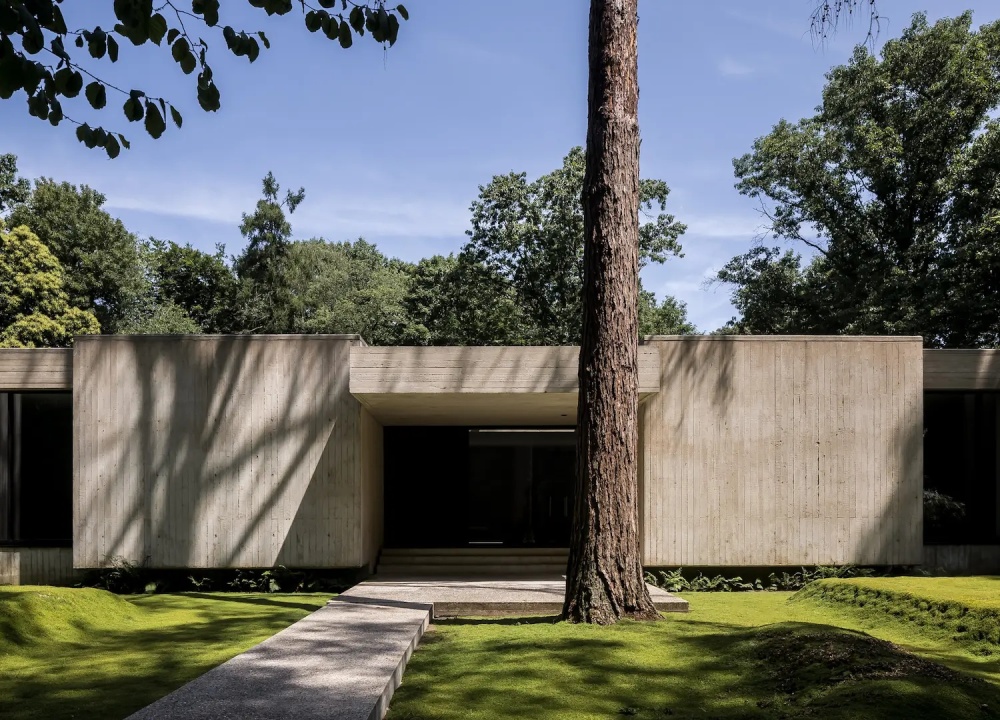
Belgian photographer Thomas De Bruyne captures a meeting of the minds between two of the country’s pre-eminent architects: one who first designed the 1970s concrete pavilion, and the other who now calls it home.
Ghent-based architect Glenn Sestig recalls the moment when architect Ivan Van Mossevelde first visited his home in Sint-Martens-Latem, Belgium. “He had tears in his eyes,” Sestig says, entrusted with restoring the concrete pavilion—one of Van Mossevelde’s earliest projects—alongside his partner Bernard Tournemenne, artist and creative director of Glenn Sestig Architects.
Sestig first came across the brutalist villa by accident as a young architect while walking through the forest. Asking the owner to explore the house from the outside, to which they declined, he took a few photographs of the nameplate and street, and promised himself he would write a letter if it were ever to be sold.
“I kept those pictures for years, but eventually I threw them away,” Sestig says, before a local journalist called him to let him know the home was quietly for sale. “I couldn’t believe it—20 years later someone was calling me about the house I had fallen in love with.”
Writing to the owners’ grandson with the intention of preserving and “bringing art back into the home” led Sestig to secure it in just under 48 hours—aided by the architect’s internationally recognised oeuvre, which includes collaborations with the likes of Belgian fashion designers Raf Simons and Ann Demeulemeester.
Sestig acknowledges it’s incredibly rare to find a house of this size—1,000 square metres on 4,600 square metres of land. The home’s size also wasn’t typical for the area in 1972, when the then- owners had to request permission from 40 neighbours for the flat-roofted, modern design. The brief was to create a living gallery for the art-collecting owners, who, upon seeing the first drawings, had only one concern: that the home would be too small for their collection. This prompted the request to double its size.