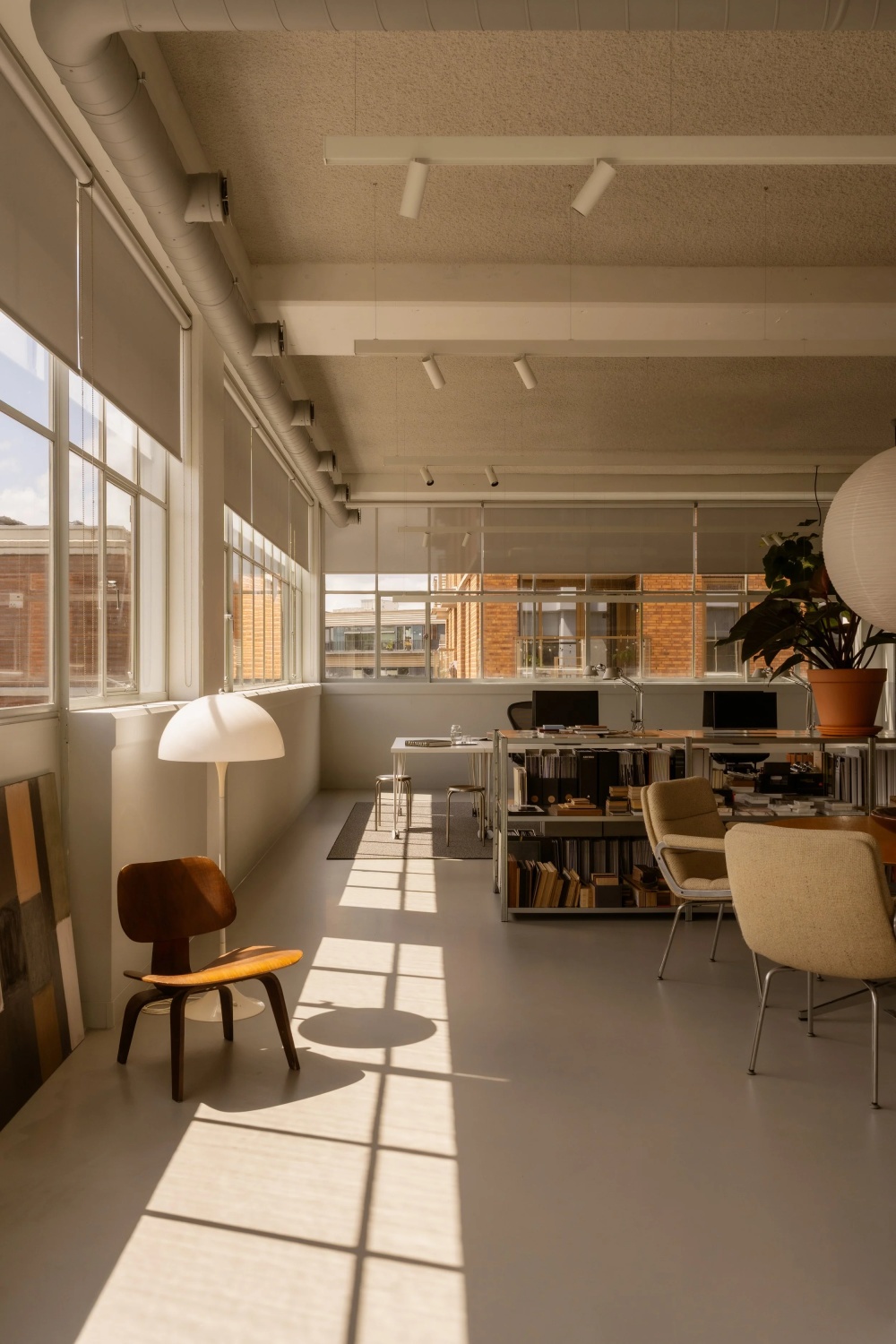
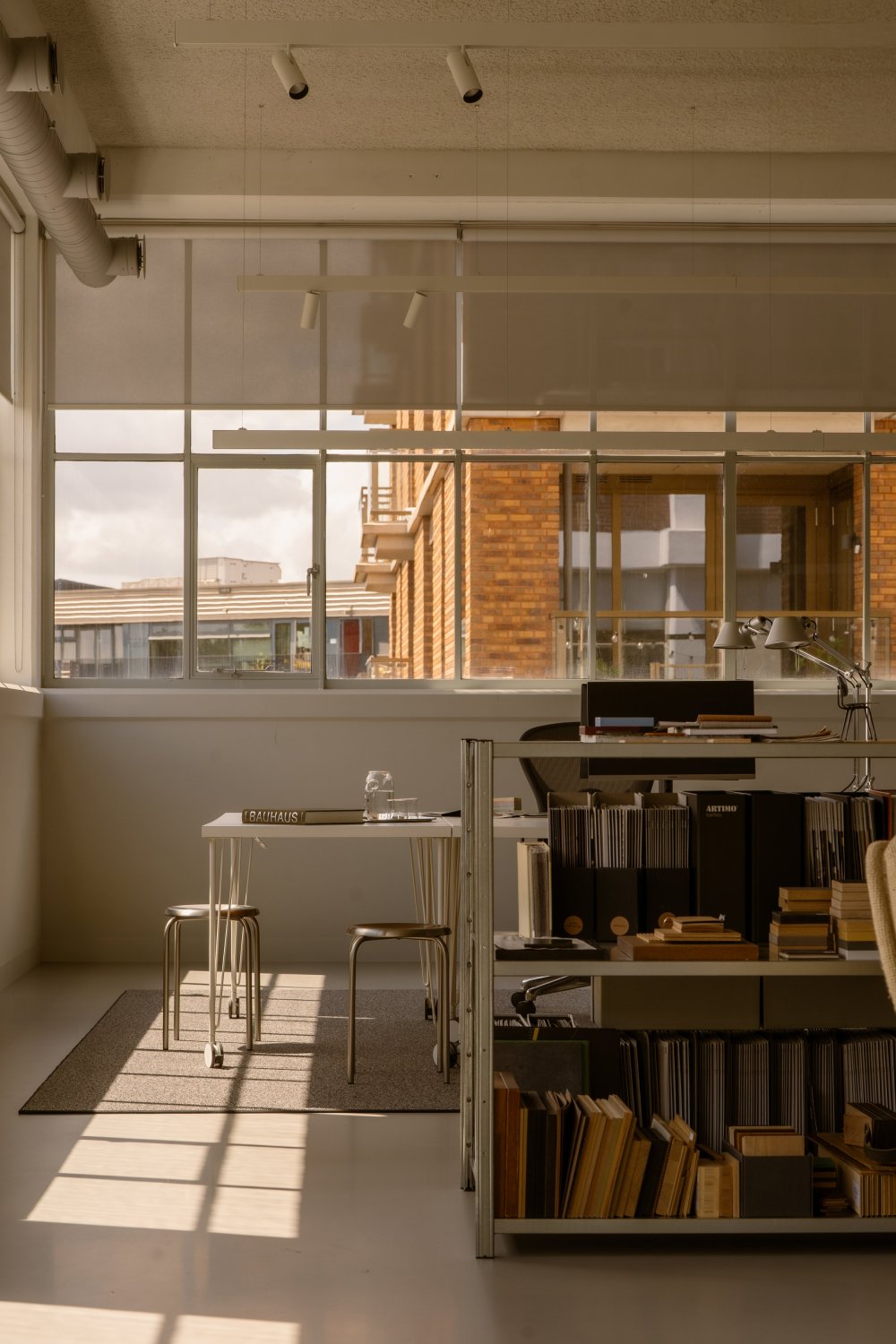
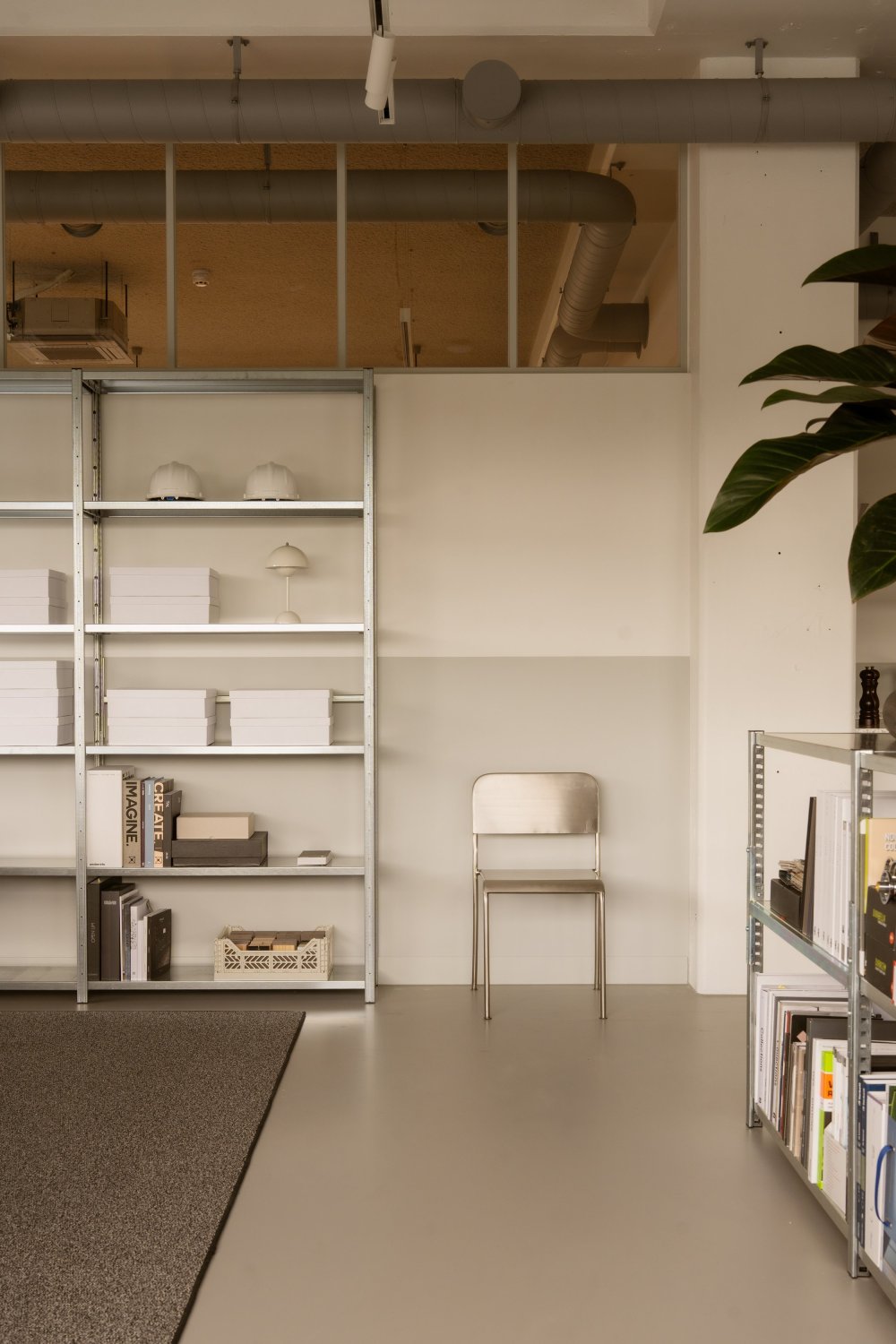
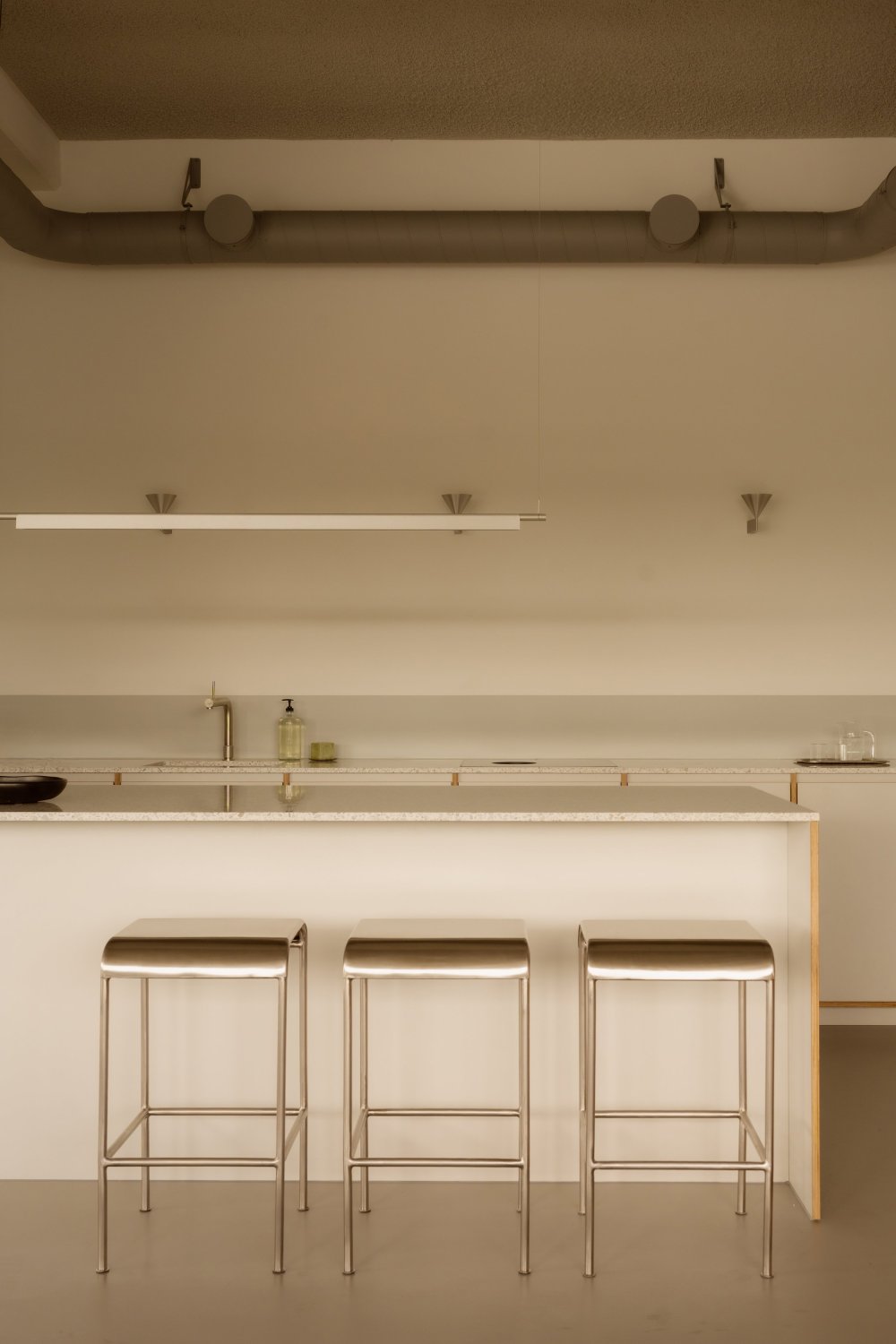
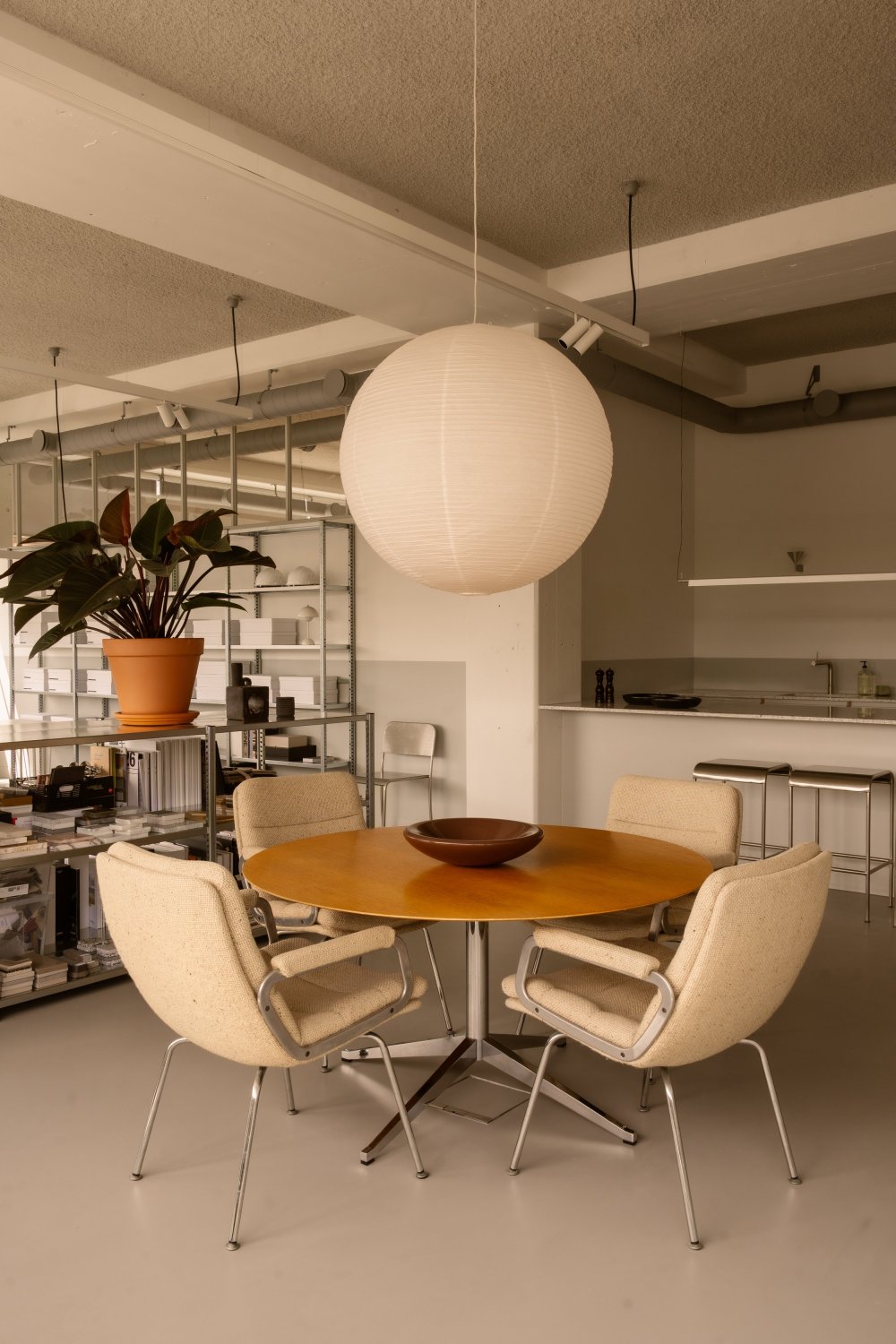
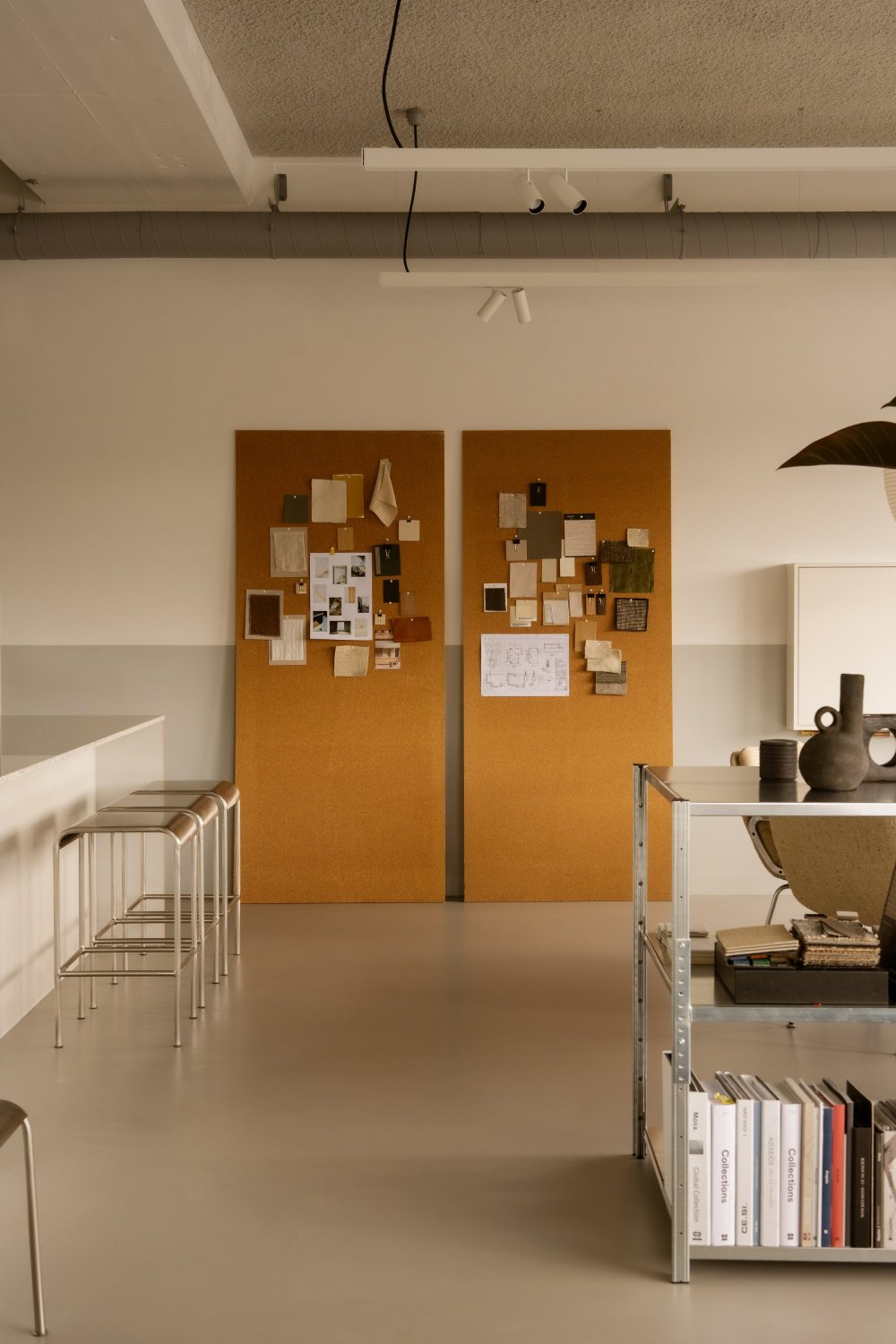
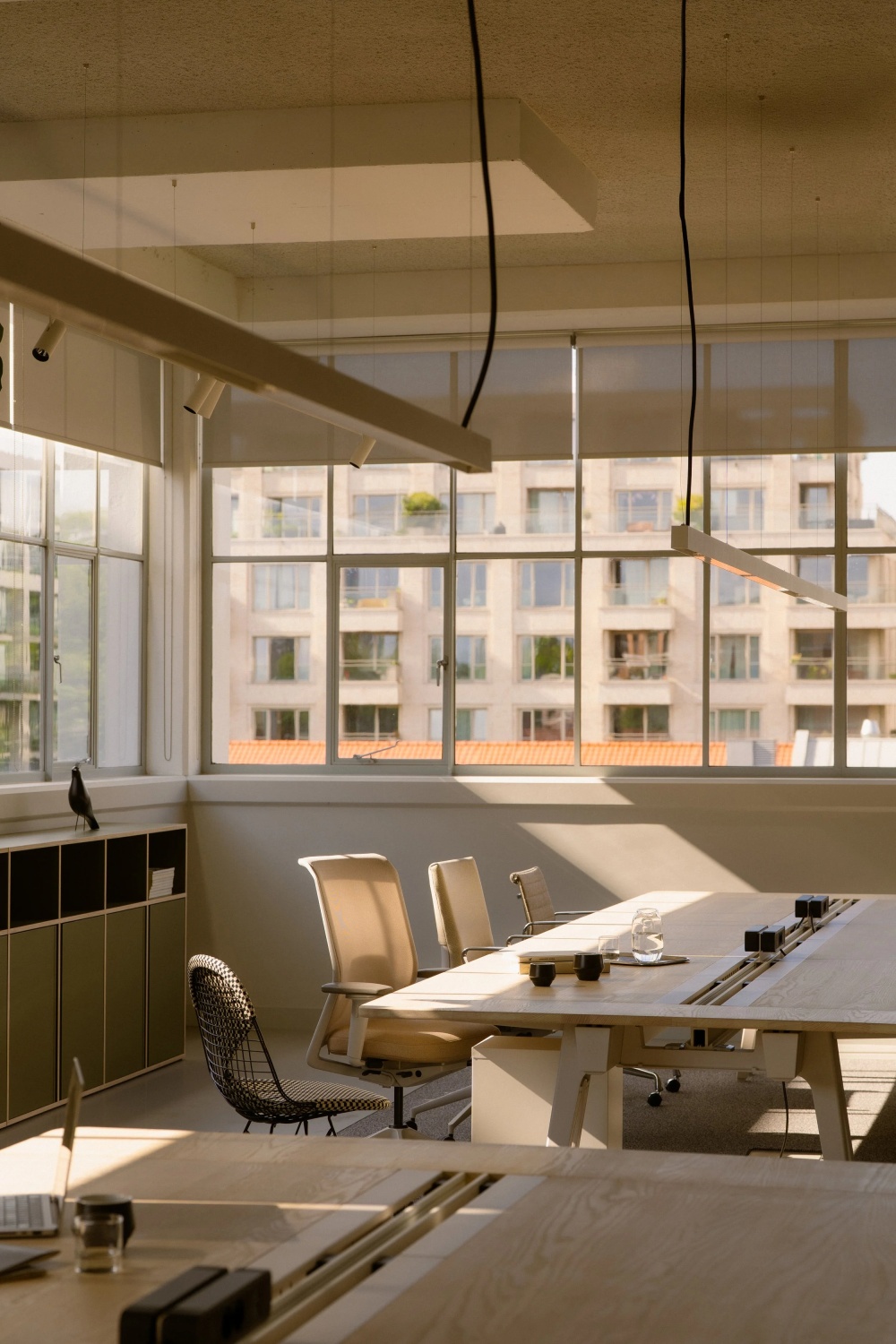
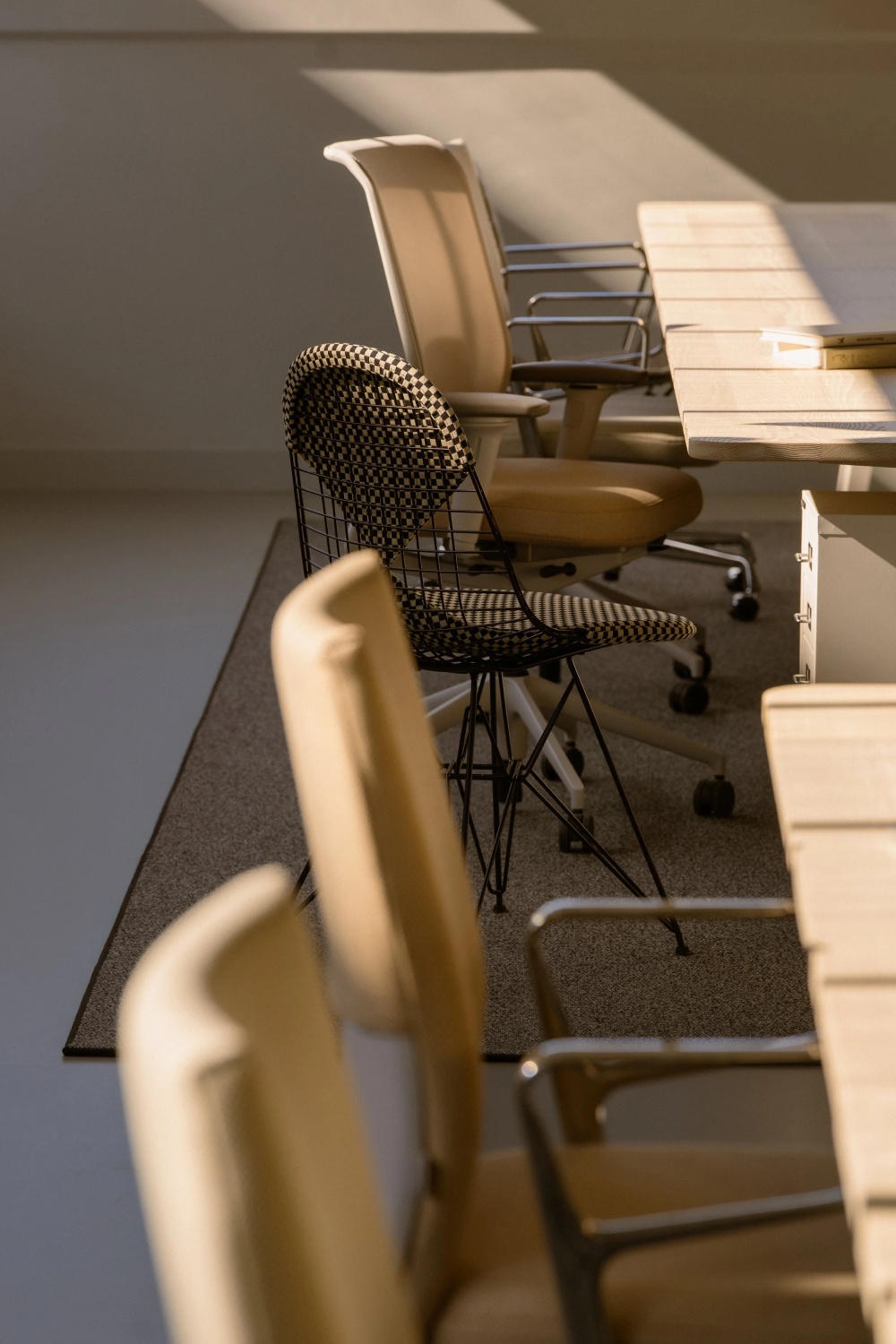
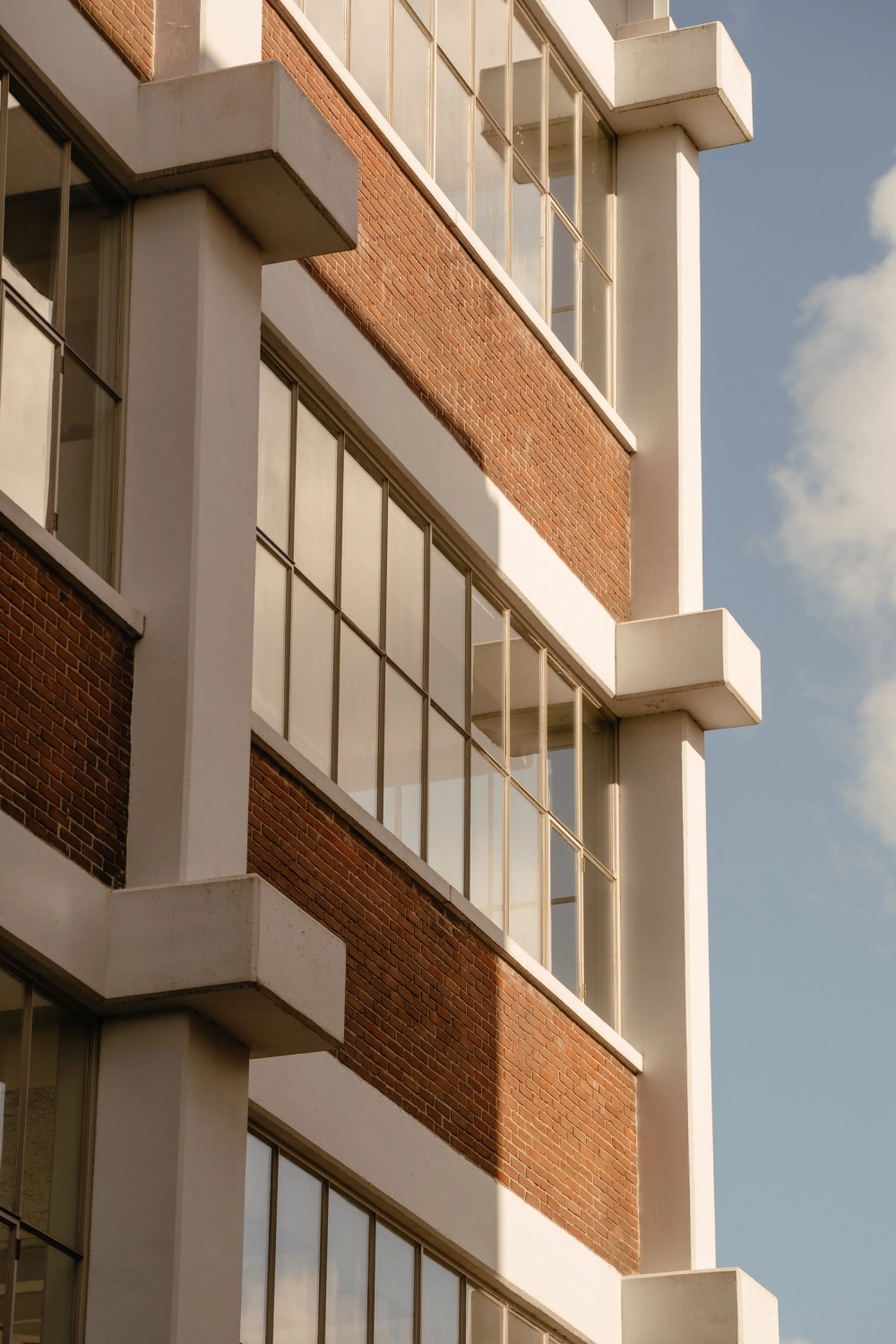
In Amsterdam’s eastern docklands, a former paint factory from 1958 has been carefully adapted into a creative hub for interior architecture studio Heinzel De Vries.
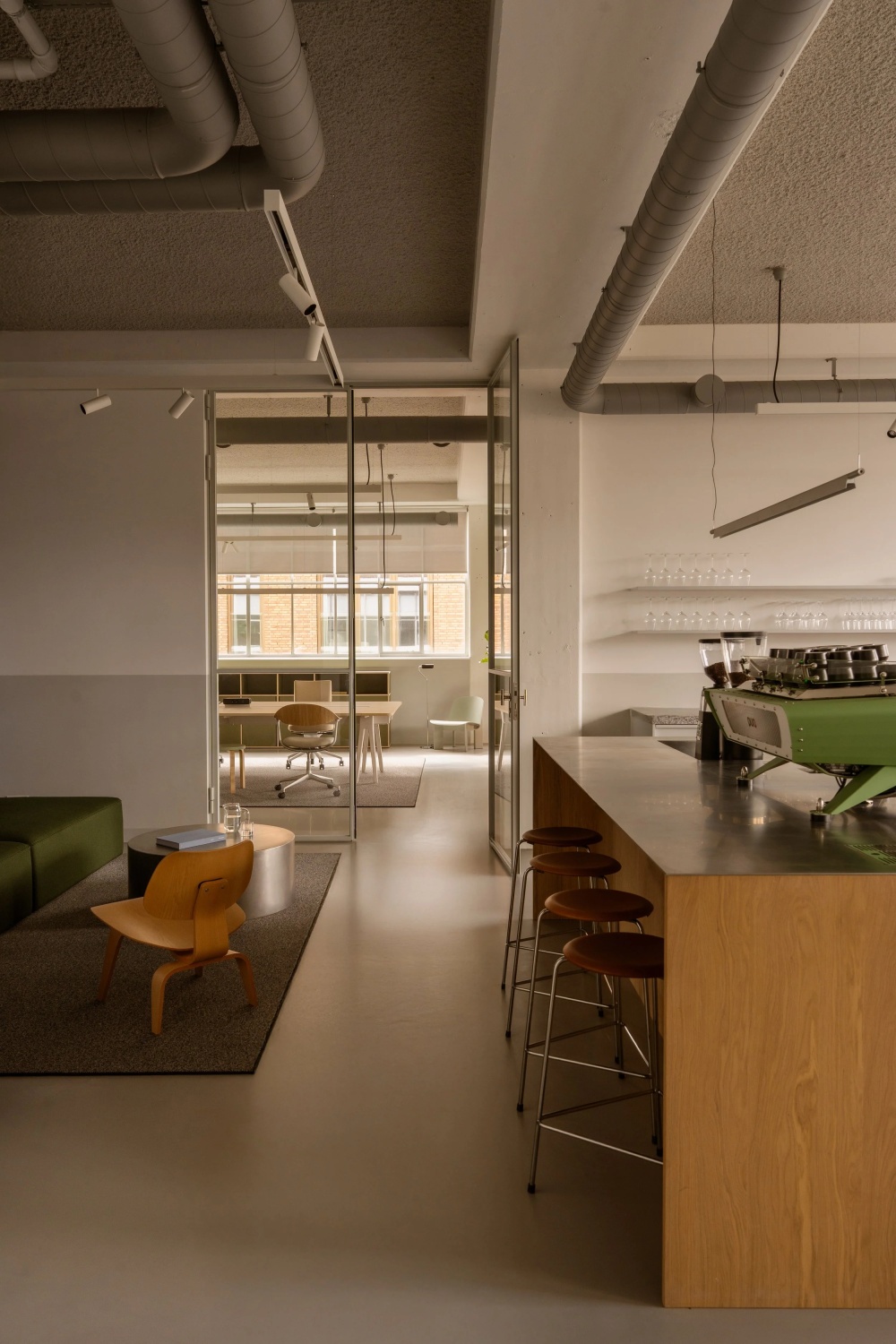
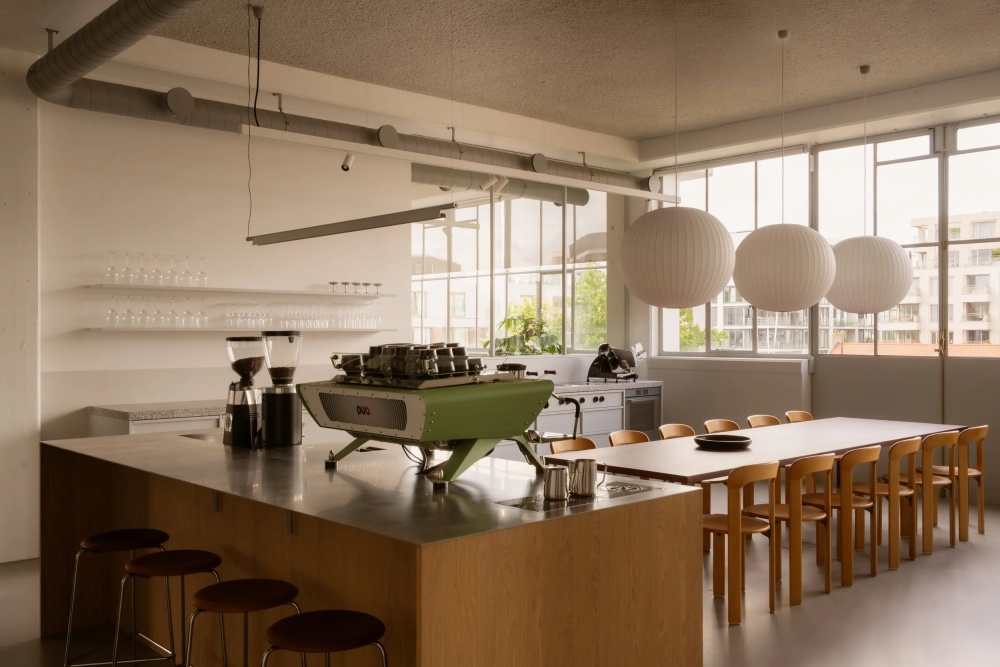
Now a protected municipal monument within the redeveloped Cruquius district, the building stands at the intersection of industrial legacy and contemporary use, shared with a barista supplies brand and a small community of creative enterprises.
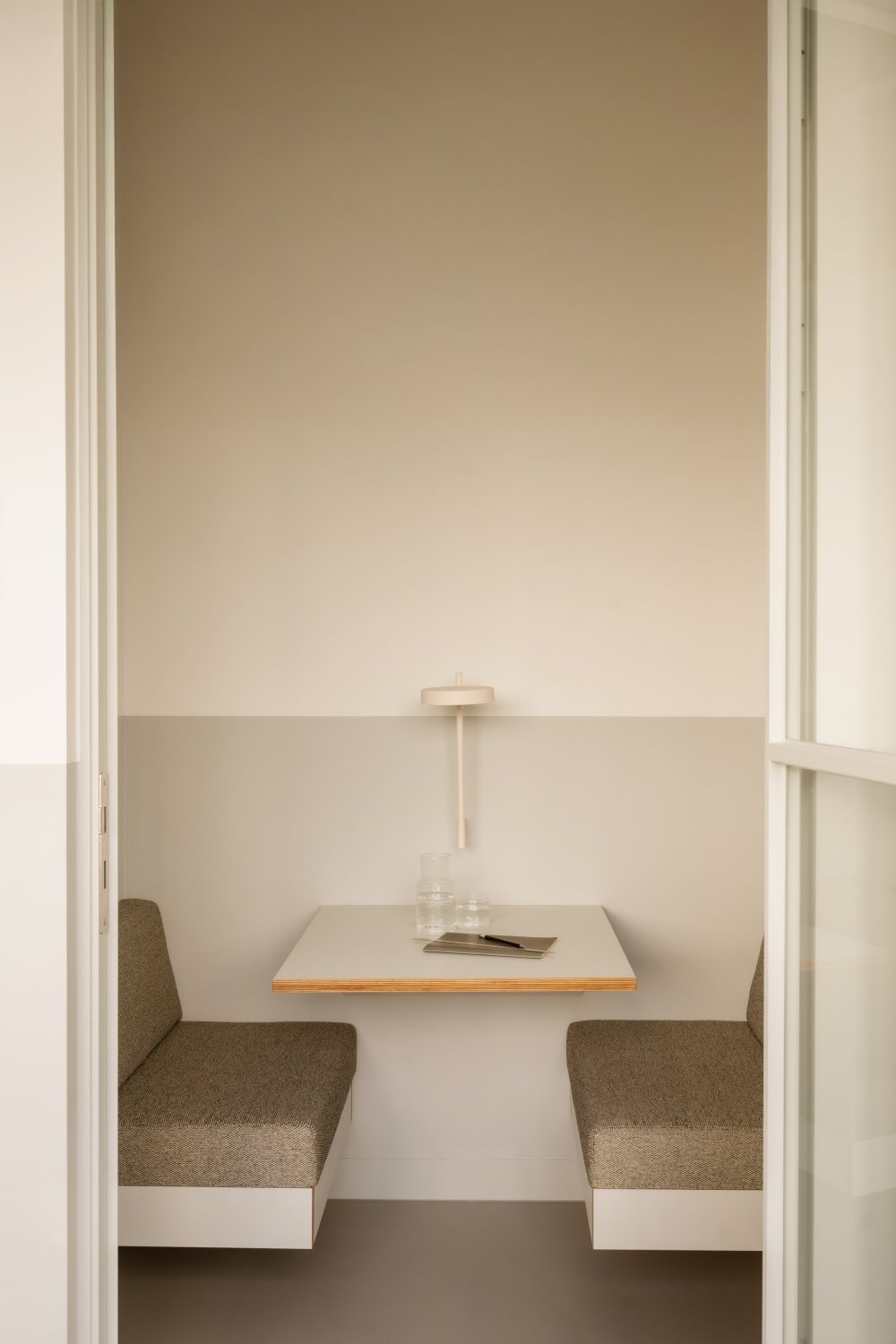
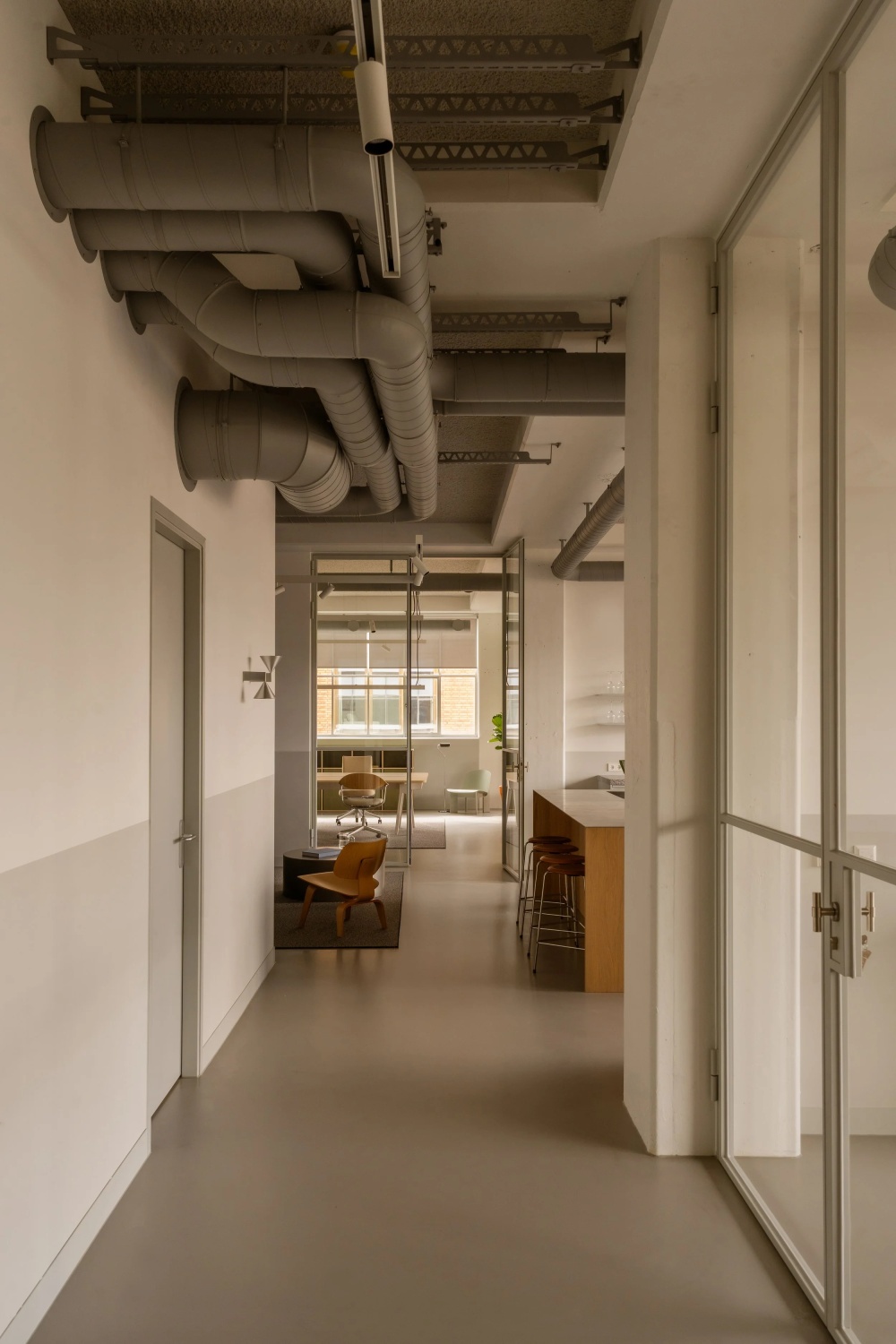
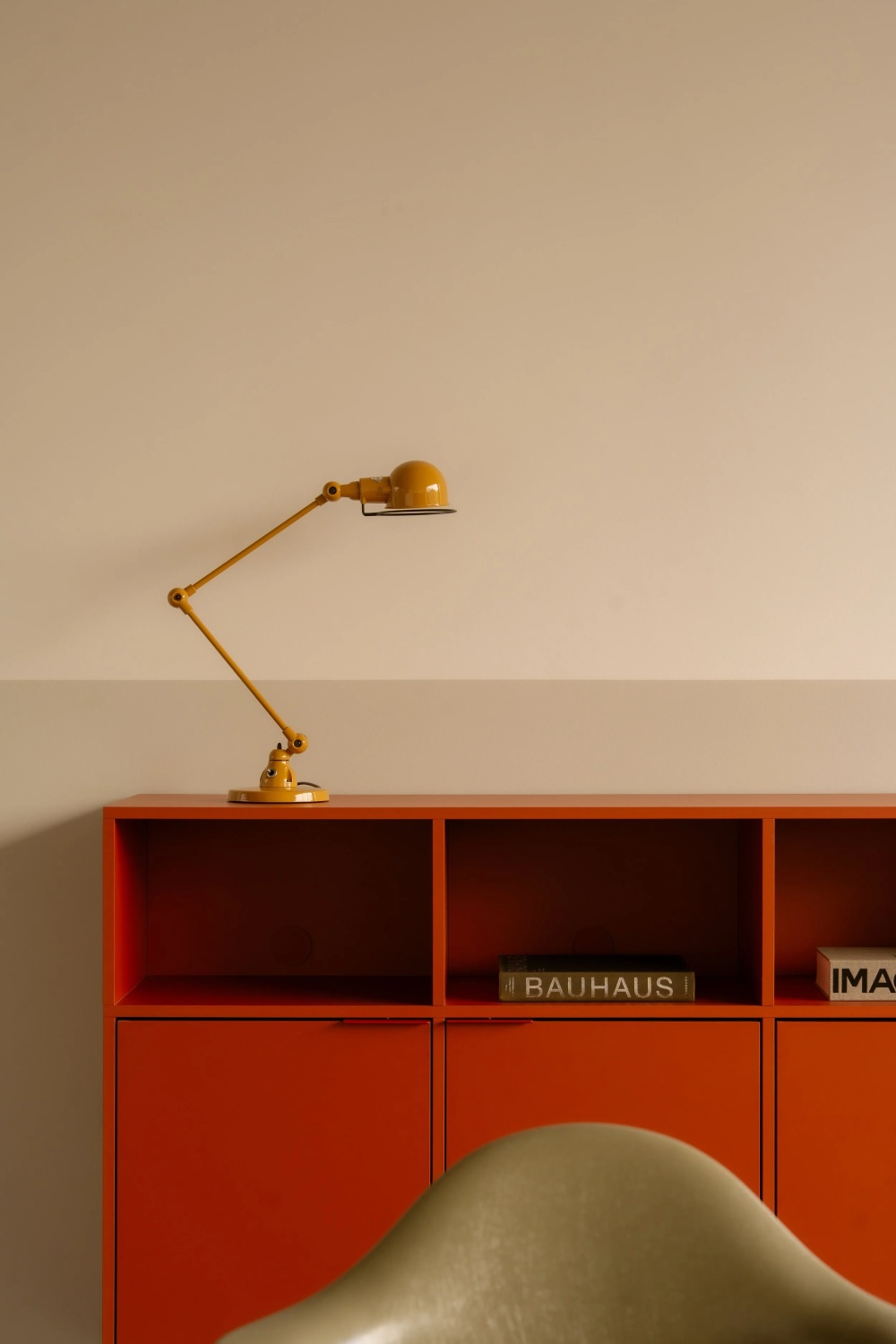
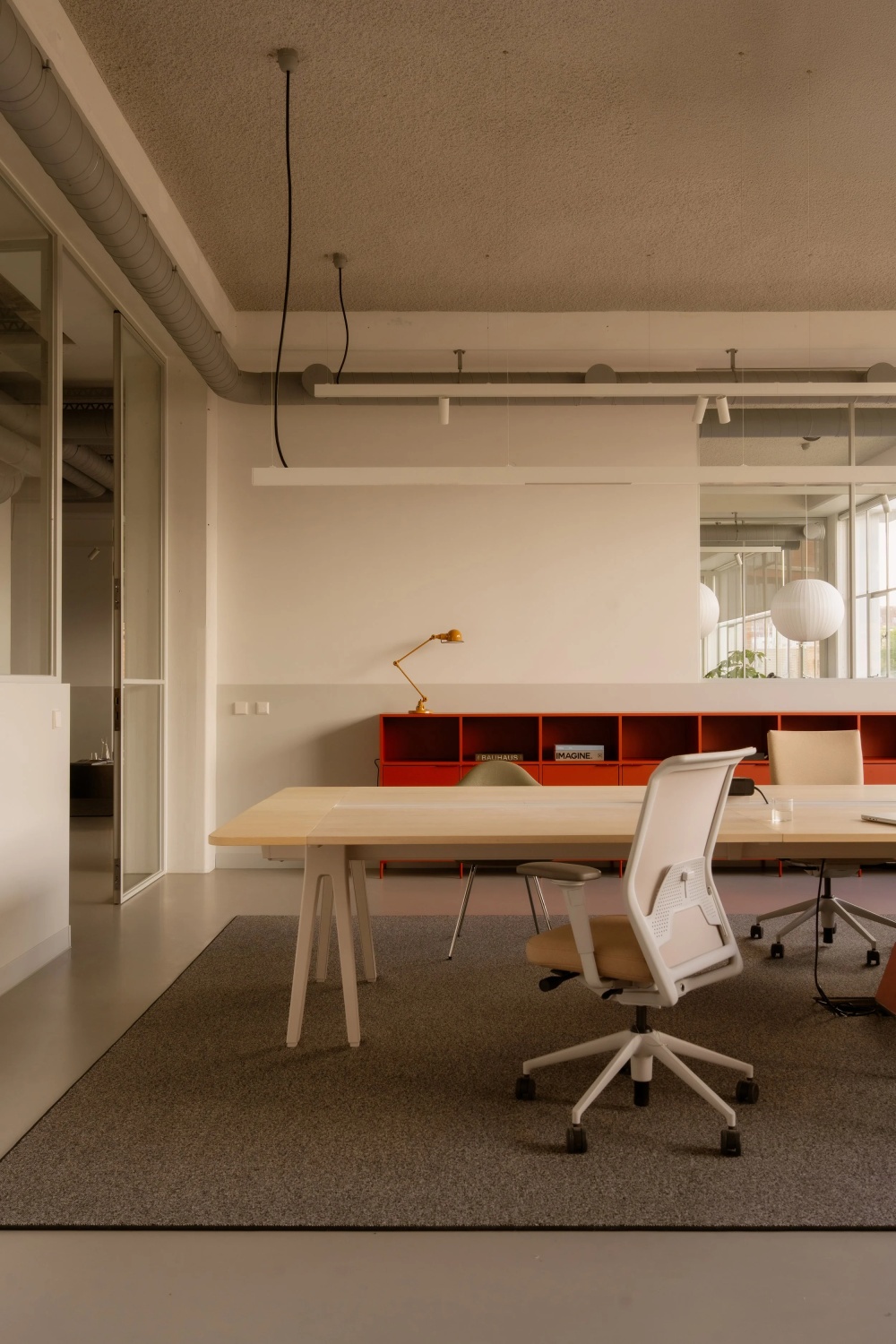
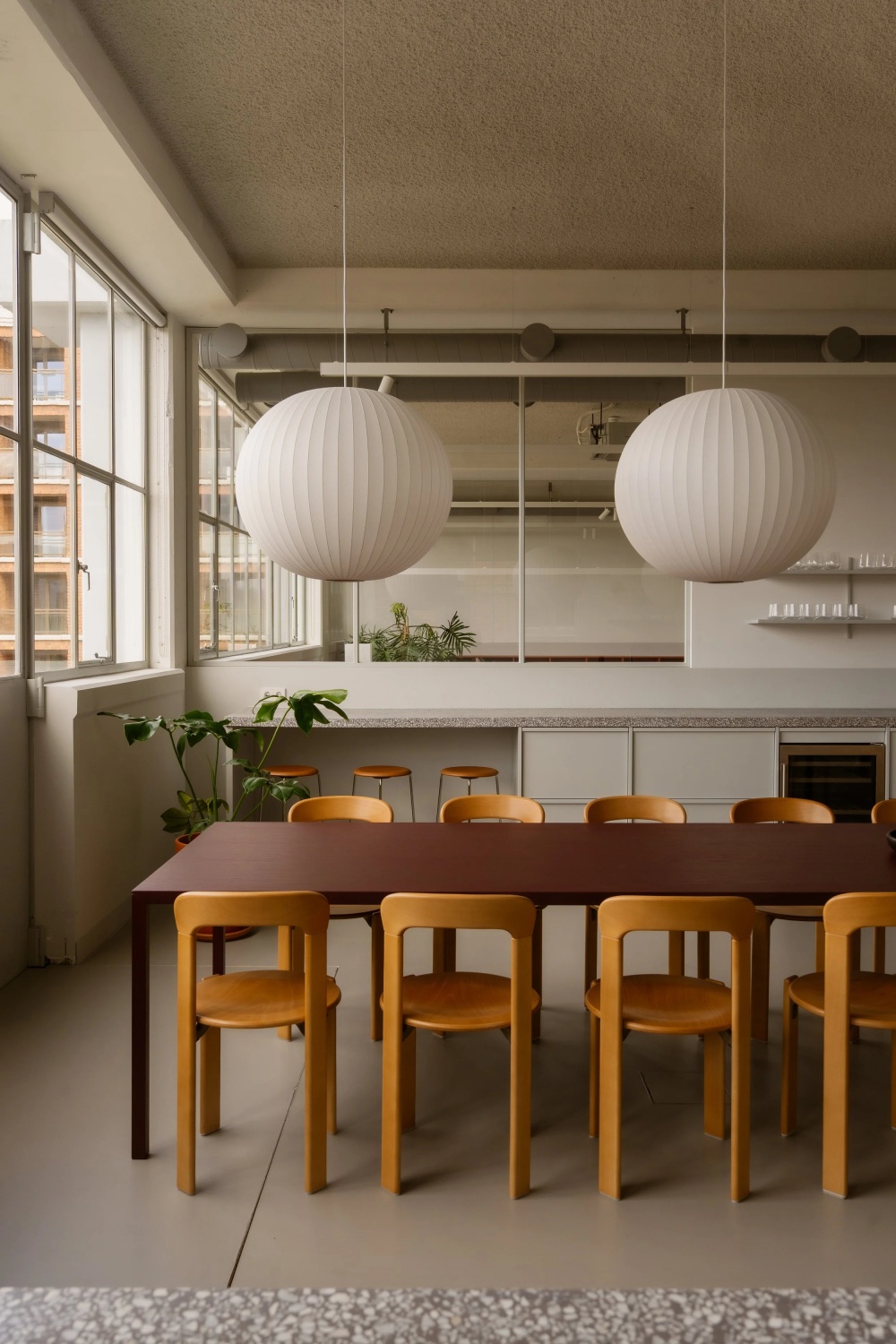
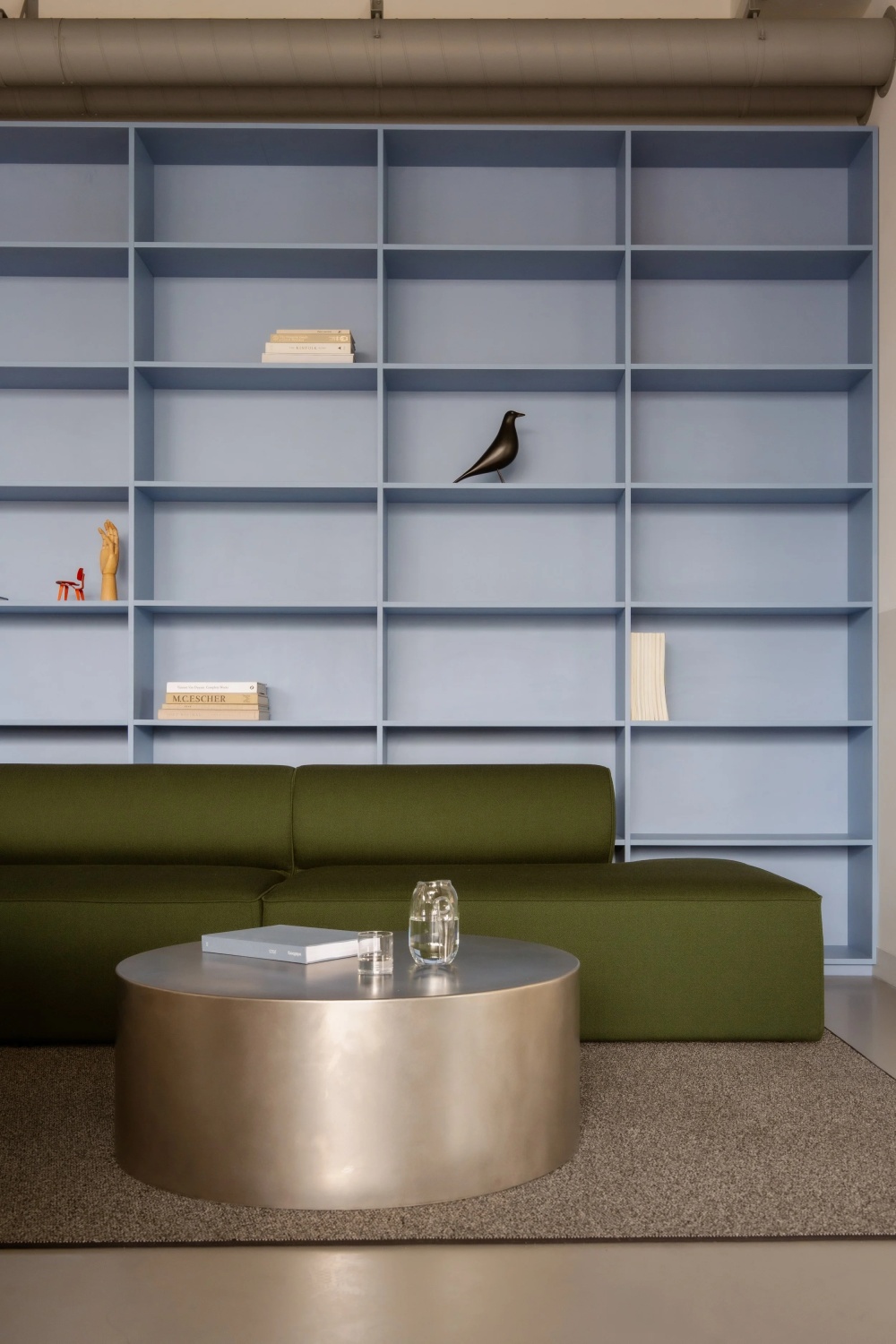
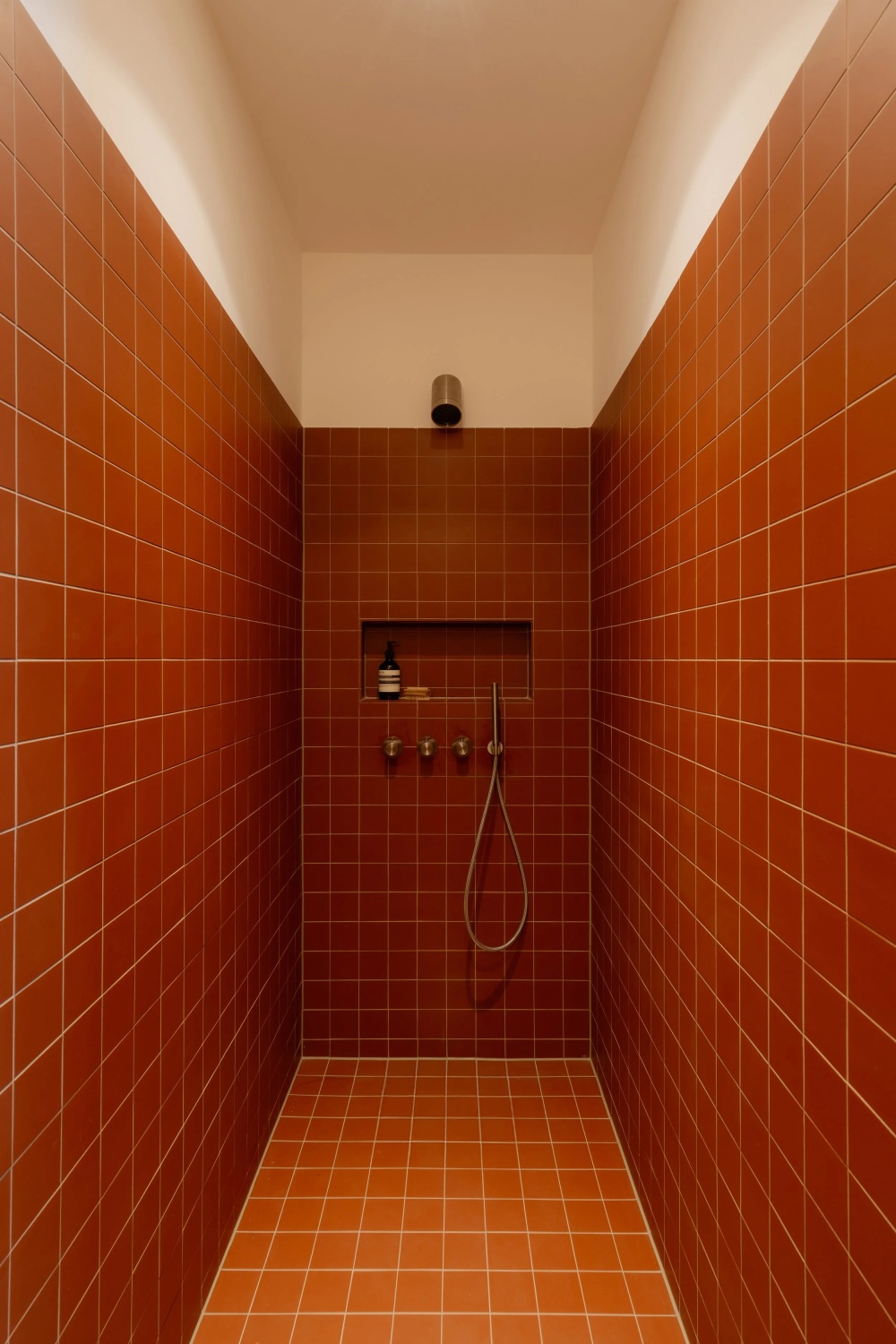
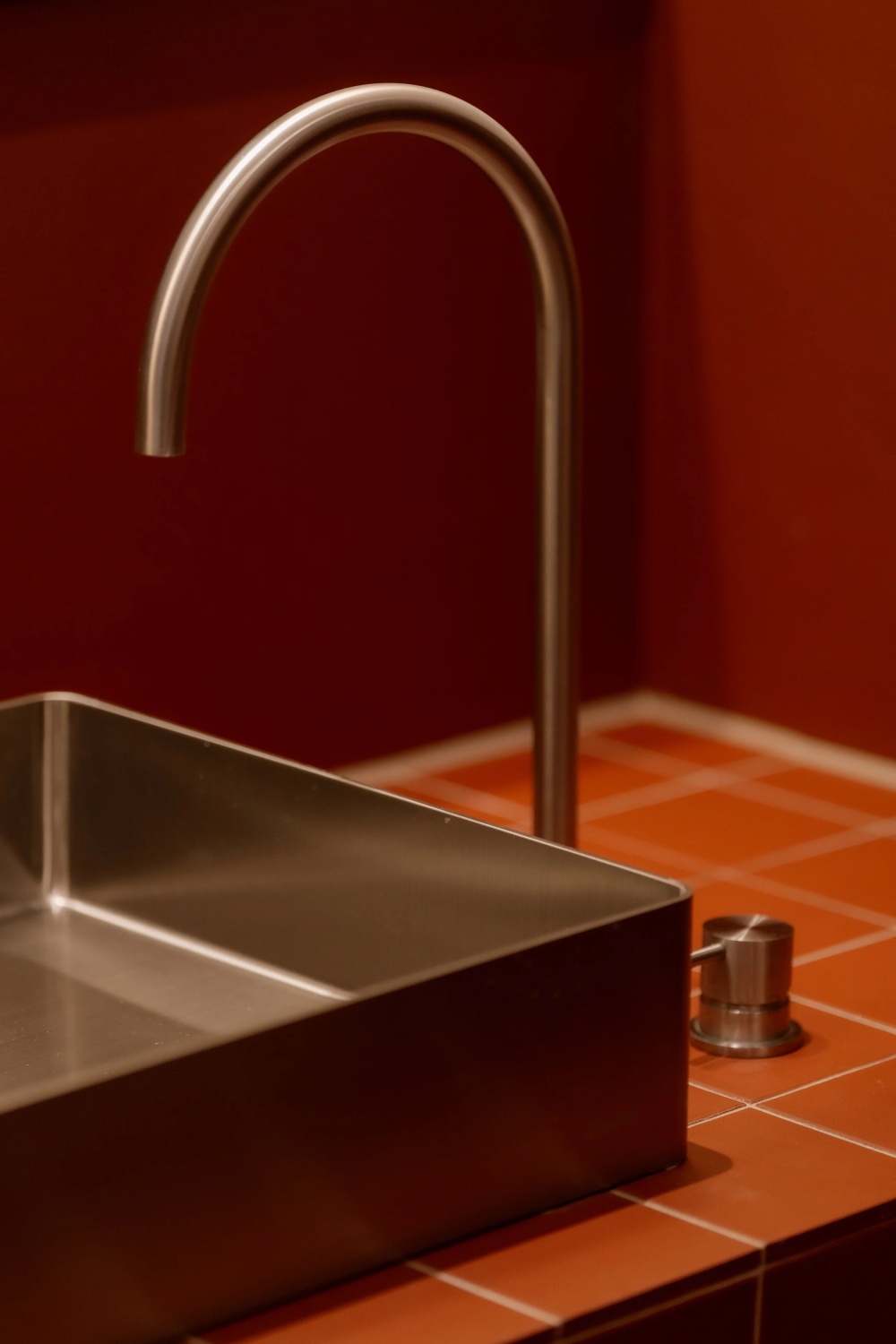
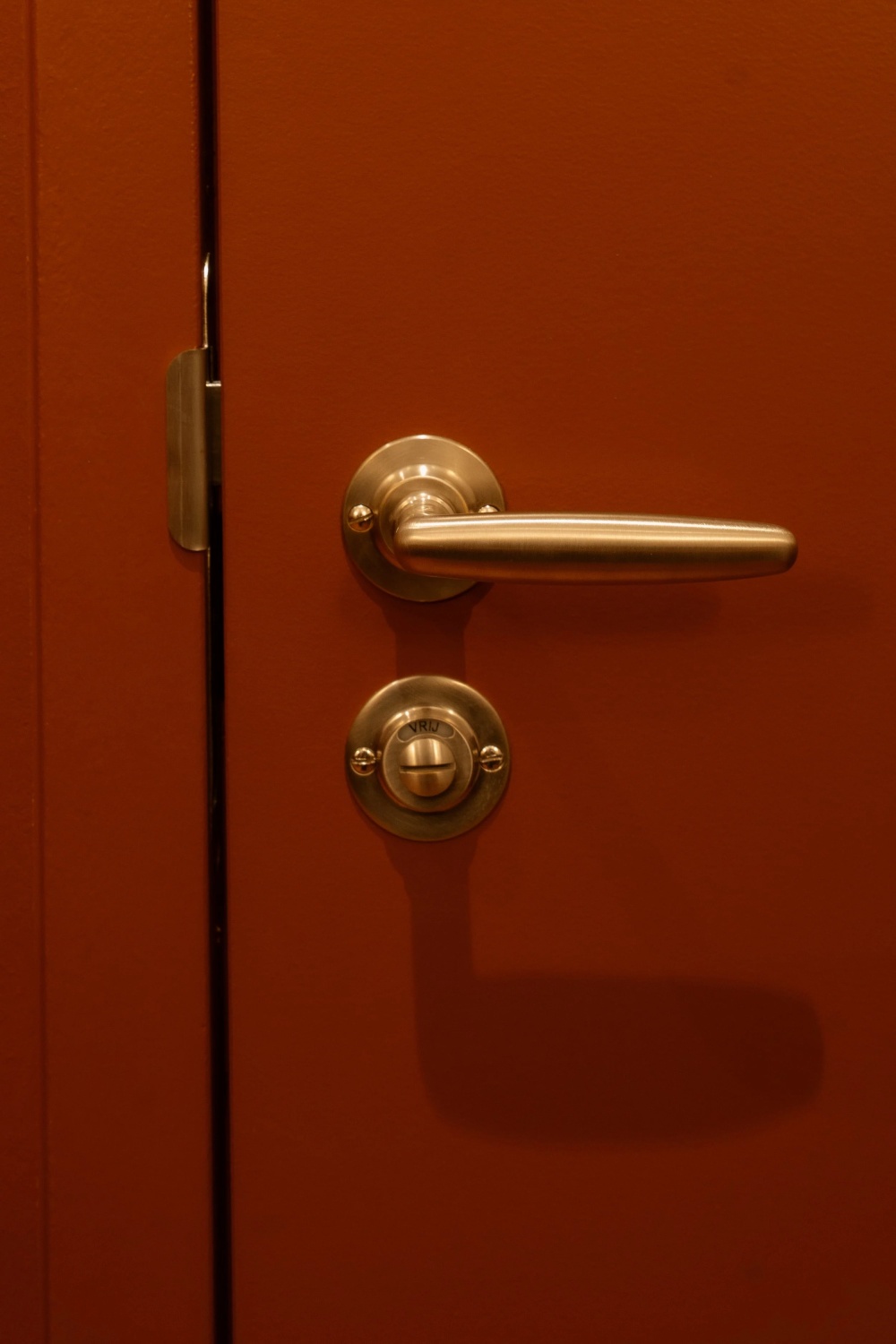
The intervention is grounded in close study of the factory’s past. Archival research informed the reintroduction of original details, most notably the grey-painted wainscoting that once lined the production halls and now reappears as a tactile reminder of the building’s earlier life. A palette of deep, saturated hues is punctuated by red, blue and grey, recalling the utilitarian tones of mid-century manufacturing environments while lending the interior a composed intensity.
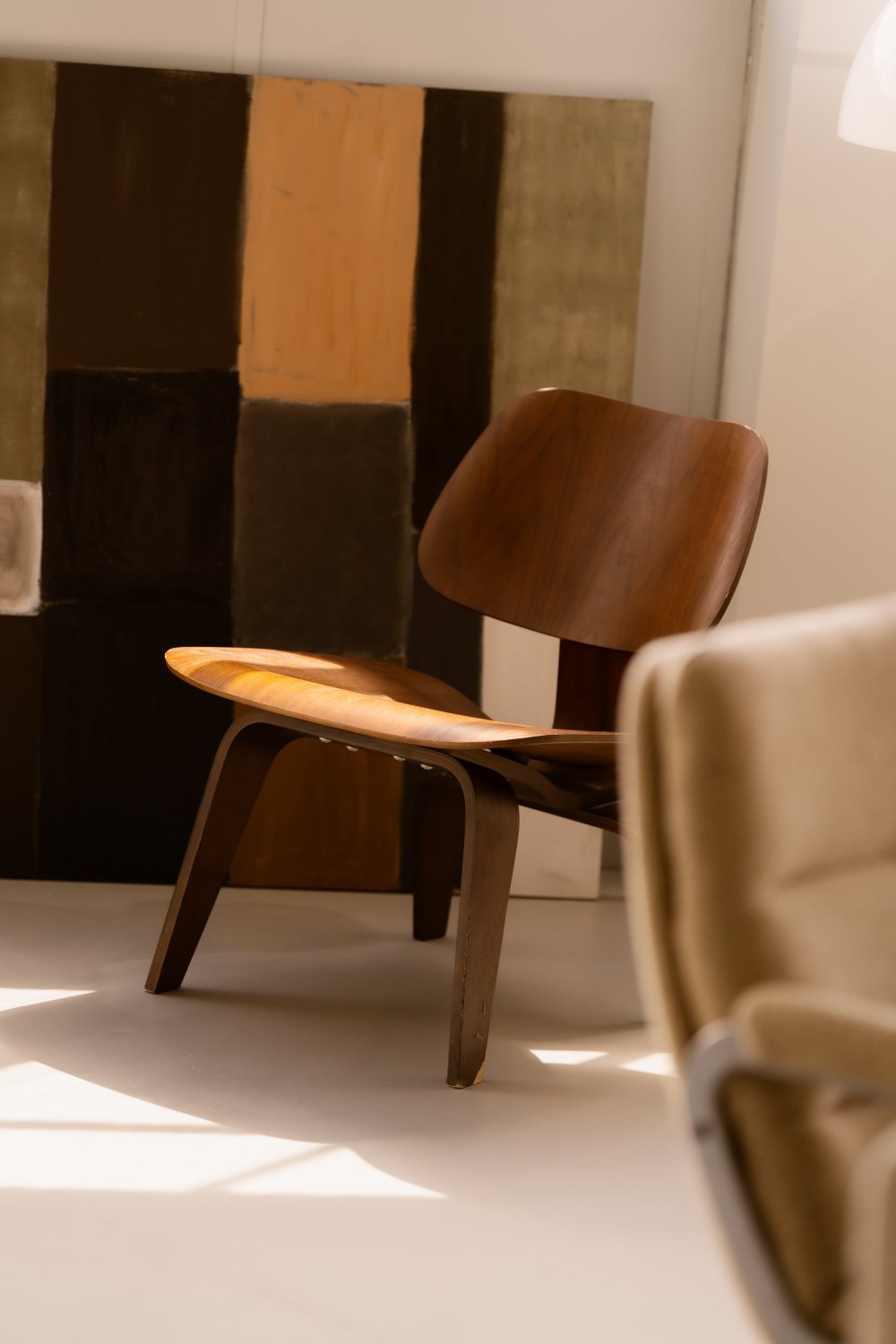
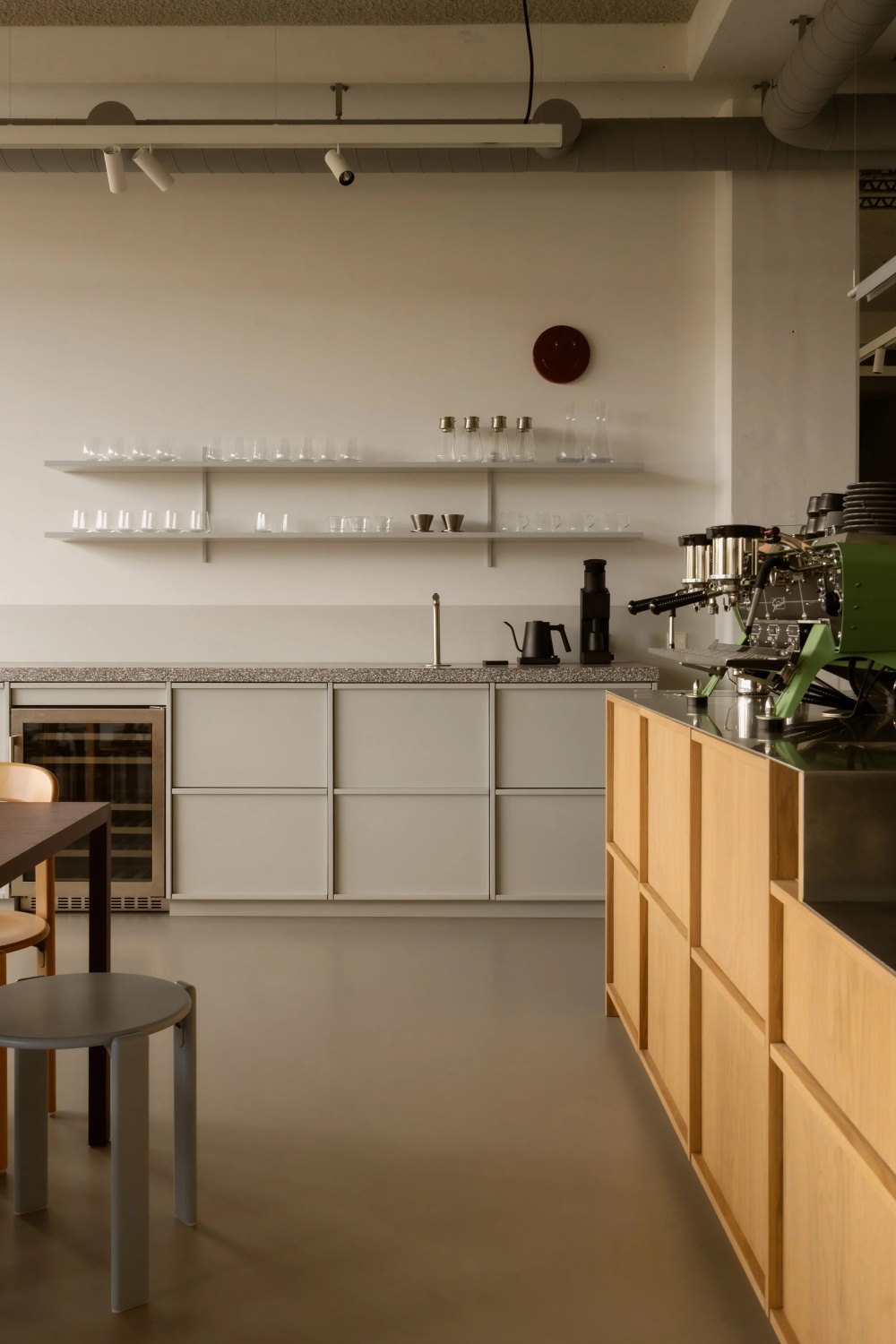
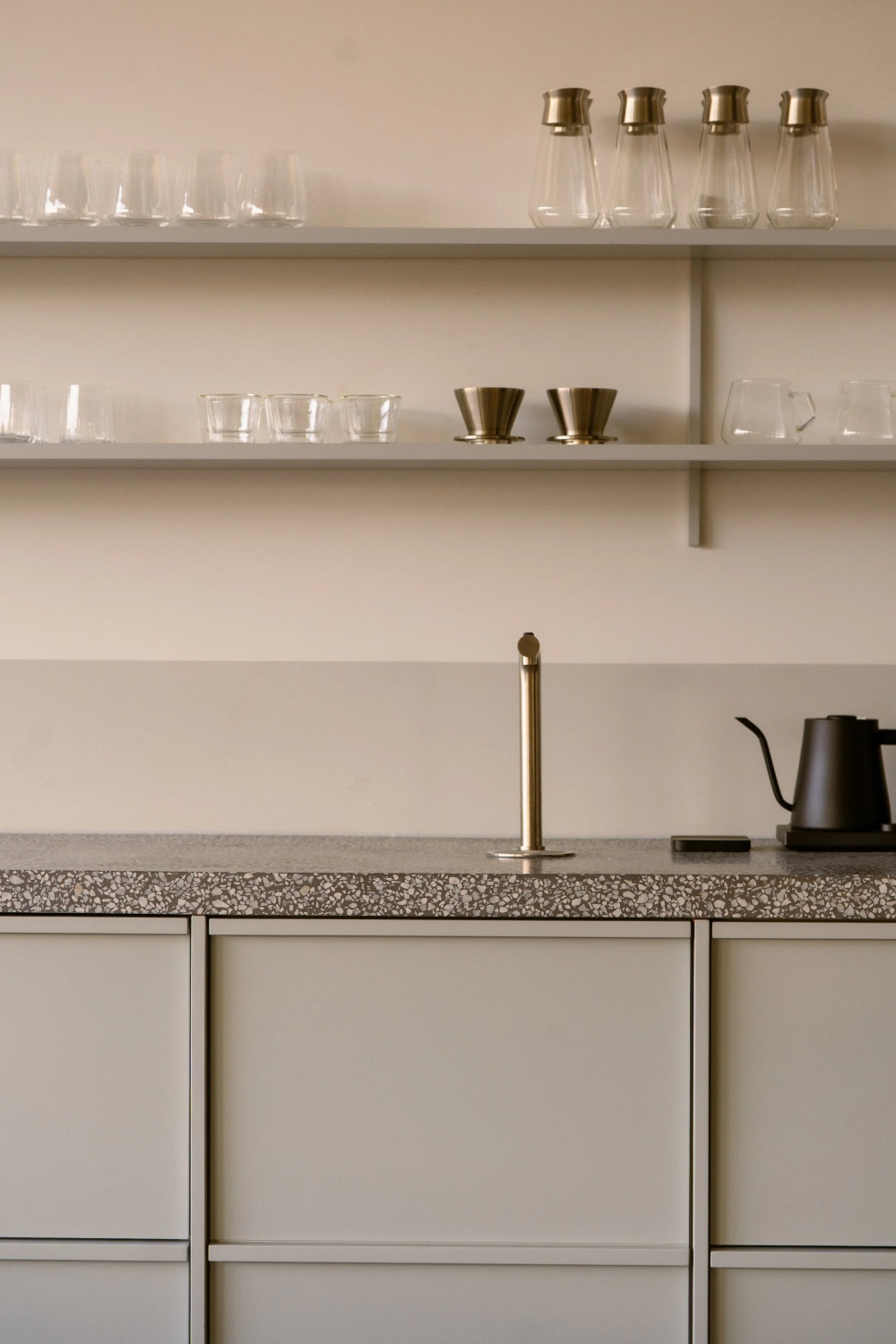
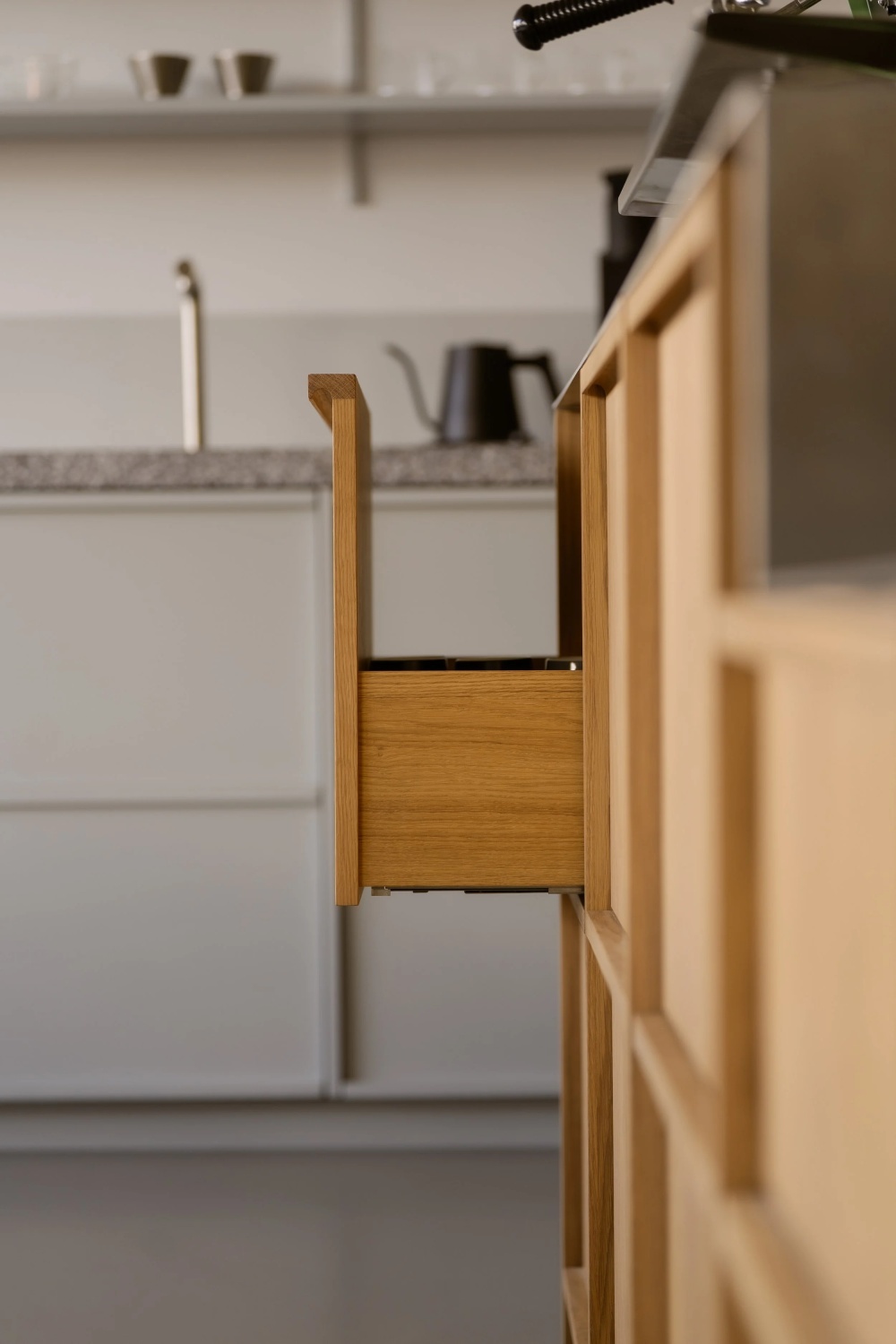
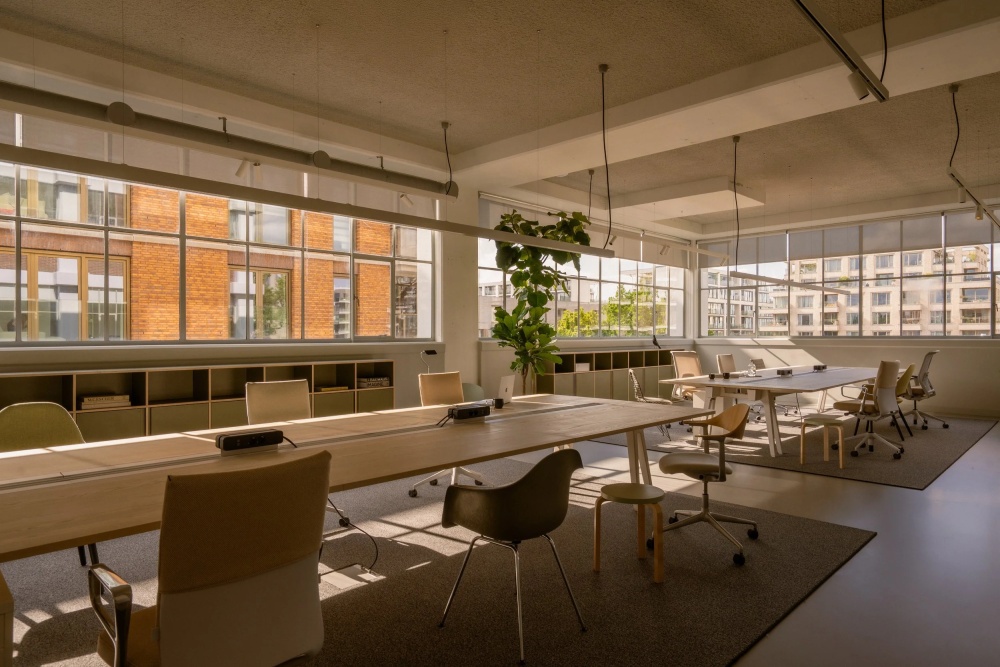
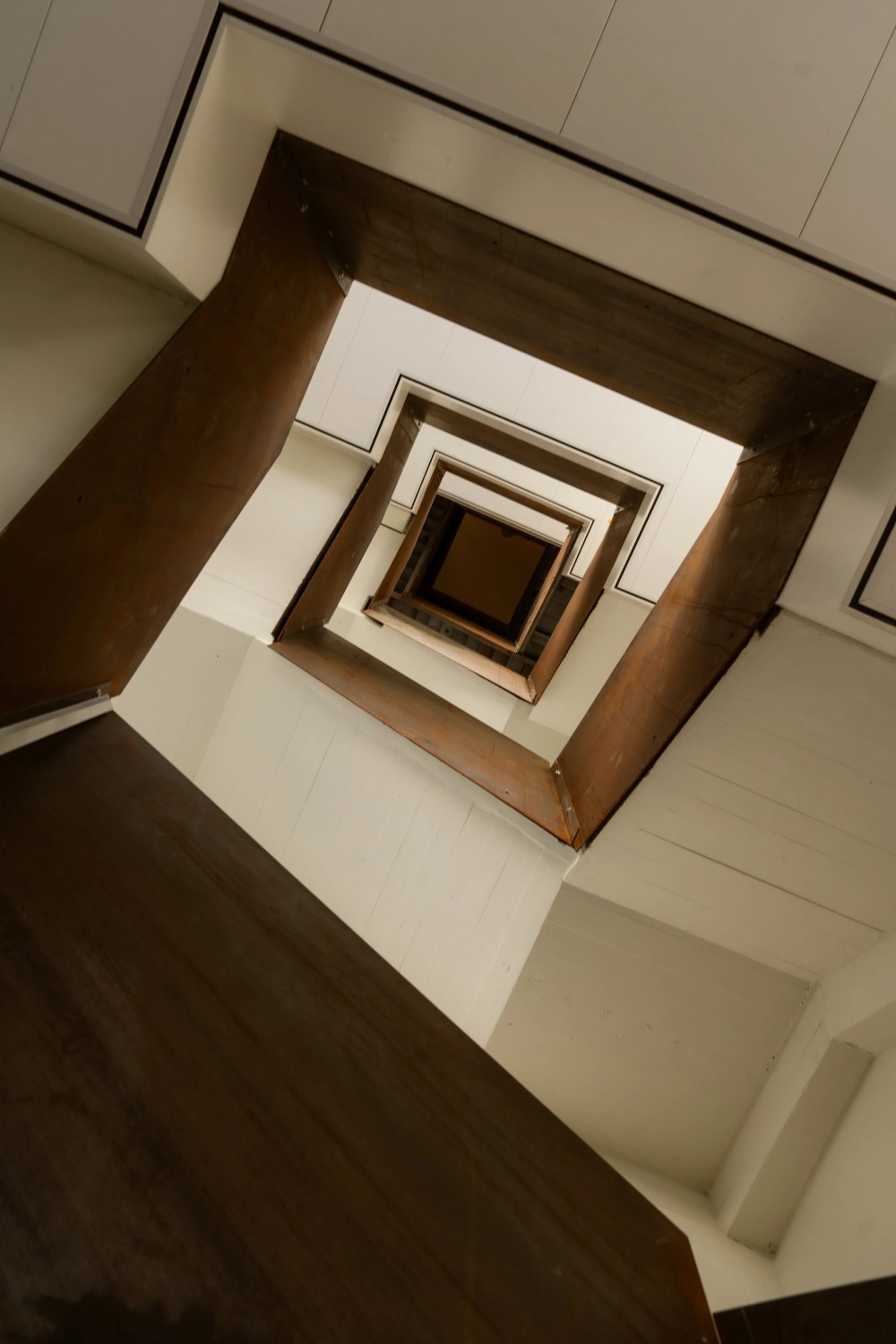
Internally, the plan has been fully reworked to suit present-day working needs. Newly positioned walls establish a clear sequence of rooms, while expansive glazing maintains visual continuity and allows daylight to filter deep into the building. Material choices are deliberately restrained: poured concrete floors, steel-framed doors and custom-built elements create a dialogue between raw surfaces and finely resolved details.