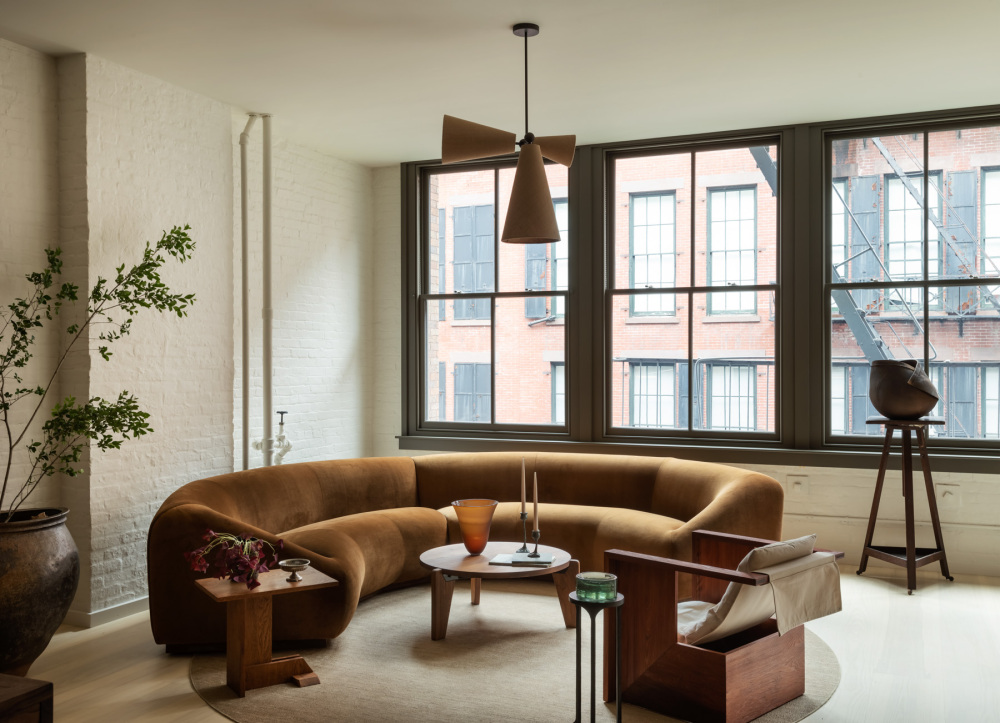
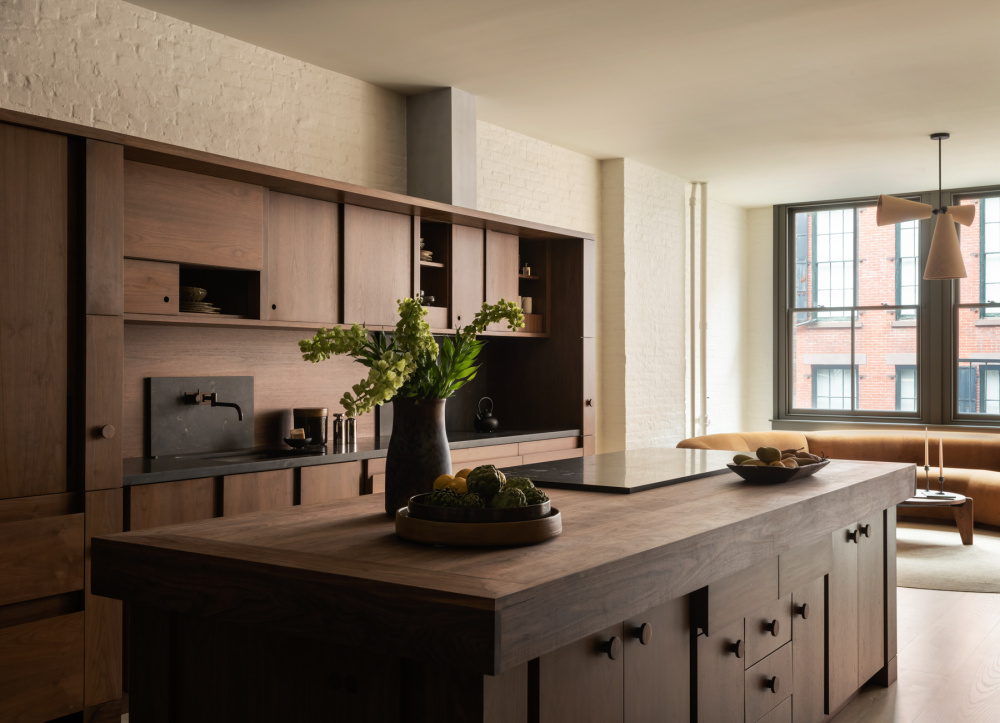
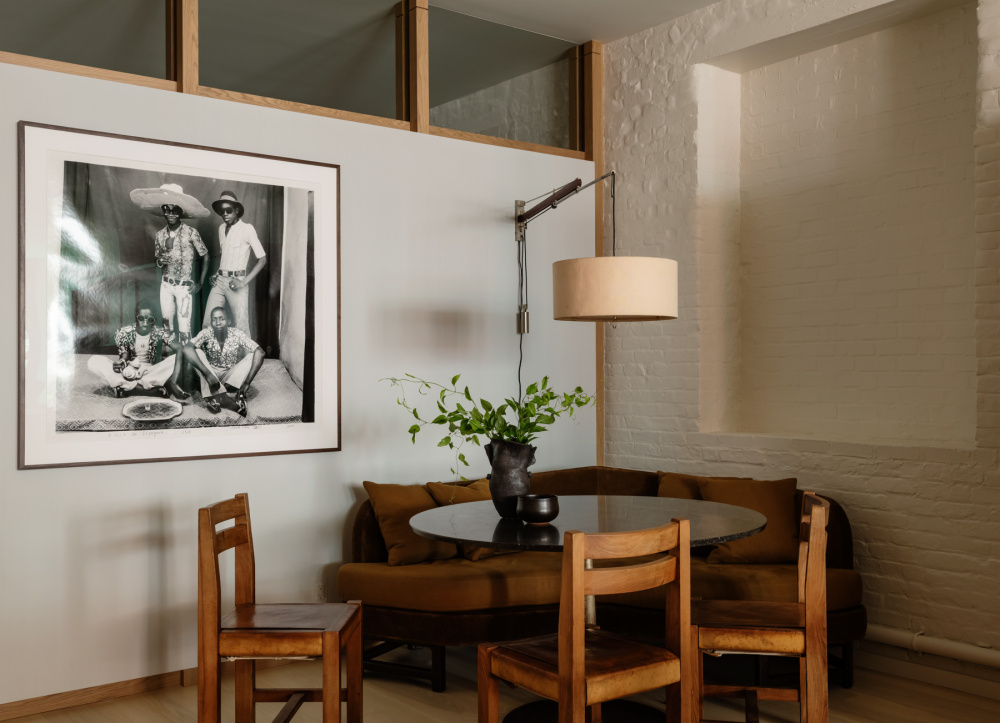
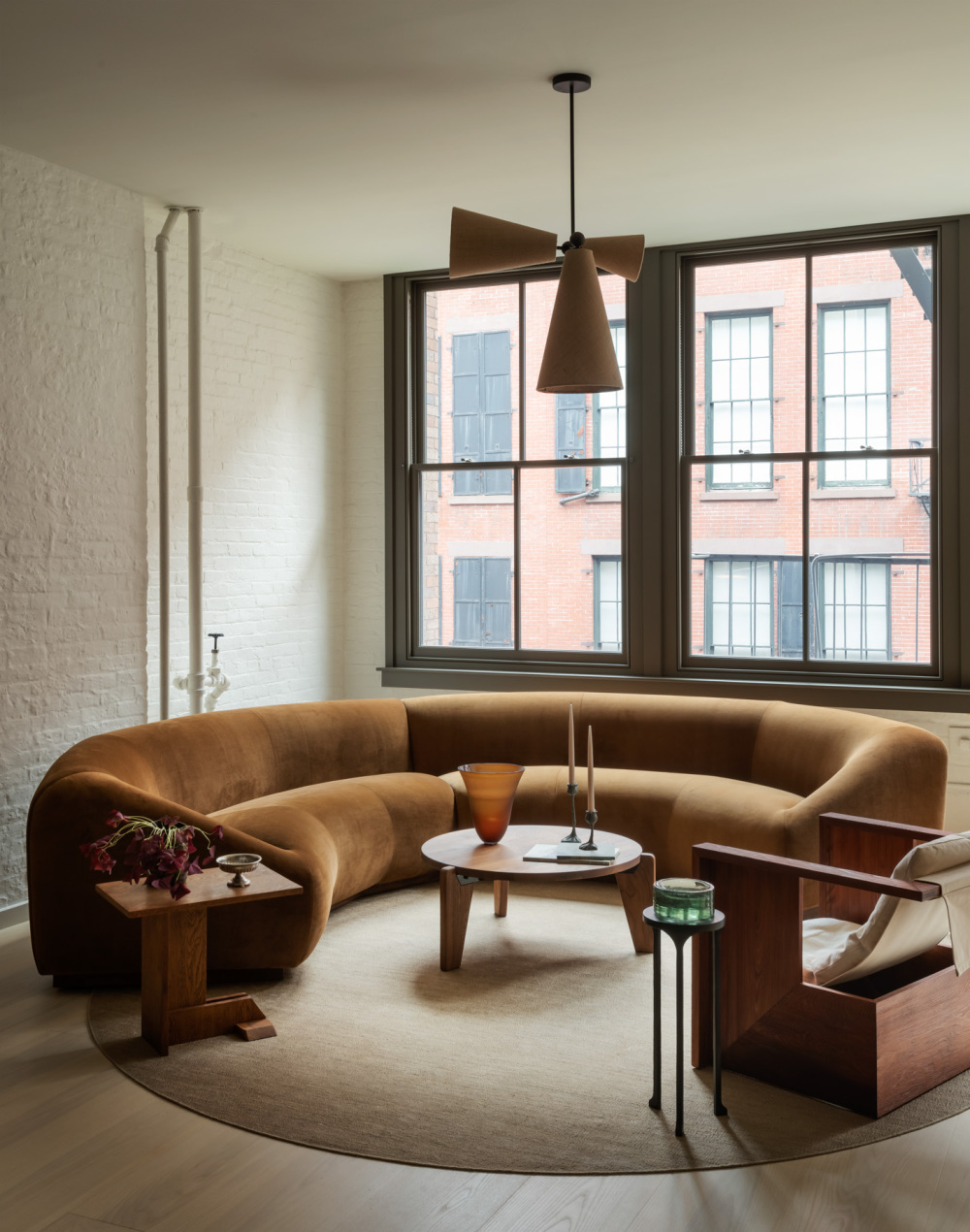
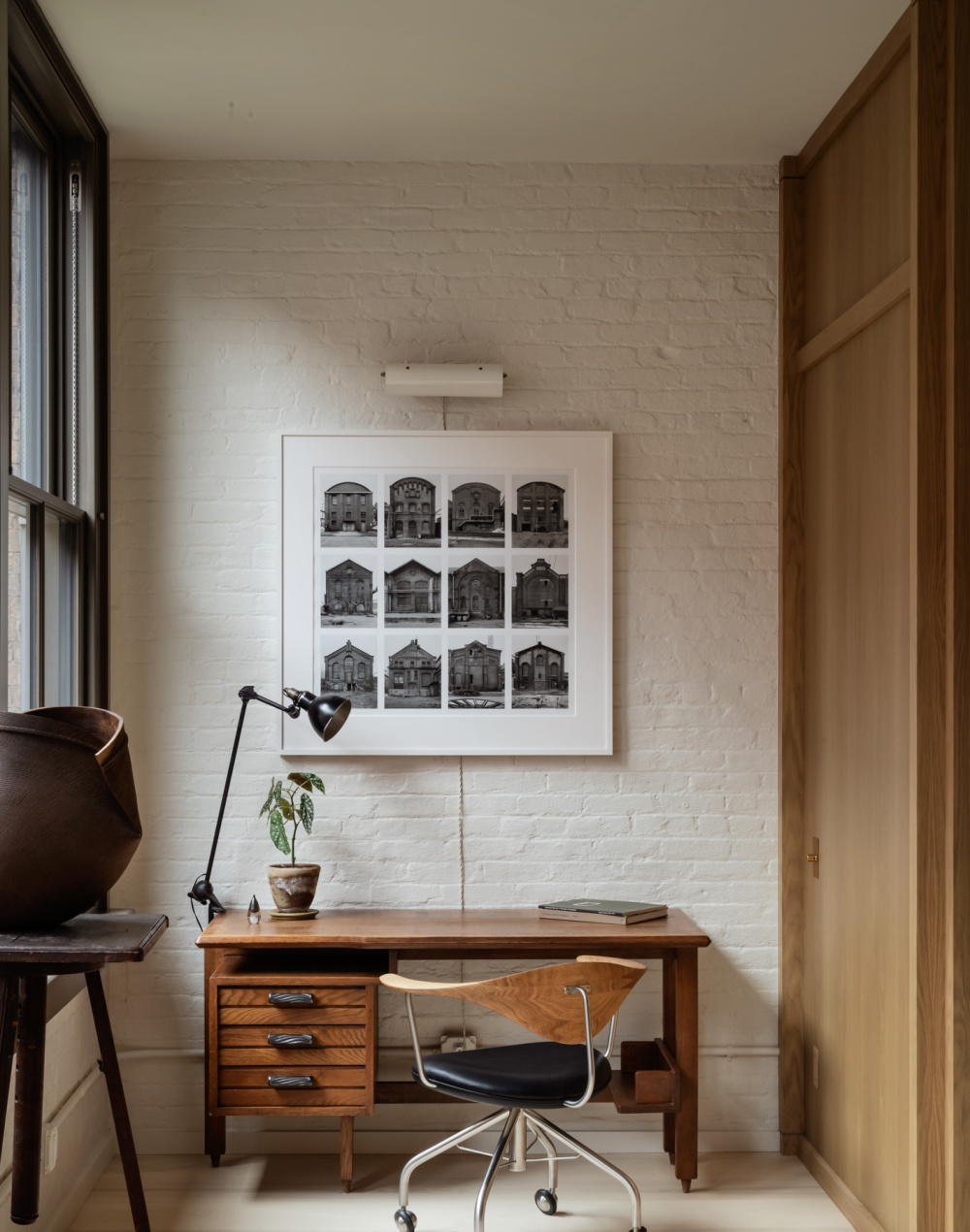
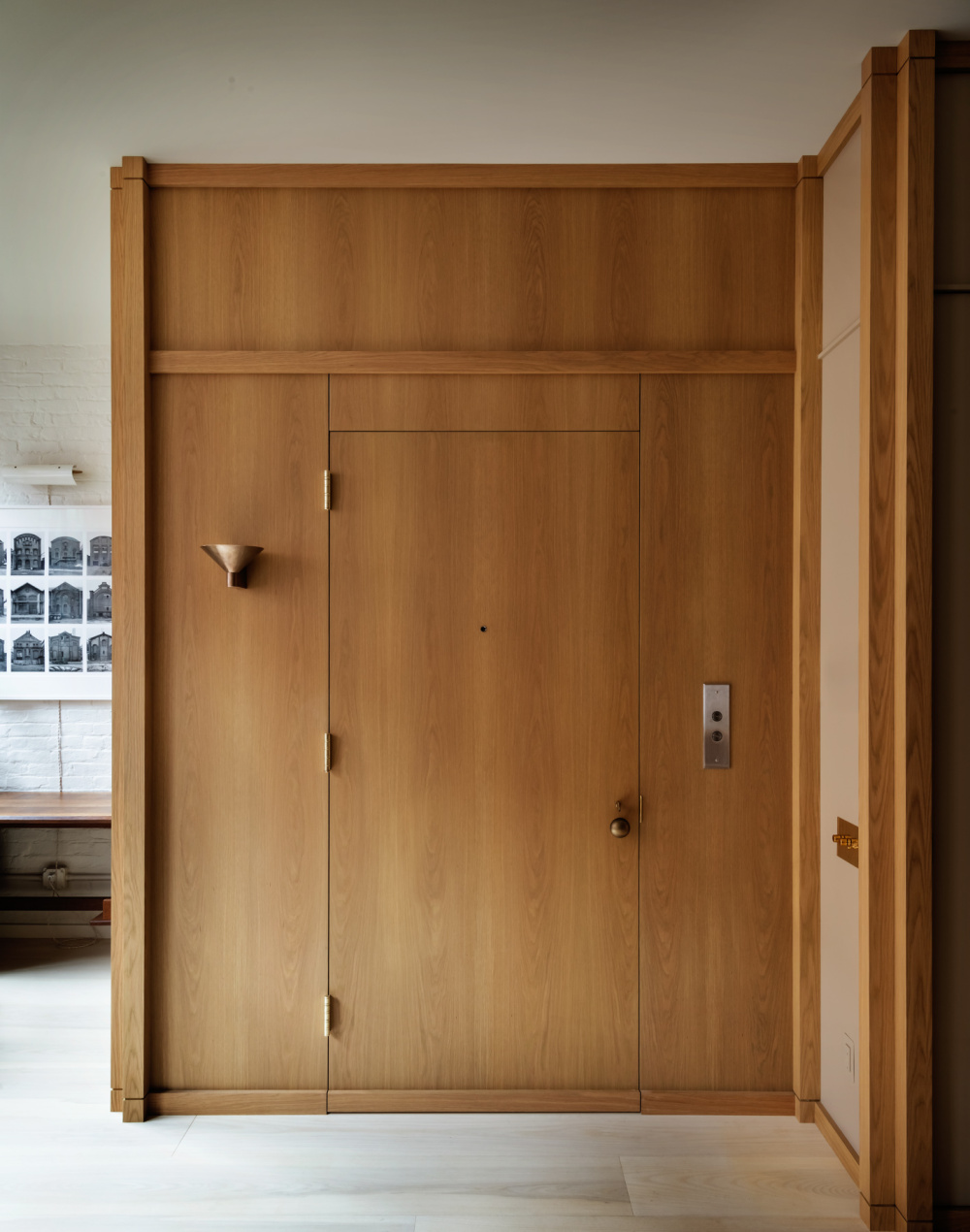
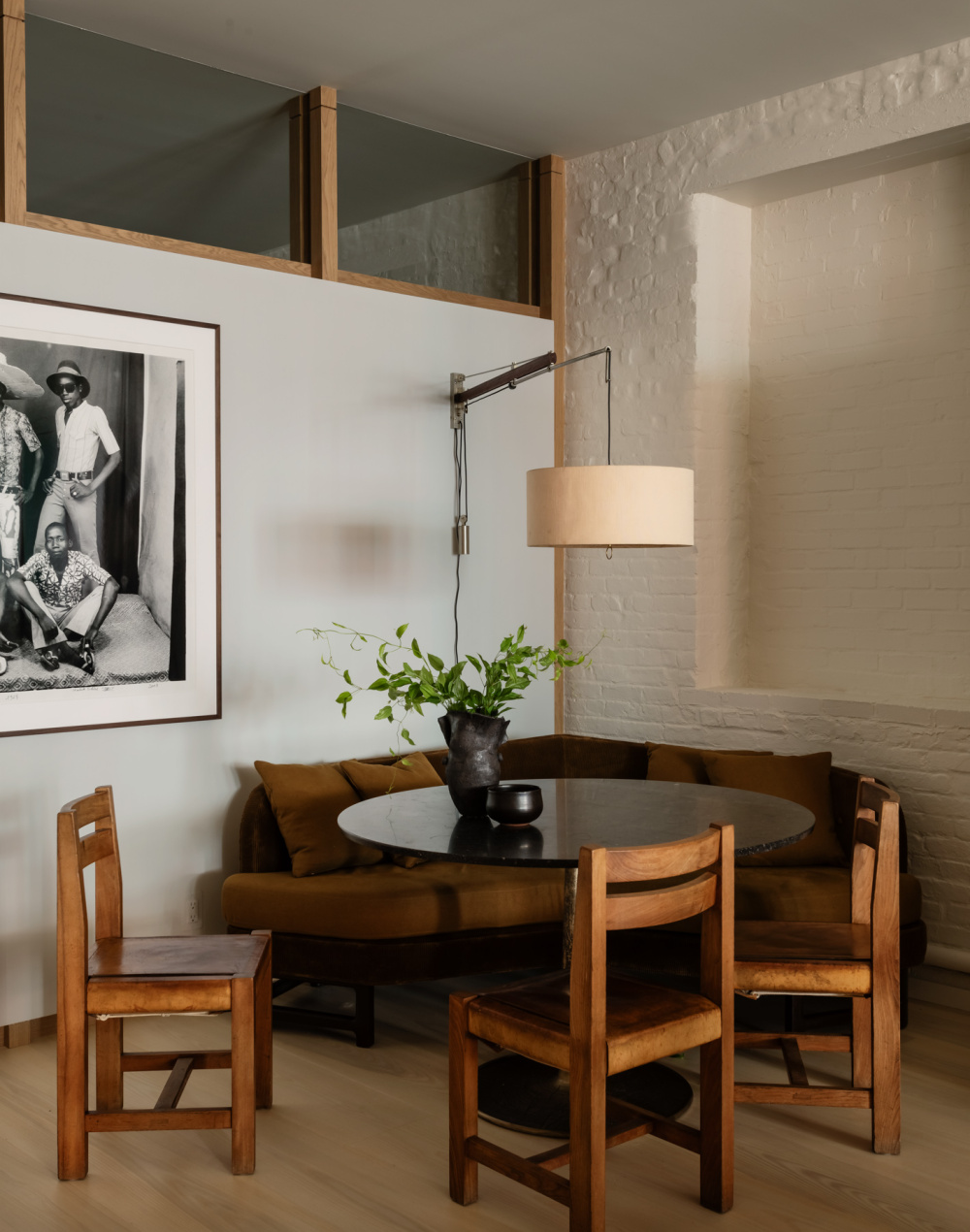
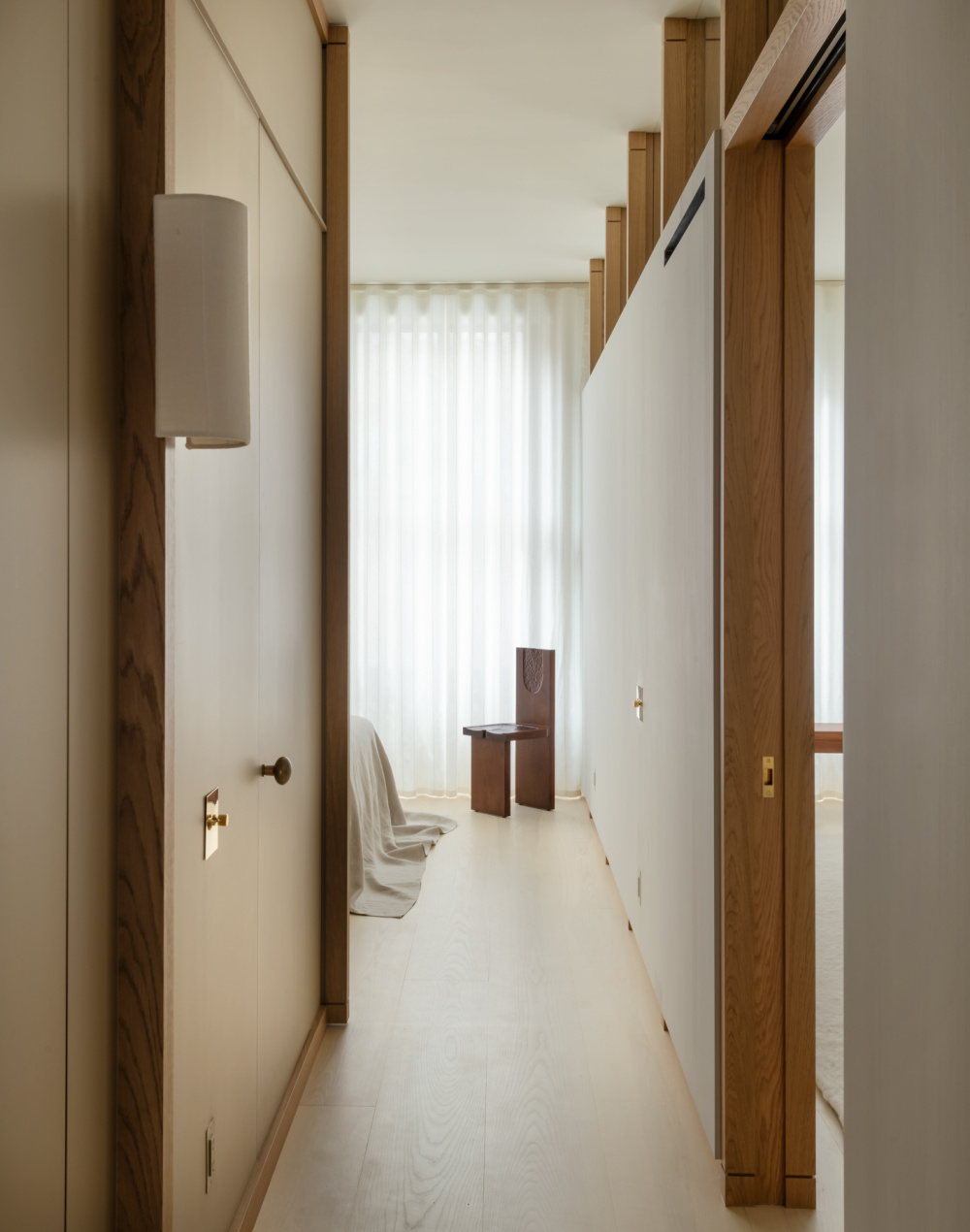
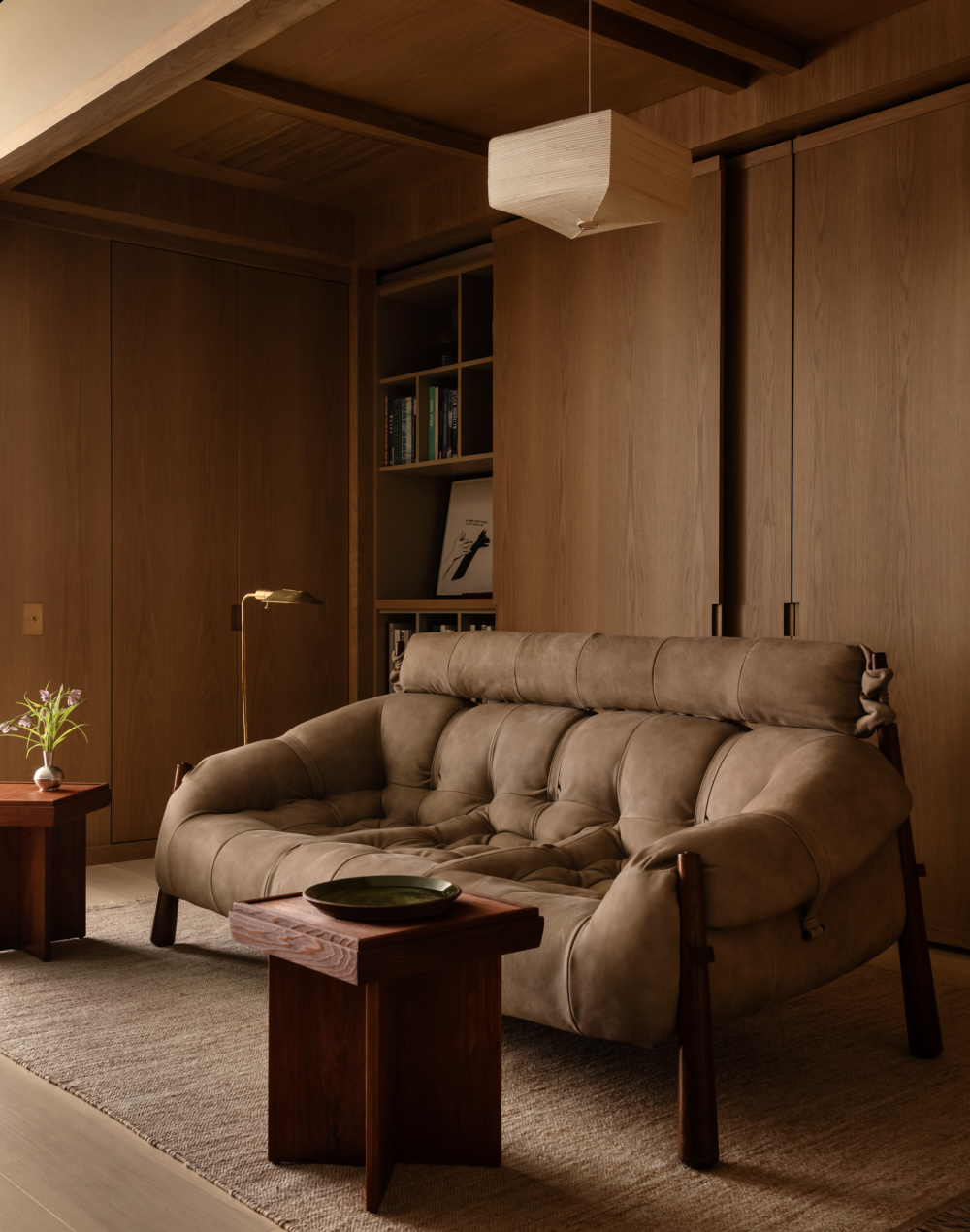
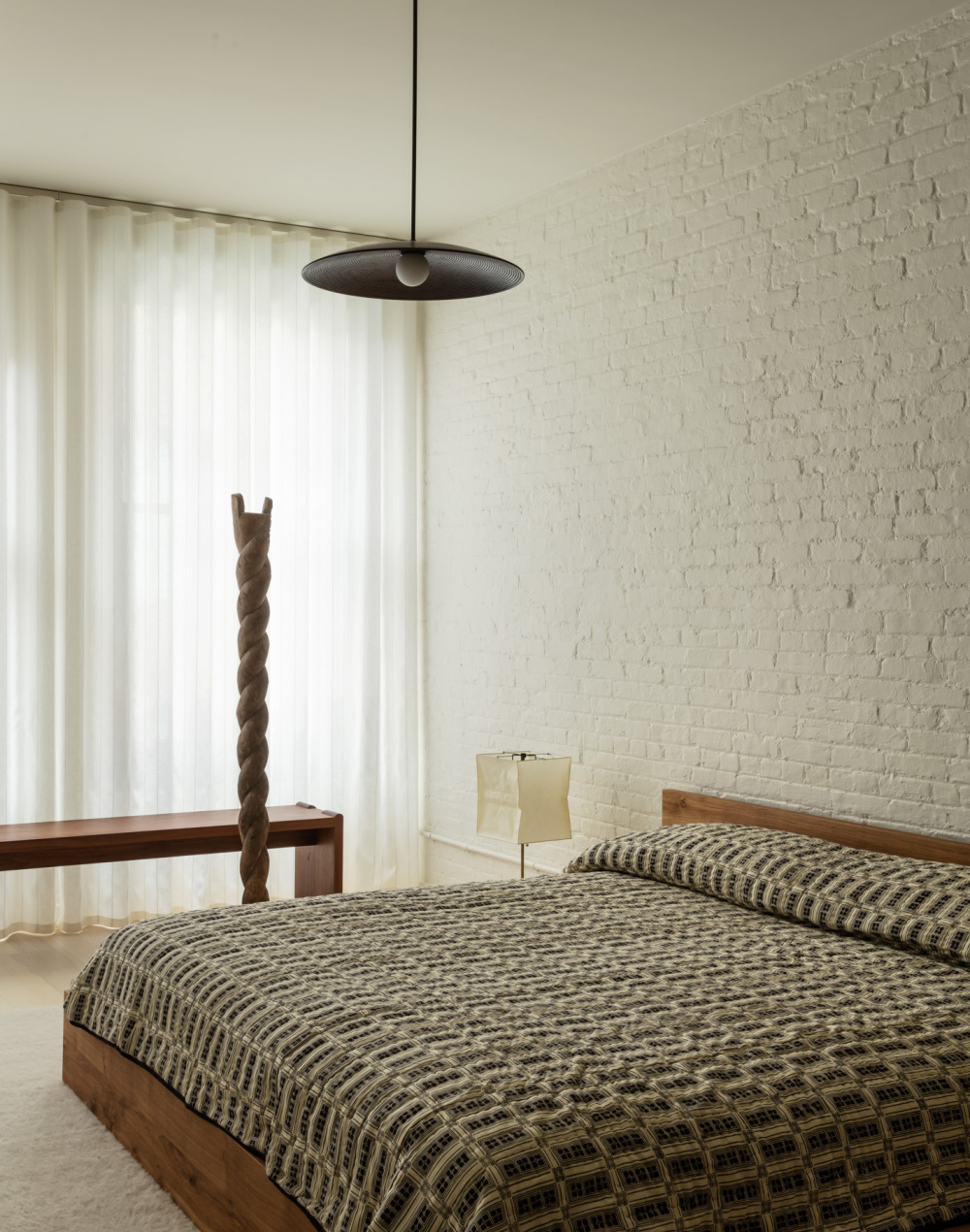
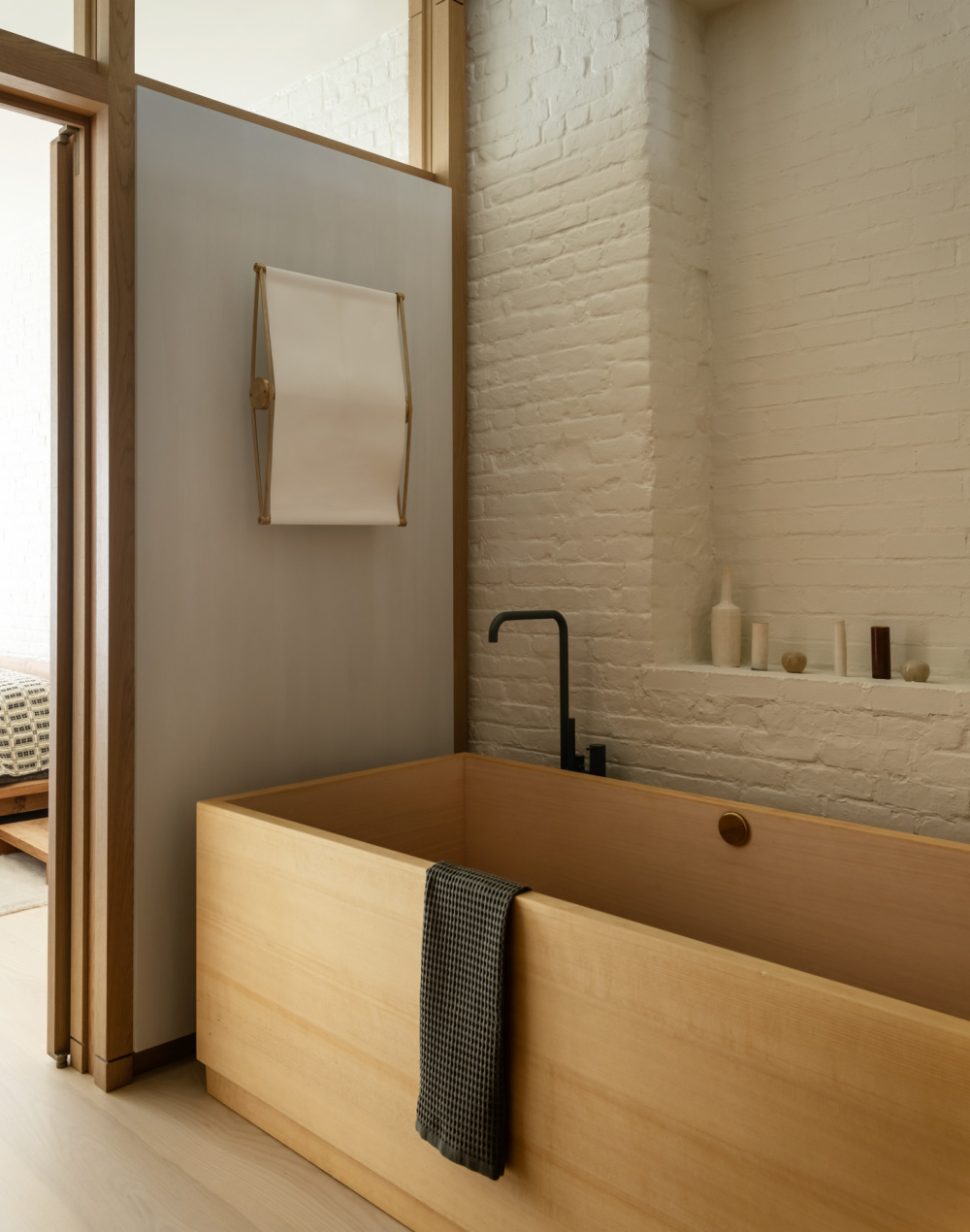
Set within one of Soho’s six-storey masonry buildings built in 1910, the site was likely a warehouse before its conversion into an active warren of live-work studios for a number of artists. The co-op spans a large footprint, and its long proportions are both a blessing and an obstacle, offering limited natural light, with windows only on the narrow east and west elevations. Workstead’s goal was to bring dimension, intimacy and a sense of warmth to this deep, low-light interior while preserving the character of its painted-brick walls and heavy timber beams.Part of the overall solution was to integrate a distinctive architectural language for the interior walls: a panelled enclosure system that gently recalls the ubiquitous scaffolding integral to New York’s ever-evolving skyline. This detailing introduces a sense of rhythm and containment throughout the home, offering privacy and structure without interrupting the natural flow between spaces. The system is unified by oak trimming that forms prominent vertical and horizontal ribs, providing a tactile counterpoint to the smooth planes of plaster and softly aged brick. The ribs also organise the home’s technical infrastructure, neatly integrating lighting and other systems into the architectural framework.