888 | Commune Design
vsszan206762021013051.jpg
vsszan206762021013052.jpg
vsszan206762021013053.jpg
vsszan206762021013054.jpg
vsszan206762021013055.jpg


Achieving this demanded a rigorous response to all facets of the design – from materials and style references to acoustics and layout – and the studio’s experience working on the Ace Hotel Kyoto proved a valuable touchpoint, specifically as it related to materiality and craft.
“Over the course of designing that hotel, we established ties to many makers in Japan and were exposed to new materials and ways of detailing,” says Alonso. “For 888, we were excited to bring old friends back into the fold while also expanding our orbit with new collaborators.”


vsszan206762021013056.jpg
vsszan206762021013057.jpg
vsszan206762021013058.jpg
vsszan206762021013059.jpg


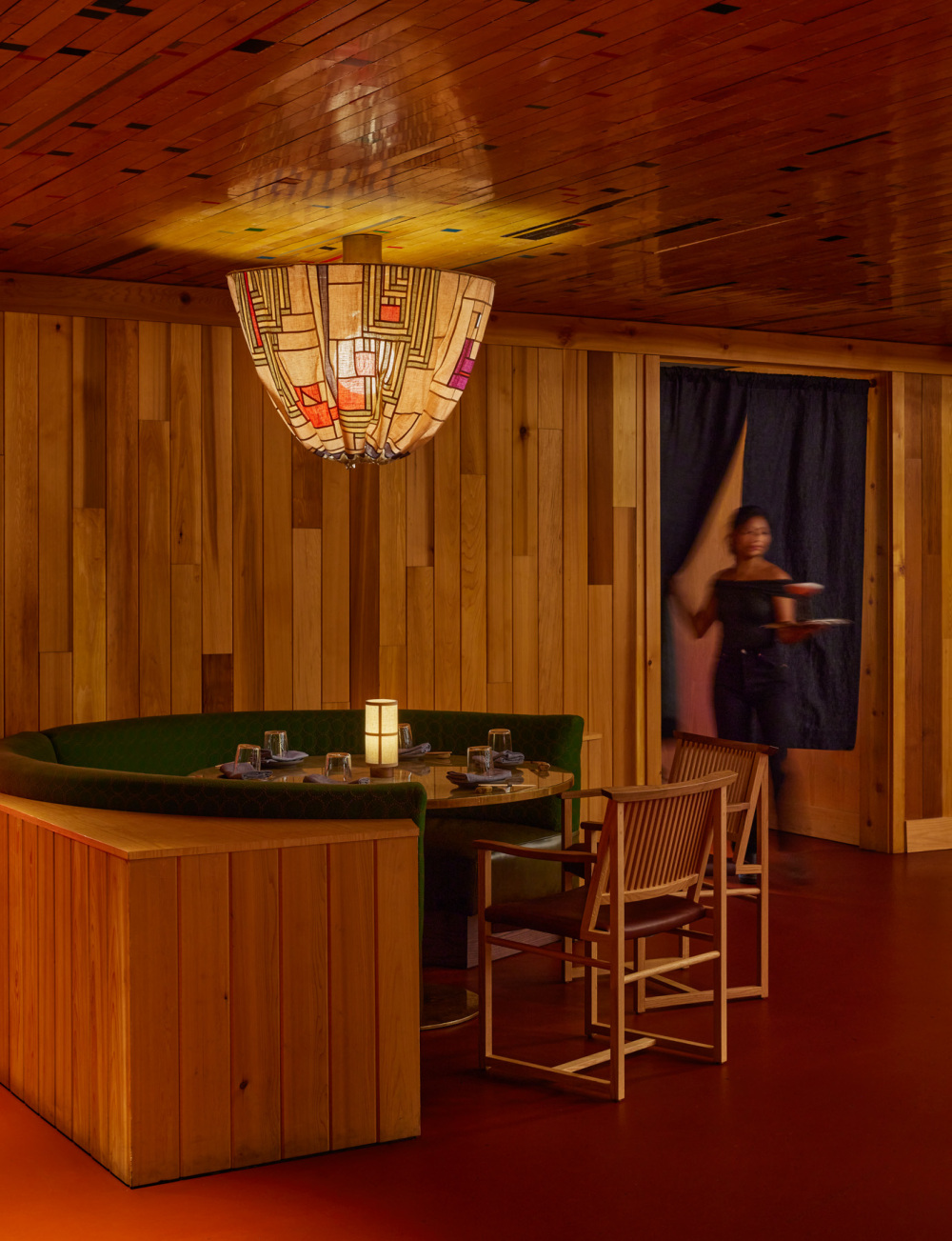
The backlit washi-paper lantern designed by Yusuke Nagai of Tokyo-based creative studio Vacant and fabricated by washi master Takanori Senda is a prime example. There are also paintings by Japanese pop artist Keiichi Tanaami alongside pieces from Los Angeles-based artists and makers, including Adam Pogue’s patchwork fabric pendants and Sofia Londoño’s handmade mosaic tiles.
Multiplicity is a common theme; there’s a slew of highly crafted elements, like the cedar lattice and washi paper sliding shoji doors, and polished contemporary lighting, but there’s also a modesty to the palette. “Traditional Japanese kissas have a very layered and patched-together feeling,” says Alonso. “We wanted to express that by using humble materials typically found in DIY projects, but executed in an elevated way.”


vsszan2067620210130510.jpg
vsszan2067620210130511.jpg
vsszan2067620210130512.jpg
vsszan2067620210130513.jpg


The ceiling’s timber lining was salvaged from the floors of an old gym, and the round acoustic ceiling panels are made from recycled denim insulation. There are also linoleum floors in the bathroom. This jumbled approach culminates in a dynamic environment where the textures and tropes play off each other, ensuring the eye is always entertained.
Though the design alone makes for a worthy session here, music is the main attraction. Excellent acoustics were a must, and Commune Design worked with audio engineer and sound guru Devon Turnbull to design the venue’s sound system, as well as acoustical designer Steven Durr – a “Nashville legend,” says Alonso.


vsszan2067620210130514.jpg
vsszan2067620210130515.jpg


“He has an incredible talent for communicating how sound will behave in spaces and with certain materials,” says Alonso, adding that Durr “was able to take a very nebulous, theoretical thing and explain it in a way that made it tangible to us”. This directly influenced many of the material selections; after consulting with Durr, the designers switched copper ceiling panels from polished to hammered and framed them with wood trims, better diffusing the sound. “We love when a practical need layers onto the design and makes it feel more nuanced.”
Guests can settle into booths, enjoy the lounge or book the private dining room, replete with its own serving counter. Alonso simply suggests pulling up a seat at the sushi stations flanking the DJ booth along the main bar. “It’s a physical manifestation of 888 – a highly considered and soulful dining experience with music at its centre.”
Architecture by Smallwood. Interior design by Commune Design. Build by Whiting-Turner. Lighting design by Sean O’Connor Lighting. Artwork by Keiichi Tanaami.


    • 转载自:The Local Project
    • 图片@The Local Project
    • 语言:英语
    • 编辑:序赞网
    • 阅读原文
    AI文本分析中……
    AI色彩命名中……

    暂时没有评论,你回一个呗!~

    您需要登录后才可以回帖 登录 | 注册序赞号

    快速回复 返回顶部 返回列表