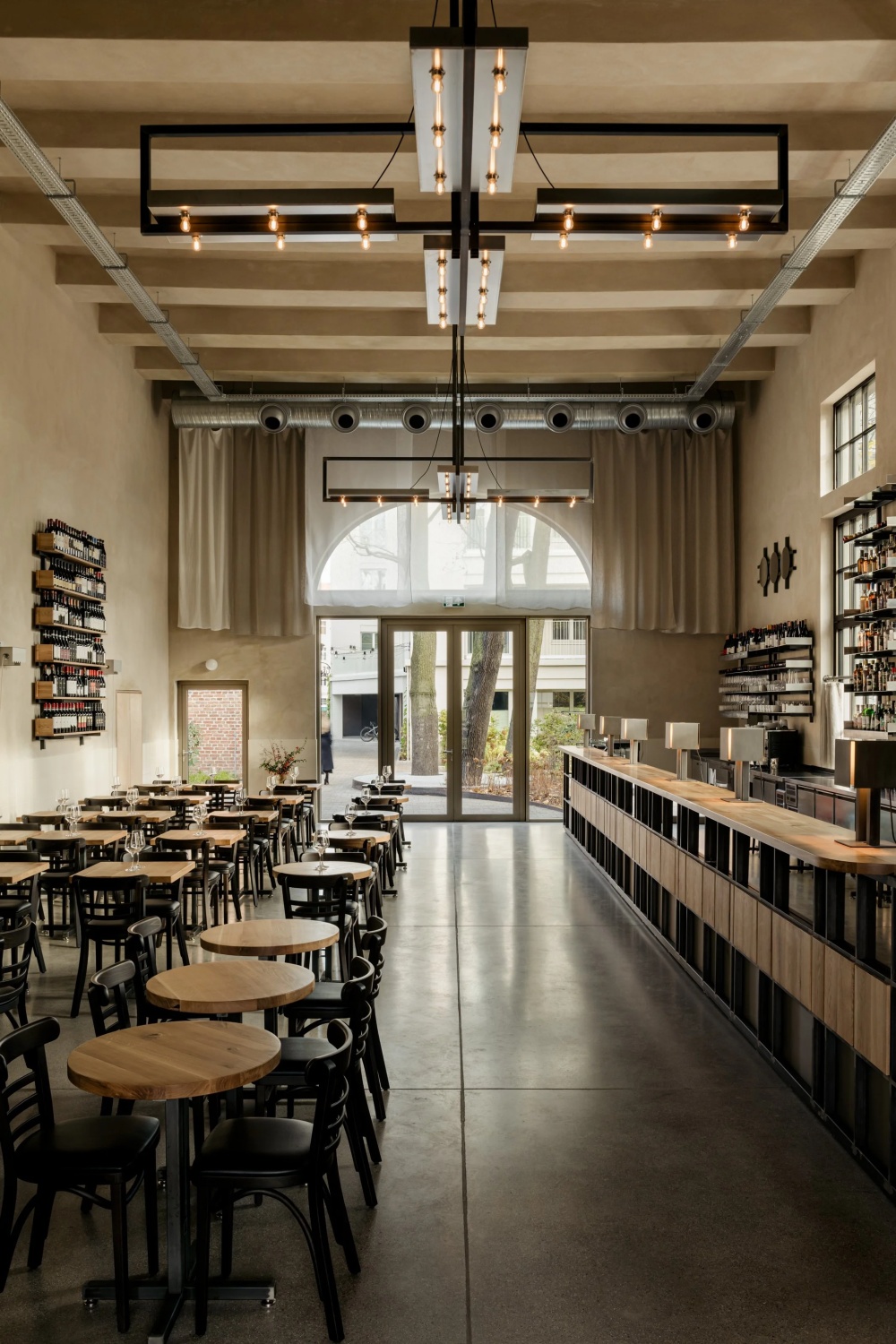
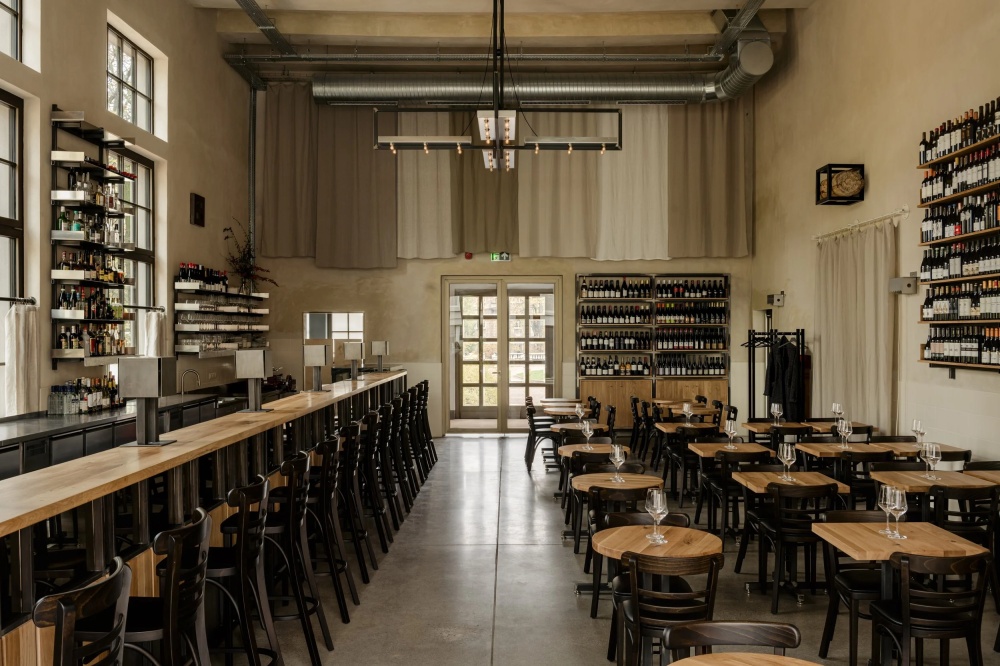
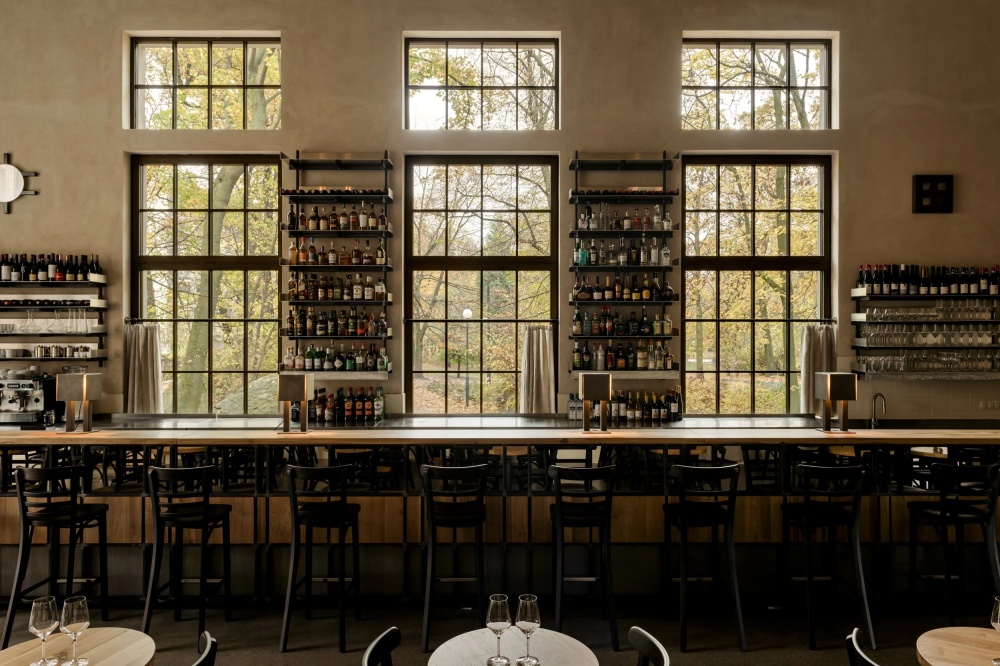
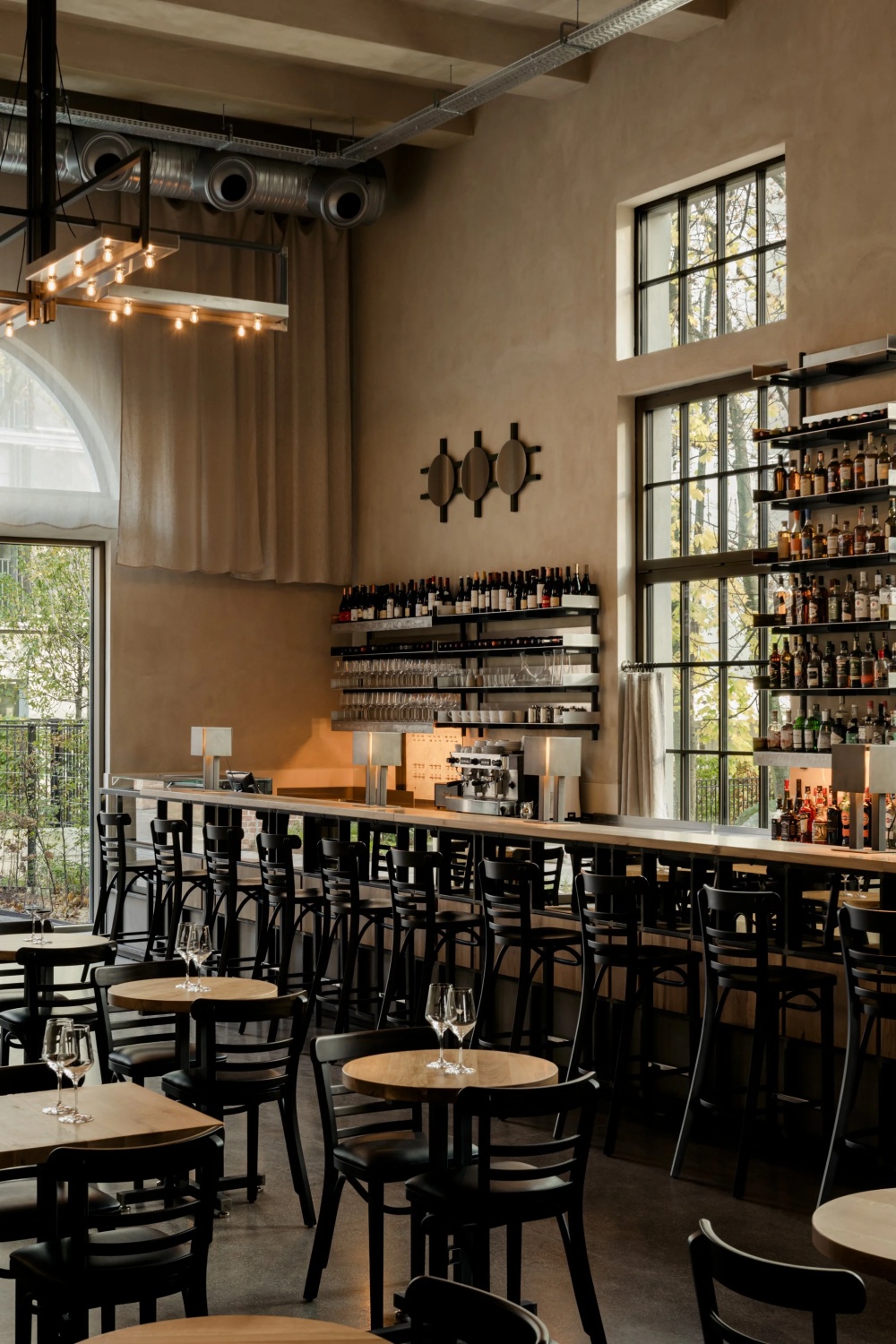
Black Crocodile Bar (Czarny Krokodyl), designed by wiercinski-studio, occupies a monumental reinforced concrete hall in Poznań’s Wilson Park.
Set within the historic Betonhaus pavilion, the venue sits inside a building first erected in 1911 for the East German Exhibition of Industry, Crafts and Agriculture. Following a comprehensive revitalisation in 2024, the pavilion’s interiors were adapted for commercial use, creating space for the owners of Poznań’s much-loved wine bar Black Cat (Czarny Kot) to establish a new destination within the city’s evolving hospitality scene.
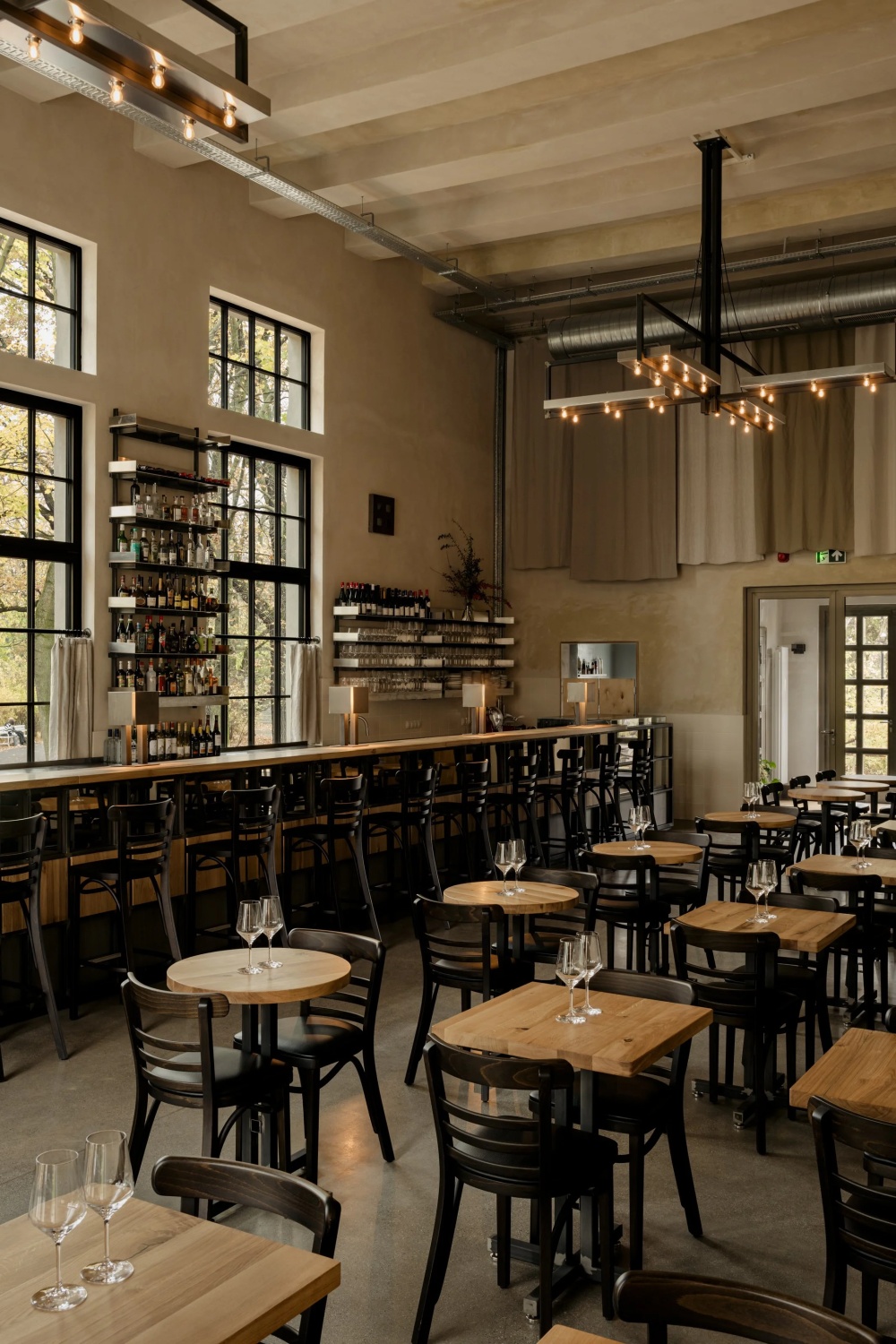
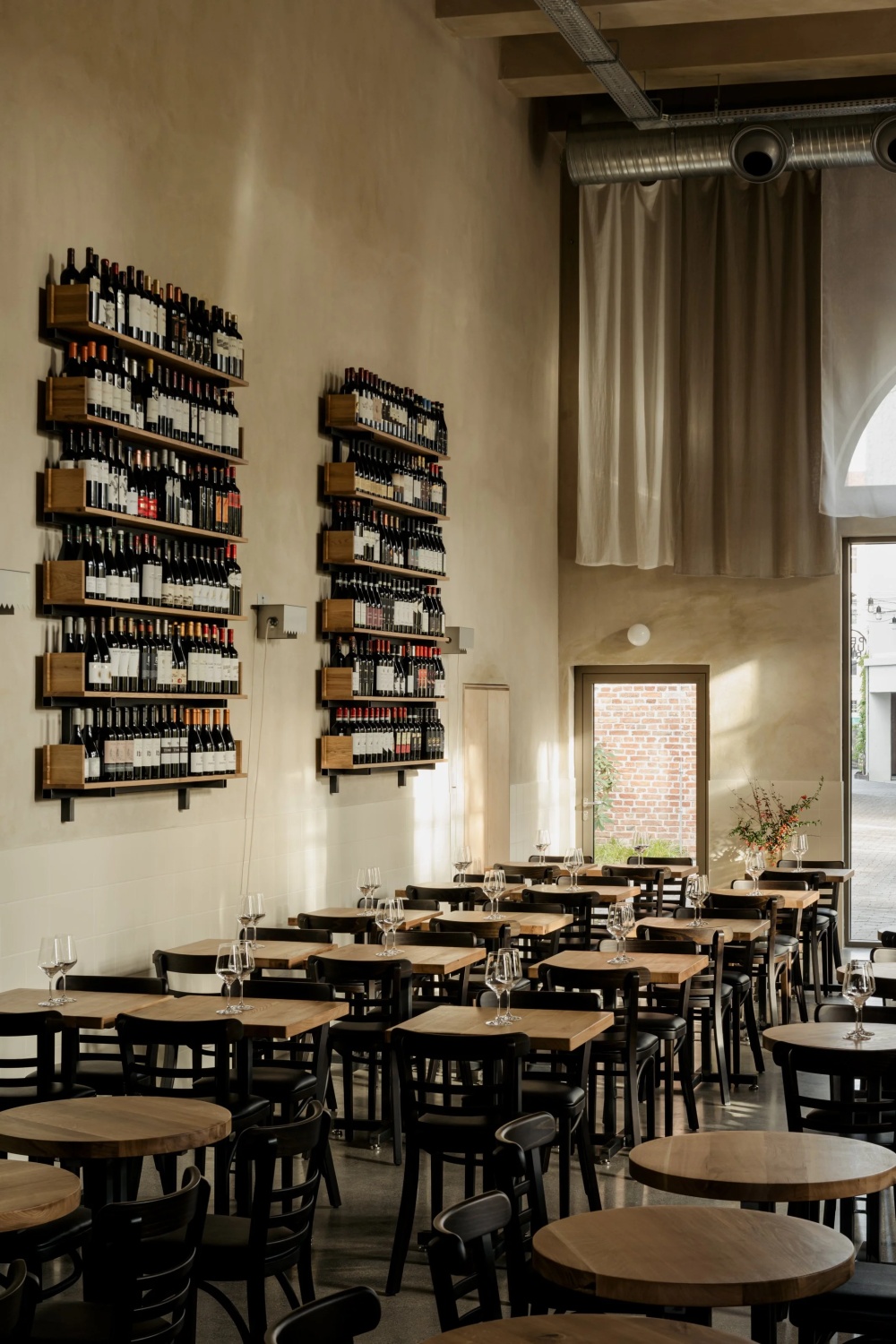
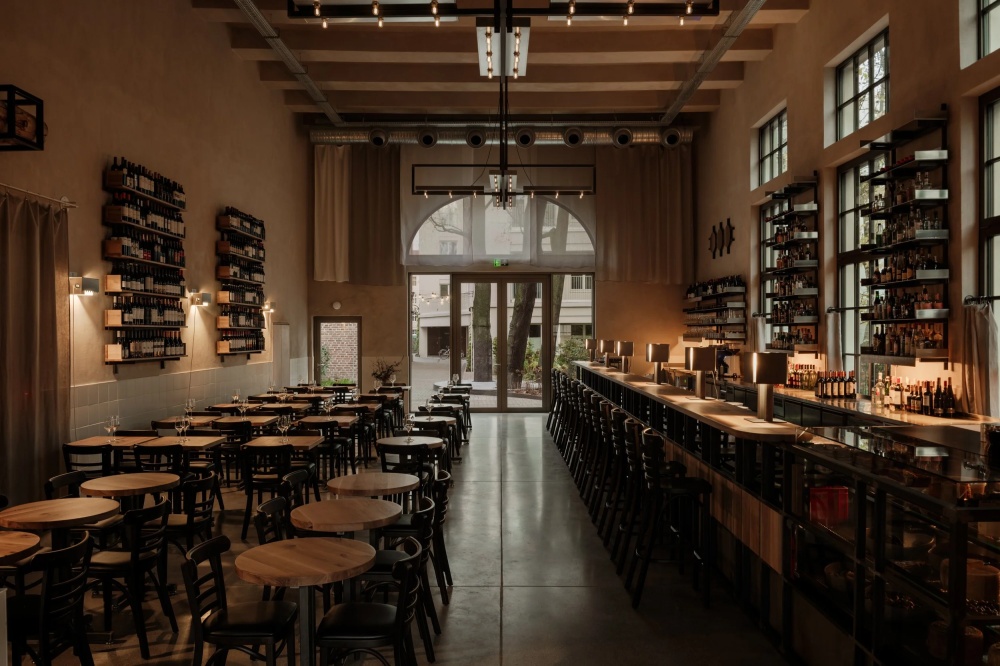
The bar’s setting is defined by scale and structural character. Across 130 square metres, the hall rises to a six-metre ceiling, with concrete ribbing overhead and tall windows retaining their original divisions. These elements are not treated as background texture, but as the anchor for both planning and atmosphere. The functional layout takes cues from the existing geometry, allowing the architecture to set the pace for how guests move through the room, where they gather, and how they connect to the park landscape beyond the glazing.
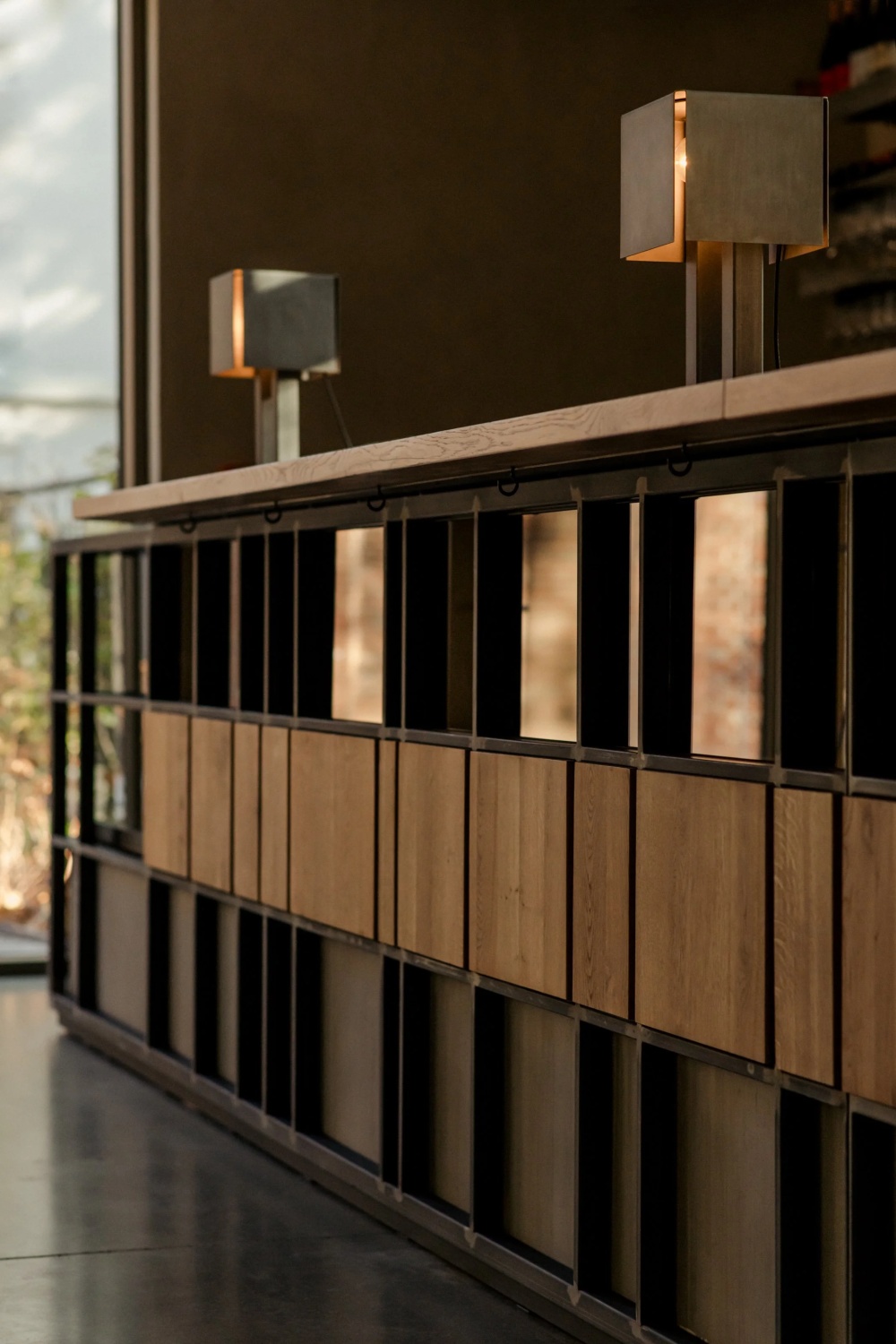
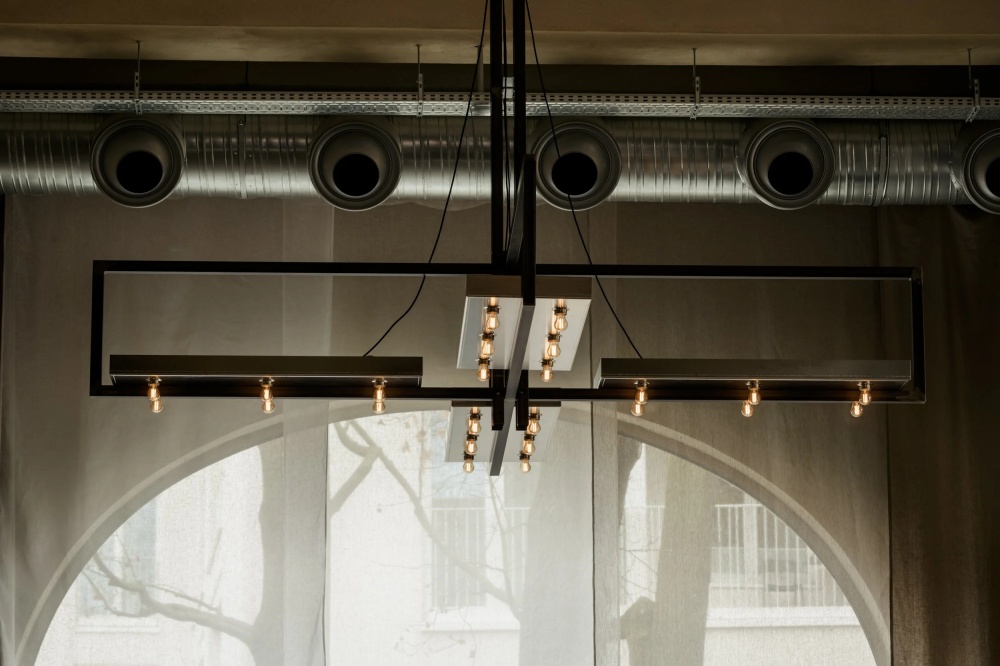
Drawing on the spatial language of early 20th-century German restaurants, Adam Wierciński brings familiar typologies into a contemporary register. Historic references appear through the presence of a decorative bar, moments of wainscoting-like articulation, and sculptural chandeliers scaled to suit the hall’s generous height. Rather than leaning on nostalgia, these gestures are reinterpreted through wiercinski-studio’s distinctive vocabulary, where robust construction and finely made detailing share equal weight.
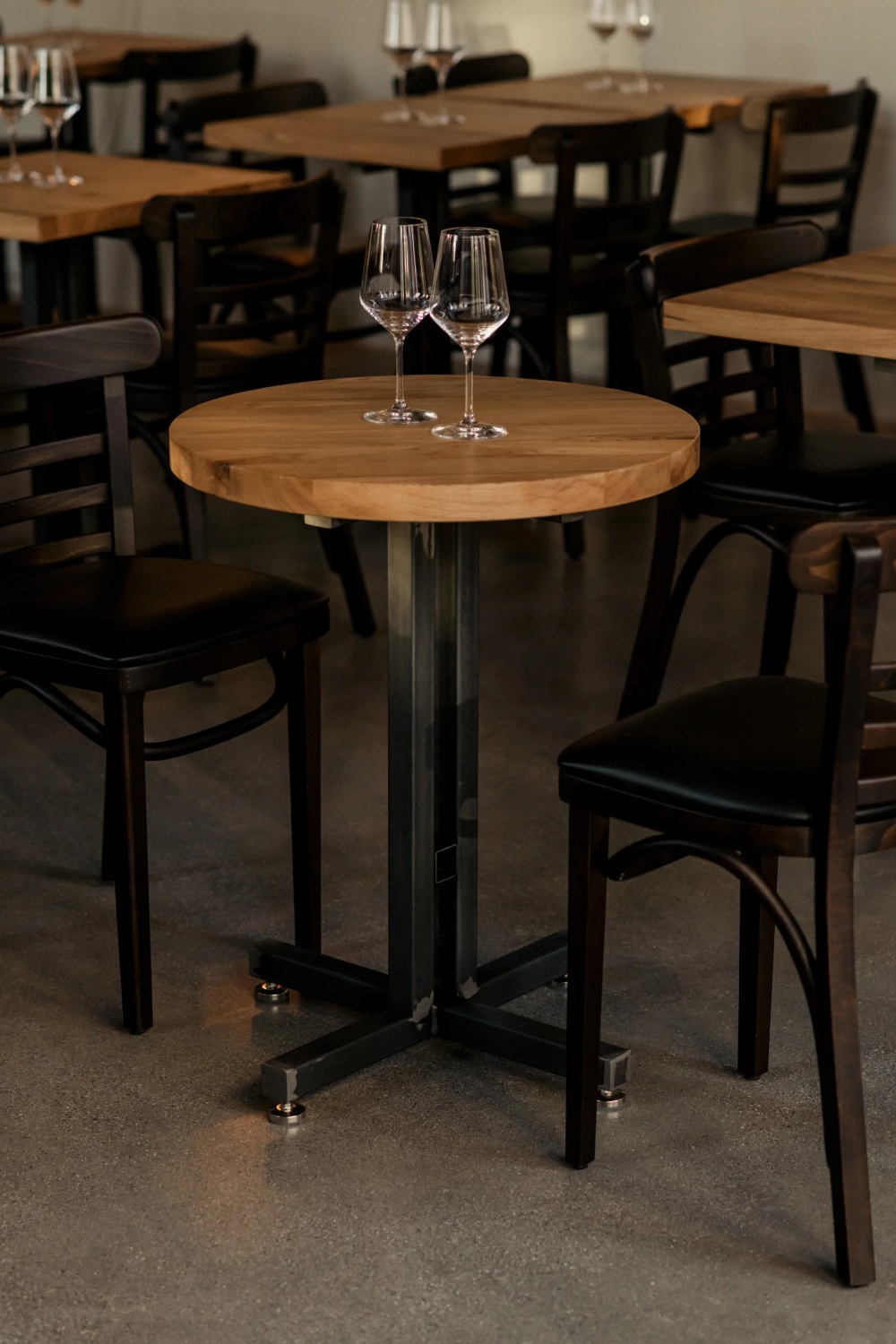
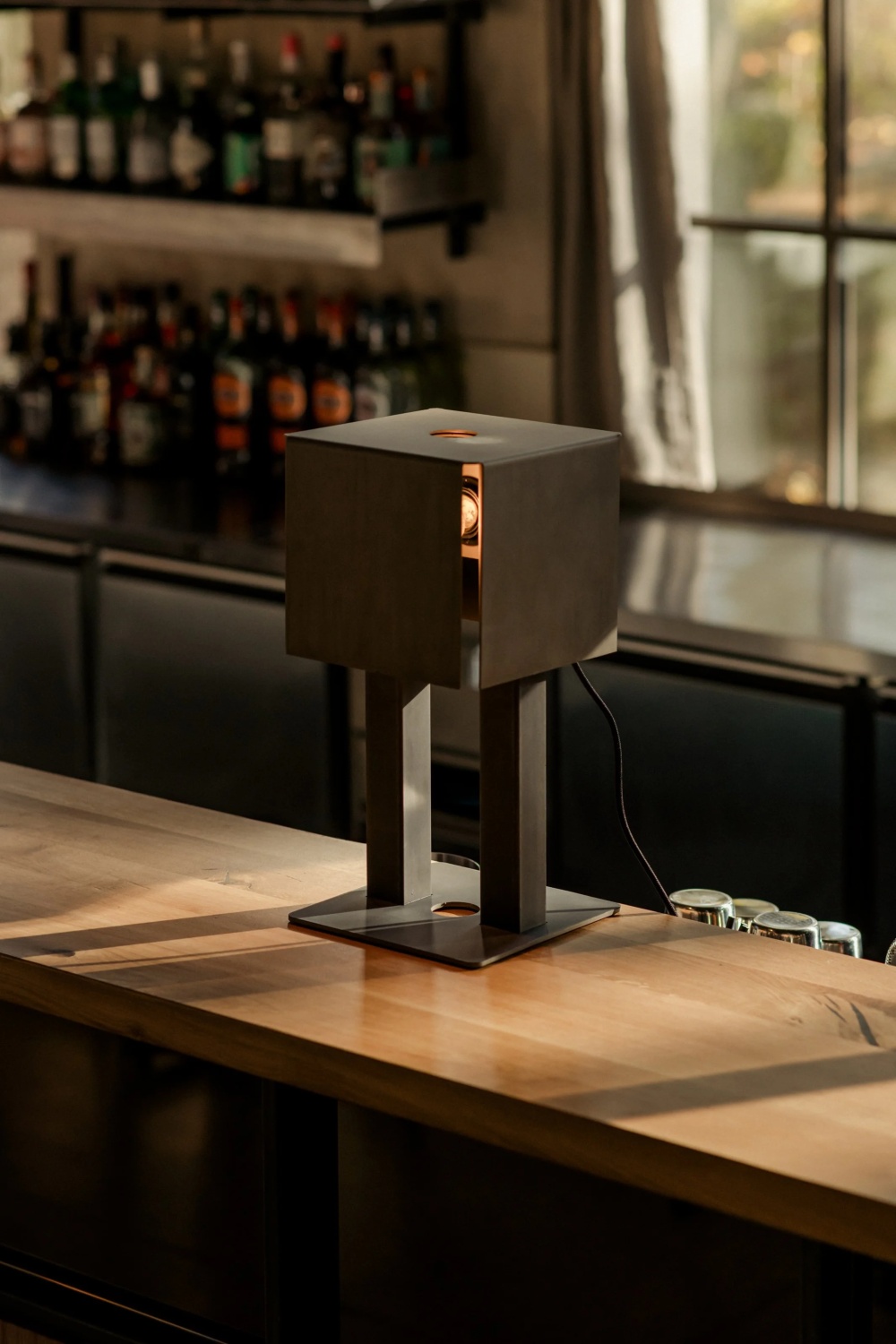
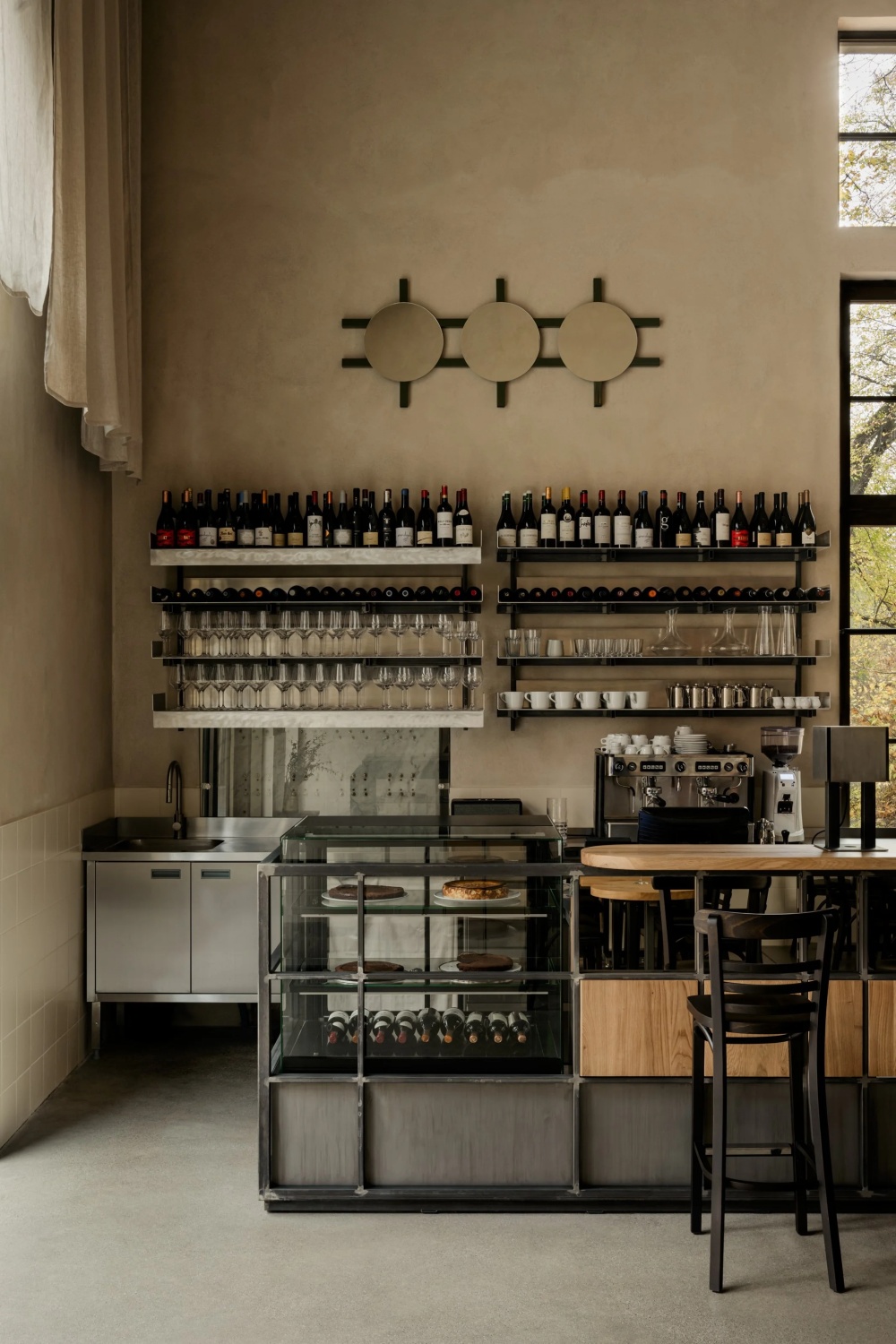
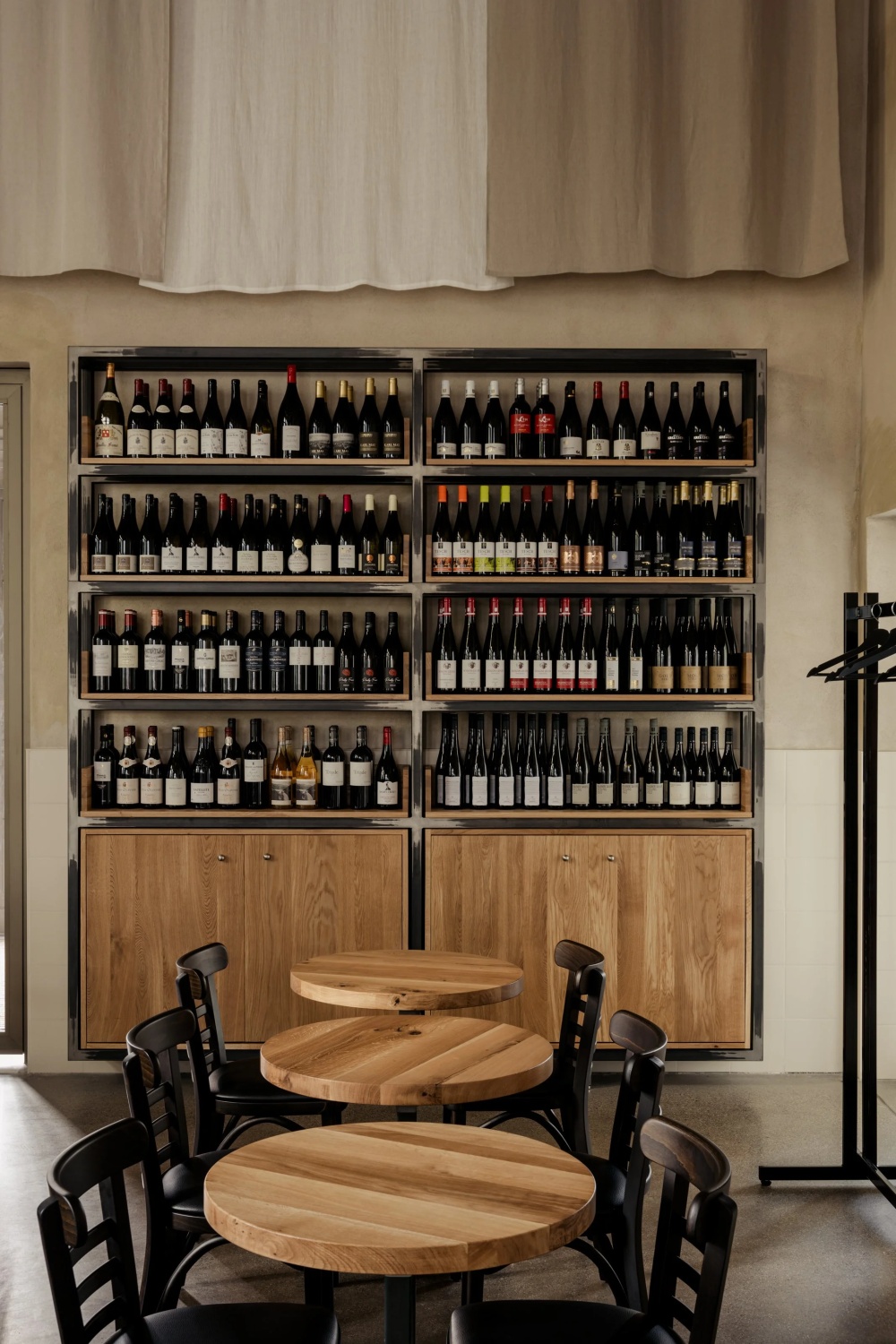
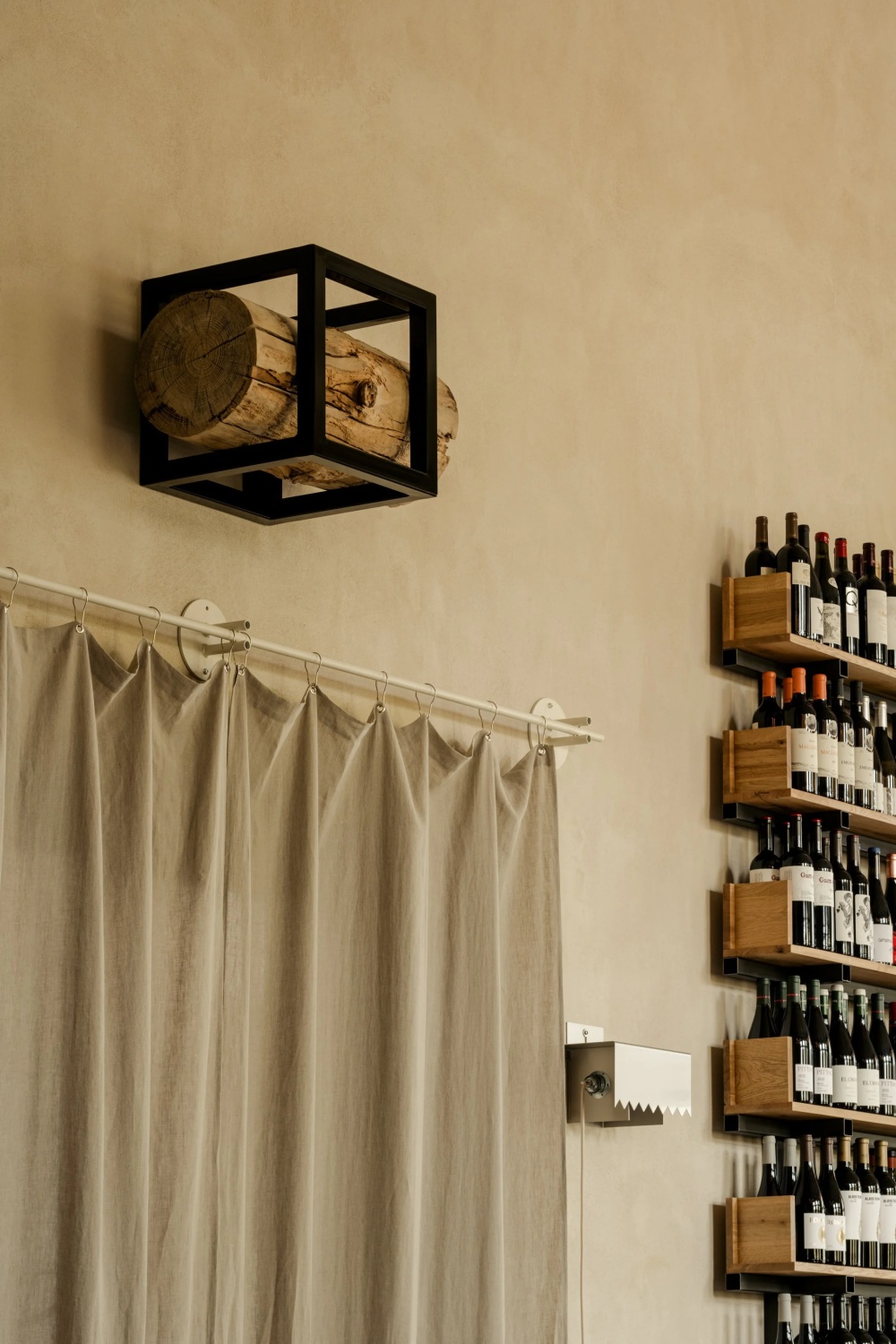
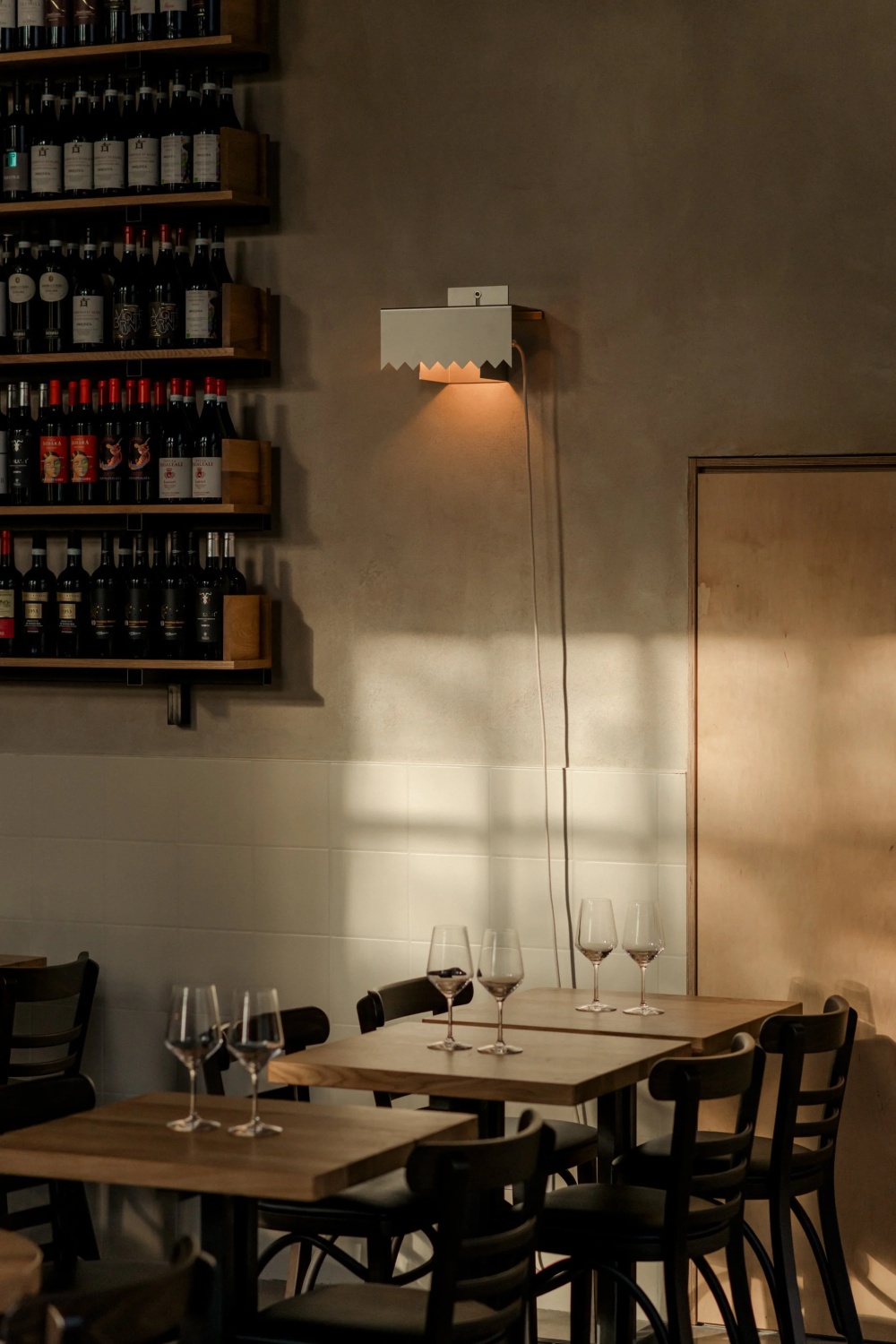
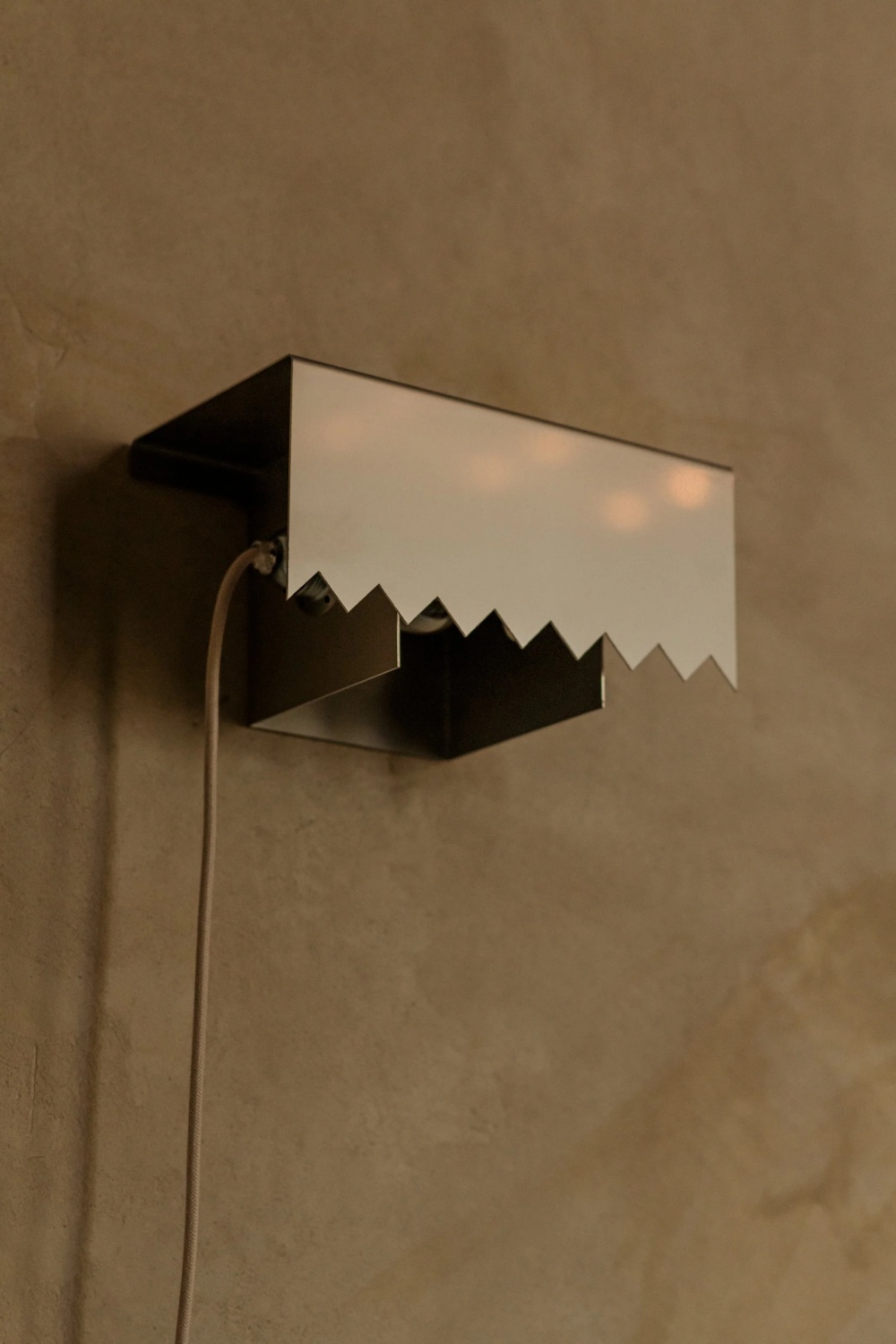
A suite of bespoke furnishings establishes the interior’s identity. Raw steel profiles and solid oak form the backbone of a crafted family of elements, including shelving, tables, lamps, wall details, and even curtain rods. This consistent approach gives the space a cohesive visual logic, with joinery and metalwork carrying a shared hand and a clear intention. Against this custom-built backdrop, only the classic chairs and bar stools are catalogue selections, chosen for their historical continuity, echoing designs visible in archival photographs of century-old dining rooms.
Material discipline sits at the heart of the project. The entire interior is shaped by four materials in their natural tones: raw steel, solid oak, aluminium, and natural linen. This restrained palette balances warm and cool surfaces, placing the tactile honesty of the fit-out in direct conversation with the hall’s brutal concrete shell. The simplicity of the material selection heightens the contrast between refined craft and industrial monumentality, while keeping the view to the park as an ever-present extension of the room.