Patonga House | Casey Brown Architecture
vsszan207224031750281.jpg
vsszan207224031750282.jpg


Patonga House by Casey Brown Architecture makes spectacular use of salvaged and recycled timbers to create a coastal residence that is warm, generous and bursting with history.
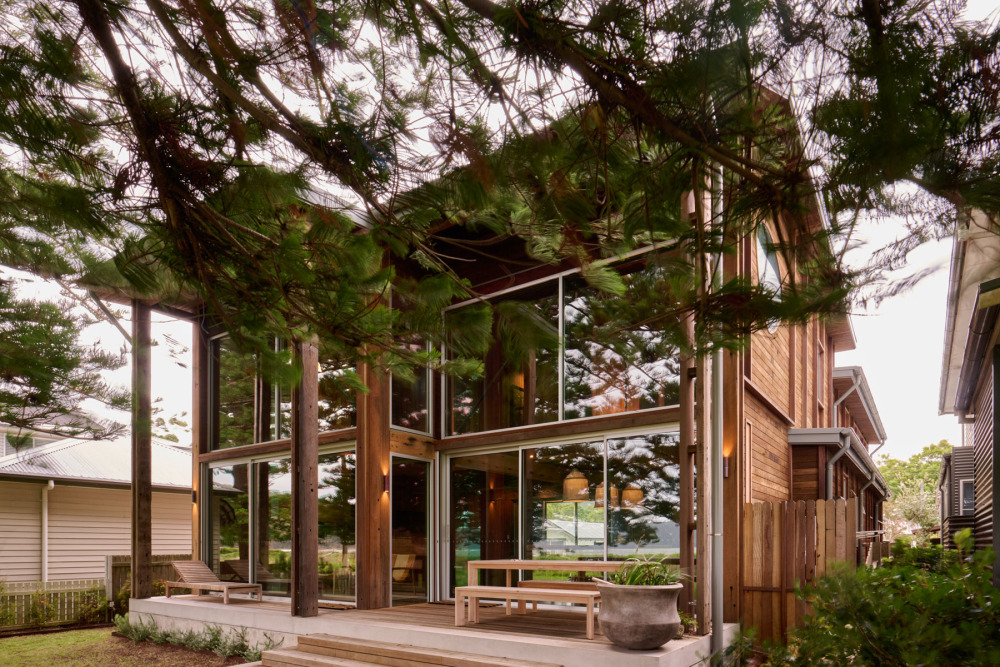
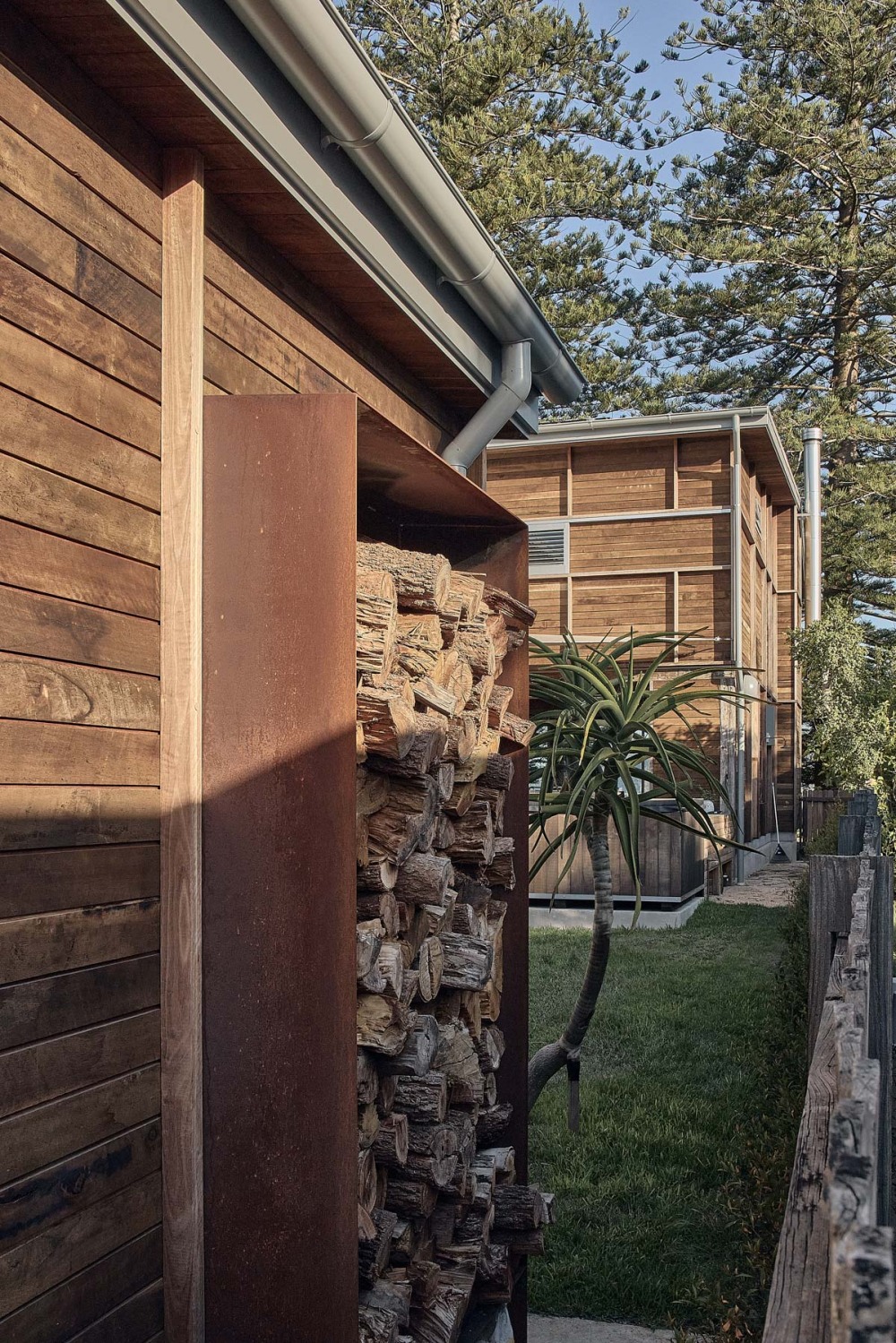
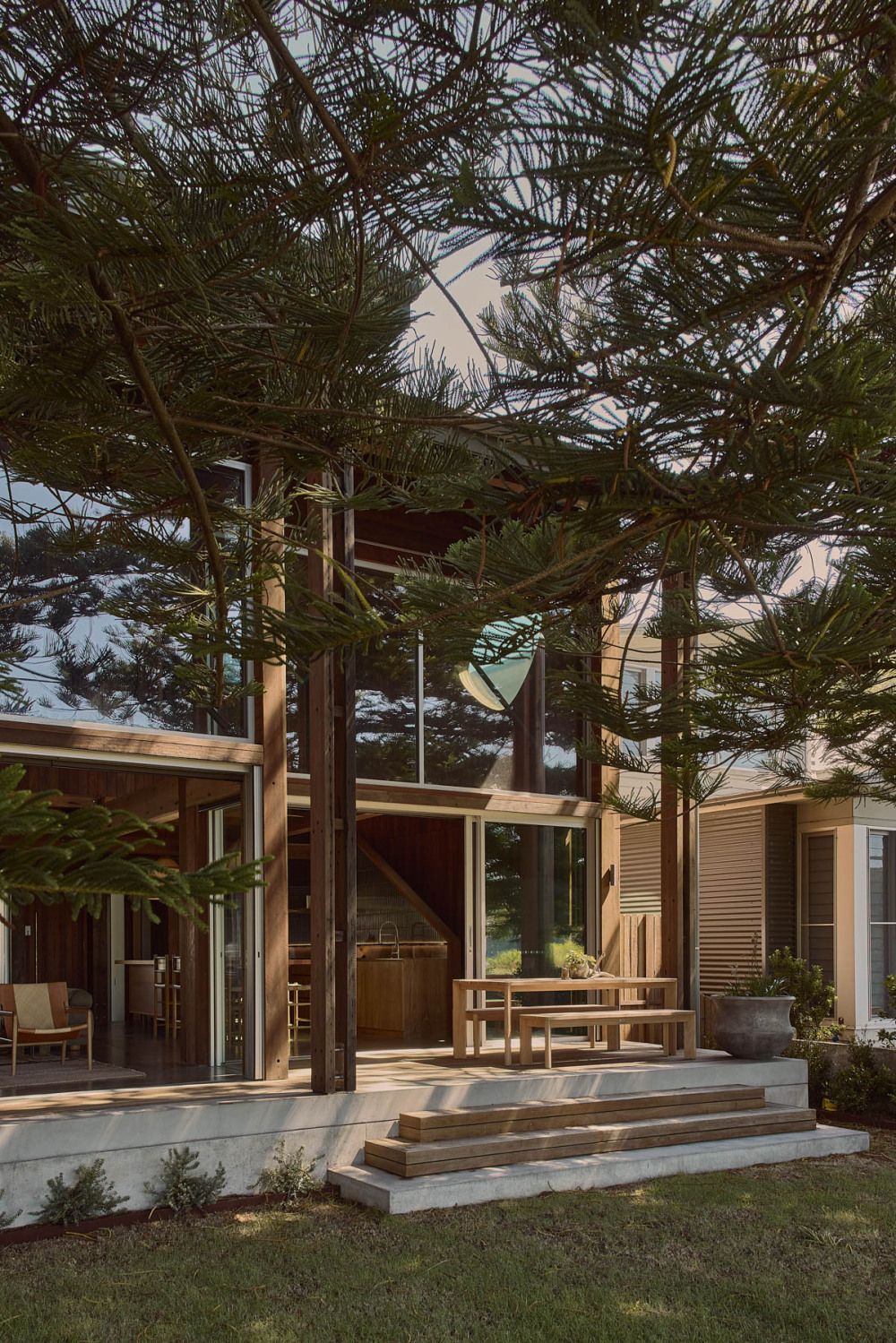
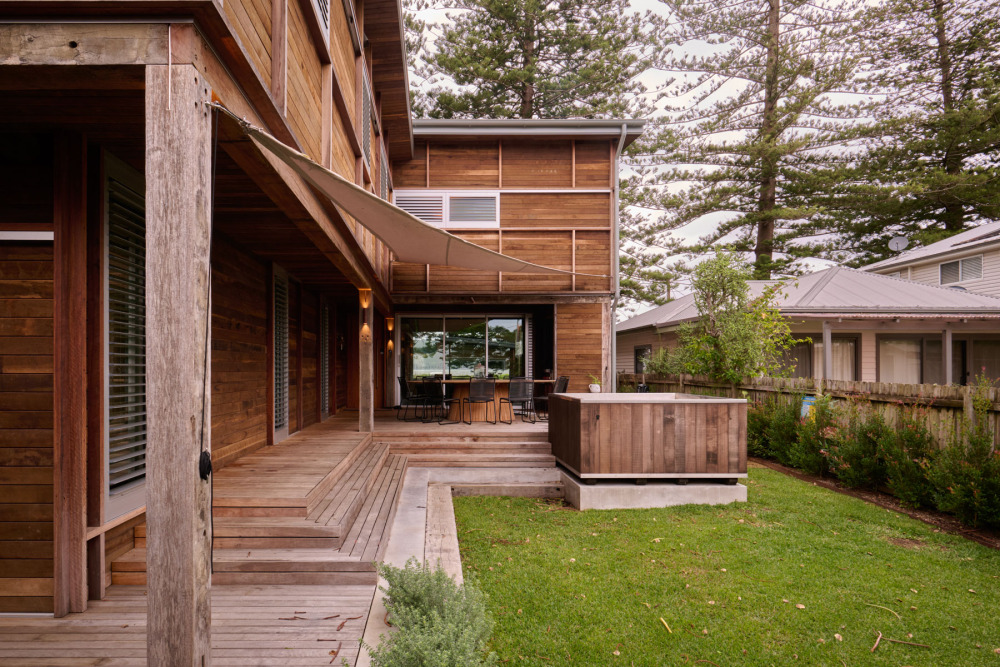
In a small, beachside village at the mouth of the Hawkesbury River, Patonga House sits alongside weatherboard cottages and towering Norfolk pines. Inspired by the nostalgic summers of the owner’s childhood, the design embraces the idea of “wearing in, not wearing out,” constructed completely in a range of recycled timbers that will allow it to age gracefully in its coastal setting.


vsszan207224031750283.jpg
vsszan207224031750284.jpg


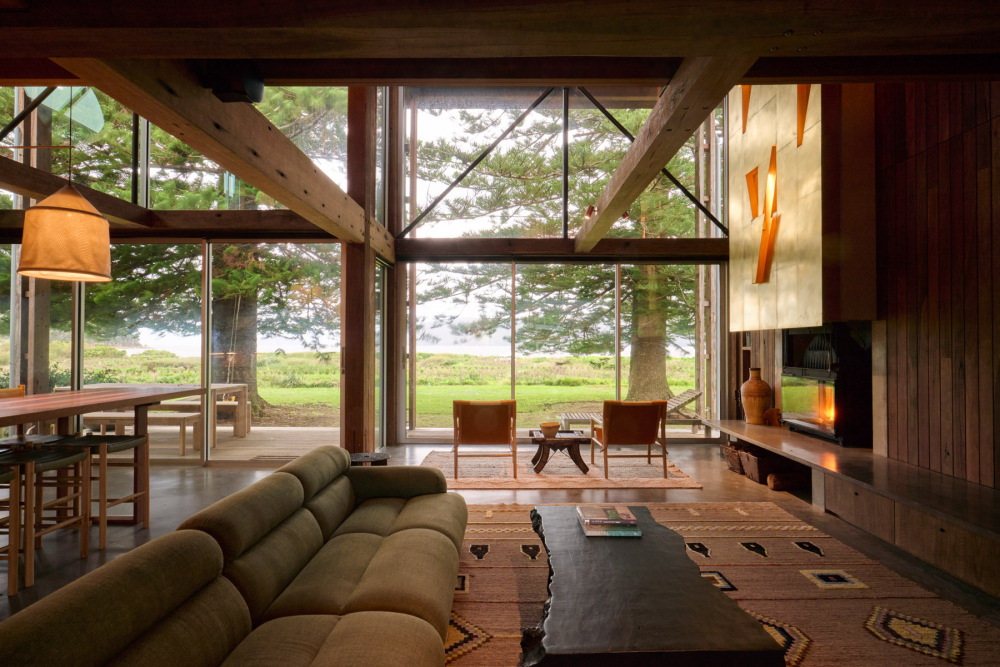
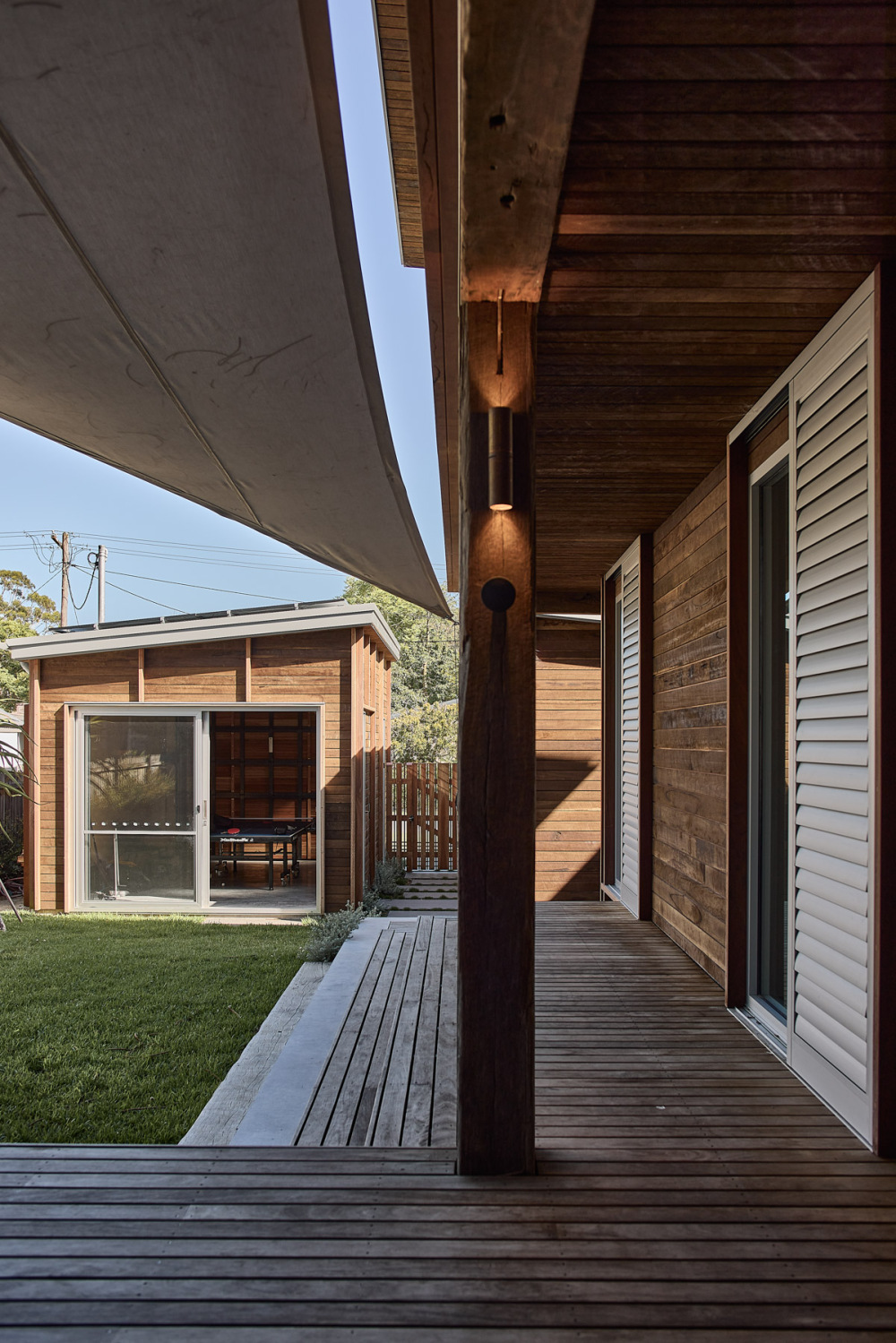
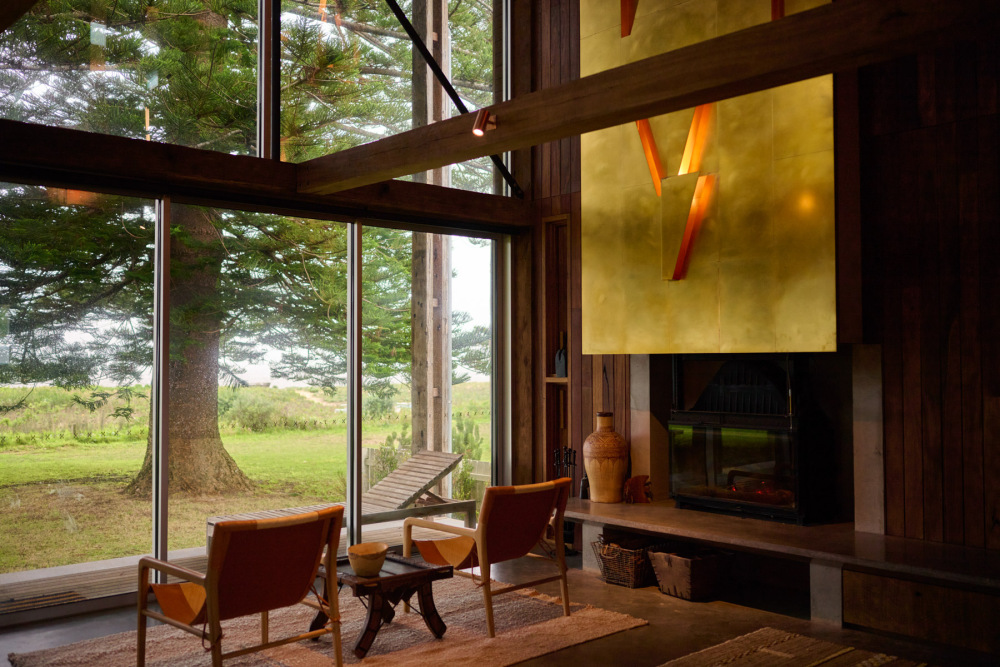
Elevated on a concrete platform to protect against tidal surges, two modest timber pavilions enclose a sheltered courtyard, creating a sense of privacy and protection while opening the home up to sea breezes. “When you open the front door… it brings the beach plus the atmosphere of the two enormous Norfolk pines in the front yard right into the house,” says architect Rob Brown. Inside, the compact plan accommodates up to 12 people, with warm, generous spaces and flexible indoor-outdoor living areas.
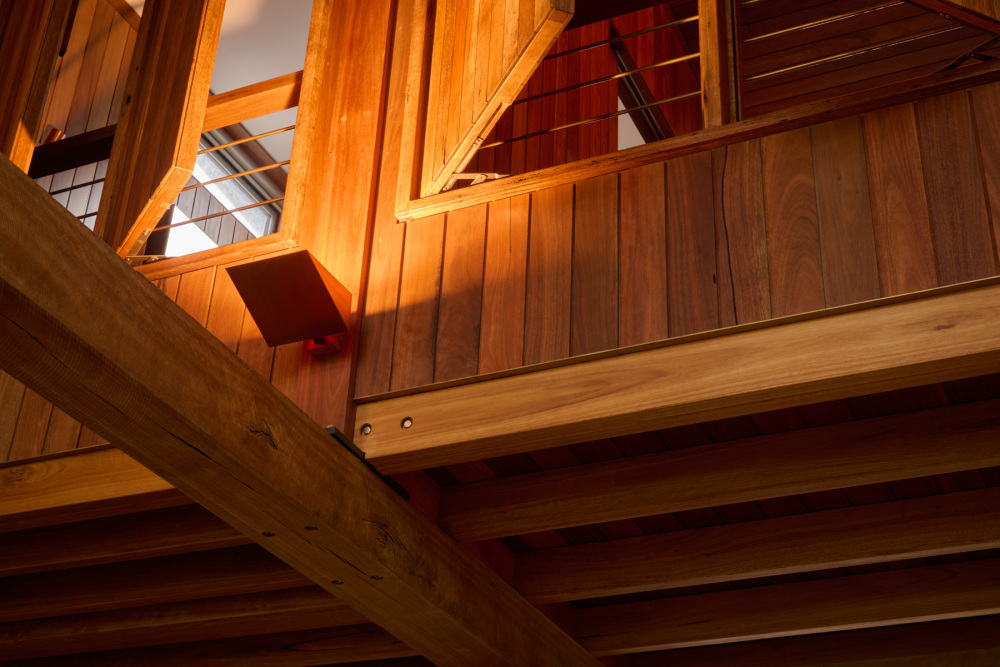
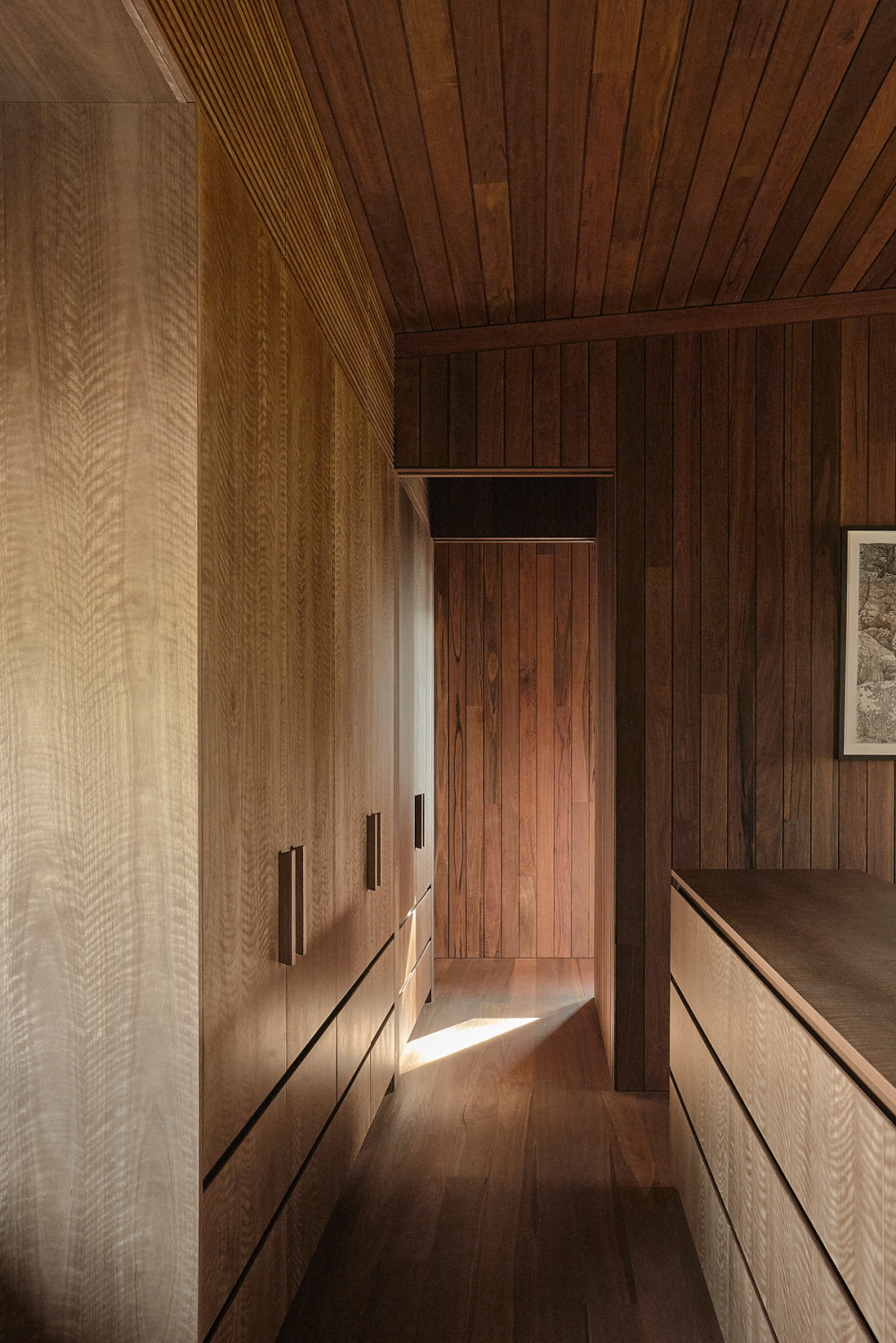
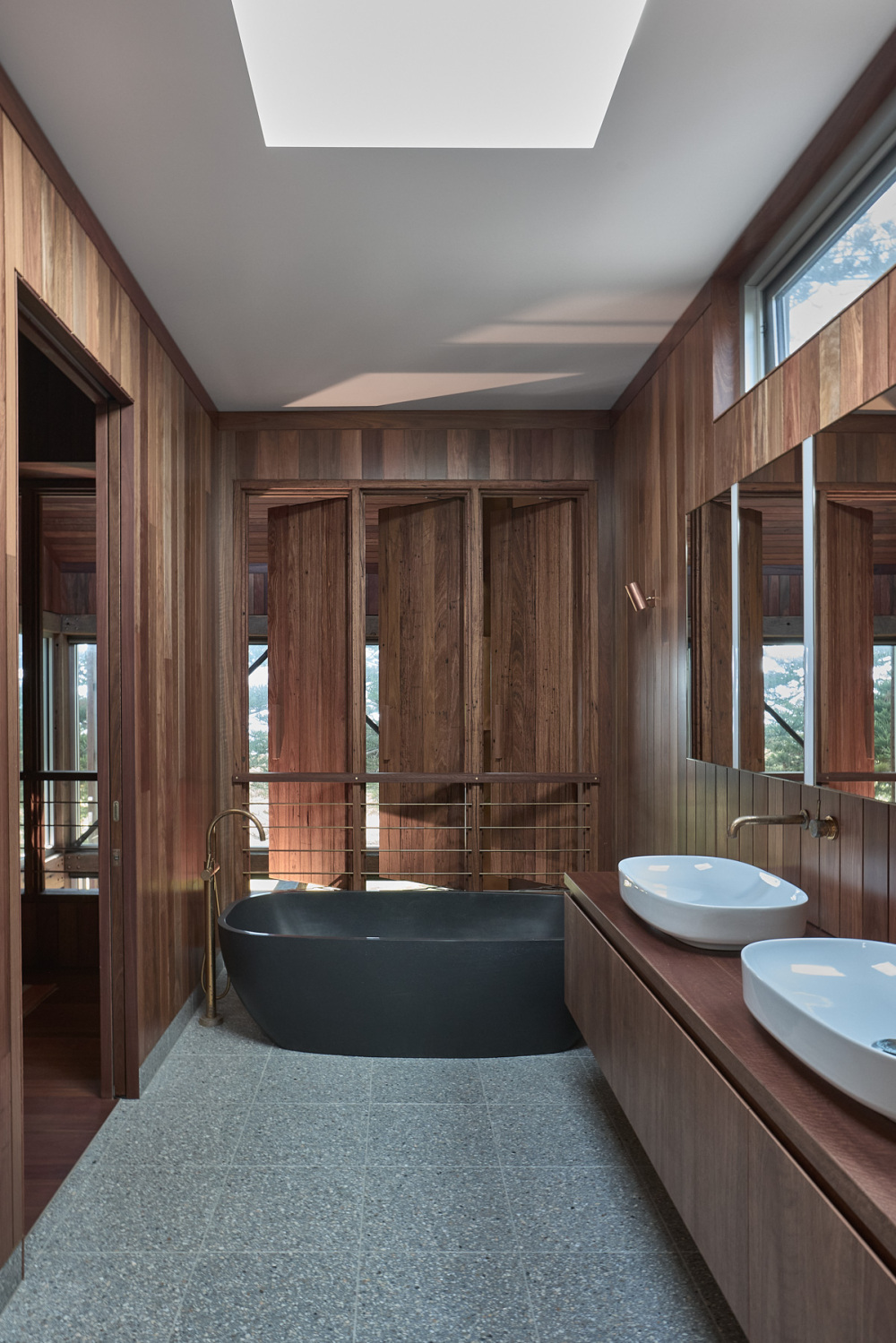
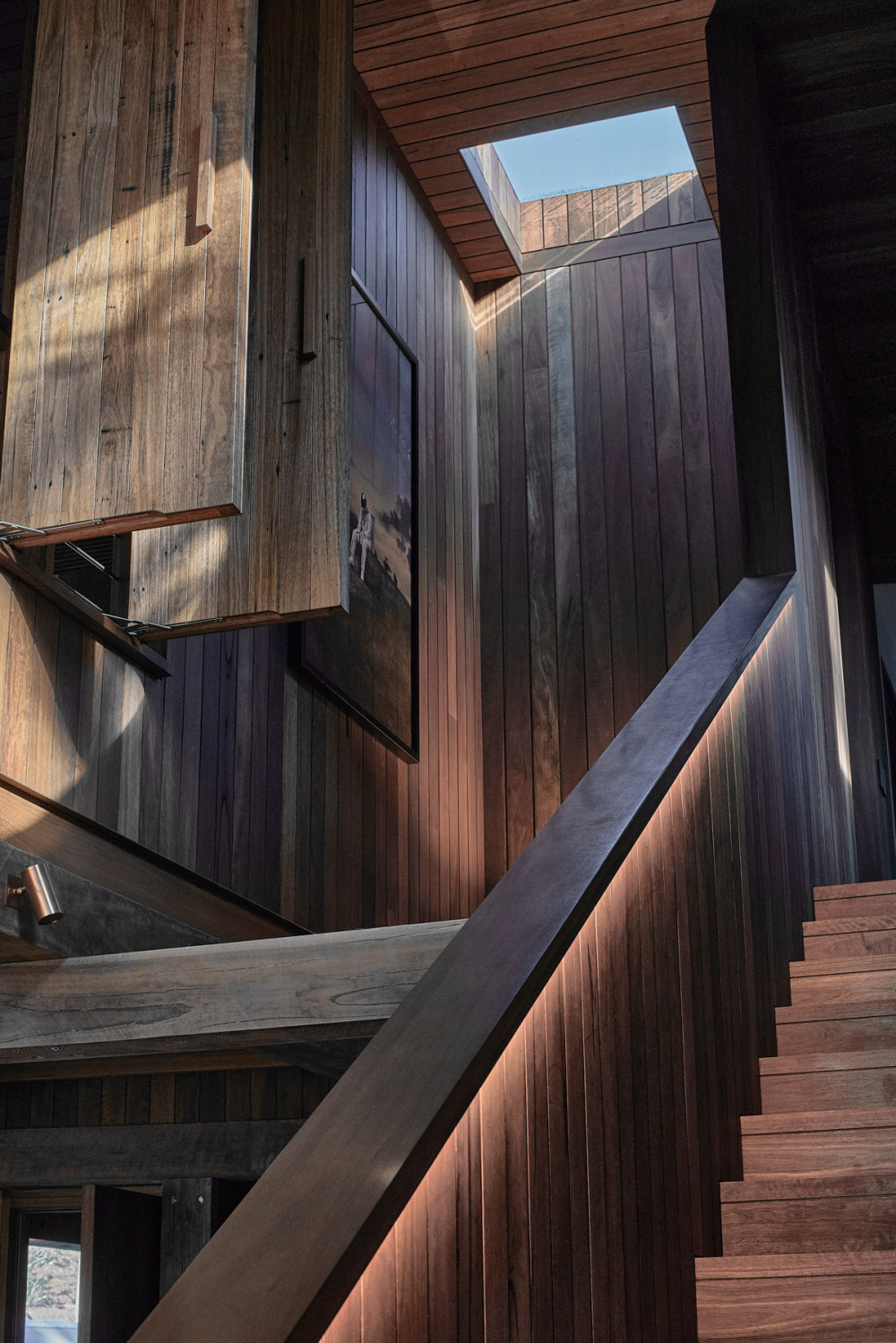
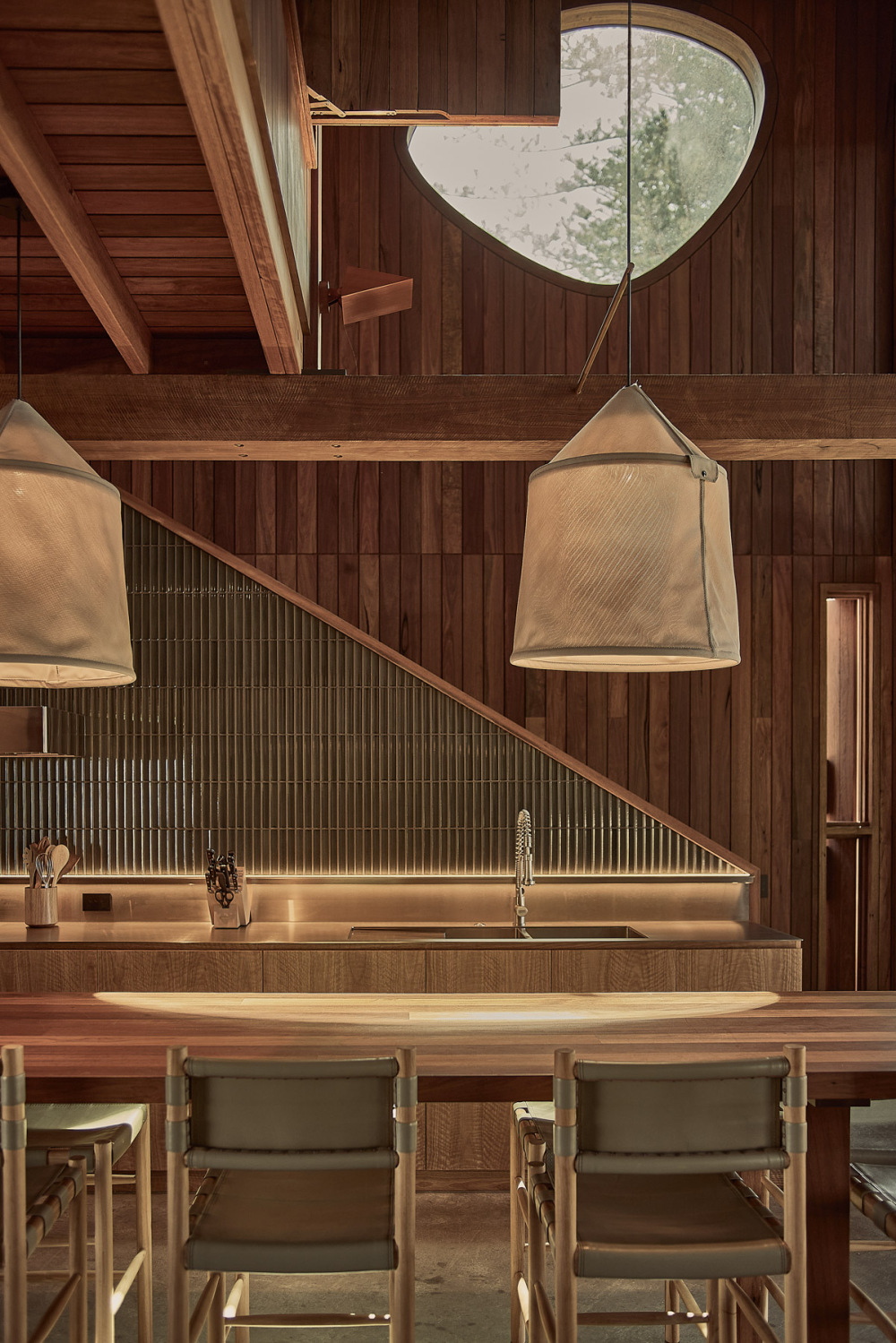
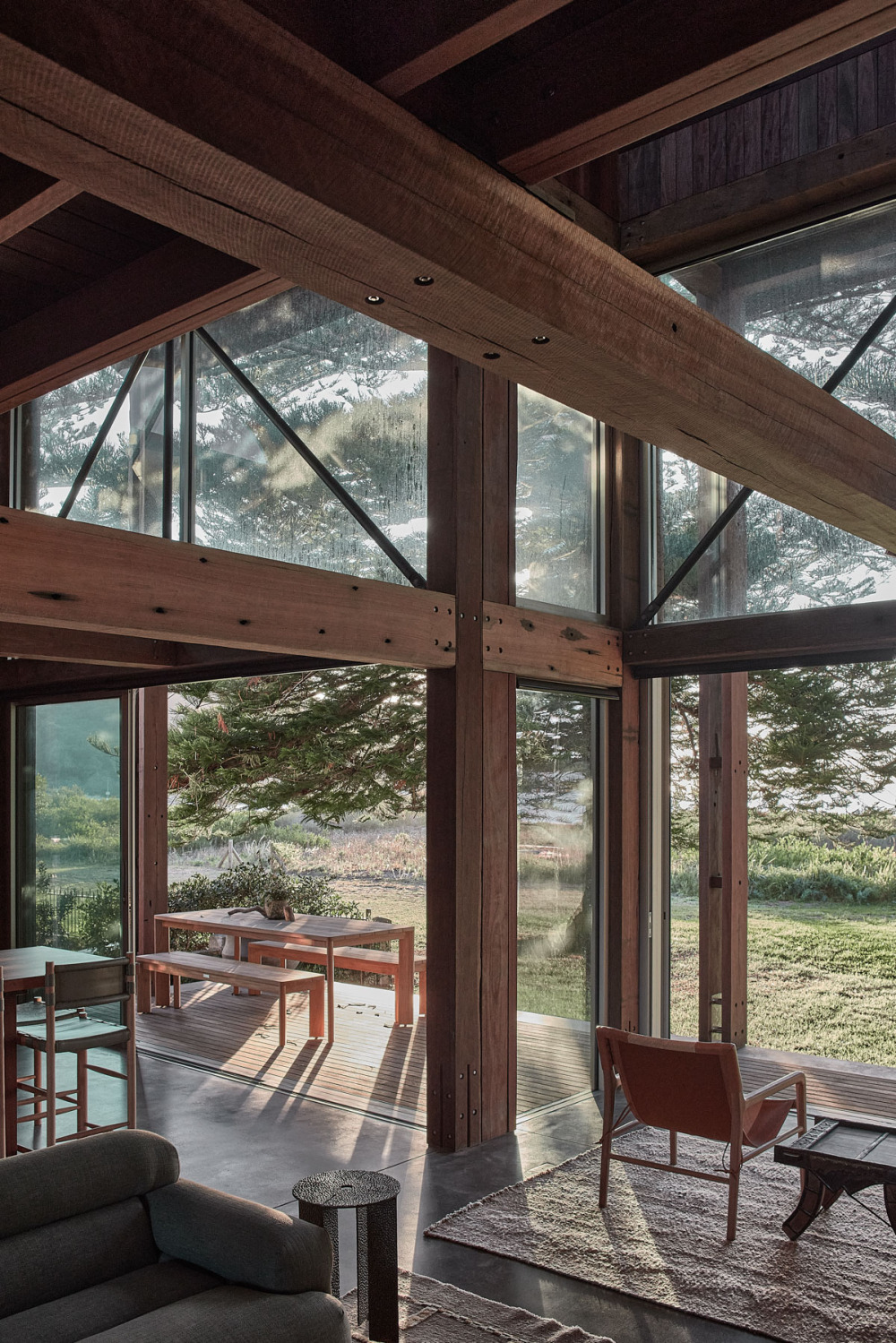
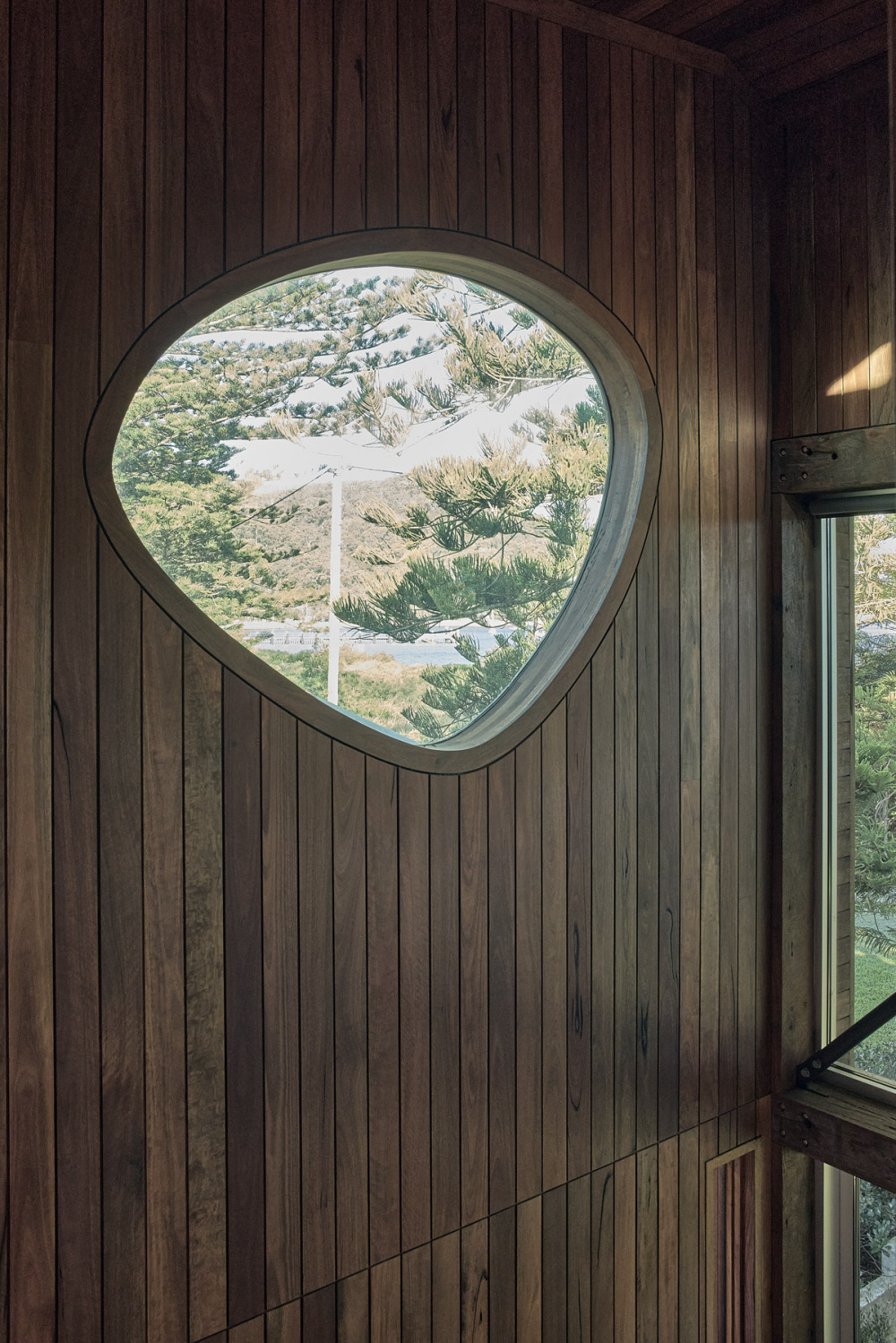
Facing south-west on the water, the architecture takes its cues from a shell – with a rustic, rugged exterior and an inside that is beautifully smooth and rich. Timber is favoured throughout for its durability, warmth and history. “As each board and each post and each beam is slightly different, it’s got a story.” He notes that the choice of a completely timber interior was “to expose the structure, show the bones, show how it was put together, and its wonderful recycling of history.”


vsszan207224031750285.jpg
vsszan207224031750286.jpg


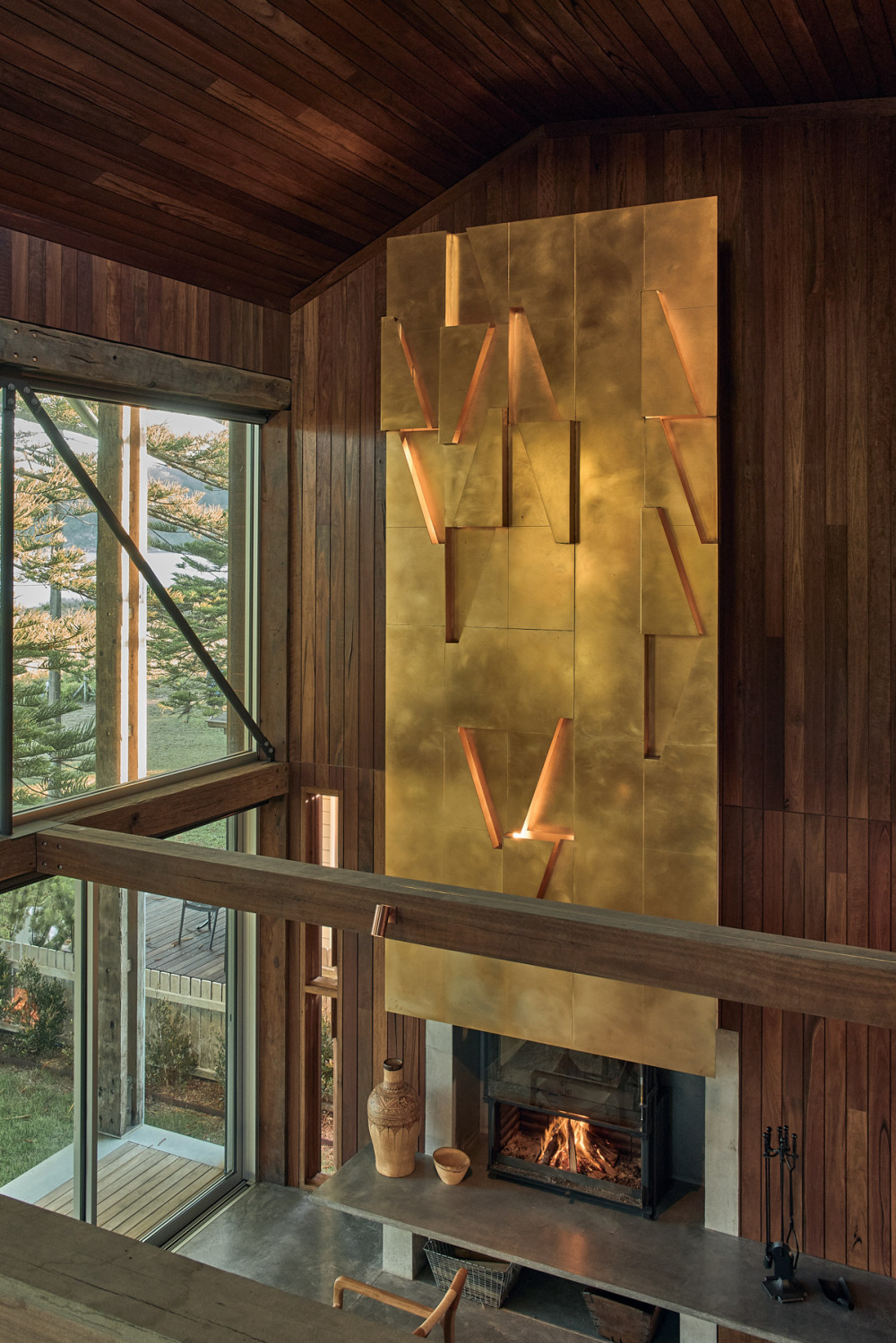
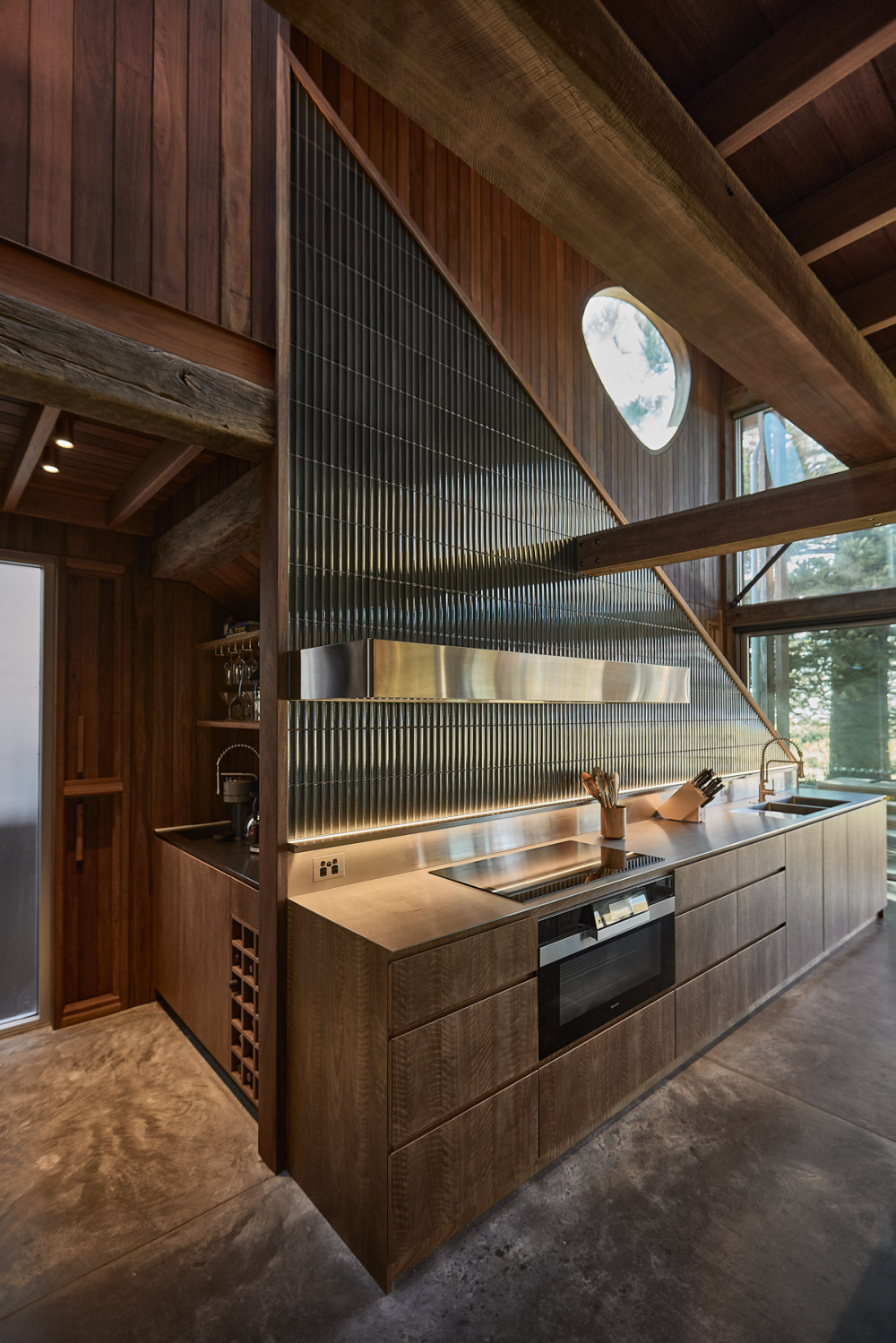
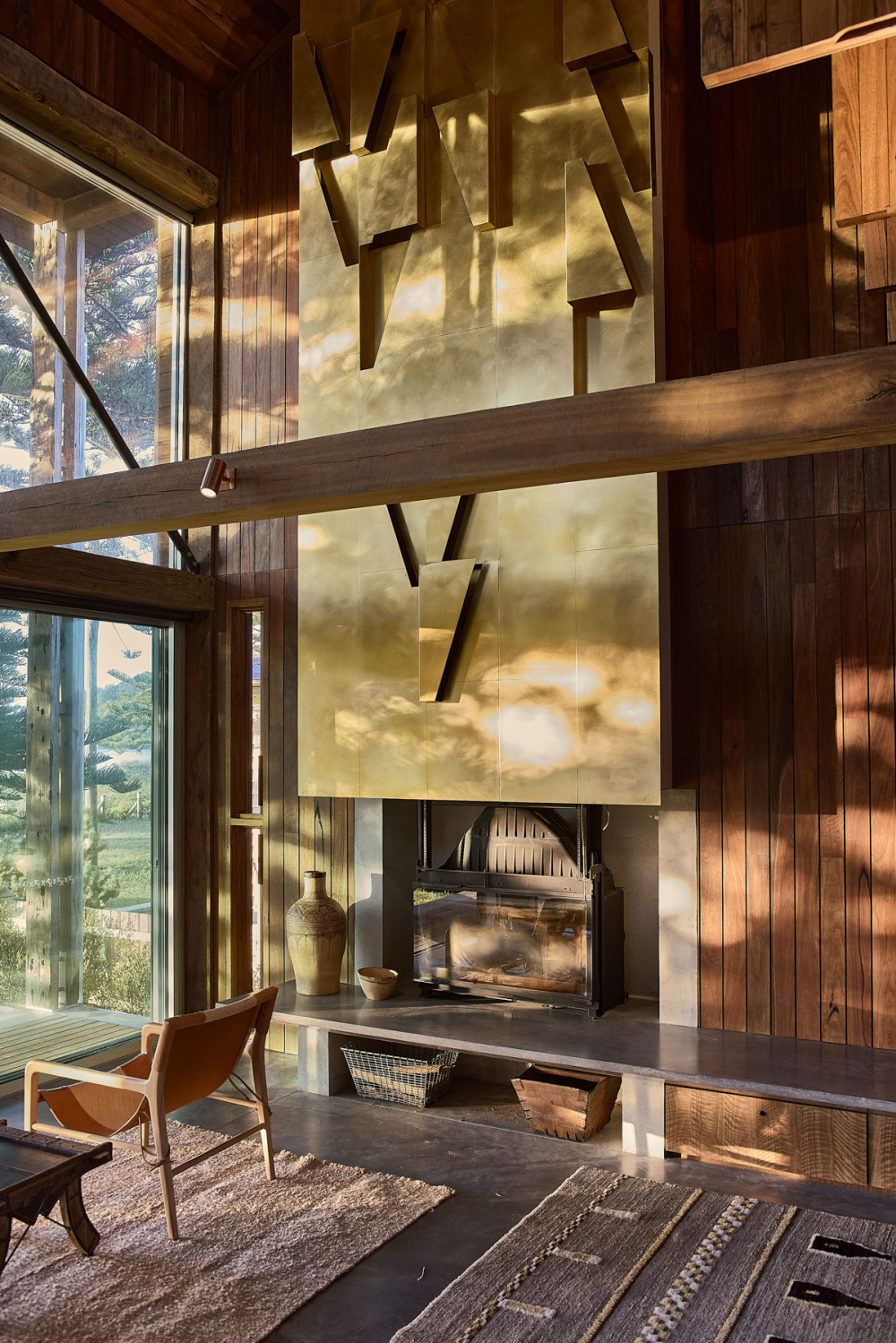
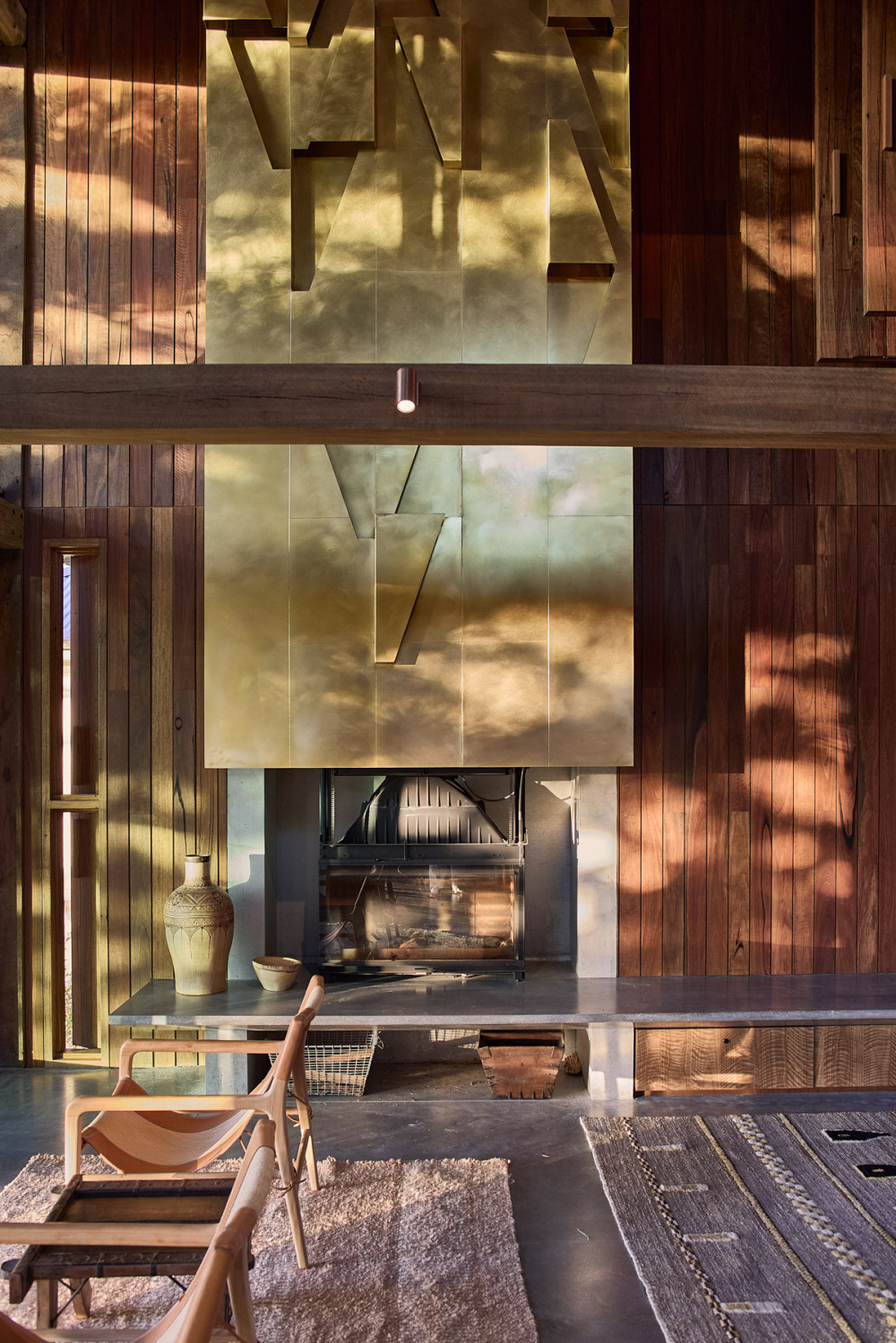
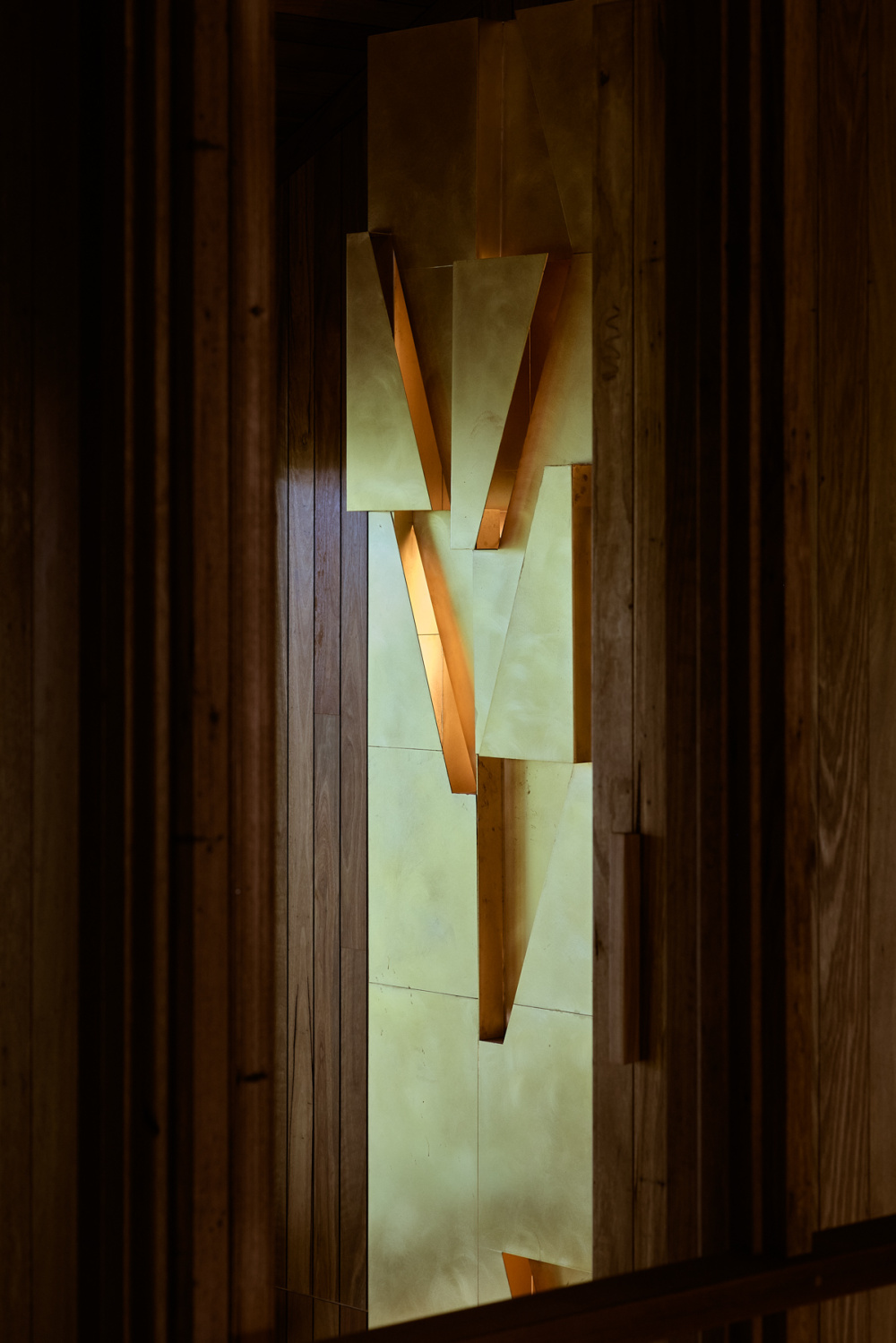
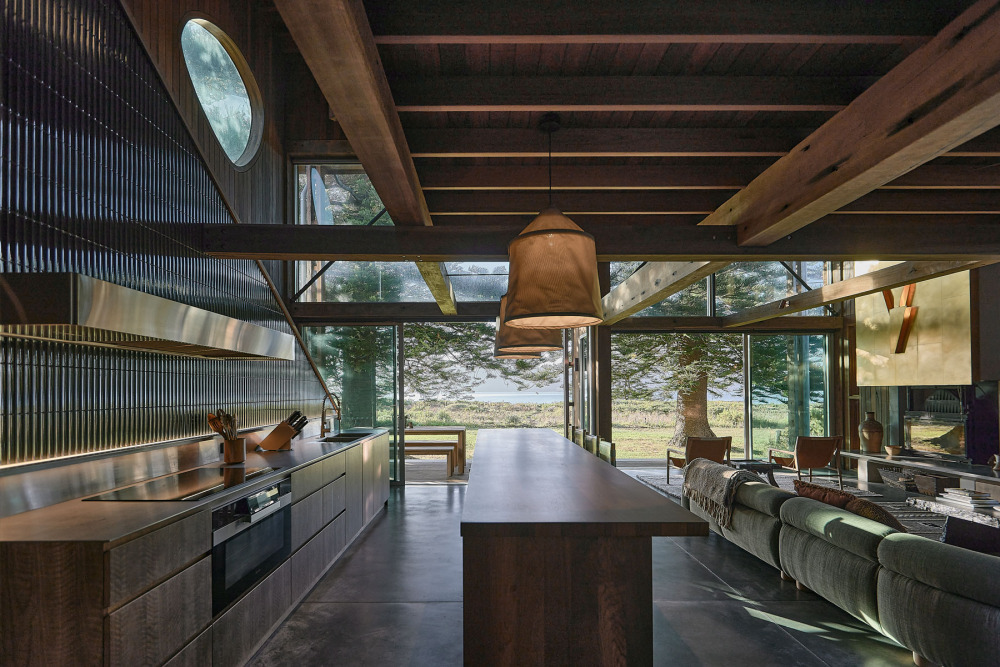
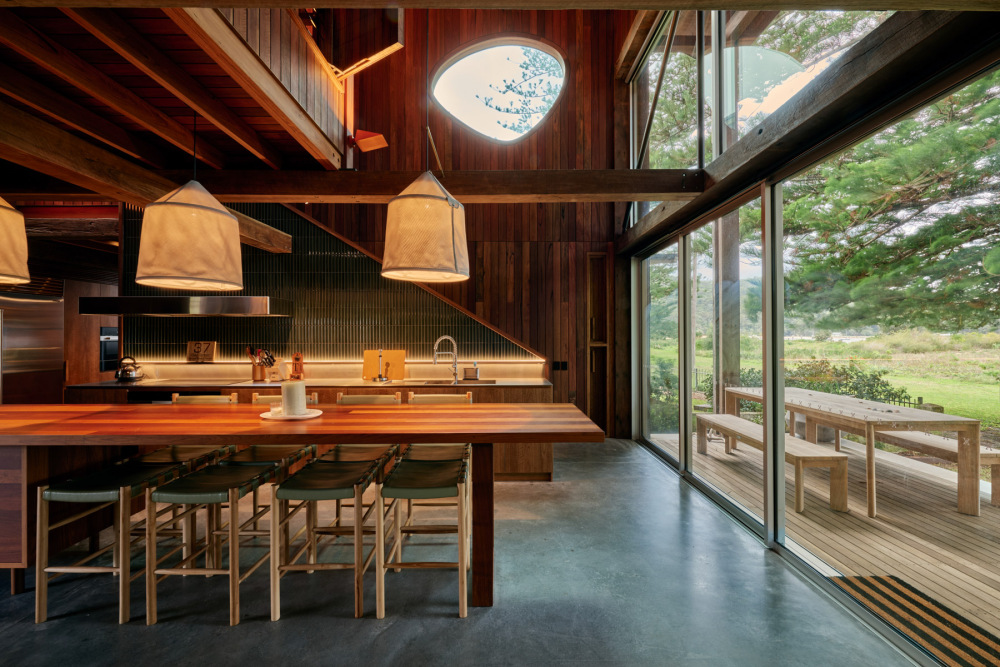
Due to the double-height, open-plan kitchen, dining and living area, one of the challenges was finding timber boards of the right size. These large structural beams were ultimately salvaged from a disused Clarence River bridge and measure an incredible 11 metres long.Meanwhile, the kitchen island is constructed from original Burmese teak recycled from a CSIRO lab. The internal doors are made from mixed reclaimed hardwoods, while locally sourced spotted gum completes the interiors and exteriors. In the heart of the living space, a bespoke brass fireplace screen stretches all the way to the ceiling, acting as the home’s sculptural centrepiece.


vsszan207224031750287.jpg
vsszan207224031750288.jpg
vsszan207224031750289.jpg
vsszan2072240317502810.jpg
vsszan2072240317502811.jpg
vsszan2072240317502812.jpg
vsszan2072240317502813.jpg
vsszan2072240317502814.jpg
vsszan2072240317502815.jpg
vsszan2072240317502816.jpg
vsszan2072240317502817.jpg
vsszan2072240317502818.jpg
vsszan2072240317502819.jpg
vsszan2072240317502820.jpg
vsszan2072240317502821.jpg
vsszan2072240317502822.jpg
vsszan2072240317502823.jpg
vsszan2072240317502824.jpg
vsszan2072240317502825.jpg
vsszan2072240317502826.jpg
vsszan2072240317502827.jpg
vsszan2072240317502828.jpg
vsszan2072240317502829.jpg
vsszan2072240317502830.jpg
vsszan2072240317502831.jpg
vsszan2072240317502832.jpg
vsszan2072240317502833.jpg
  

Architecture by:Casey Brown Architecture
Video by:Pew Pew Studio
Build by:Moneghittie Built
Photography by:Rohan Thomson, Pew Pew Studio
Edited by:Pew Pew Studio
Engineering by:Cantilever Engineers

  
    • 转载自:The Local Project
    • 图片@The Local Project
    • 语言:英语
    • 编辑:序赞网
    • 阅读原文
    AI文本分析中……
    AI色彩命名中……

    暂时没有评论,你回一个呗!~

    您需要登录后才可以回帖 登录 | 注册序赞号

    快速回复 返回顶部 返回列表