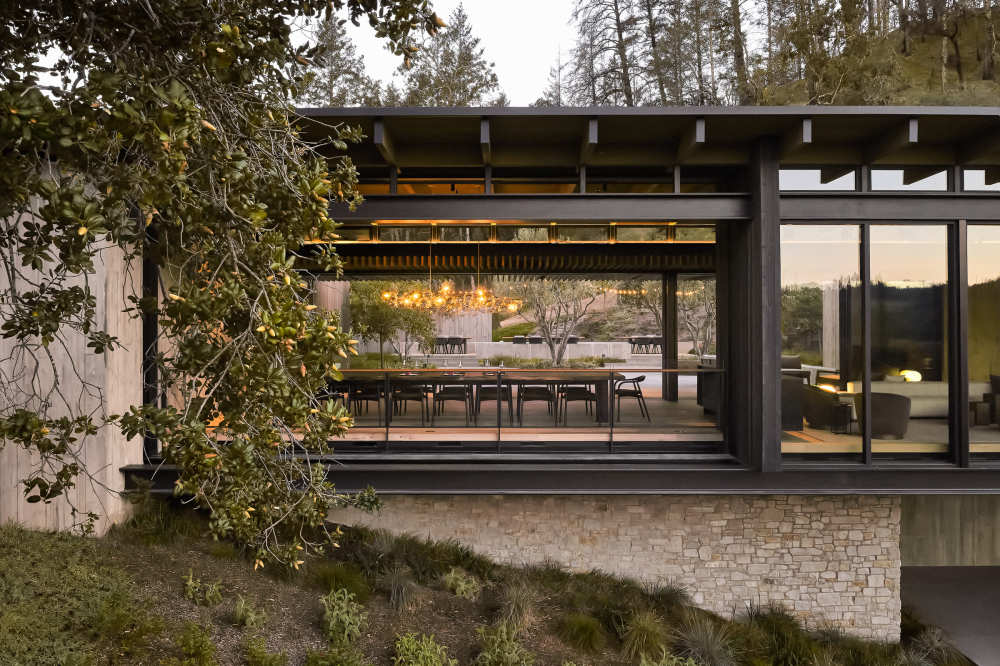
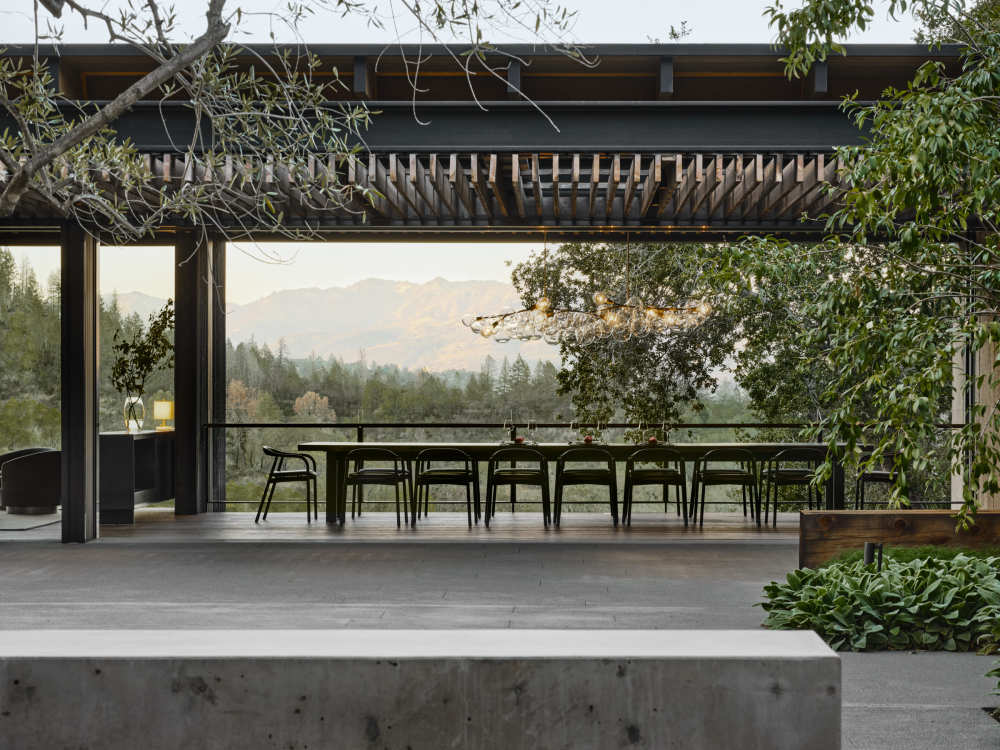
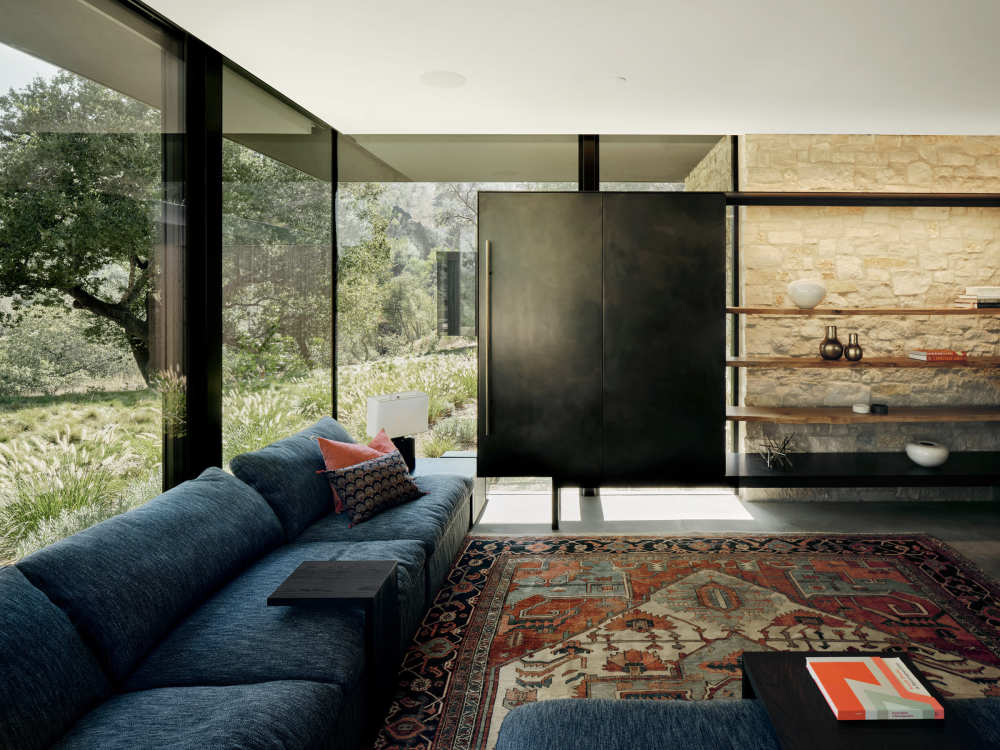
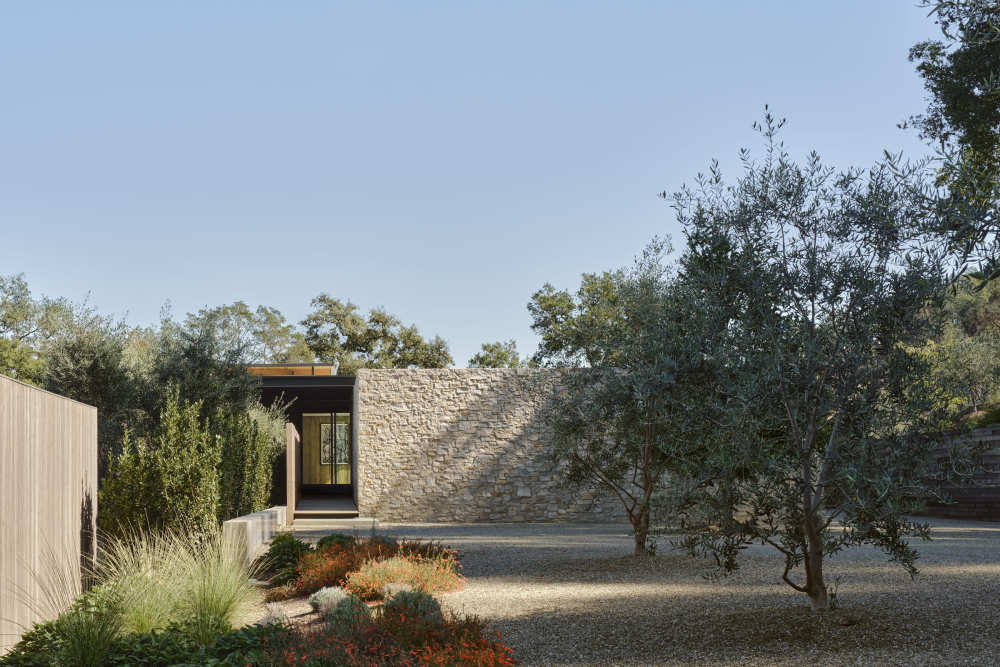
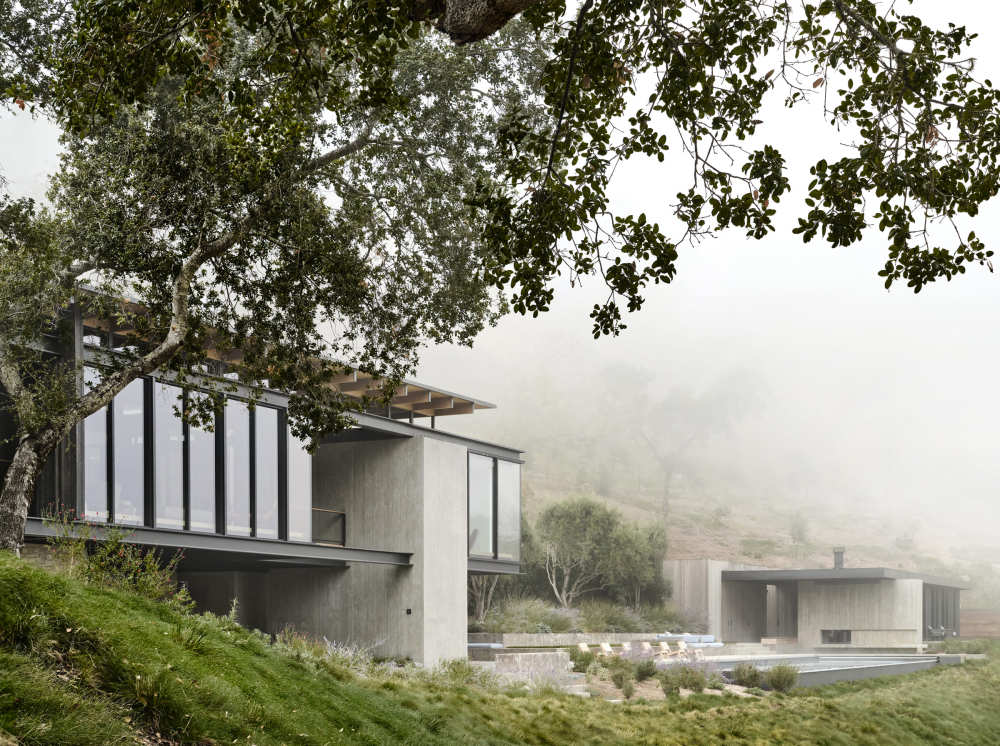
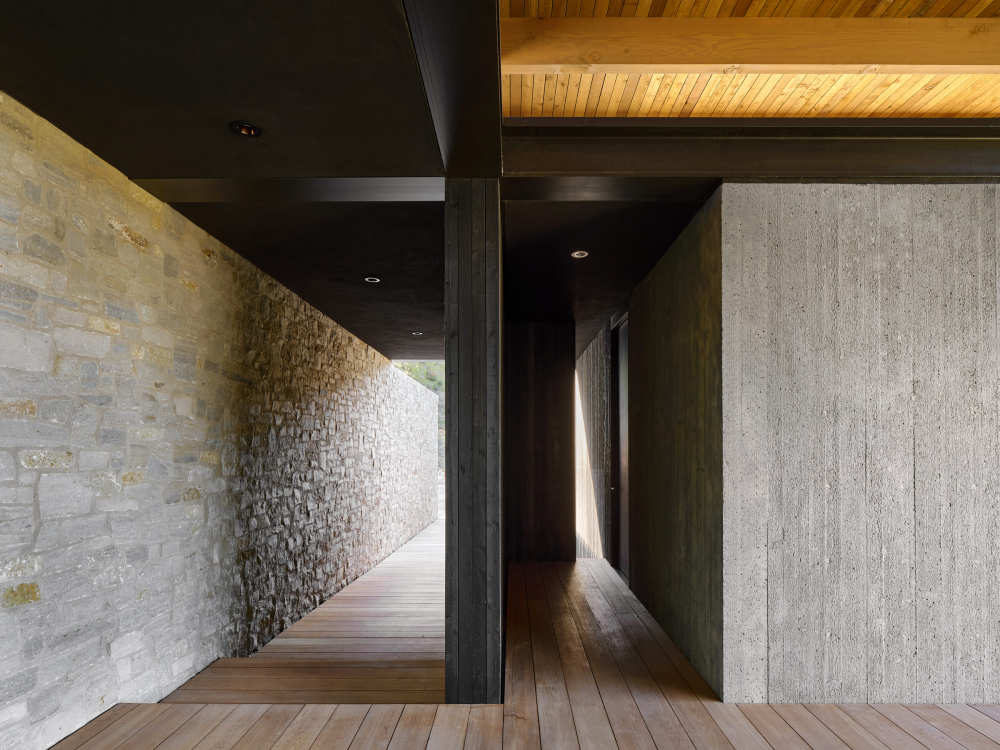
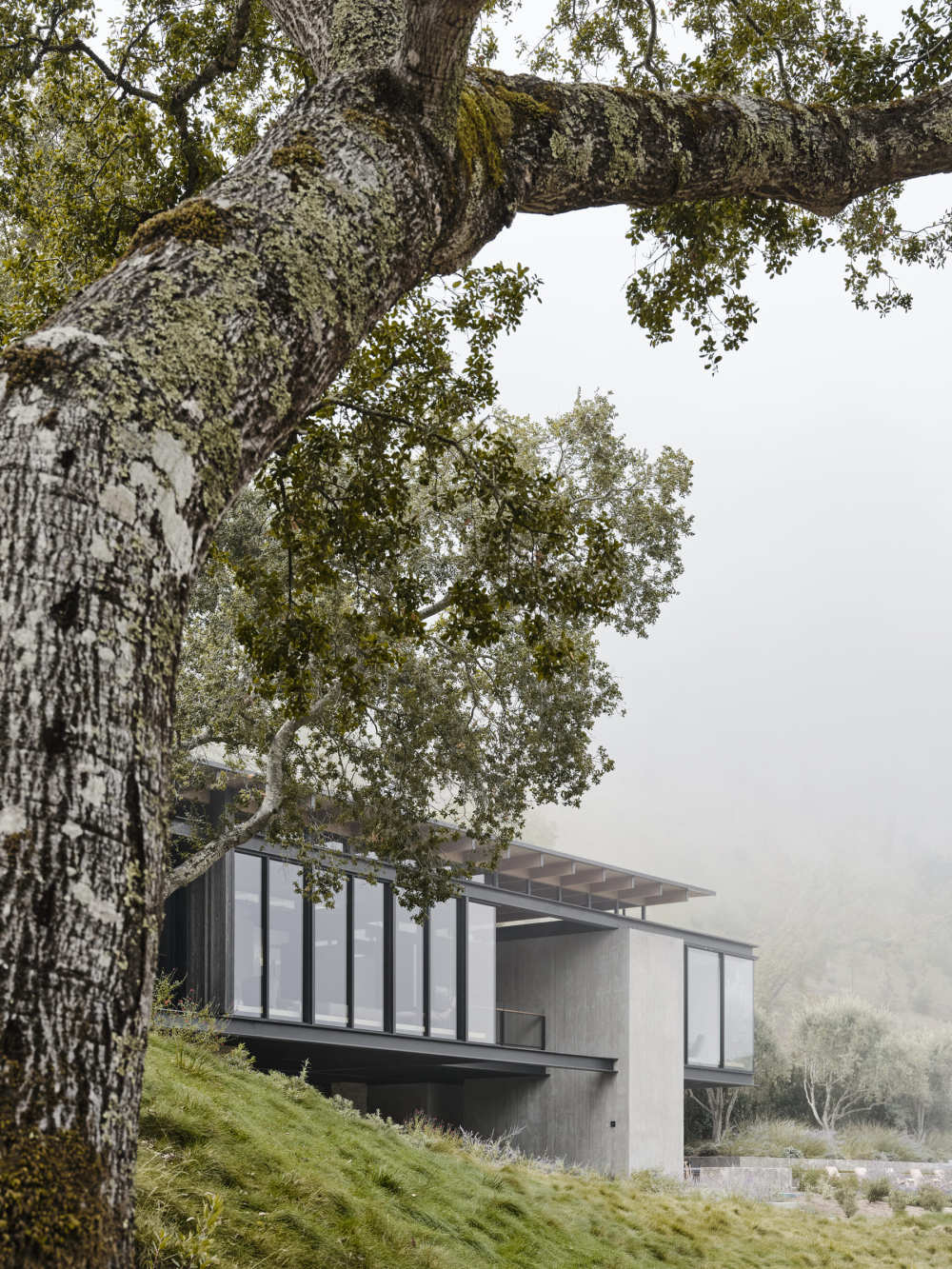
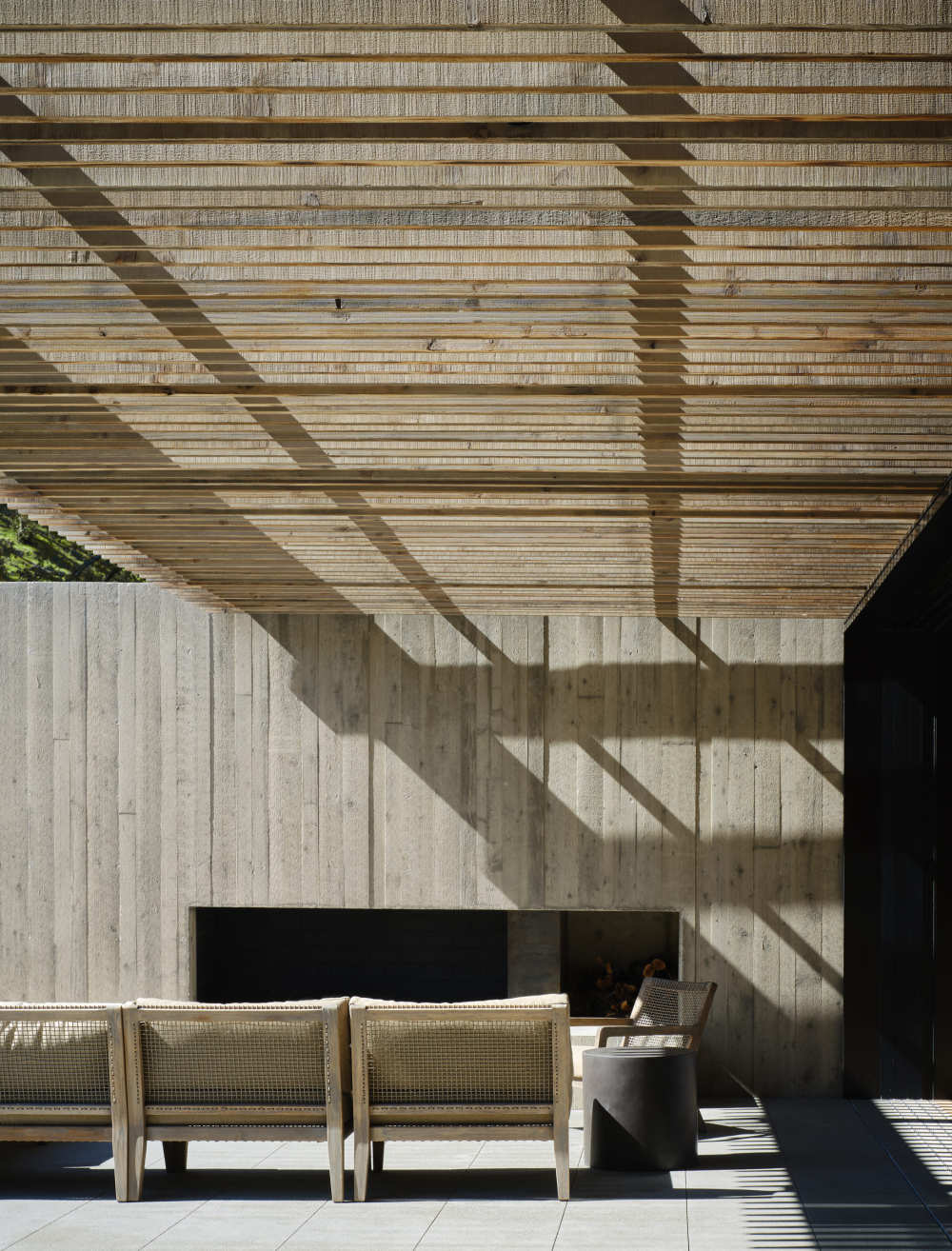
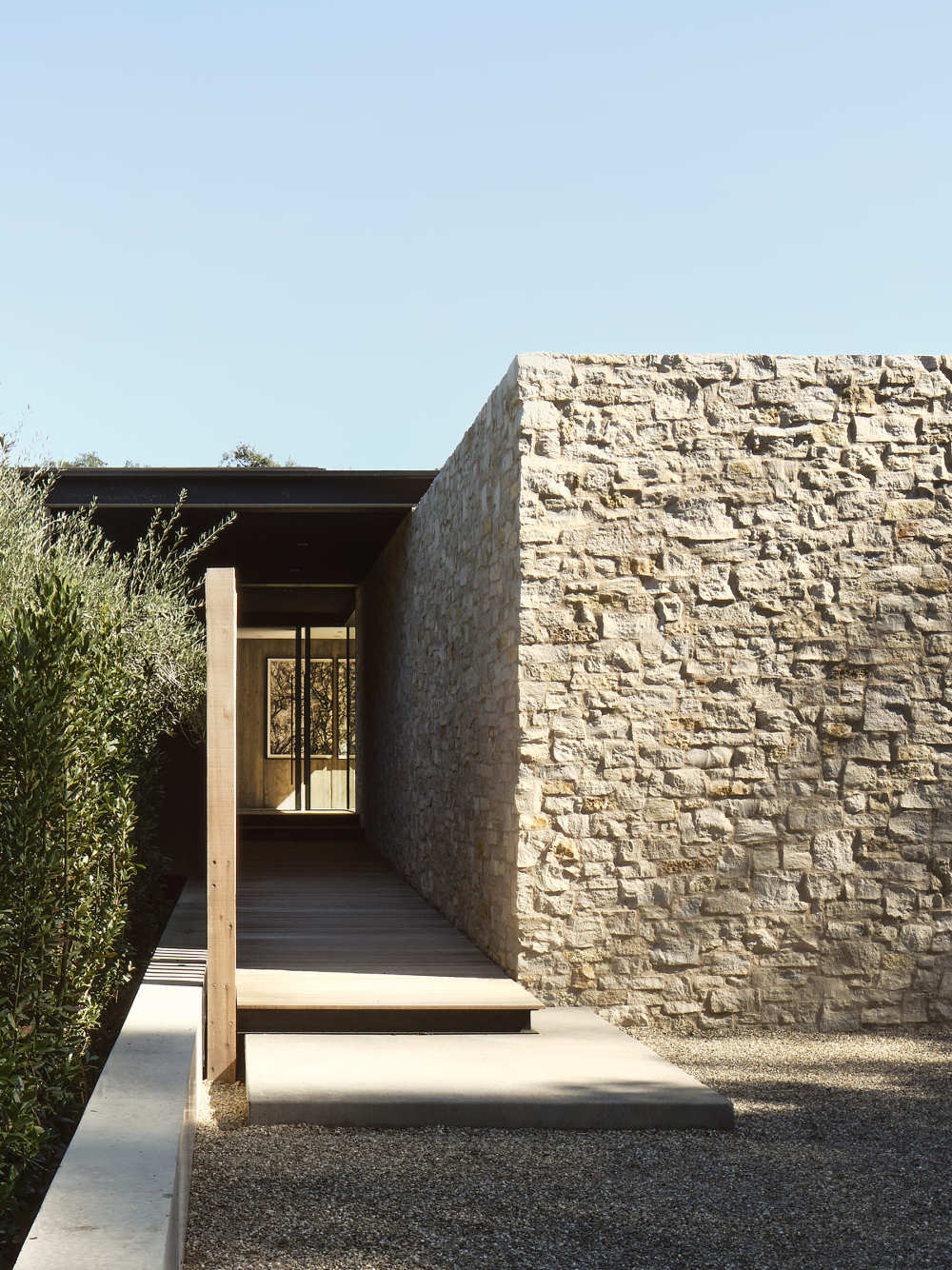
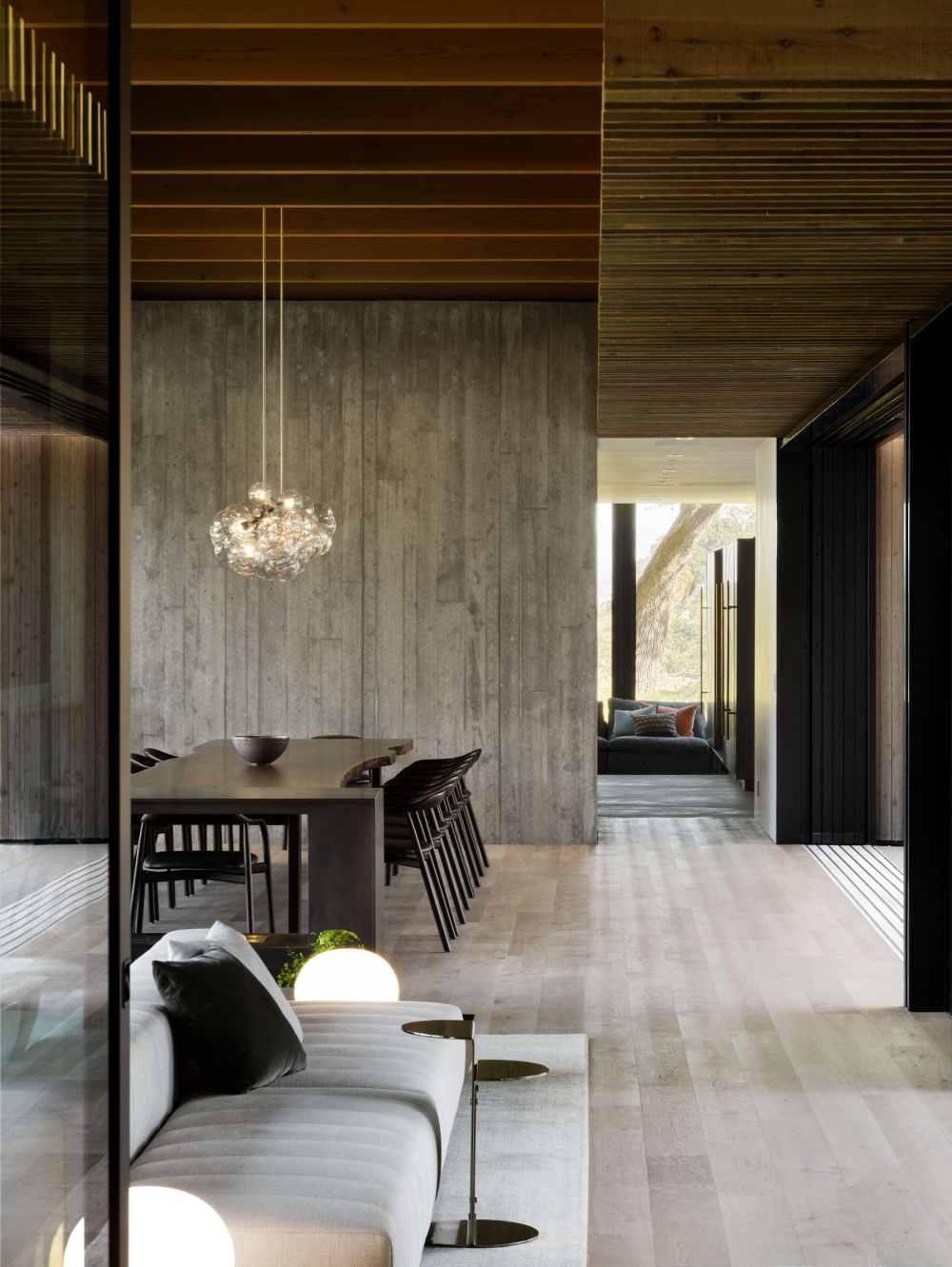
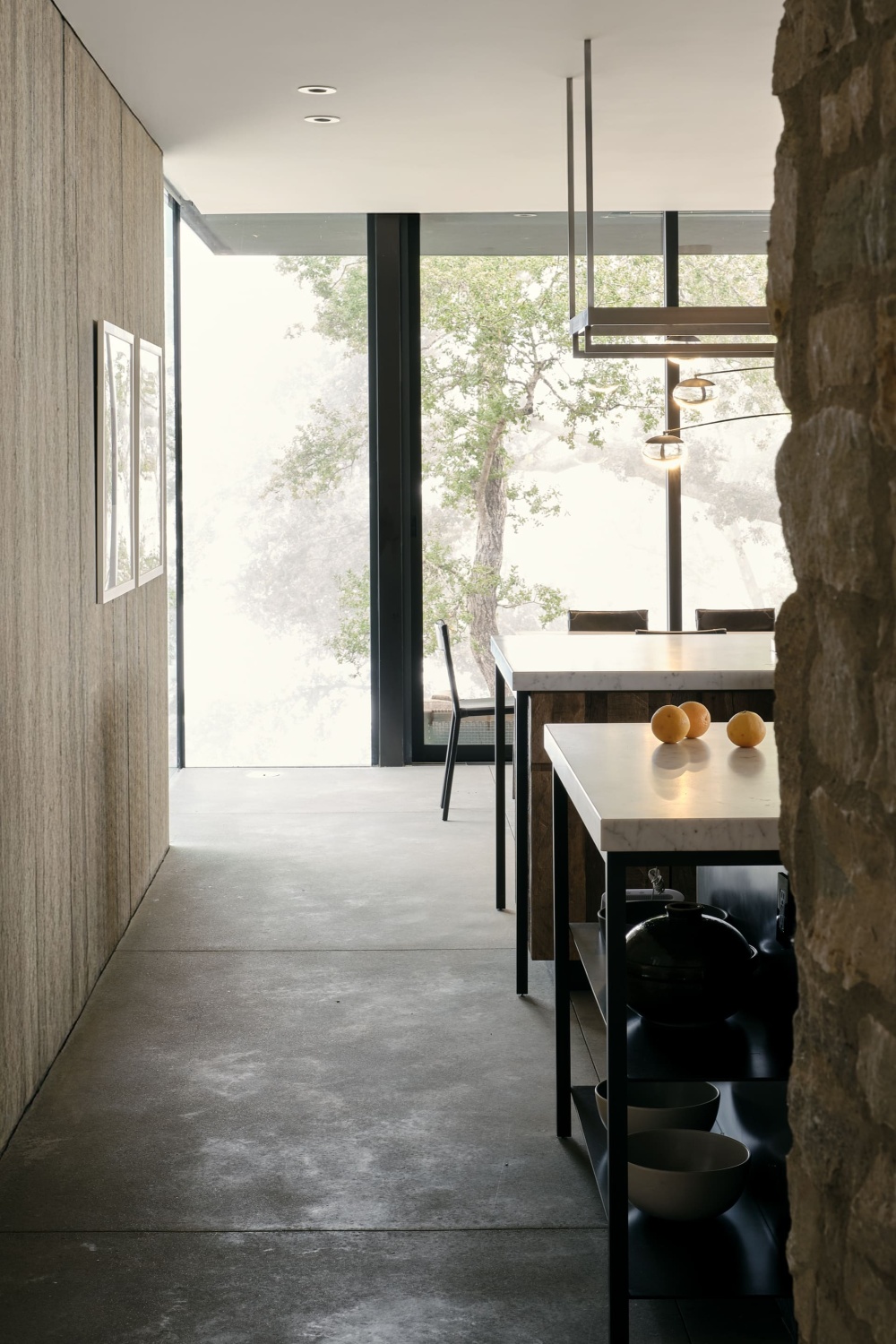
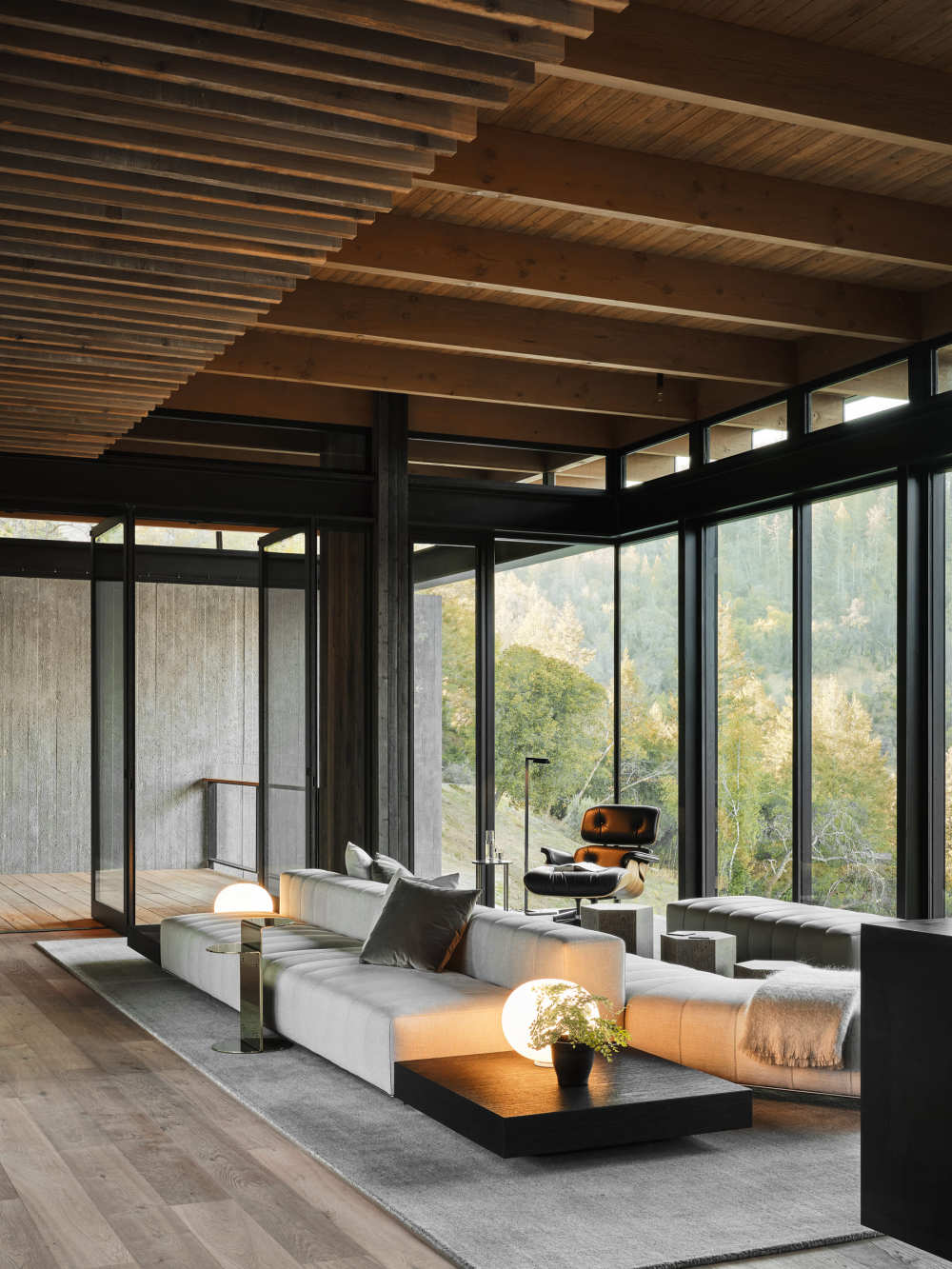
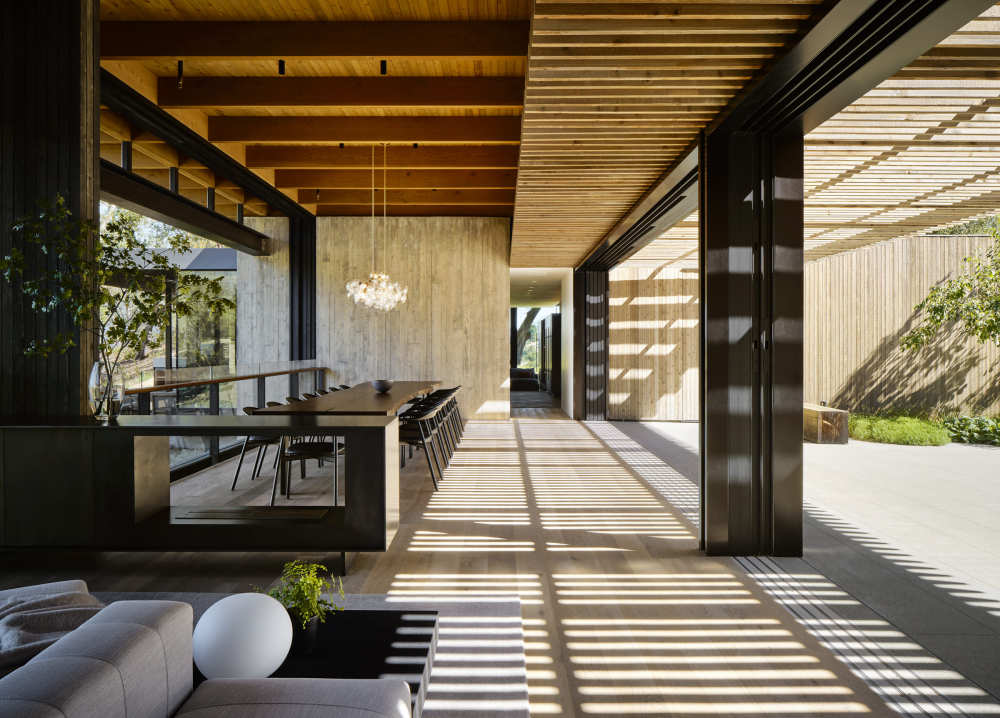
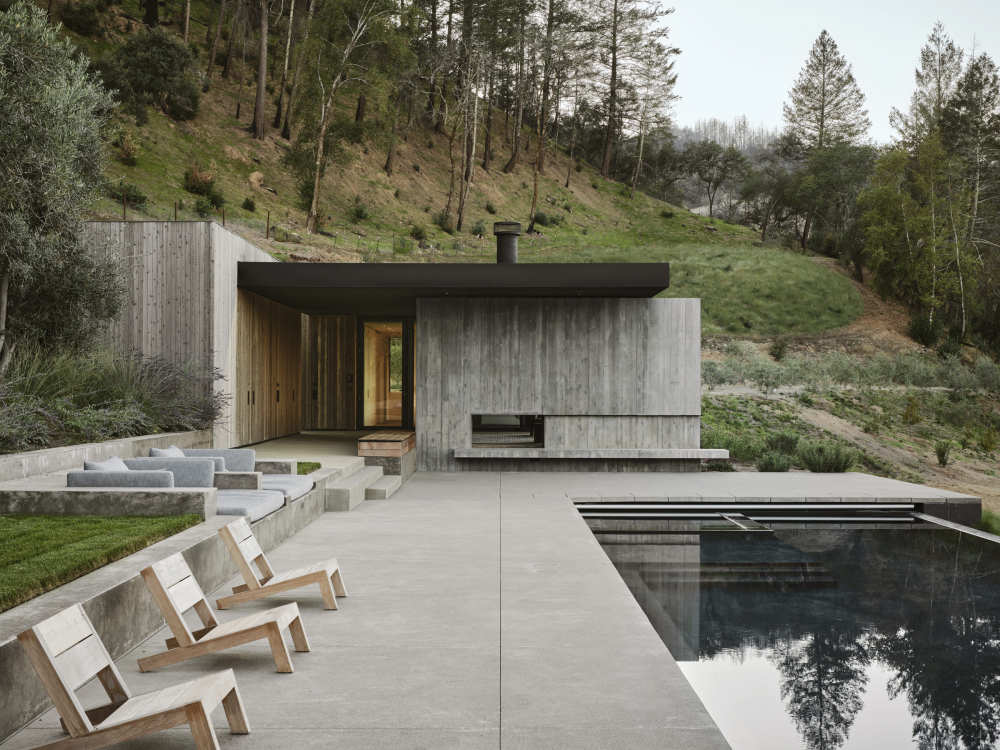
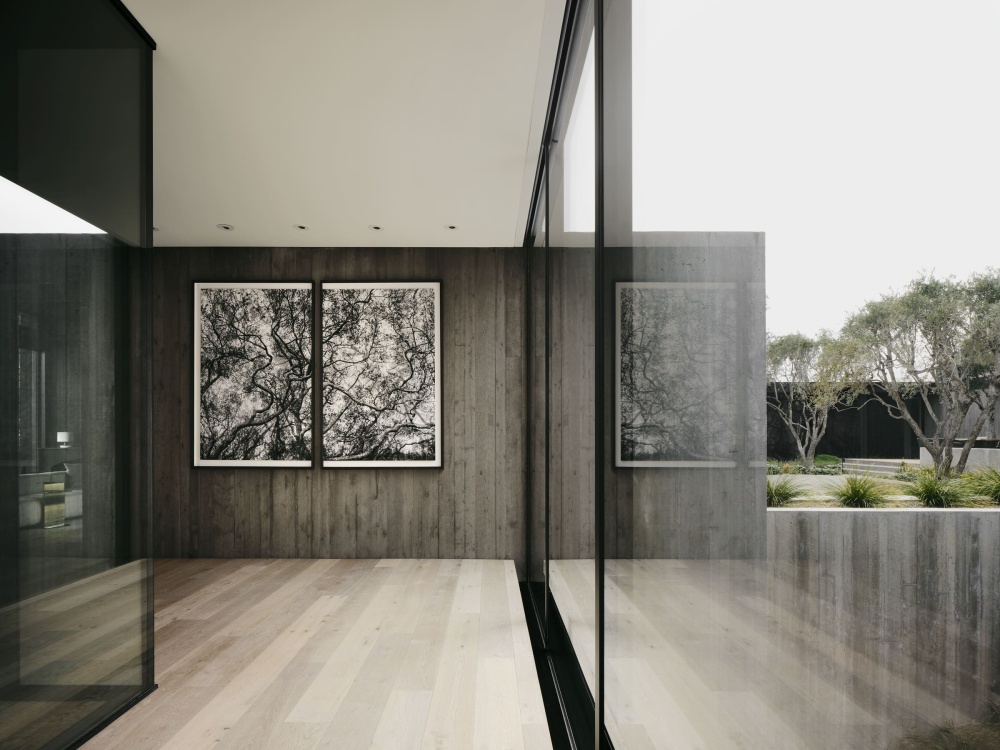
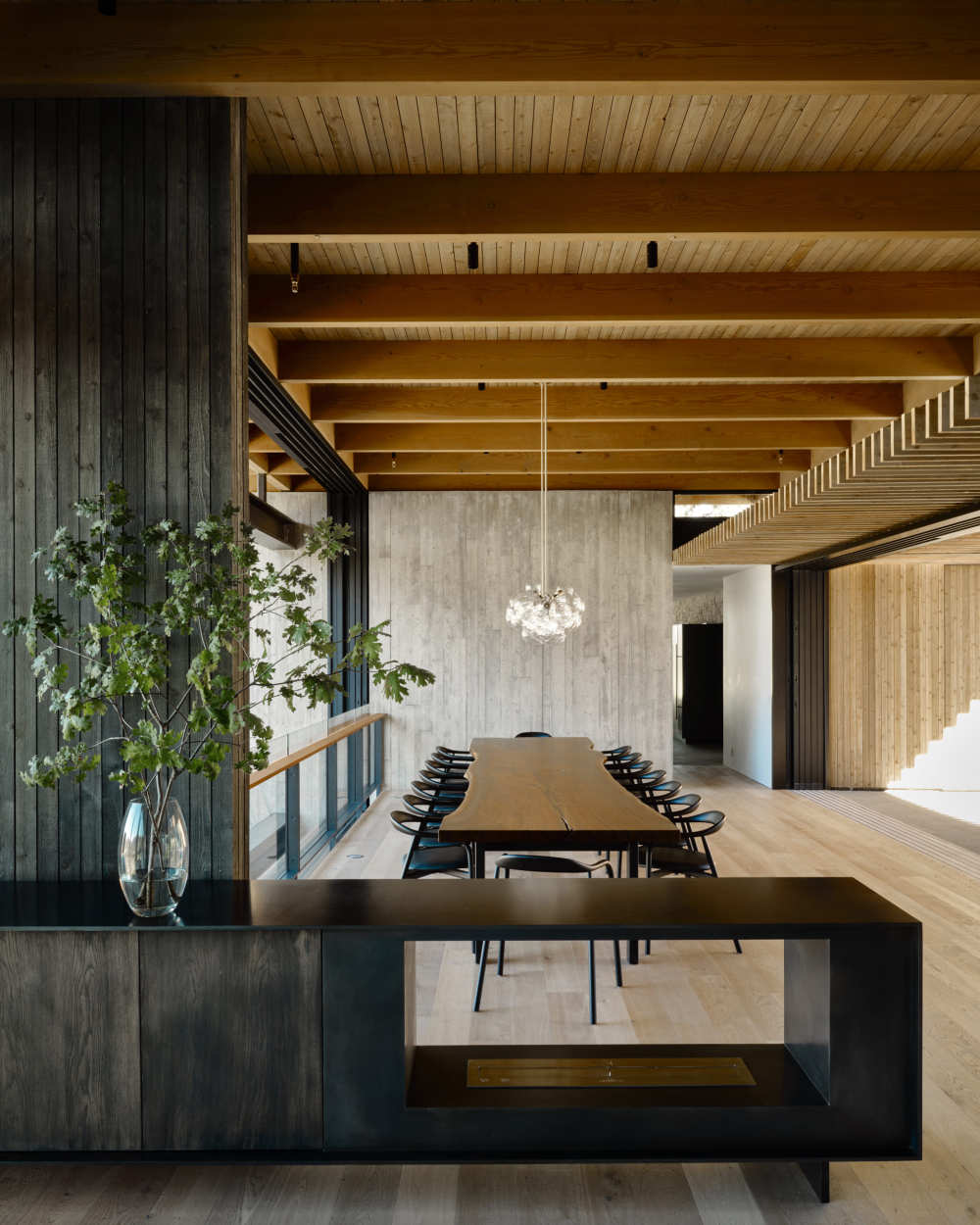
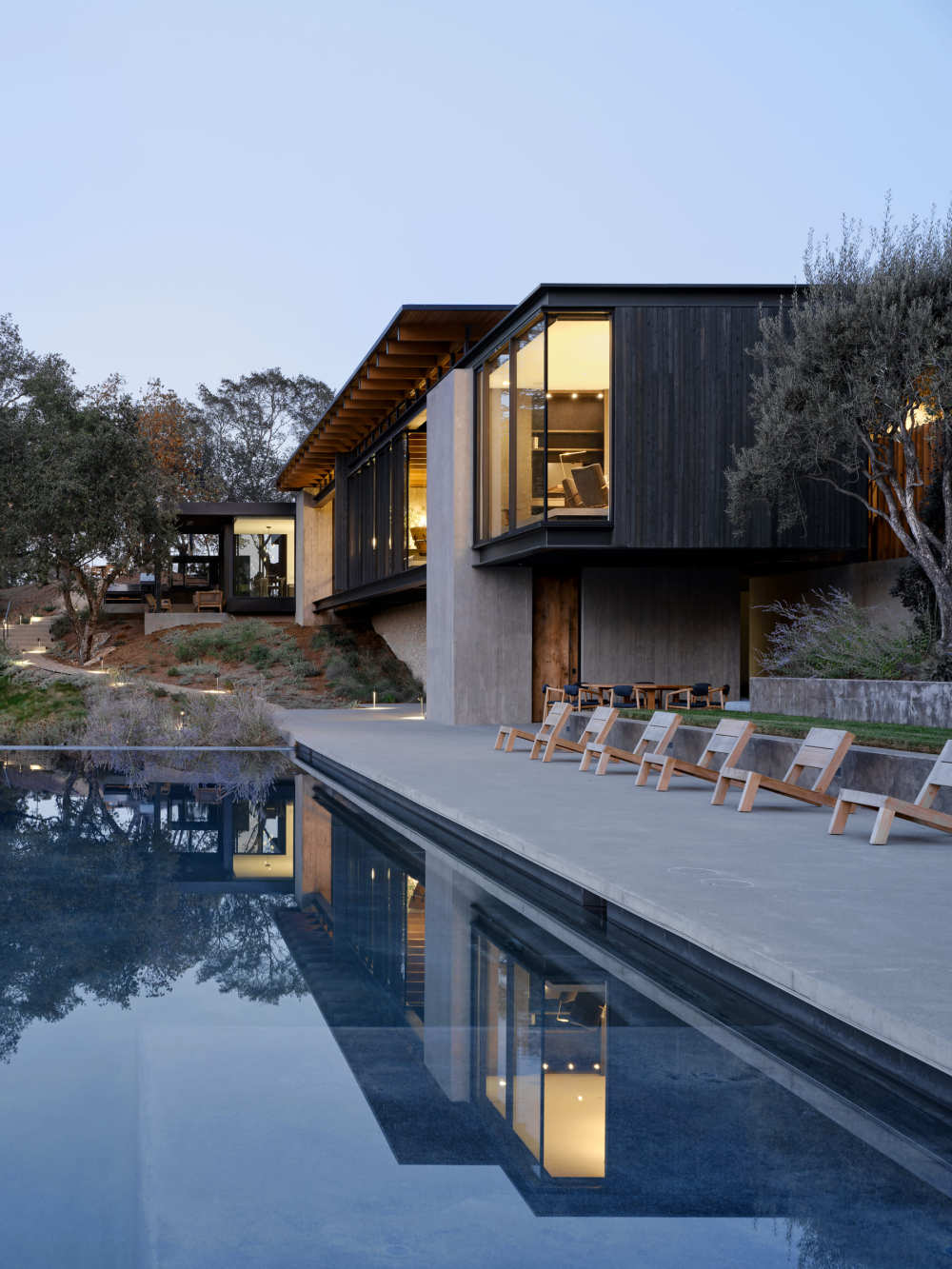
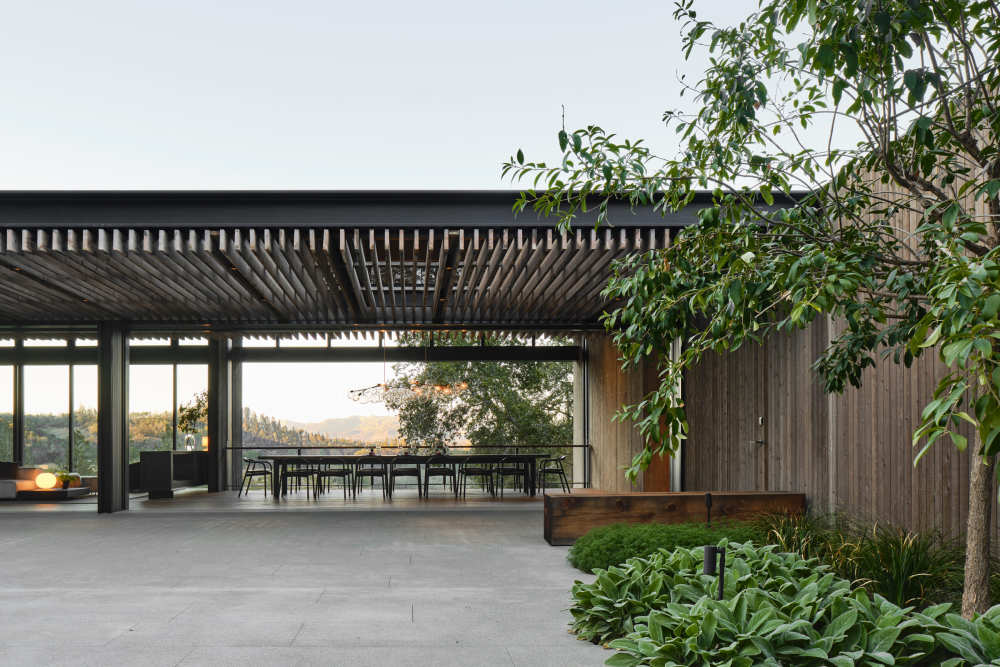
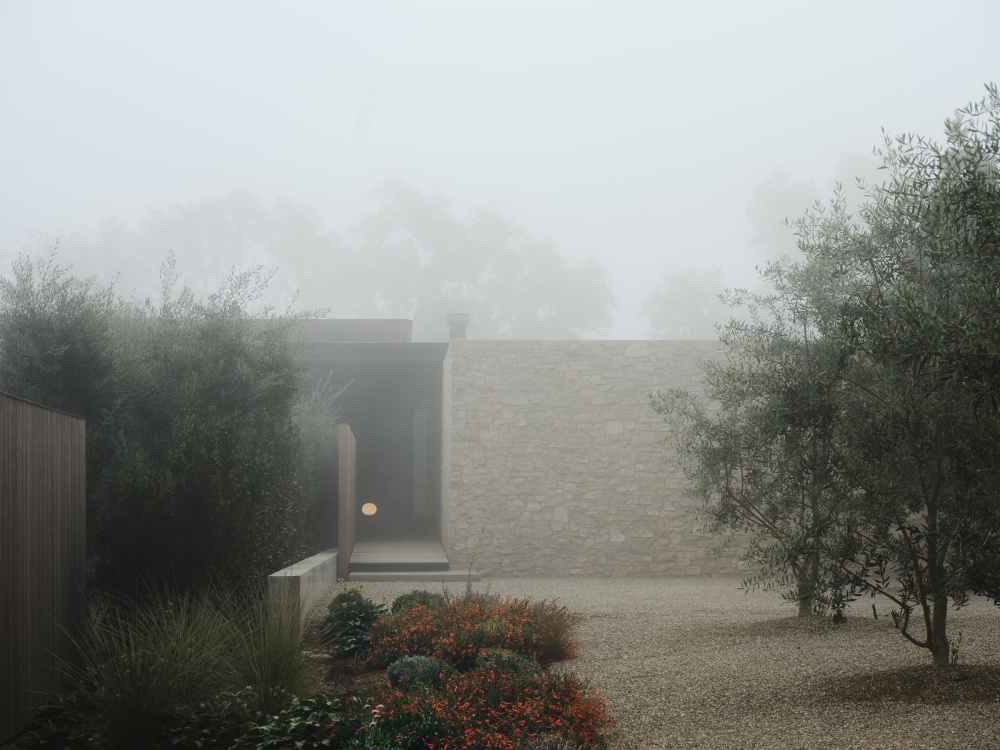
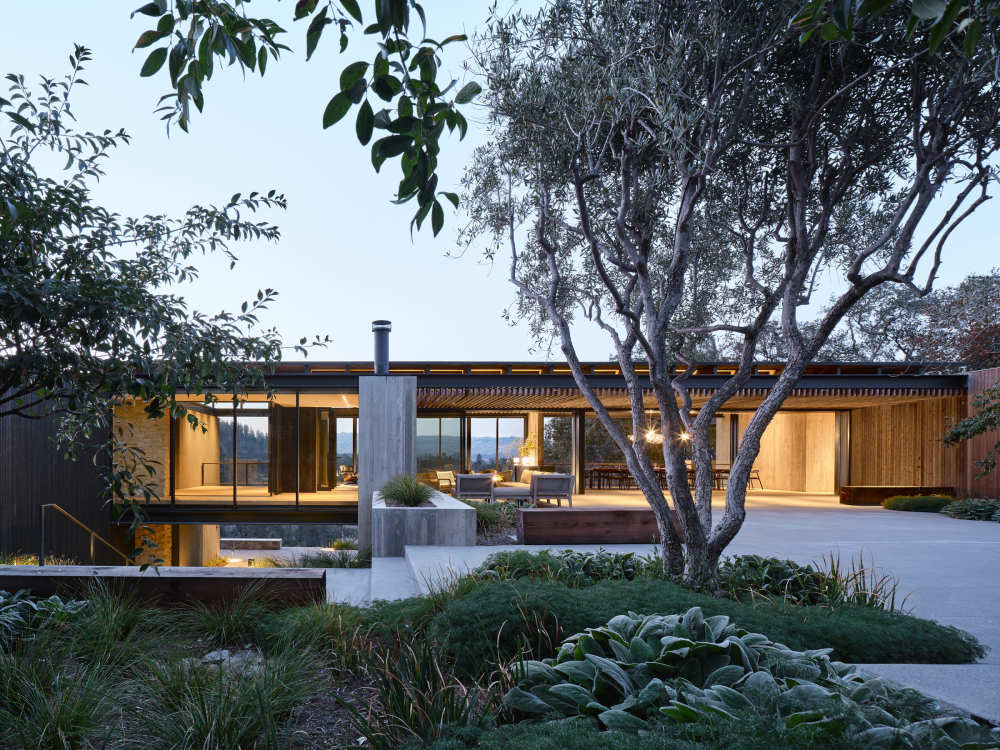
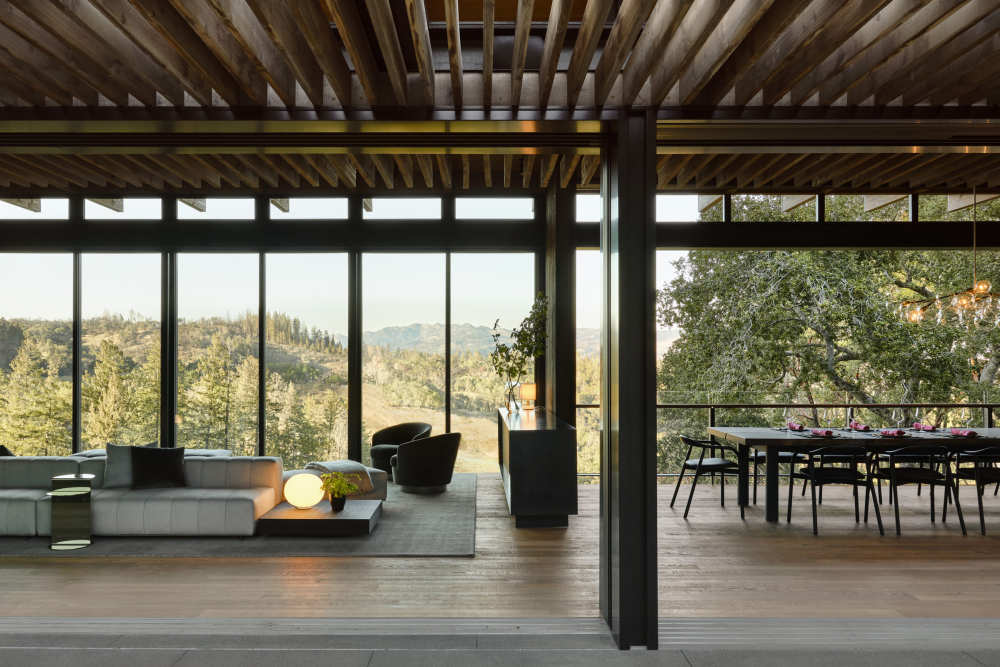
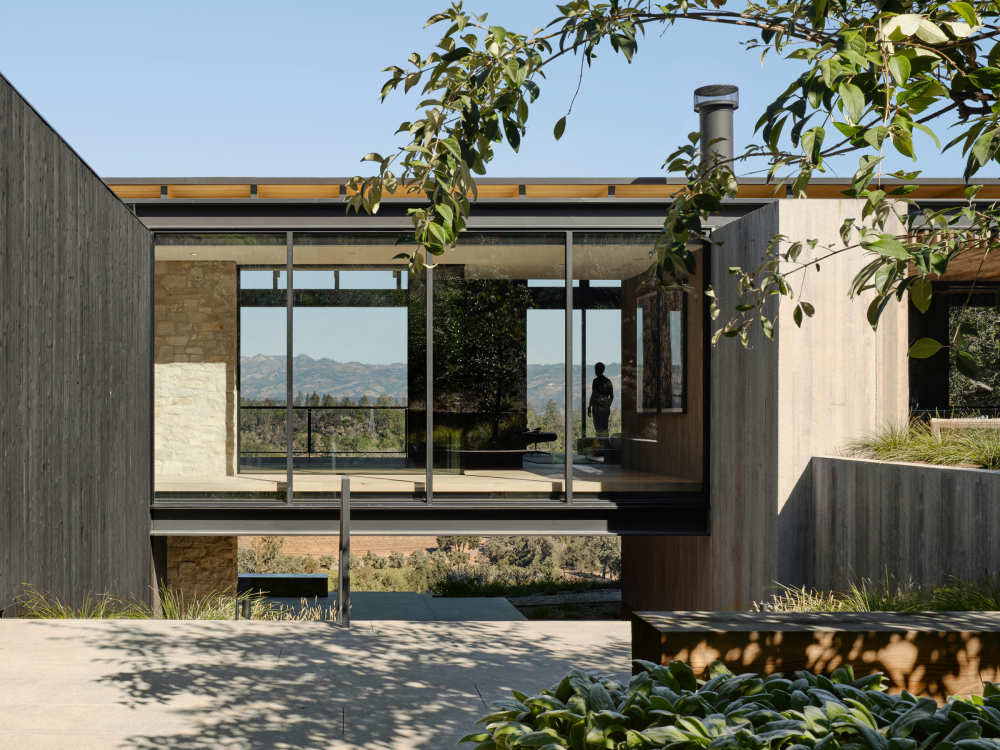
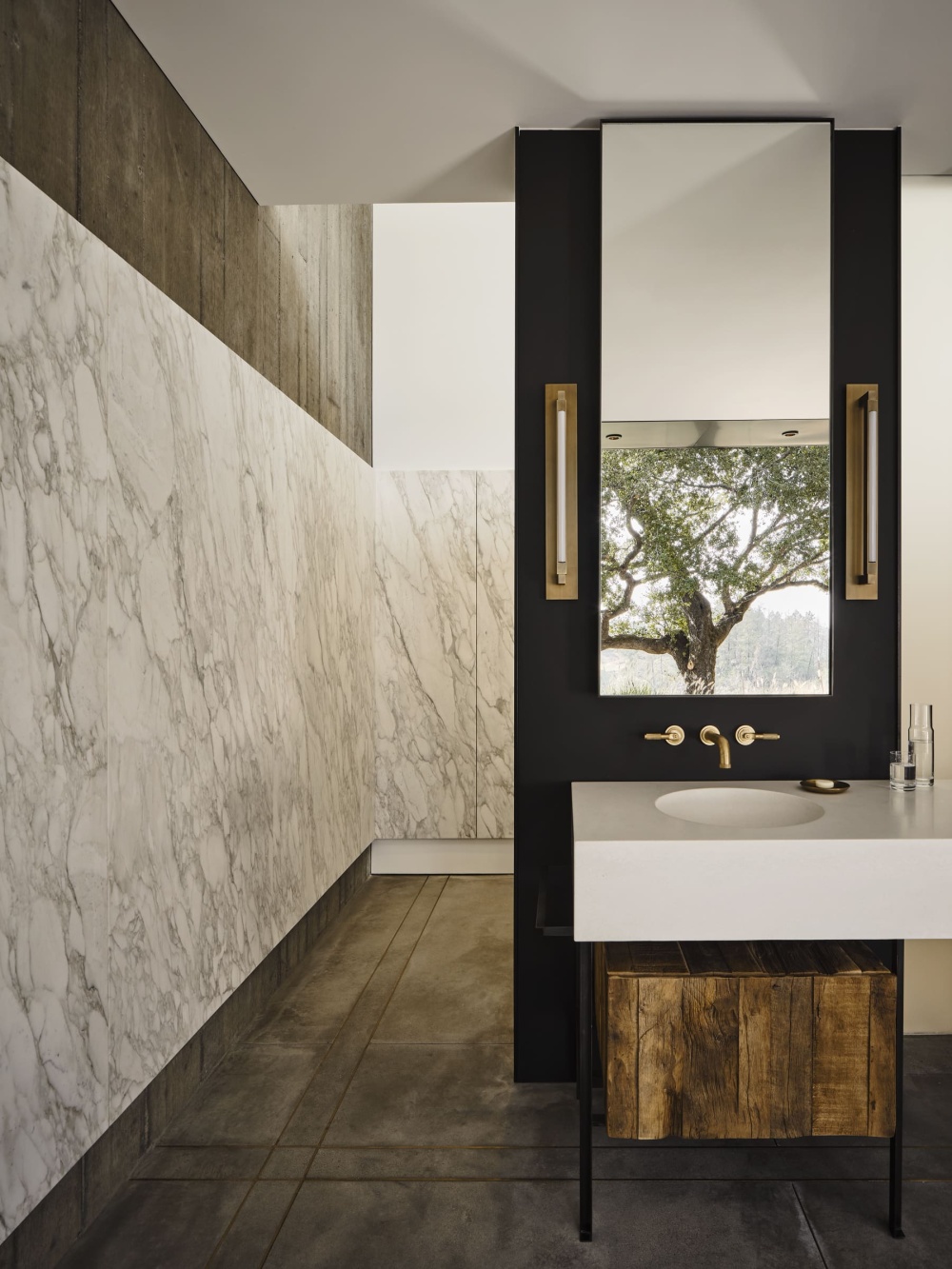
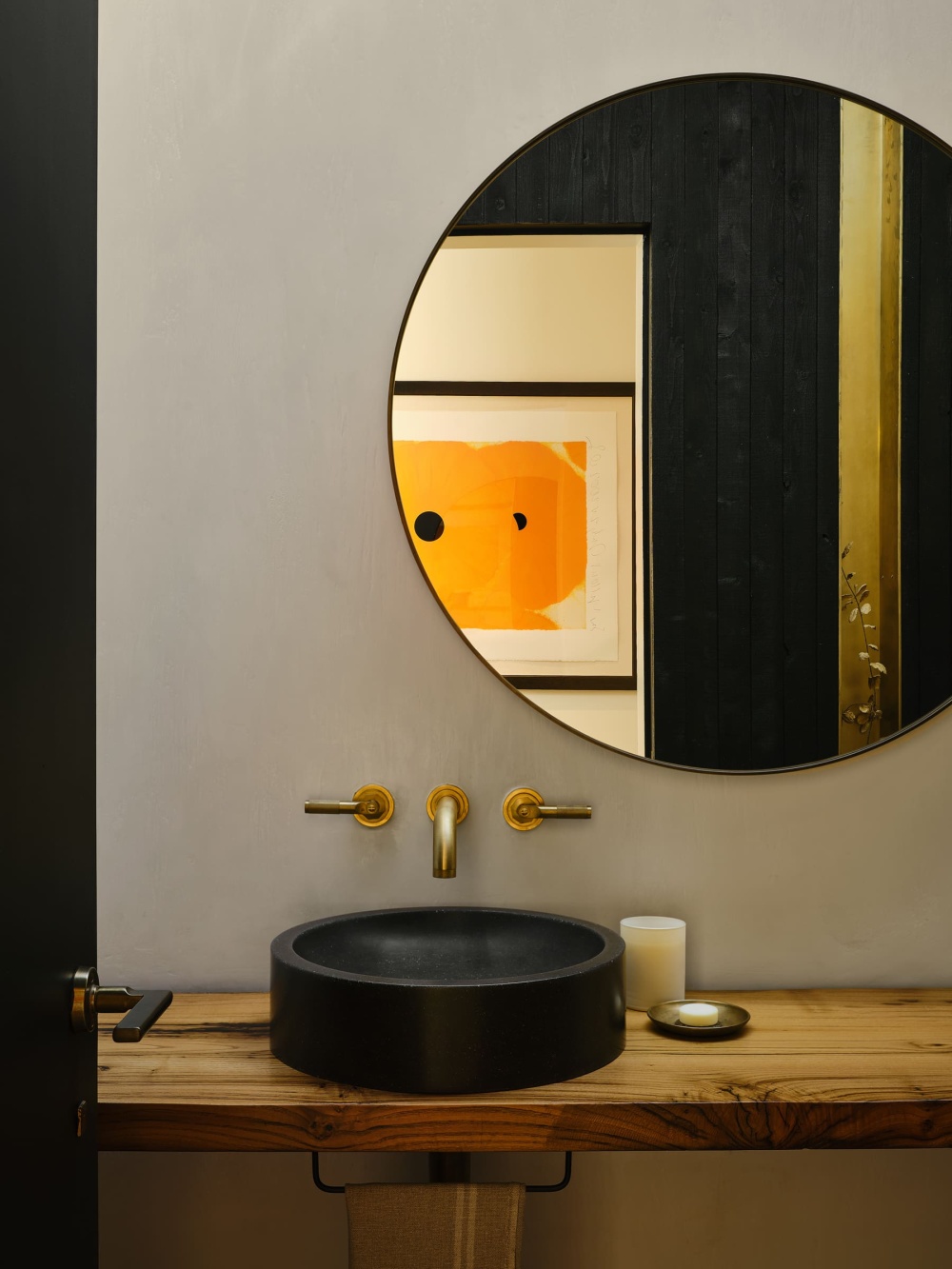
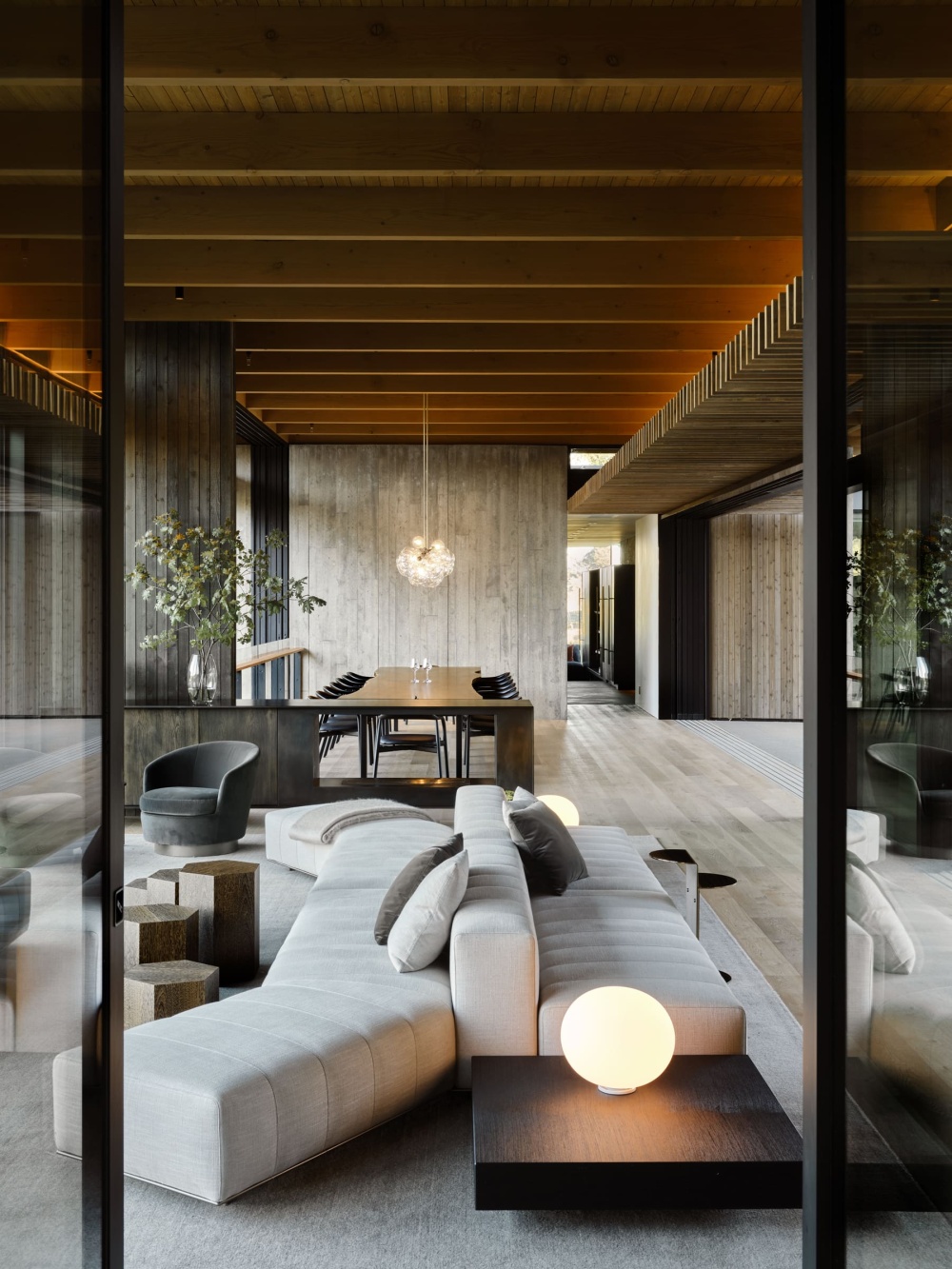
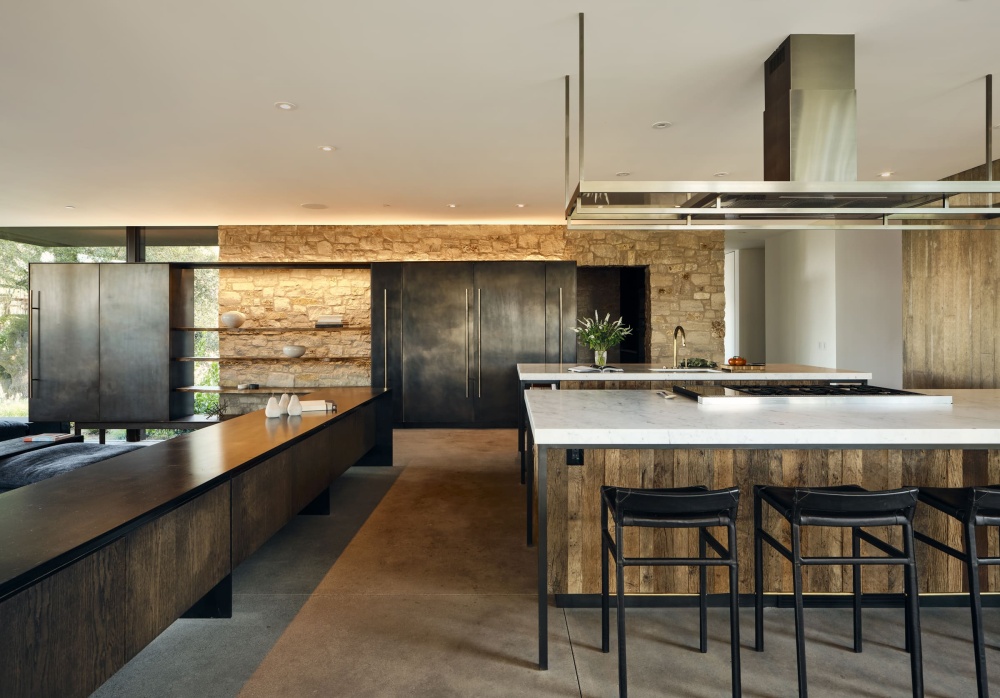
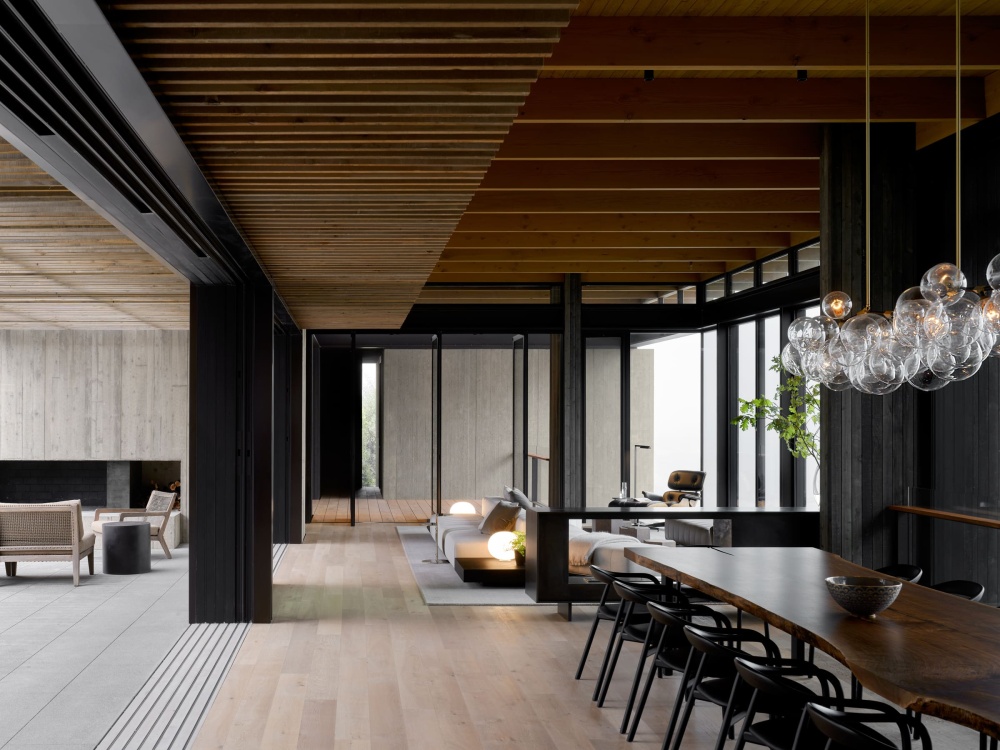
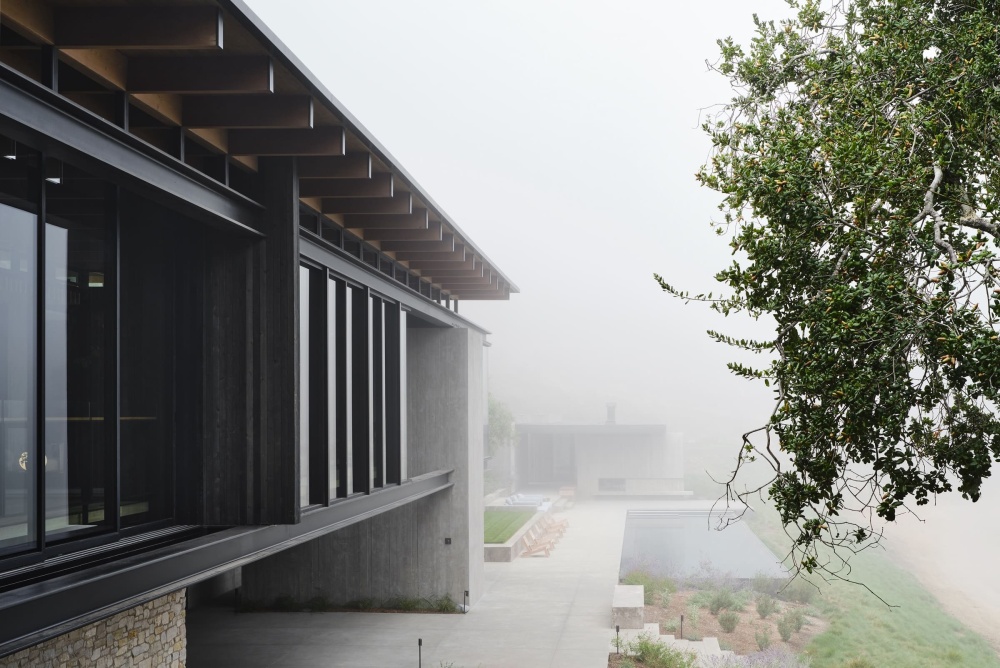
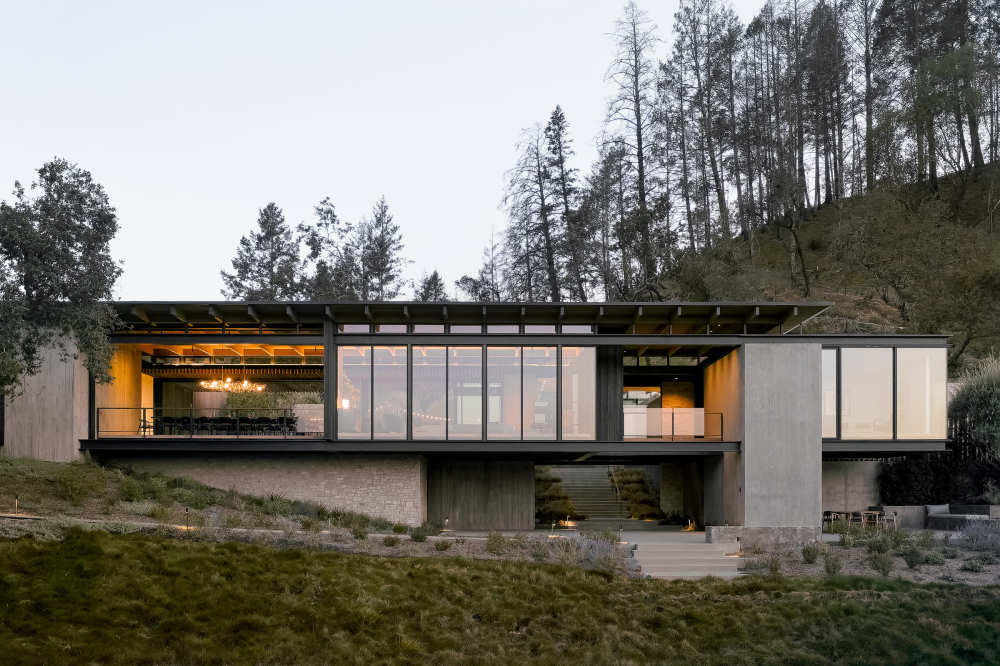
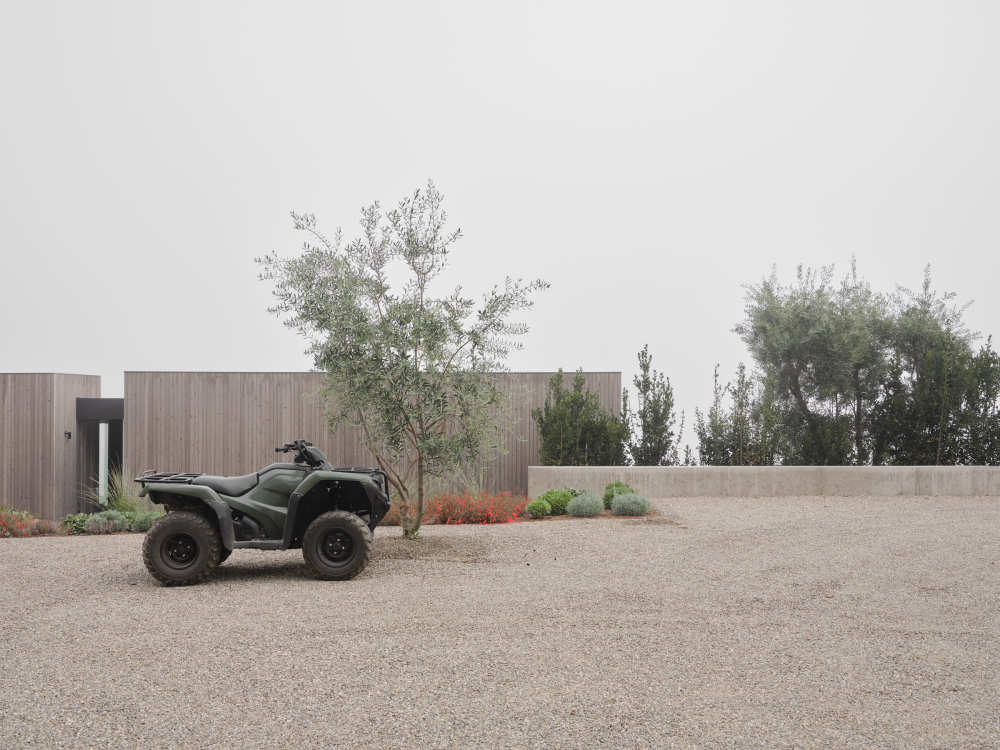
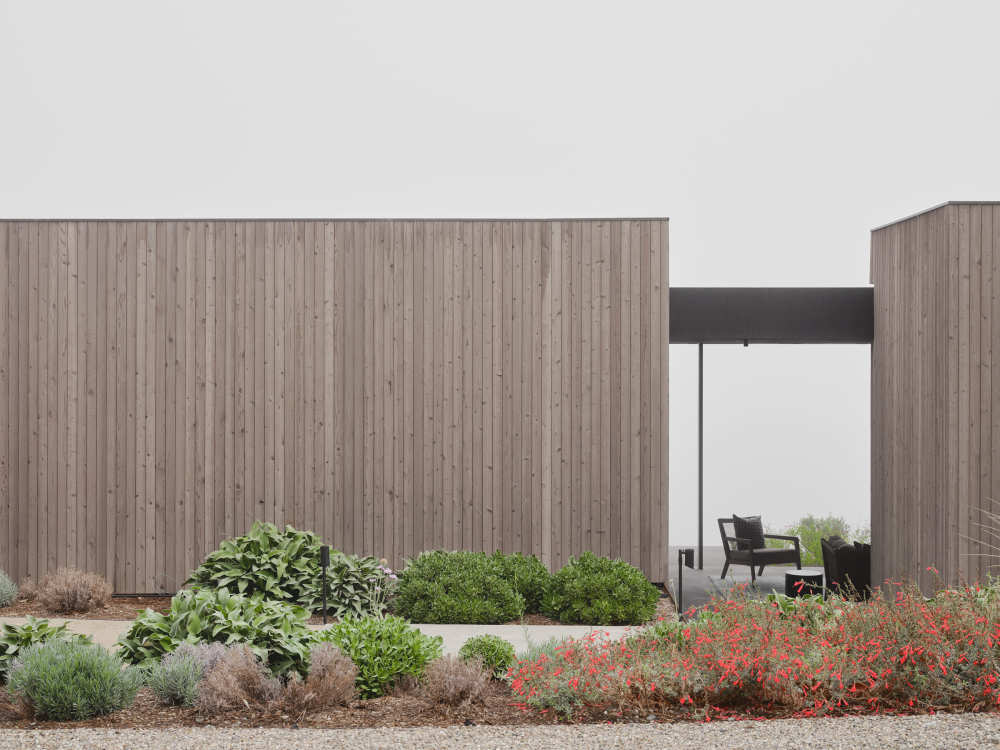
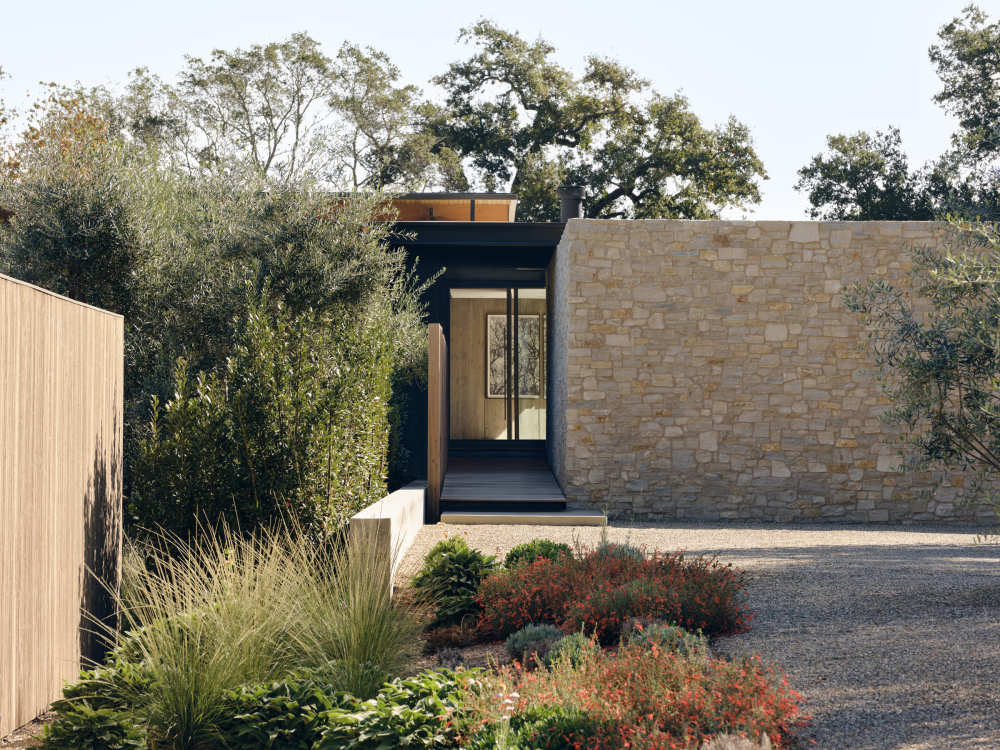
Materiality plays a pivotal role in defining the design. Durable and tactile, the palette pairs local fieldstone, concrete and steel with high-performance glazing – materials chosen for longevity and minimal maintenance. Expanding on this, Darling notes that the materials “reflect the natural terrain and working farm”, with each surface embodying texture, movement and irregularity. Expressed rafters and high-level glazing draw the eye upward to the sky while framing views across the farm and valley to the sloping hillside beyond. The spacing of the natural timber rafters becomes an ordering tool: it defines spaces and shifts the dynamic from primary living areas to transitional zones and sheltered outdoor realms. Each space has its own identity yet remains part of a consistent design language. Light filtering between the beams highlights the rugged character of the mass concrete walls they meet. Shou sugi ban timber cladding and wide-plank oak flooring carry across thresholds, establishing a continuous texture throughout. Reclaimed elements such as oak shelving and teak countertops add subtle character and a sense of accumulated history.Due to its location within a bushfire-prone region, the design incorporates rigorous measures for protection and sustainability. “The design was conceived with great awareness towards sustainability and longevity,” explains Darling. Robust building assemblies, an external sprinkler system and large-scale water storage work together to improve resilience. The extensive use of stone and concrete buffers against heat, while operable glazing supports natural ventilation. The dwelling sits on the foundations of previous structures to reduce site impact and is surrounded by drought-tolerant planting. Rooftop solar panels also supply energy for mechanical cooling during periods of extreme heat or smoke.