Stone Villa | Feldman Architecture | 2026 | 美国
As experienced travellers drawn repeatedly to the Tuscan countryside, the clients arrived at the project carrying vivid impressions of Italy’s hill towns – the warmth of weathered masonry, the permanence of rustic walls and the unhurried rhythm of villa life beneath generous sun. Rather than transplant these memories entirely, the 11-hectare estate achieves something more nuanced – a translation of those timeless sensibilities through the lens of modern Californian living, firmly grounded in the character of this particular place.
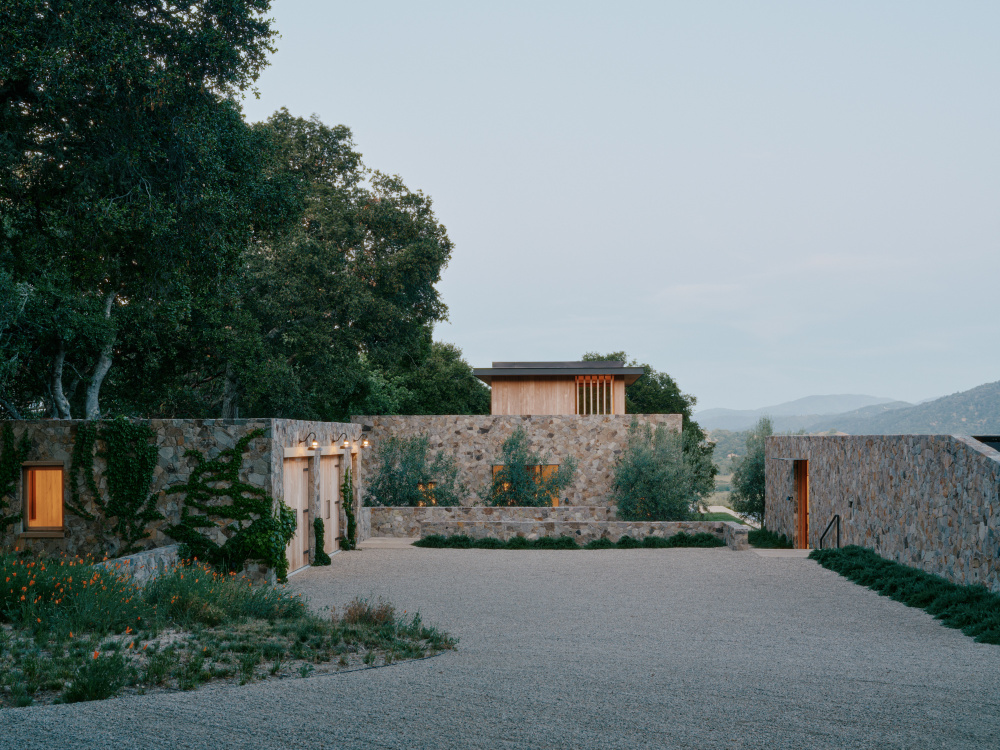
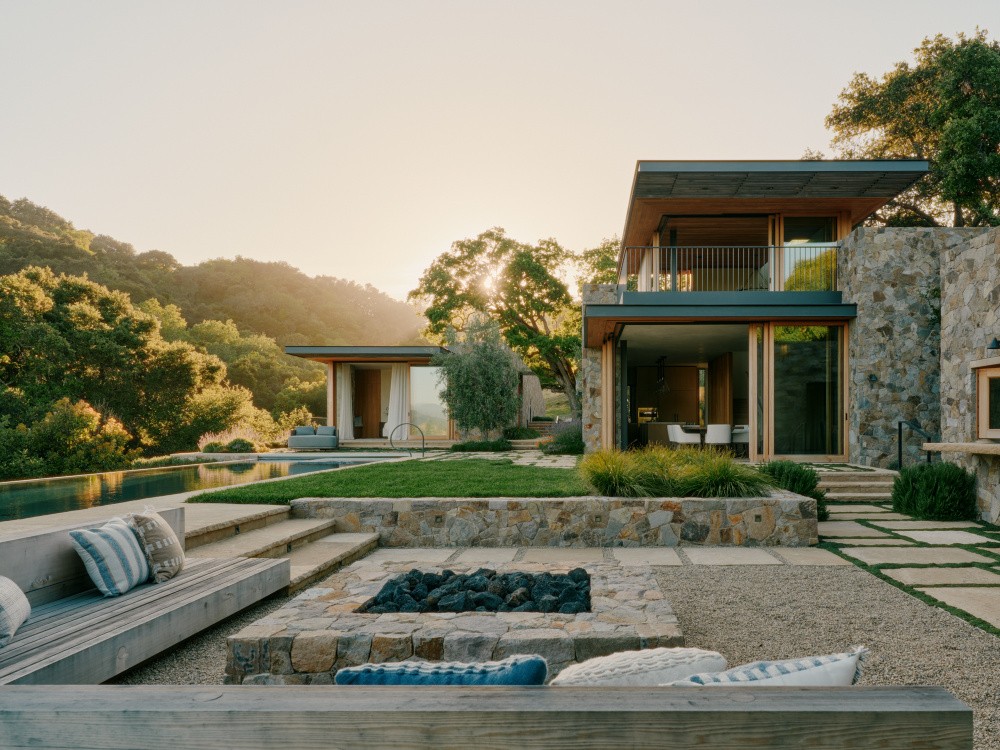
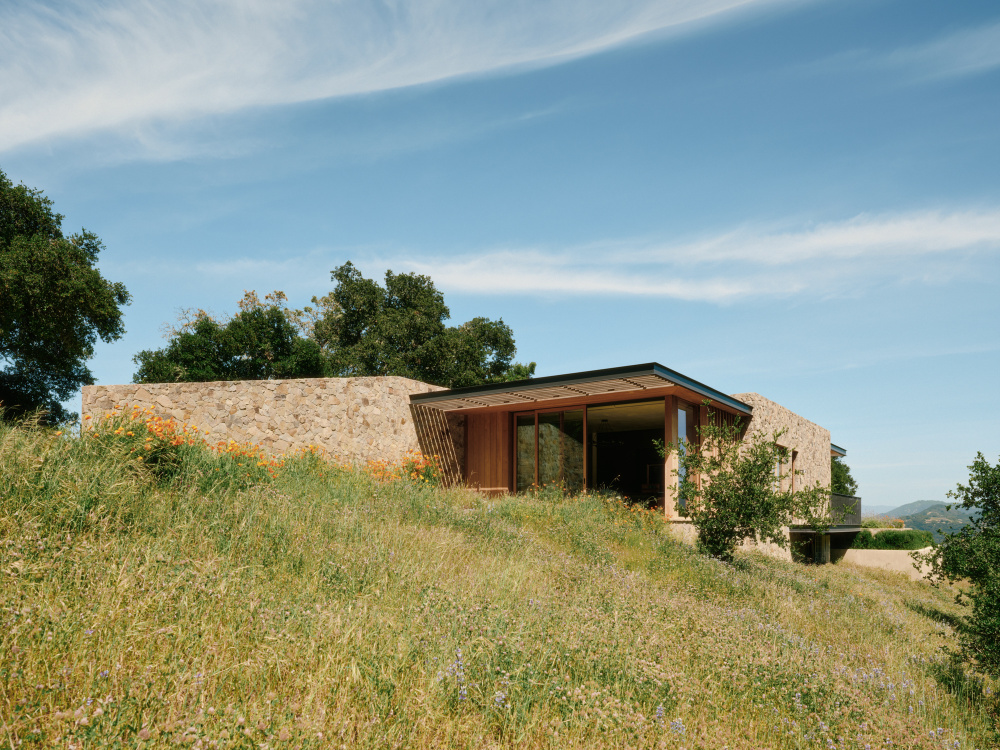
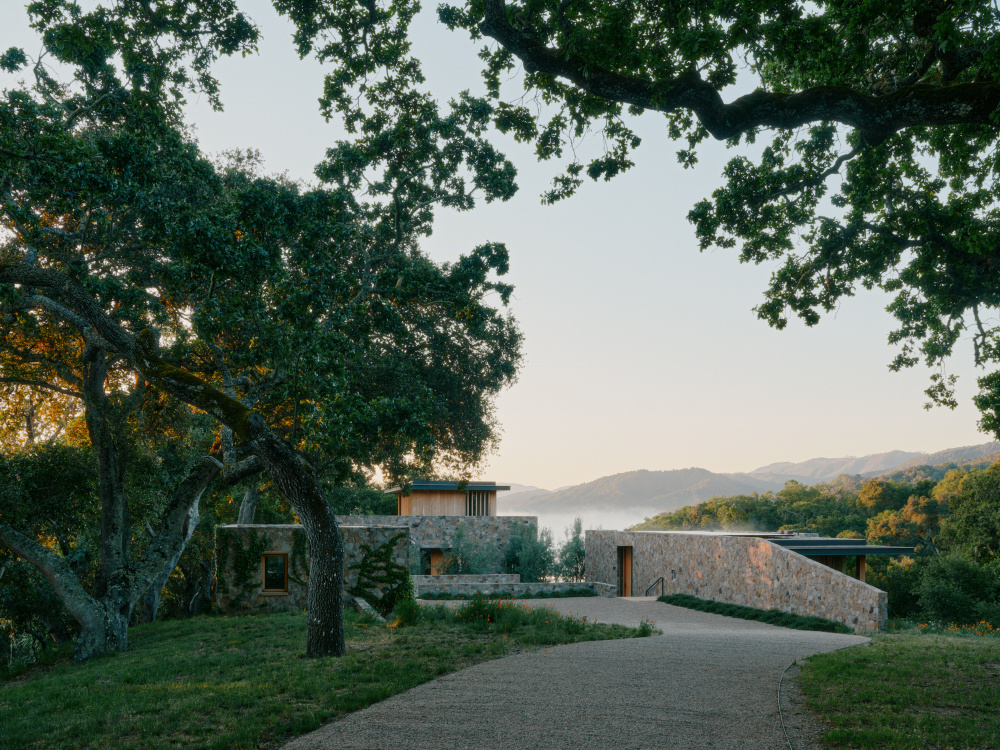
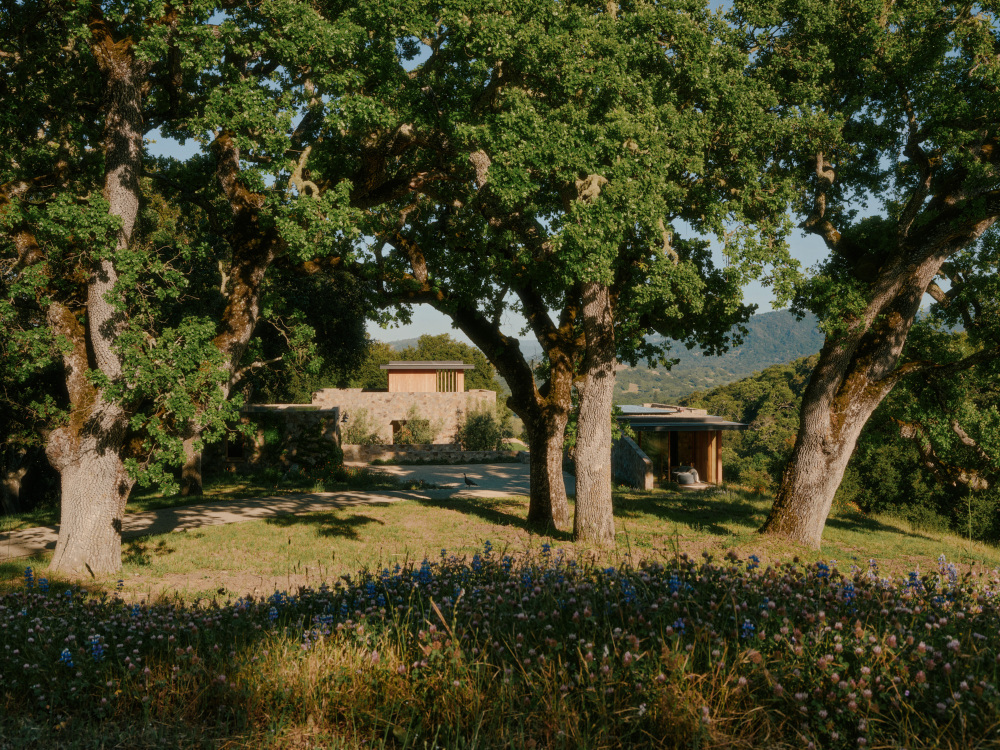
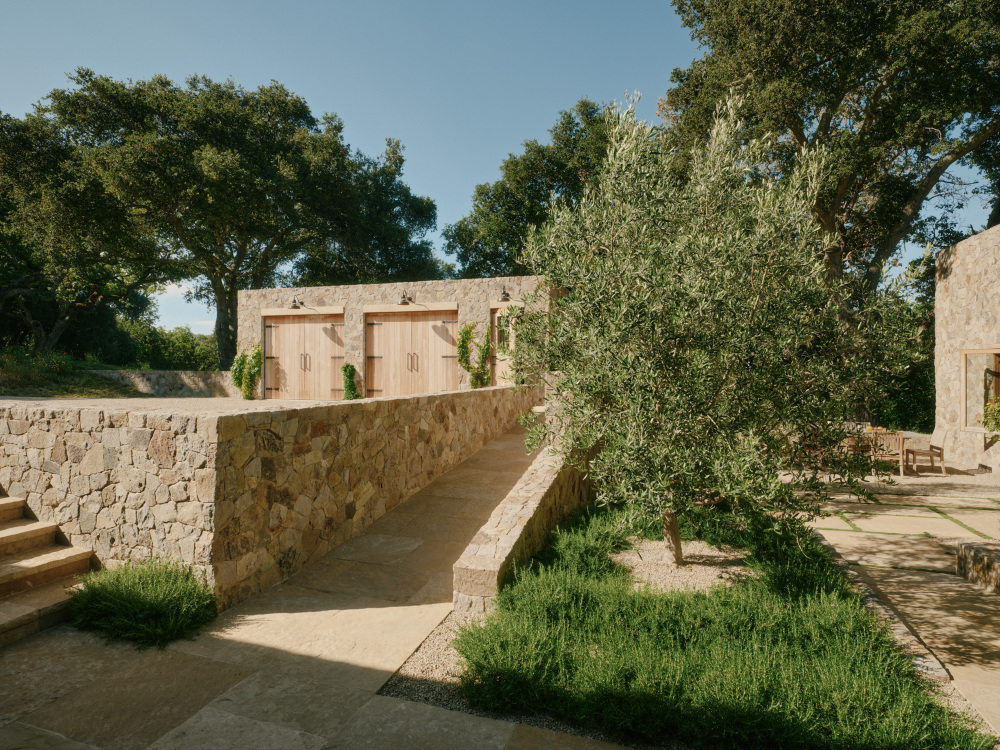
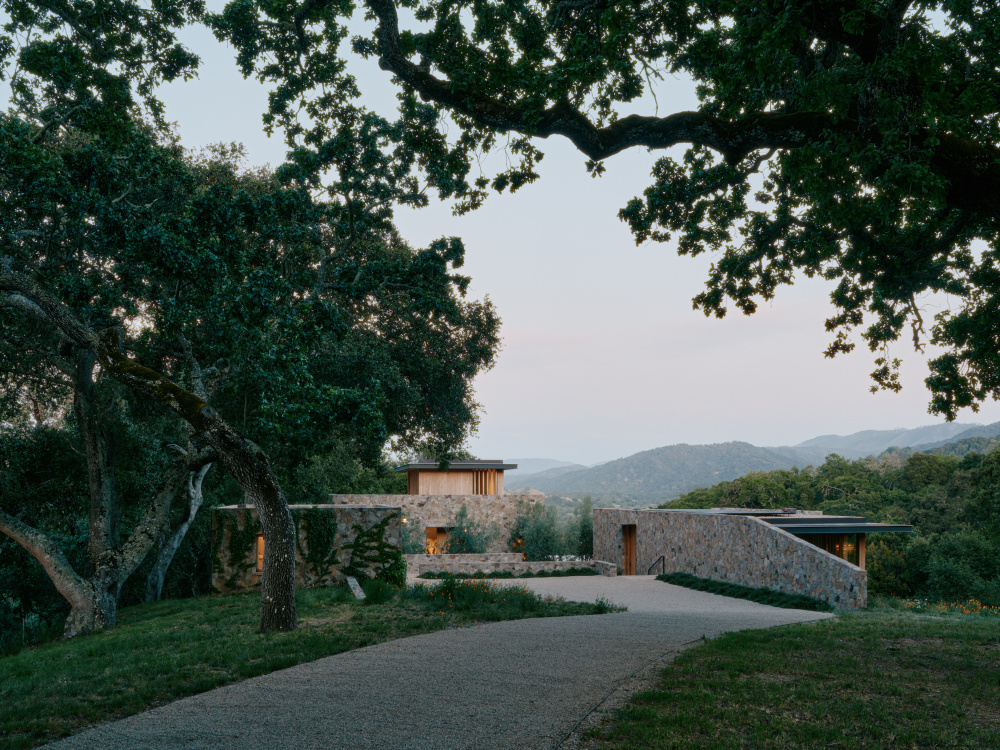
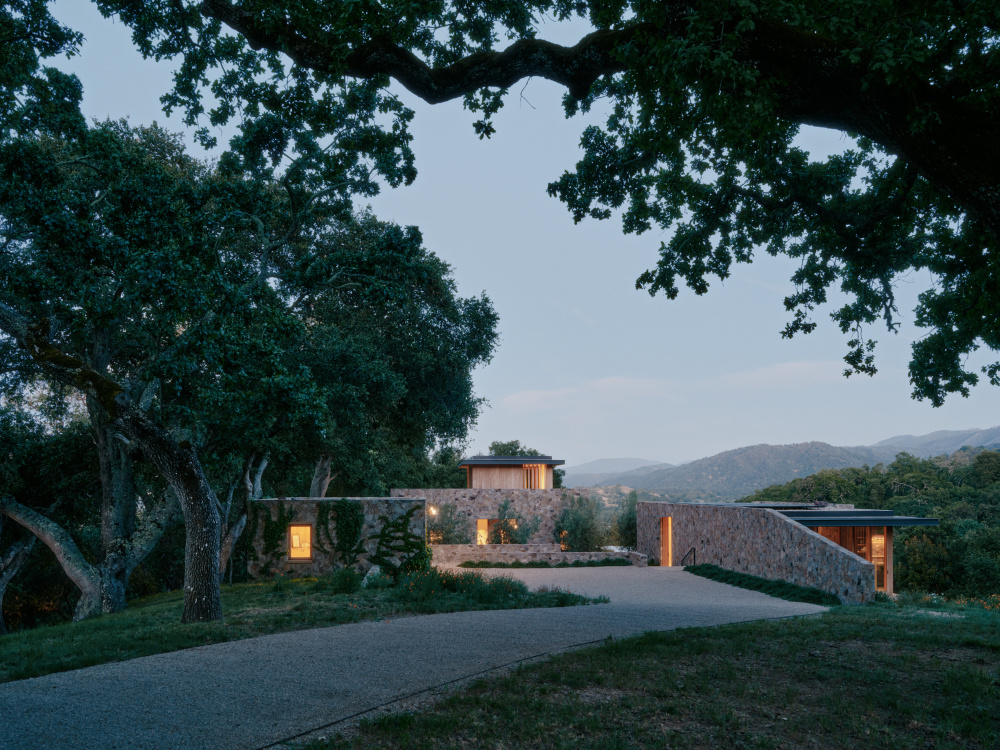
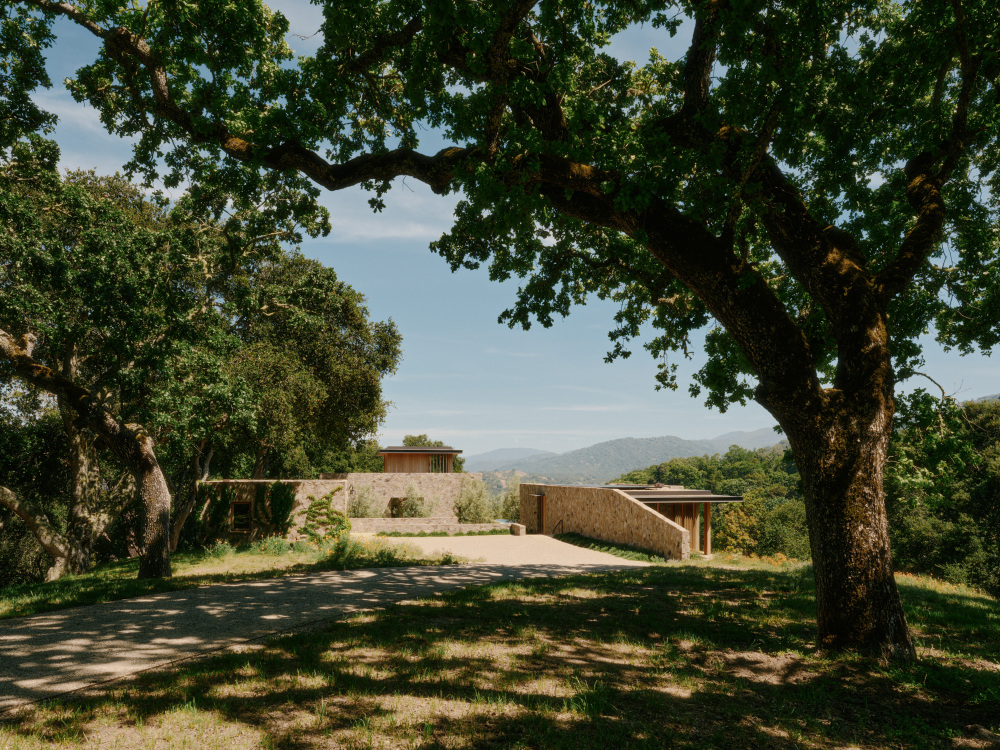
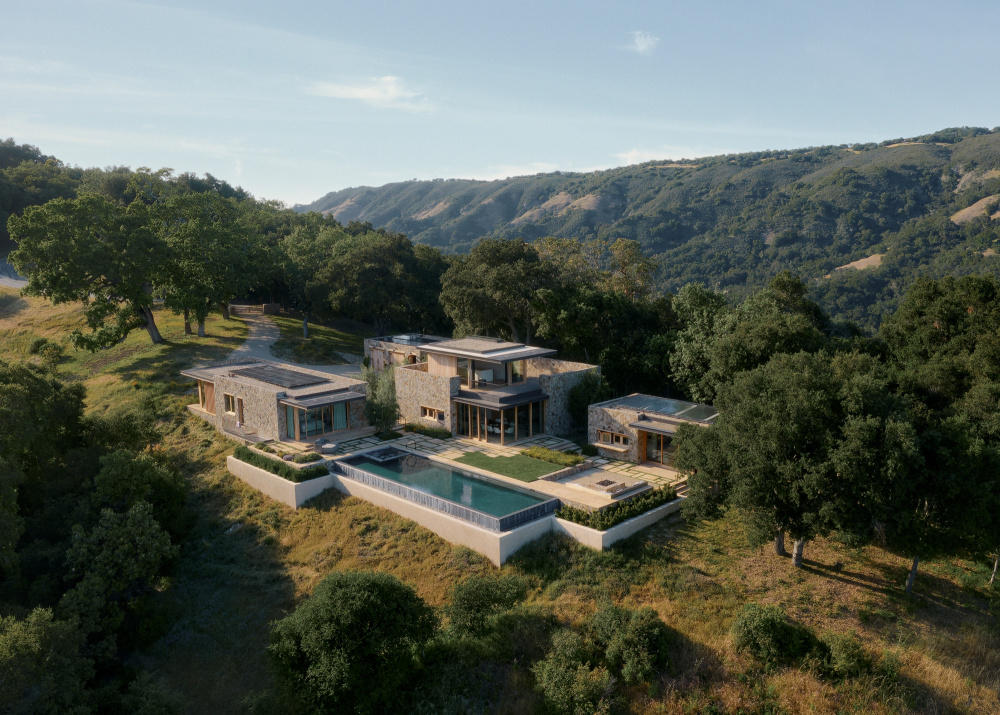
“The owners dreamt of their property as a place of retreat, dedicated to spending quality time with family and friends, and an escape from the foggy weather of their Carmel home to the sun, warmth and natural serenity of the inland foothills,” explains senior project manager Ben Welty of Feldman Architecture. Their vision centred on creating a private sanctuary capable of accommodating everyday life while welcoming five children and extended guests. The realised outcome is a home that nurtures relationships and celebrates its environment through thoughtful indoor-outdoor connections.Early analysis of the topography proved crucial in shaping the architectural response. Dropping steeply on three sides, the ridge-top location demanded a strategy that would minimise environmental impact while maximising the property’s inherent drama. Rather than impose a single substantial volume, the design is composed of four detached buildings – a living area, main suite with office, guest suite and pool cabana and a garage – each positioned at varying elevations to weave between mature oak trees and orientate towards optimal views and sunlight.
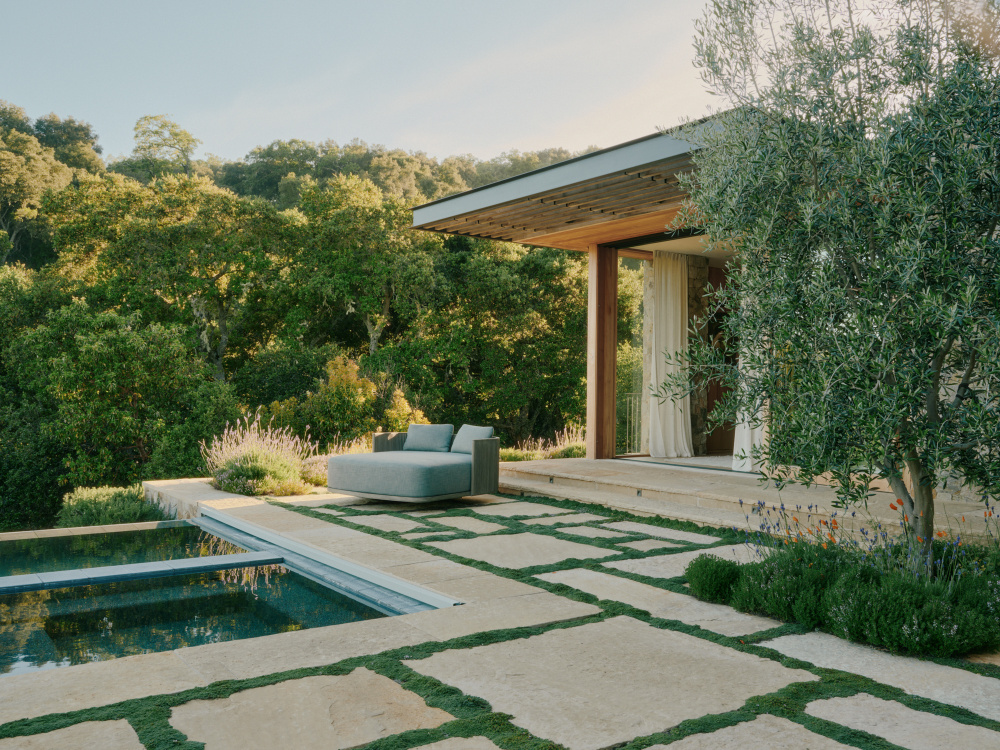
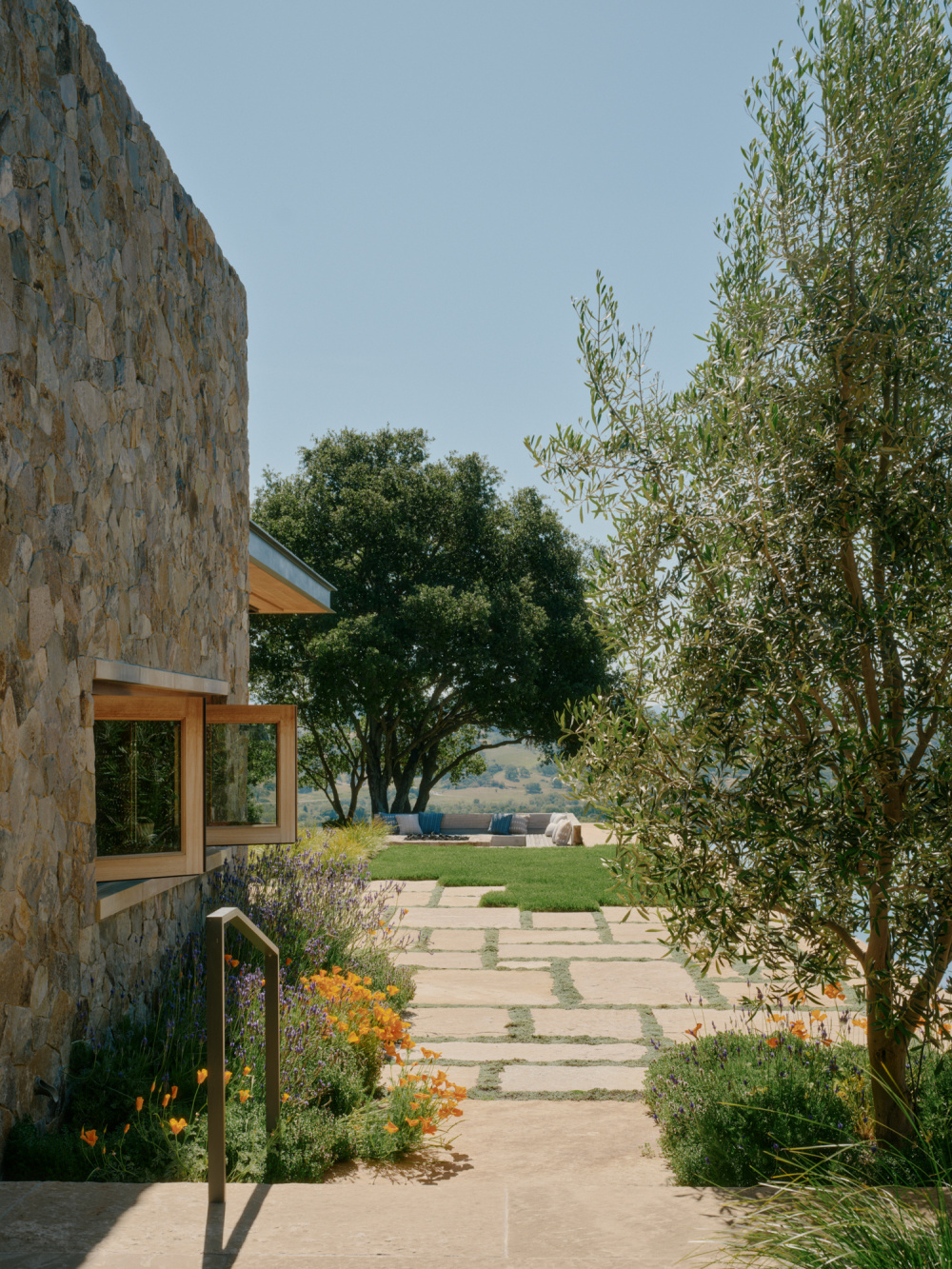
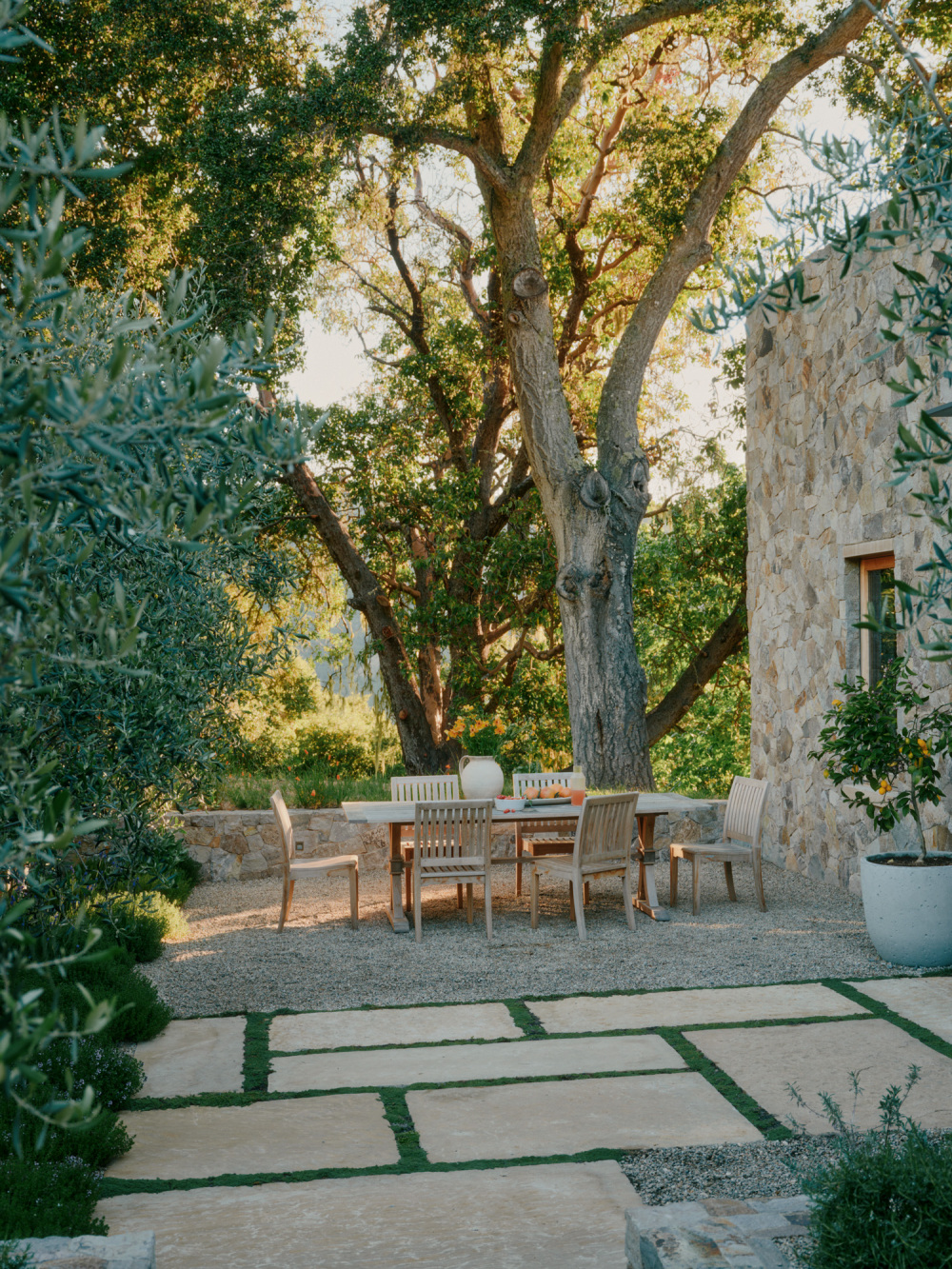
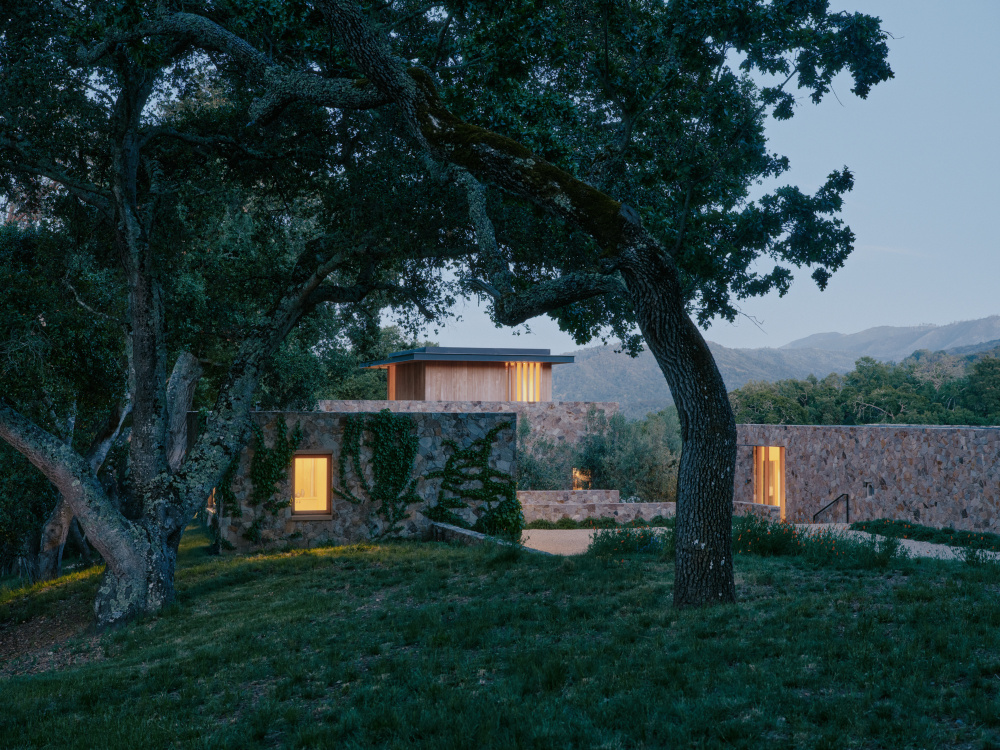
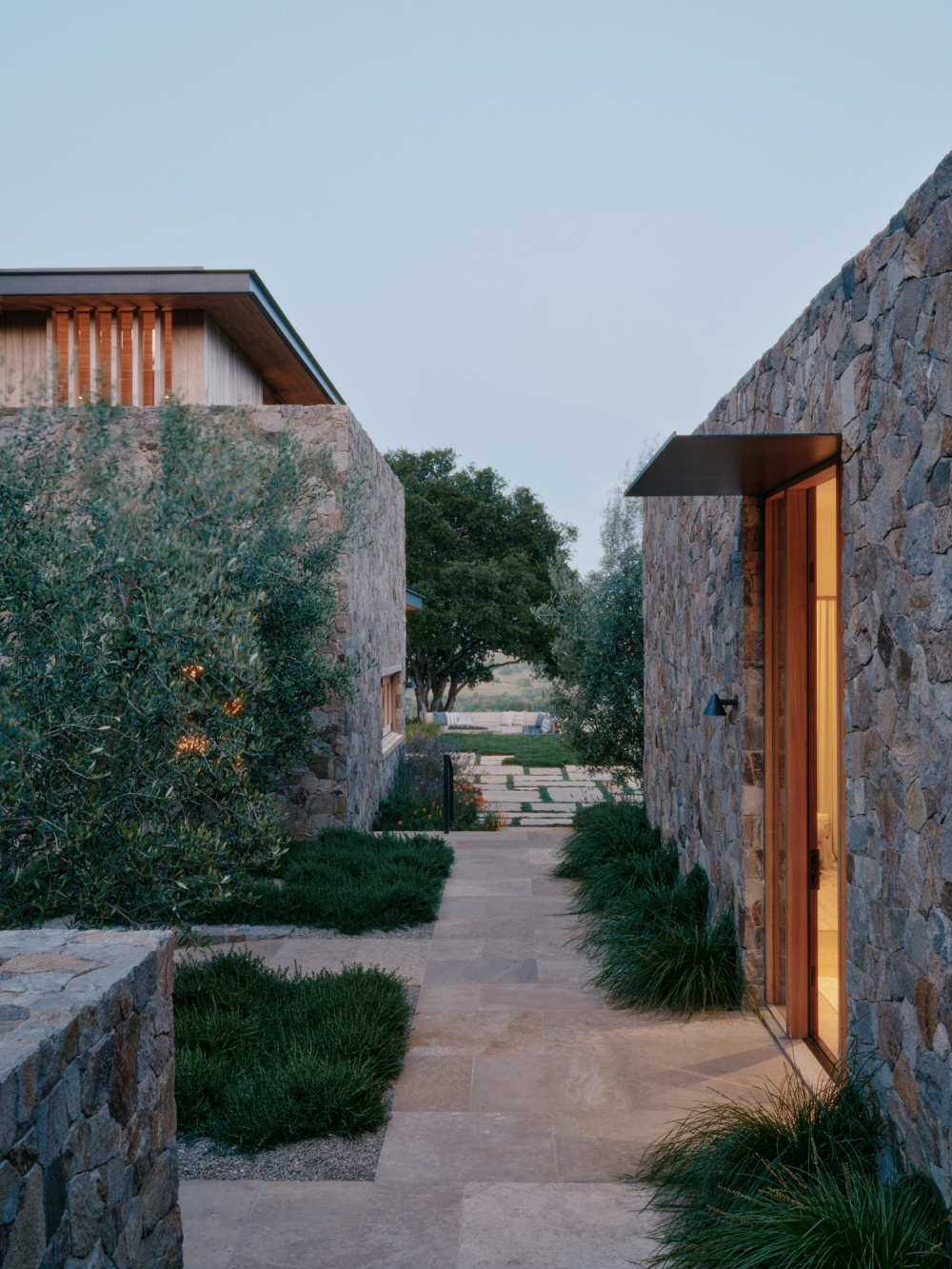
This separation of functions reduced the overall footprint, yielding benefits that extended well beyond the purely spatial. Carbon emissions and construction costs diminished proportionally, while the built form gained the ability to rest lightly upon the land, its dispersed pavilions reading as natural extensions of the hillside rather than intrusions upon it. The intervention simultaneously regenerated a meadow overtaken by invasive growth, reintroducing native grasses and reinstating critical habitats for local fauna and pollinators – a quiet act of ecological restoration woven into the architectural agenda.A series of pathways, courtyards and gardens stitch the pavilions together, choreographing a daily experience that immerses residents in seasonal shifts and changing light. This programmed circulation transforms routine movement into a subtle ritual, guiding occupants through moments of unfolding discovery while harnessing carefully positioned breezeways to draw prevailing winds through the compound, refreshing the interior spaces.
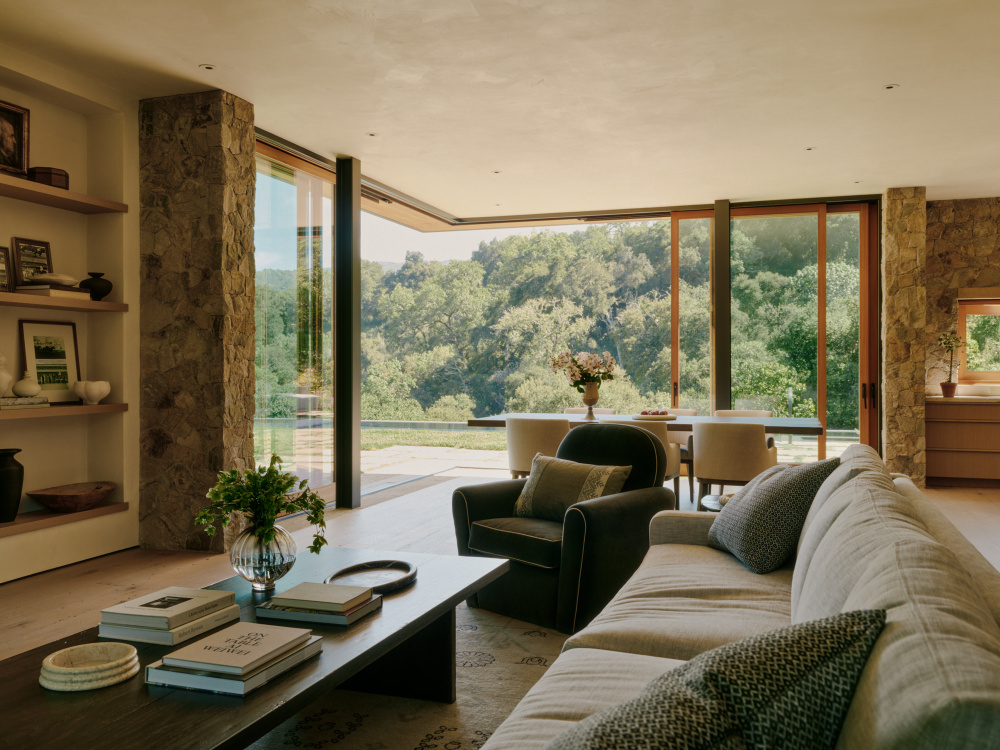
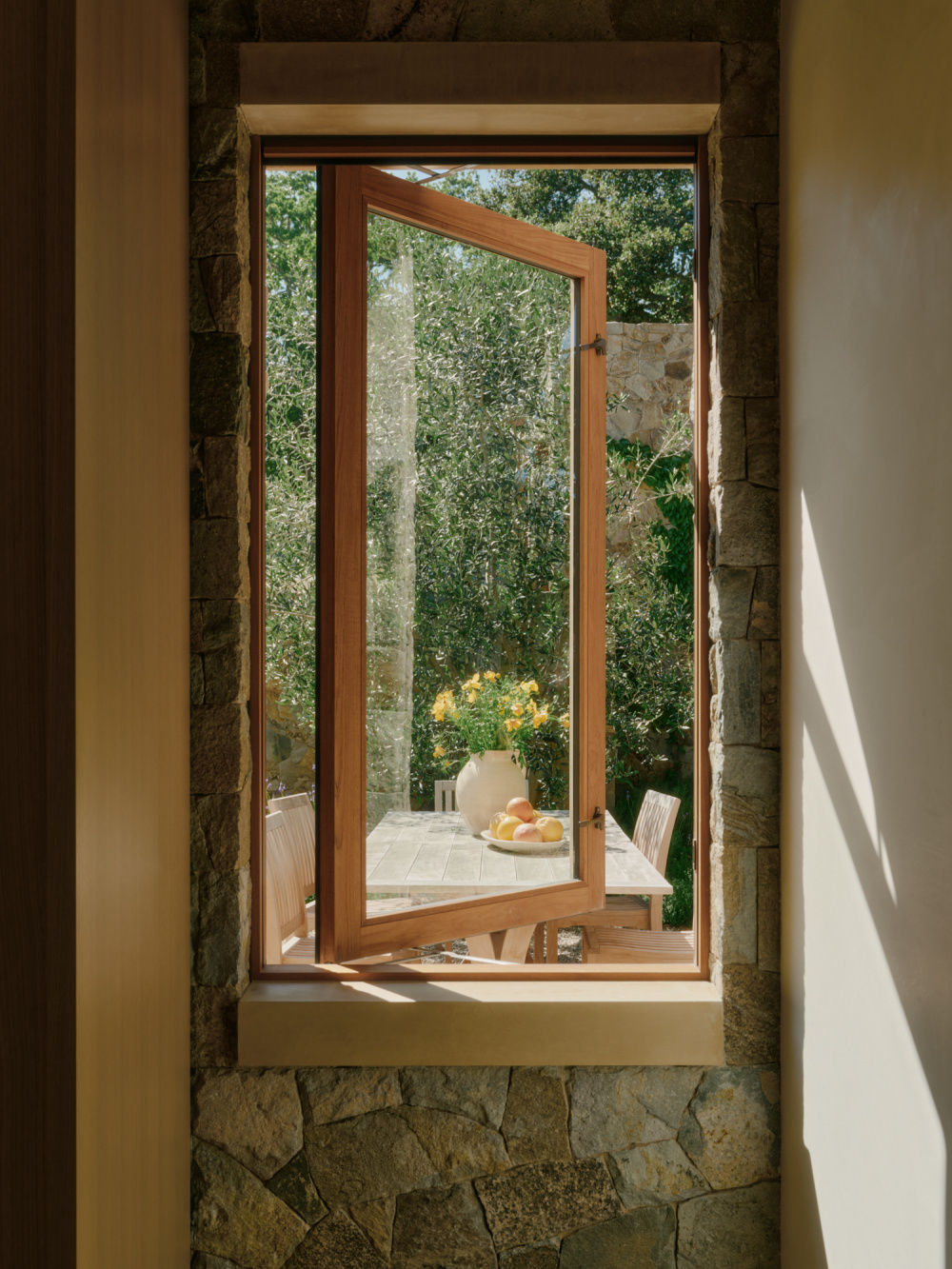
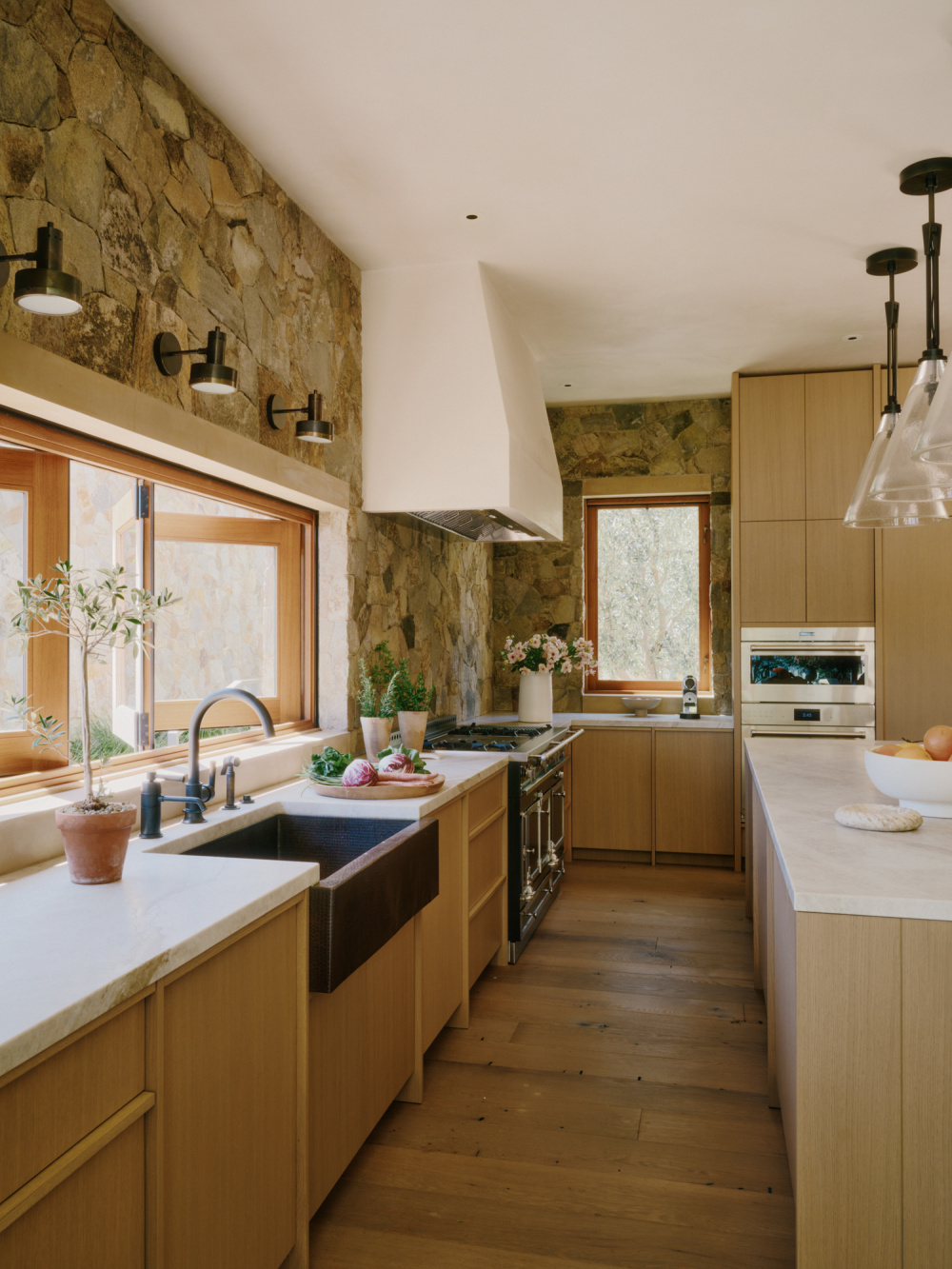
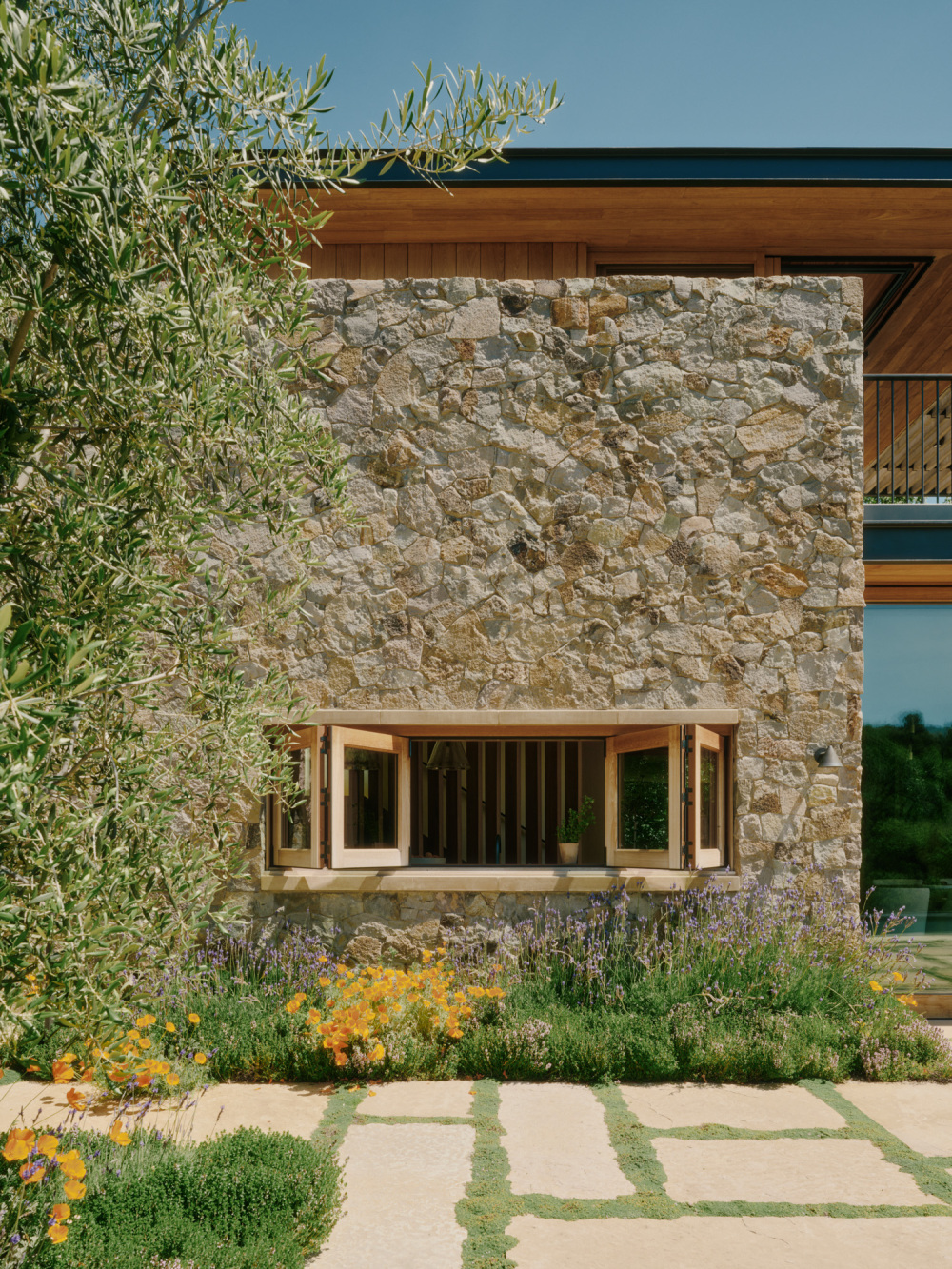
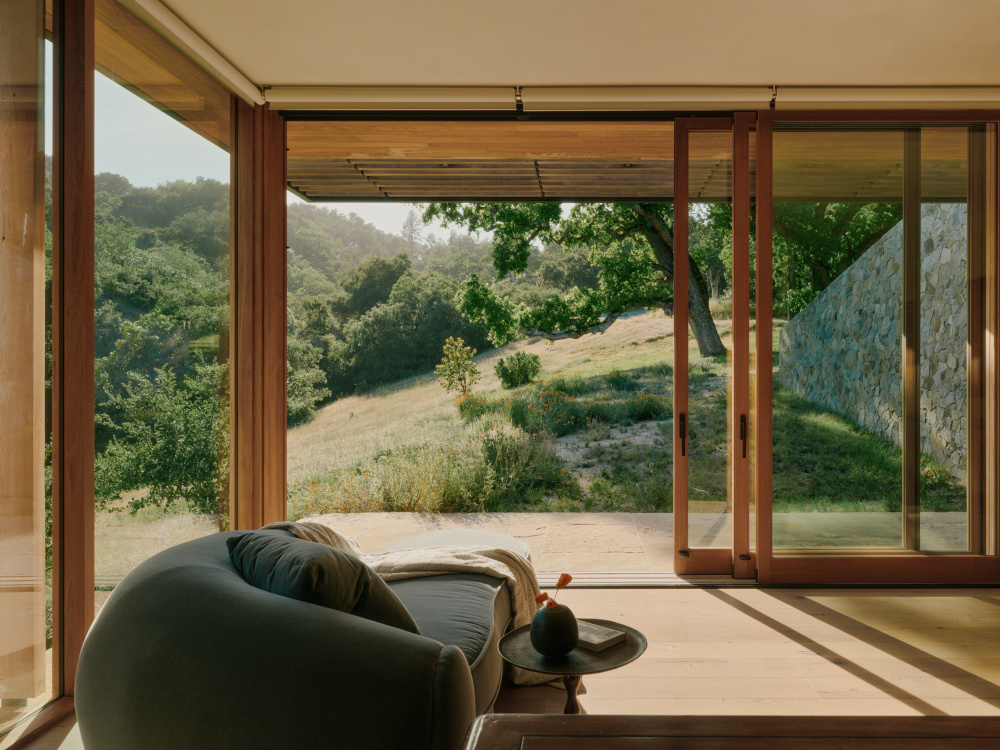
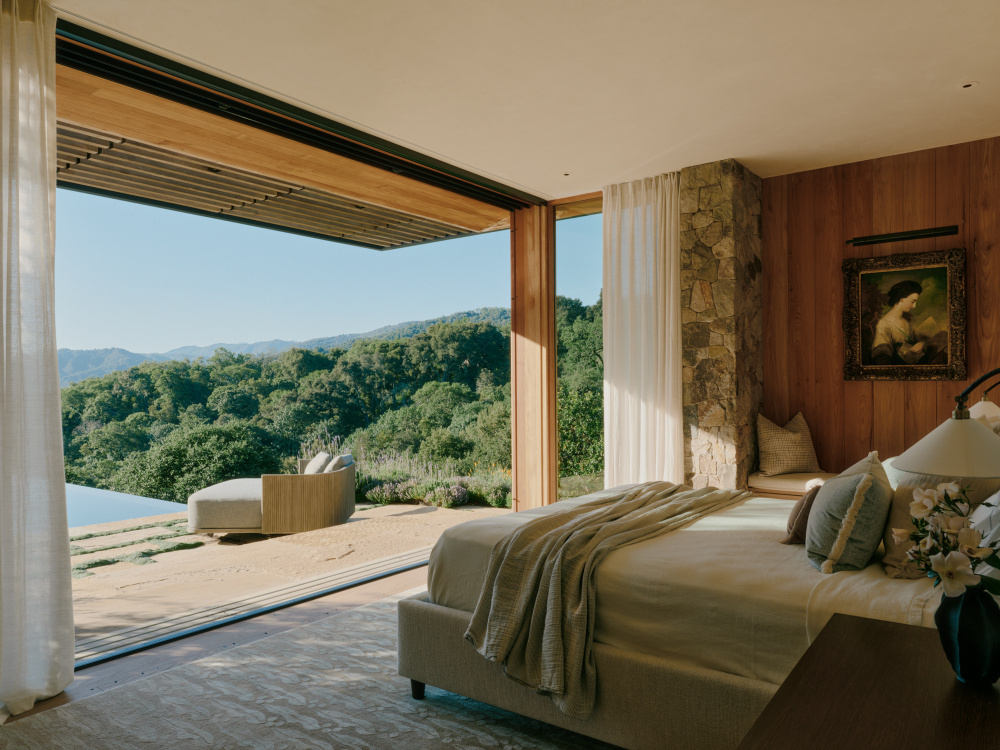
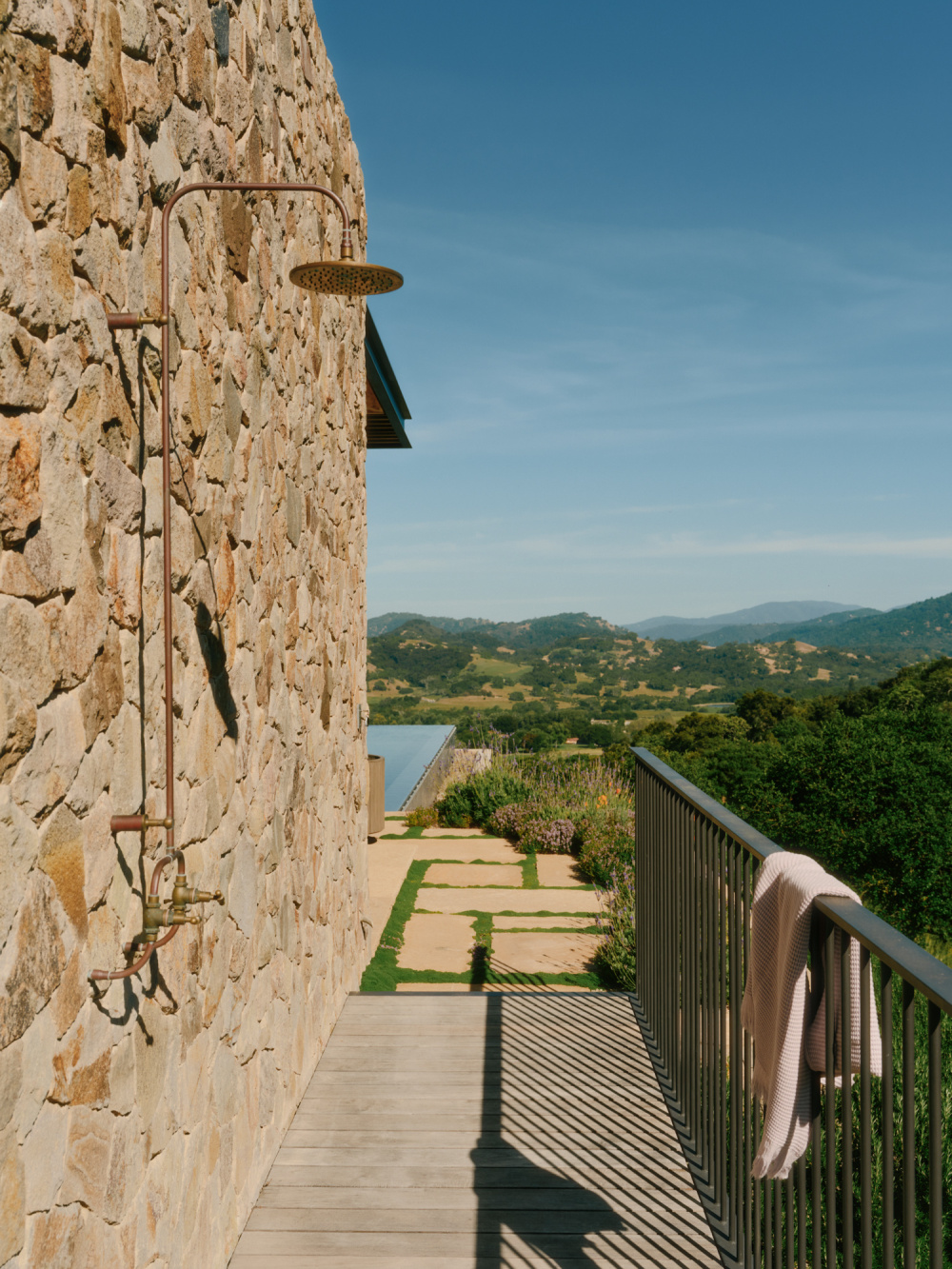
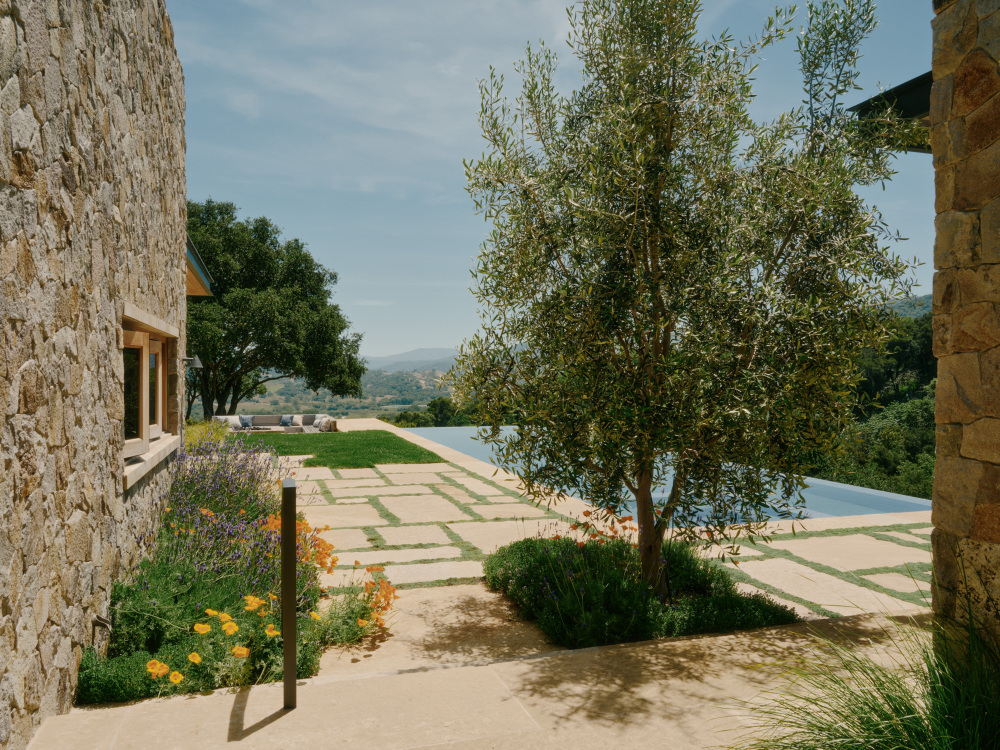
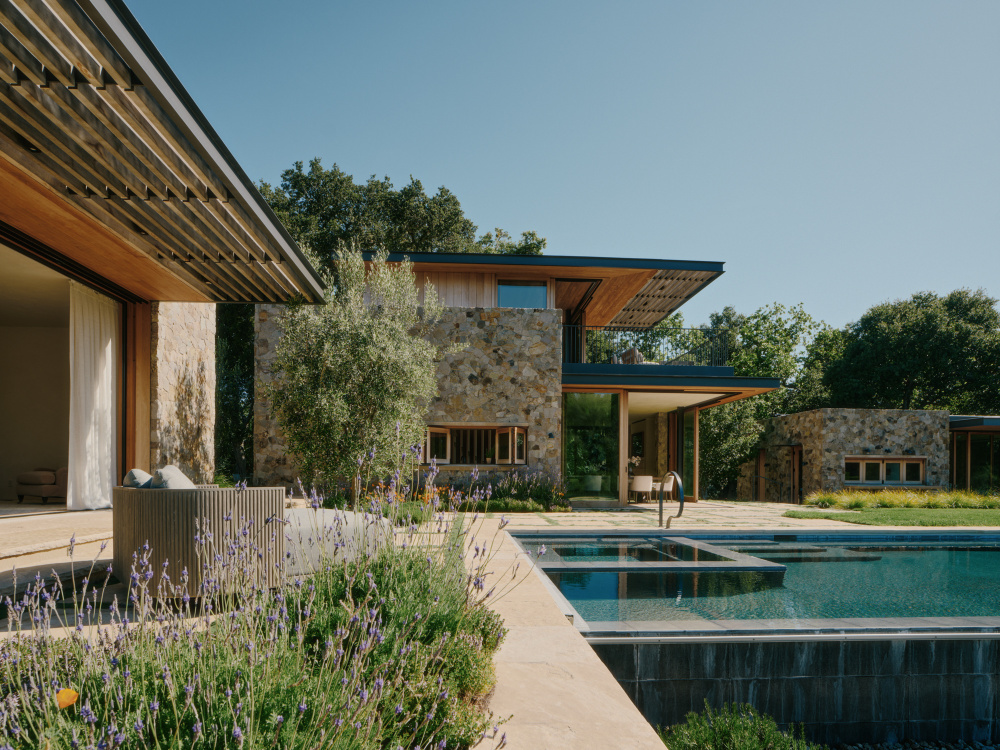
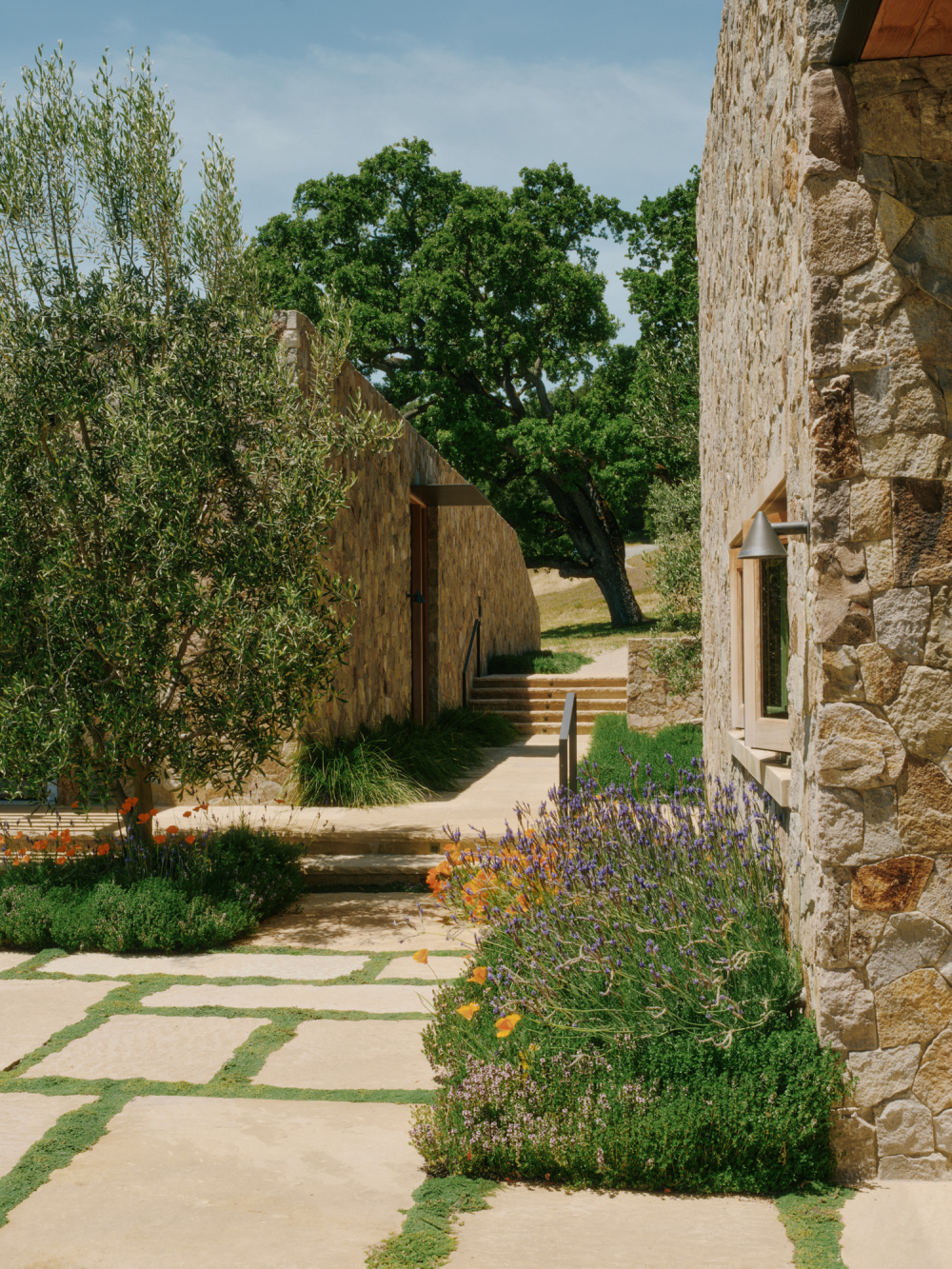
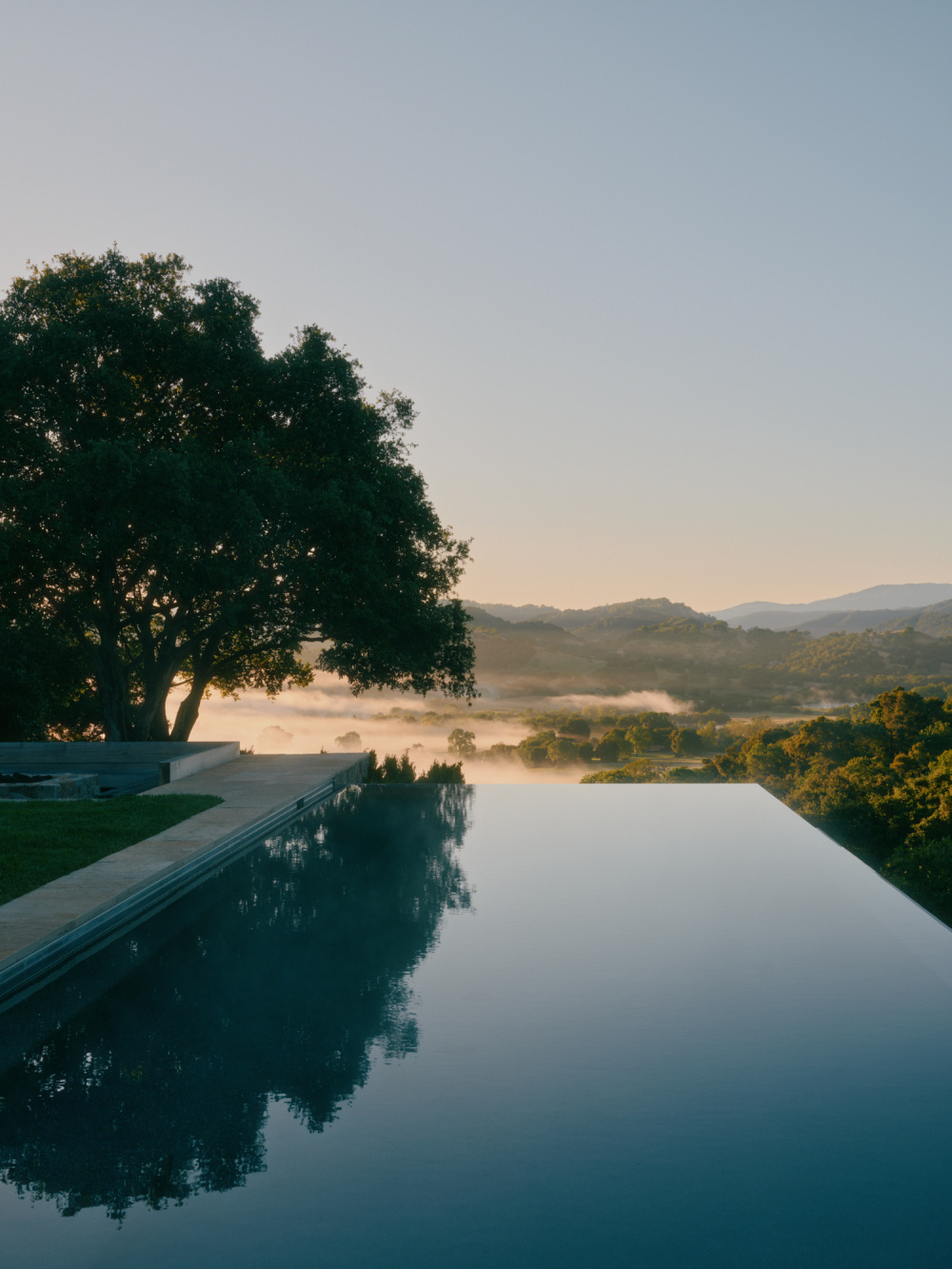
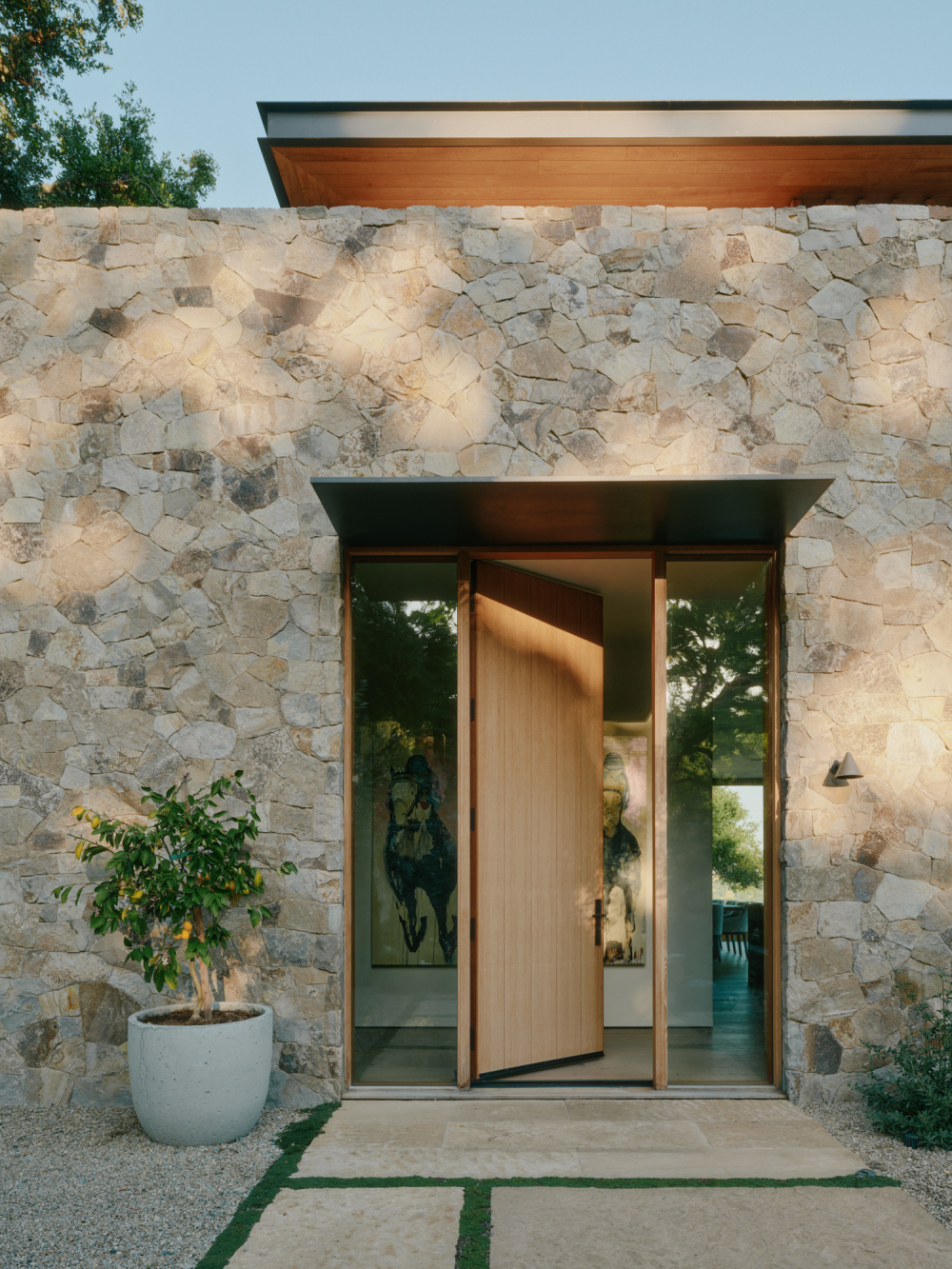
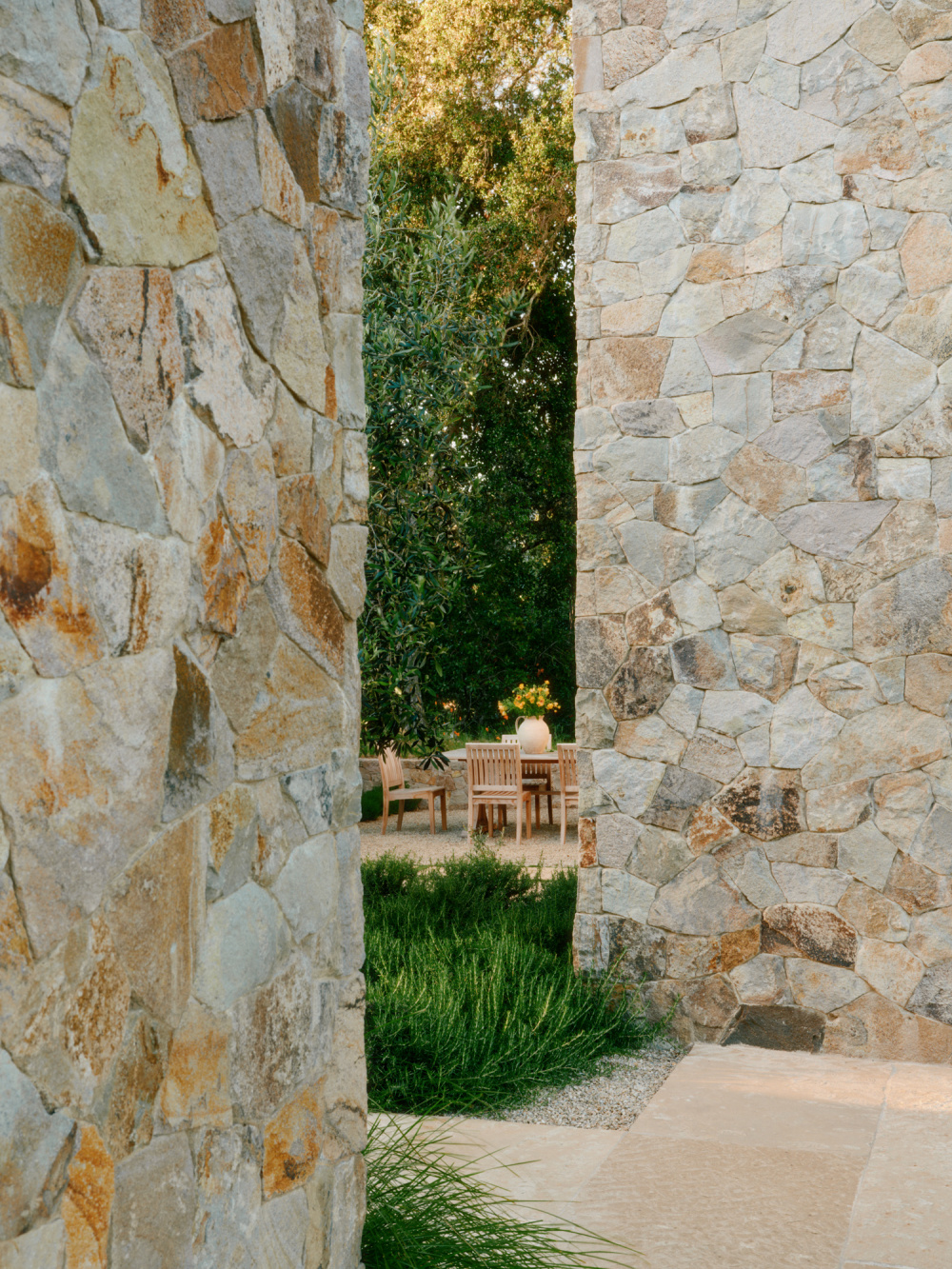
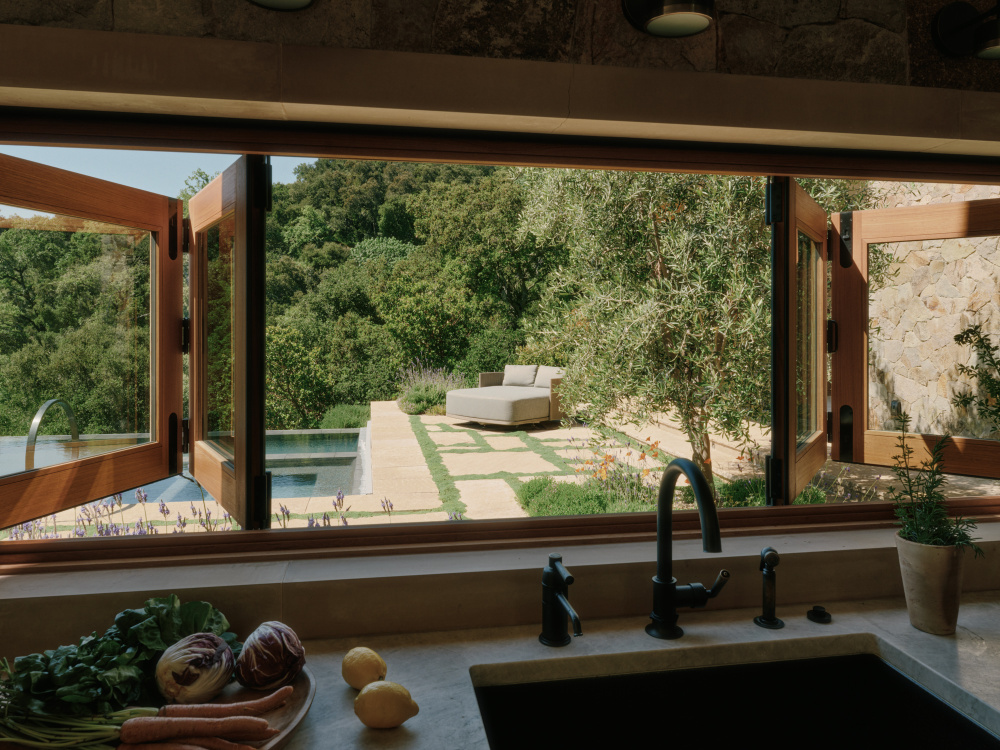
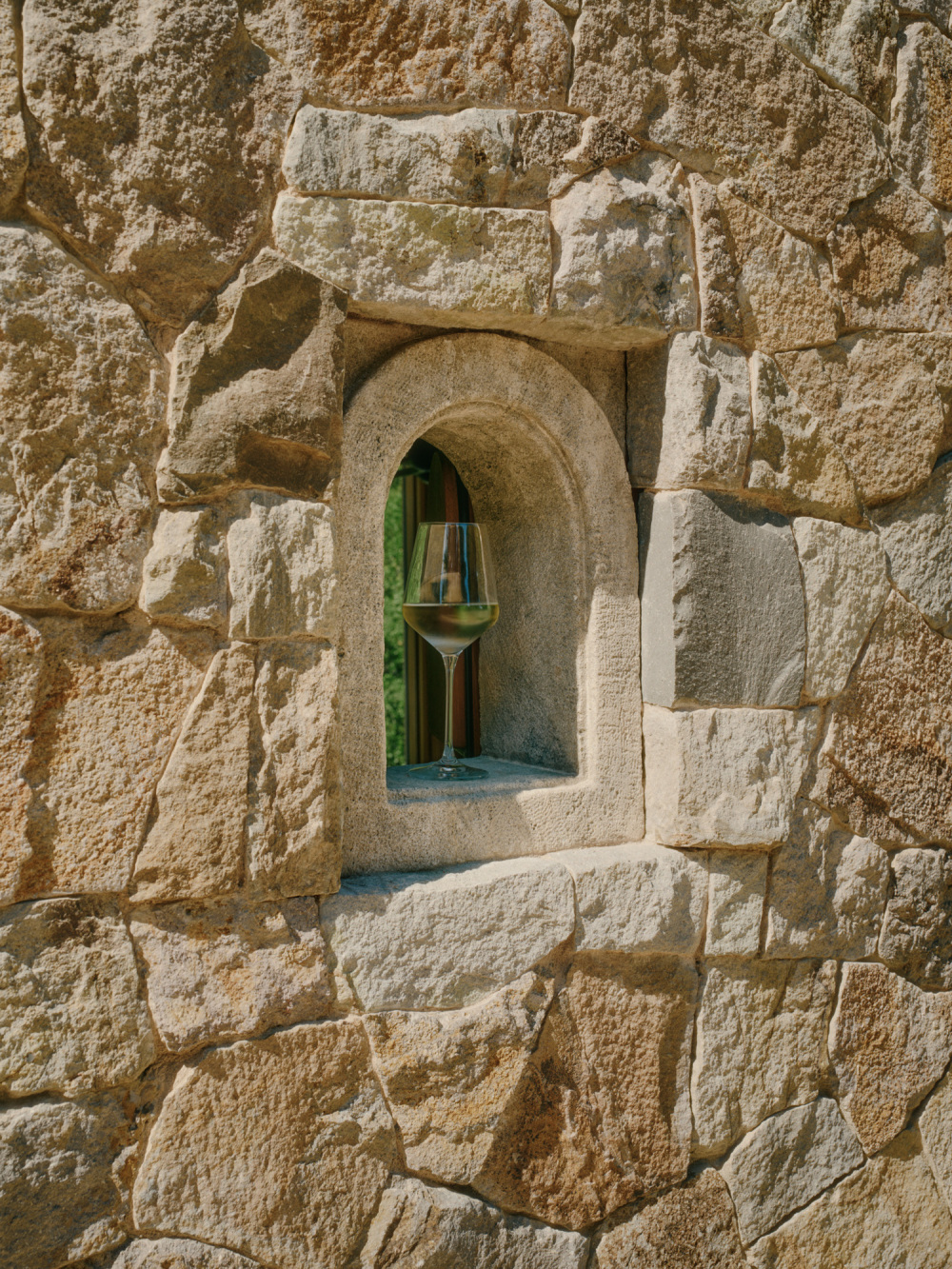
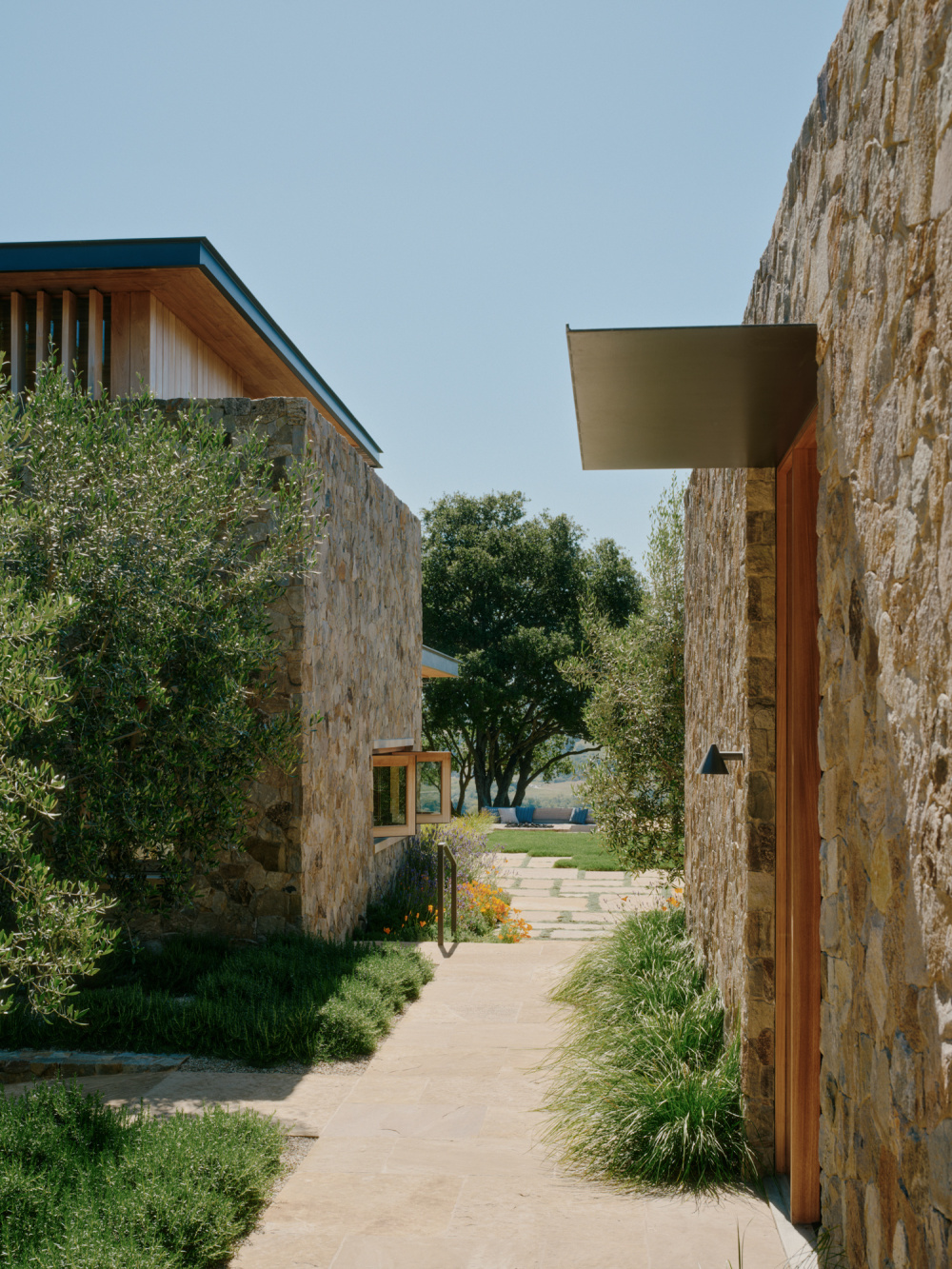
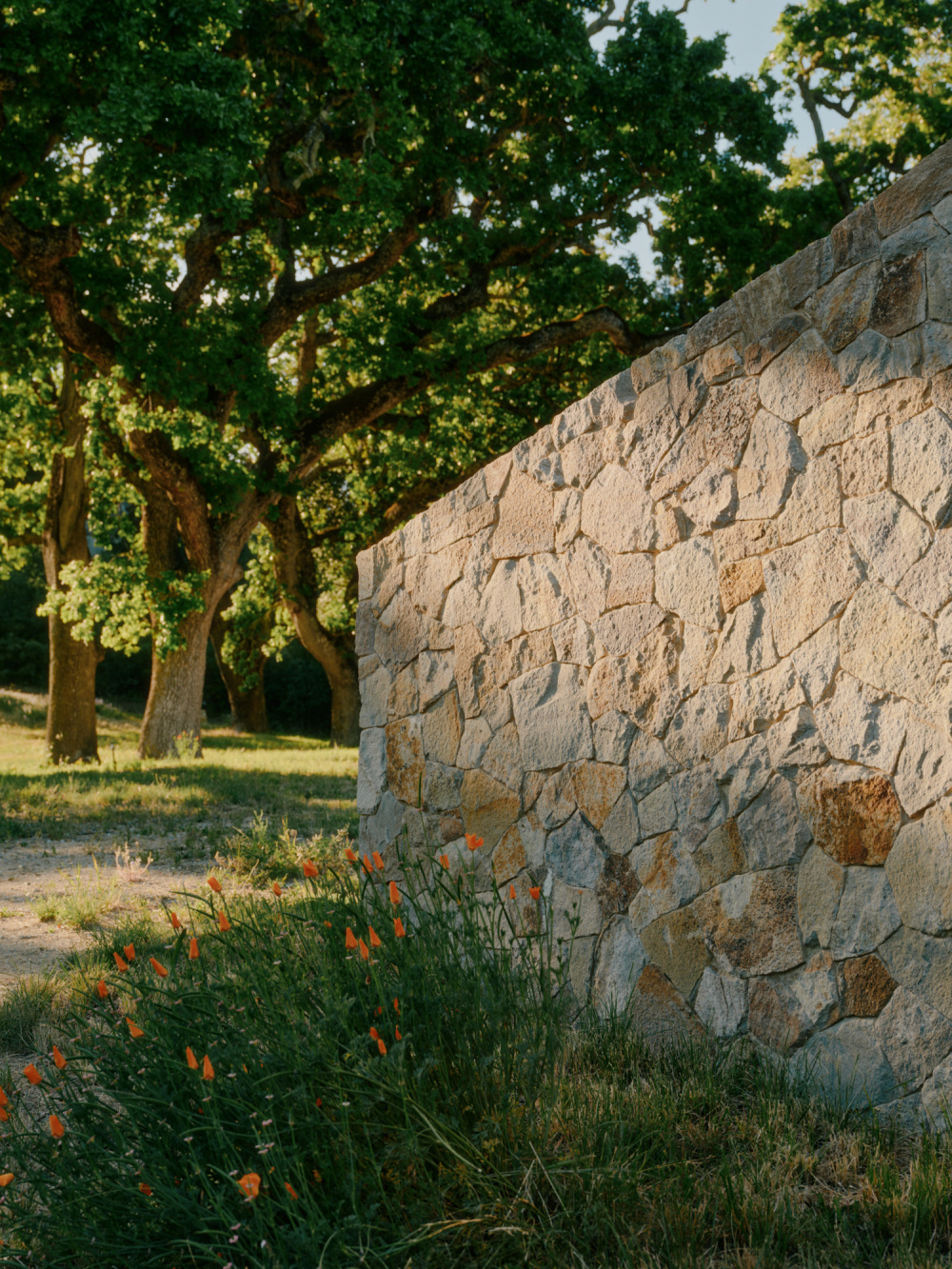
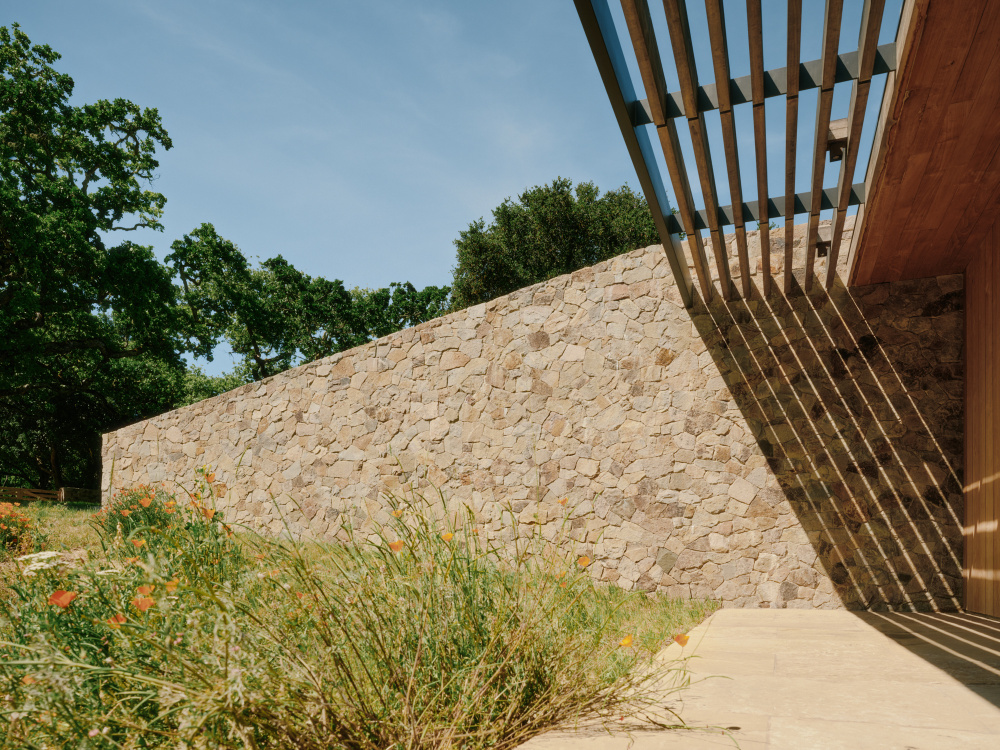
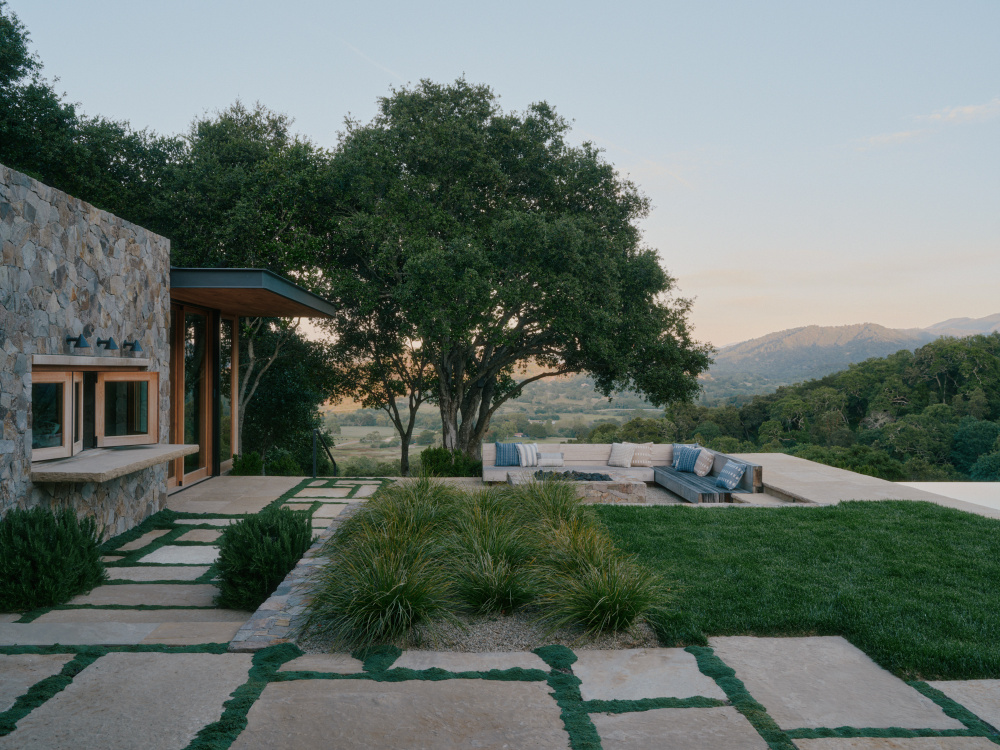
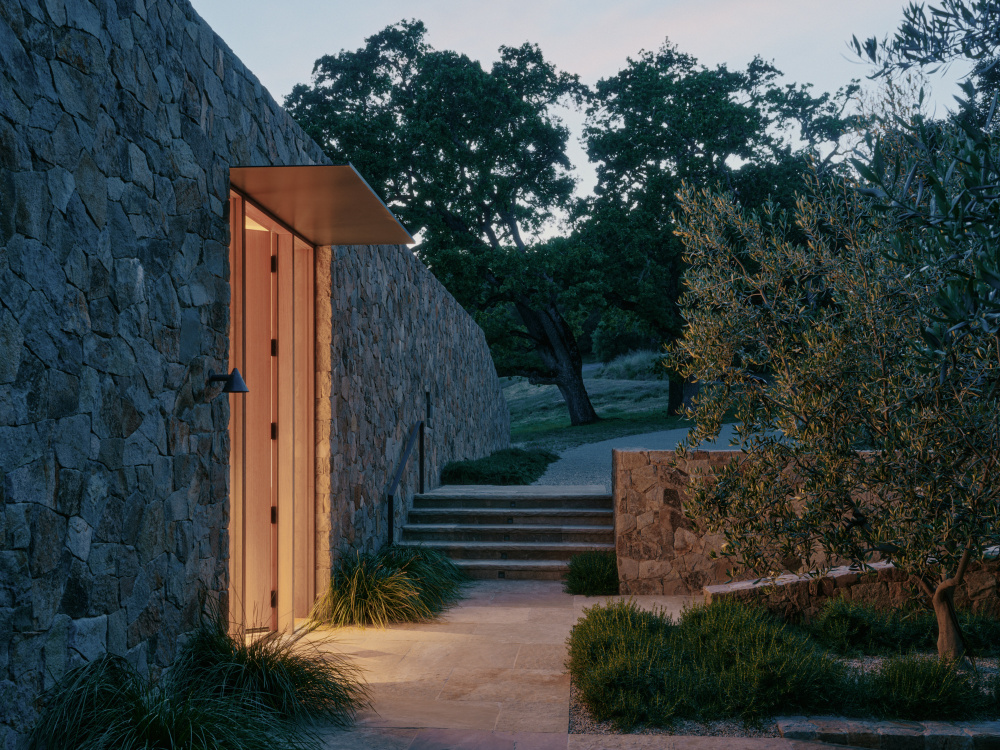
Materially, the architecture articulates a language of enduring substance. Thick granite walls anchor each pavilion to its position on the ridge, their rough-hewn surfaces recalling centuries-old construction while remaining distinctly contemporary through proportion and detailing. St Helena Cottage stone, sourced from Sonoma, was selected for its tonal harmony with Northern California’s forests and grassy hills.Entry to Stone Villa is a carefully orchestrated reveal. Solid stone walls present an initially opaque face, offering only glimpses of the panoramic views beyond. Passage through a narrow aperture builds anticipation before the full drama of the rear facades is unveiled: transparent glass walls overlooking refined outdoor rooms and a cantilevered pool suspended above the valley – a layered experience of enclosure and openness.
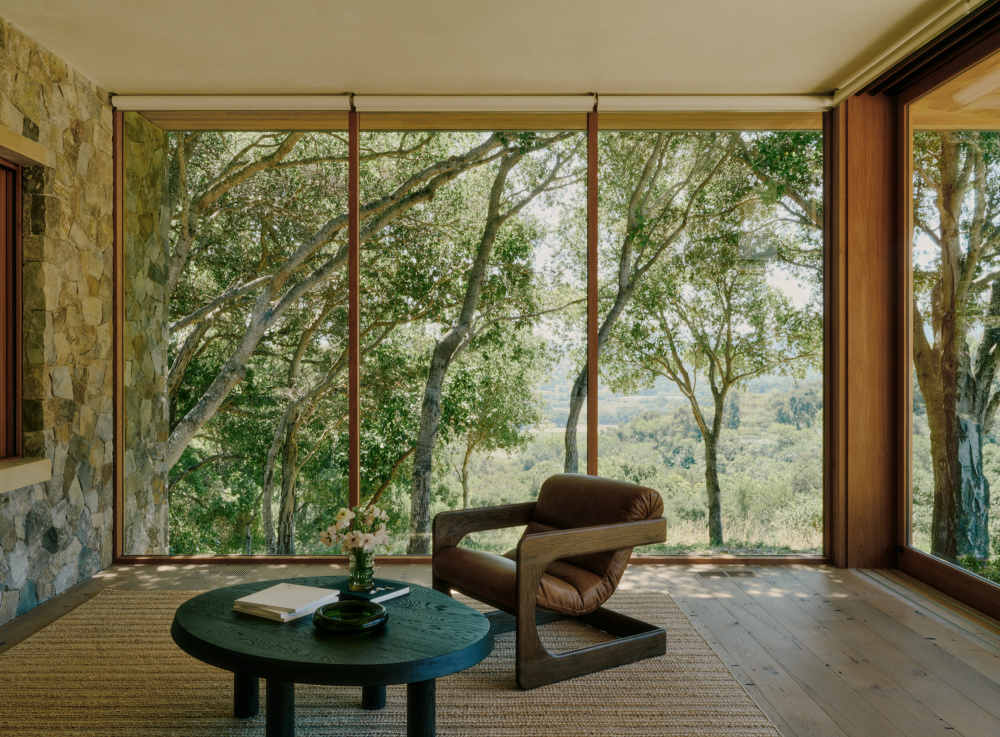
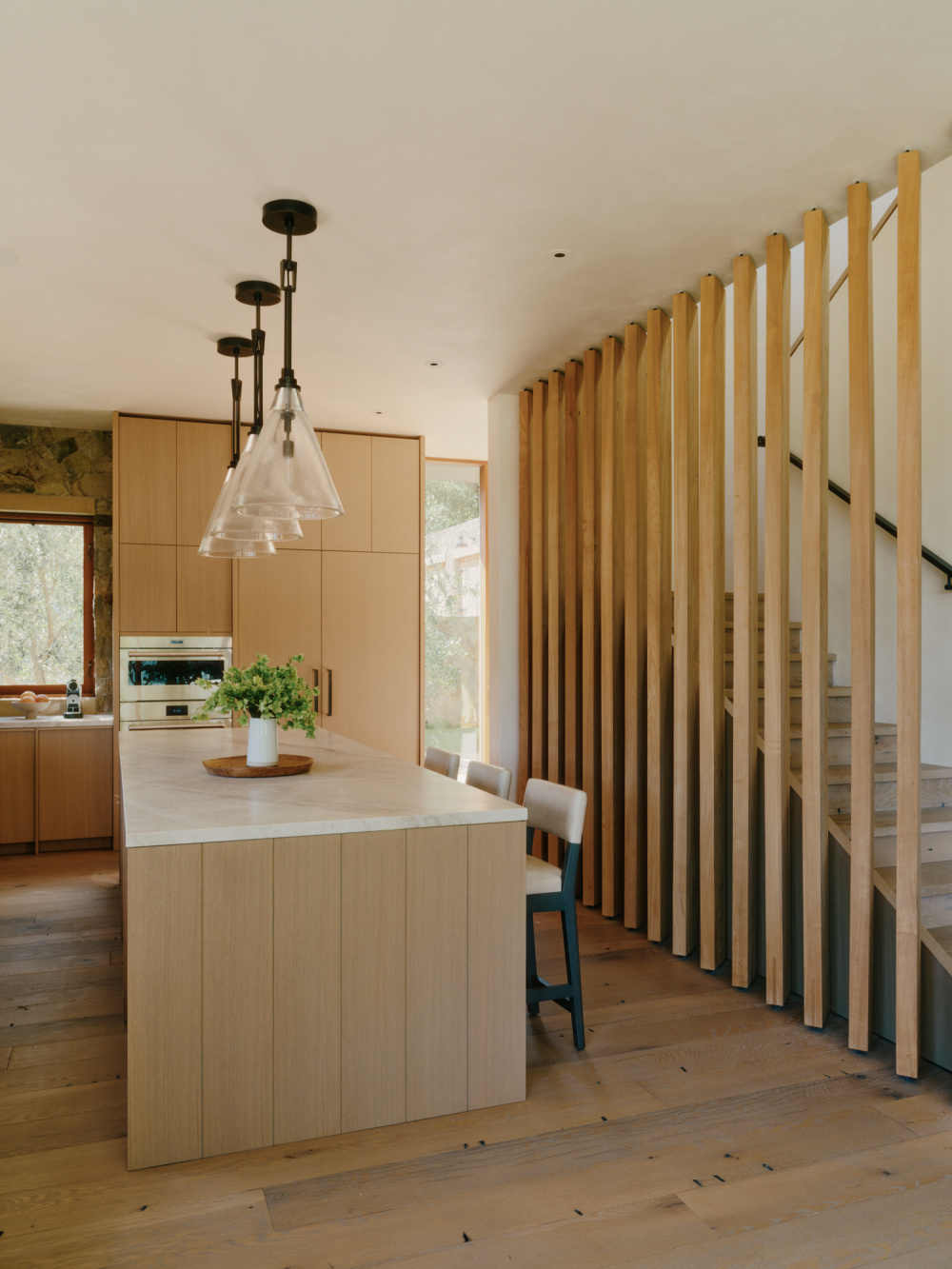
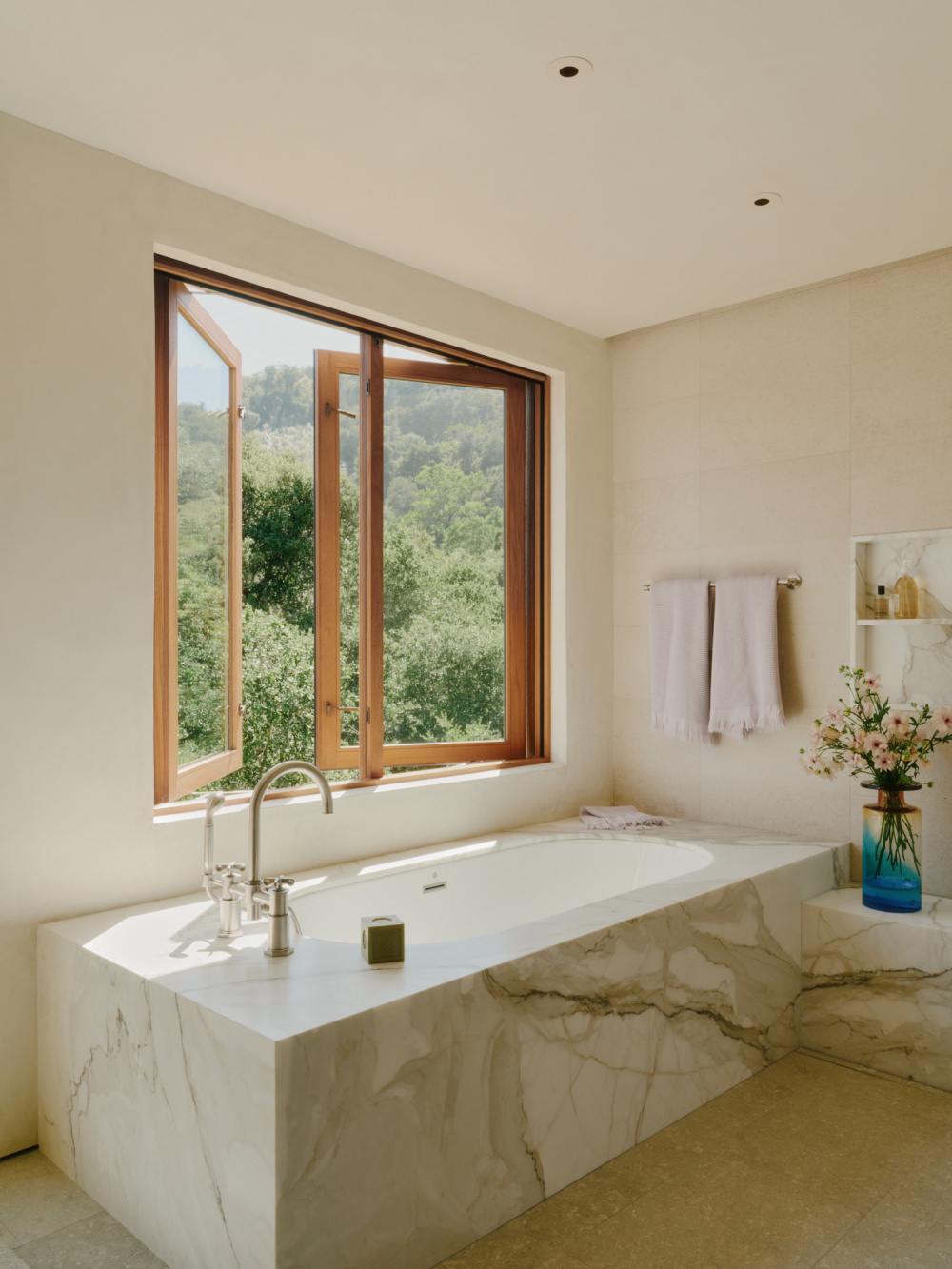
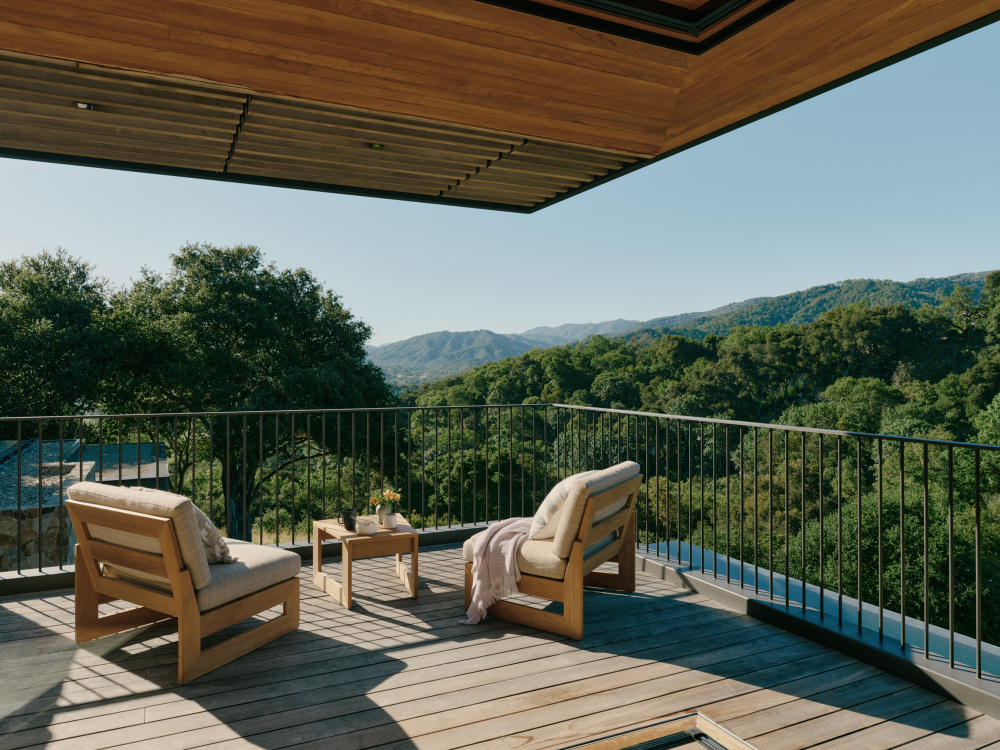
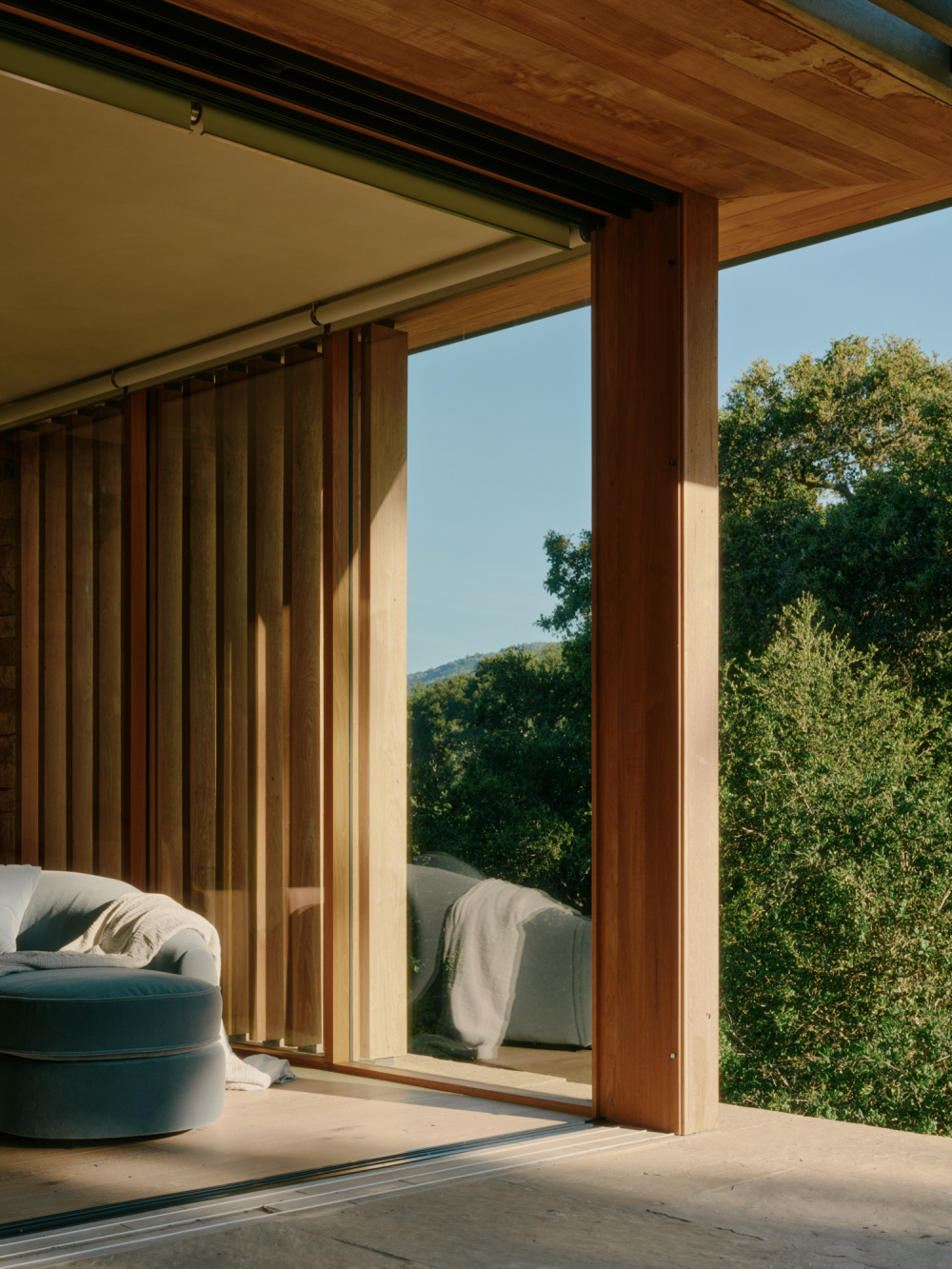
“We sought to create building forms that resembled the simple Italian hillside structures but integrated larger glass openings and minimalistic contemporary detailing,” explains Jonathan Feldman, project principal and founding partner of Feldman Architecture. Masonry is paired with reclaimed teak alongside modern steel accents and expansive sliding glass doors that dissolve boundaries between interior and exterior. Windows and openings are carved with precision, framing valley views through the tree canopy while preserving the solid bearing that lends each pavilion gravitas.Deep overhangs and shaded recesses temper harsh sun, while the thermal mass of stone walls moderates internal temperatures, a passive environmental strategy refined through careful orientation. Southern-facing glazing welcomes winter sunlight, while awnings and mature trees provide summer shade. The home takes advantage of this calibrated approach with understated elegance, supported by an all-electric system running on an extensive solar array, high-performance fenestration, thoroughly insulated exterior walls and enhanced airtightness.
The horticultural vision, developed by Johnson Bullard of Ground Studio, extends this ethos of sensitive integration. “We aimed to create a seamless transition between the built form and the natural topography,” says Bullard. Native species suited to the local ecology promote habitat restoration and biodiversity, while drought-tolerant planting establishes visual continuity between architecture and terrain, integrating each pavilion further into its wooded surroundings.Beyond its immediate resolution, the architecture anticipates its own evolution. The robust material palette – stone, teak, steel – promises to gain richness with age and the patina of weather and occupation. As native plantings mature, softening the buildings’ edges, Stone Villa will settle further into its ridge-top clearing in a gradual braiding of built and organic elements. The result is a home that is simultaneously private, generous and intimately entwined with its environment, inviting occupants to experience architecture and landscape as a cohesive, living whole.
Architecture by Feldman Architecture
Build by Truebuild Construction
Landscape Design by Ground Studio
Appliances by Miele
Appliances by Sub-Zero Wolf
- 转载自:The Local Project
- 图片@The Local Project
- 语言:英语
- 编辑:序赞网
- 阅读原文
|
|