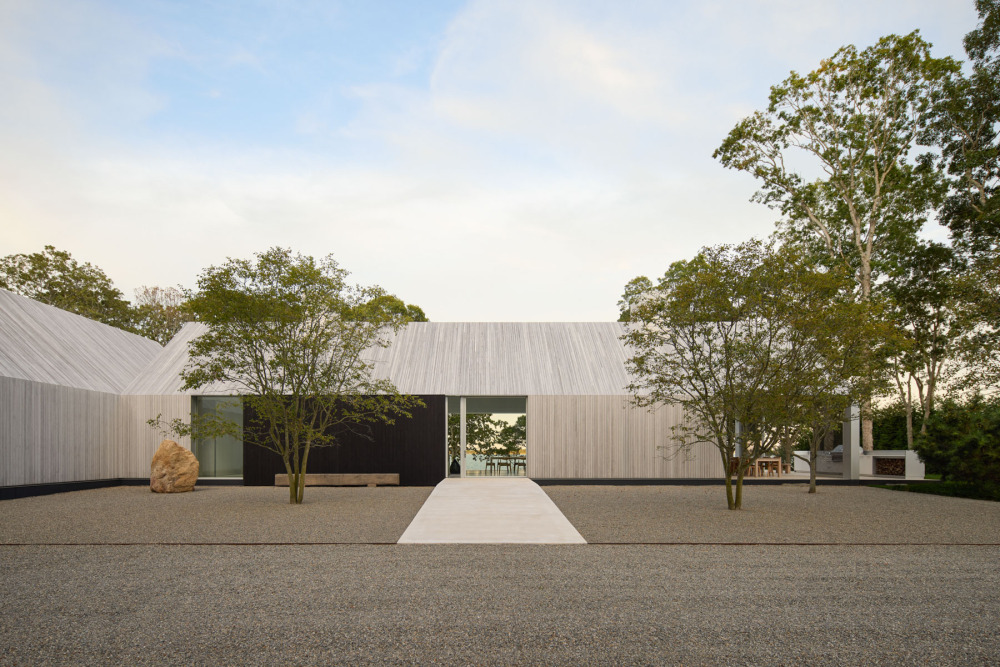
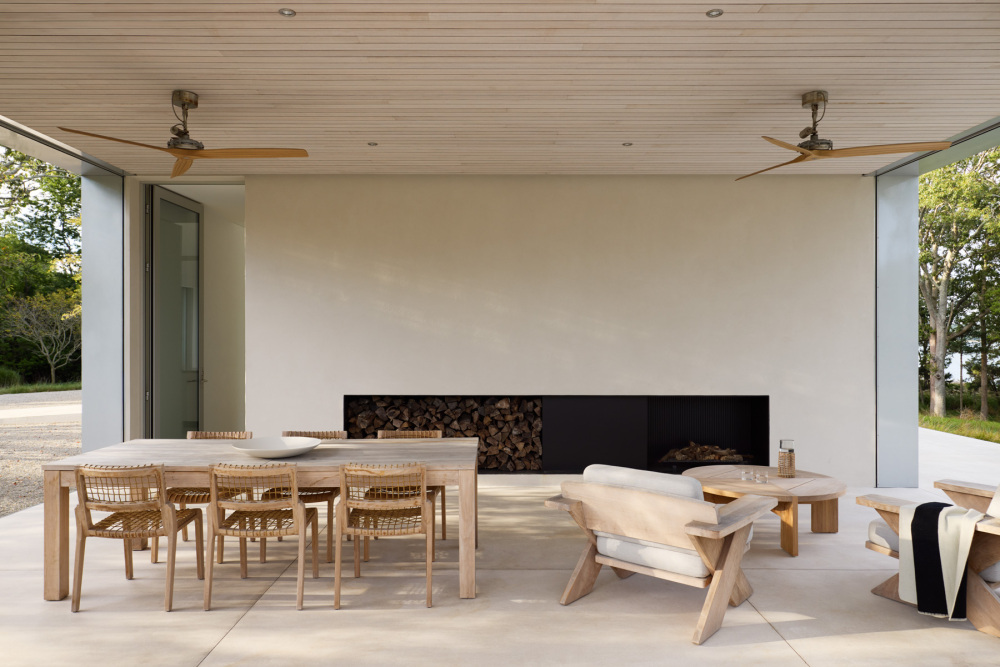
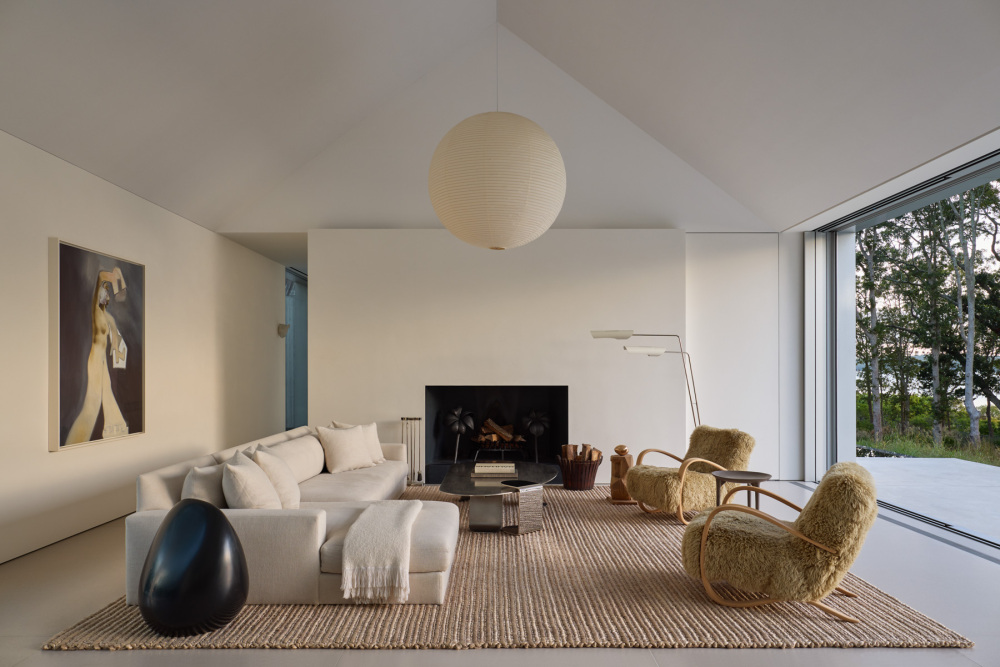
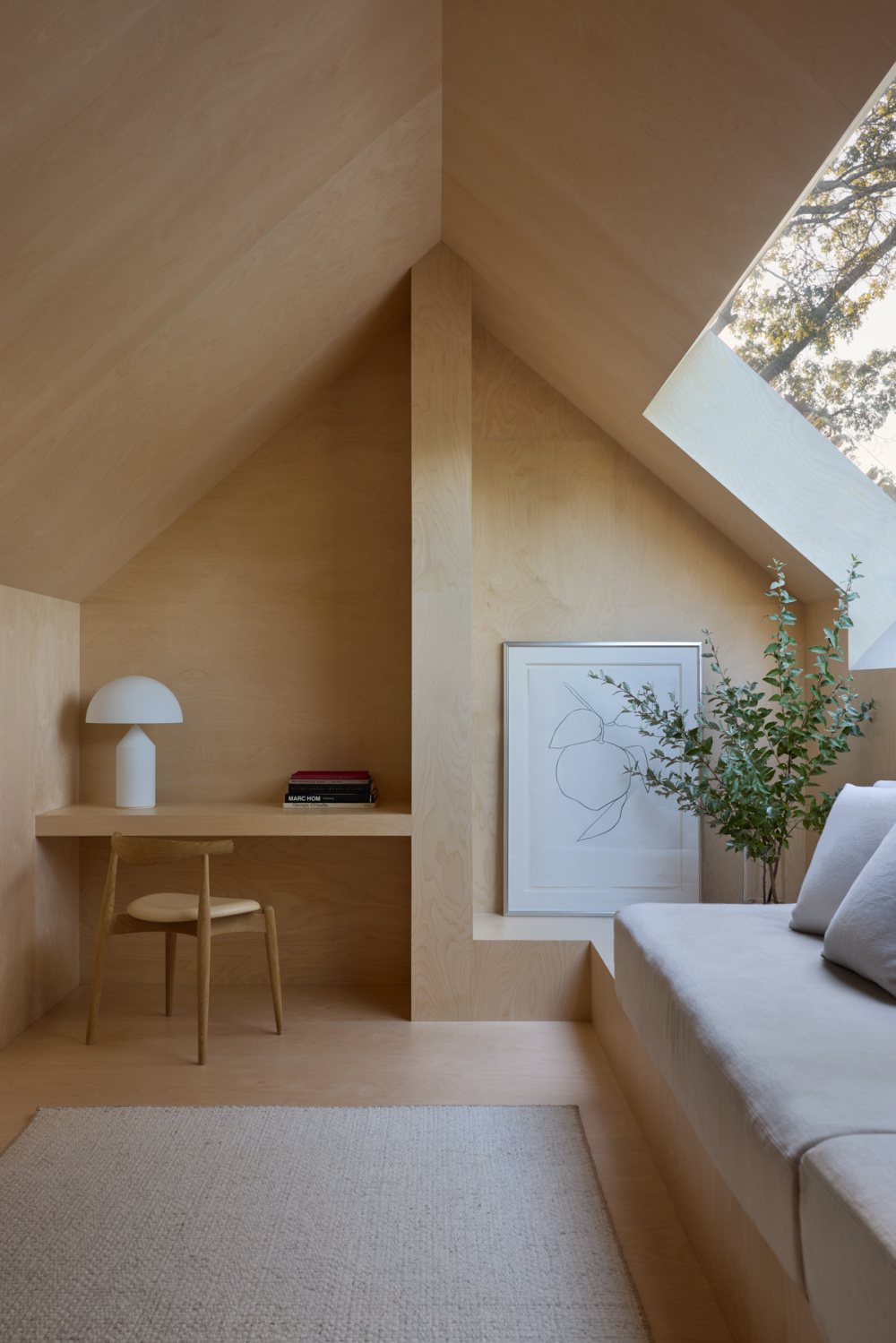
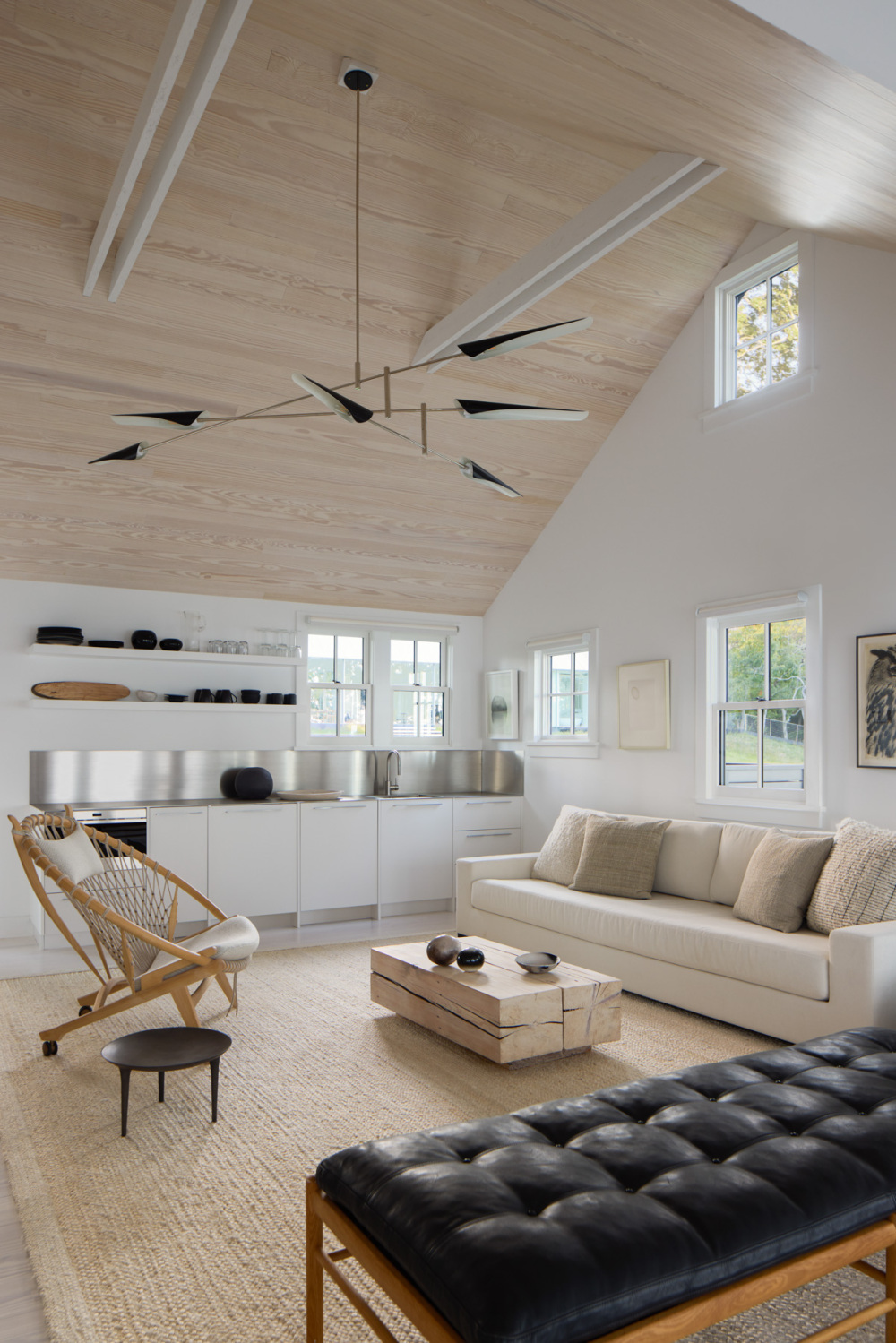
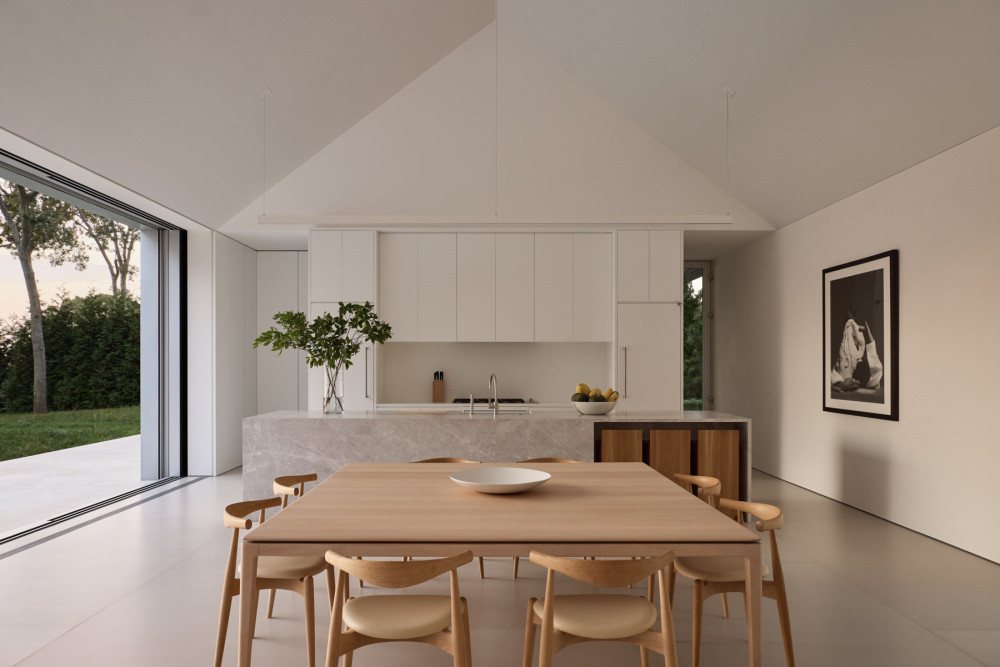
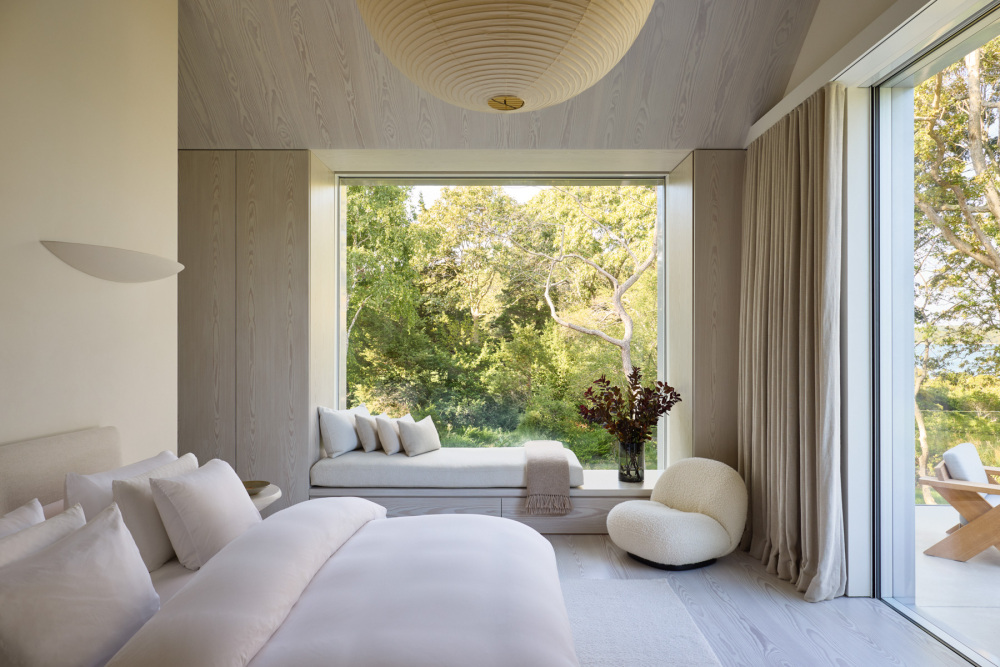
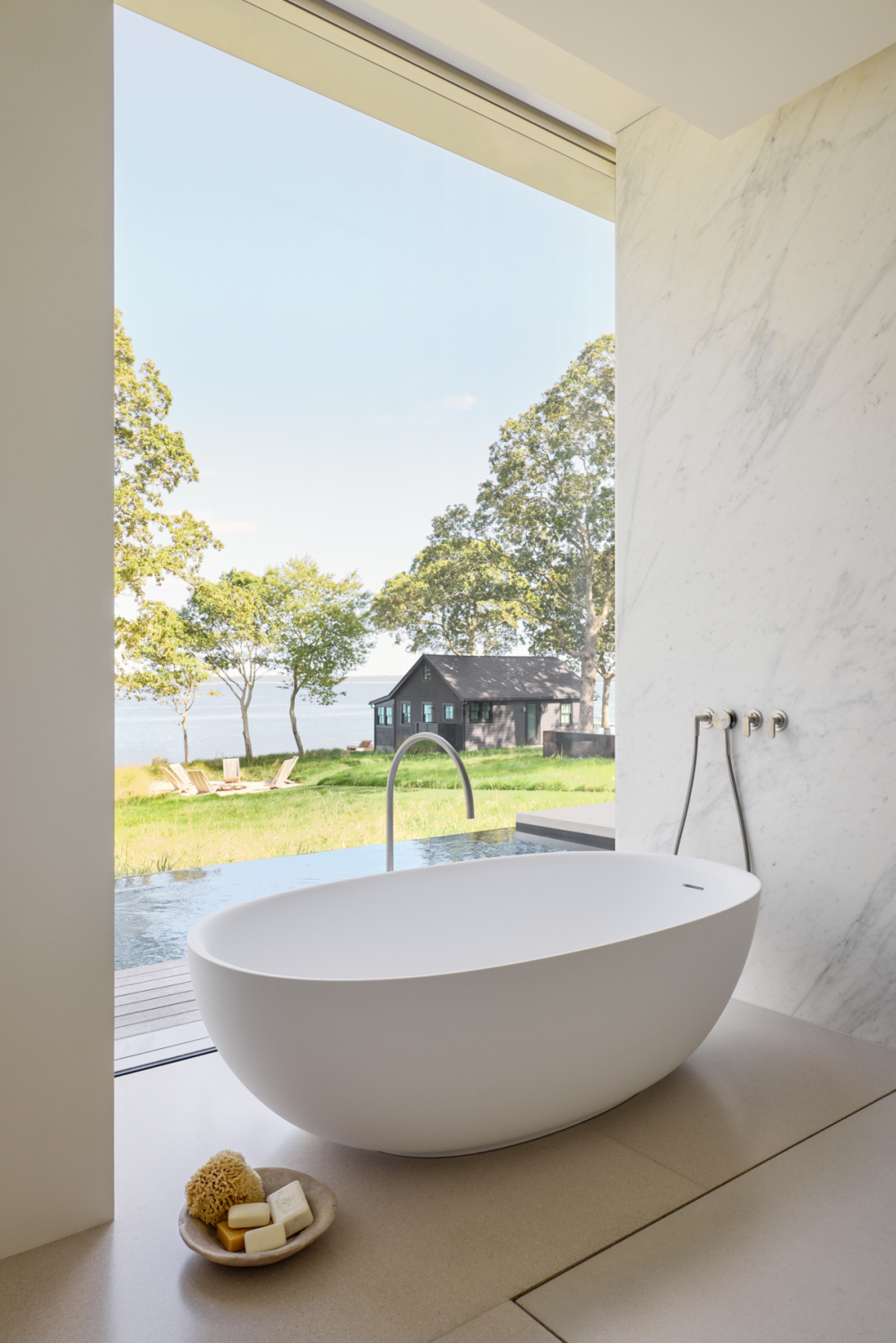
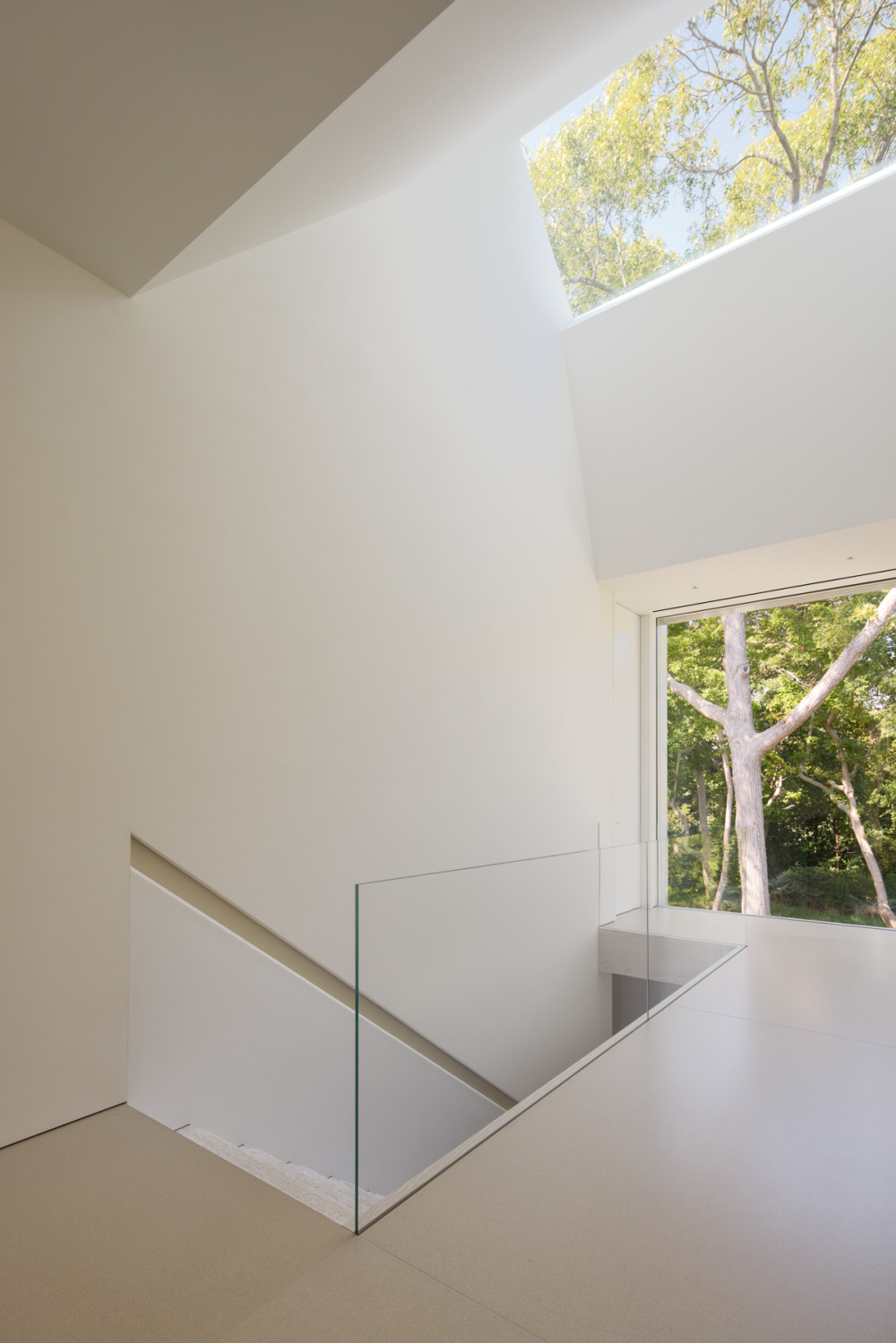
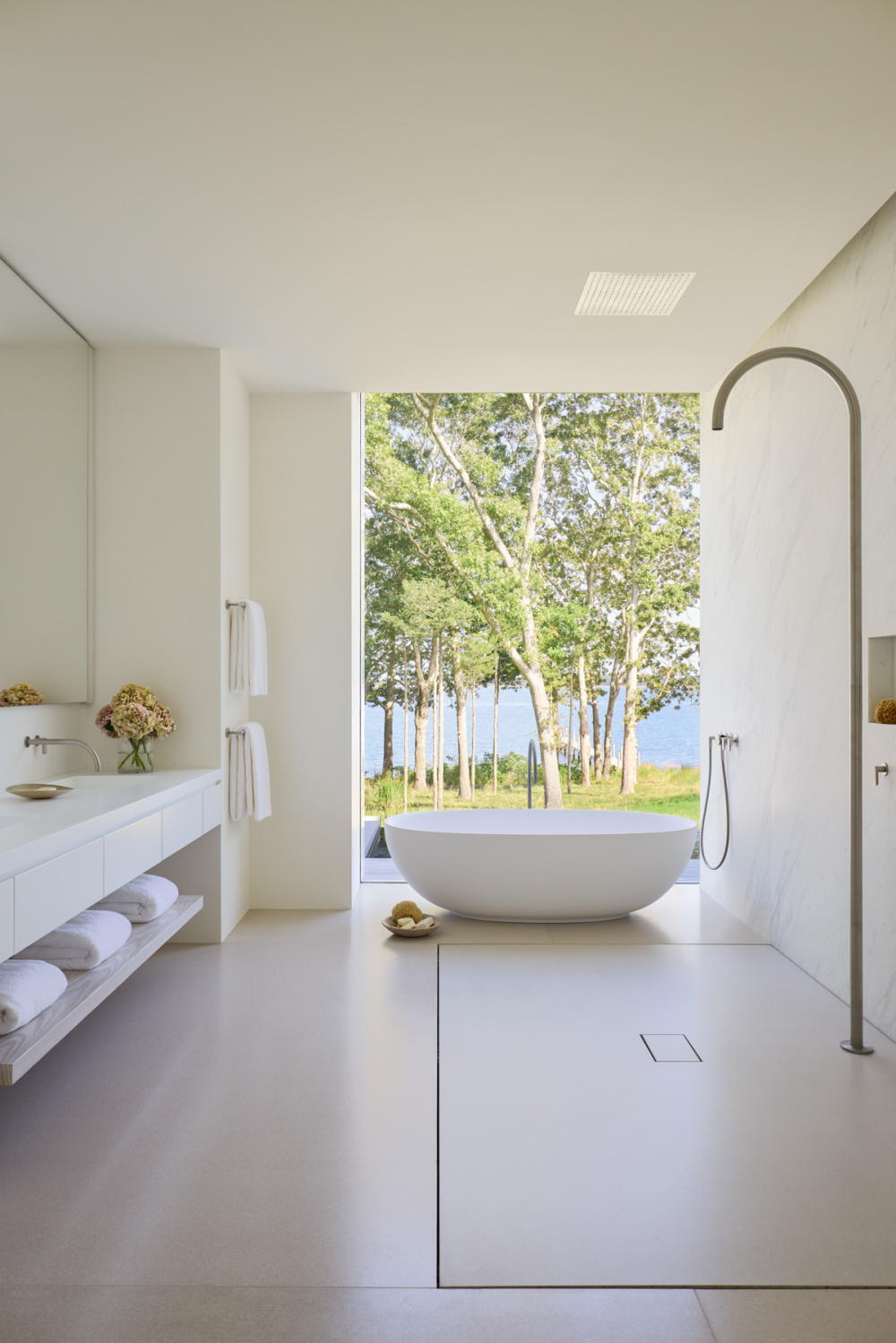
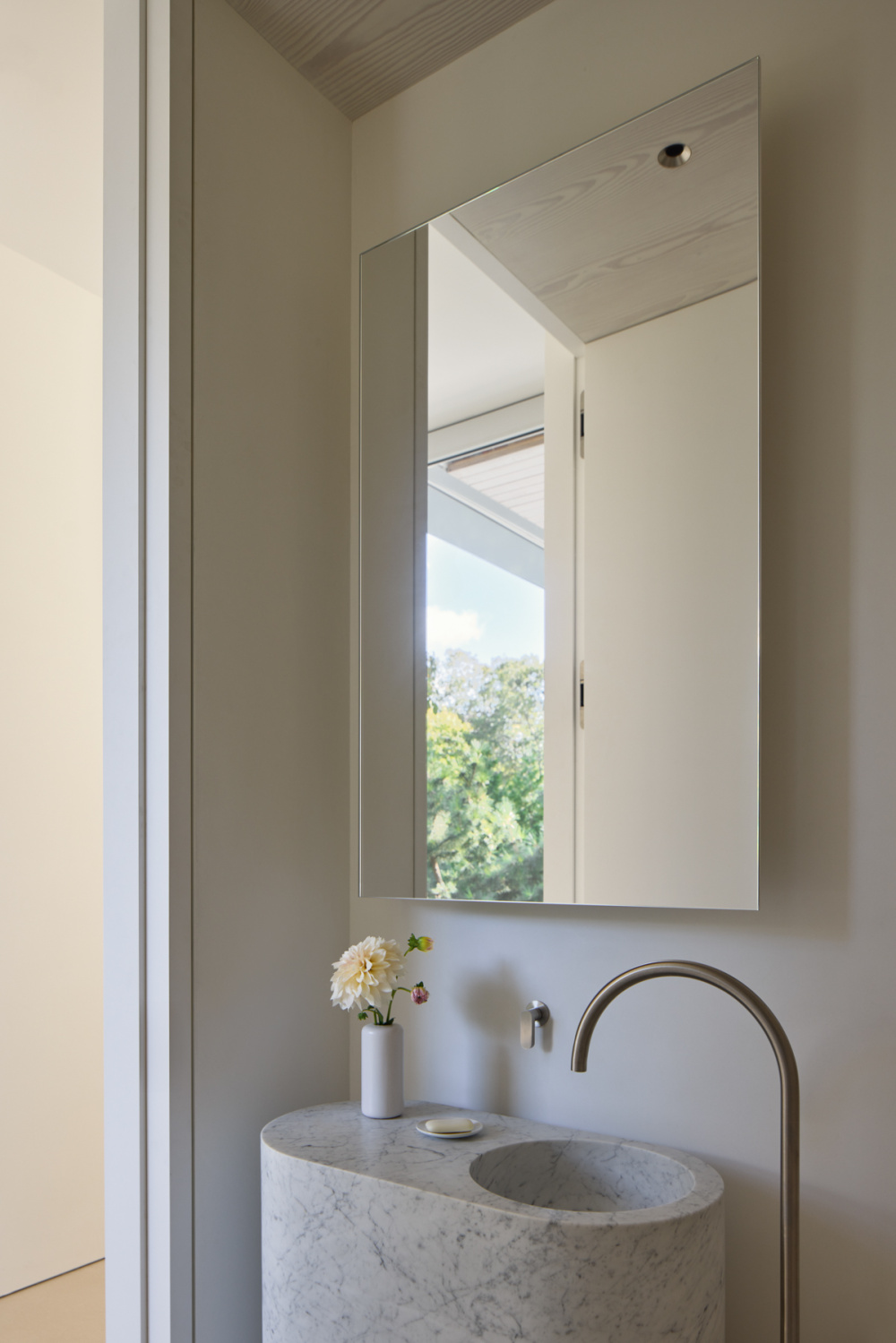
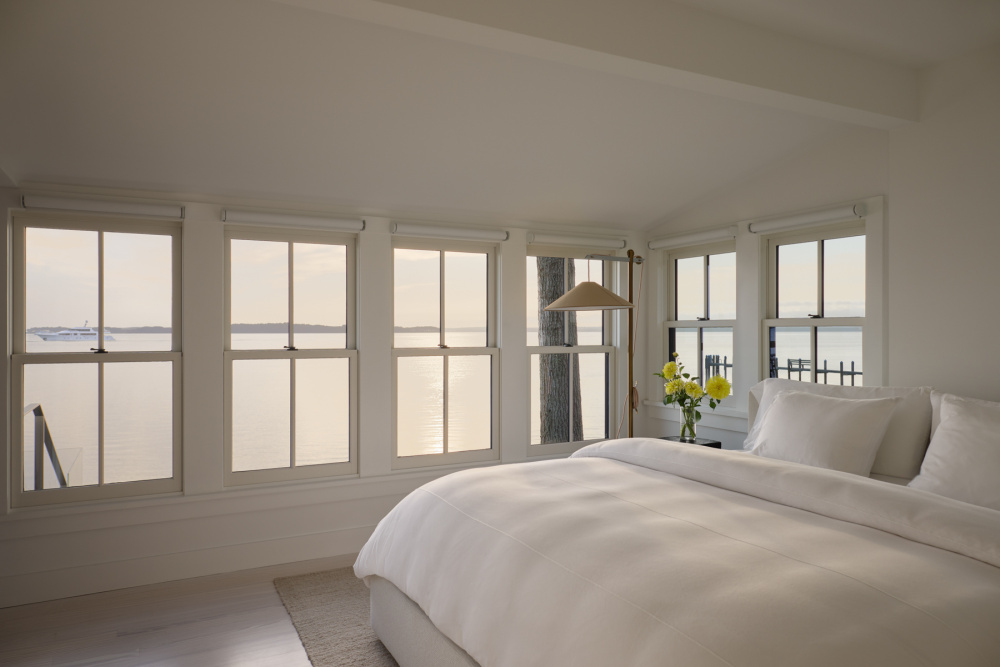
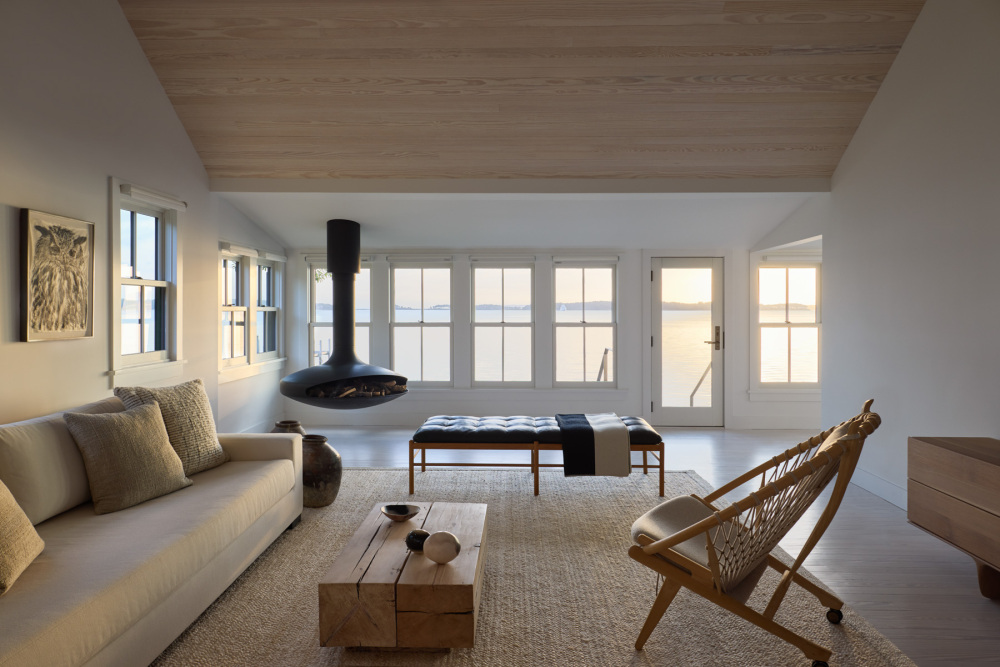
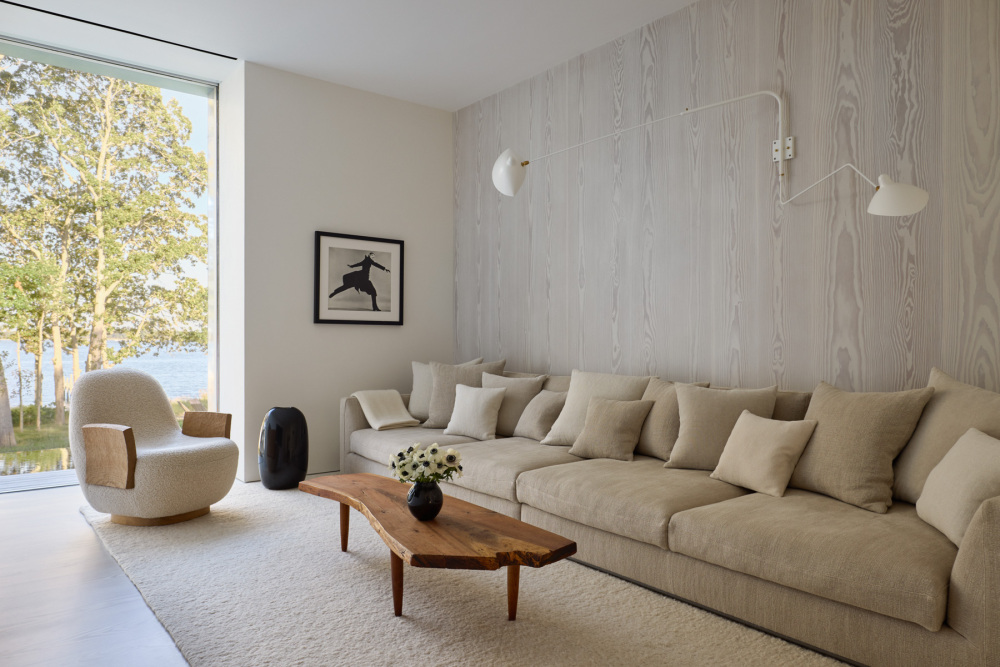
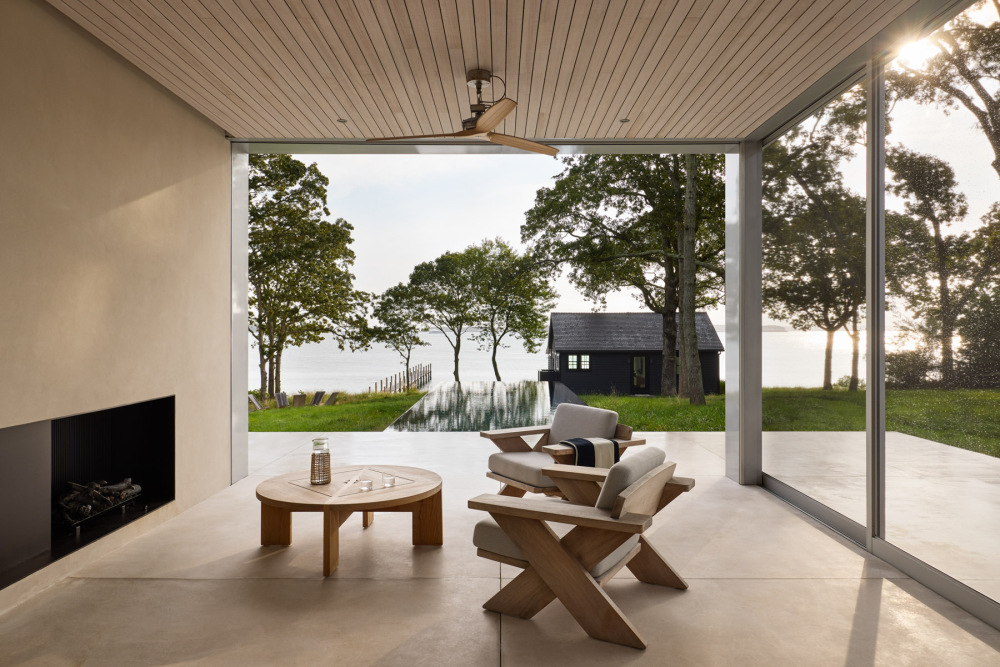
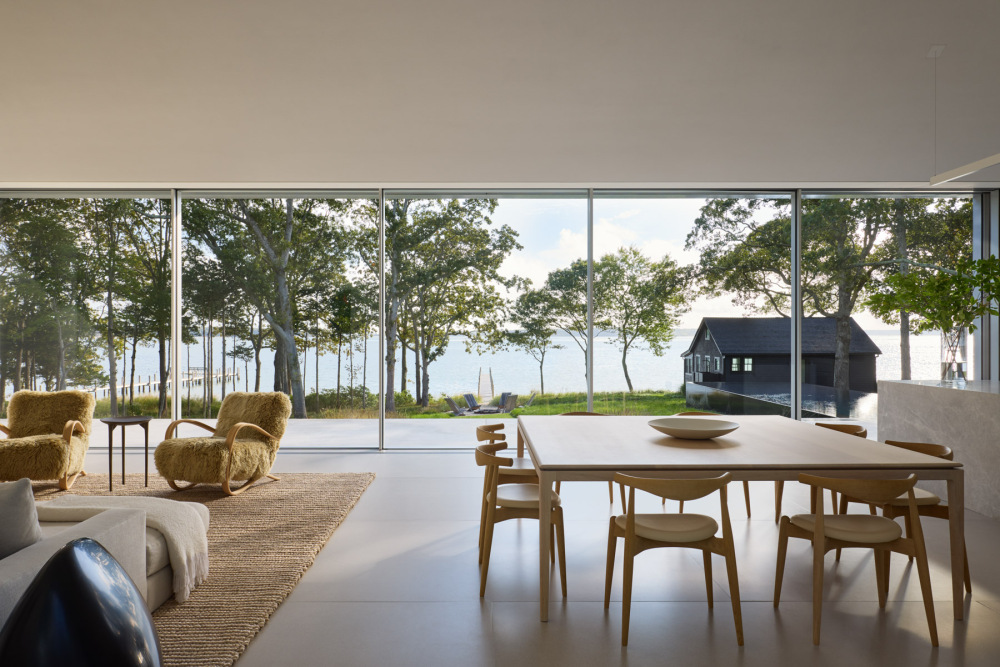
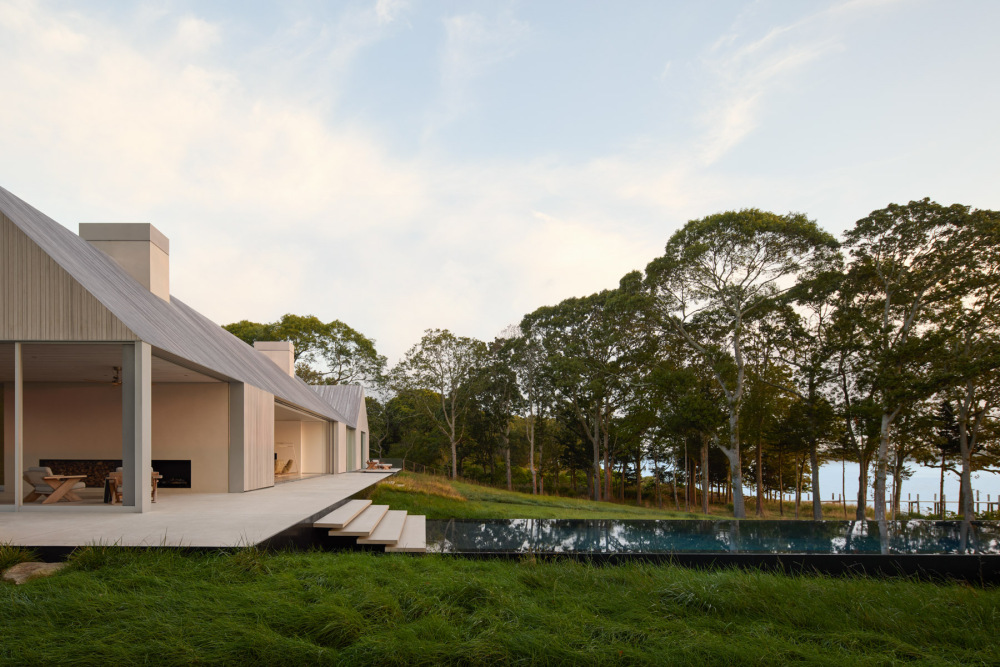
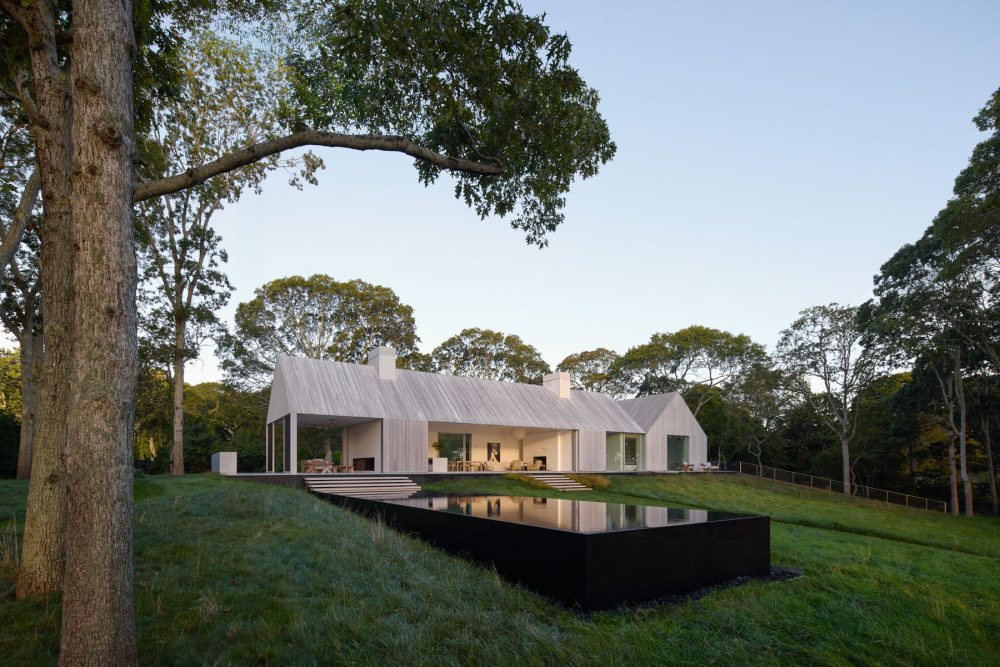
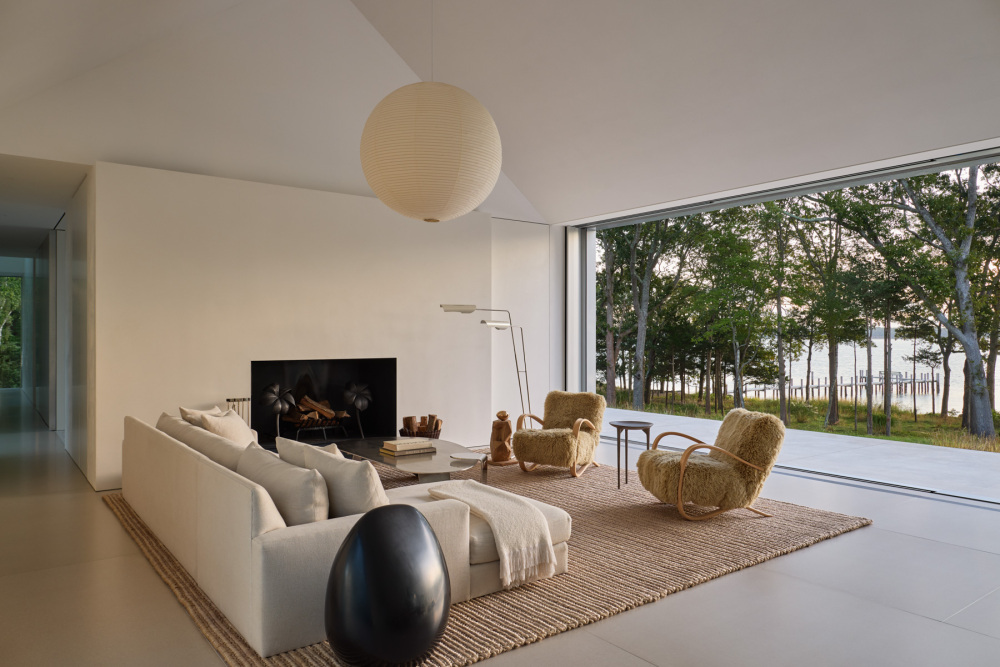
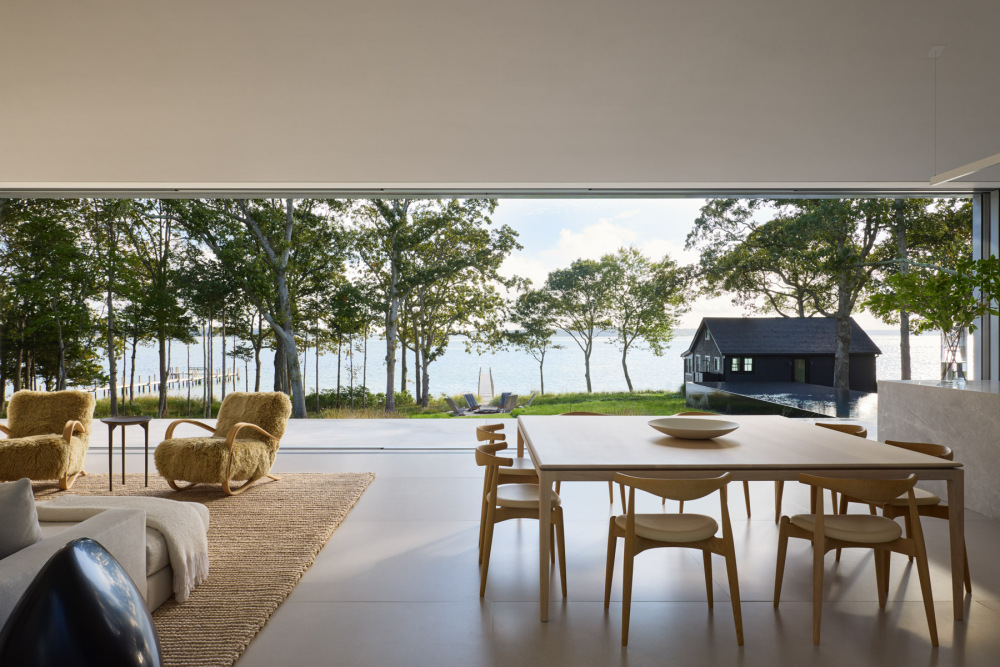
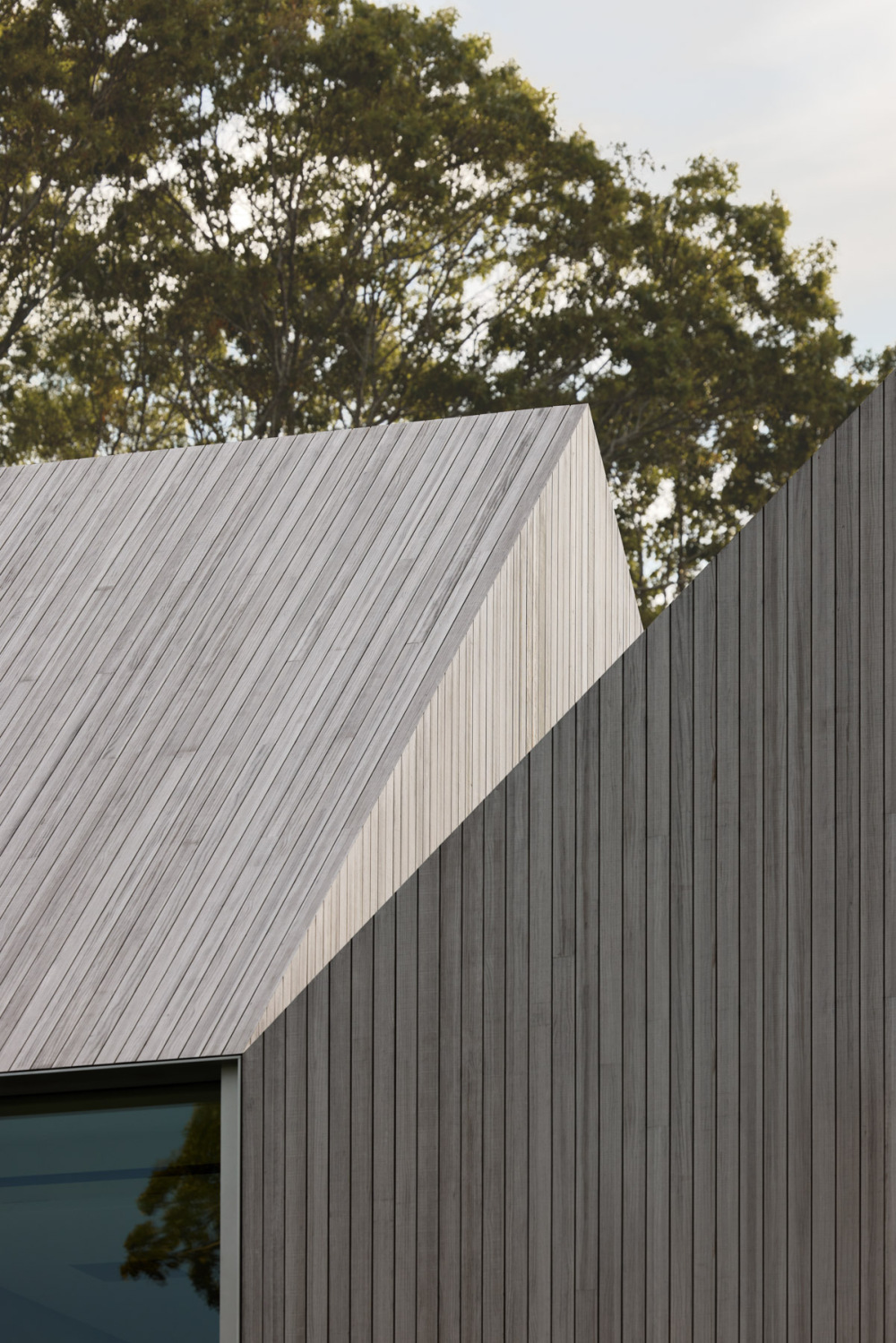
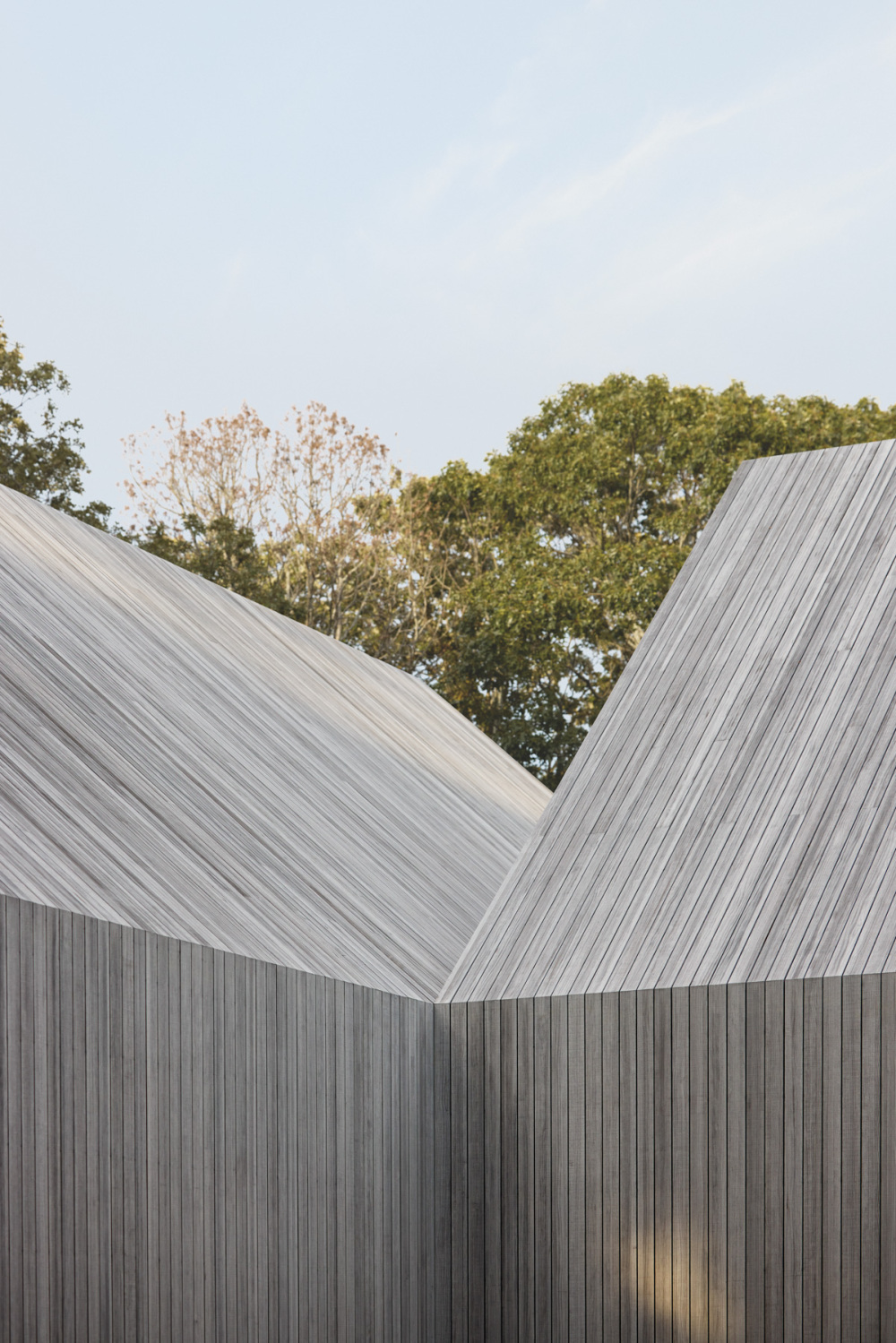
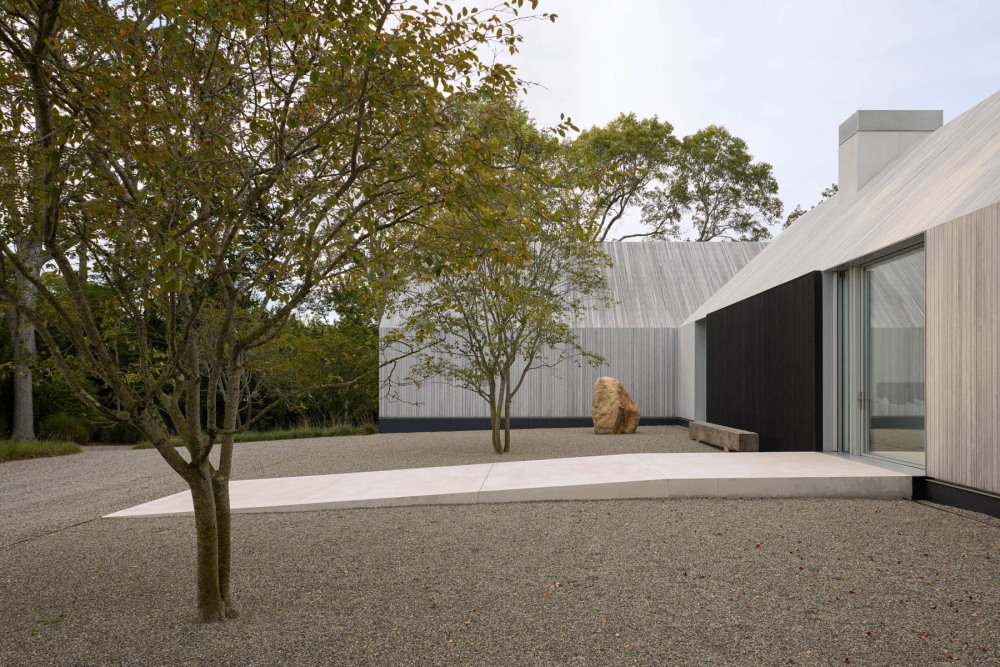
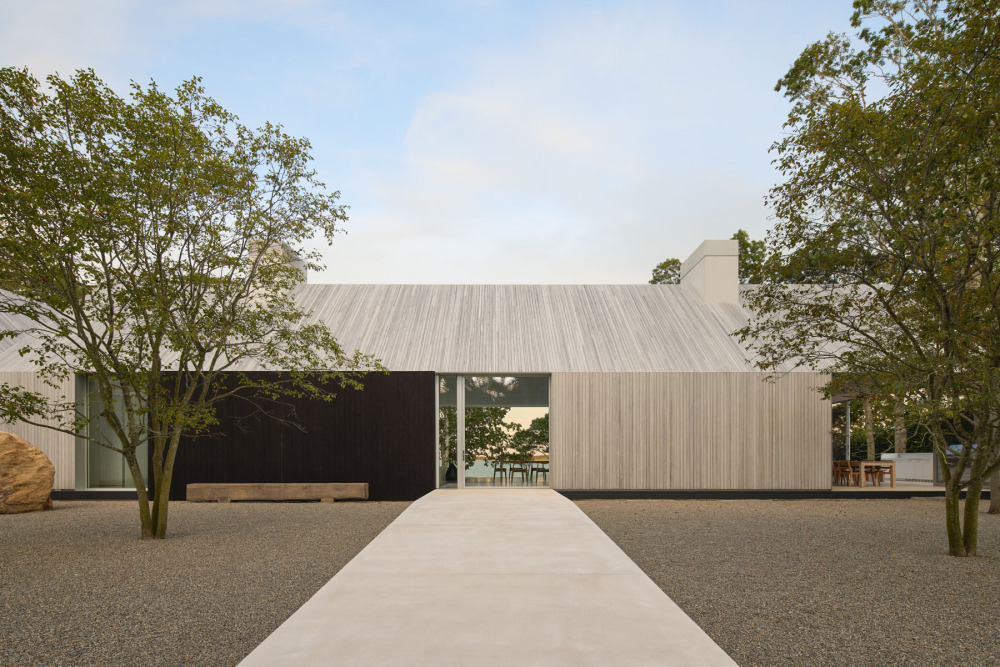
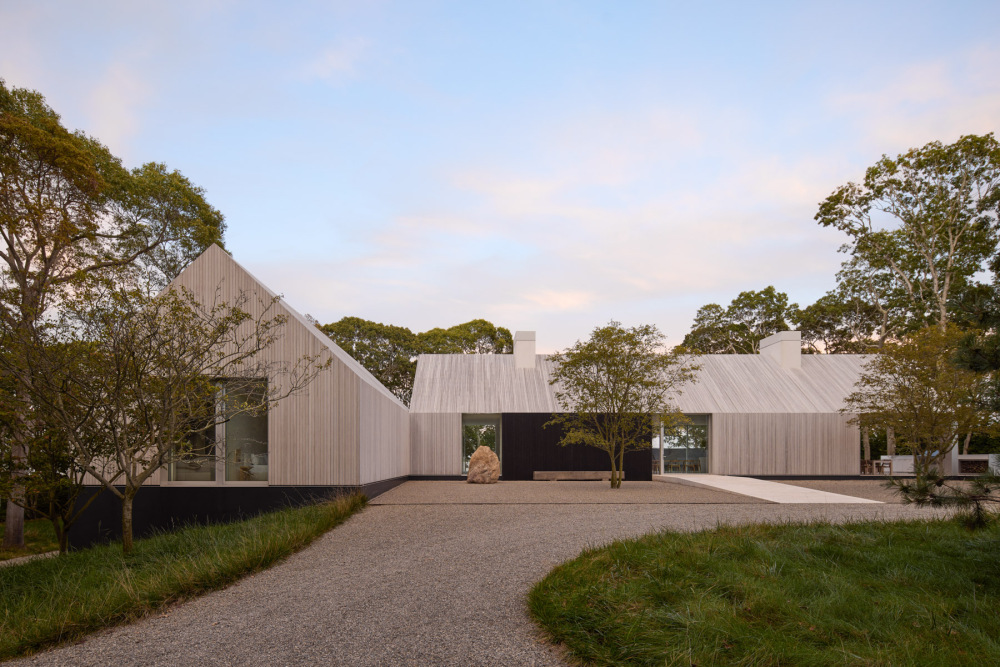
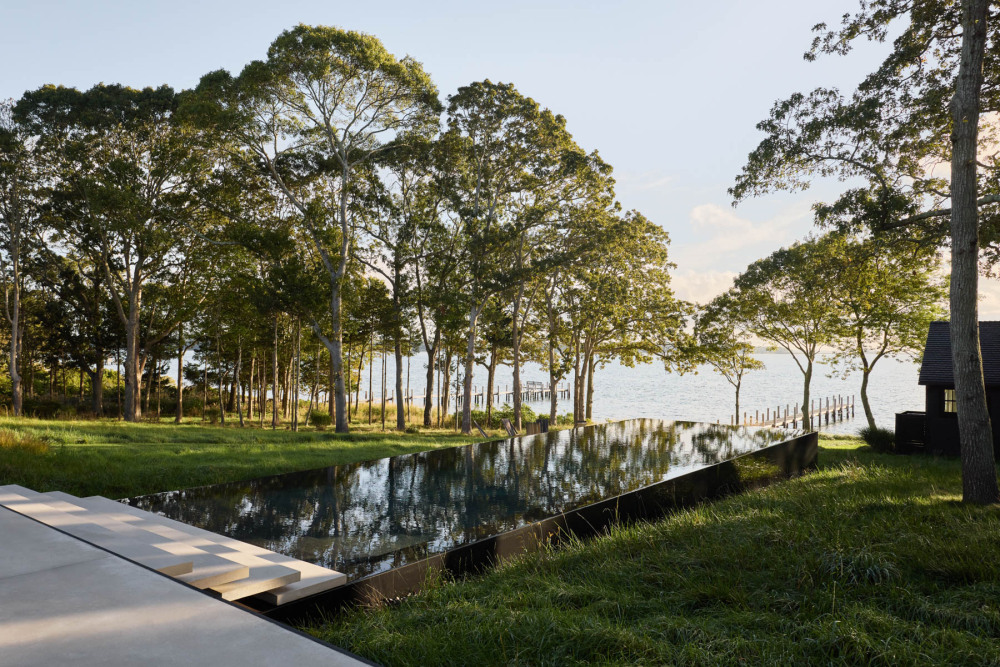
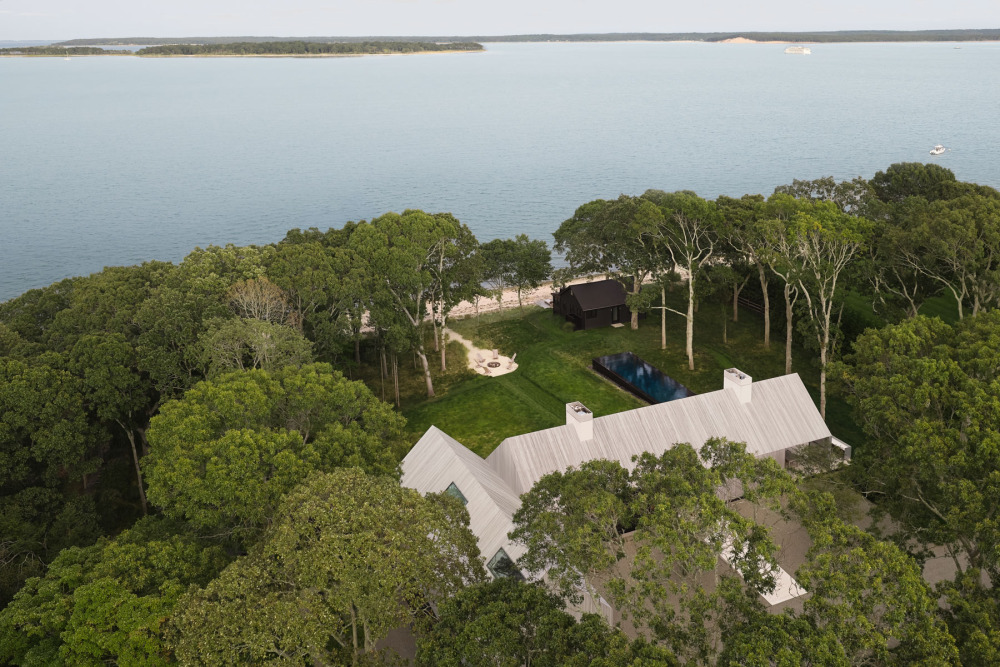
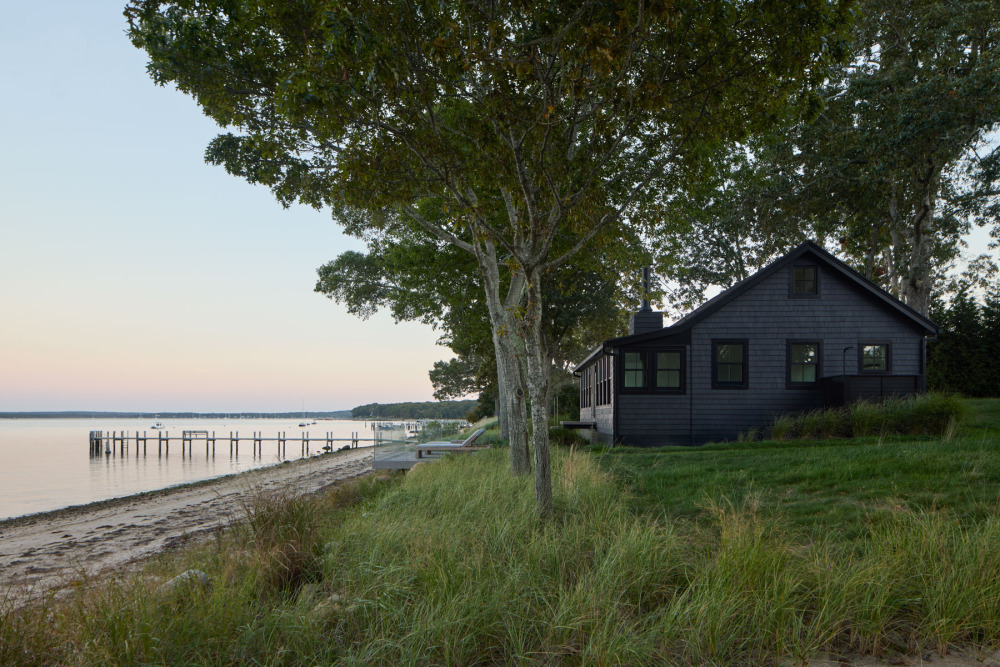
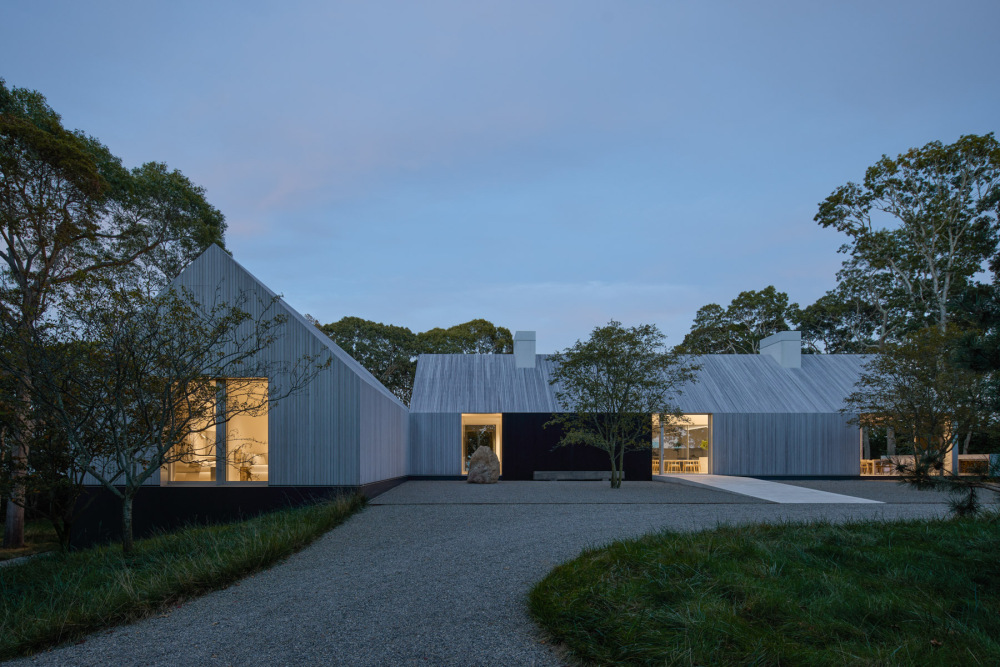
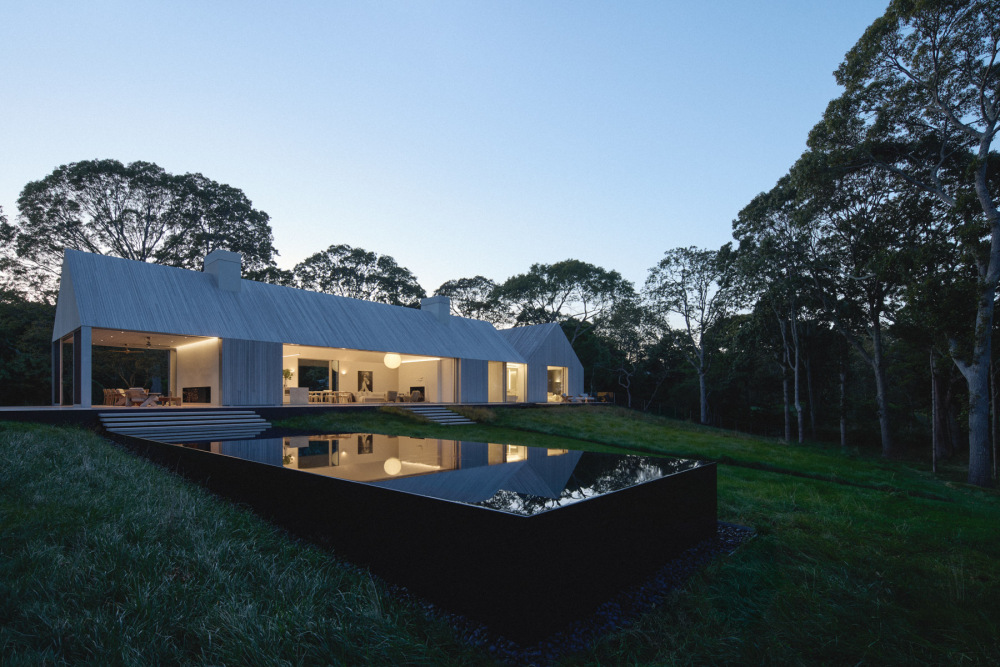
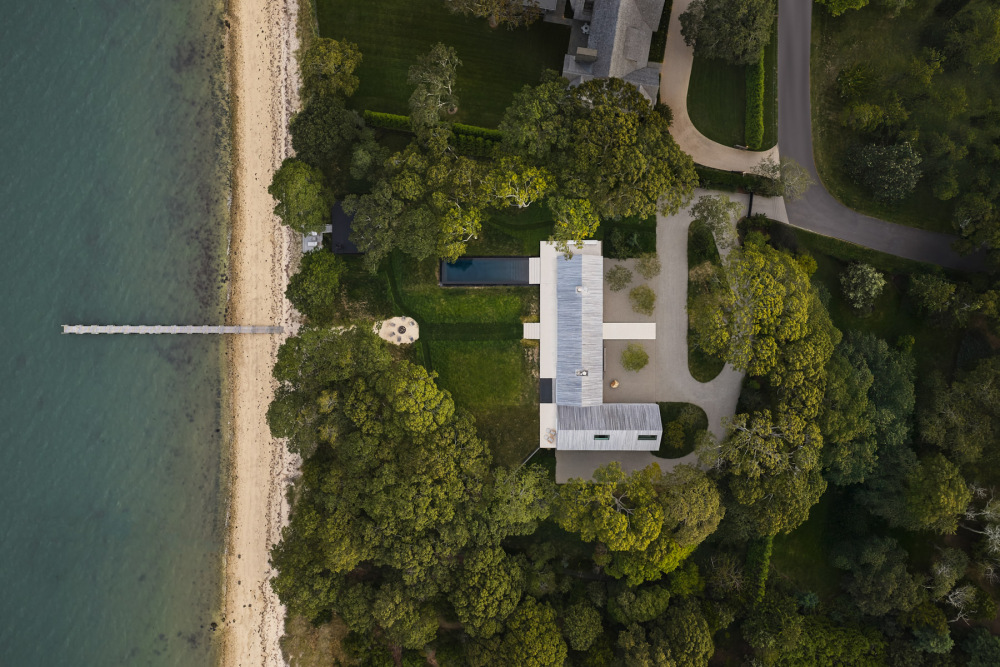
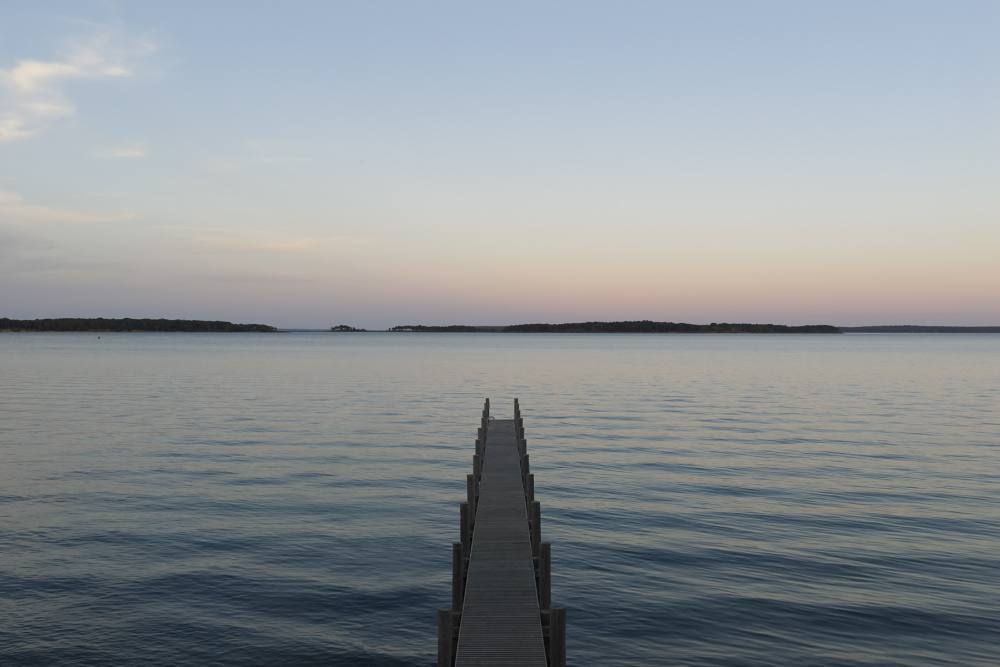
Spatially, the setback unlocks a generous landscape between house and water. A pre-existing dock extending east into the bay became a datum for the project. The architects aligned the house perpendicular to it, with a pool tracing a parallel line. Together with a refurbished cottage, now serving as a waterfront guest suite, these elements create a composed sequence from entry to shoreline. The effect is expansive yet controlled, allowing privacy without retreating from the view.Inside, the house is organised as two perpendicular wings forming an L-shaped plan, with more social functions clearly separated. This arrangement allows for adaptability and ease of movement, while large expanses of glazing draw in light and frame the land and seascape. In the living room, a 12-metre opening can be fully retracted, fulfilling what Parker describes as a desire to “welcome the breeze” and connect directly with the bay. Even the most private rooms maintain visual and environmental connection to the outdoors, which is a result of careful siting and aperture placement.Regarding how the house might be read in 100 years’ time, the focus turns to longevity – that it endure as a project that’s emotive in its use, adaptable in its distinction between public and private spaces and resilient.