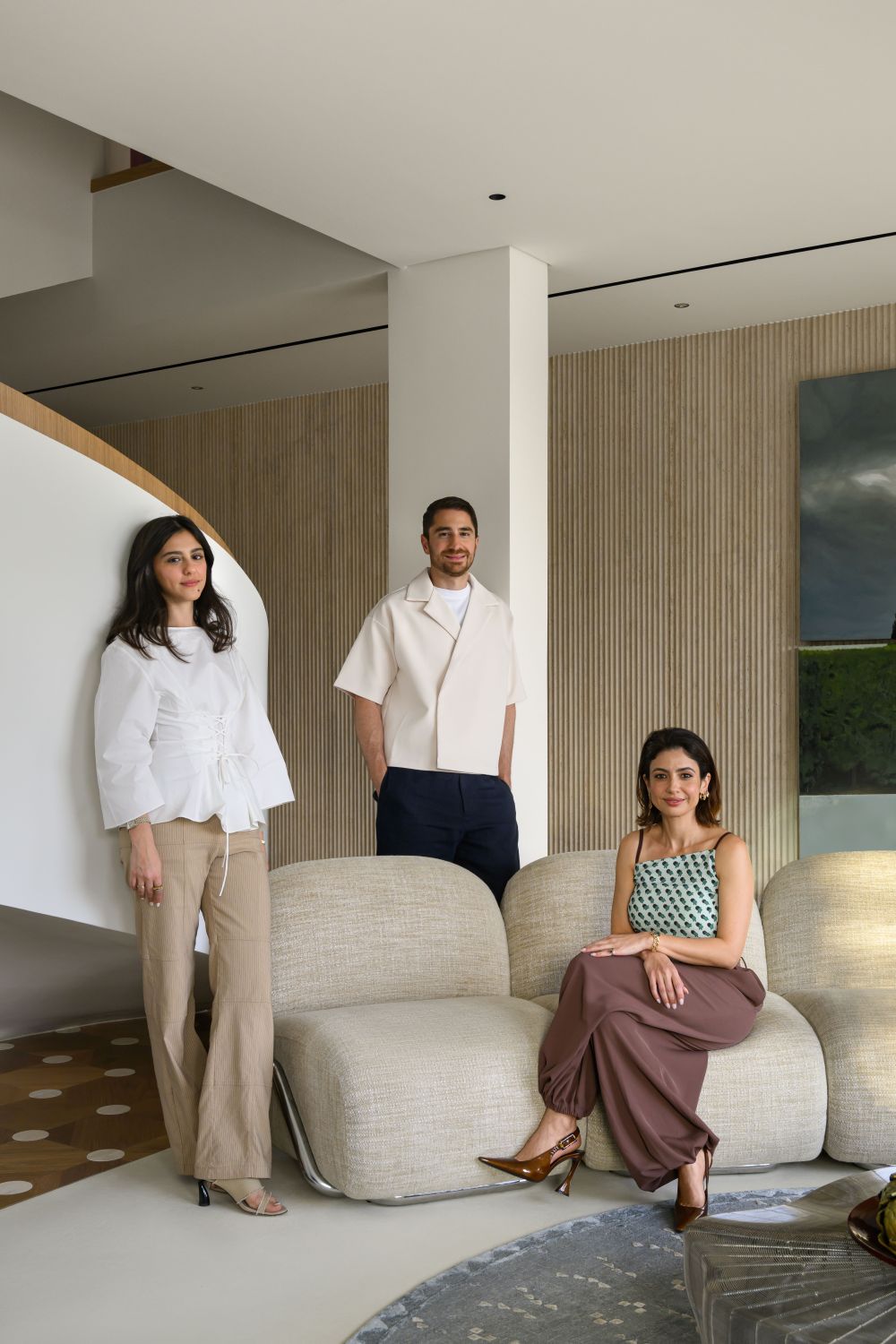
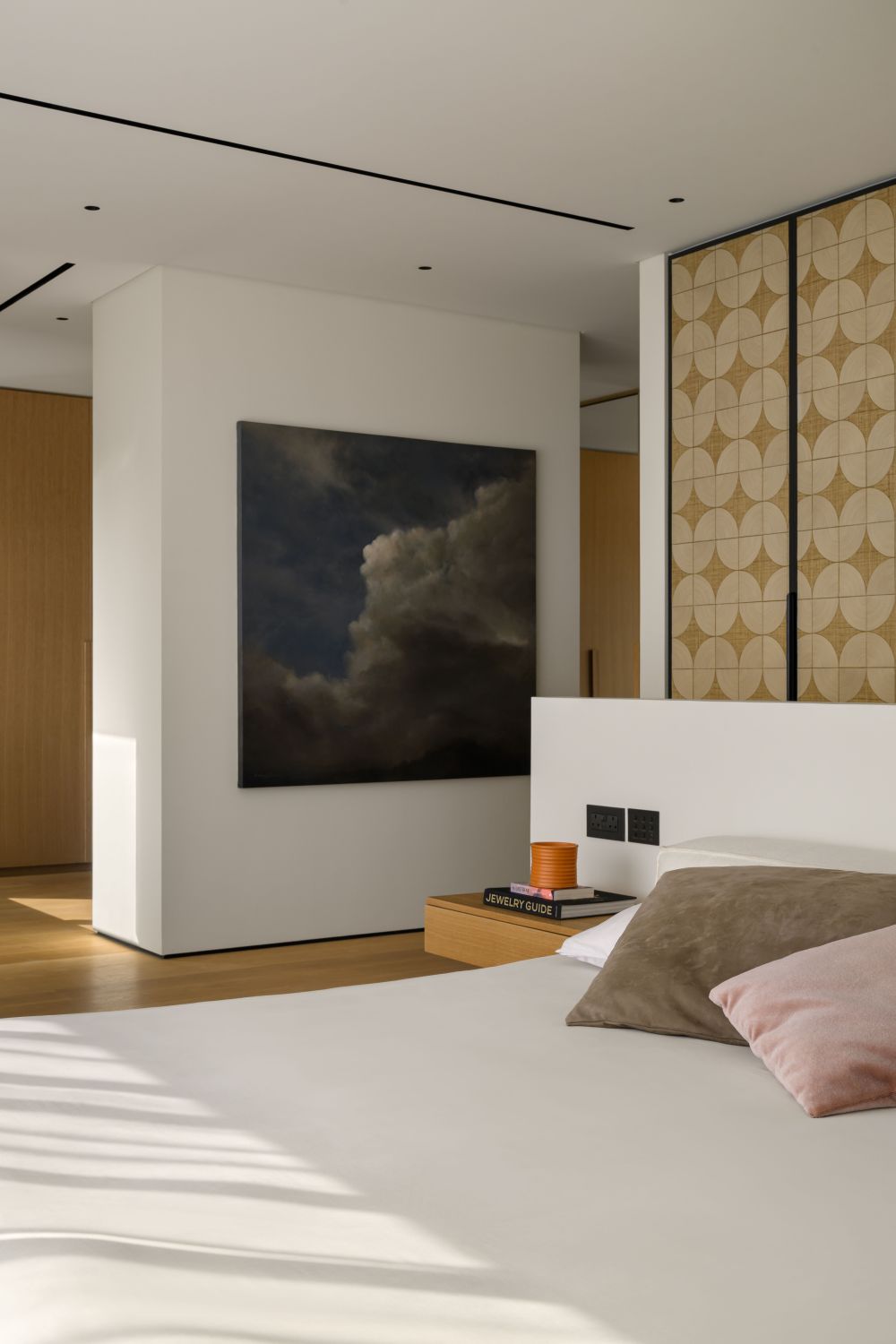
Designing for couples often means navigating opposing tastes. In this Dubai family home by Nakkash Design Studio, those differences were especially distinct. The wife, founder of jewellery brand Maveroc, was drawn to bold, sculptural interiors with expressive details, while her husband, who works in finance, preferred cleaner lines, quieter tones and a more restrained aesthetic.
“The challenge was not to compromise between these two approaches, but to hold them both honestly within the same space, creating a home that feels balanced, intentional, and deeply personal,” says AD100 designer Omar Nakkash. That balancing act shaped every part of the six-bedroom, 420-square-metre property – but so did the realities of everyday life. Home to a family of five, three young boys and a dog, the house needed to support a lifestyle that is both energetic and deeply social. Open-plan living spaces, a generous kitchen and fluid communal areas were designed to accommodate that rhythm, while more intimate rooms create moments of retreat.
The original architecture, however, worked against that vision. Previously heavily compartmentalised, the villa blocked natural light and made the home feel far smaller than it was. Nakkash and his team removed walls, reconfigured the layout and made significant structural interventions to completely rethink how the home functioned. “The architecture was the problem we were solving,” he says. One of the most technically complex changes involved reinforcing the structure after removing the load-bearing walls that surrounded the original staircase. The intervention was demanding, but central to the project’s spatial strategy.
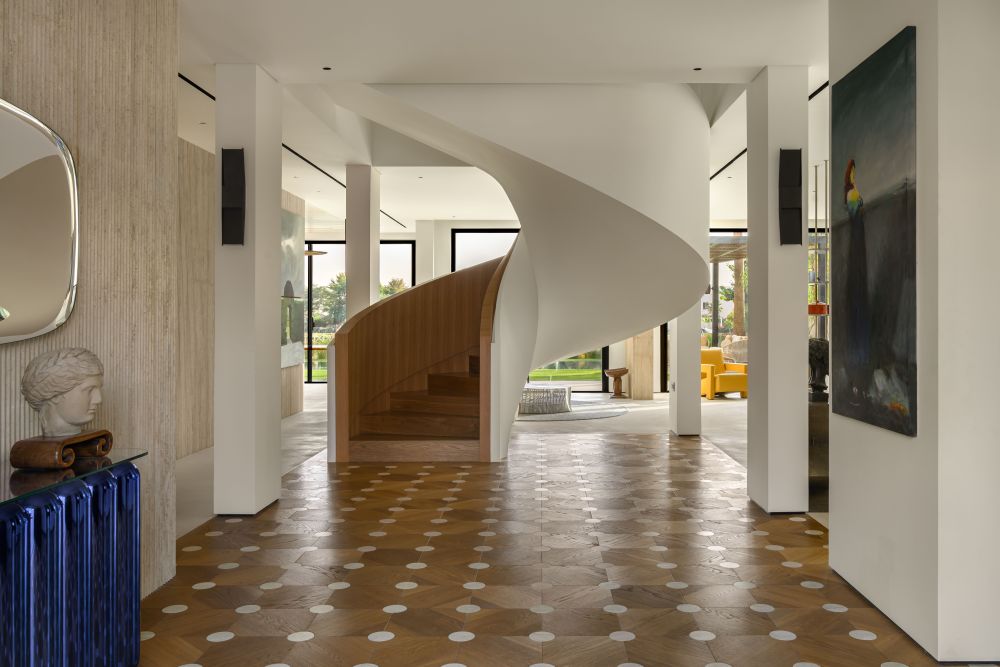
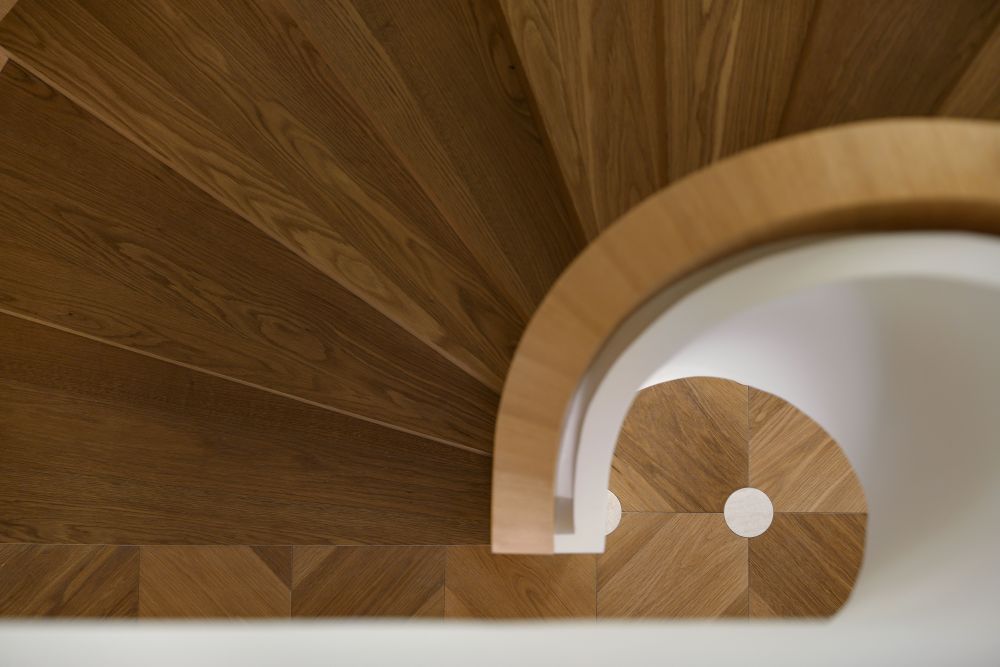
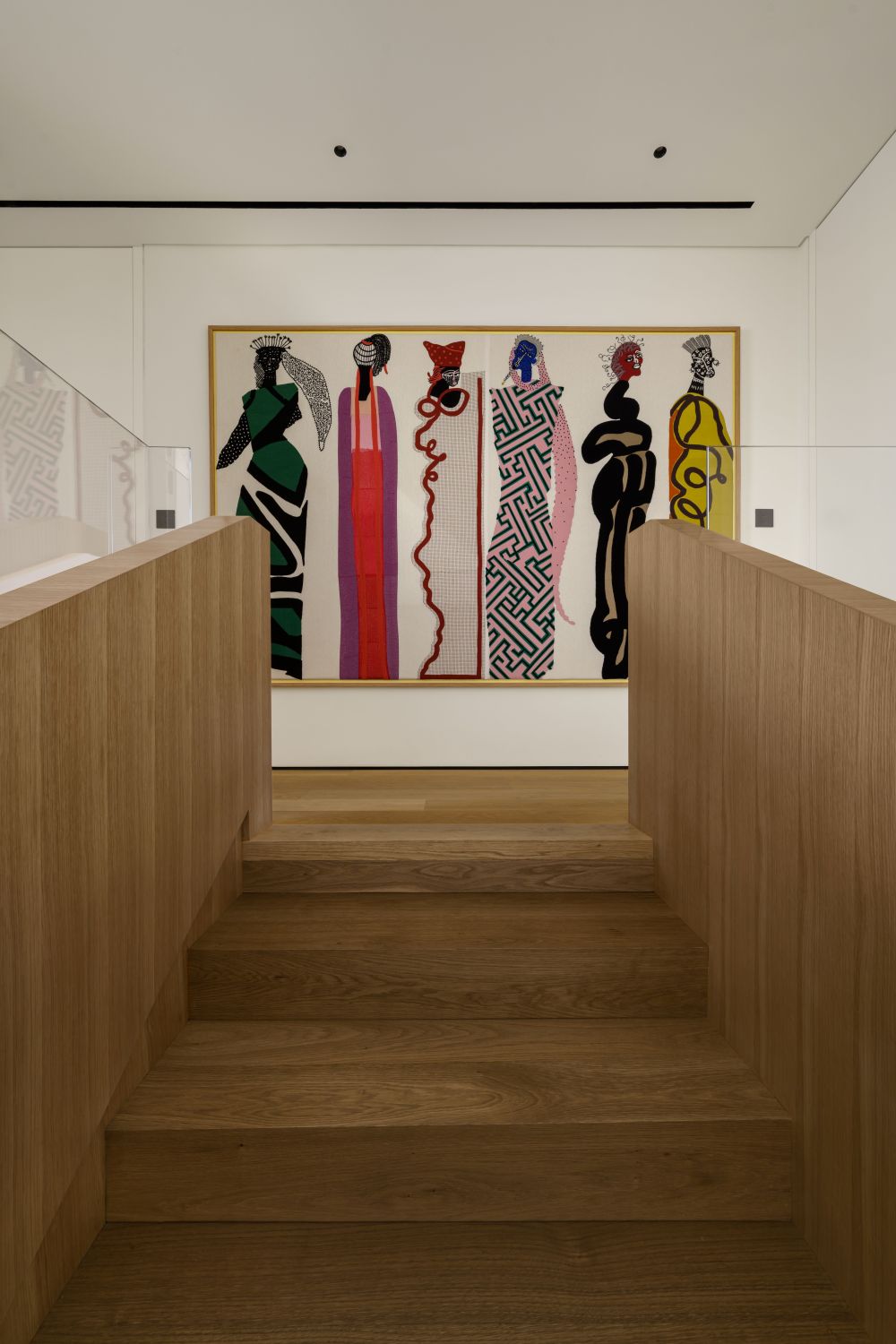
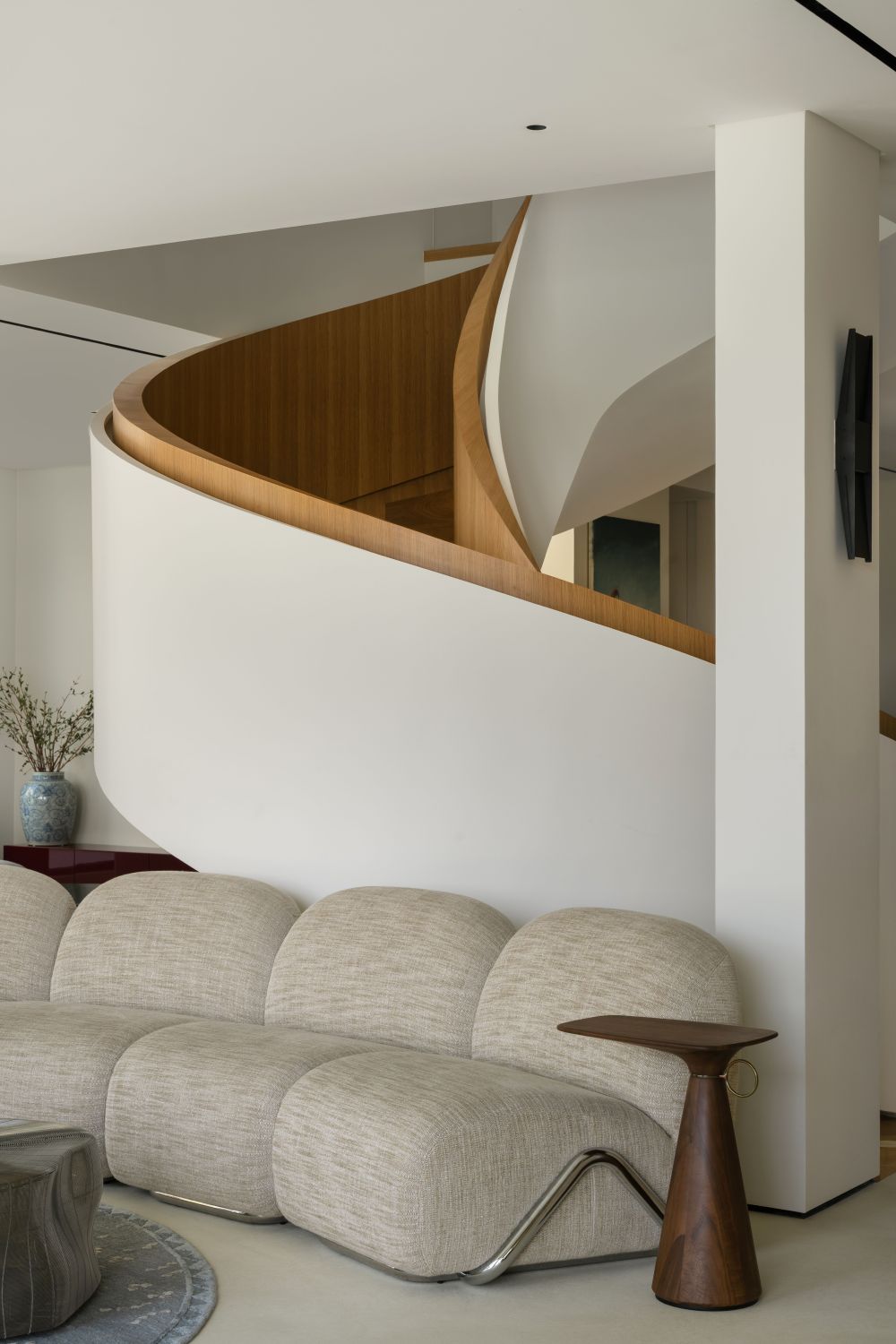
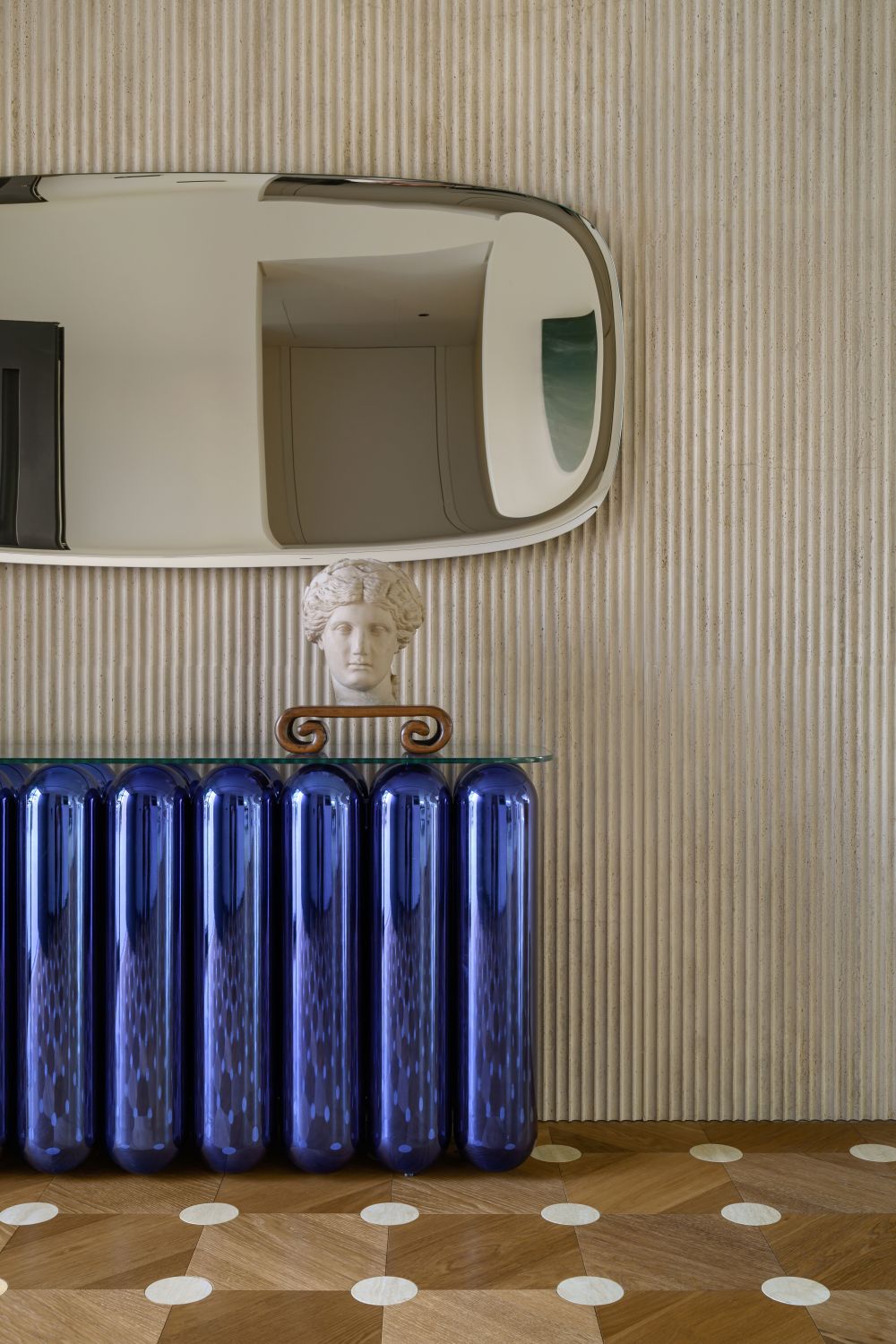
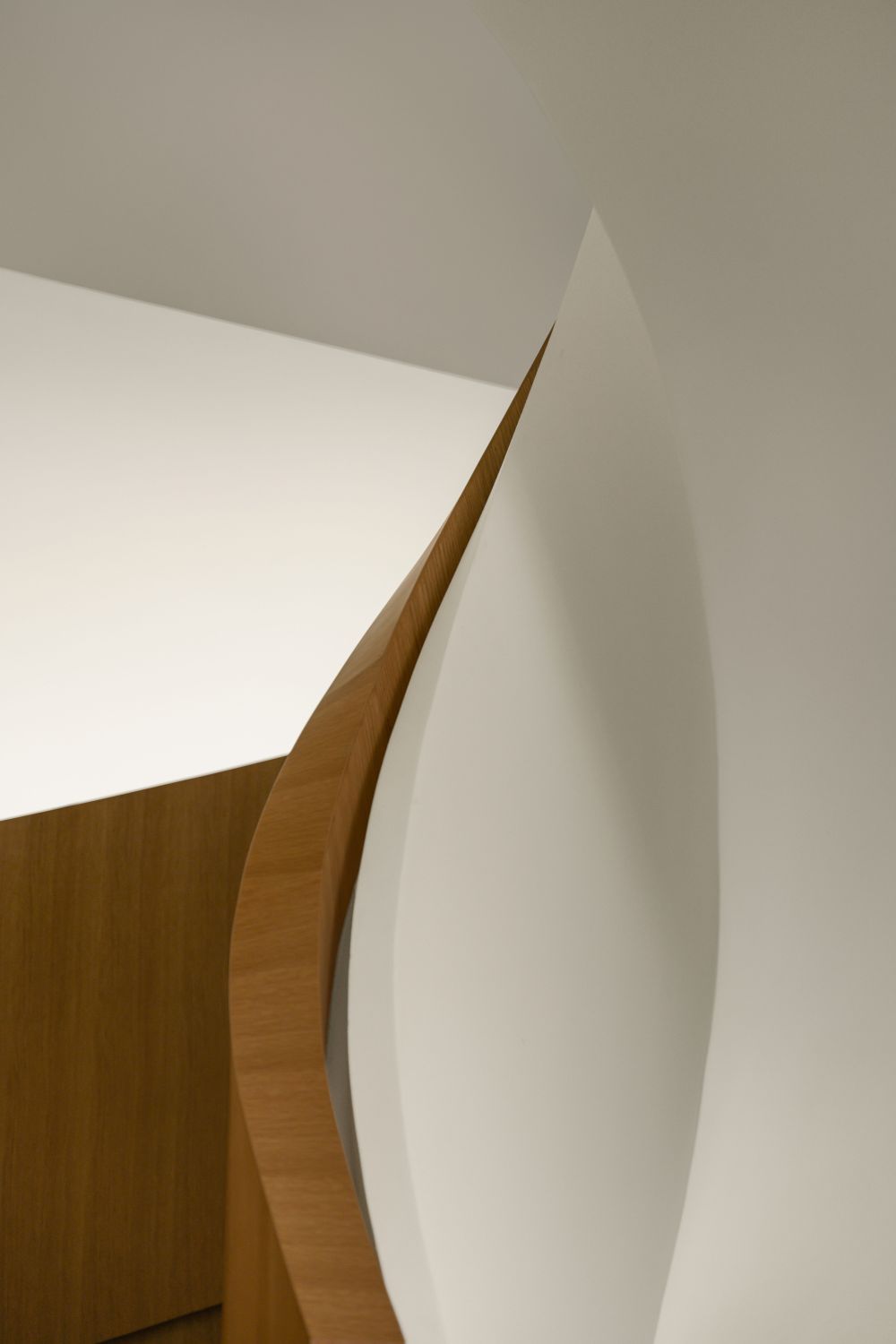
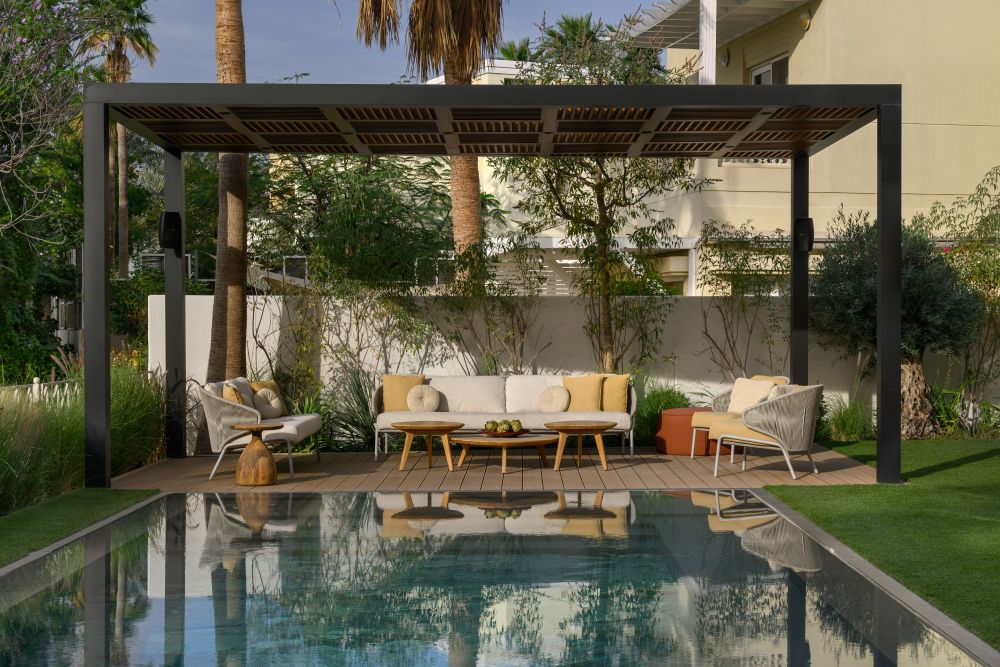
And so at the centre of it all is that staircase. Conceived as a sculptural focal point visible from the moment you enter, it organises the entire home. The approach is paved in Carré Sole parquet with travertine inlay – a detail that creates a deliberate threshold between arrival and the interior. Beyond it, views open towards the garden, pool and lake, setting the tone for a home designed to feel “spatially continuous, but never uniform.”
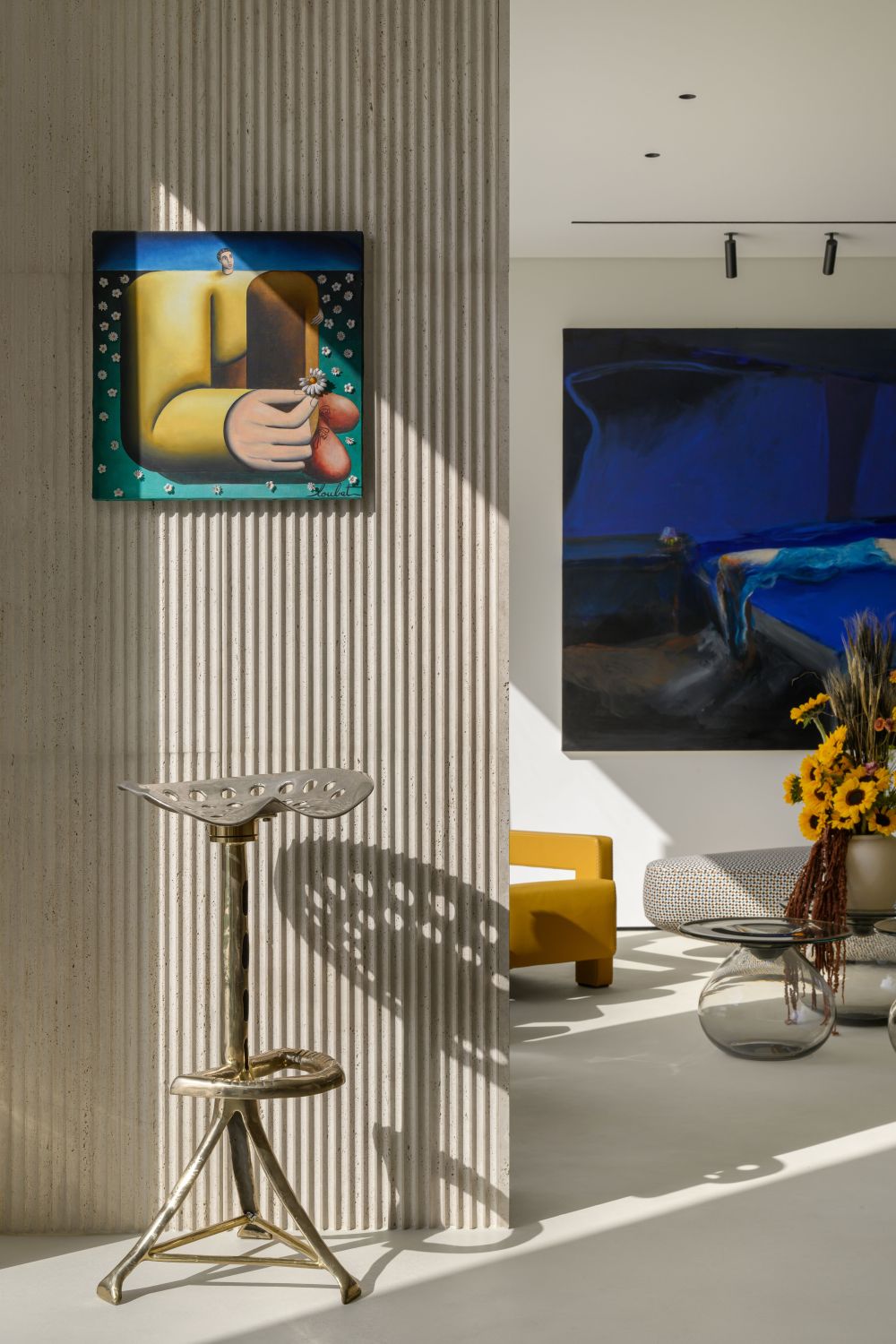
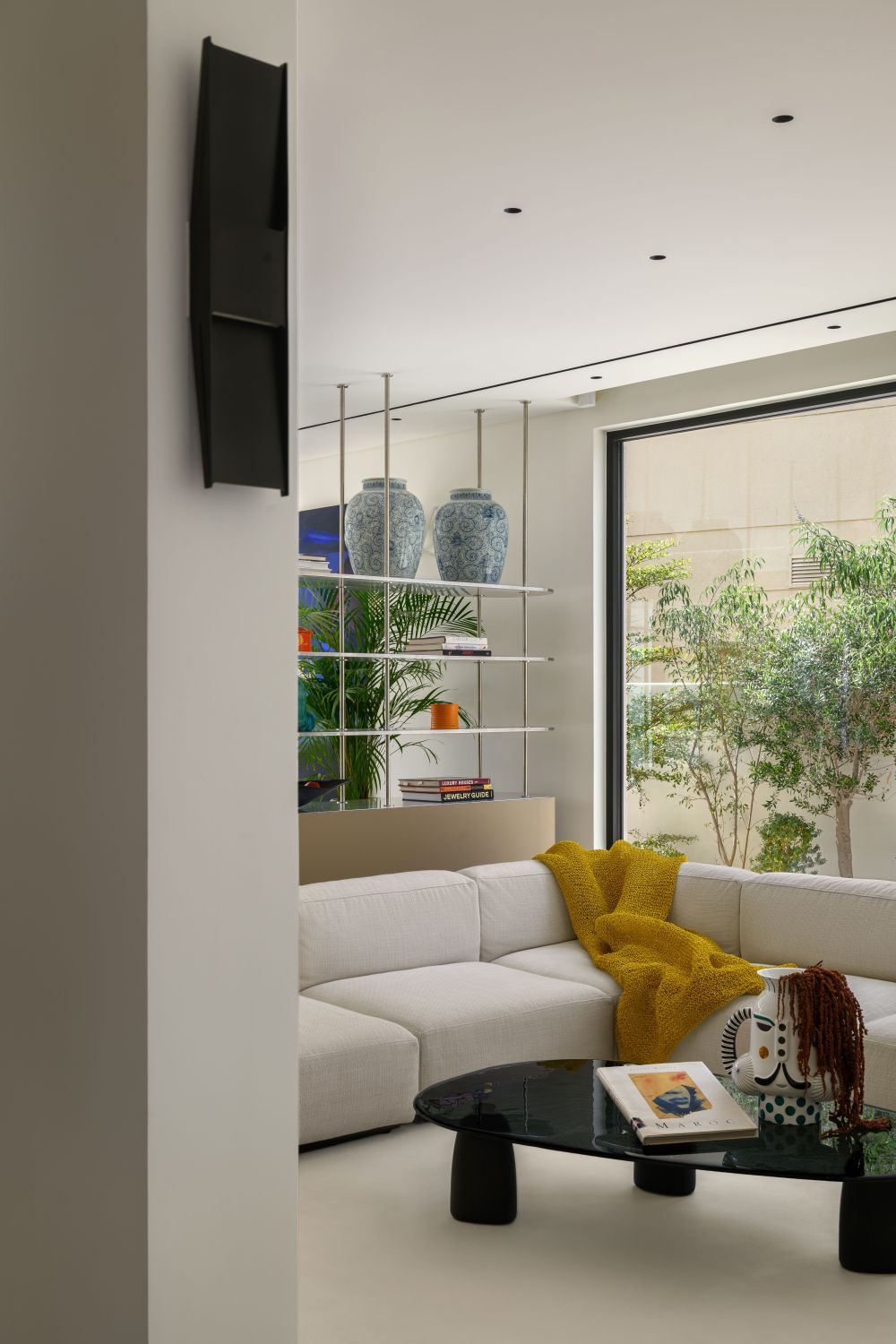
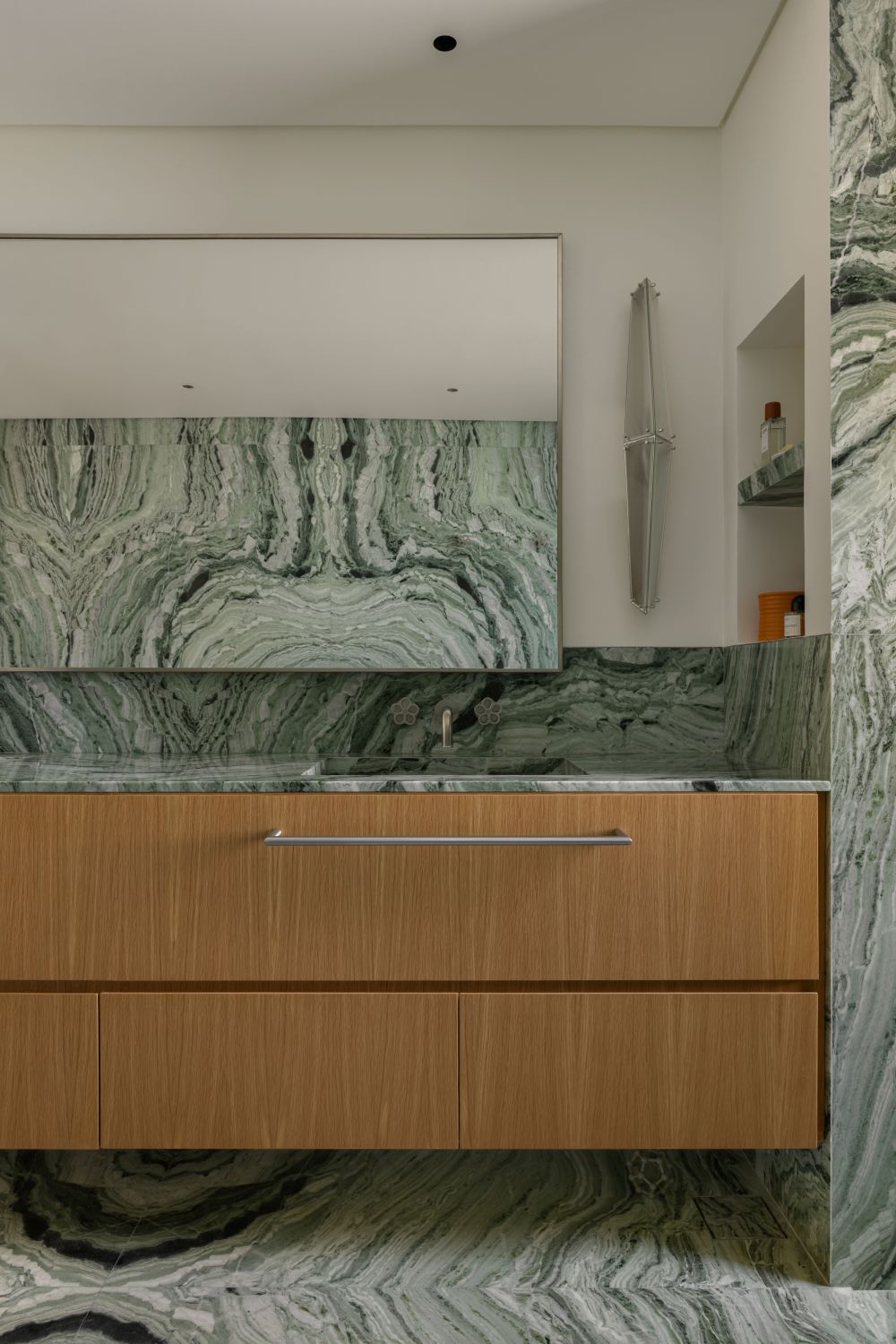
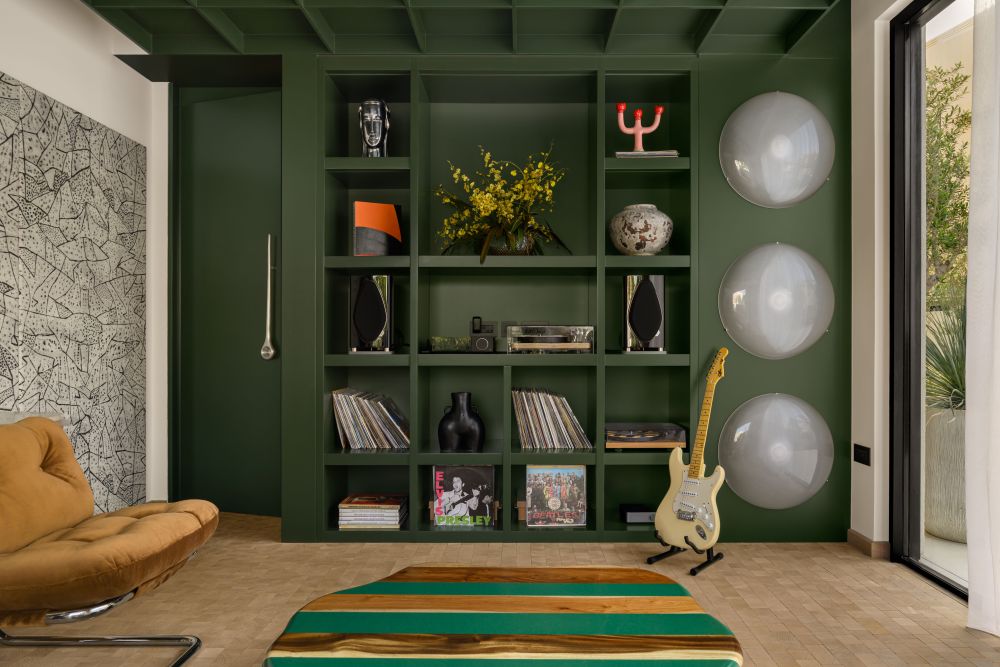
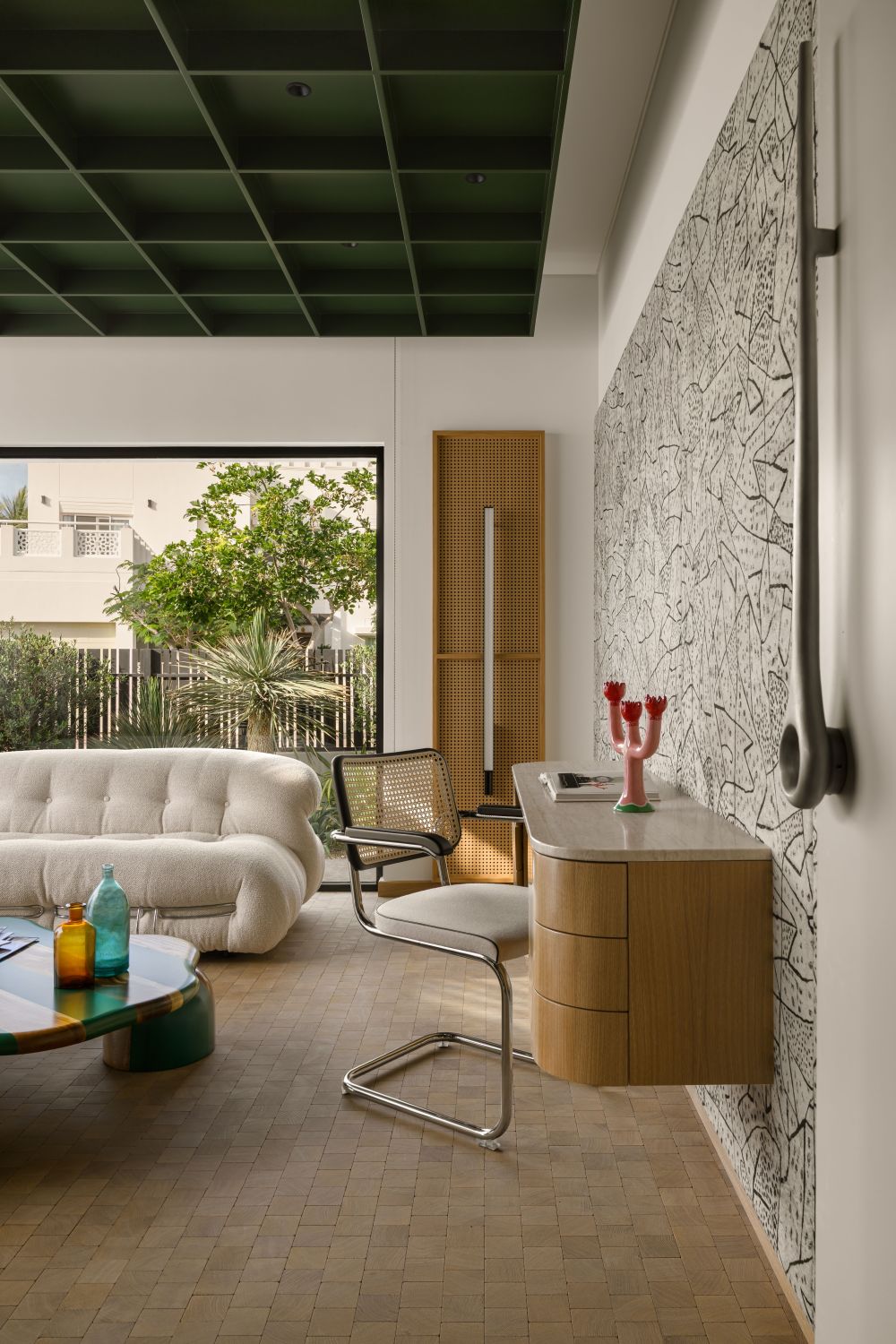
That same philosophy carries into the material palette. Microcement floors, travertine and neutral plaster create continuity throughout the house, while individual spaces introduce moments of contrast through patterned wood, reeded stone and bold colour. Two of the most craftsmanship-heavy interventions are easy to miss at first glance: reeded travertine wall cladding in the entrance and Pavé de Paris flooring in the concealed lounge, referencing the end-grain wood blocks historically used to pave European city streets. “Both are labour-intensive techniques that don’t read as decorative gestures so much as considered material choices that reward close attention,” explains Nakkash.
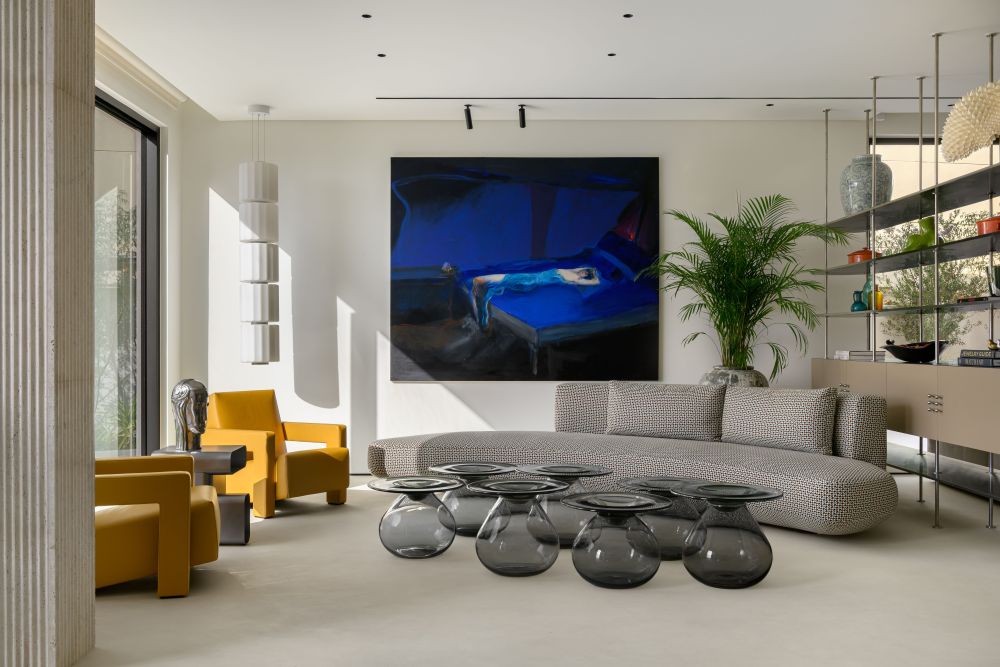
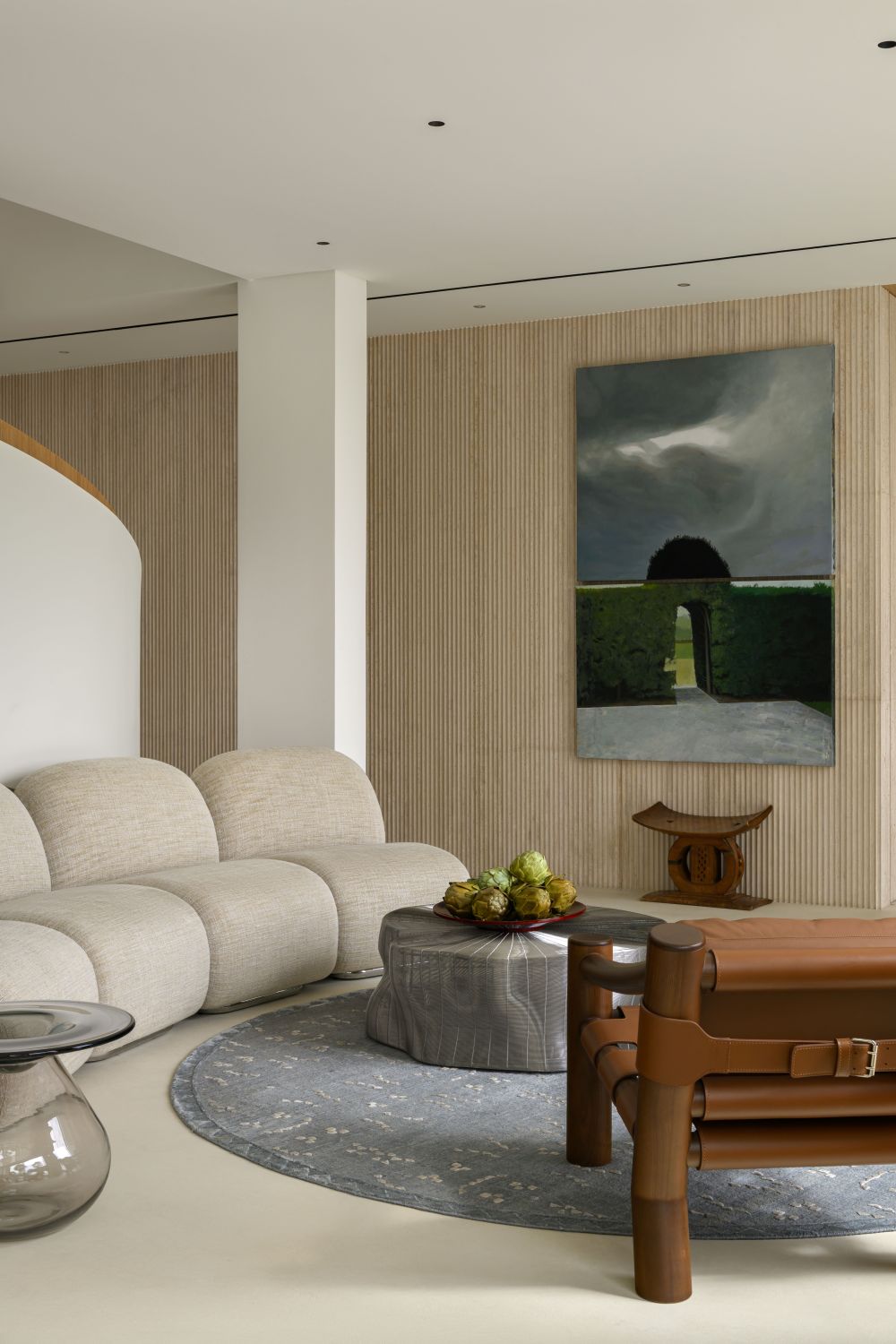
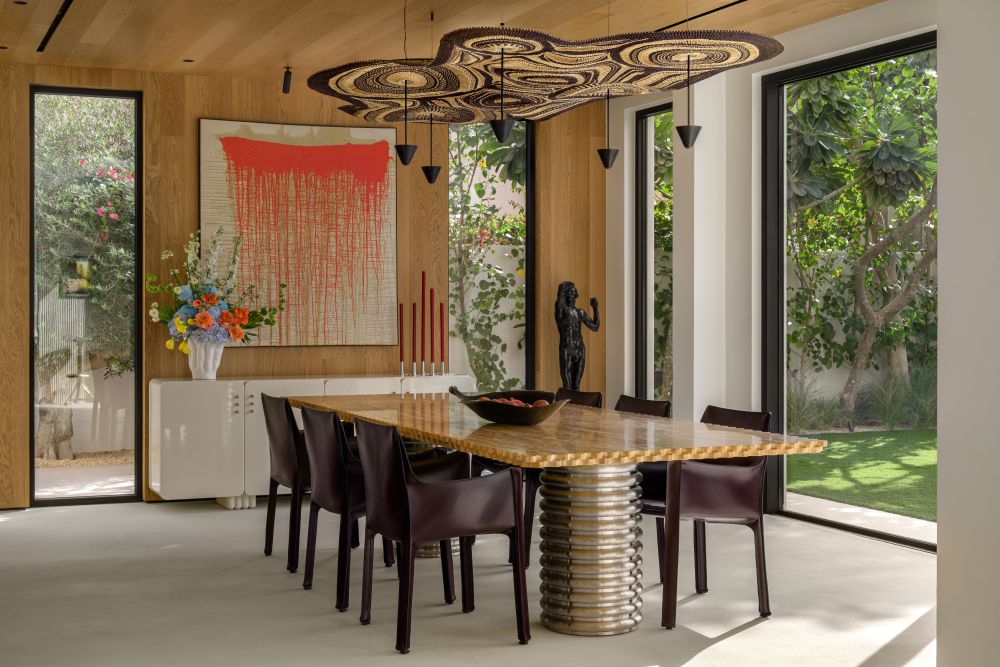
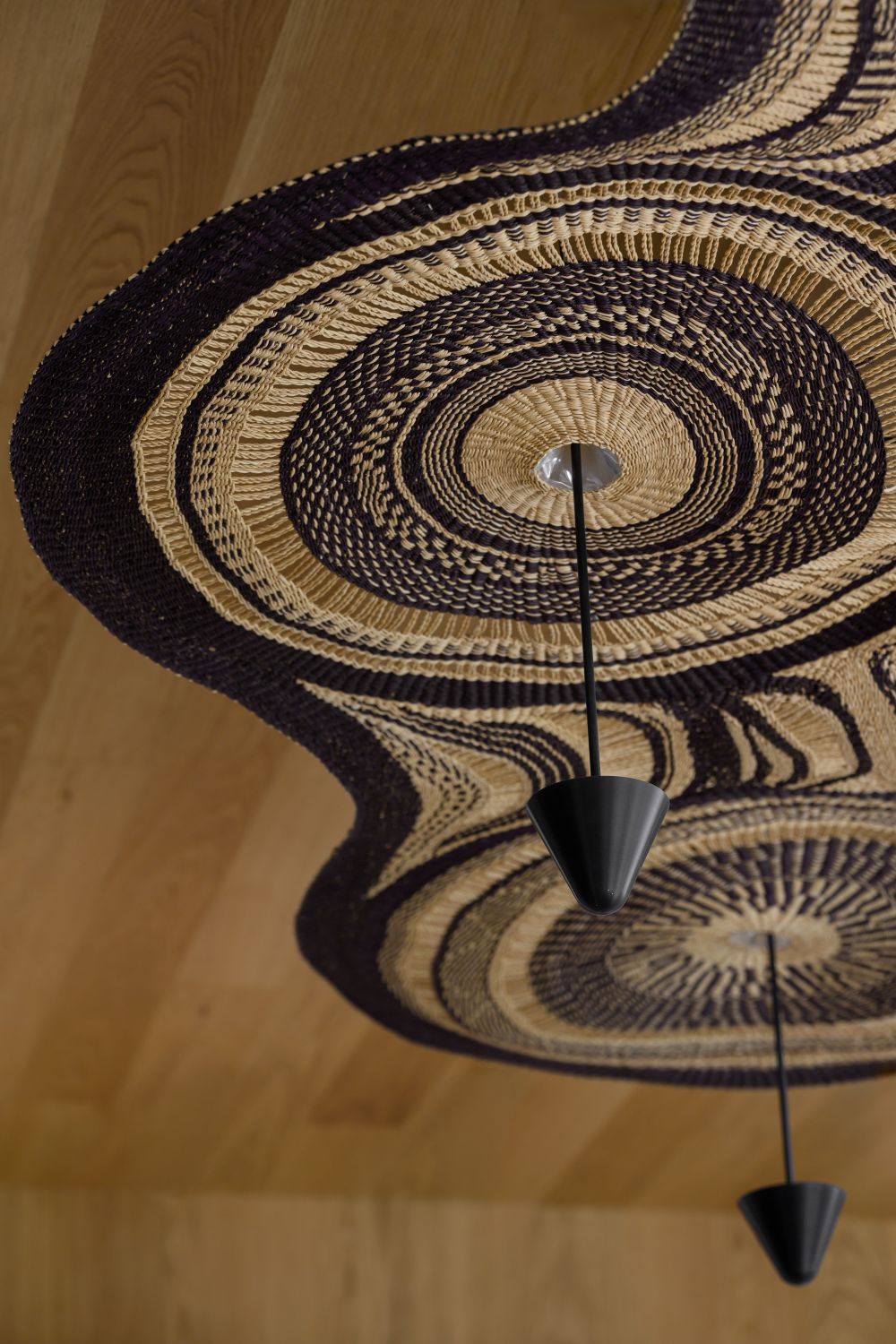
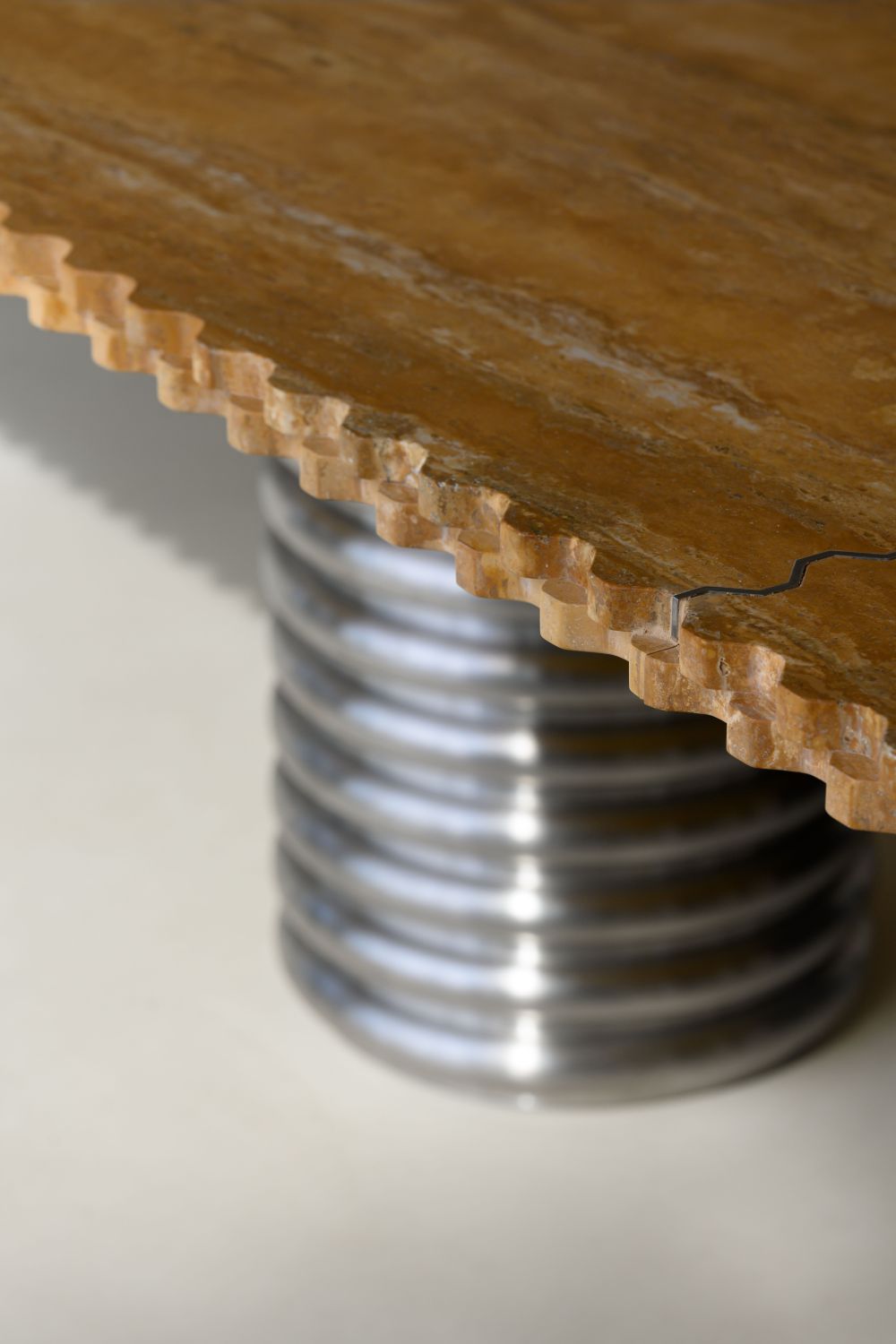
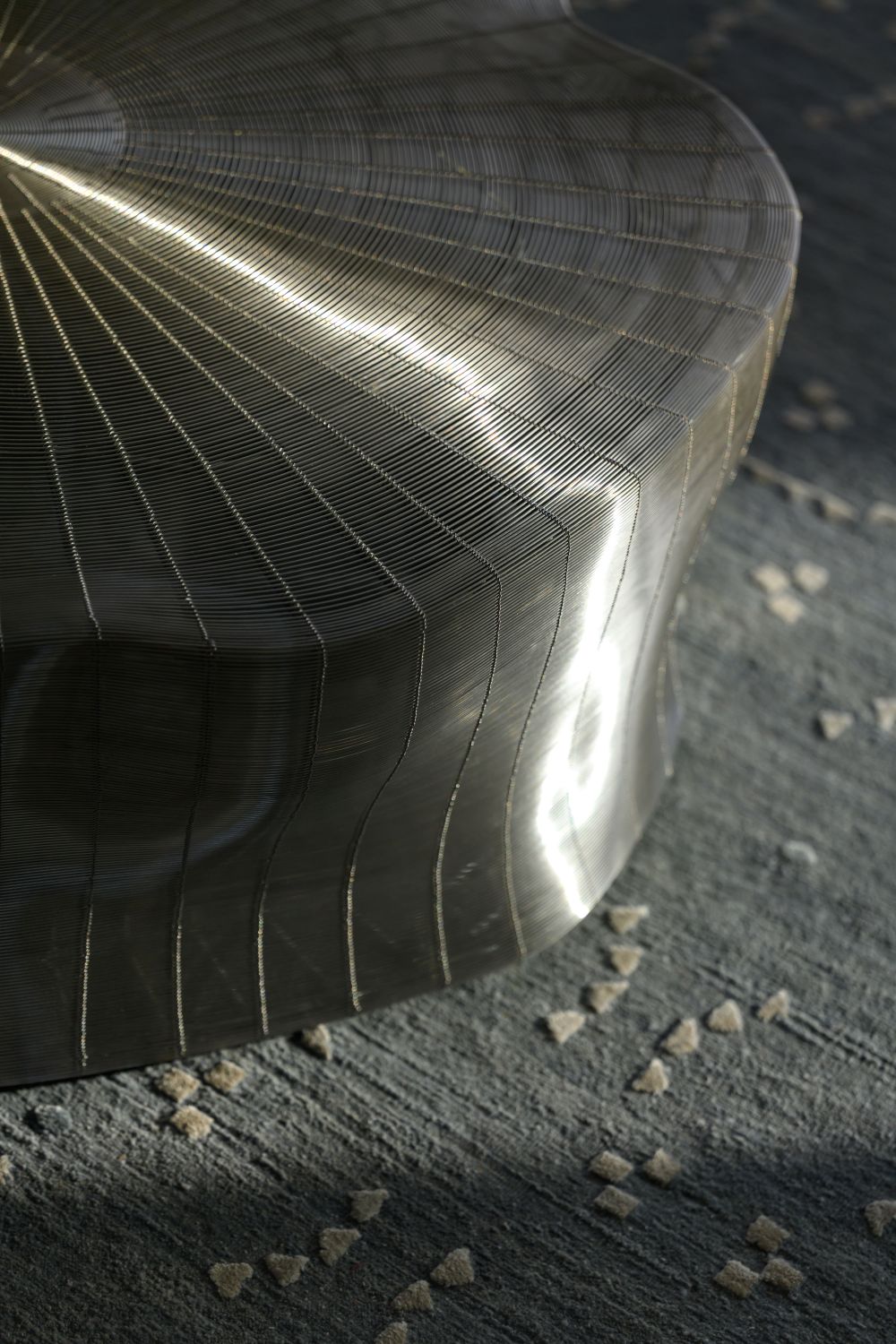
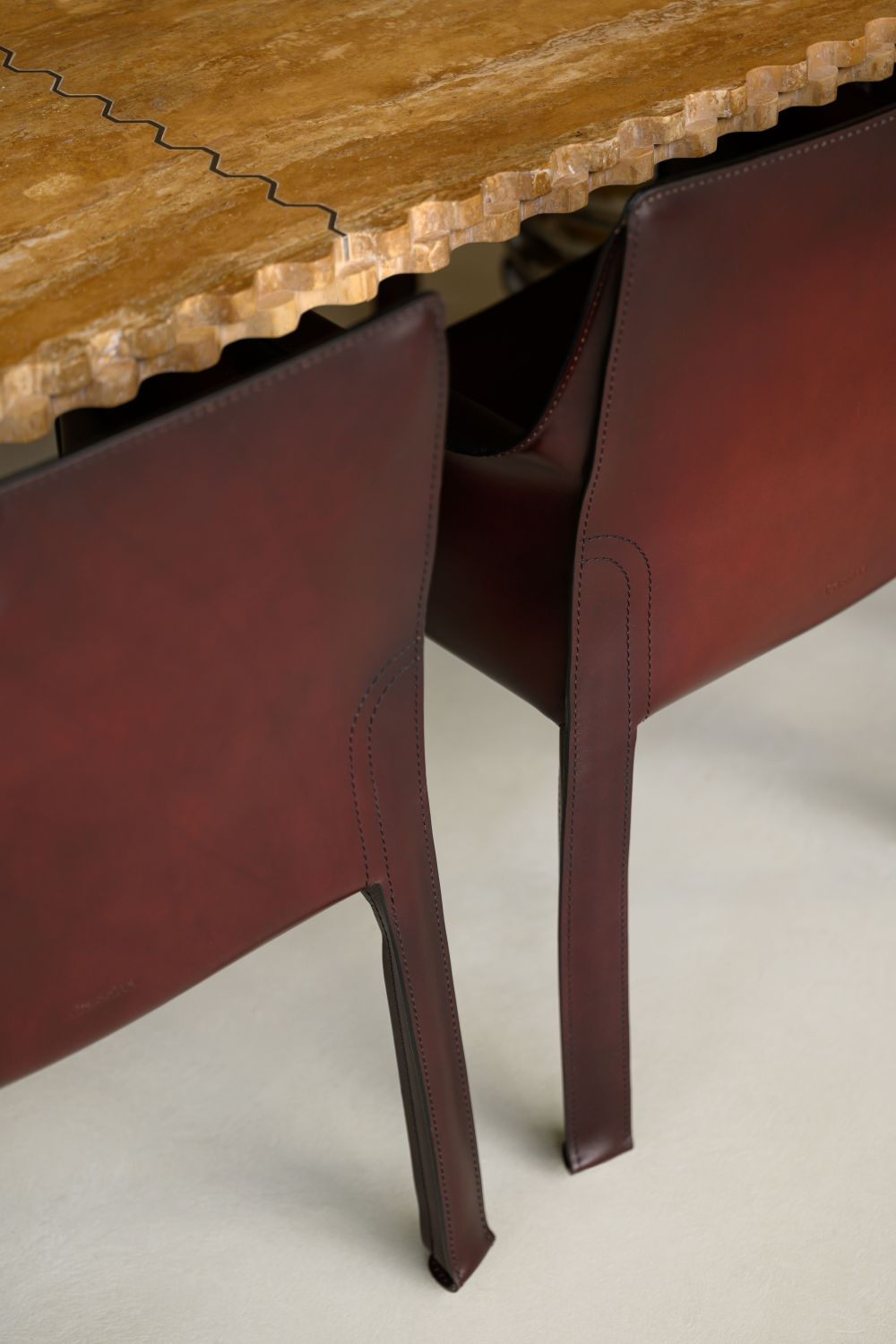
The dining room captures the balance between precision and warmth particularly well. A custom dining table with a geometric yellow travertine top and brushed stainless steel bases was designed in-house and informed by the sculptural language of the owner's jewellery brand. Above it hangs a chandelier by PET Lamp, handcrafted in Ghana – a piece Nakkash first encountered at Salone del Mobile’s Alcova exhibition. Nearby, a circular rug by Iwan Maktabi, a curved modular sofa by Tacchini, Mush coffee tables by Jader Almeida and a yellow leather Utrecht armchair by Cassina soften the stronger architectural lines. “Every piece was selected, or designed, for a reason specific to this house. Nothing was pulled from a catalogue to fill a gap.”
Then there’s the room that most guests likely never expect. Hidden behind a flush door is a darker, moodier lounge designed around the family’s love of music and late nights with friends. “The listening room or speakeasy was always conceived as a space you discover, not one you are shown,” says Nakkash. “We designed for that reality, not just for how the house is experienced during the day, but for how it lives after hours.”
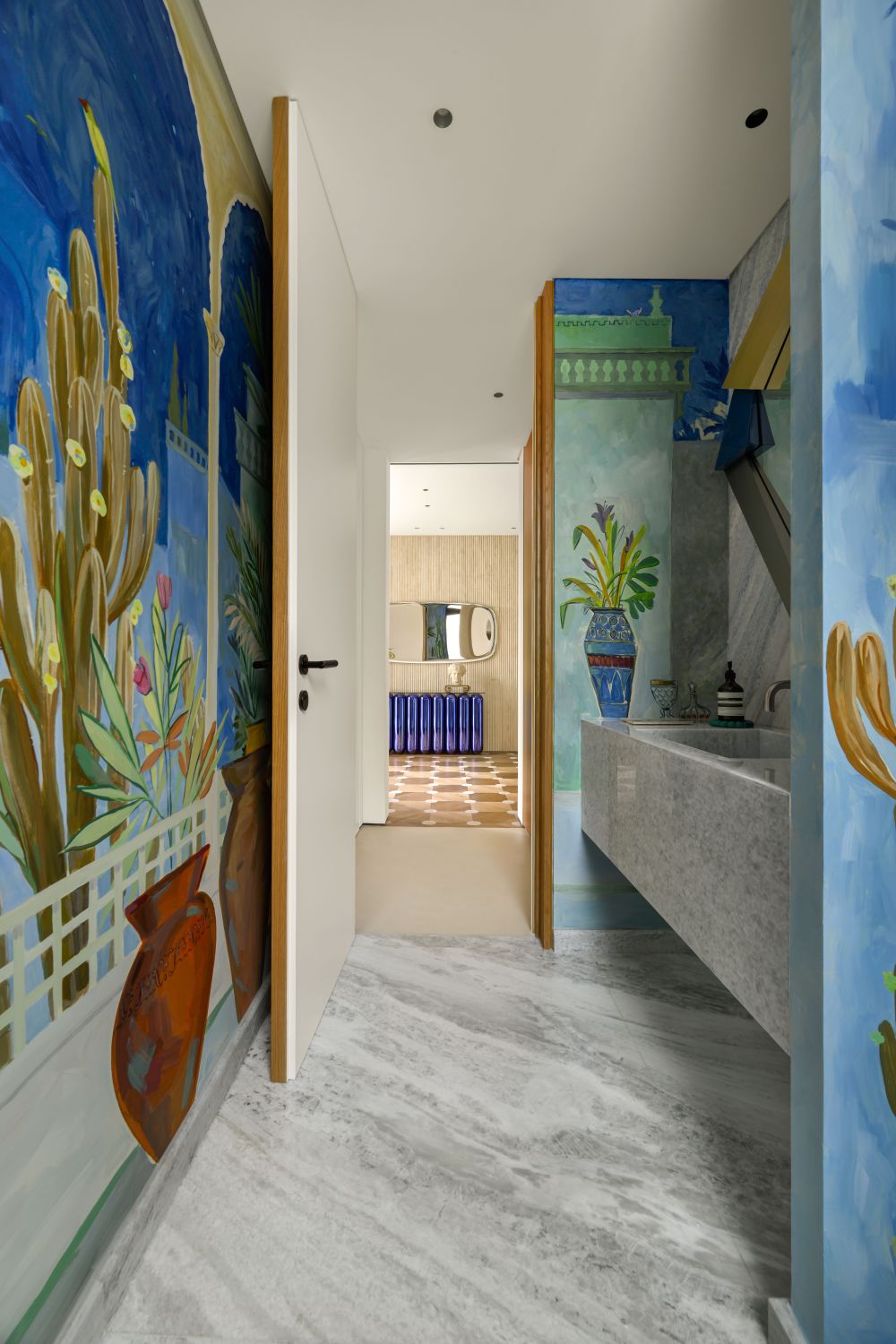
Even the smallest room in this Dubai family home carries narrative weight. Drawing from the homeowners’ Moroccan roots, the powder room references Henri Matisse’s 1912 trip to Morocco – the visit that transformed his relationship with colour. It’s one final reminder that in this home, even the boldest gestures feel deeply personal.
Natelee Cocks - 转载自:AD(admiddleeast)
- 图片@AD(admiddleeast)
- 国家:美国
- 编辑:序赞网
- 翻译:序赞网
- 阅读原文
|
|