Private Residence | Kelly Hoppen | 2026 | 英国
Kelly Hoppen's new partnership with MAVI - a collaboration set to redefine luxury interiors with the science of longevity
Having transformed the face of the design industry with her instantly recognisable East Meets West aesthetic, Kelly is one of the most sought-after creatives of her generation. Known for creating refined, emotionally intelligent interiors defined by clean lines, neutral palettes, tactile materials and an instinctive sense of balance, her work spans private residences, hotels, superyachts, commercial developments and private jets worldwide. Her spaces are celebrated not only for their beauty, but for the way they make people feel: calm, grounded and restored. It is precisely this approach to design that made her the natural partner for MAVI.
Founded by Kas Bordier, MAVI emerged from a simple but increasingly urgent observation: many modern homes are visually beautiful, yet biologically misaligned with the people living in them. After years working across property, wellness and medtech in London, Singapore and Switzerland, Bordier developed MAVI’s proprietary longevity architecture methodology and the MAVI 129™ framework, a system integrating 129 measurable health factors into the built environment, from light exposure and air quality to acoustics, materials and nervous system regulation.
The partnership brings together two distinct but deeply aligned perspectives: Kelly Hoppen’s mastery of timeless luxury interiors and MAVI’s evidence-based approach to designing for human wellbeing and performance. Together, they are creating a new model of luxury living where aesthetics and biology are considered simultaneously from the earliest stages of a project
MAVI x Kelly Hopen’s First Project
A Private London Mews
The first expression of the Mavi x Kelly Hoppen collaboration is a private mews property in London, demonstrating how longevity architecture and luxury interior design can operate as one seamless discipline. Designed room by room with total intention, the residence combines Kelly Hoppen’s refined and emotionally driven aesthetic with MAVI’s evidence-based understanding of how environments influence human health and wellbeing.
Every detail has been considered not only for how it looks, but for how it makes the resident feel, from the way light moves through the space to the materials underfoot, the acoustics of a room and the subtle cues that allow the nervous system to relax. The result is not a clinical environment, but a home where wellbeing is embedded invisibly into the experience of everyday living.
The Entrance Hall
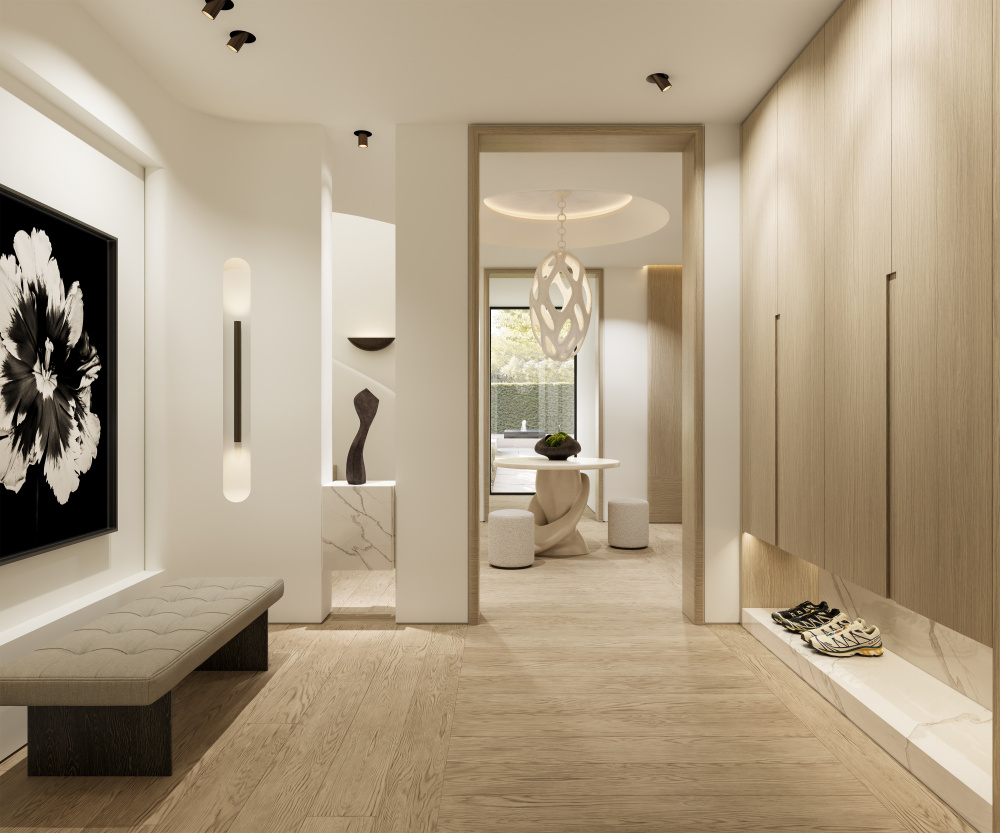
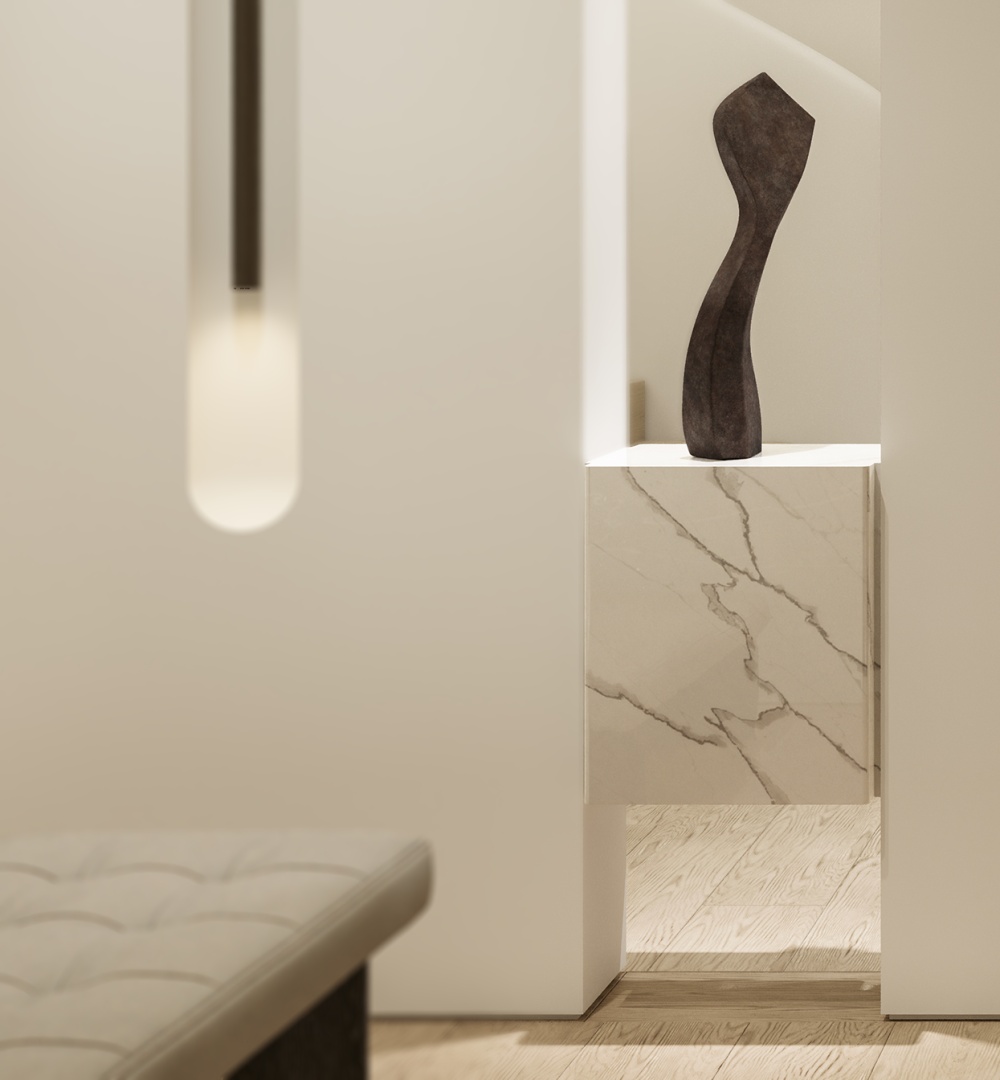
The Design: The home opens into a beautifully composed entrance hall that naturally draws the eye through a peek-through opening where light is softly inset into the wall beyond. Rounded forms and curved detailing feature throughout the space, creating an immediate sense of softness and calm. A palette of warm neutrals, tactile finishes and sculptural lines establishes the grounded atmosphere that carries throughout the home, while discreet integrated storage and a dedicated shoe area allow practicality to sit seamlessly within the design.
The Biology Layer: Research shows curved forms are processed by the brain as safer and less threatening than sharp angles, reducing stress responses by 8-12% before conscious thought has even registered the space. Warm-spectrum lighting at 2700K has been selected to avoid the cortisol spike associated with cooler blue-enriched light, while the dedicated shoe storage helps eliminate up to 30-40% of tracked-in contaminants entering the home.
The Staircase
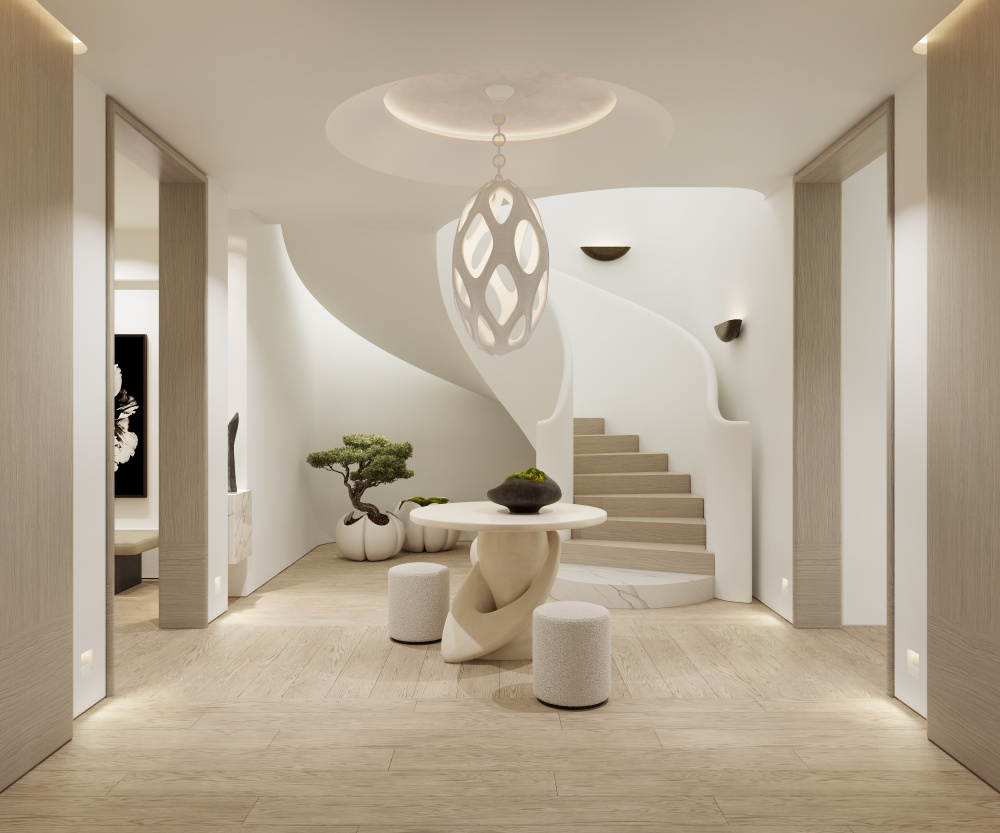
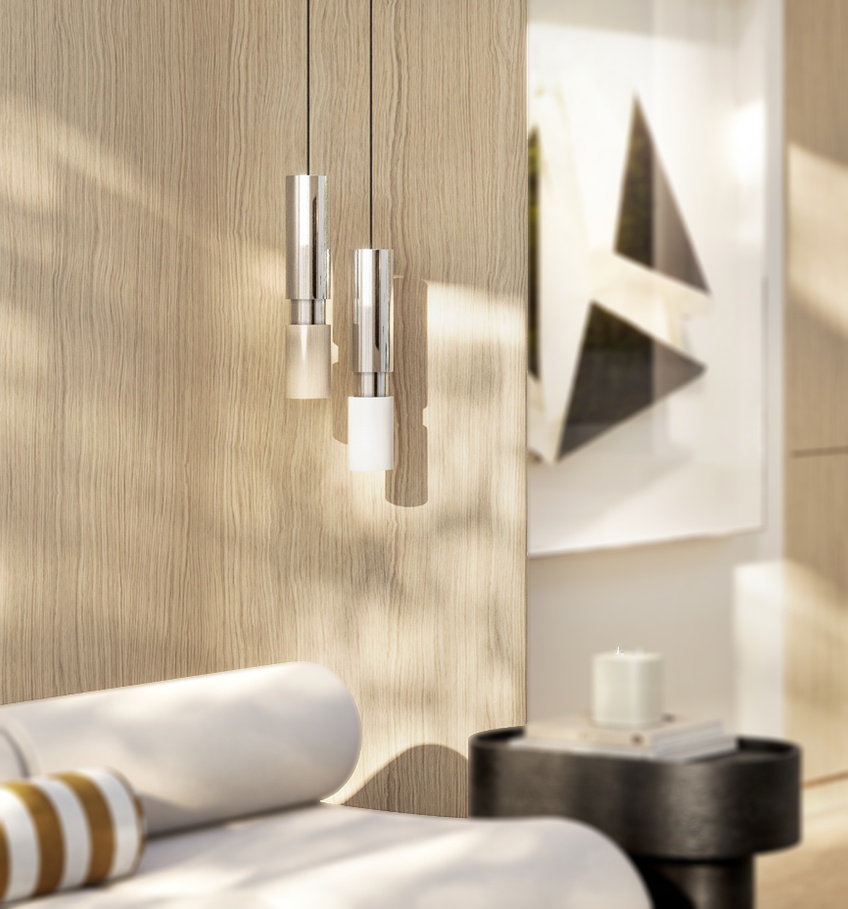
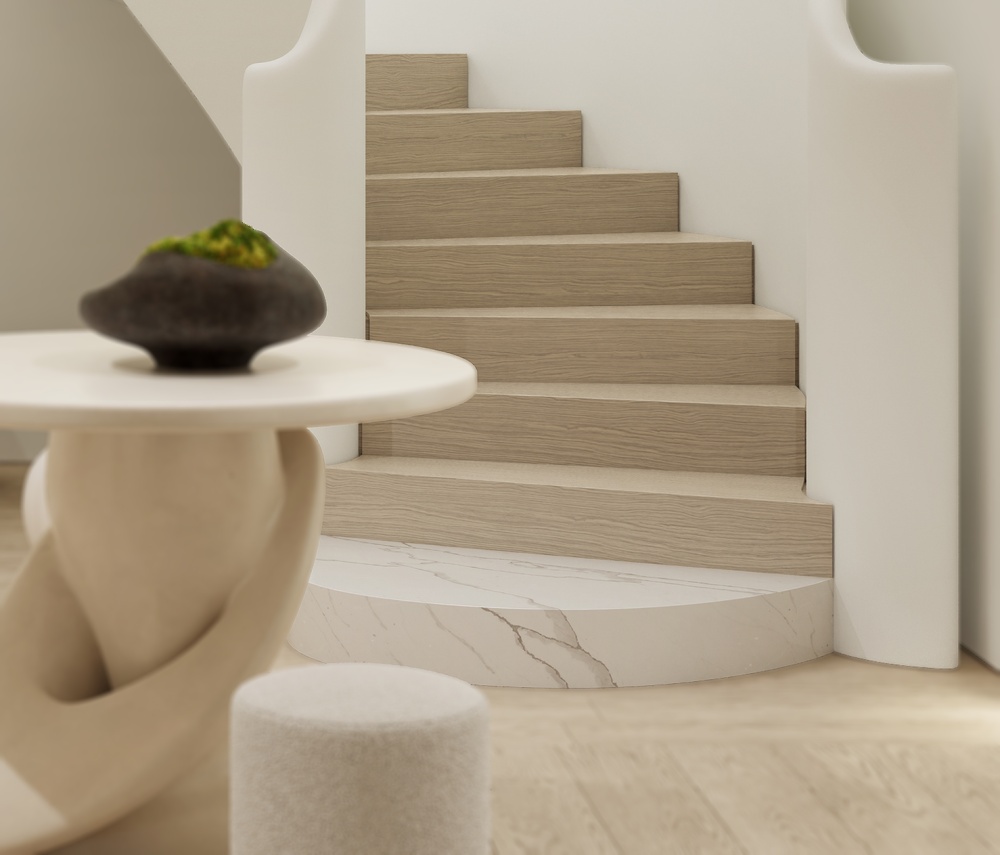
The Design: At the centre of the home sits a sculptural spiral staircase designed to feel as though it rises effortlessly into the sky. Above it, an intricate pendant casts shifting patterns of light across the wood floor and swirling stone table below, creating movement and softness throughout the space. The staircase begins with cool marble underfoot before transitioning into warm wooden treads, creating a subtle material journey as you ascend. Beneath the staircase, bonsai trees and sculptural vessels introduce an organic quality inspired by Japanese simplicity.
The Biology Layer: Filtered light throughout the stairwell mimics natural dappled sunlight, helping activate a calmer parasympathetic response within the body. The tactile transition from cool stone to warm wood keeps the nervous system engaged without overstimulation, while the bonsai trees contribute to healthier humidity and improved indoor air quality as part of the wider ventilation and materials strategy.. Research also shows indoor planting can reduce cortisol levels by up to 12%, while natural soundscapes such as rustling leaves may lower heart rate within 20-30 minutes.
The Living Room
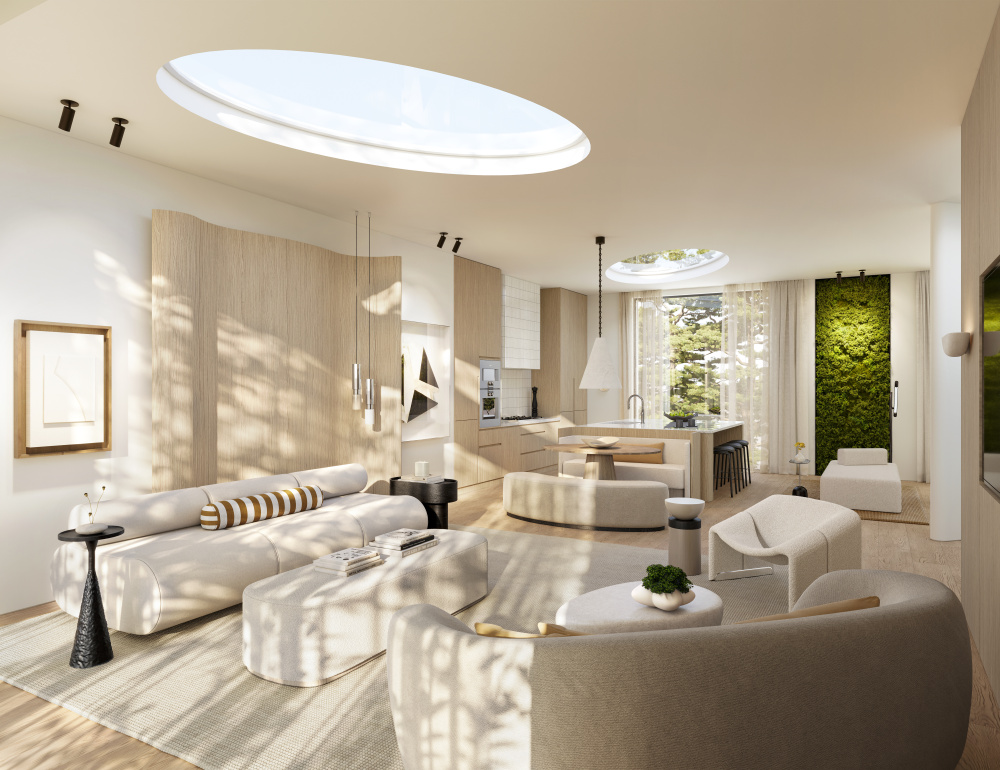
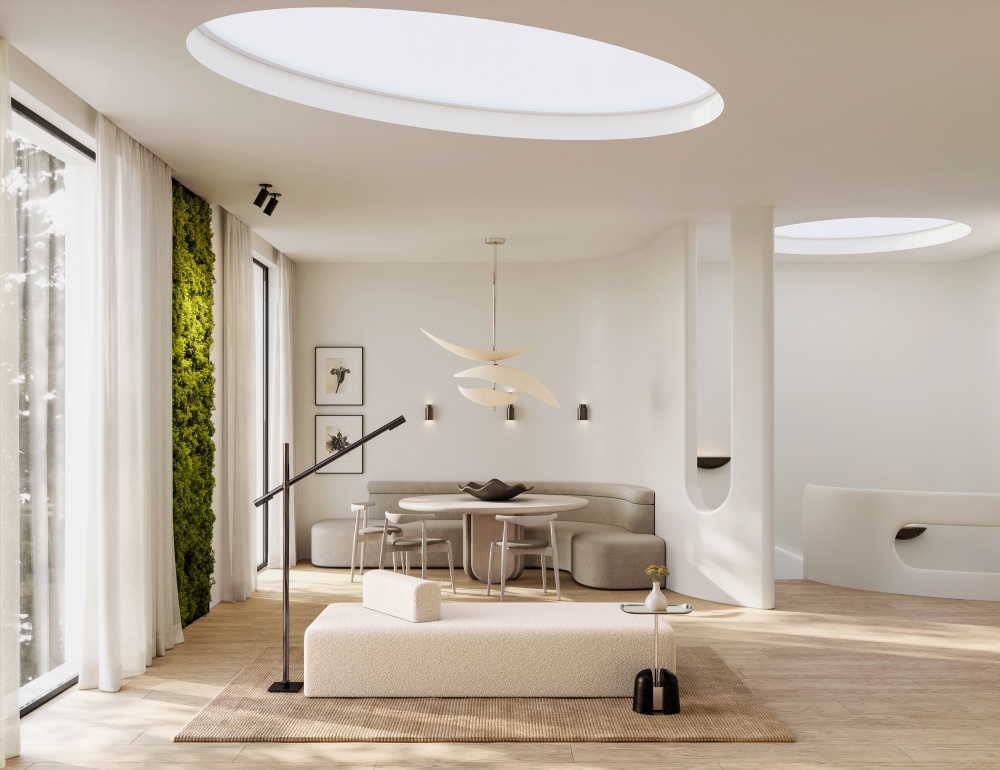
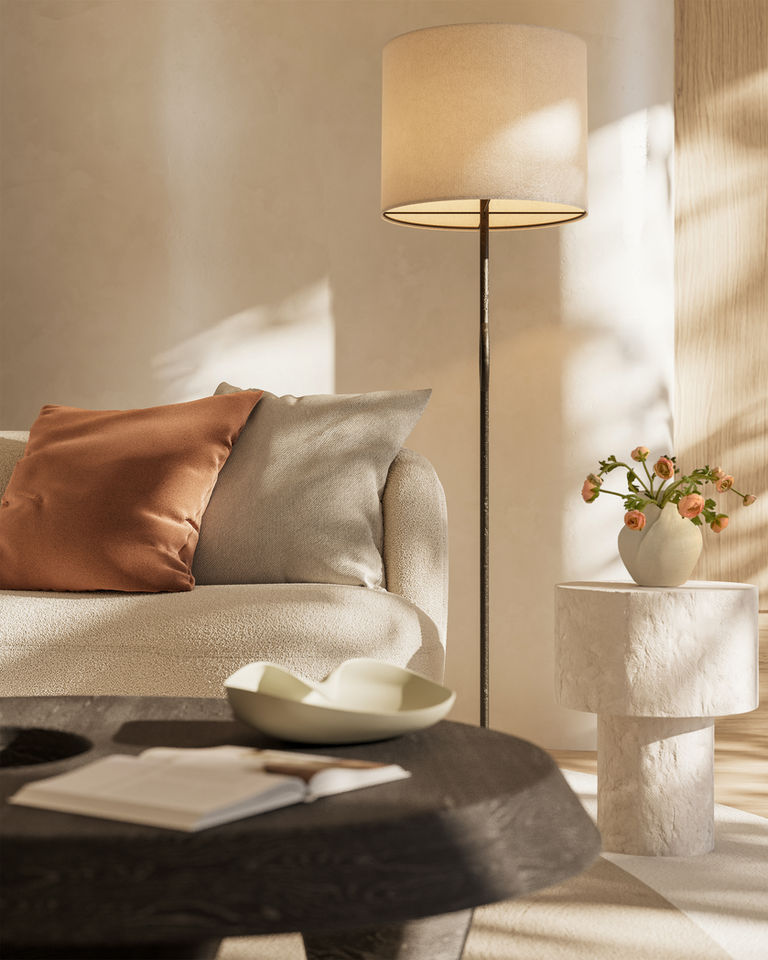
The Design: Natural light pours through skylights and expansive windows, washing over soft neutral textures, sculptural furniture and layered surfaces. A double- layered snake-wrap wall treatment introduces both visual richness and acoustic softness, reflecting Kelly Hoppen's instinct for combining aesthetics with functionality. The adjoining kitchen remains visually connected to the space, creating an atmosphere that feels both open and intimate. In one corner, a living moss wall frames a chaise longue as a quiet restorative moment within the home. Inspired by Japanese principles of simplicity, the moss was selected not only for its sculptural beauty, but for its clean, minimal aesthetic and connection to nature.
The Biology Layer: Skylights have been carefully positioned to maximise natural morning brightness, supporting circadian rhythm and healthier sleep cycles. Research shows access to daylight can advance sleep onset by up to 22 minutes. Acoustic treatments throughout the room have also been designed to keep ambient noise well below 35–40 decibels, while the living moss wall contributes to humidity regulation, sound absorption and measurable biophilic stress reduction.
The Kitchen
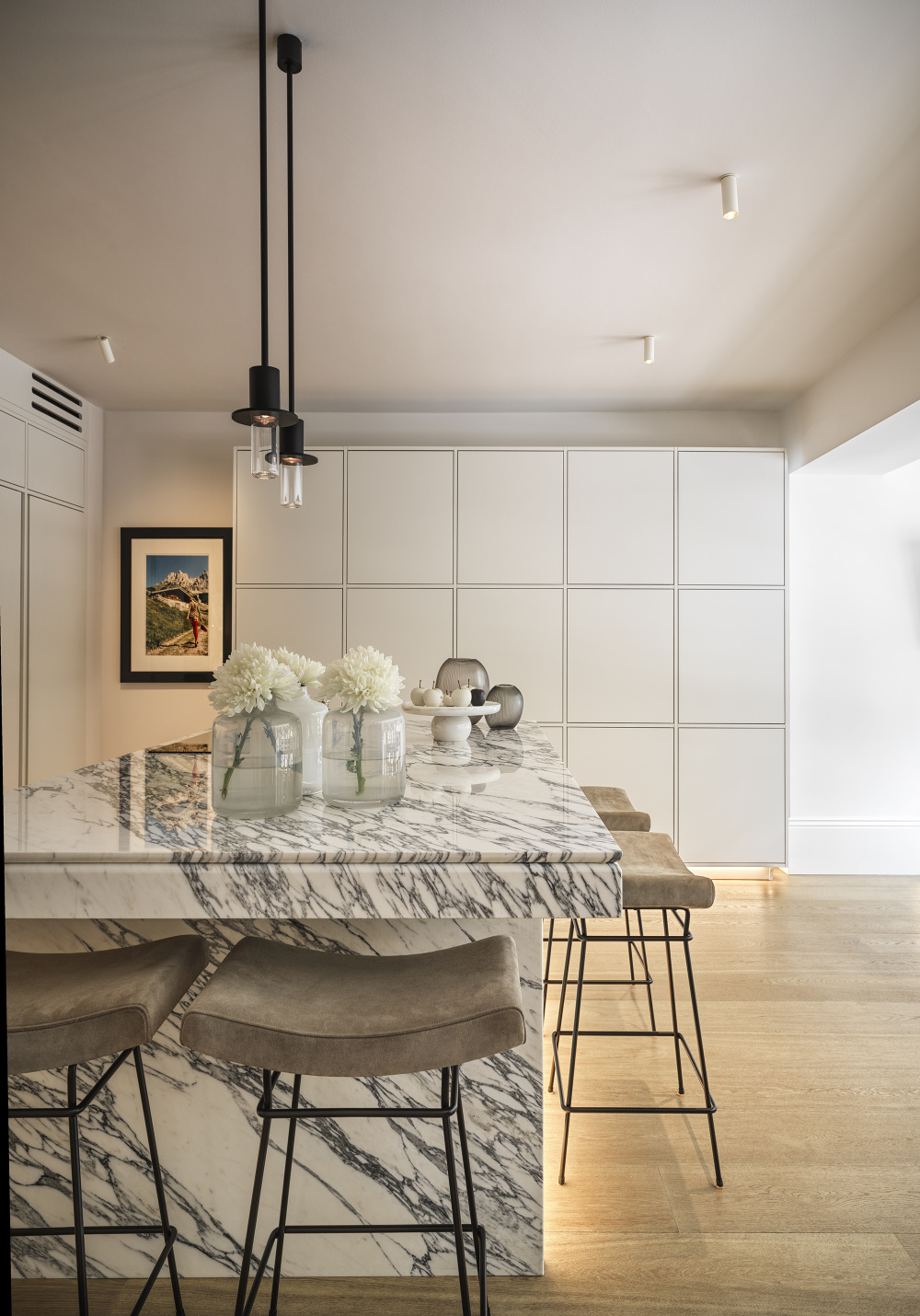
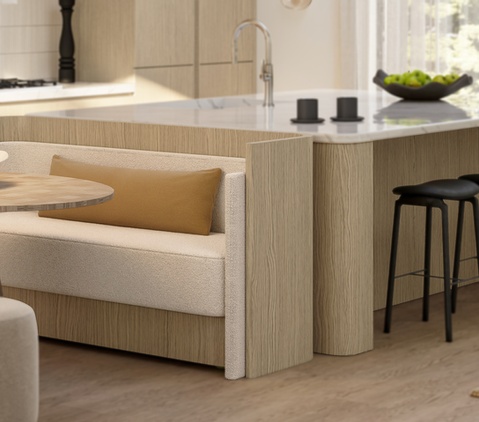
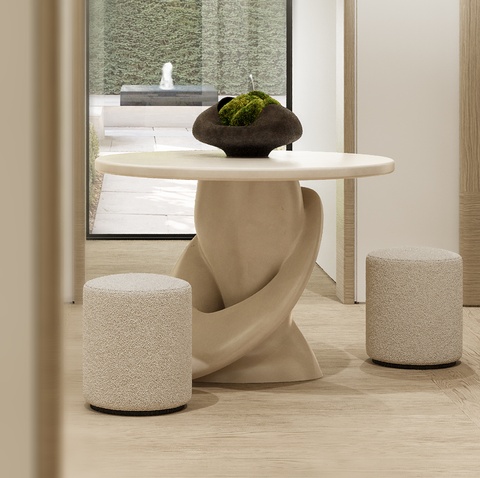
The Design: The kitchen has been designed as both a functional workspace and the social heart of the home. Seating has been carefully arranged to create two distinct experiences: a small circular table designed for intimacy and slower conversation, alongside island seating that allows connection and interaction while cooking. Warm lighting, sculptural surfaces and tonal materials create an atmosphere that feels relaxed and welcoming rather than overstimulating. Every detail has been meticulously considered, from where light falls across surfaces to how it reflects onto surrounding materials and artwork, creating a kitchen that feels balanced, calm and effortlessly social.
The Biology Layer: The dual seating arrangements support different emotional and physiological states, allowing for both restorative intimacy and open social connection. Lighting integrates a Circadian Alignment System™ designed to support both metabolic activity and evening nervous system regulation throughout the day, combining higher-intensity task lighting to reduce ocular strain and support visual clarity with warmer ambient lighting at 2700–3000K calibrated to minimise evening melatonin suppression and support the body’s natural wind-down process.
The Dining Space
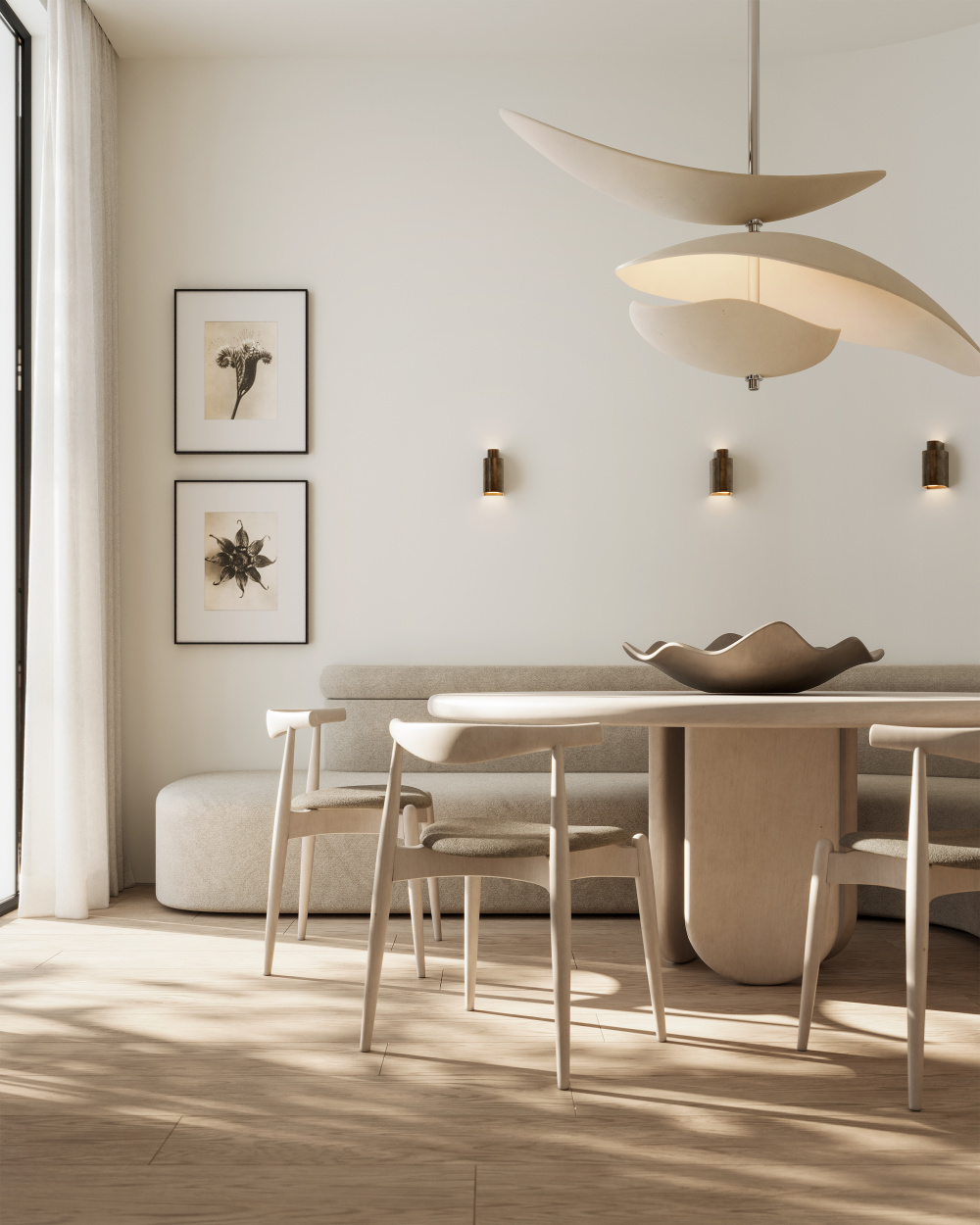
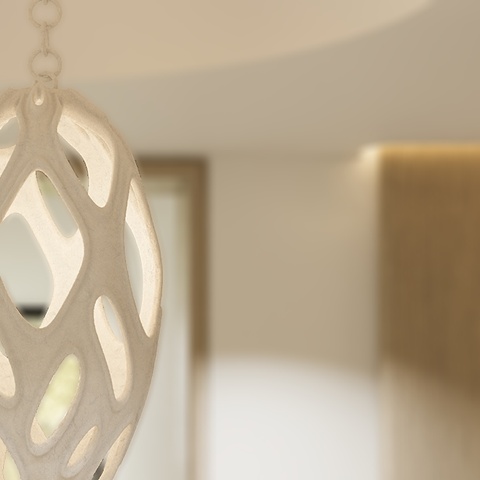
The Design: Looking back toward the staircase, the dining area unfolds as a softer, more relaxed entertaining space. A sculptural light fitting, resembling a seagull in flight, floats effortlessly above the dining table, bringing movement and elegance into the room. Rounded seating, layered textures and warm finishes create a distinctly feminine atmosphere with no harsh visual interruptions, while gentle glimpses of the staircase beyond maintain openness and flow throughout the home.
The Biology Layer: Research shows rounded furniture and curved edges help reduce subconscious stress responses, while repetition within interiors creates visual rhythm and a sense of order that allows the brain to relax. Pendant lighting has also been calibrated to shift naturally throughout the day, with brighter, cooler light supporting daytime alertness and warmer, lower‑lux evening light helping protect melatonin production so dining remains a true “rest and digest” experience.
The Wellness Spa
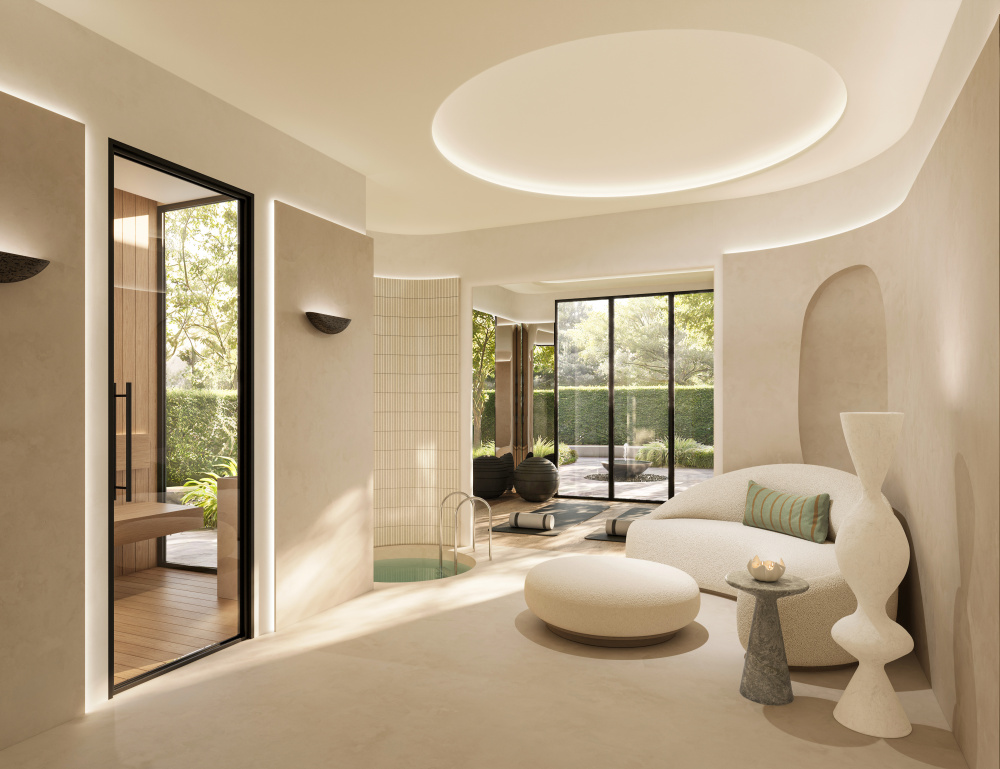
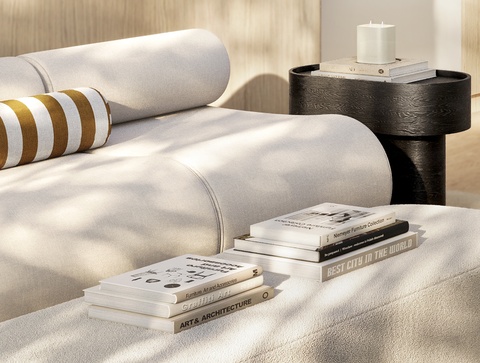
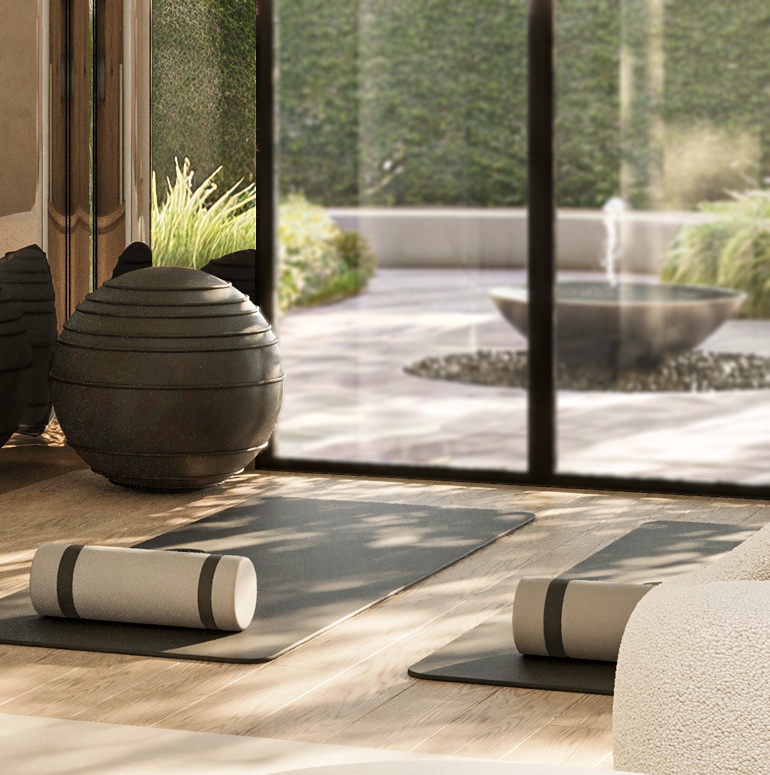
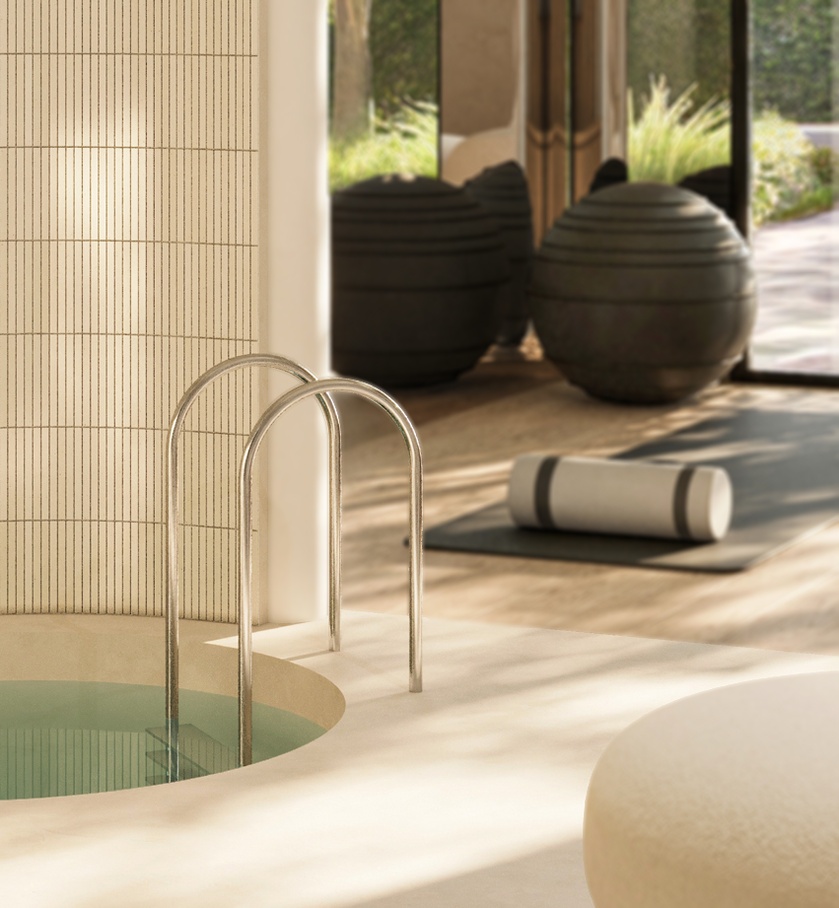
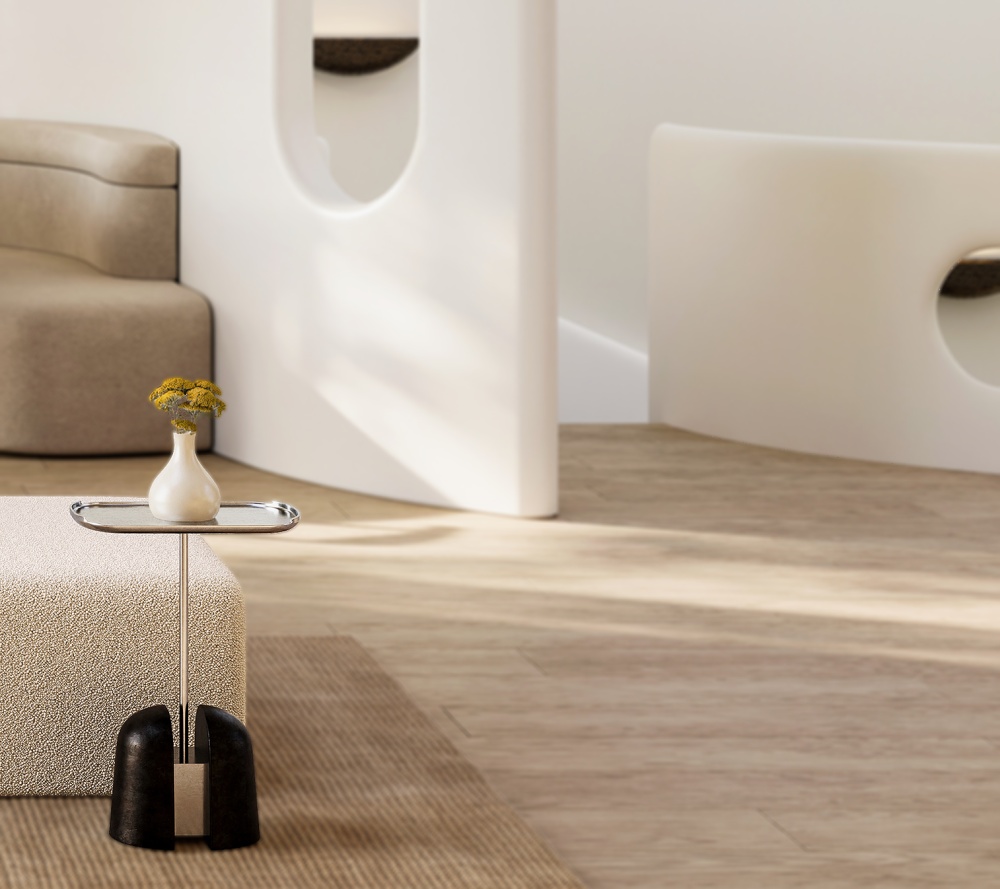
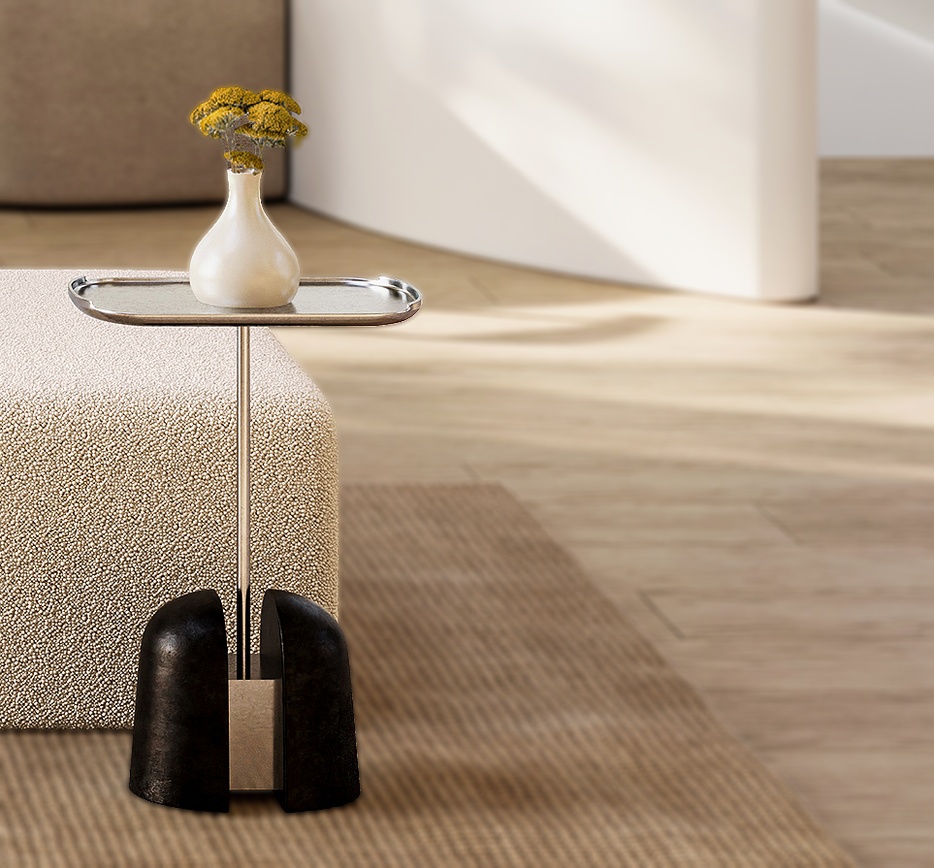
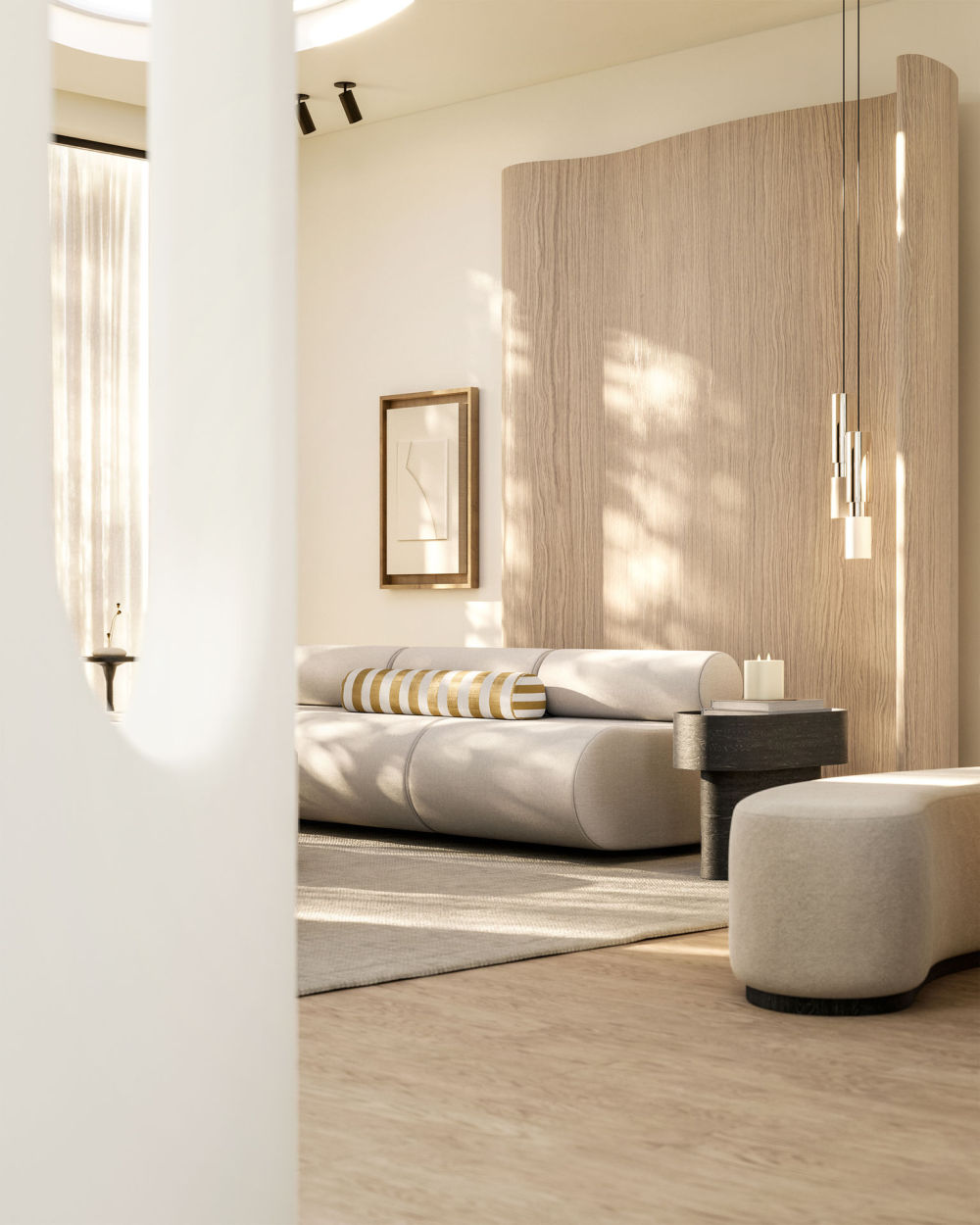
The Design: Designed entirely around restoration, the wellness room embraces softness, movement and sculptural form. A feminine sculpture anchors the space, echoed through the curved silhouettes of the sofa, footstool and side table, while the wall behind has been shaped into a gentle concave-convex form that subtly catches light throughout the day. Large glass doors dissolve the boundary between indoors and the garden beyond, maintaining a constant visual connection to nature. The palette remains soft and understated, with layered textures and curved forms creating an atmosphere that feels deeply peaceful and emotionally grounding.
The Biology Layer: Curved environments have been shown to reduce stress responses by 8–12%, while visual access to greenery can lower cortisol through biophilic exposure. The room’s Neuroacoustic Stability Layer™ has also been designed to support parasympathetic activation, with immersive sound environments linked to measurable reductions in heart rate and nervous system stress.
The Bedroom
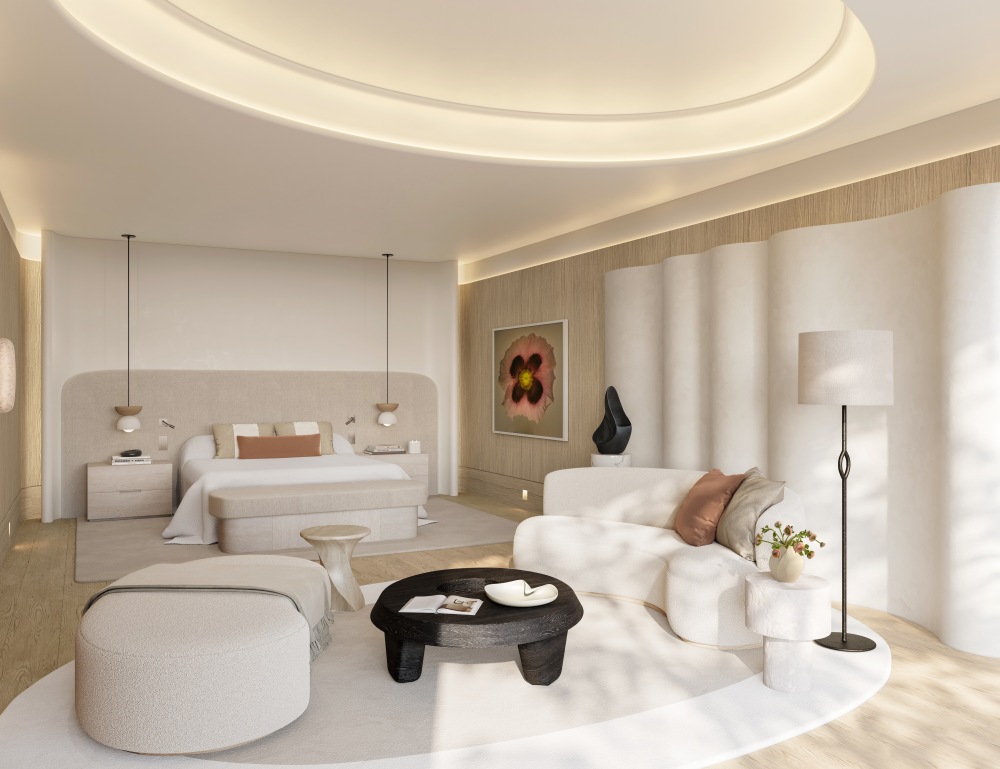
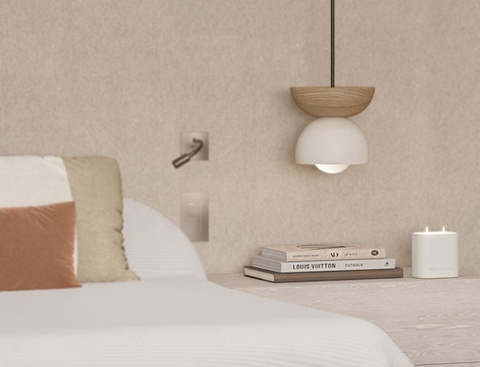
The Design: The bedroom has been designed as a sanctuary-like retreat balancing softness, texture and warmth with a strong sense of calm. A cloud-like snake-moulded wall treatment wraps the space, adding sculptural texture while also introducing discreet acoustic softening. Rounded furniture silhouettes, layered textiles and warm timber detailing create a cohesive and cocooning environment, while the fully wrapped bed and integrated lighting make the room feel deeply intimate and protected.
The Biology Layer: Lighting throughout the room has been orchestrated to support the body’s natural circadian rhythm, with brighter morning light encouraging wakefulness and softer amber evening lighting supporting melatonin production and evening nervous system regulation. Acoustic control through the room’s Neuroacoustic Stability Layer™ has been engineered below 30 decibels to minimise sleep disruption, while dedicated air filtration, fresh-air ventilation and low-toxicity materials help reduce VOC exposure, particulate load and overnight CO₂ accumulation in an environment where indoor air can be 2–5 times more polluted than outdoor air. Thermal conditions have also been calibrated within the optimal range associated with deeper sleep onset, thermoregulation and overnight recovery.
The Bathroom
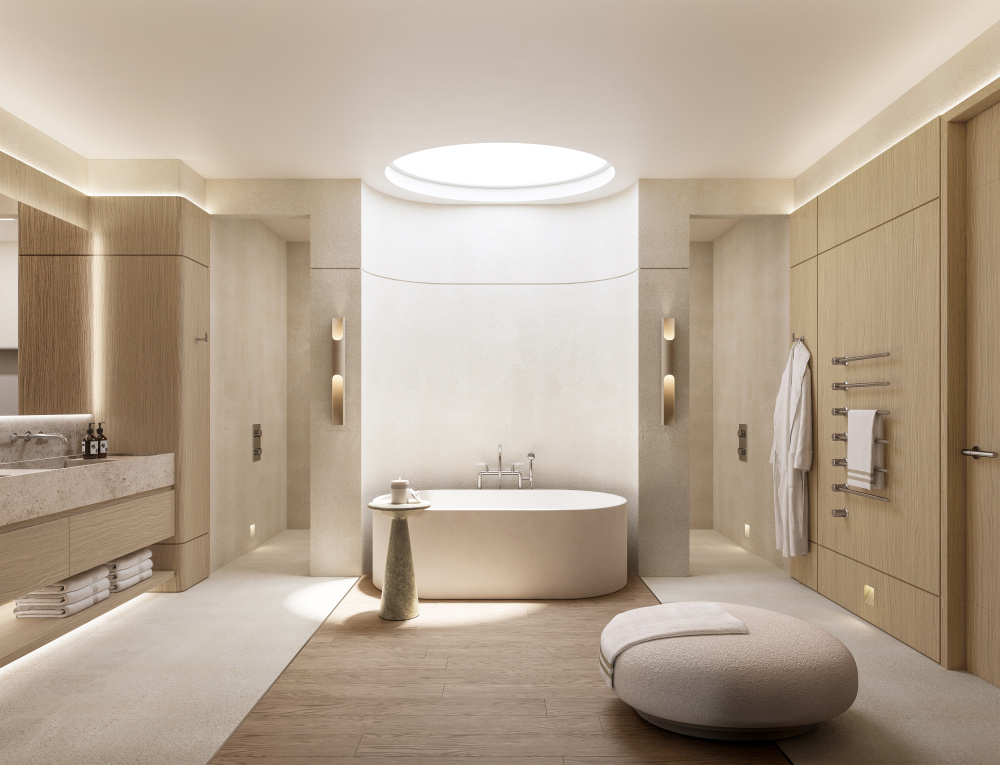
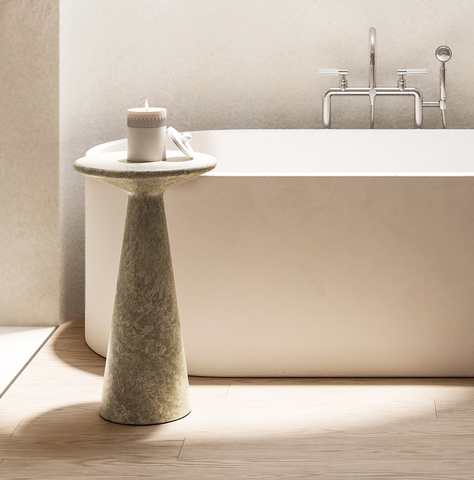
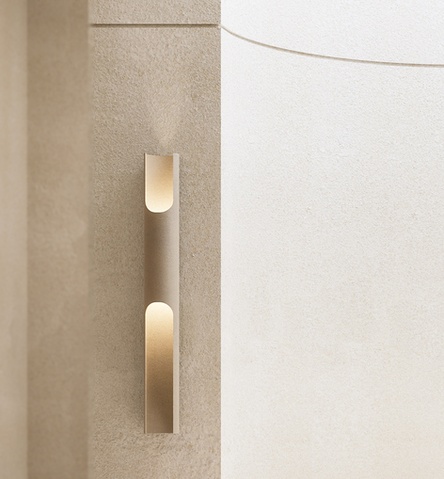
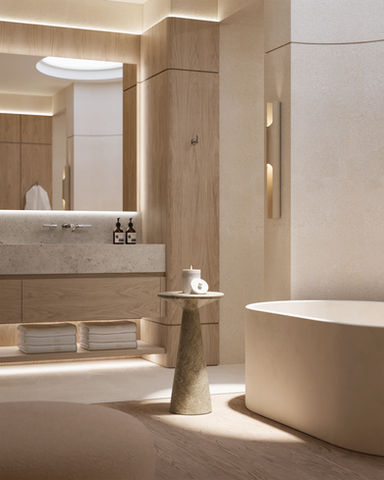
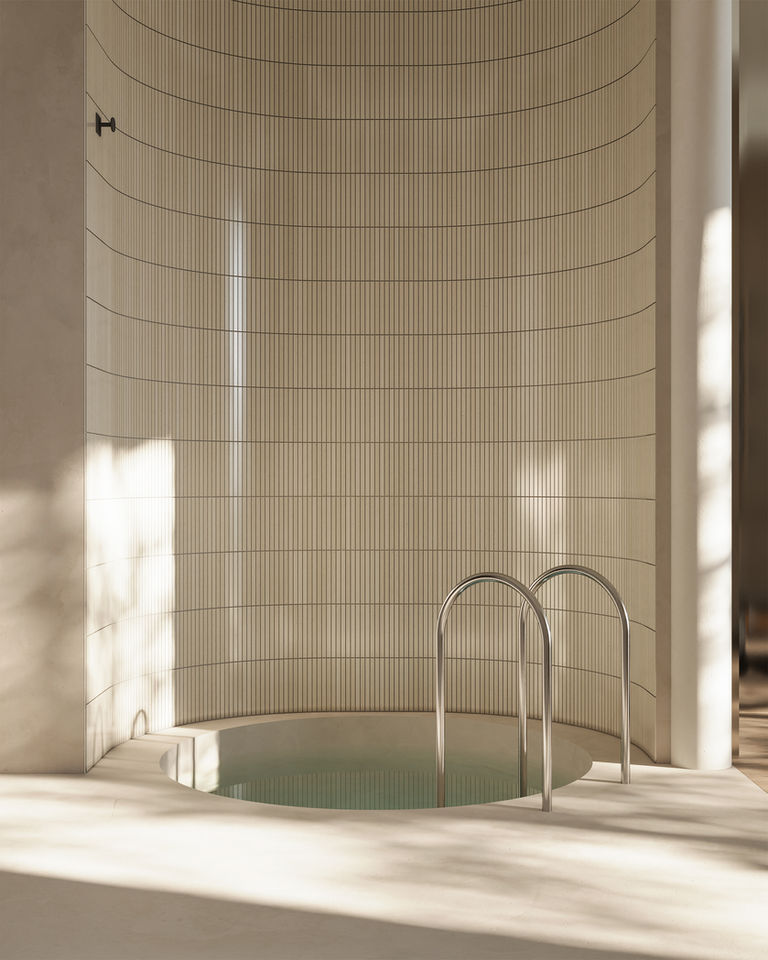
The Design: The master bathroom has been conceived as a spa-like sanctuary centred around a dramatic freestanding bath positioned beneath a circular skylight. Natural daylight pours into the room from above, illuminating warm wood panelling and soft stone surfaces throughout the space. A central stone runner introduces refined material contrast, while sculptural plaster wall lights appear seamlessly integrated into the architecture itself. Hidden lighting layered throughout the room creates softness and atmosphere from day into evening. The overall effect is warm, cocooning and deeply luxurious, balancing sculptural simplicity with a quiet sense of retreat.
The Biology Layer: The circular skylight has been designed to maximise natural morning light exposure, helping strengthen circadian signalling at the start of the day. In the evening, warm amber lighting at 1800–2200K supports melatonin production and relaxation before sleep. The bathroom’s Environmental Regulation Layer™ integrates humidity control, passive moisture buffering and thermal stabilisation through dedicated ventilation and natural wood surfaces, helping maintain a healthier indoor humidity balance in one of the home’s highest-moisture environments while creating a calmer and more restorative atmosphere overall.
SHOWCASE
Kelly Hoppen CBE has made her first contribution to WOW!house 2025, held at the Design Centre, Chelsea Harbour in London from 3 June to 3 July 2025. Over four weeks, the event runs on weekdays and Saturdays from 10 am to 6 pm .
For this year’s showcase, Kelly and her team designed the Living Room, curated by Visual Comfort & Co. Her concept centers on the transformative power of lighting, using sculptural chandeliers, directional sconces, and layered illumination to craft a soothing, grounding ambience imbued with warmth.
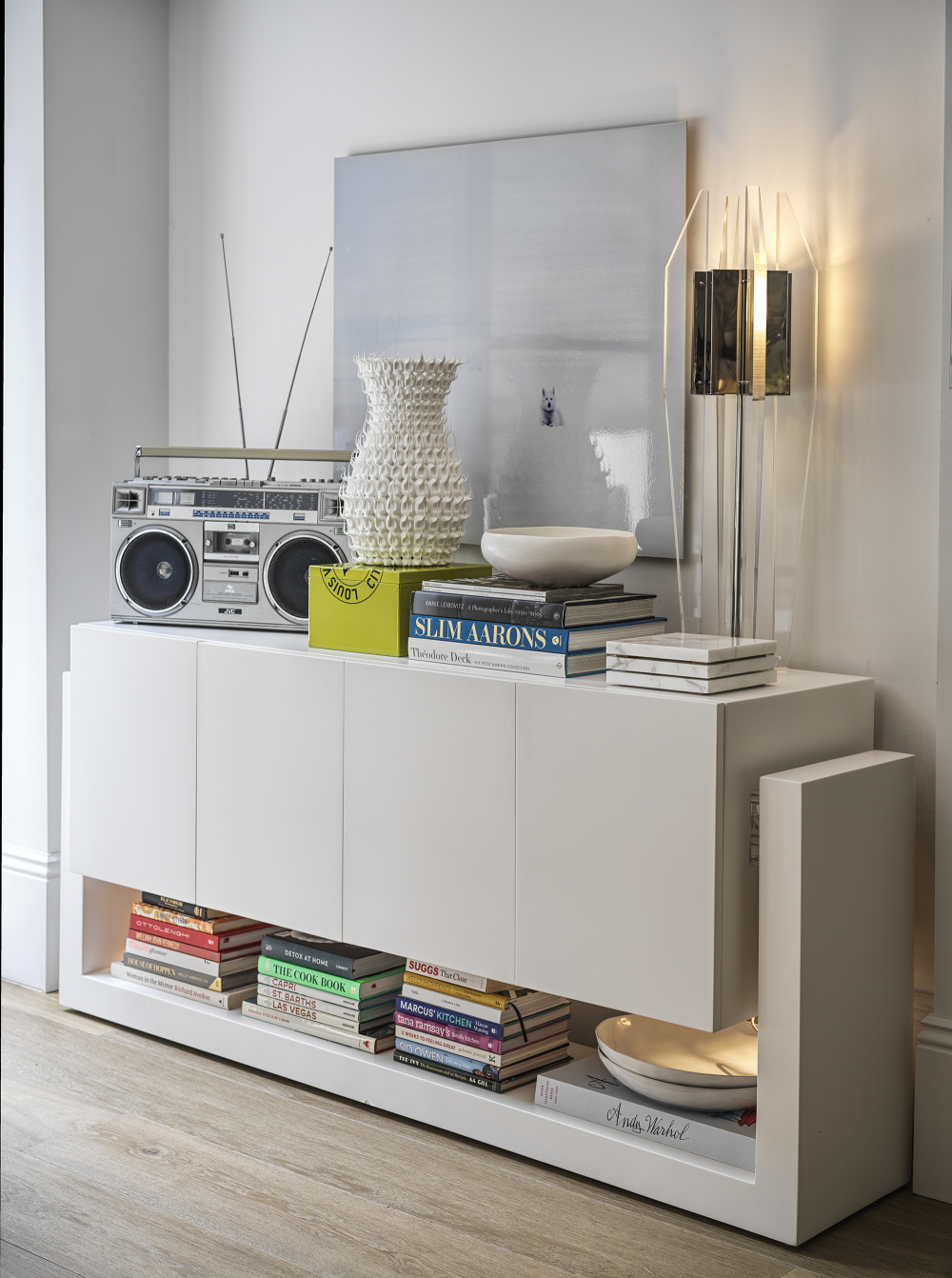
"The inspiration for our WOW! House Living Room was to create a space that exudes comfort while embracing an asymmetric design infused with history. This was achieved through the use of art pieces, artifacts, record collection, photography, and curated objects, all of which add depth and personal storytelling.
Lighting played a crucial role, used in innovative ways to highlight textures and forms while also creating shading and balance. We used multiples of certain lighting pieces to enhance the atmosphere, while sculptural fixtures were carefully placed to add definition and depth. Reflections and directional light were considered to ensure a dynamic and harmonious ambiance. A deep-bordered rug blends rich colors with linens and suedes, while theatrical yet understated patterns and eclectic fringing are applied in a fresh, unexpected way.
Our vision was a seamless fusion of timeless elegance and modernity. Luxurious materials, handcrafted details, music, and scent come together to transport visitors into a world of comfort. Iconic design elements work together to create an inviting and sensory-rich experience."
- 转自:Kelly Hoppen
- 图片©Kelly Hoppen
- 编辑:序赞网
- 阅读原文
|
|