海岸隐居之所 | Amjad Ayoub | 2026 | 阿联酋
Long before the architecture fully reveals itself, there is the sound of the sea. In Umm Al Quwain – one of the UAE’s quieter coastal emirates – the waves fold steadily into the background of daily life; the city has long been known for its mangroves, wildlife and slower pace of life. At the aptly named Frangipani House, which was completed in 2025 as a winter retreat, that atmosphere becomes part of its very architecture. Meanwhile, the location itself is historic, the land tied to the emirate’s ruling Al Mualla family, descendants of one of the UAE’s founding fathers, Sheikh Ahmed Bin Rashid Bin Ahmed Al Mualla.
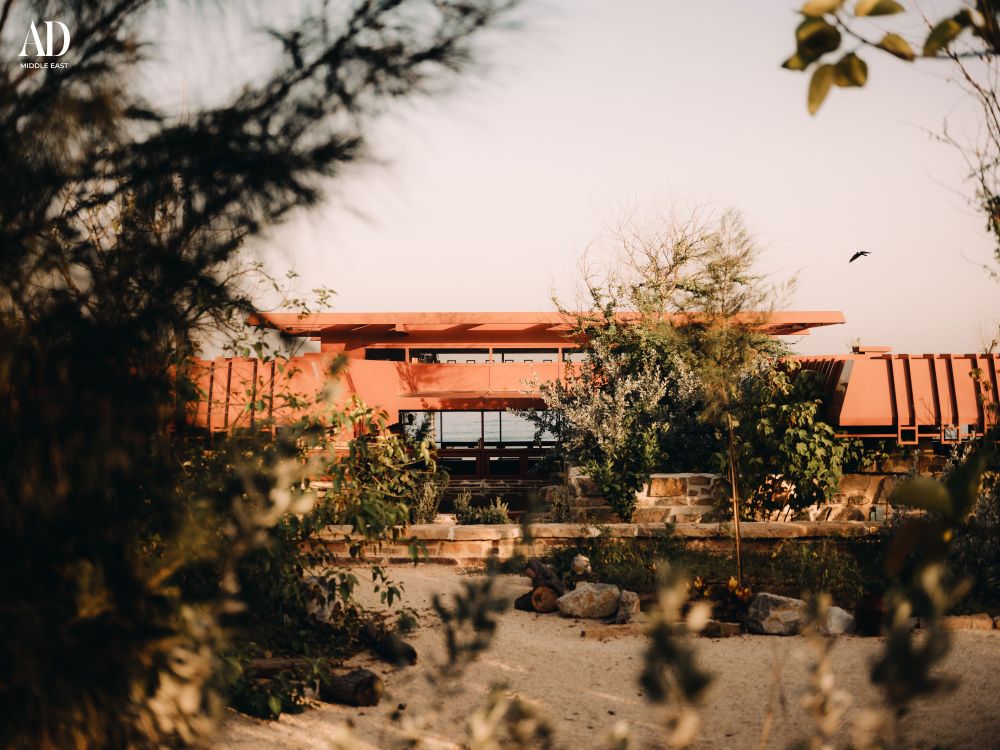
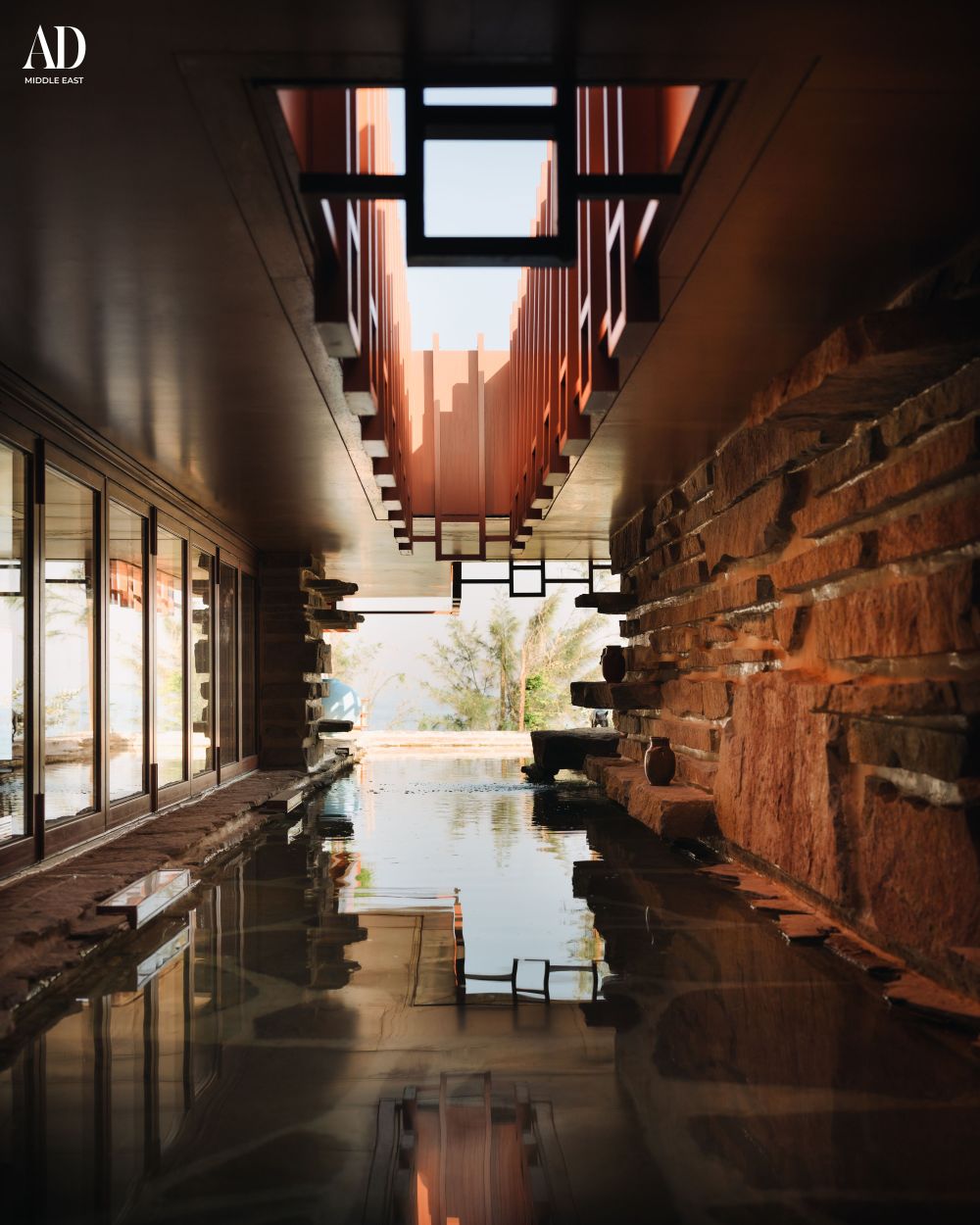
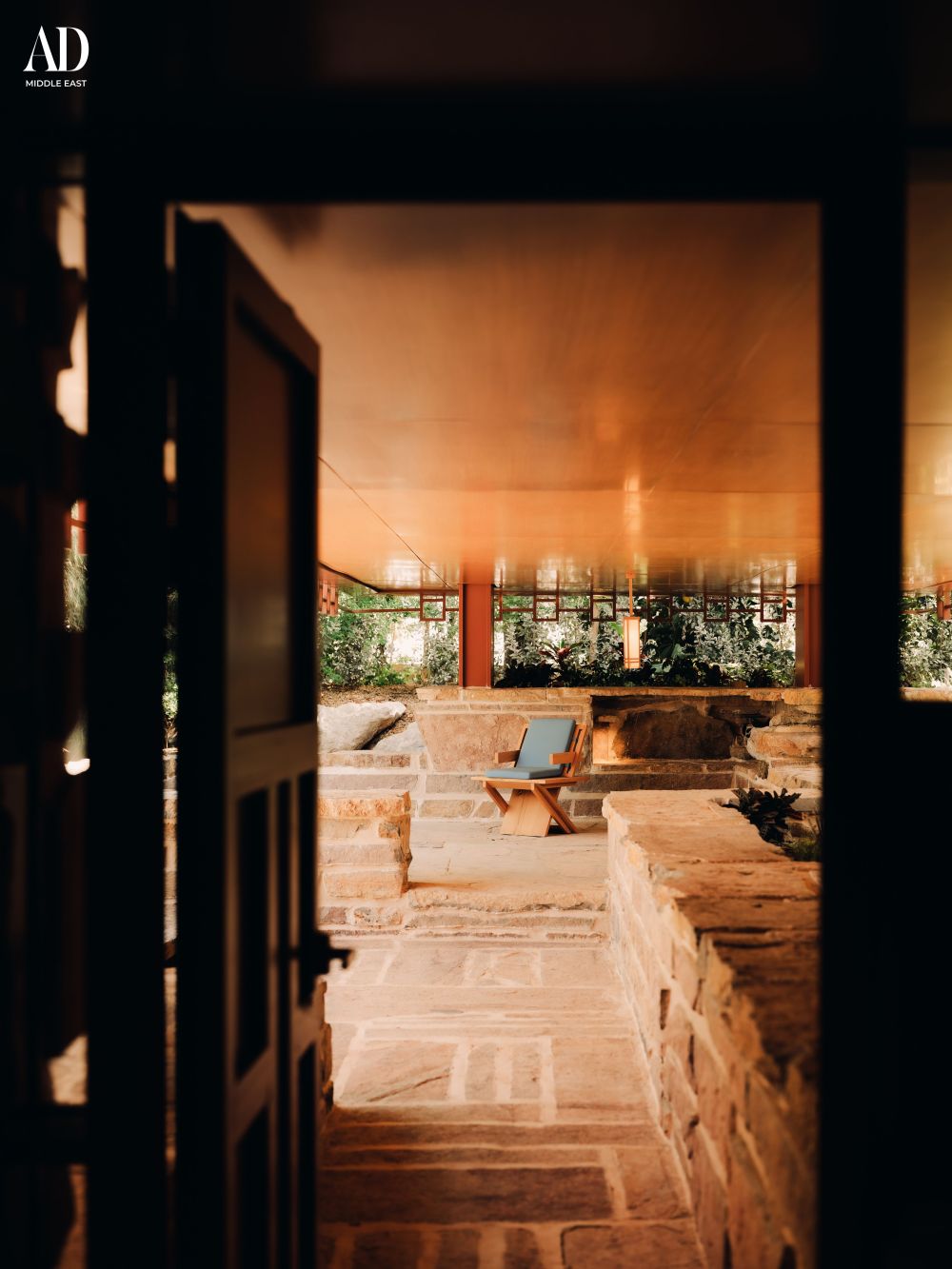
At first sight, the sprawling 1,758-square-metre residence, spread across a 13,580-square-metre site, does not announce itself in a single gesture. Instead, it unfolds slowly, through low-slung stone volumes, filtered light, deep overhangs and corridors that frame only fragments of the landscape at a time. Arriving here feels strangely cinematic – less like stepping into a conventional luxury holiday home and more like entering the opening sequence of a film that reveals itself scene by scene. That sensation is not accidental.
As conversations drift between architecture, landscape and cinema, Alqasimi speaks animatedly about Alfred Hitchcock’s framing techniques in midcentury films like Rear Window and Rope, and the idea of withholding a complete view in order to sustain curiosity. “You may notice that the house is never revealed fully, from arrival at the gate and throughout,” he explains. “I have always admired landscapers and filmmakers whose framing always keeps you in mystery and only unveils a certain amount. That keeps the person always engaged.”
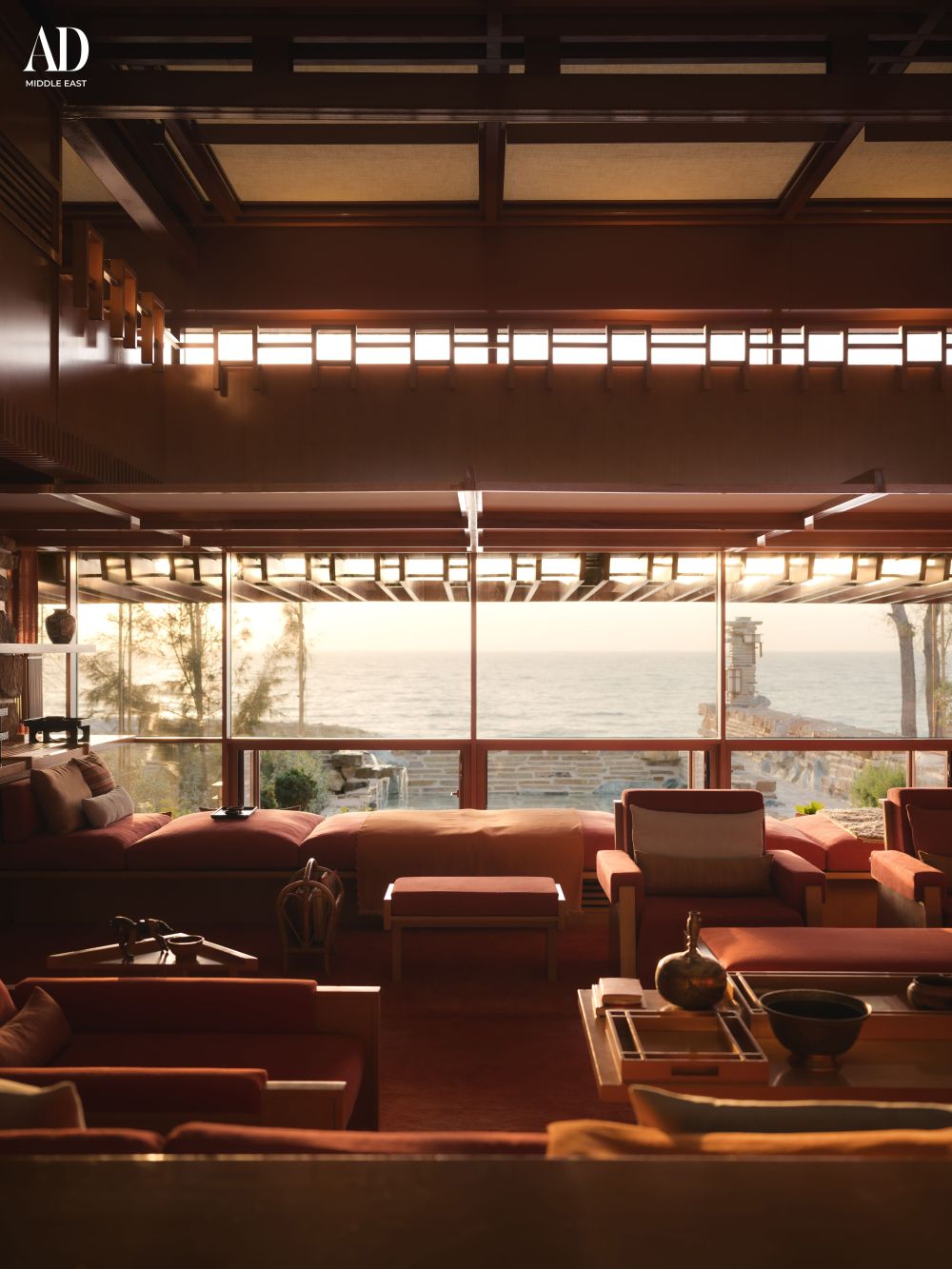
That sense of choreography is immediately apparent while moving through the house. Sightlines tighten and expand unexpectedly. Stone pathways disappear behind planted mounds before opening toward the coastline. Long horizontal rooflines mirror the sea beyond, while moments of compression suddenly give way to expanses of sky and water. The landscape itself was shaped with similar intentionality, with bermed earth, rocks and pathways designed to feel almost naturally formed rather than imposed. Ghaf, Sidr and eucalyptus trees punctuate the site, while hibiscus, almond and Pakistani lemon trees soften the edges of the coastal terrain. “The horizontality of the project is a direct response to the coastline,” explains lead architect Amjad Ayoub. “The intent was to anchor the house within the landscape rather than place it on top of it.”
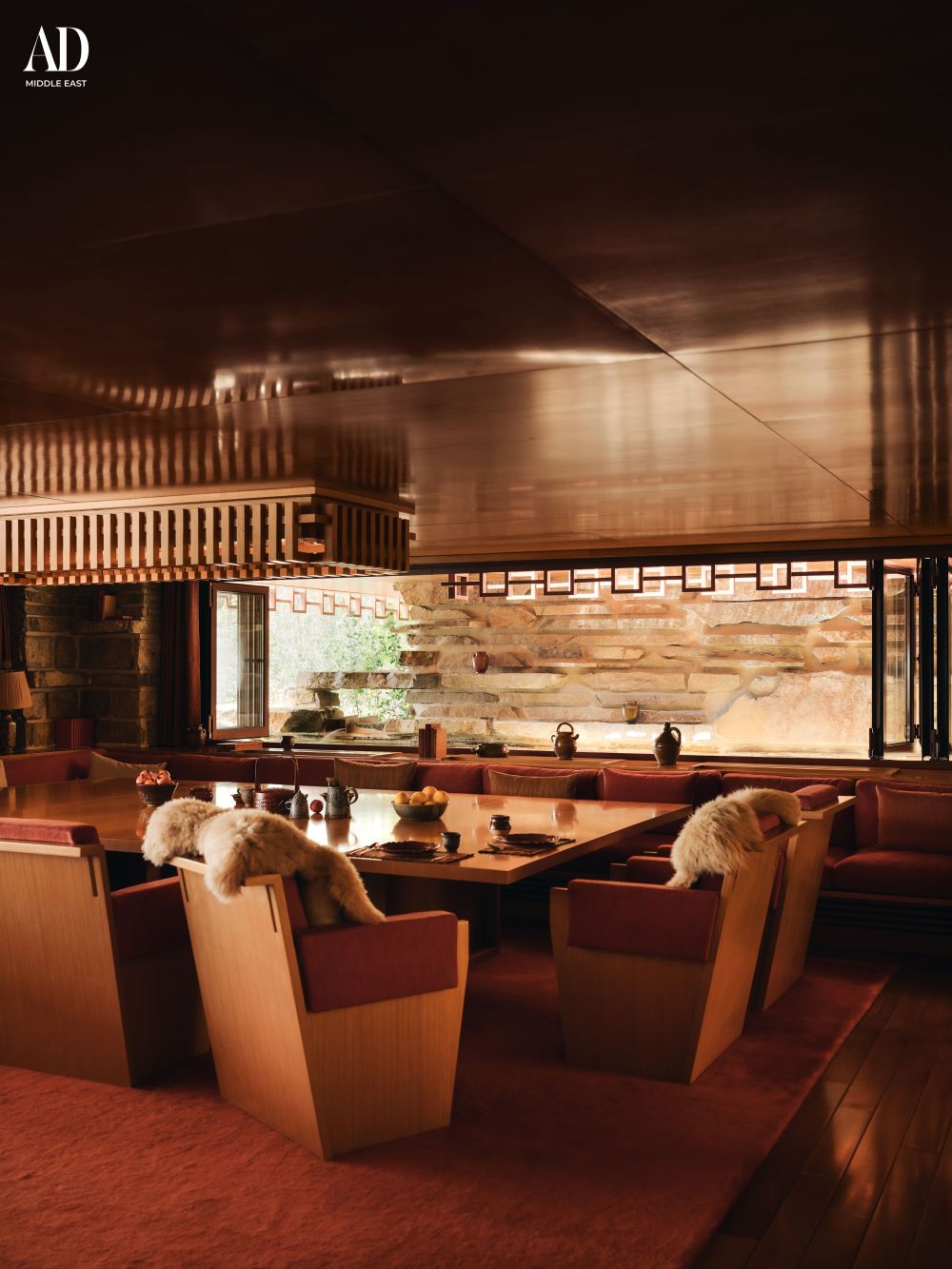
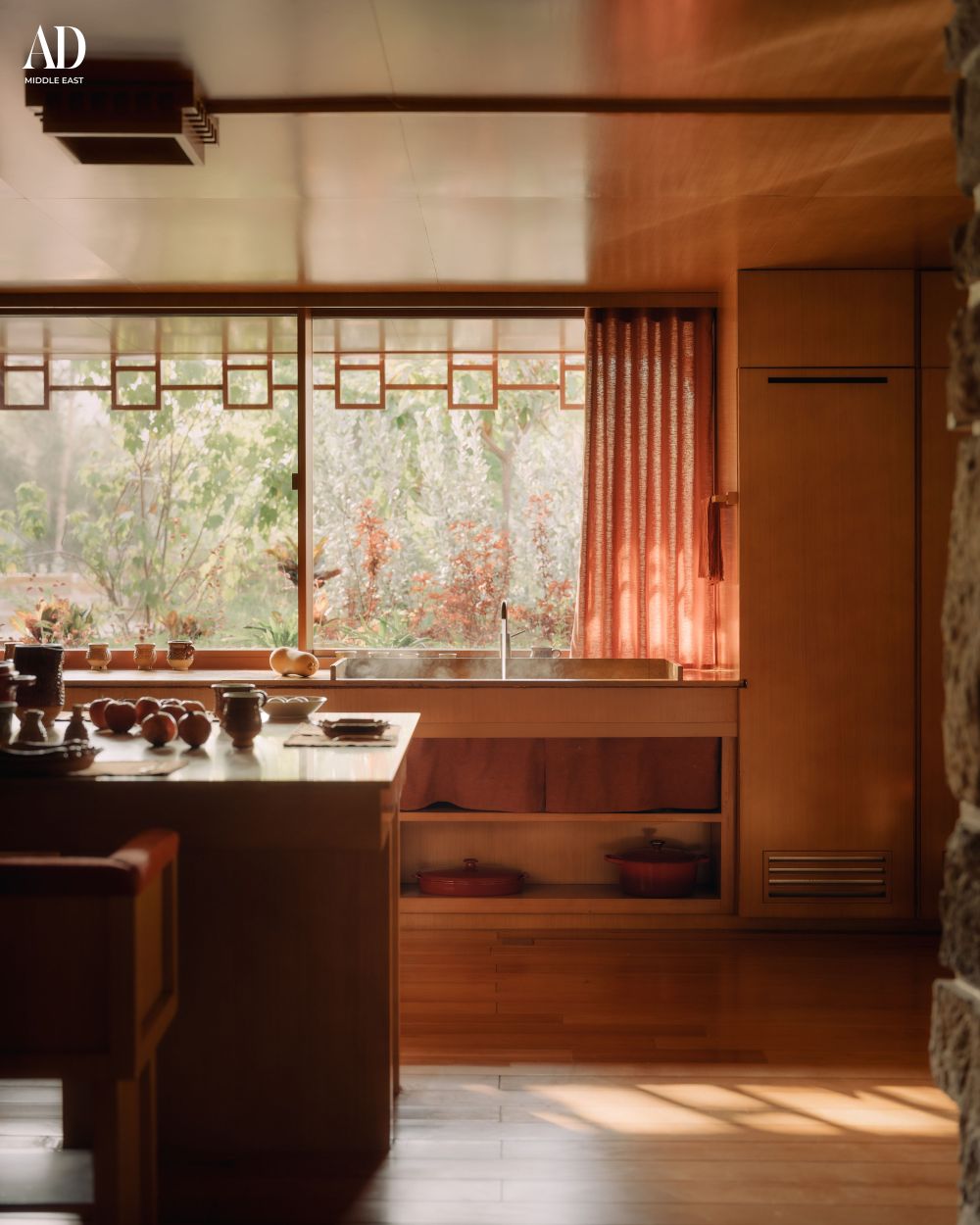
Ayoub describes light and shadow as “primary materials” within the project – an idea that becomes especially palpable by midday, when the coastal sun strikes the stone walls and shallow water features. At that hour, reflections ripple across ceilings and corridors, softening the intensity of the landscape outside. “At noon, the house affirms itself in being a wonderful shelter,” says Alqasimi. “The reflections of the harsh sunlight turn into cool light playing through the dining area adjacent to the river water feature.”
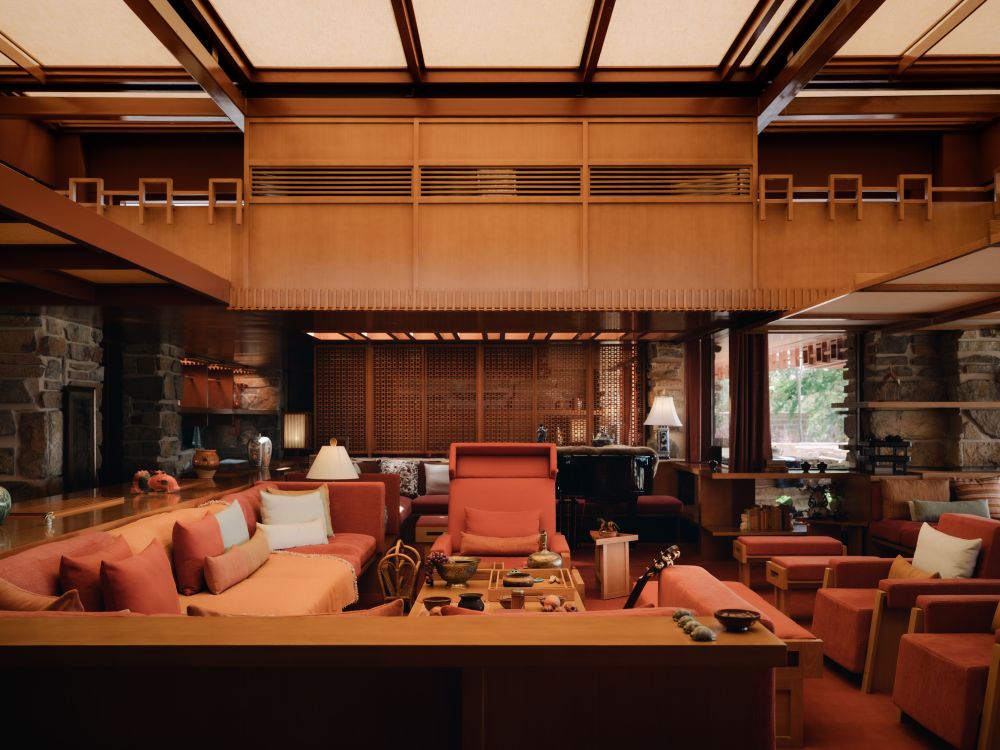
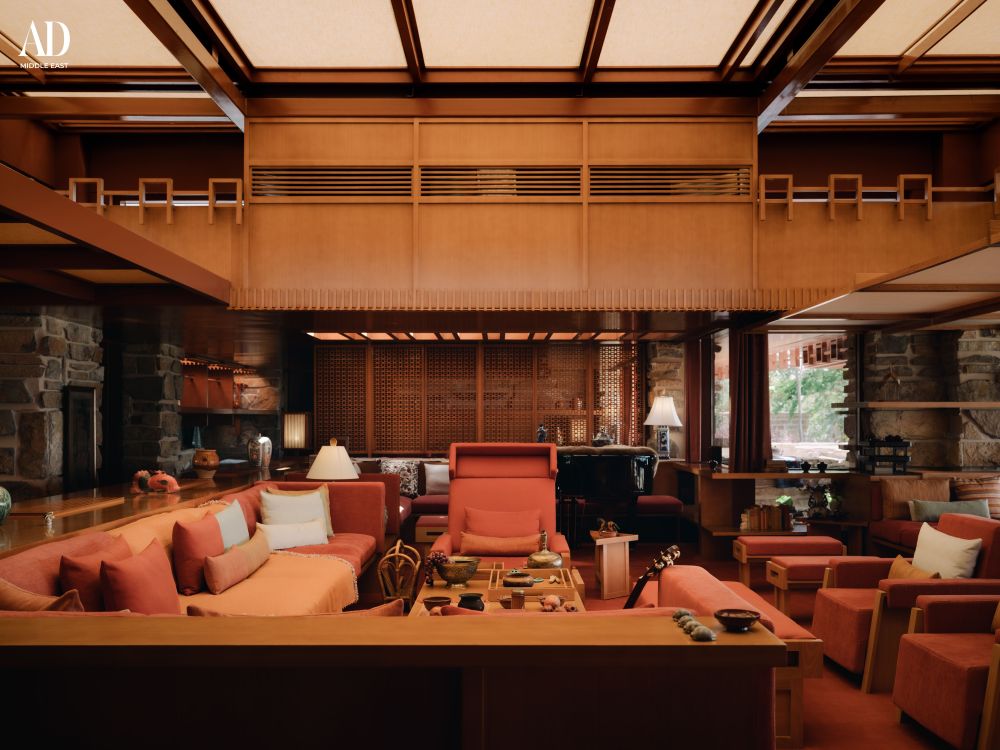
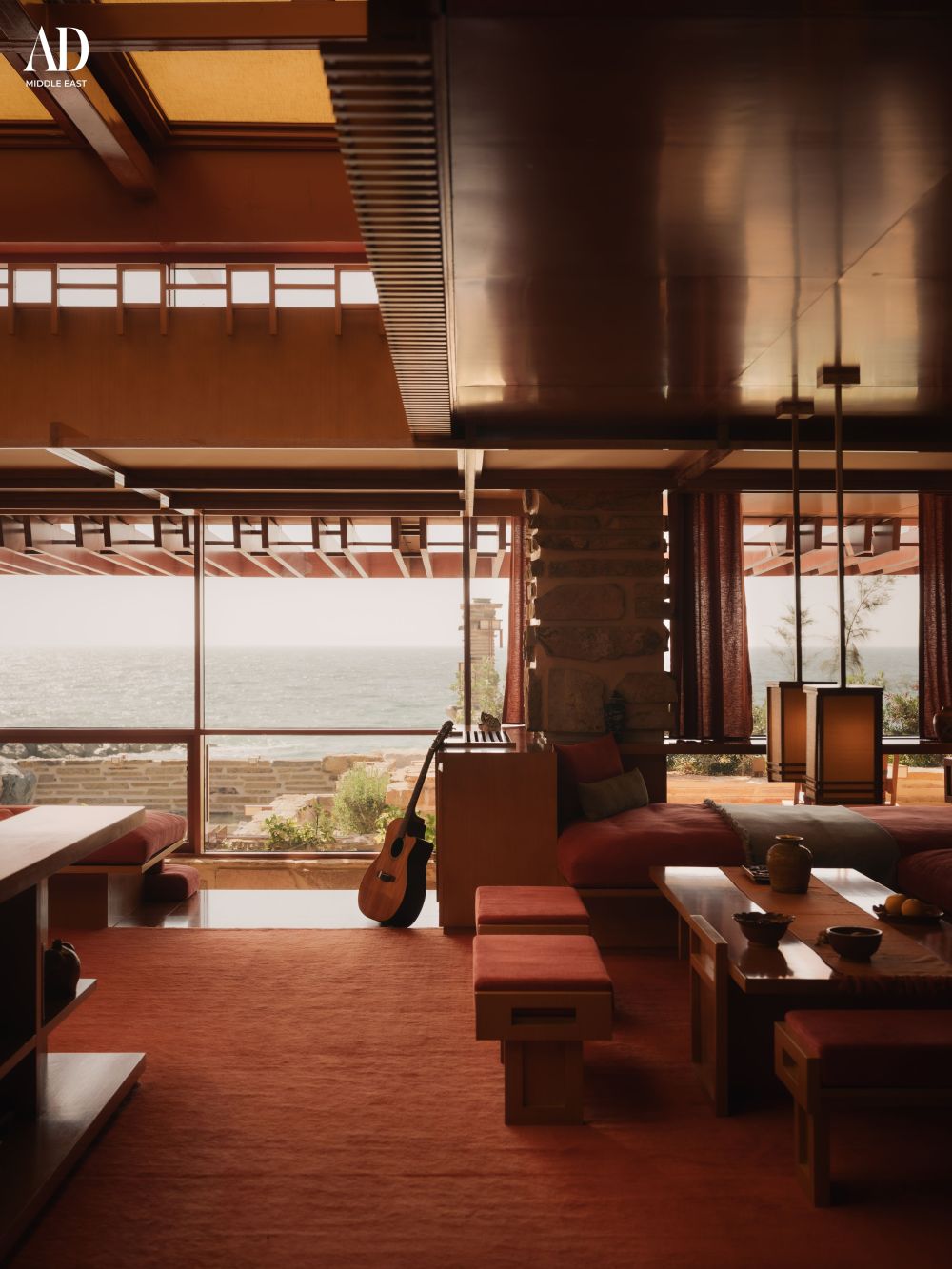
Indeed, the project often feels more alive than static. Passing birds cast fleeting shadows across the ceilings of the main living room, also known as the Crown Room. Arabian red foxes – commonly found in the emirate – occasionally appear against a stone ledge outside the windows. Wind moves through the shaded transitional spaces designed to encourage cross ventilation, while water operates not merely decoratively but atmospherically, amplifying light and creating what Ayoub describes as “acoustic calm”. Casuarina trees sway quietly in the coastal breeze, while dense foliage around the house creates pockets of shade and moments of unexpected intimacy throughout the day.
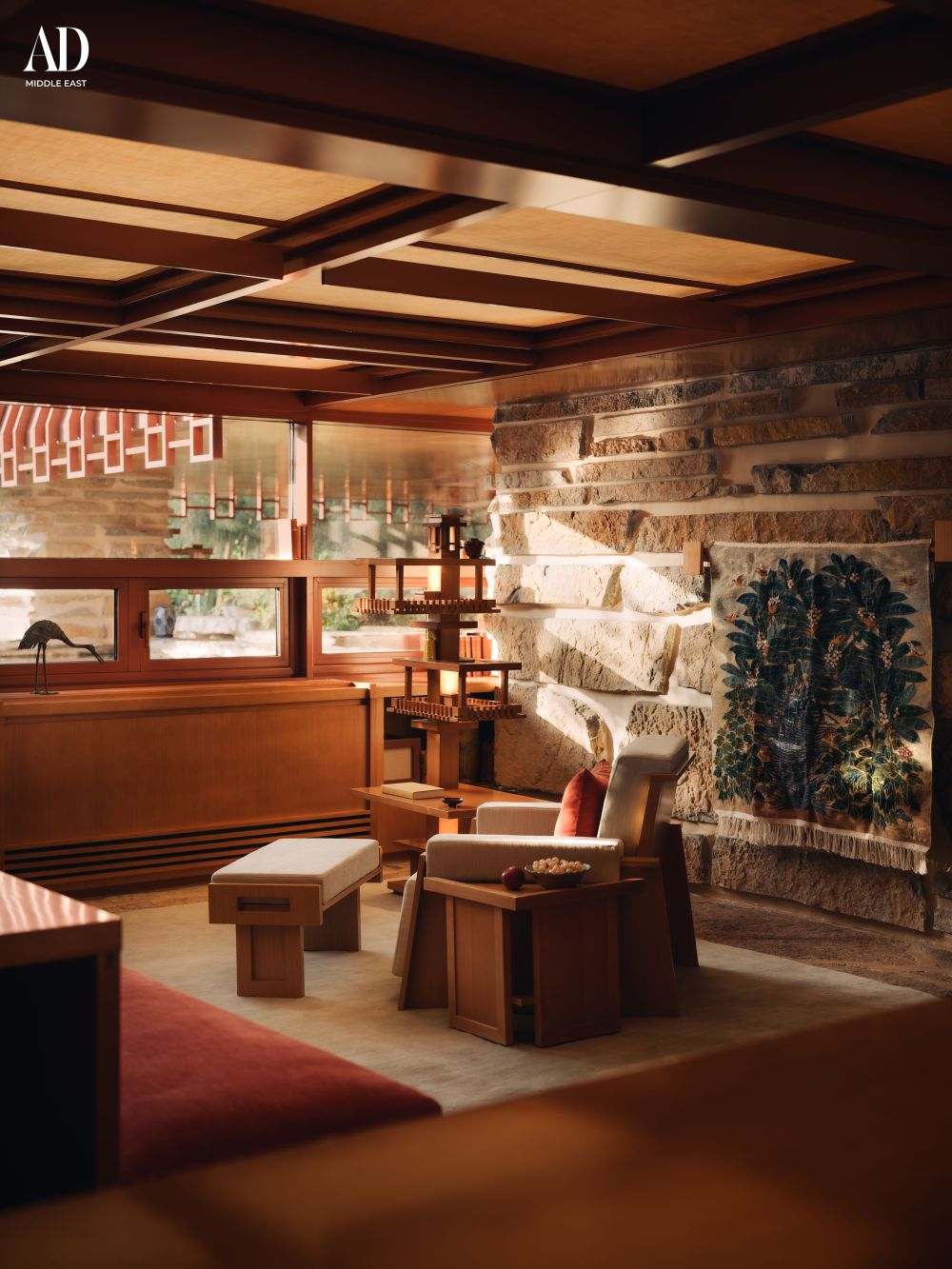
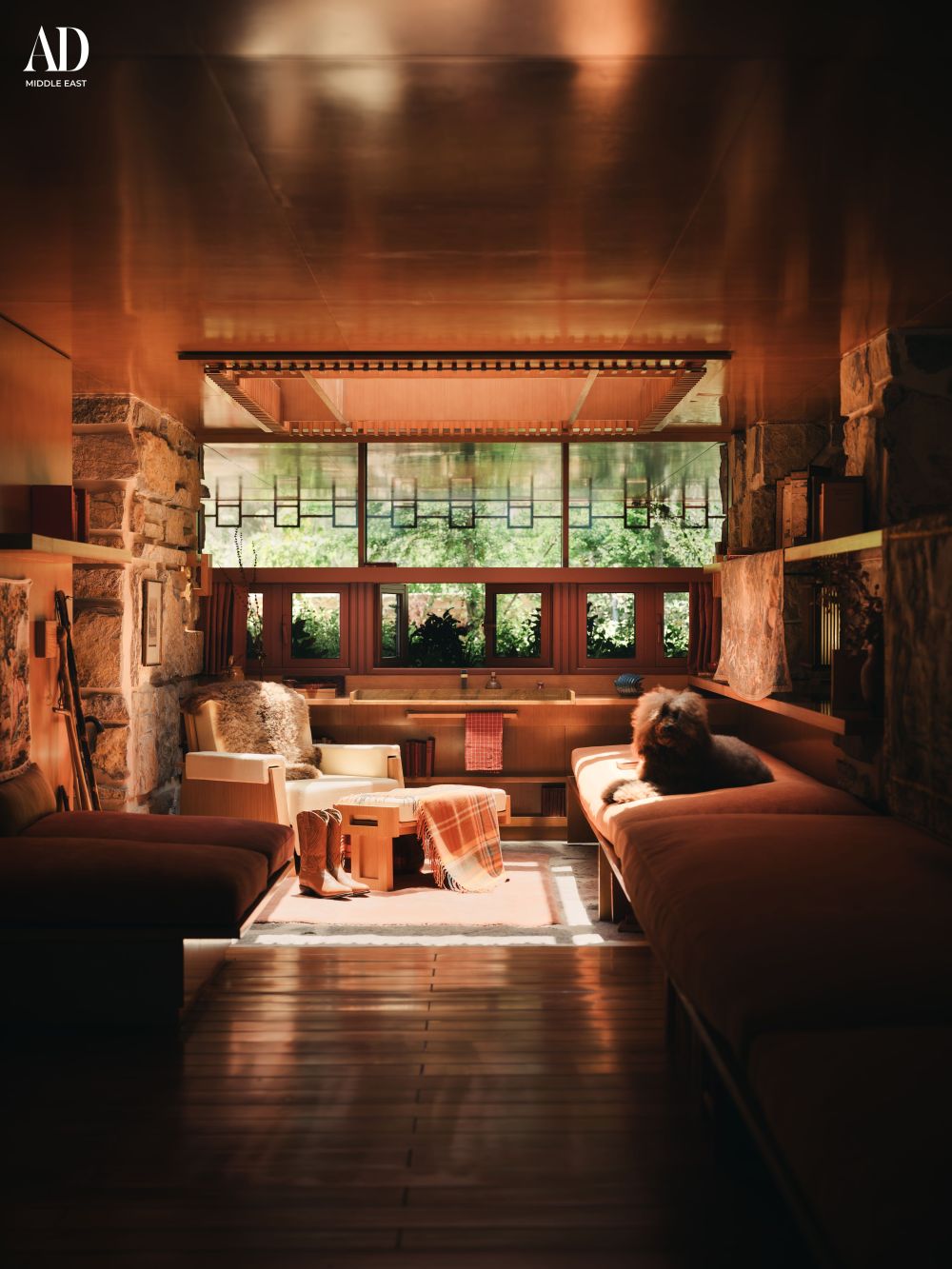
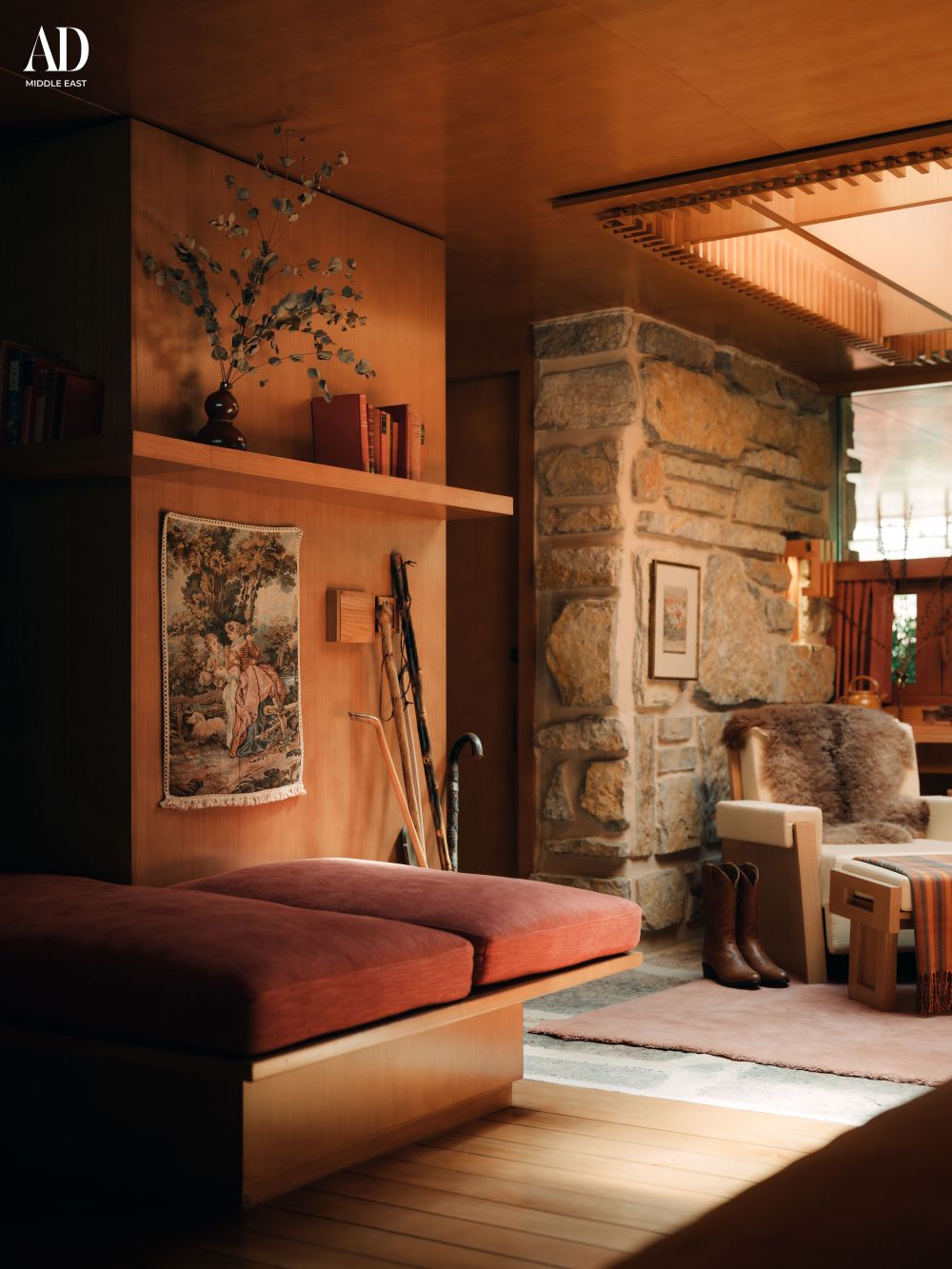
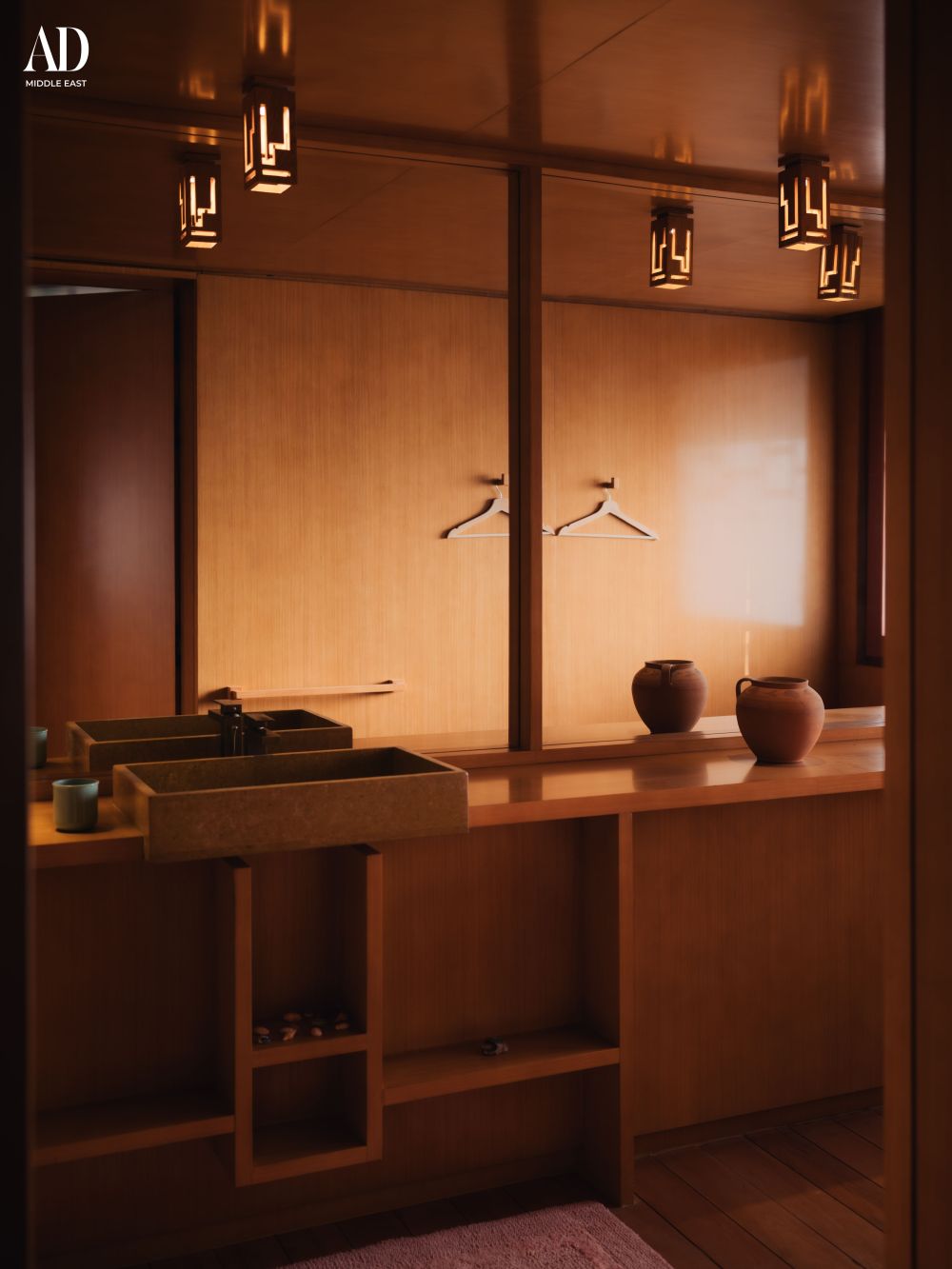
Materially, the house draws deeply on its coastal surroundings. Locally extracted mountain stone from the neighbouring emirates of Fujairah and Ras Al Khaimah, oak, Indus Gold marble and red-painted steel form a palette that feels sun-warmed rather than polished. Inside, the interiors are wrapped in oxidised reds, timber ceilings and textured surfaces that seem to absorb the shifting tones of the day.
Nothing inside the home feels isolated from the architecture around it. Every light fixture, furnishing and utility was designed by the trio (aka The Fellowship) on site specifically for the project, blurring the boundary between object and structure. Hanging within the reading area is Frangipani by Egyptian artist Sabra Saoud from the Ramses Wissa Wassef Art Center, while ceramic vessels by Sara Chemseddine, Matooqa Al Rahma and Rhode Island ceramicist Brian Dougan appear almost archaeologically embedded within the interiors.
Yet despite the intricacy of detail, the coastal retreat in Umm Al Quwain resists putting on a show. There are no grand gestures clamouring for attention. Instead, the house rewards stillness. Long afternoons drift between shaded terraces, reading corners, and the sound of waves moving beyond the stone walls. Even the architecture itself seems designed for lingering observation.
- 转载自:AD(admiddleeast)
- 图片@AD(admiddleeast)
- 国家:美国
- 编辑:序赞网
- 翻译:序赞网
- 阅读原文
|
|