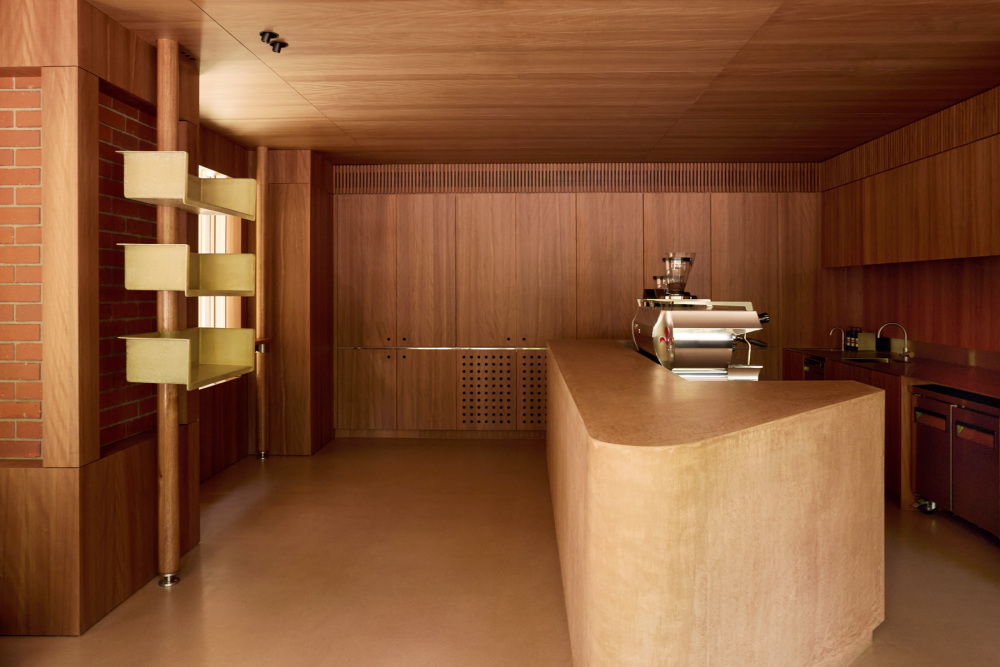
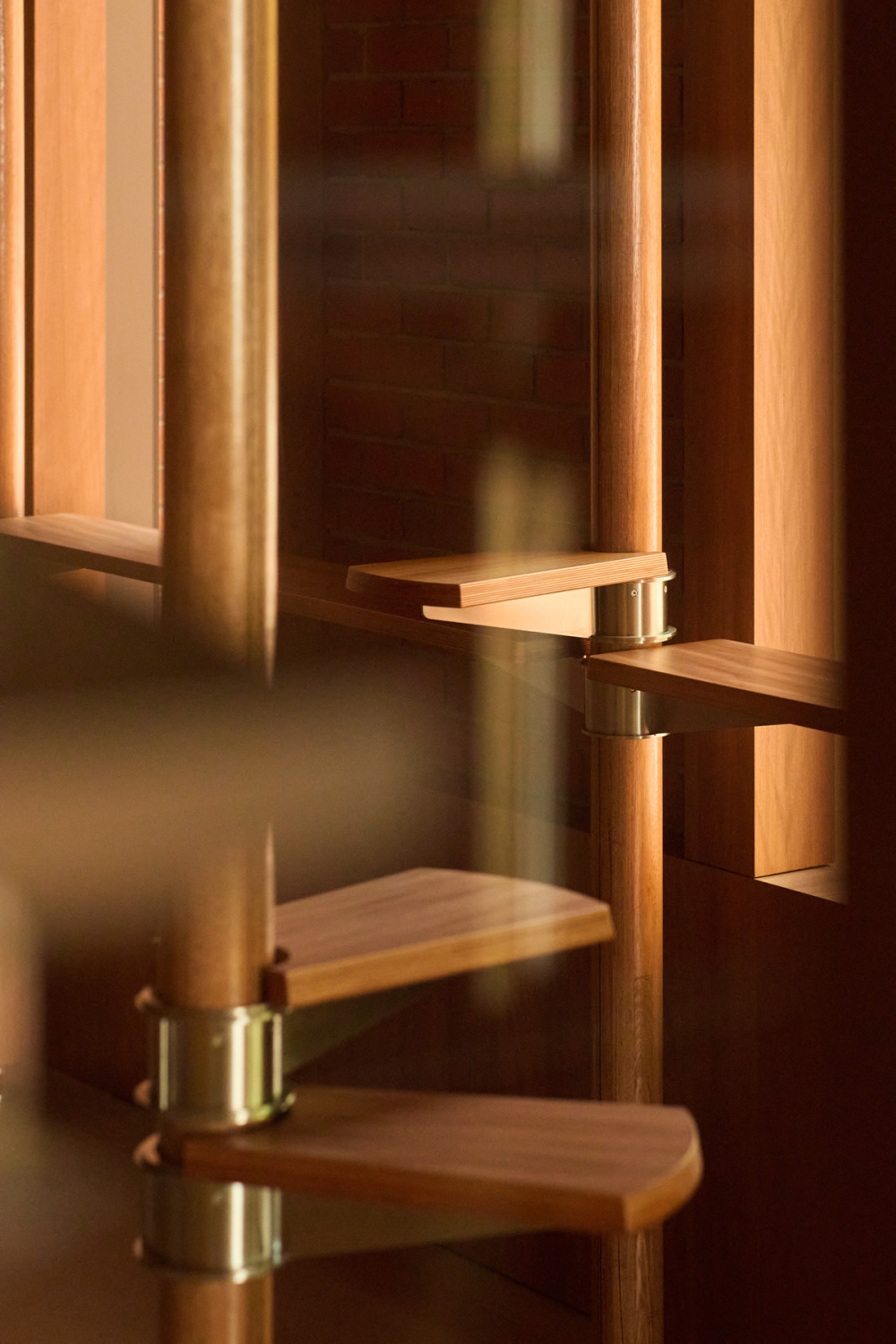
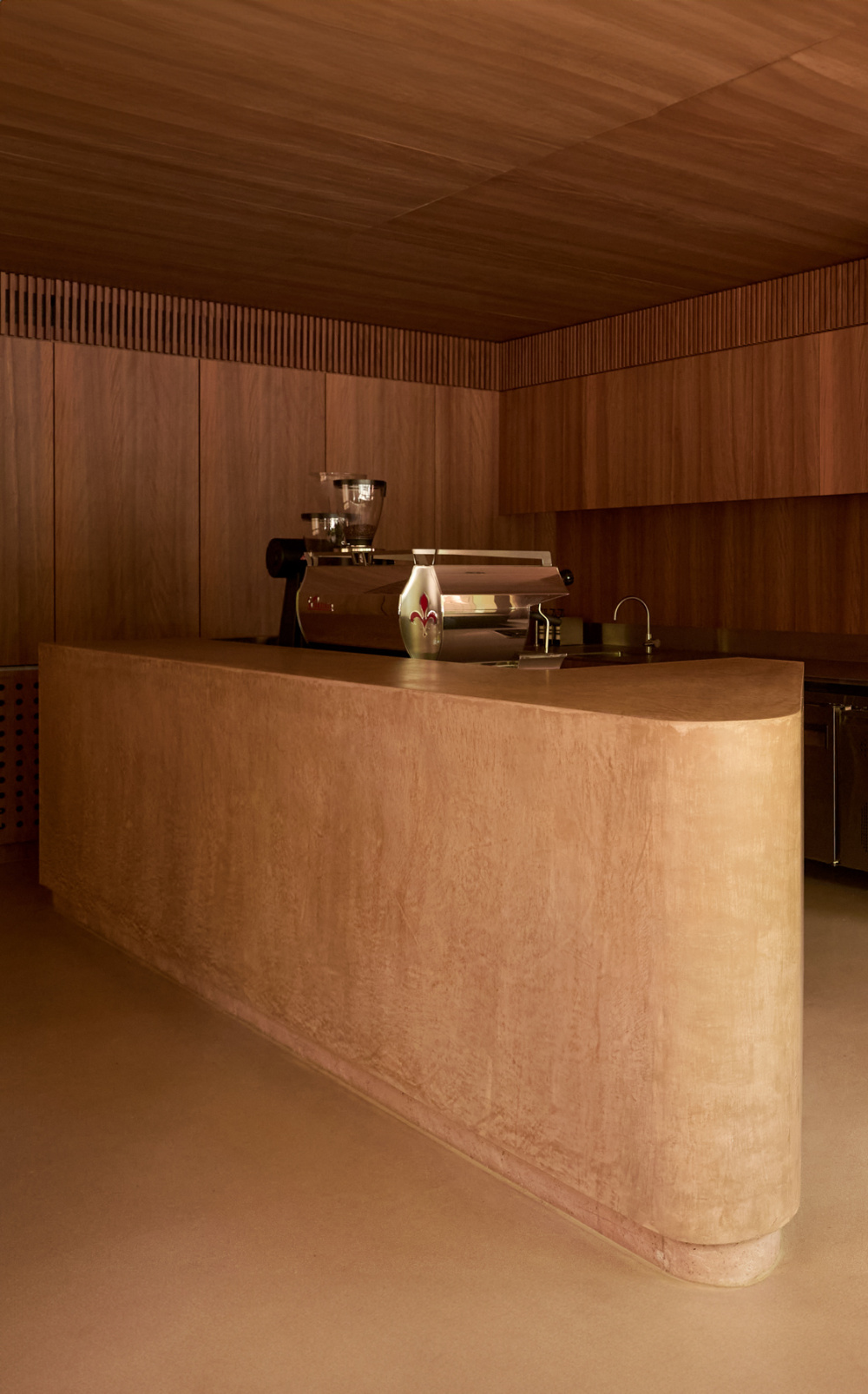
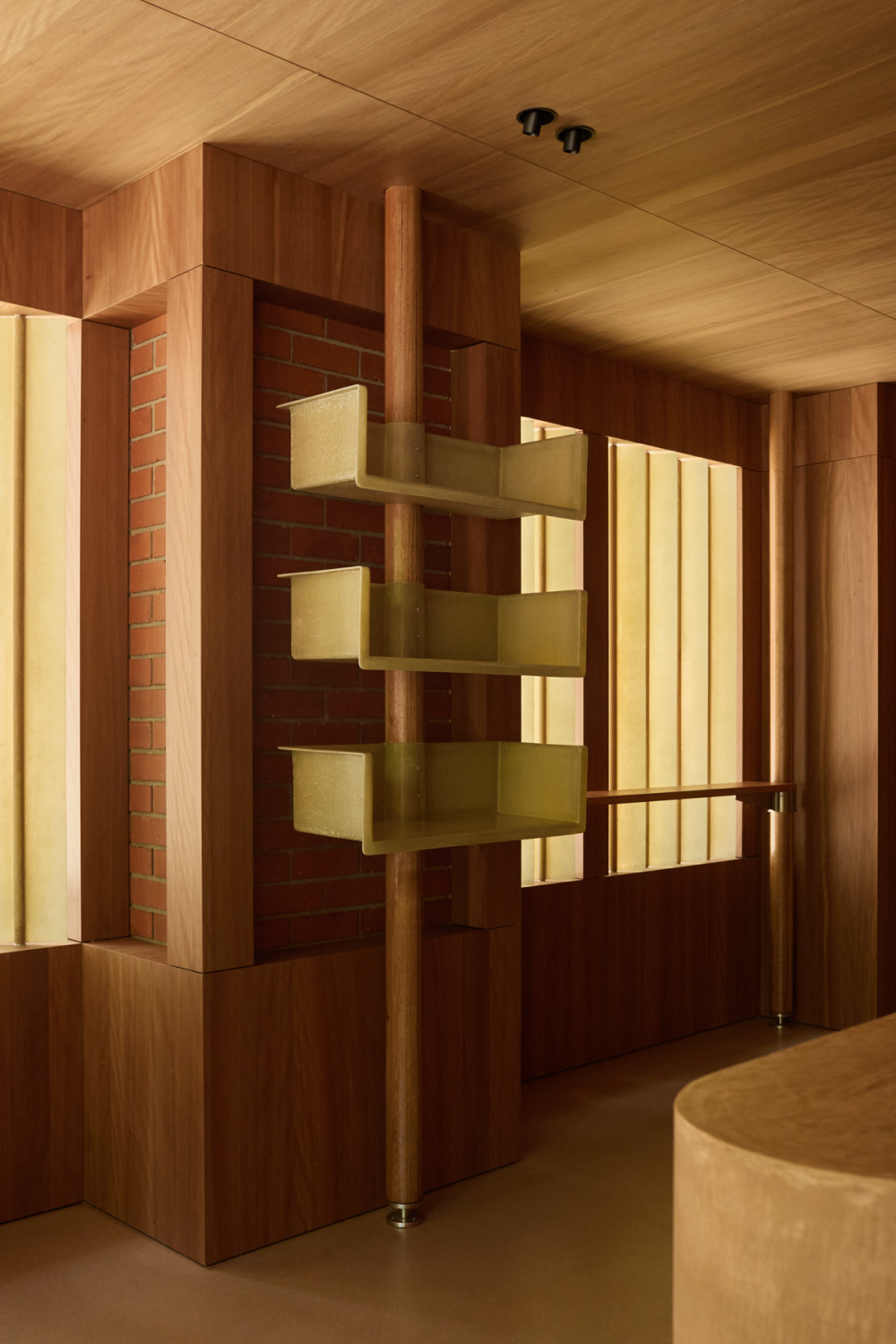
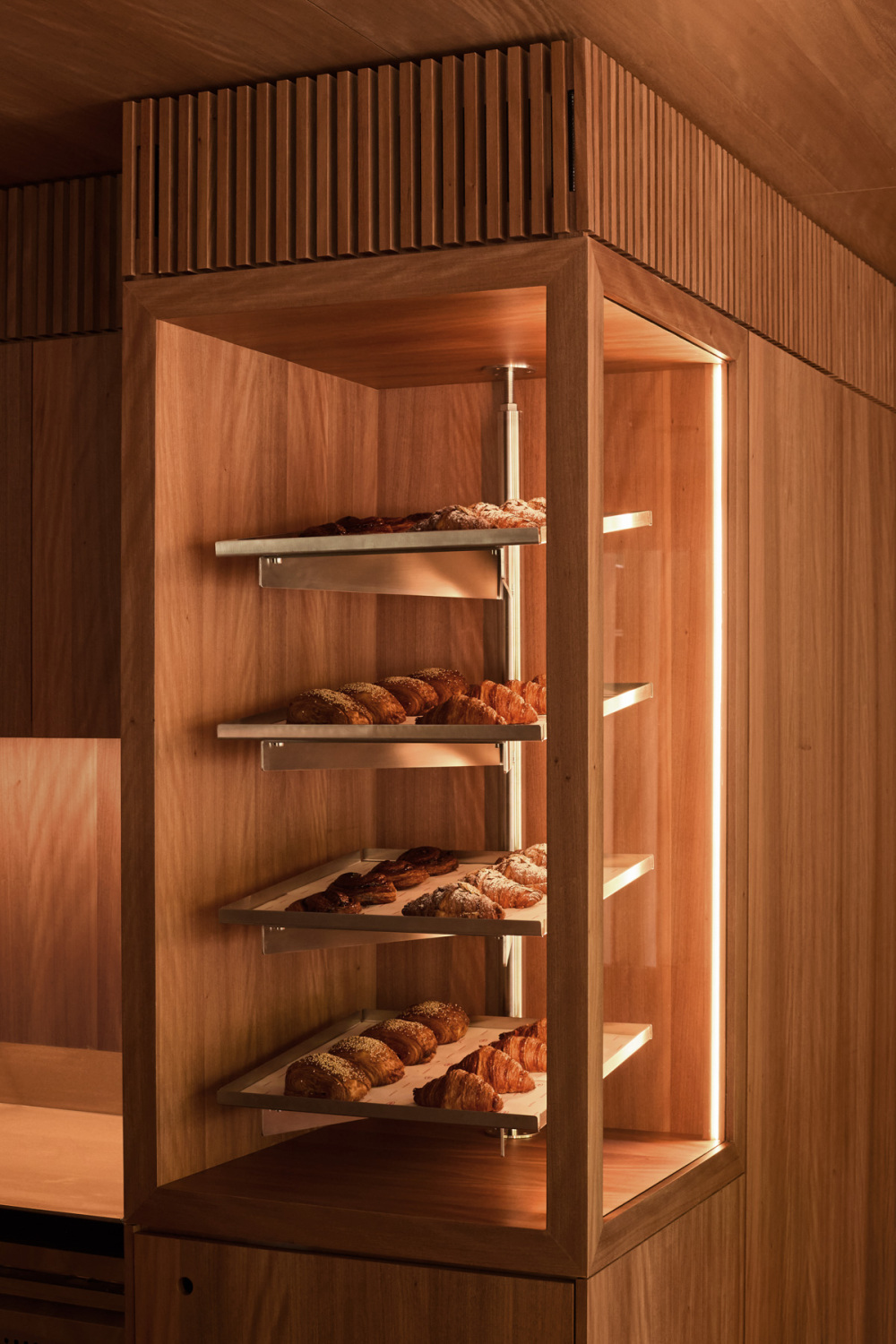
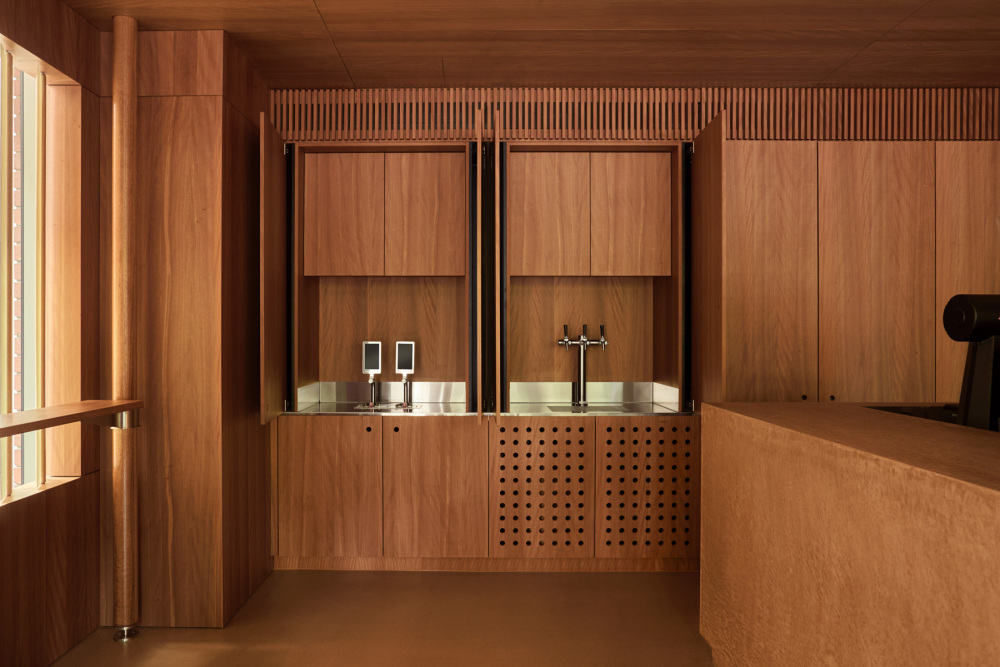
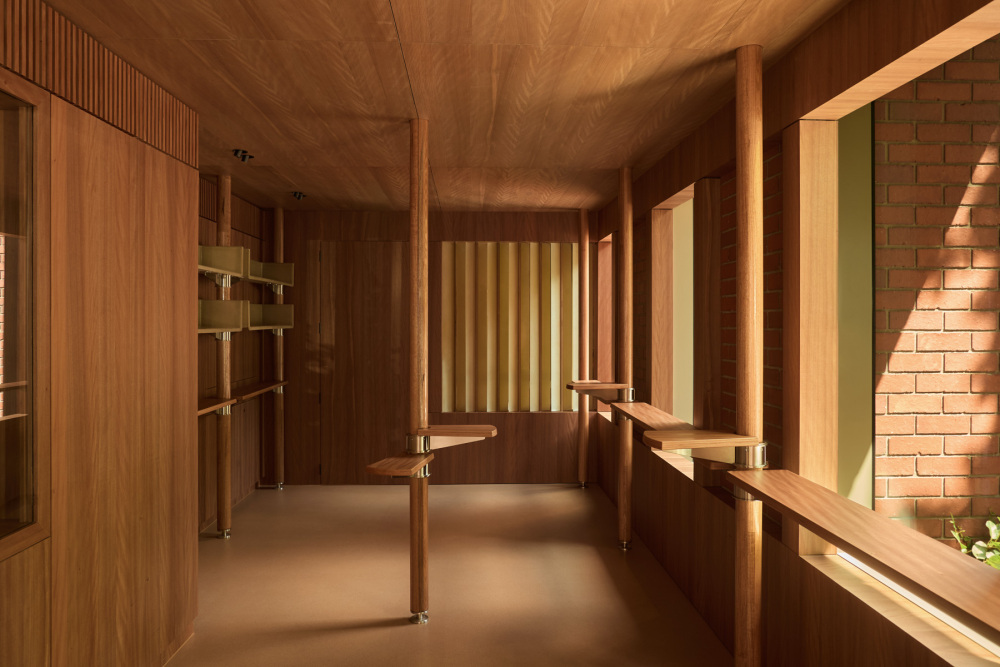
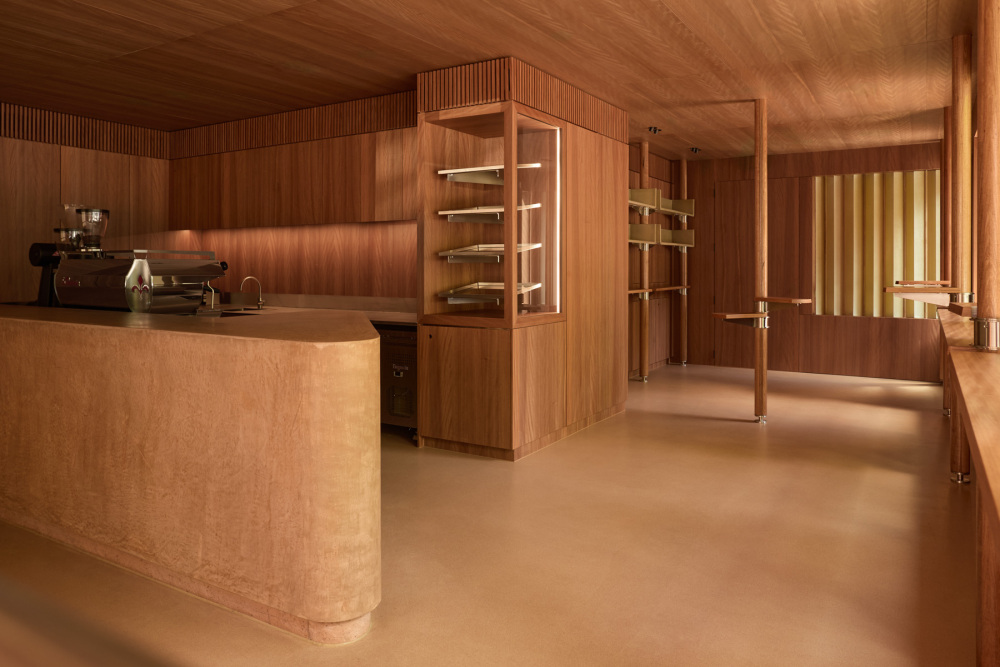
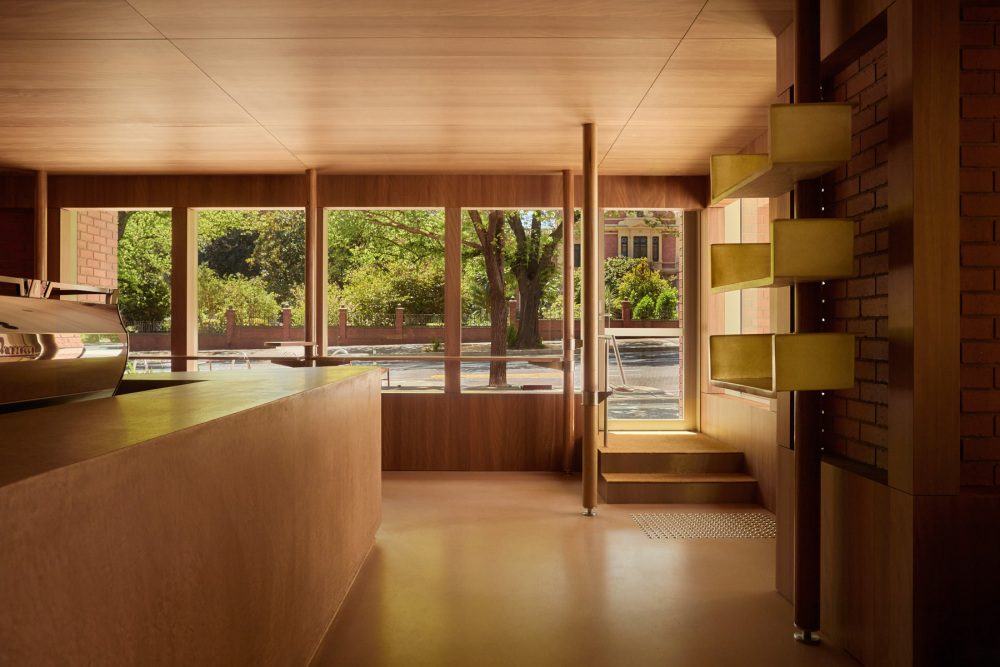
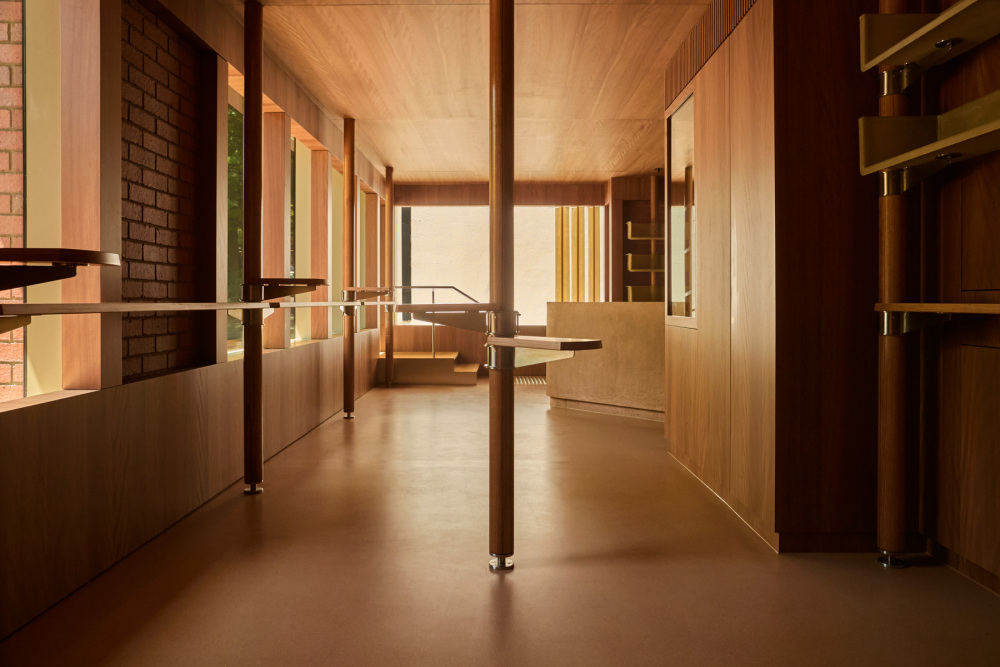
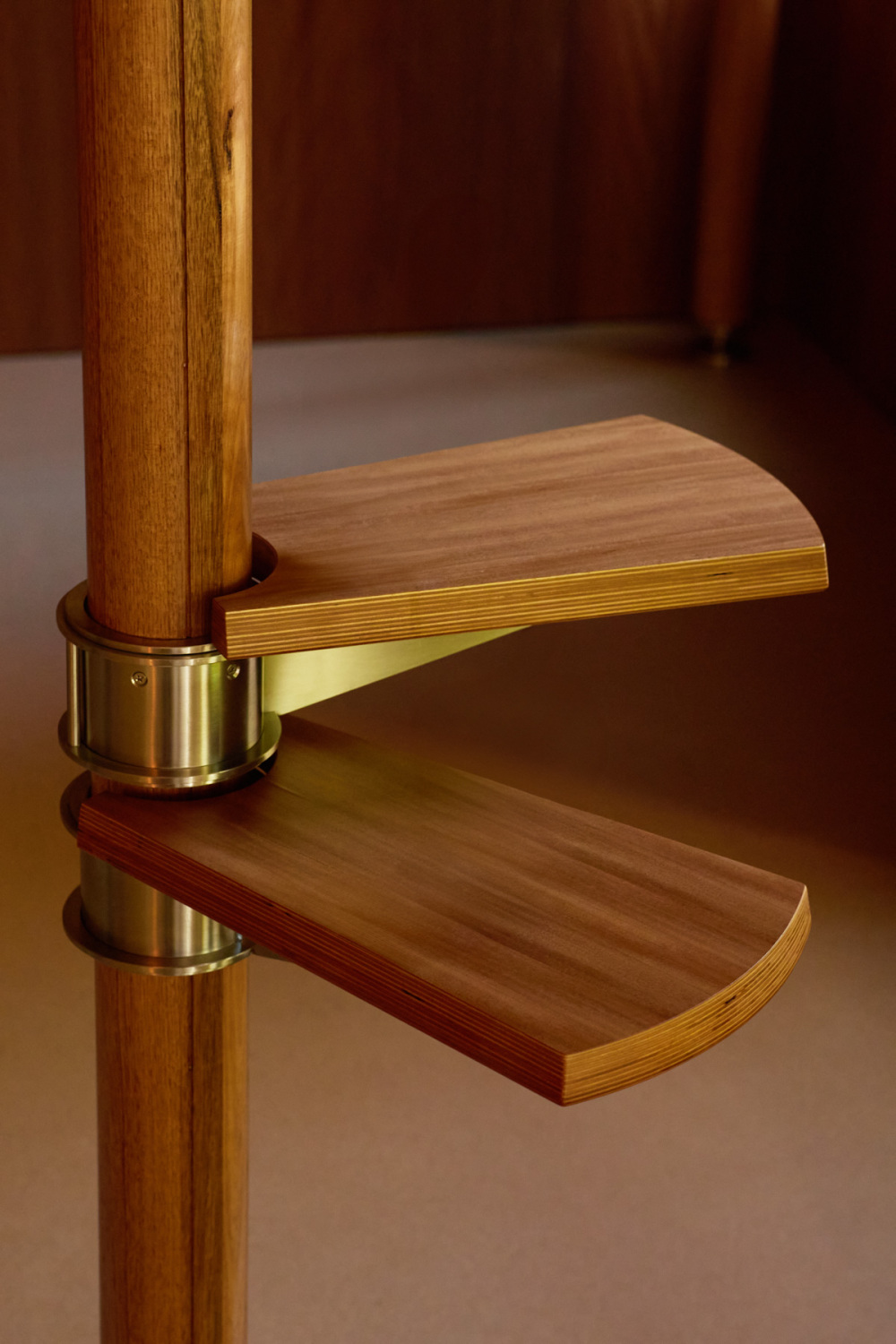
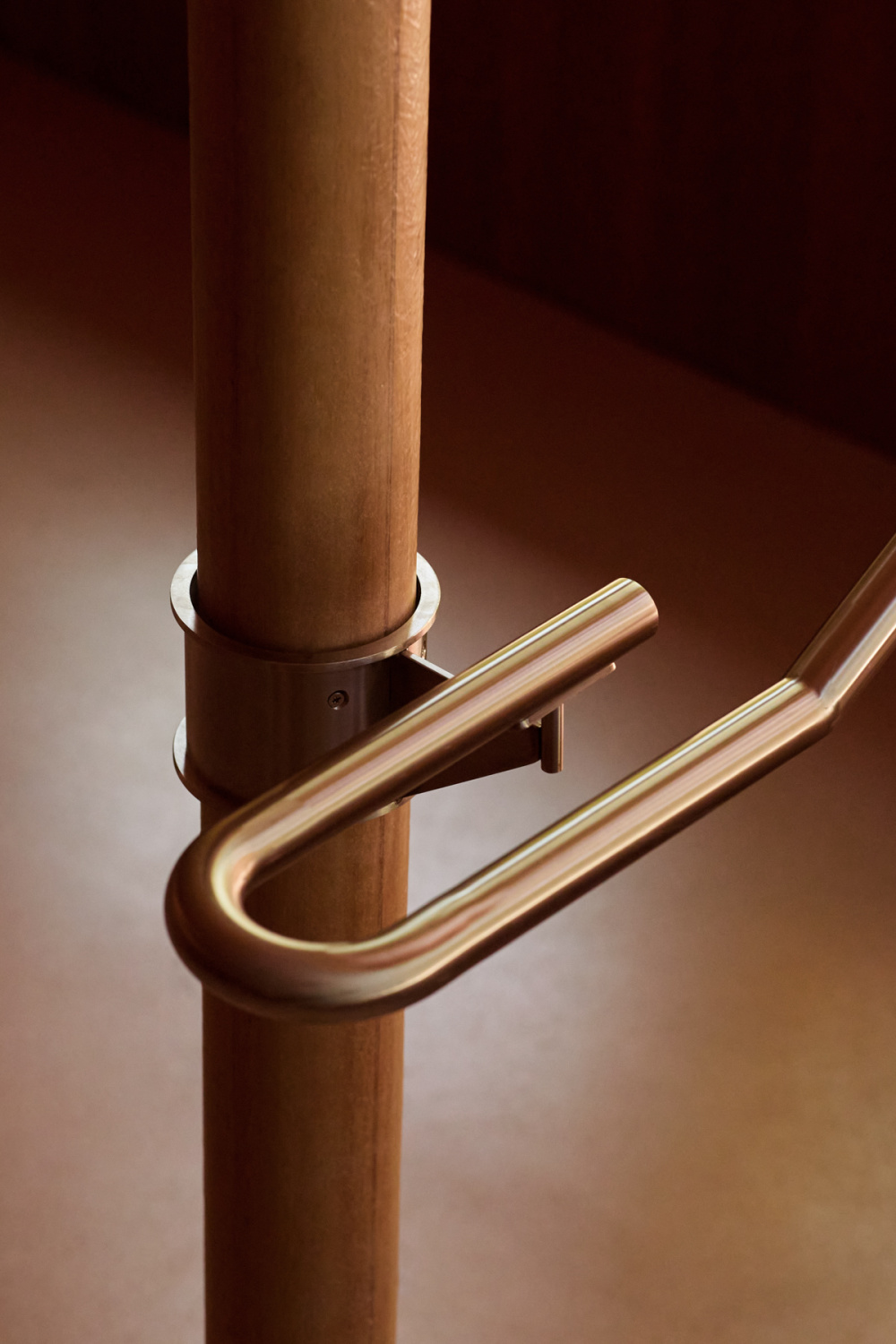
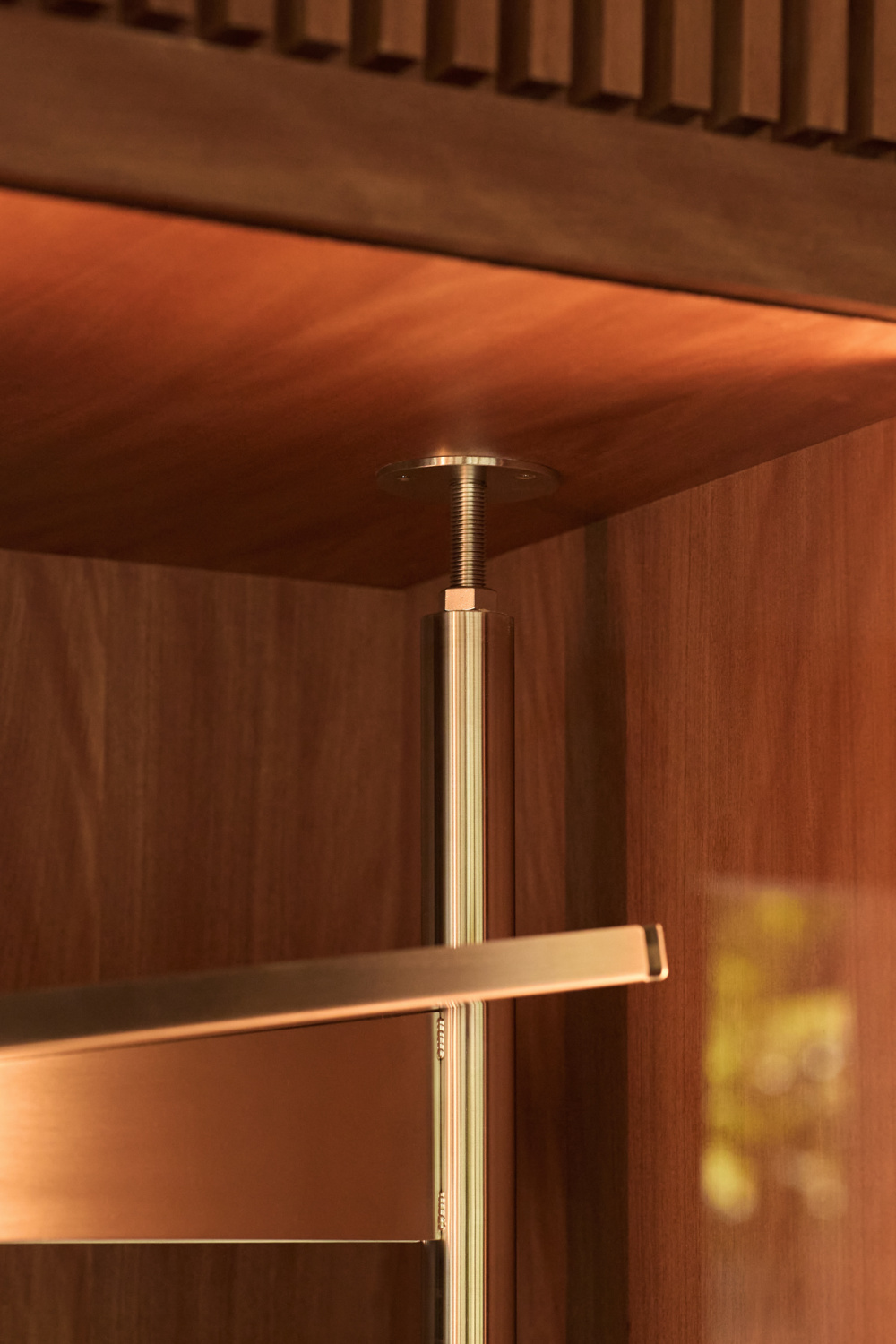
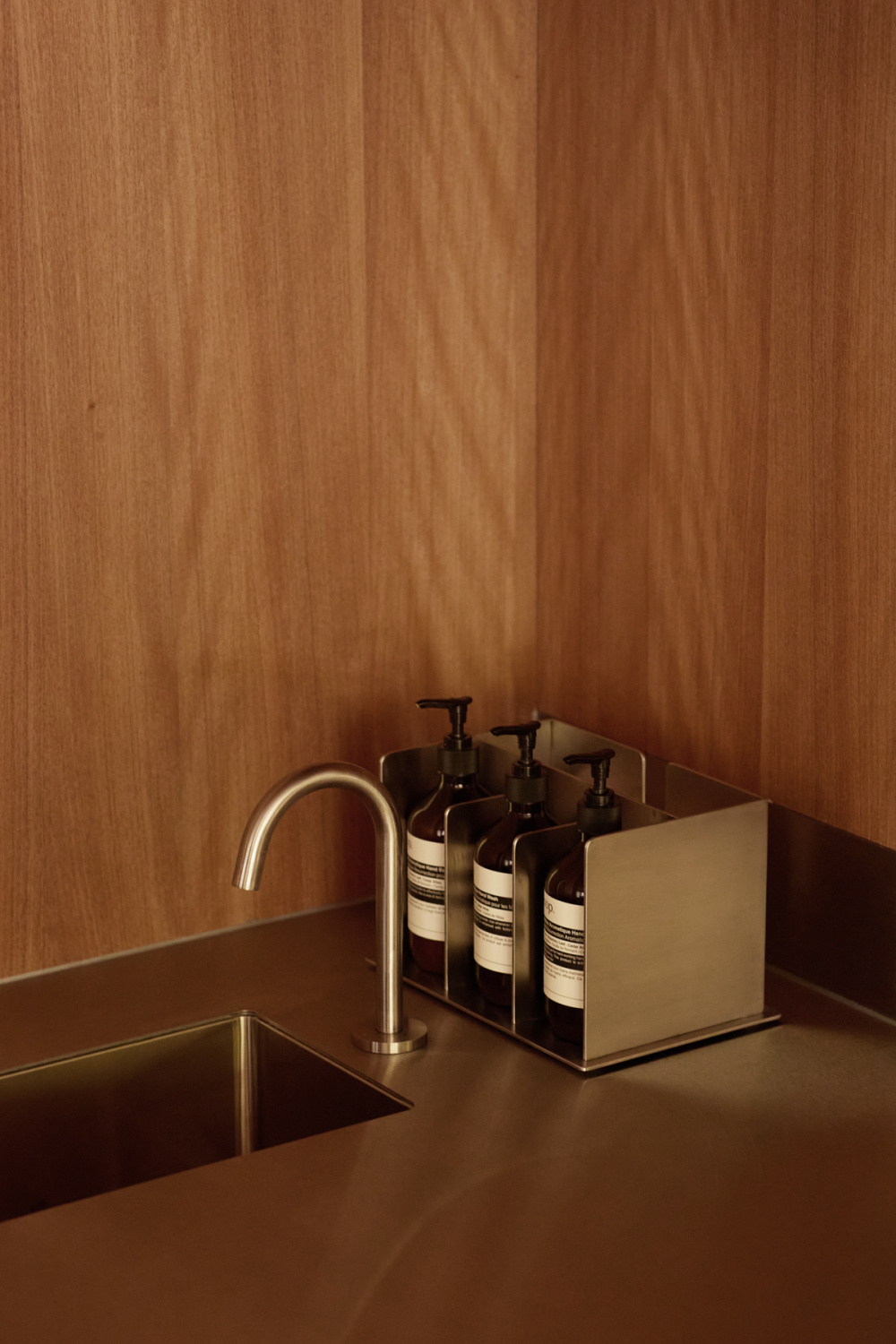
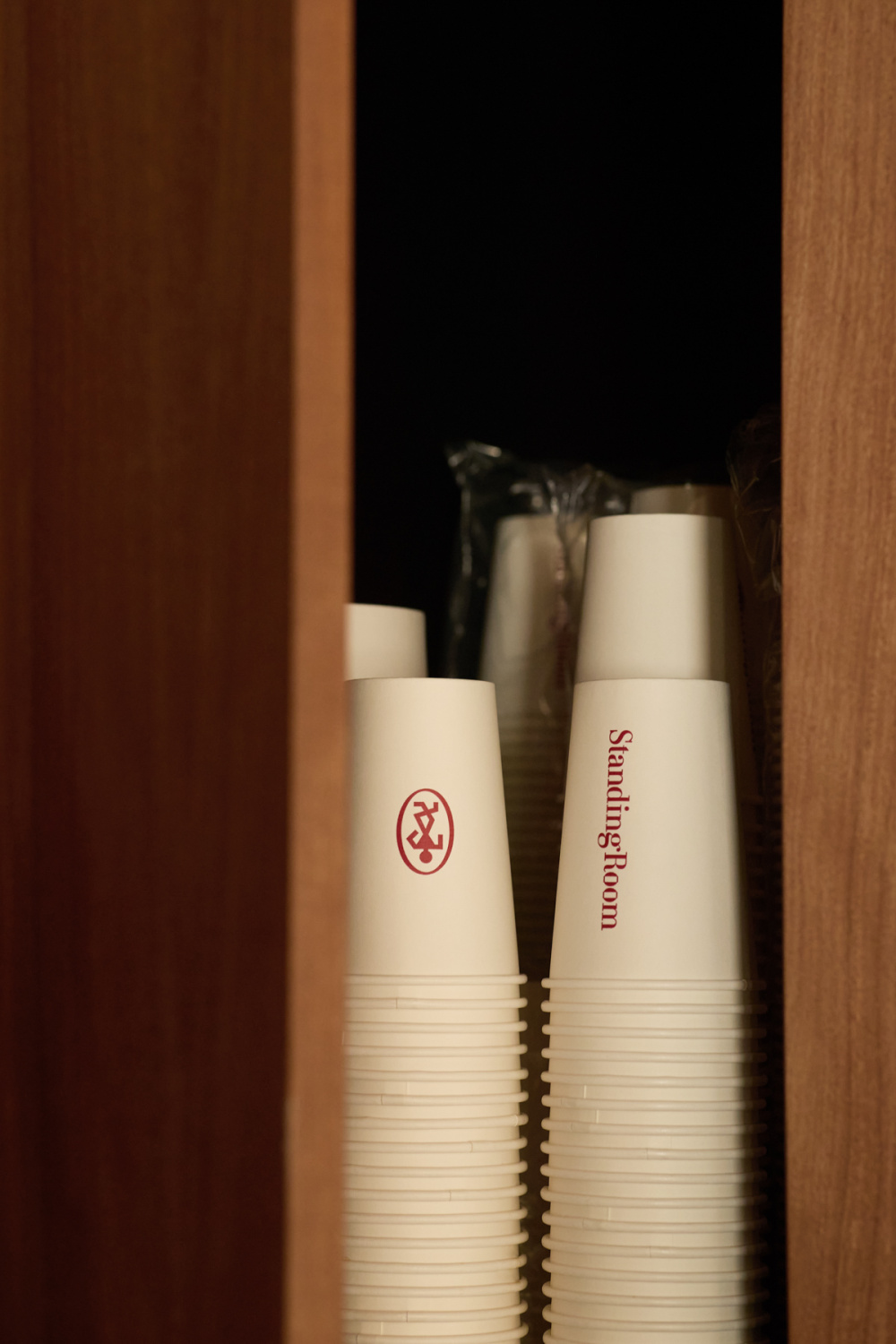
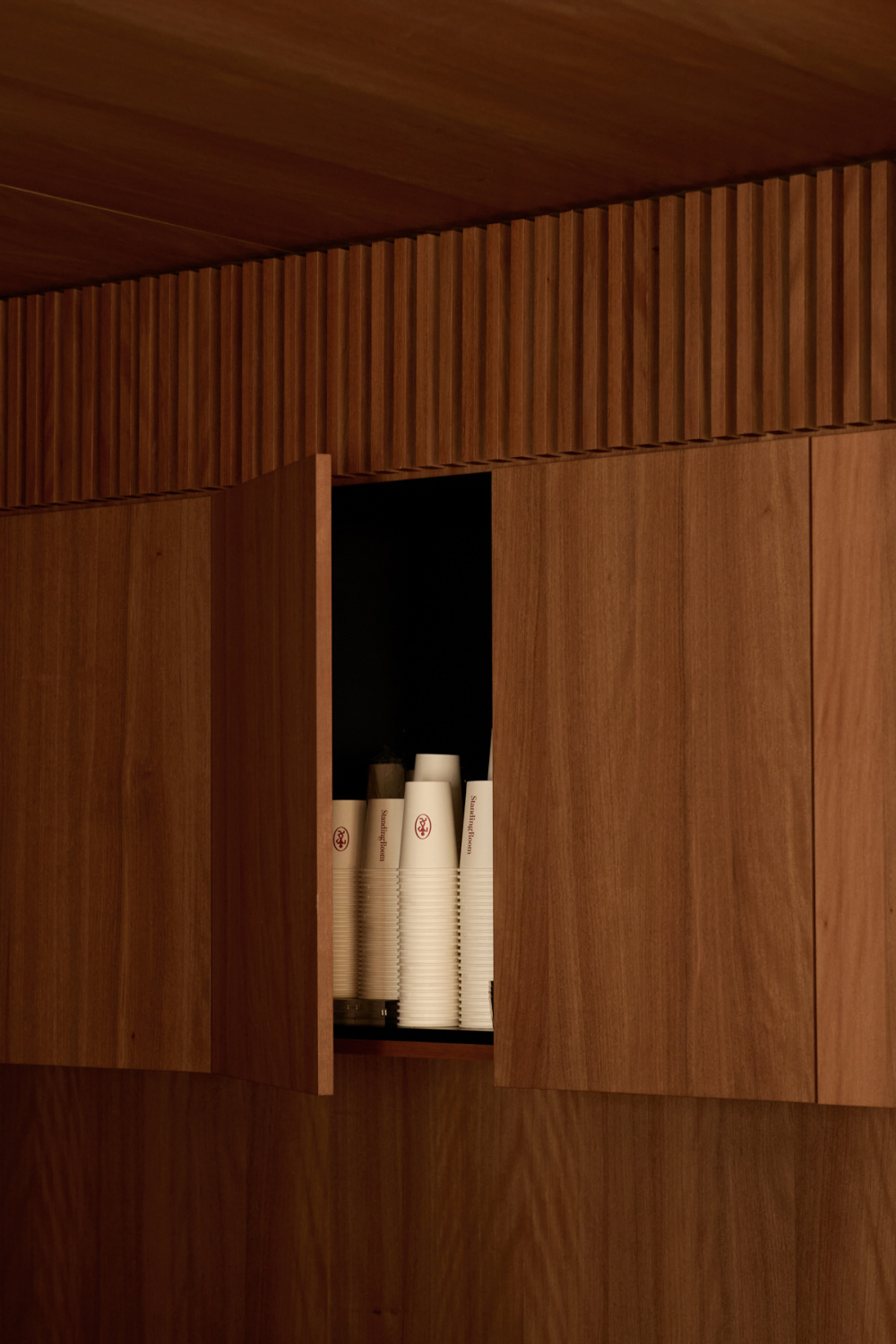
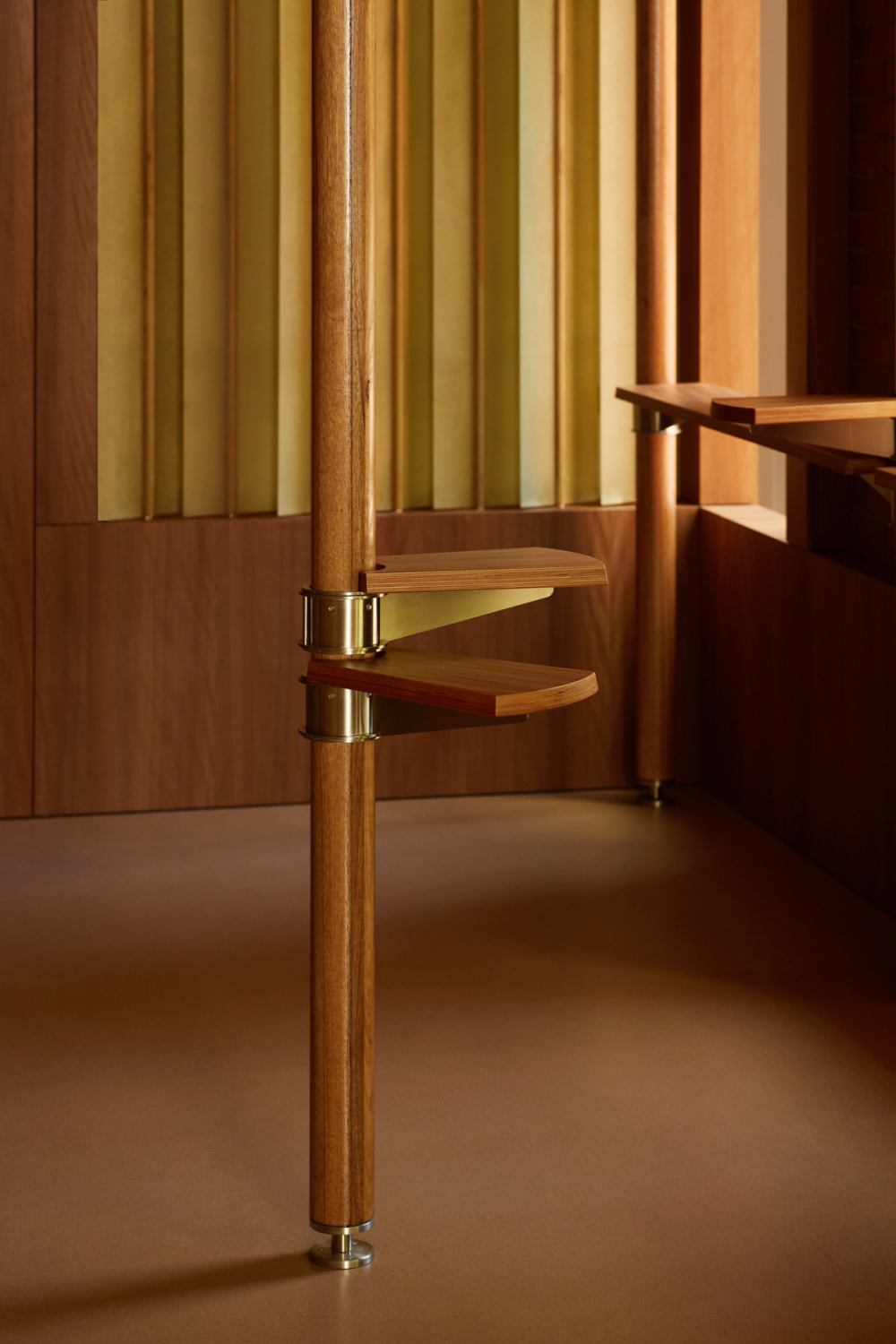
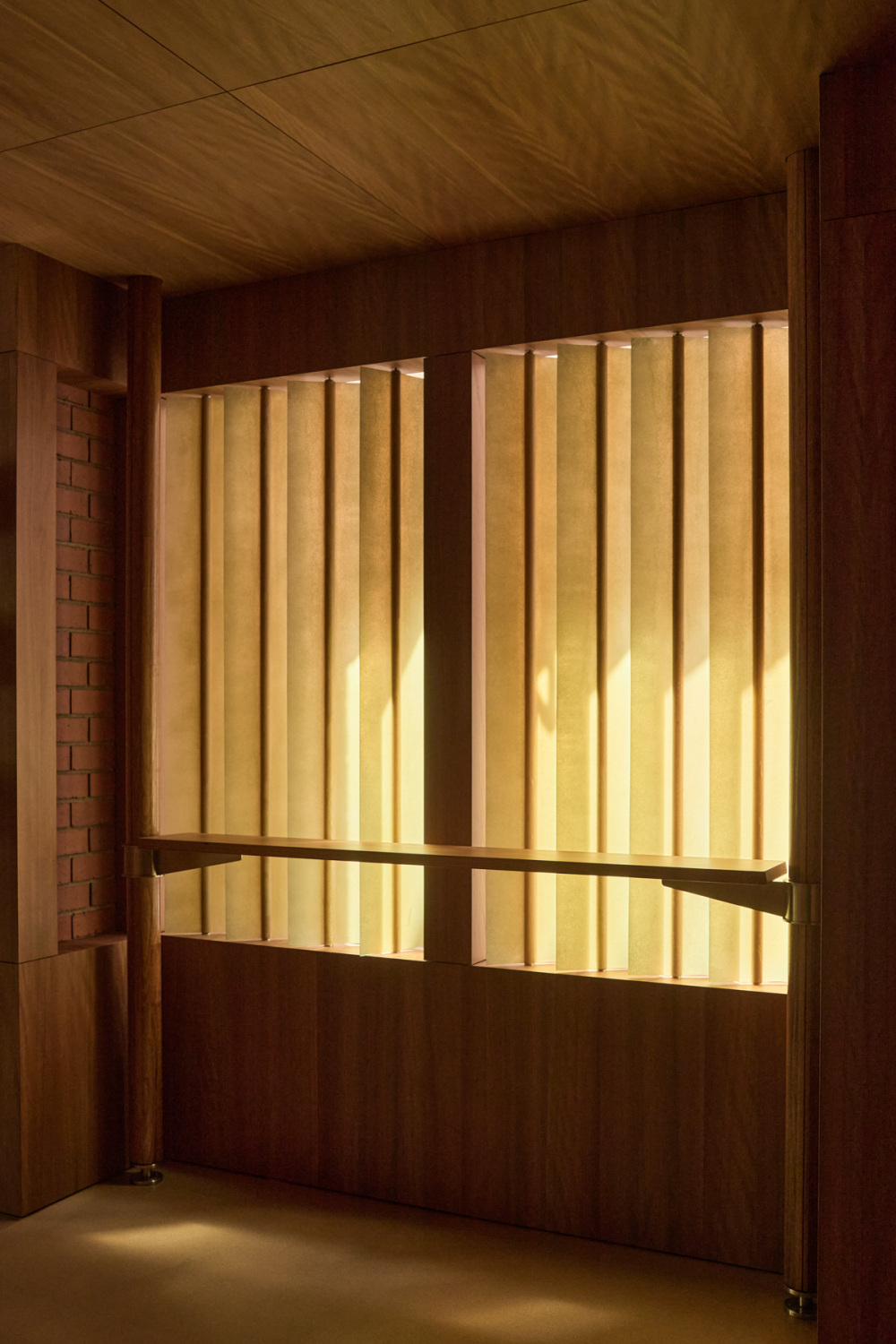
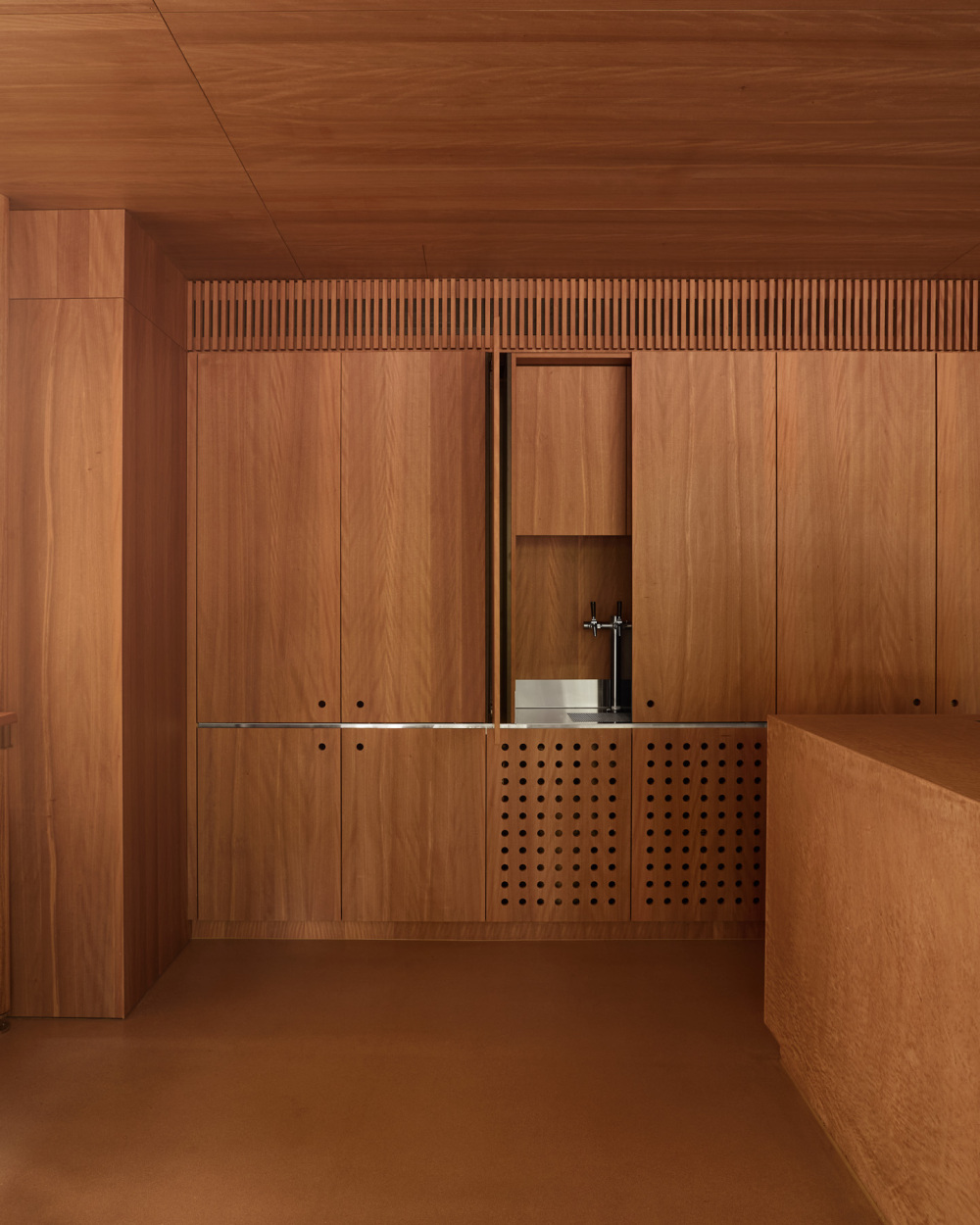
The project reinterprets the archetype of the standing espresso bar and Hall’s approach favours subtle gestures over spectacle. The curved counter anchors the space, while a series of vertical poles rhythmically punctuate the room. They guide the flow of people, suggest boundaries without division and introduce a quiet tempo that mirrors the steady choreography of service. Each detail – the brushed brass edges, the pale timber joinery, the gentle rotation of shelving – feels purposeful but understated, creating an environment that invites pause rather than performance. In this way, movement itself becomes part of the design language, each gesture highlighting the exchange between barista and customers.
Materiality carries much of the experiential weight. Brush box timber and Victorian ash lend warmth and tactility, recalling the intimacy of the city’s older espresso bars, while the inclusion of fibreglass introduces a subtle sheen that plays with shifting light throughout the day. The palette is soft but confident, offering a juxtaposition between raw textures and refined surfaces – a dialogue that reflects both craft and modernity. These elements encourage a sensory awareness that deepens with repetition, each visit revealing new layers of tone, light and texture. Generosity underpins the design, showing that restraint can be rich and simplicity deeply expressive.