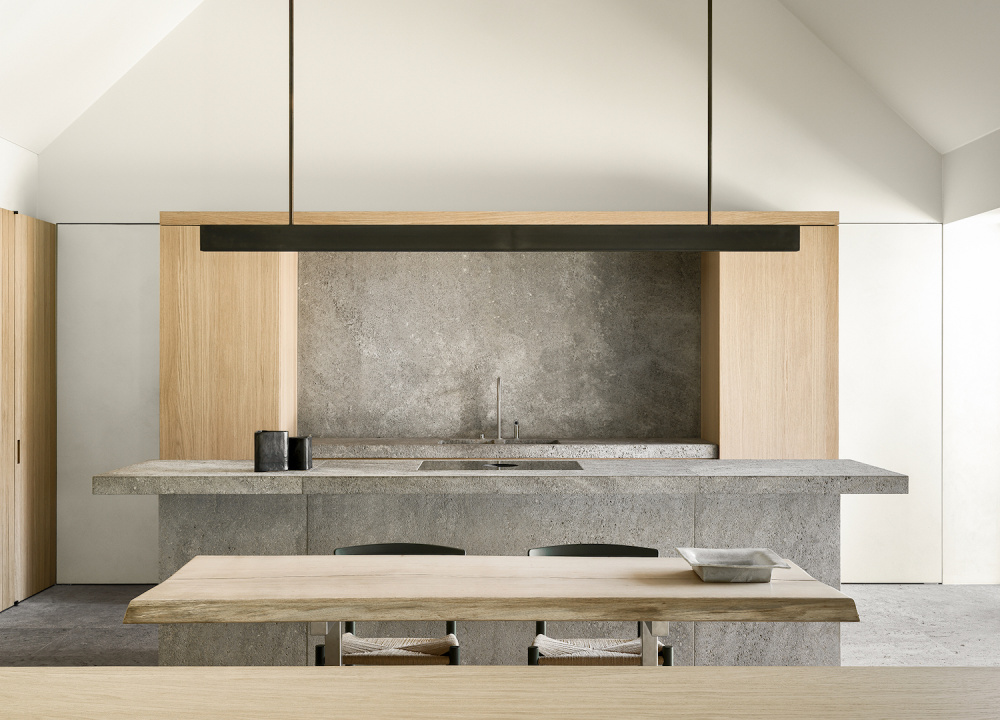
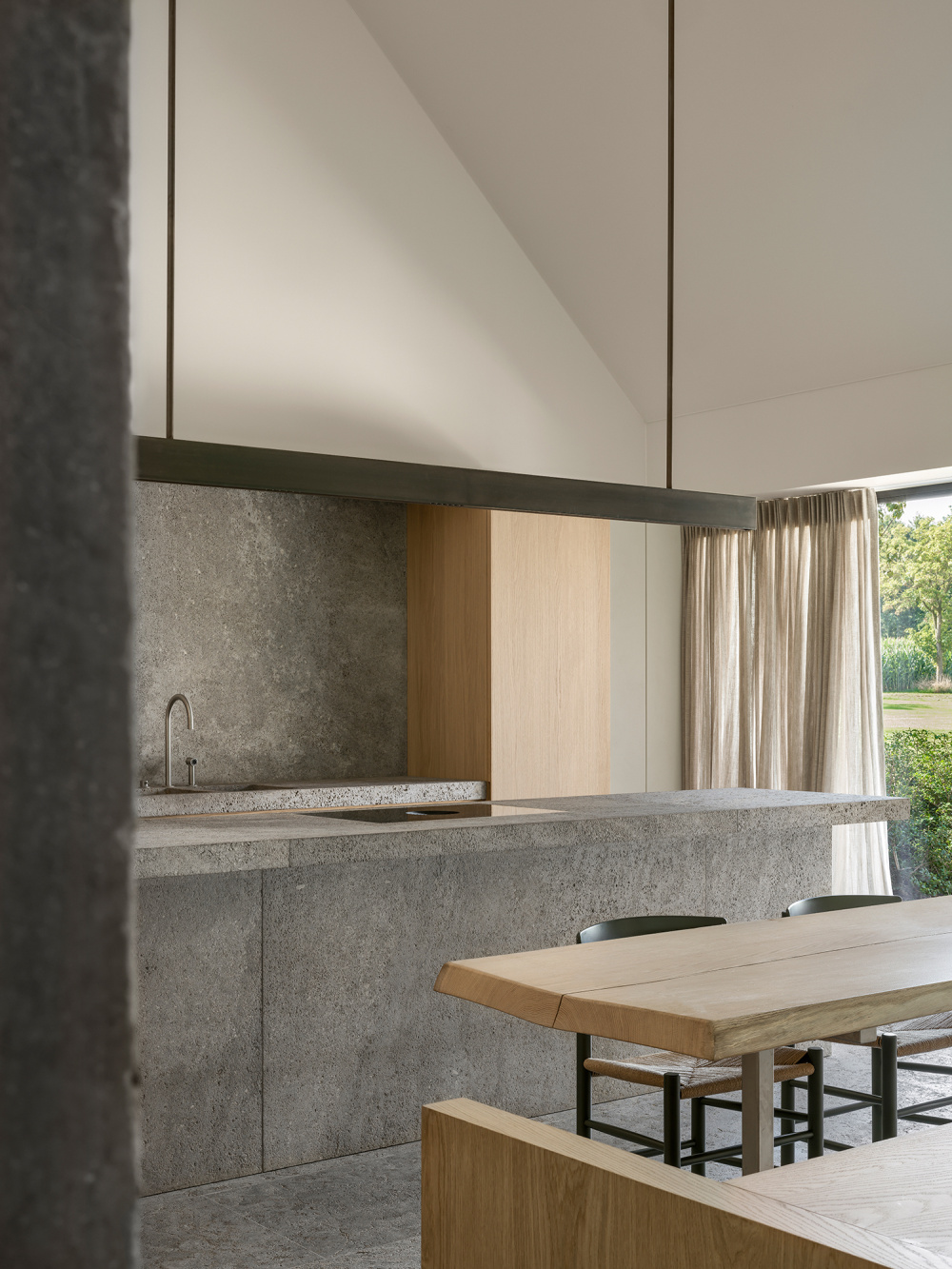
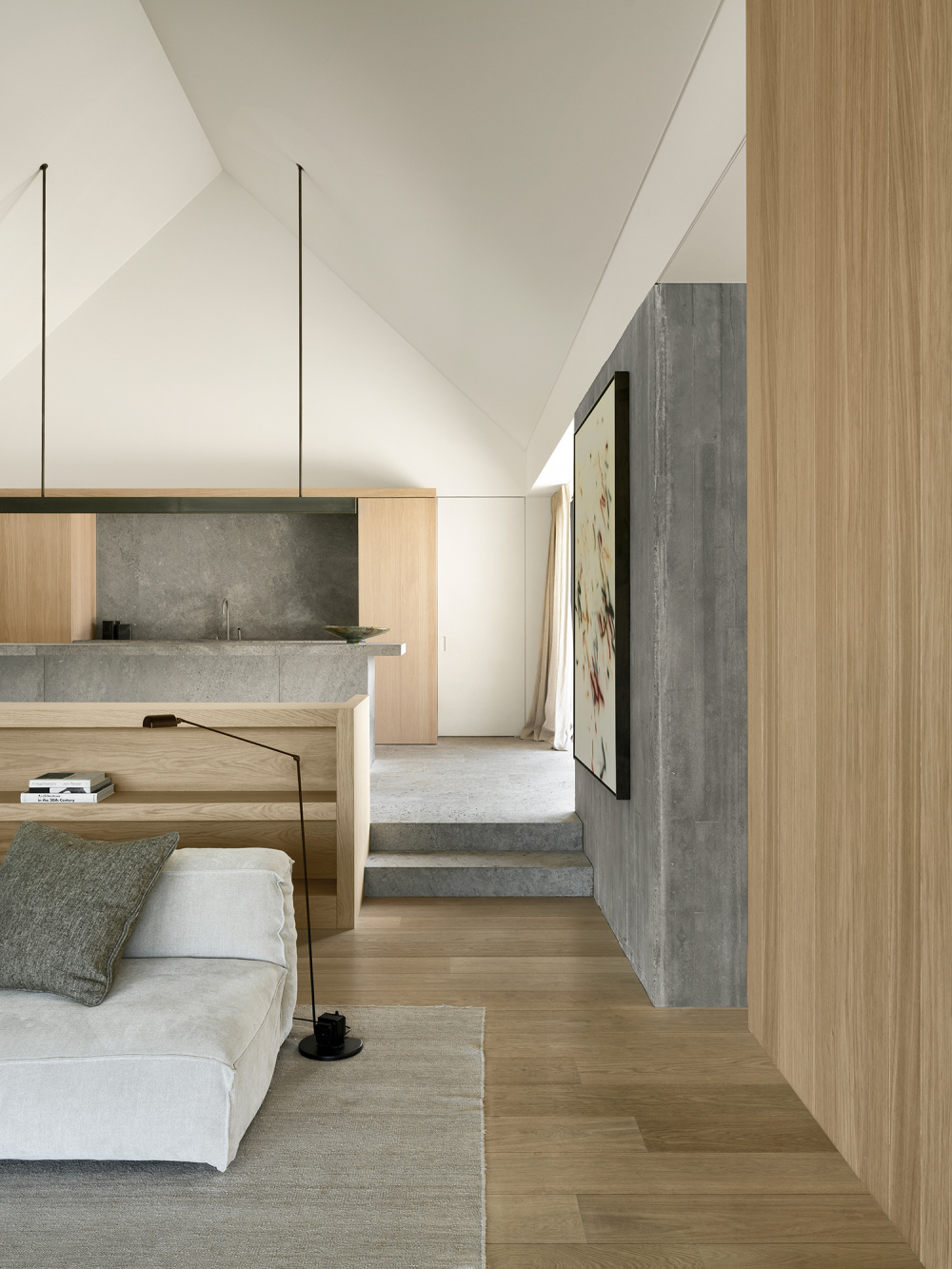
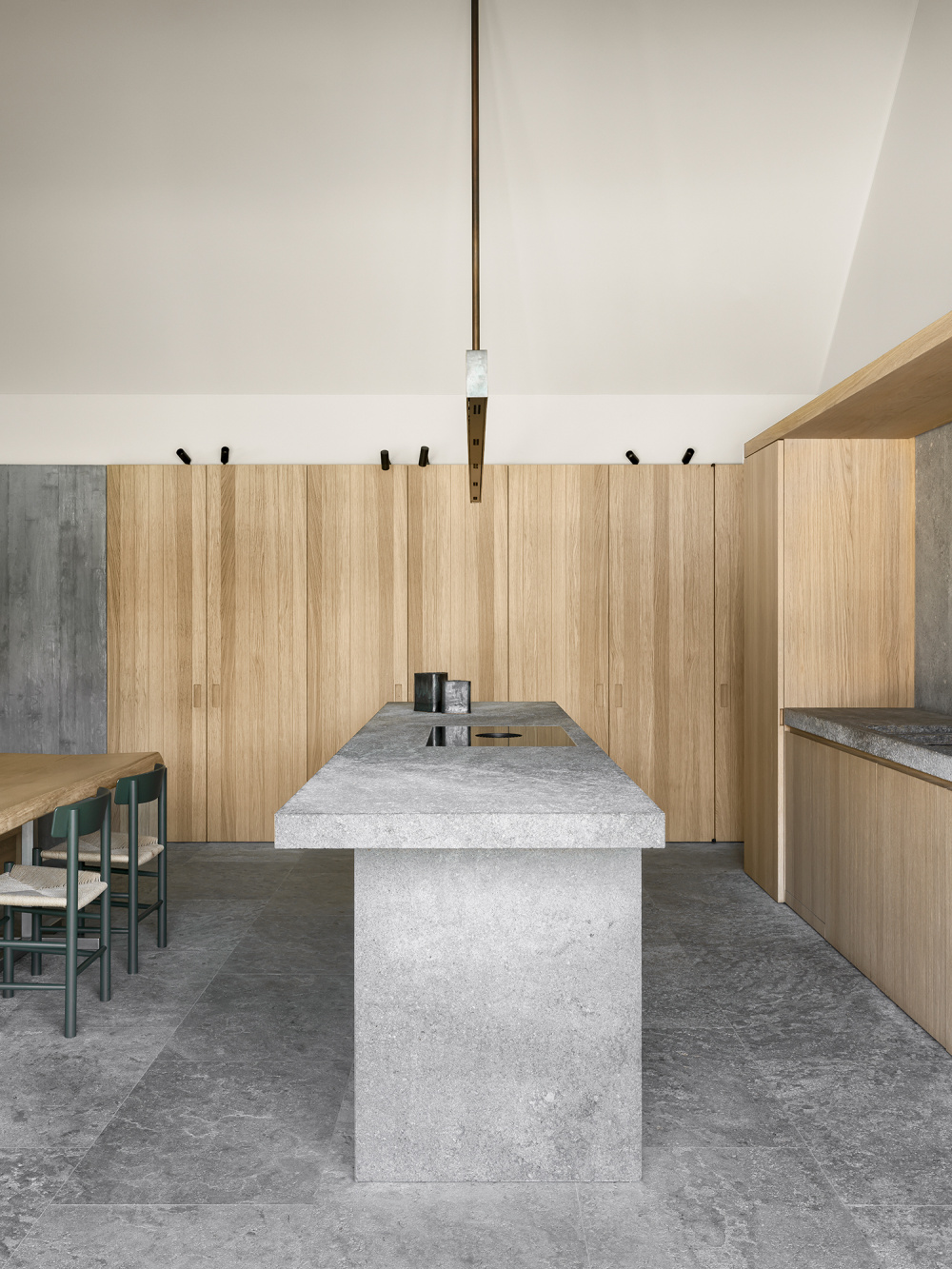
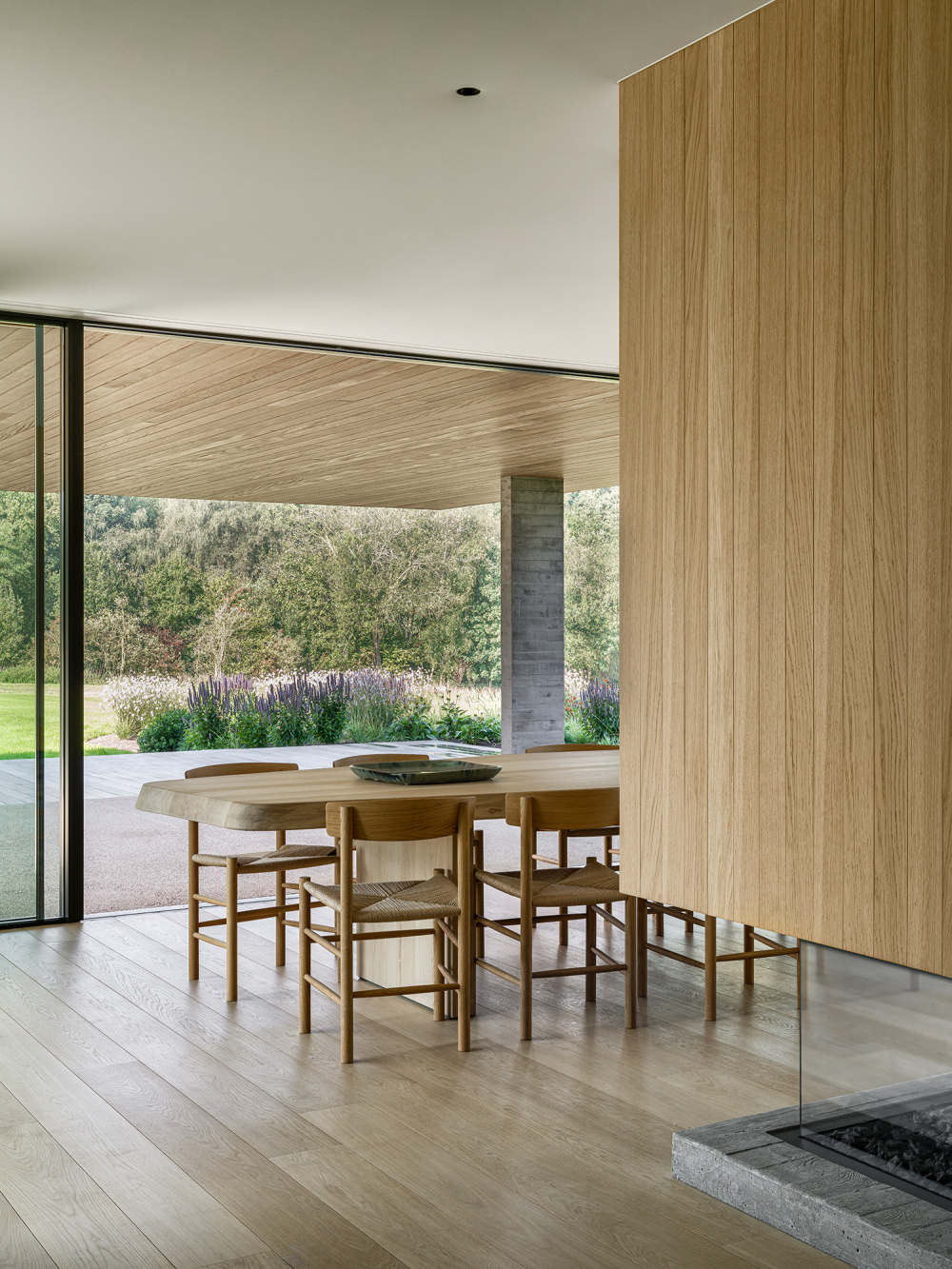
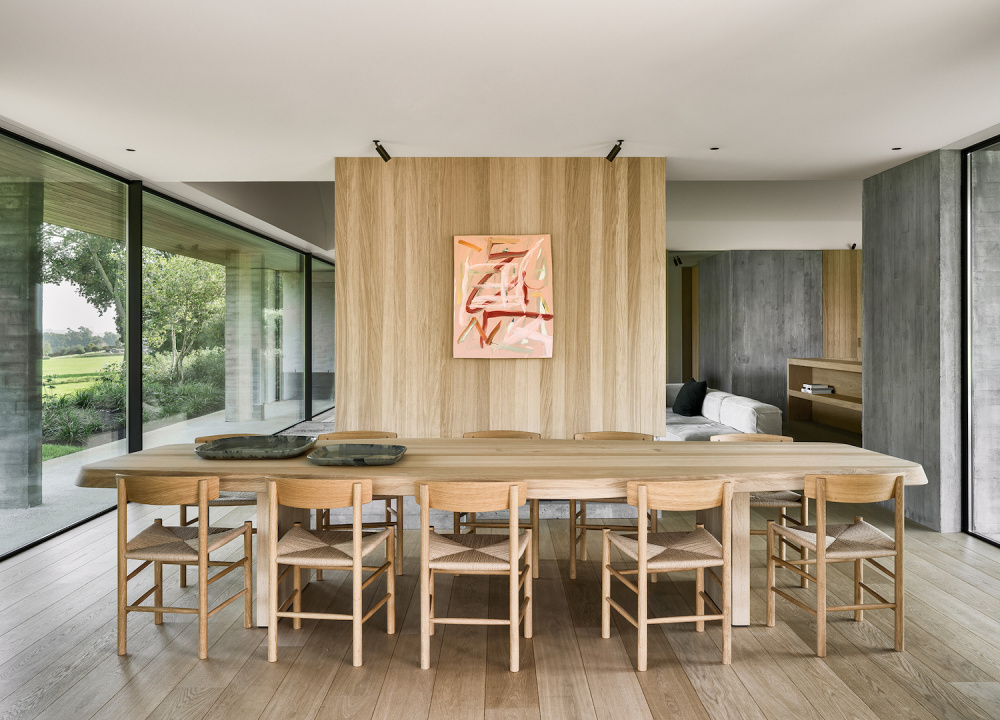
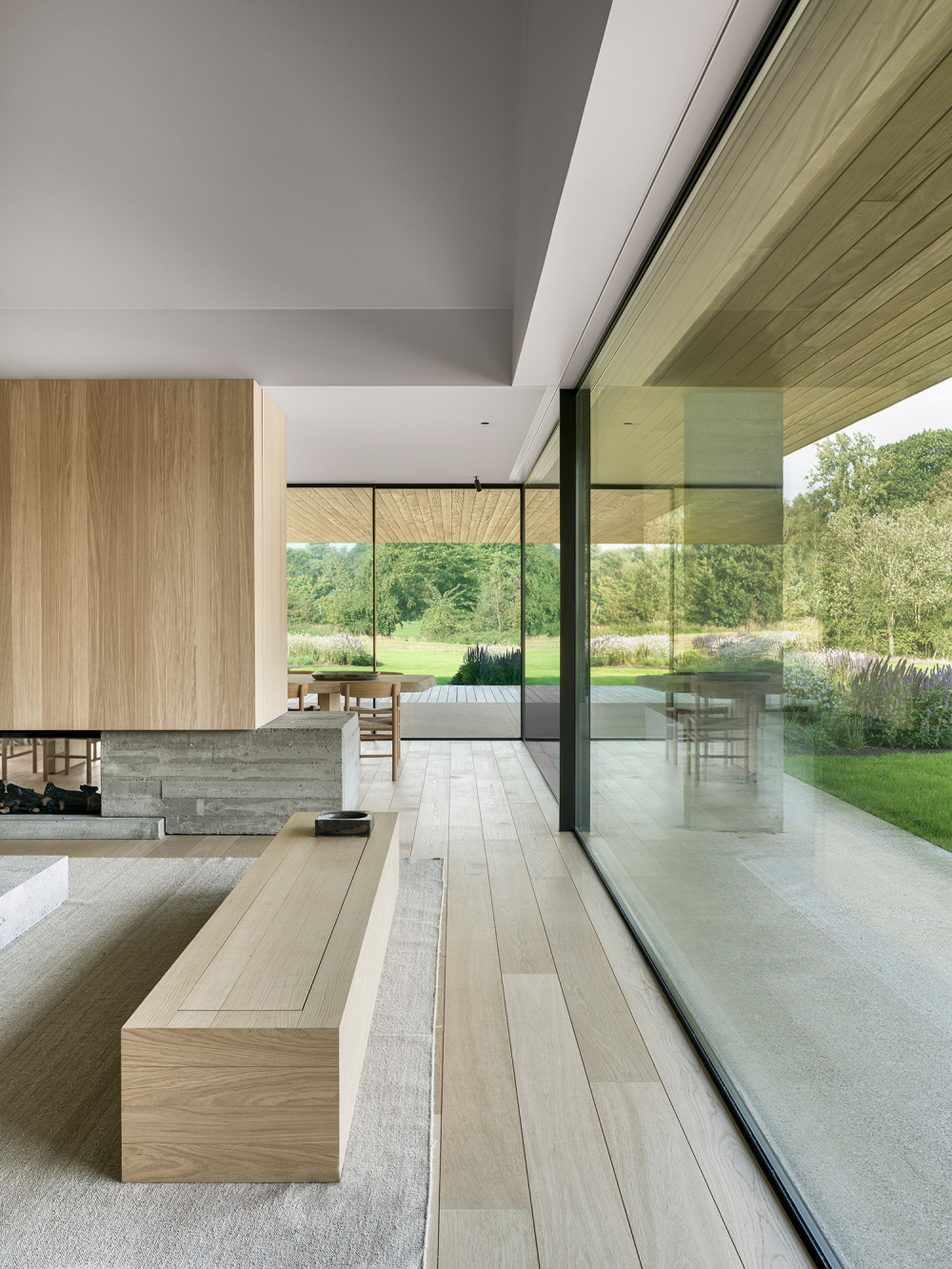
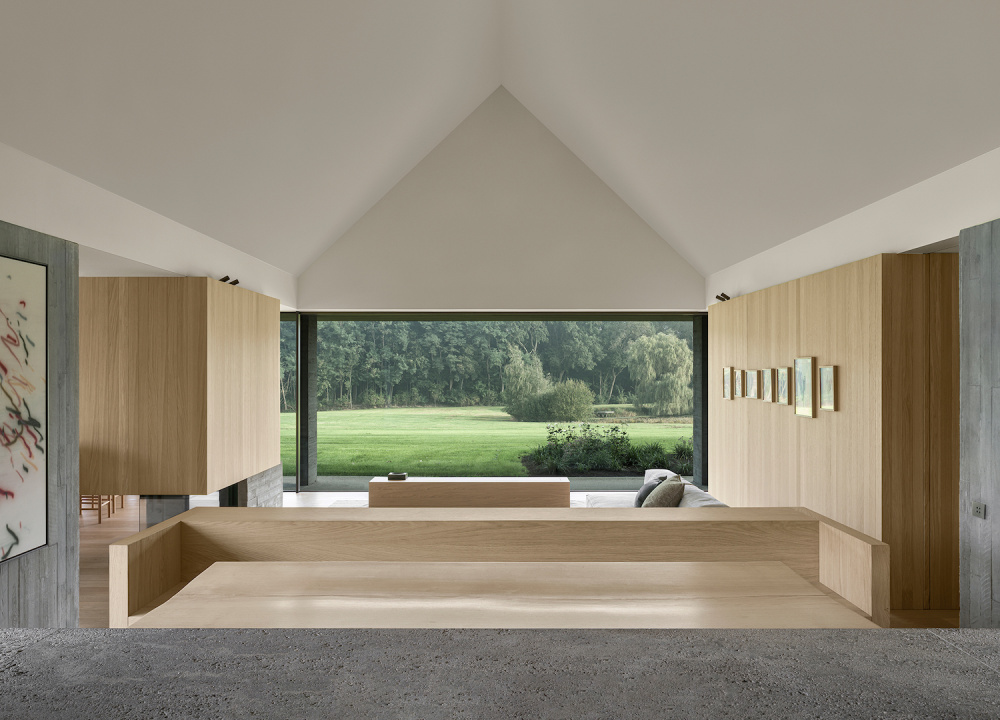
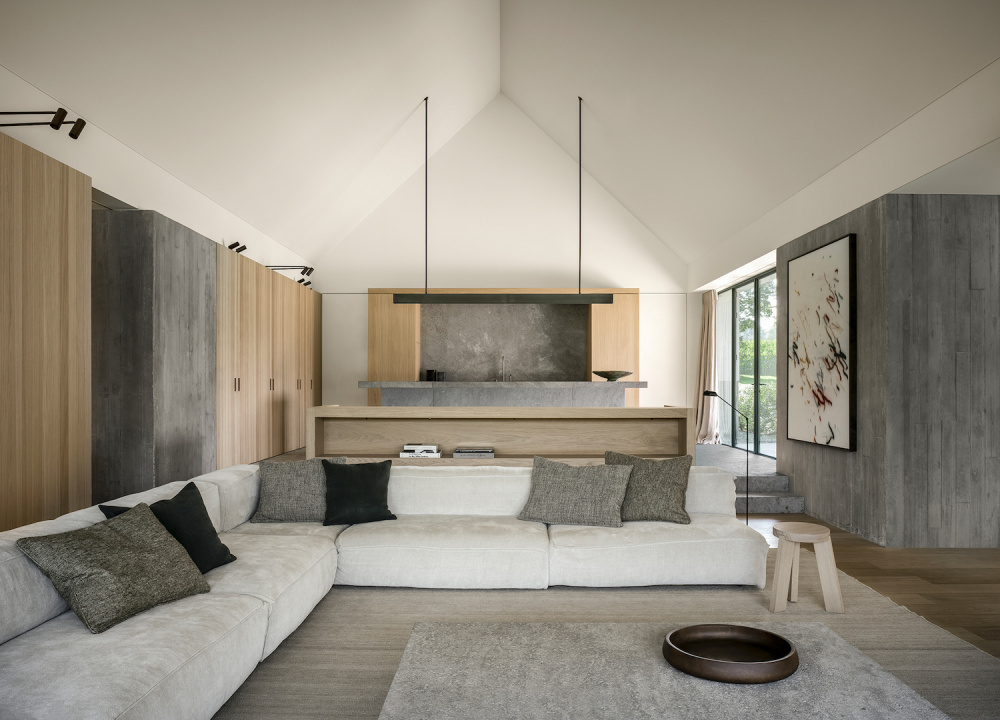
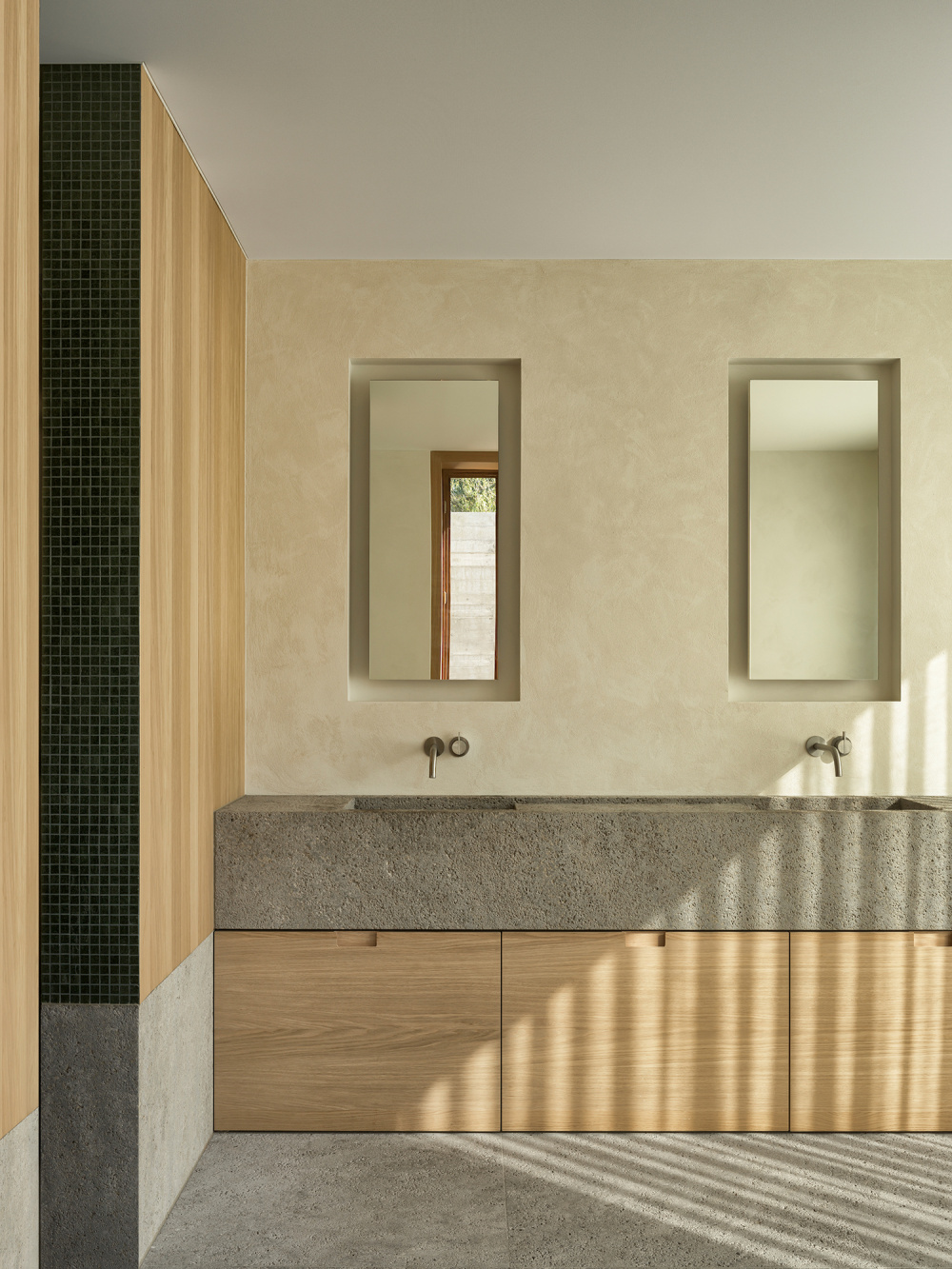
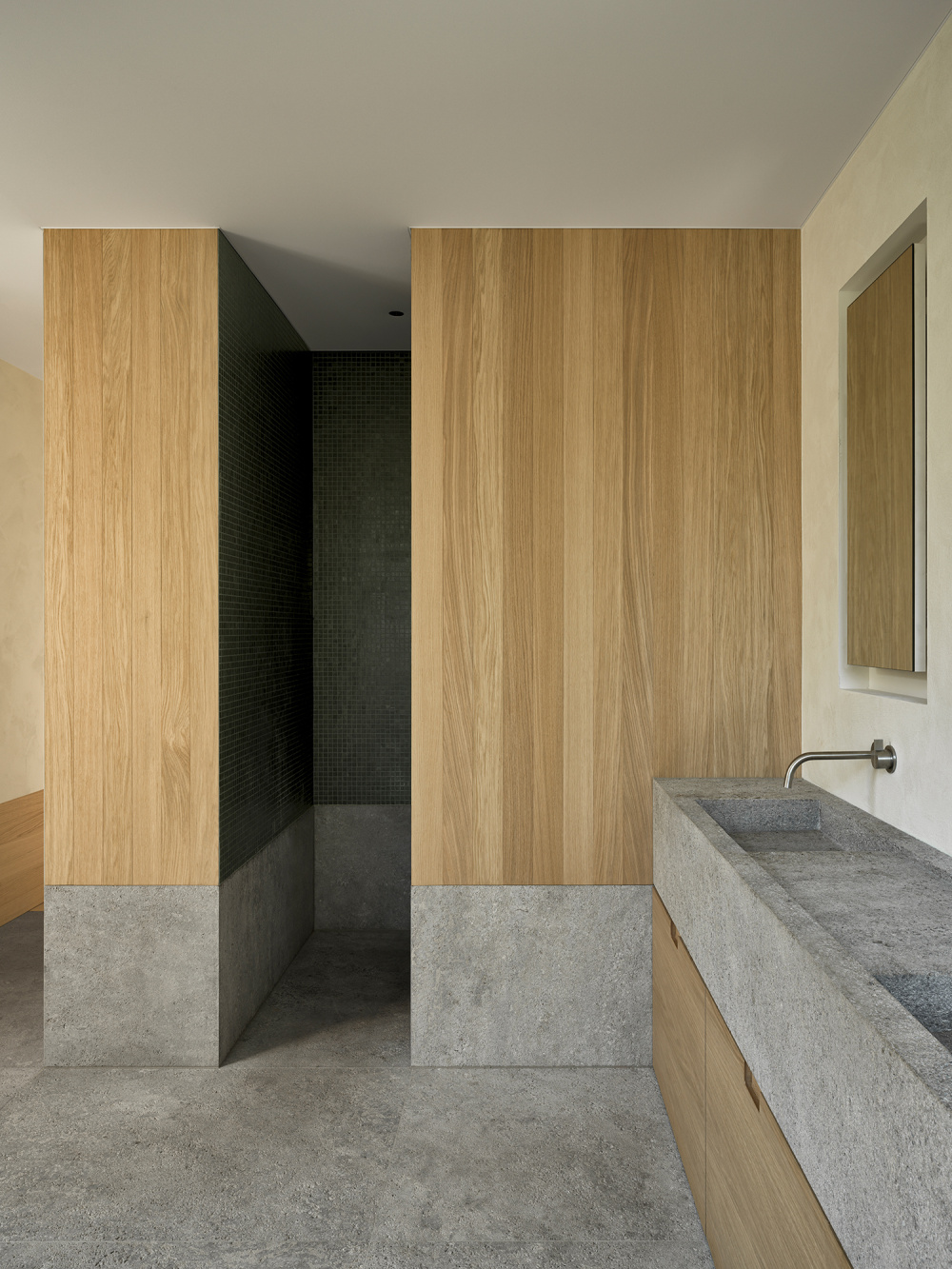
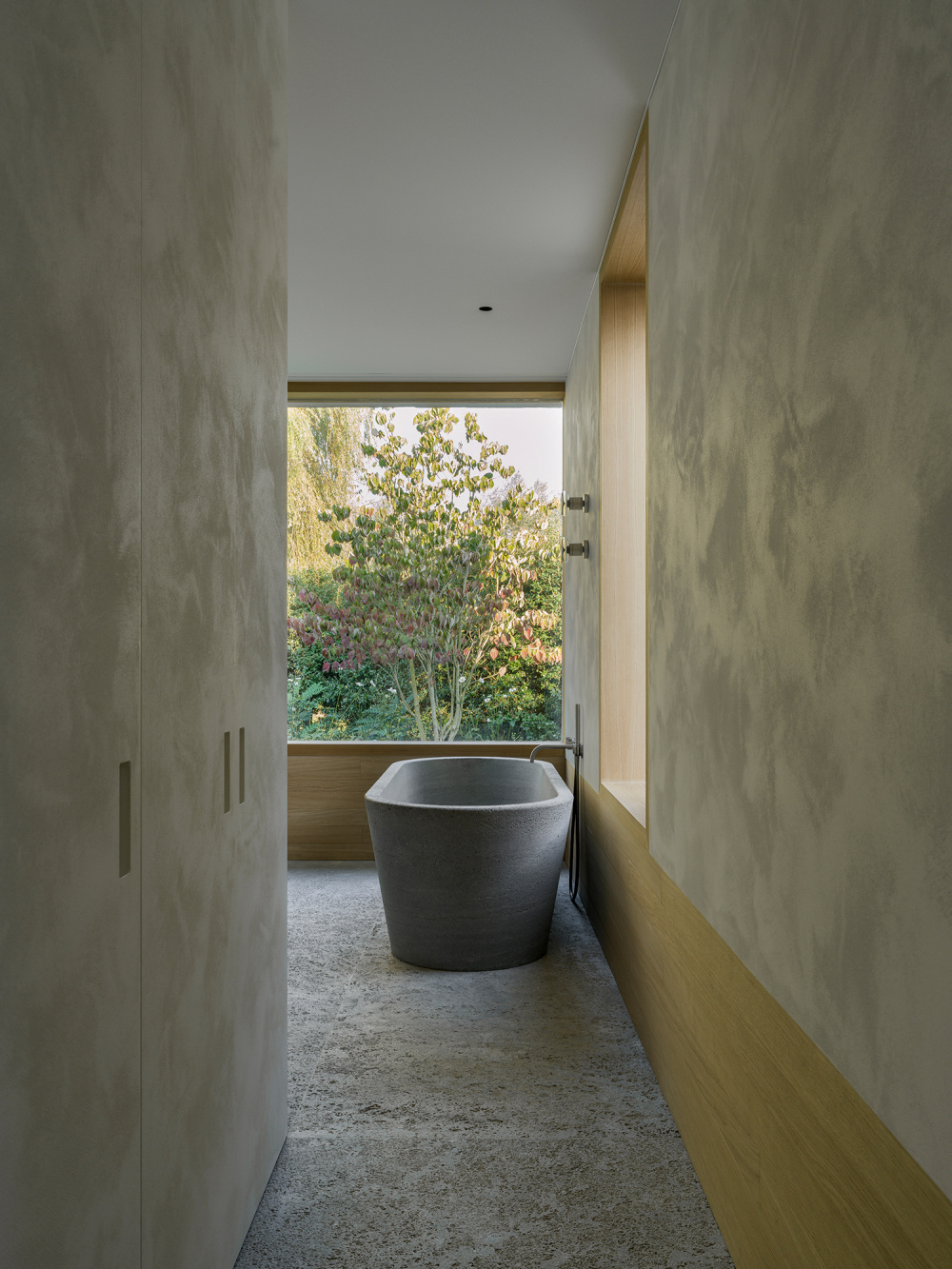
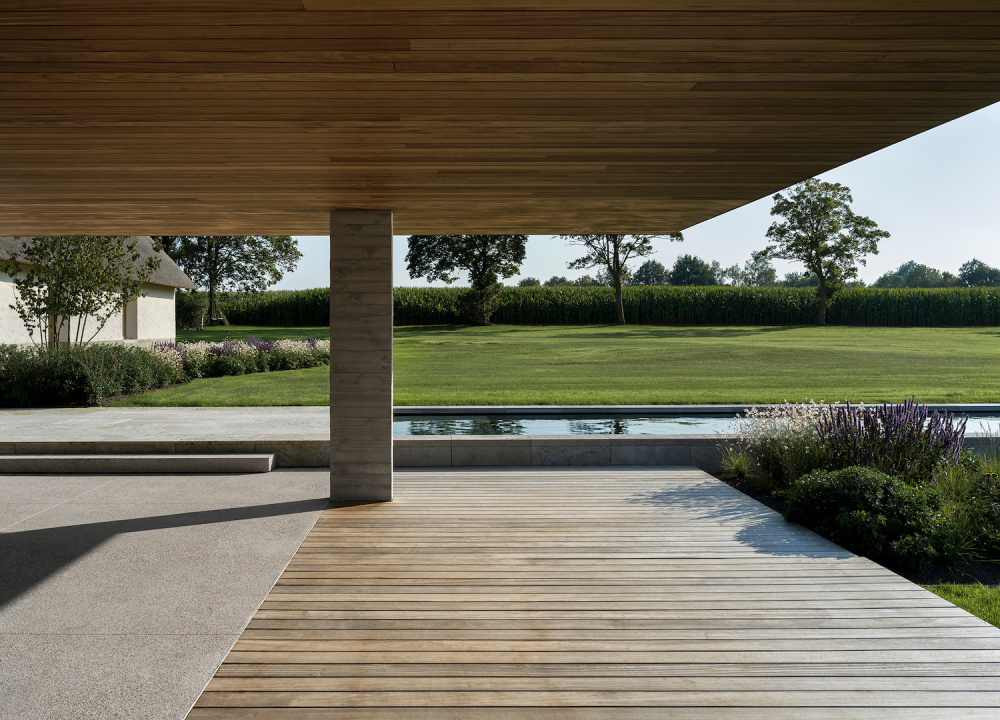
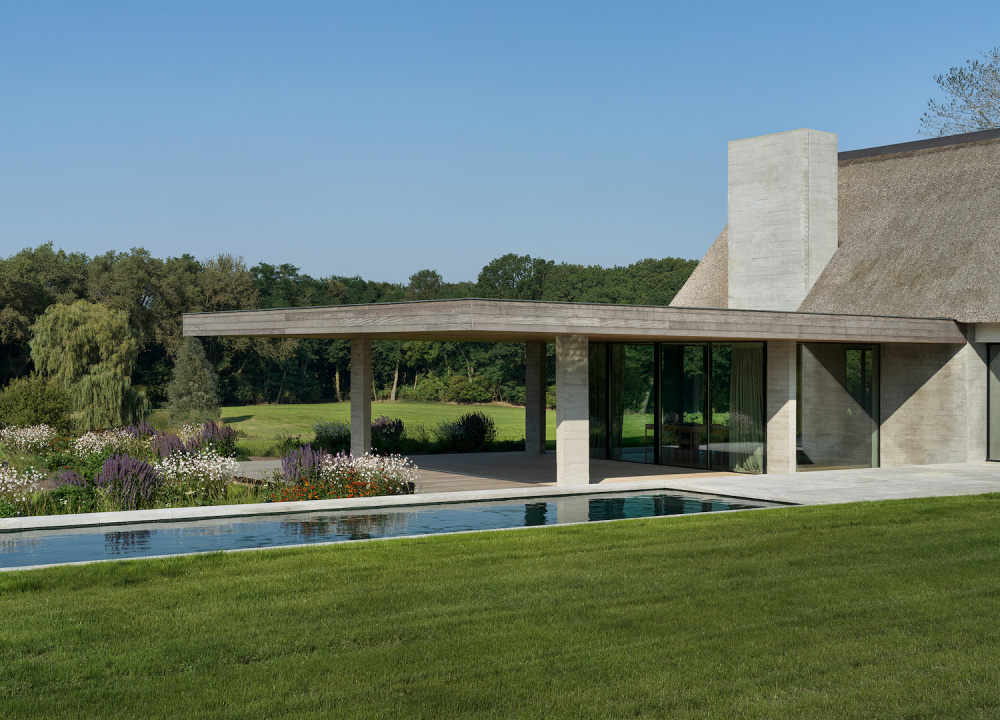
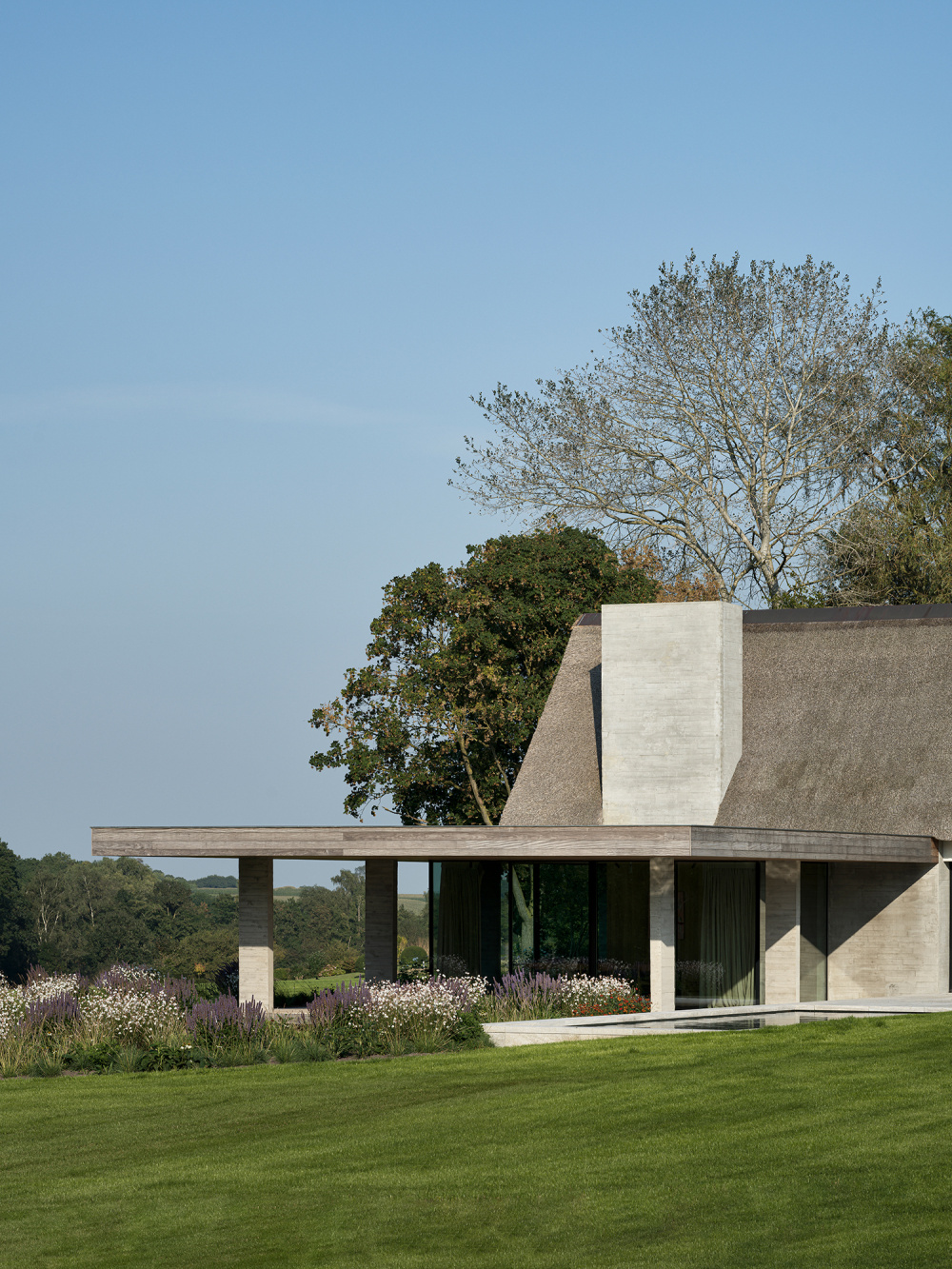
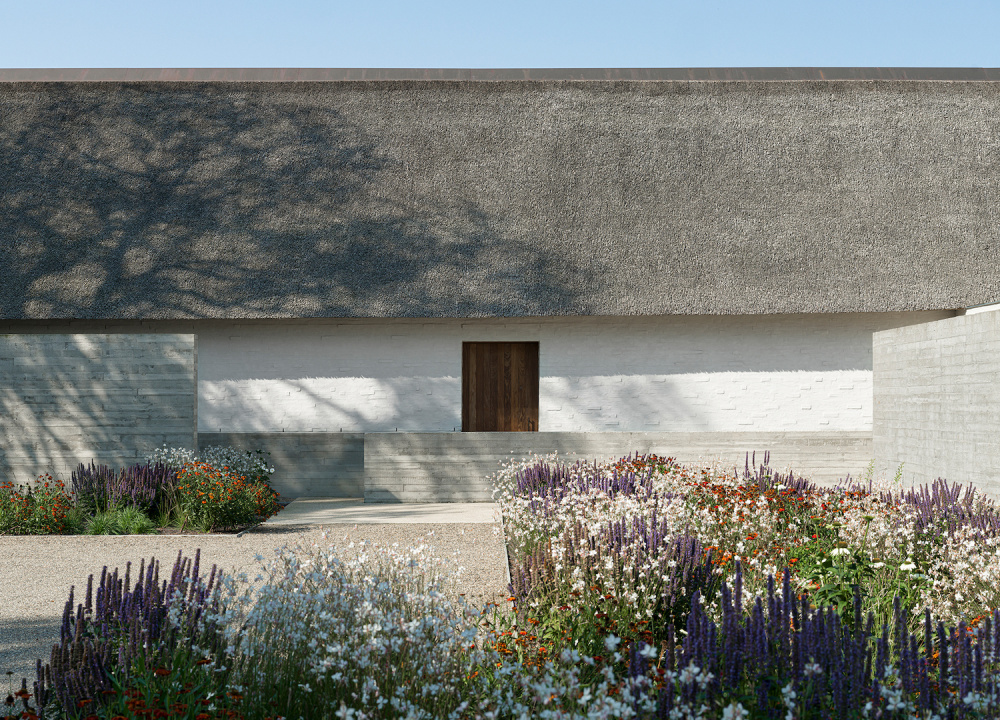
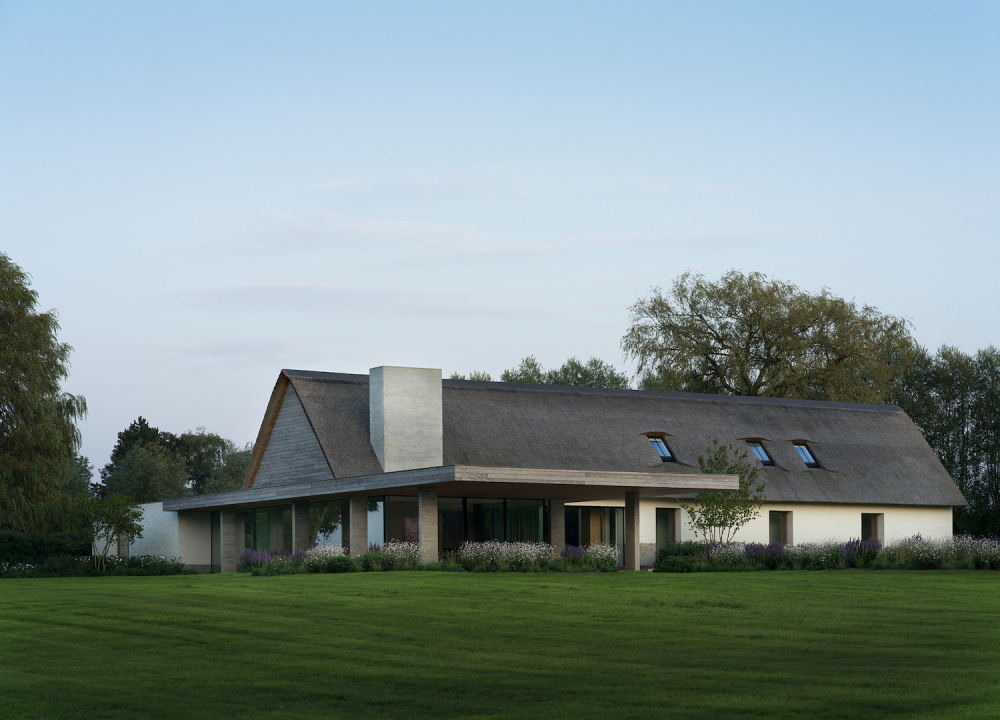
In Belgium, this renovated farmhouse sits on land marked by World War I, negotiating a peaceful balance between its history, landscape and architecture.
Originally a Belgian farmhouse, the Palingbeek home is restored by architecture studio Decancq Vercruysse into a contemporary interpretation of farmhouse living. Set apart from the world with centuries of quiet history built in, the building was in poor condition before the team approached it with careful consideration. “We decided to keep the part of the house that was well positioned and still retained the typical archetypal shape of the local farmhouses,” architect Emiel Vercruysse says. The remaining structure’s condition led to the demolition of a significant portion, replaced with a new form designed to open onto the surrounding landscape.
Vercruysse notes that one of the main challenges during restoration was navigating the site’s history, set on a former World War I battlefield. Early construction uncovered multiple unexploded bombs, where “authorities were required to intervene several times to safely dismantle them,” Vercruysse says. This reminder of the past sits in contrast to the nearby Palingbeek nature reserve, informing a design that honours both history and landscape. Previously the original home felt “very closed off from its environment,” Vercruysse says, noting how the restoration process allowed the home to take new shapes, channel minimalism with preservation, and gently open up without compromising the structural principles that define it. The main intention, as Vercruysse notes, was to create a new addition that would reconnect the home with its beautiful surroundings.”.