独家 | 探访比利时设计大师 Michaël Verheyden 工作室
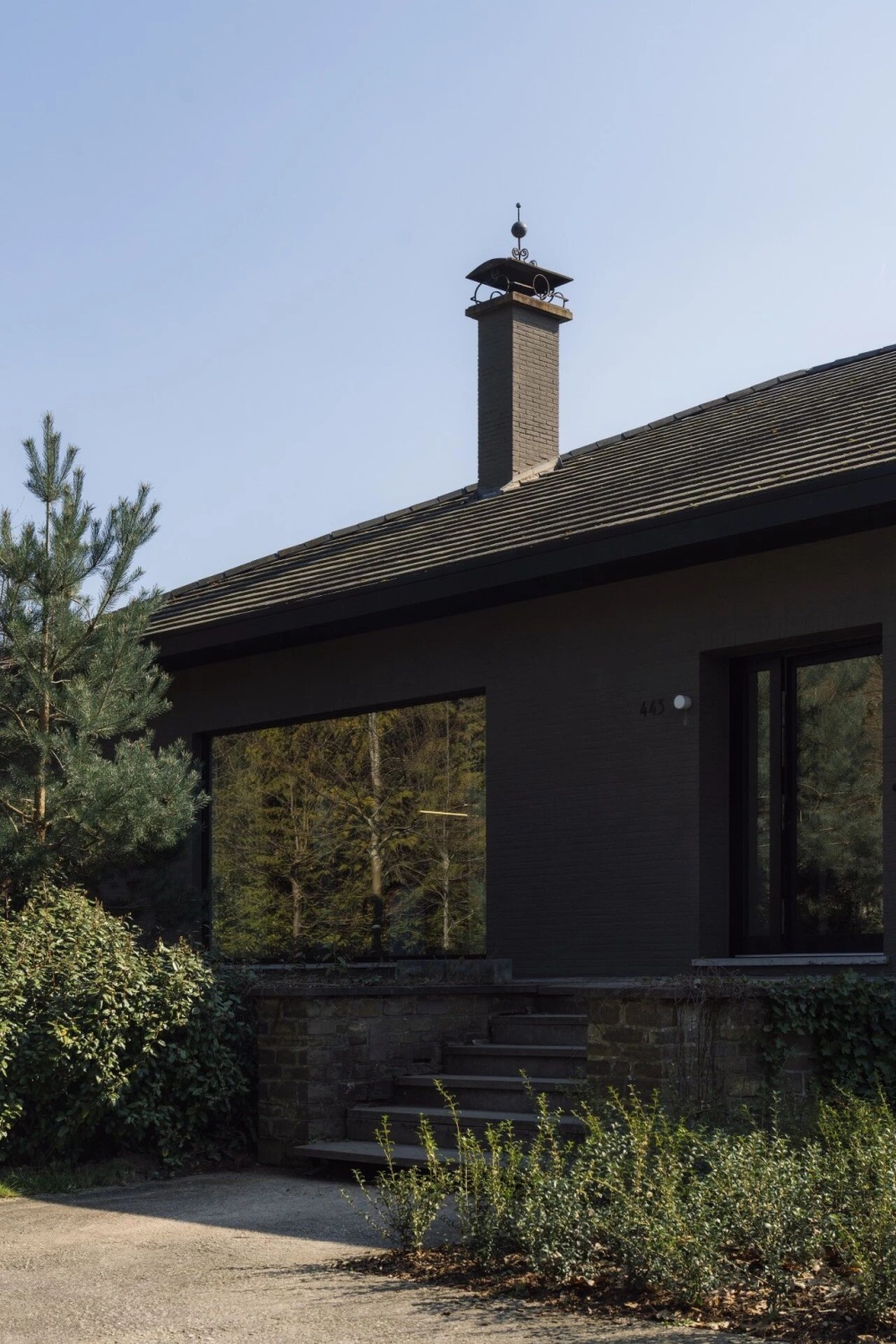
春日的光线落在Genk 的边缘,沿着砂砾路慢慢走近,我们来到 Michaël Verheyden 与 Saartje Vereecke 的工作室门前。建筑的体量在树影与天光之间一点点显现出来。整座房子用了很克制的砖砌语言,深色砖墙安静而厚实,坡屋顶覆着黑色瓦片,一面稳定的斜坡整齐地铺展开。屋顶一侧,烟囱从深色屋面笔直升起,像整座建筑轮廓中的一处垂直坐标,在斜线与直线之间,生出一种几何式的秩序感。
Spring light settles at edge of Genk. Walking slowly along a gravel path, we arrive at Michaël Verheyden and Saartje Vereecke‘s studio. Volume of building gradually emerges between shifting tree shadows and open sky. House is articulated in a restrained language of brick: dark masonry walls, quiet and weighty; a sloped roof clad in black tiles, forming a steady, continuous plane. On one side, chimney rises cleanly from dark surface—like a vertical coordinate within building outline—establishing a subtle geometric order between slope and line.
大面积的玻璃把外面的绿意轻轻引向室内,黑色细框在墙面上收出干净的边界。它不像典型工坊那样粗放直白,反而更像一处被压低了声量的场所。站在门外,还没真正进去,外立面就已经先一步显露出Michaël Verheyden 一贯的审美态度:简洁、安静、重视材质,也重视时间留下的痕迹。
Large panes of glass gently draw surrounding greenery inward, thin black frames defining crisp boundaries against walls. It does not resemble a typical workshop in any direct or rugged sense; instead, it feels like a place where volume has been deliberately lowered. Even before stepping inside, façade already conveys Michaël Verheyden’s sensibility: simplicity, quietness, a respect for material, and attentiveness to traces of time.
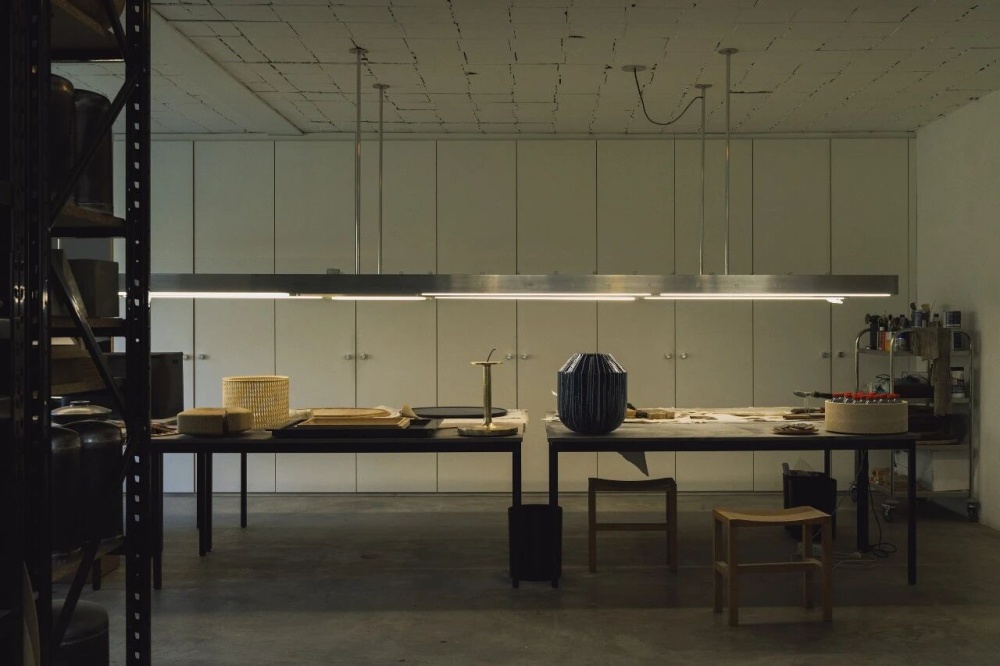
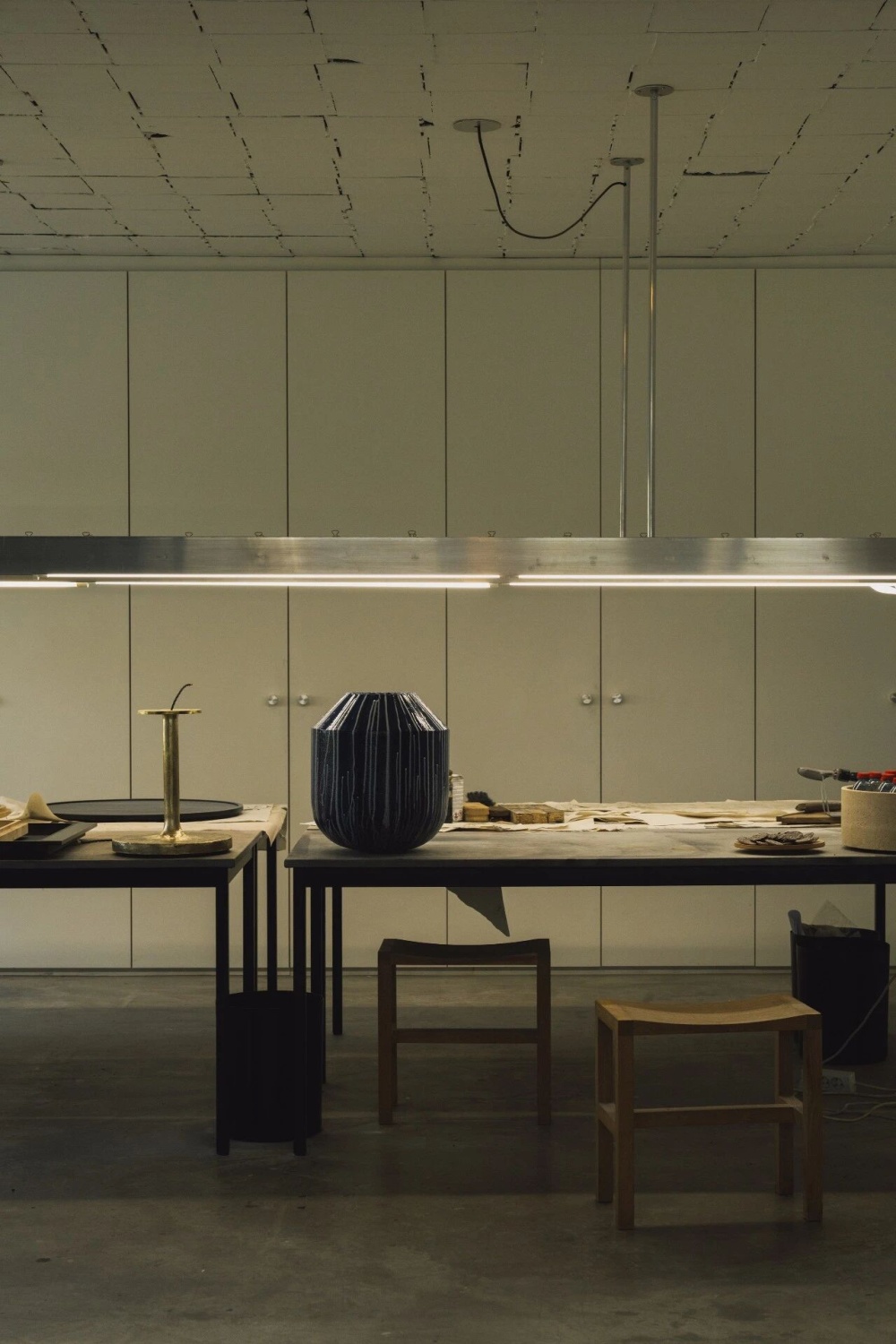
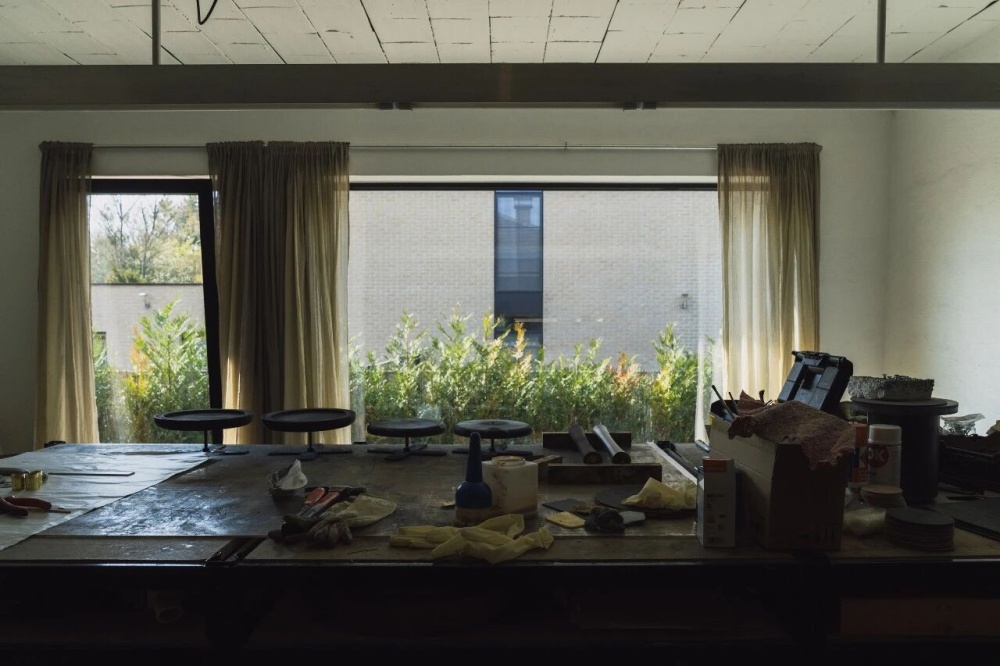
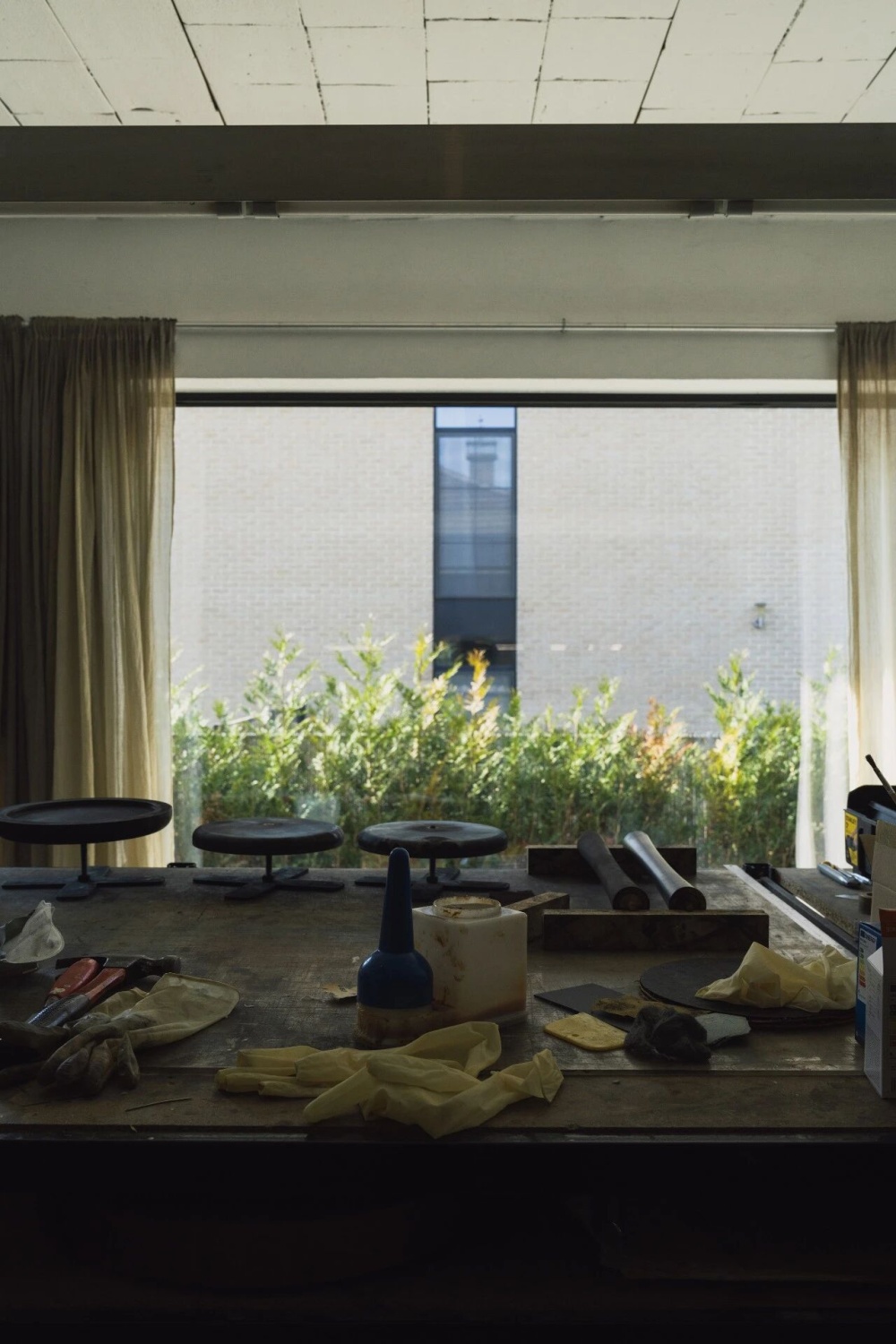
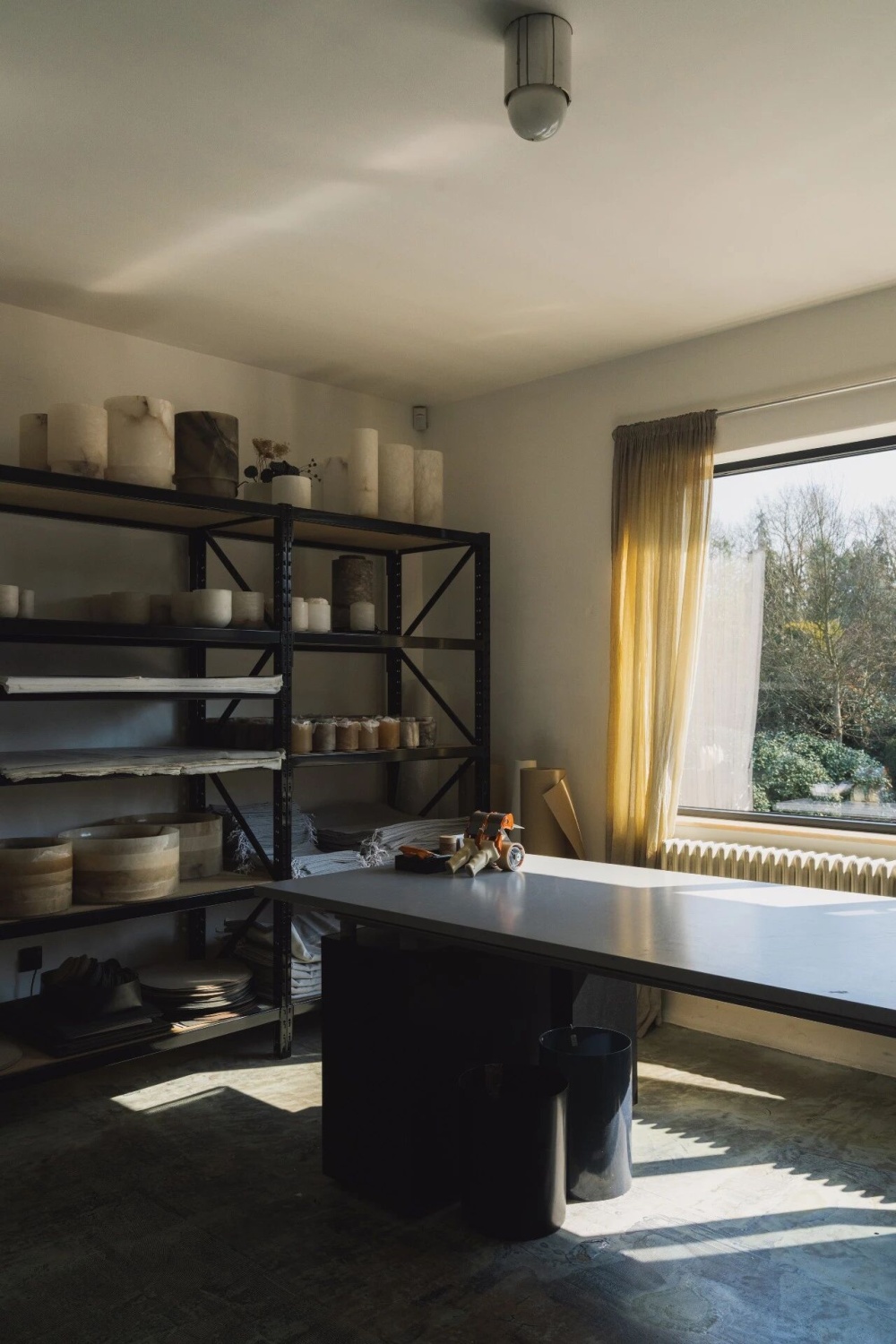
推门而入,视线最先落在那些被真实使用过的工具与器物上。灰色地坪、白色墙面、深色桌面与黑色金属架,共同搭出一个中性的背景。主工作台在空间中央,尺度开阔,黑色金属框架稳稳托起整个结构,台面又长又宽,足够容纳好几个人一起工作。凑近看,桌面上散落着木质圆盘、白色编织罩体、哑光漆面构件,还有几圈铜色线圈——它们错落排布,像刚刚经历过一场关于材料、表面与形态的实验,还没有完全收拾起来,反而让人觉得真实。
Pushing door open, eye first lands on tools and objects marked by real use. Grey flooring, white walls, dark tabletops, and black metal shelving form a neutral backdrop. At center sits main worktable—generous in scale, its black steel frame firmly supporting a wide surface large enough for several people to work together. Up close, tabletop is scattered with wooden discs, white woven shades, matte-coated components, and coils of copper wire. They lie in a loose arrangement, as if a material experiment had just taken place and not yet been cleared away—an unfinished state that feels precise and real.
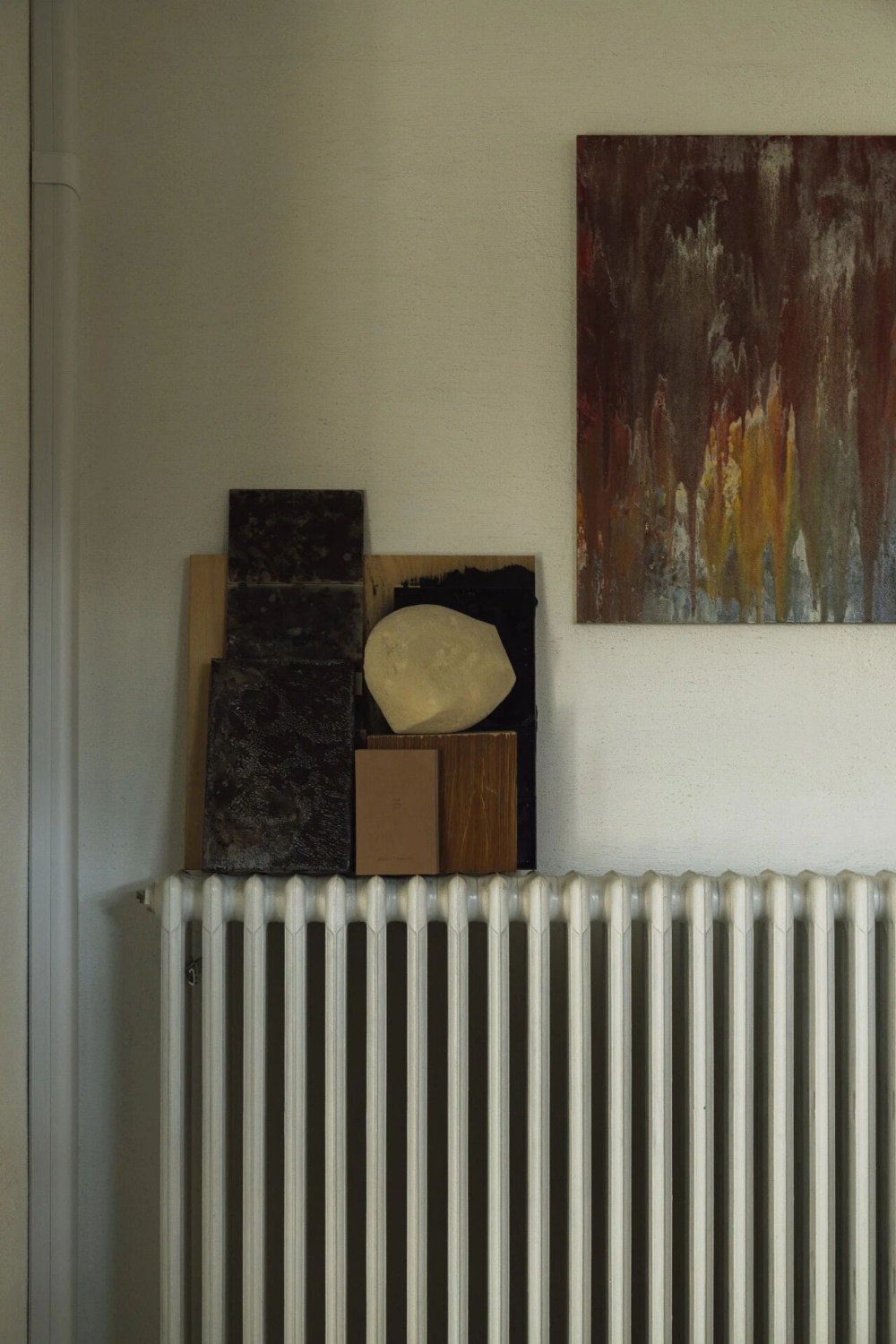
Michaël Verheyden 对材料有着极为敏锐的把握。皮革、陶石、金属与木材,经他之手都能保留各自原有的质地与性情;Saartje Vereecke 则长期在绘画与纺织设计中工作。她的画挂在墙上,褐红、铁锈色、灰白与一点暗金在画布上层层交叠,颜料顺着表面缓慢下坠,留下清晰的流痕与沉积感。给这个偏理性、偏工艺的空间注入了温度。
Michaël Verheyden works with acute sensitivity to material. Leather, stoneware, metal, and wood retain inherent character under his hand. Saartje Vereecke, by contrast, has long been engaged in painting and textile design. Her canvases hang on walls—layers of reddish-brown, rust, grey-white, and muted gold overlap, while pigment slowly drips across surface, leaving visible traces and sediment. They introduce quiet warmth into what might otherwise feel like a more rational, craft-driven environment.
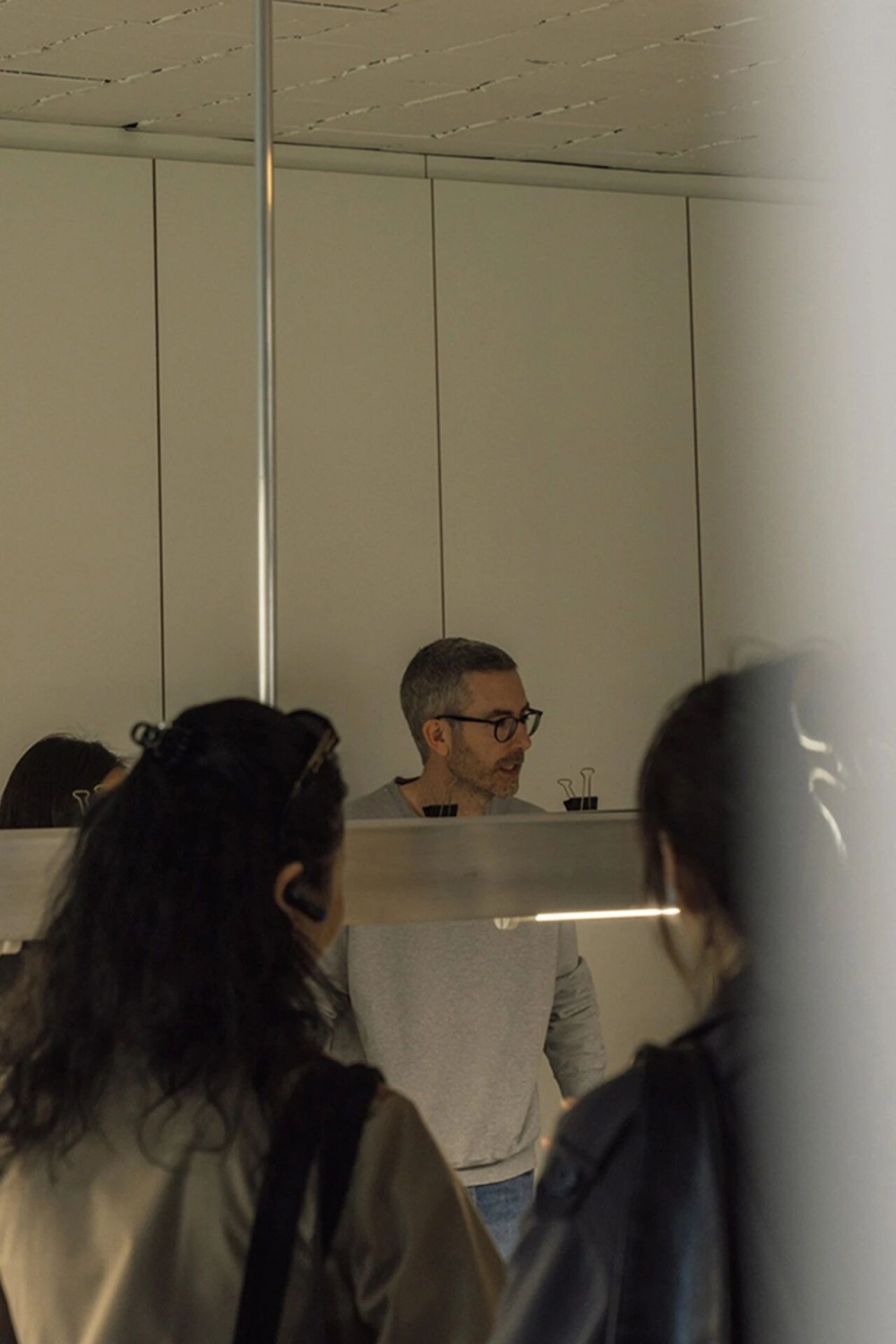
两人积累下的经验,让他们几乎能创造出家里所需要的一切东西——从篮筐、包袋到花器、灯具与家具。不过,并不是所有器物都由他们从零开始亲手完成。我们围在工作台前,一边听 Michaël Verheyden 讲,一边了解到:多年来,他们与不同的本地匠人建立了稳定的合作——有人专做皮革,有人擅长木工,有人处理青铜,还有人仍在坚持那些正在慢慢消失的地方手艺。不同部分先在这些工匠手中完成,再被送回工作室做最后的打磨、修正、组装。
Together, accumulated experience allows them to produce nearly everything needed within house—from baskets and bags to vessels, lighting, and furniture. Yet not every object is made entirely by their own hands. Standing around worktable, we learn how, over years, they have established ongoing collaborations with local craftsmen—some specializing in leather, others in wood, bronze, or traditional skills gradually disappearing. Components are first made by these artisans, then brought back to studio for final refinement, adjustment, and assembly.
说到这里,Michaël 特意请我们留意一件带着地方气息的柳条作品。它出自一位年轻的工匠之手——一个十八岁的青年,和母亲一起取材、编制,材料直接来自自家花园里的树木。经过耗时的分条、去皮与整修,原本朴素的柳枝被处理得细腻而干净。工作室所维系的,正是这样一种温和的生态:让地方工艺、社区生活与日常劳动彼此支撑,也让手艺在现实中继续生长。
At one point, Michaël draws attention to a wicker piece with distinct local character. Made by one of their youngest collaborators—an eighteen-year-old who gathers and weaves materials together with his mother, using branches sourced directly from their garden. Through slow processes of splitting, peeling, and refining, raw willow becomes clean and delicate. What studio sustains is this kind of gentle ecosystem—where local craft, community life, and daily labor support one another, allowing making to continue as lived practice.
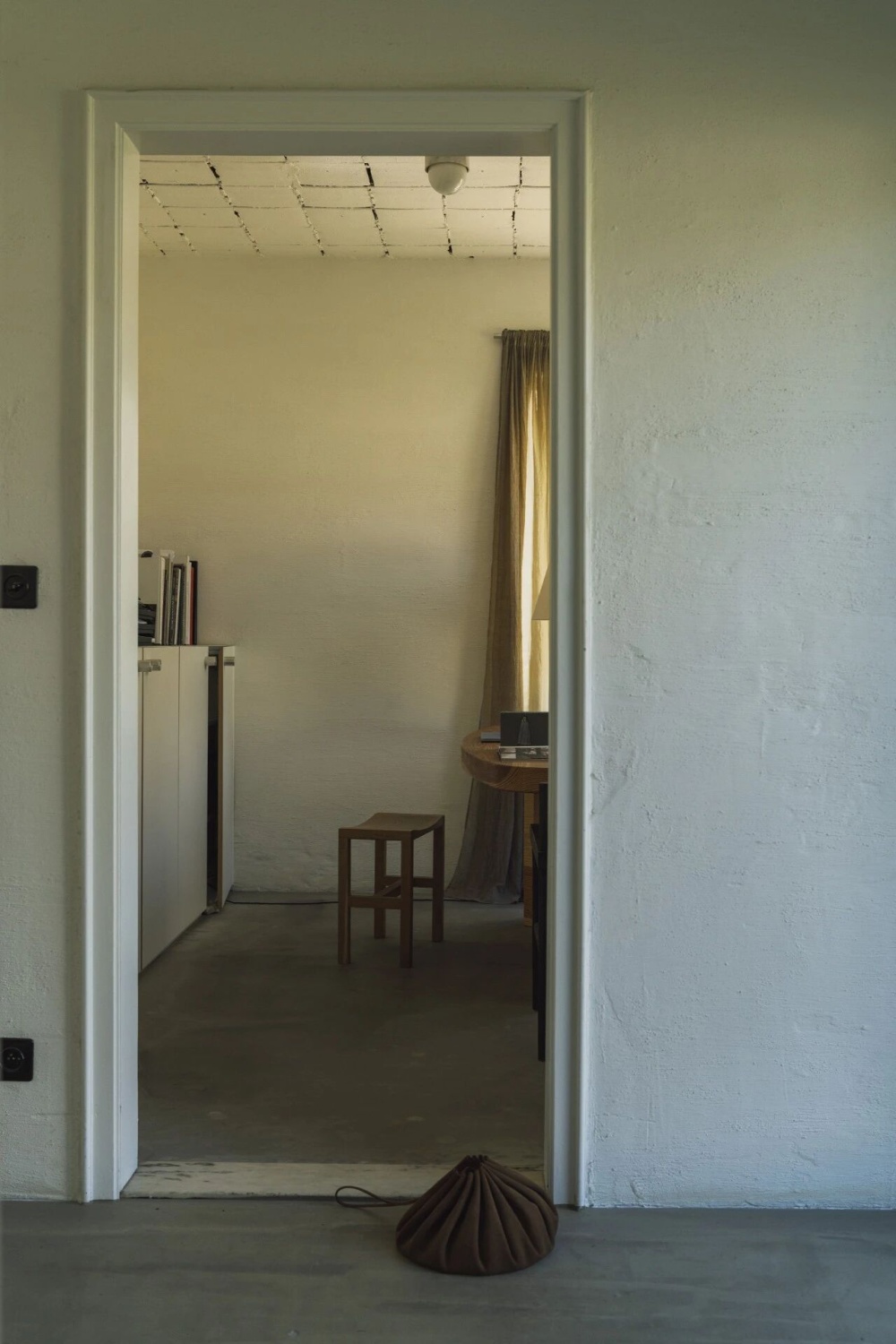
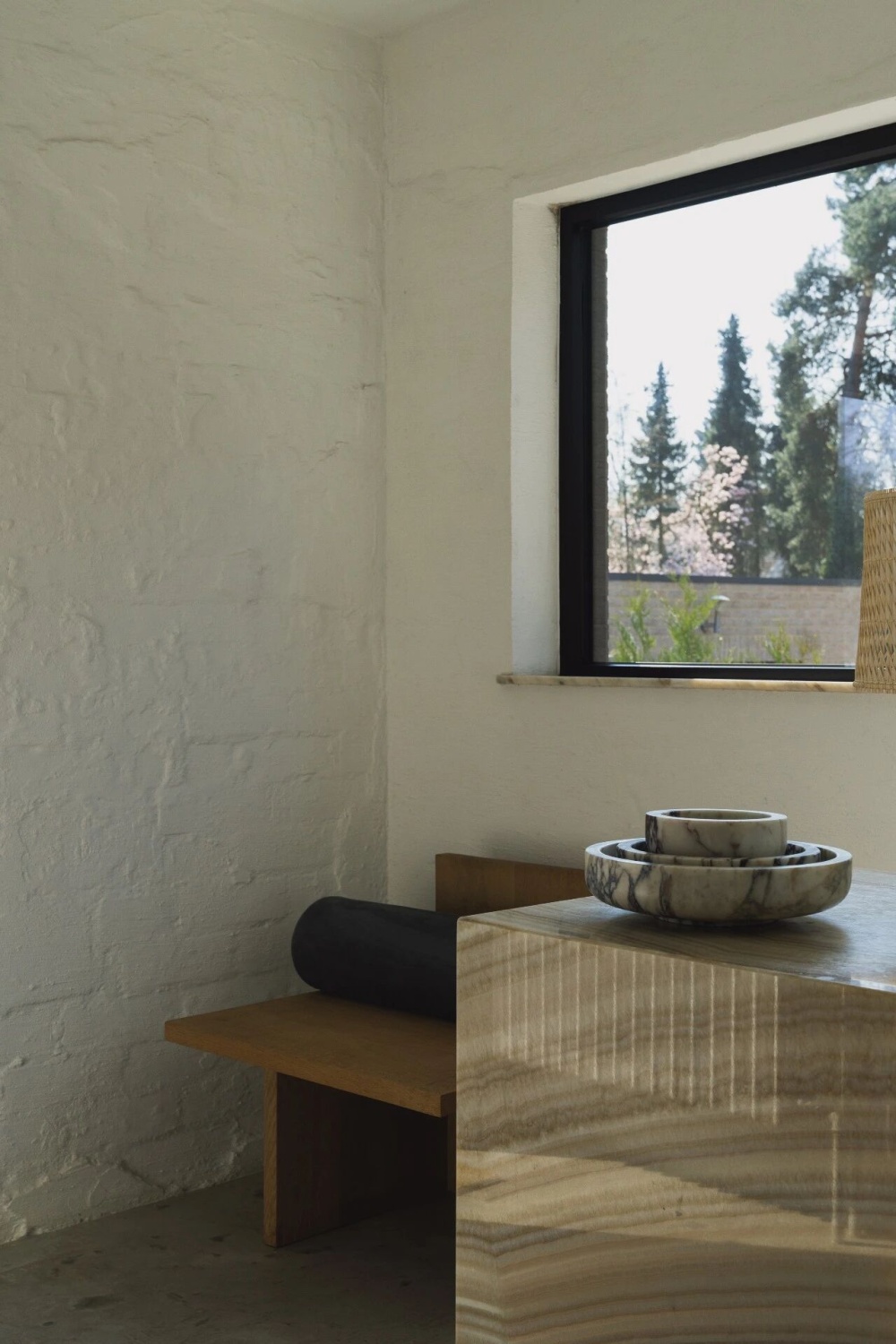
转过一个弯,我们看见一束阳光正好从小方窗落进来,在一整块切割完整的大理石体块上缓缓移动。光慢慢滑过石面,勾勒出空间松弛而安静的轮廓。再往里走,一扇横向展开的窗户把外面的绿意轻轻引入——白色老式暖气片靠在墙边,浅黄色窗帘垂在一旁,共同构成一处带着生活痕迹的界面。
Turning a corner, a beam of sunlight enters through a small square window, moving slowly across a monolithic block of cut marble. Light glides over stone surface, outlining space with ease and stillness. Further in, a horizontal window draws in greenery from outside. A white vintage radiator rests against wall, pale yellow curtains hanging beside it—together forming a quiet, lived interface.
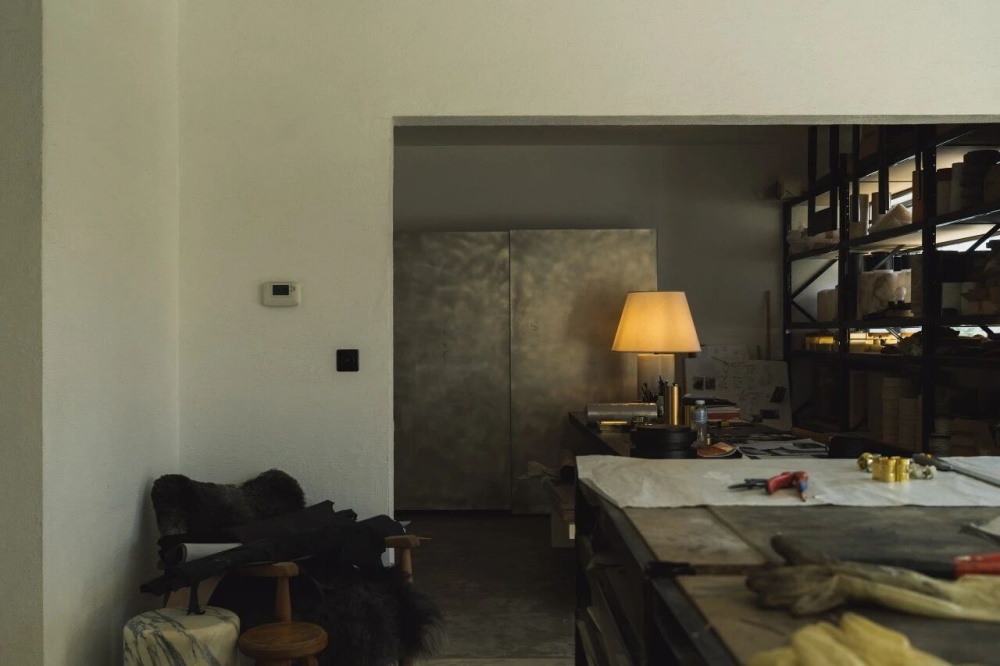
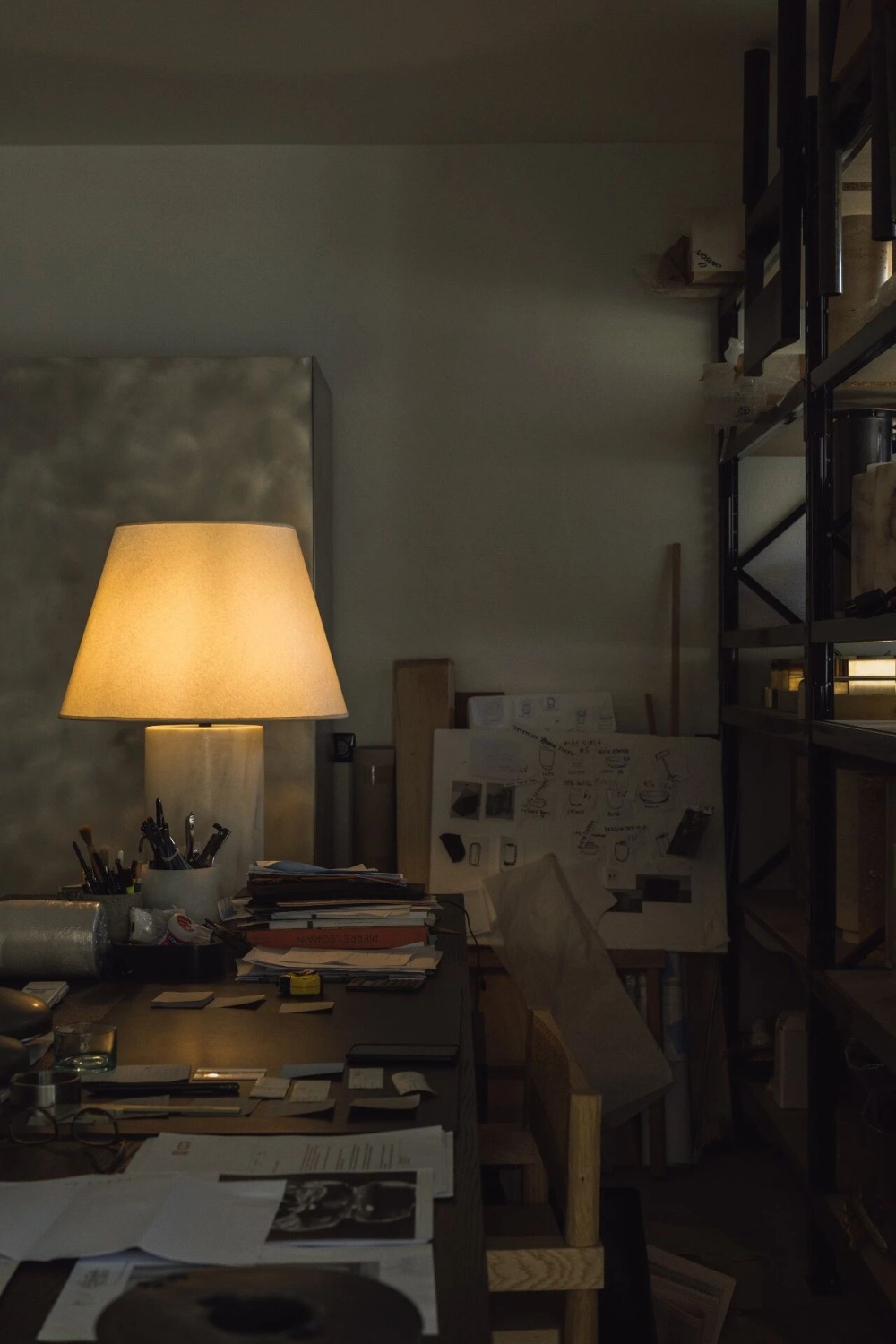
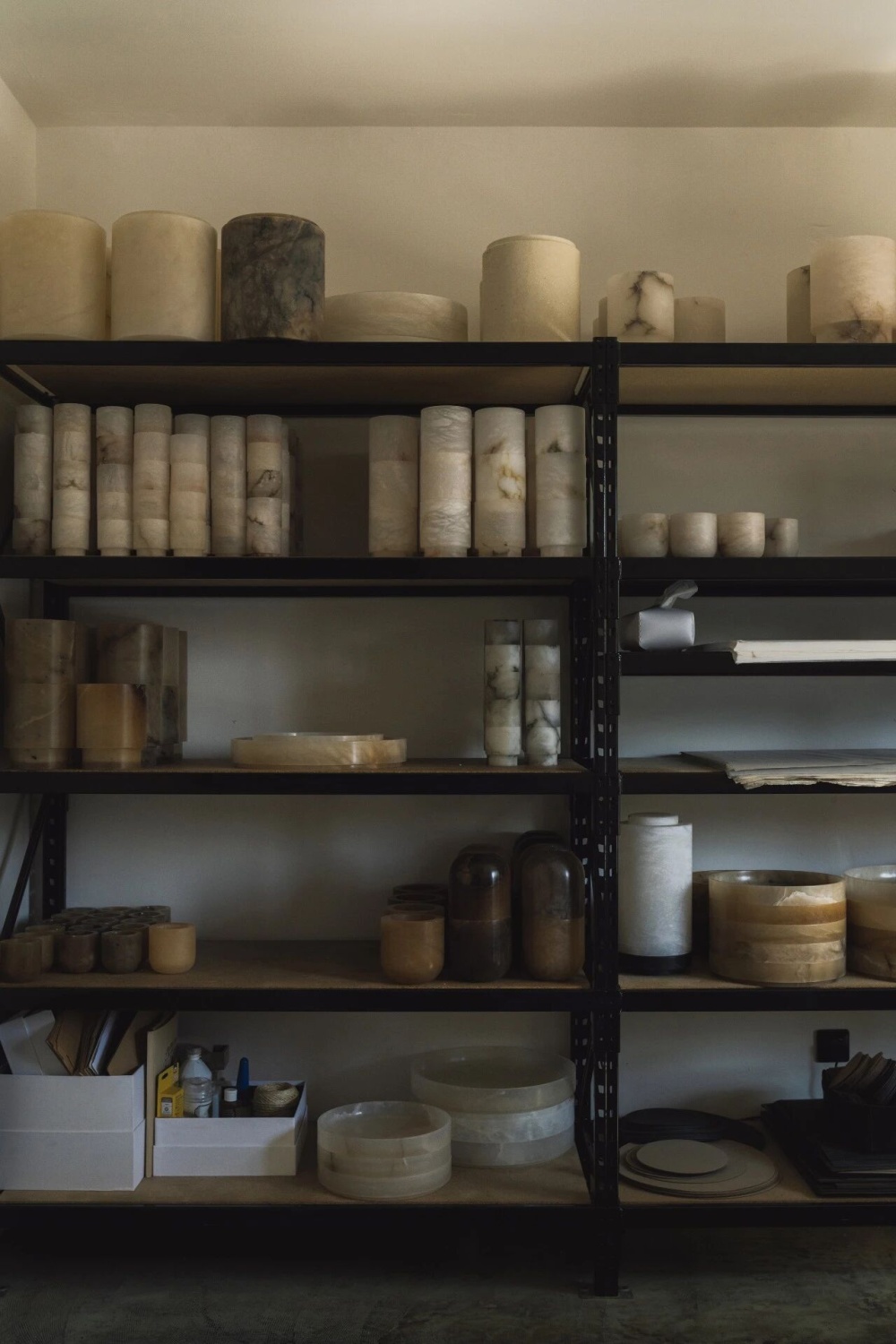
房间左侧是一个黑色置物架。走近看,层板上纸张、织物与各类原材料被安放得很有秩序;手工容器则高低错落地排列着,有的厚重斑驳,有的素白轻盈。也正因为石材本身已足够丰富,这些器物的形态被处理得格外克制——圆柱、浅盆、托盘、器皿,都以最本真的状态显露出来,让创作回到材料本身的生命力。
On left, a black shelving unit lines wall. Up close, paper, textiles, and raw materials are arranged with care, while handmade vessels are placed at varying heights—some heavy and weathered, others light and pale. Because stone already carries richness, forms of these objects remain deliberately restrained: cylinders, shallow bowls, trays—each presented in an essential state, allowing vitality of material to come forward.
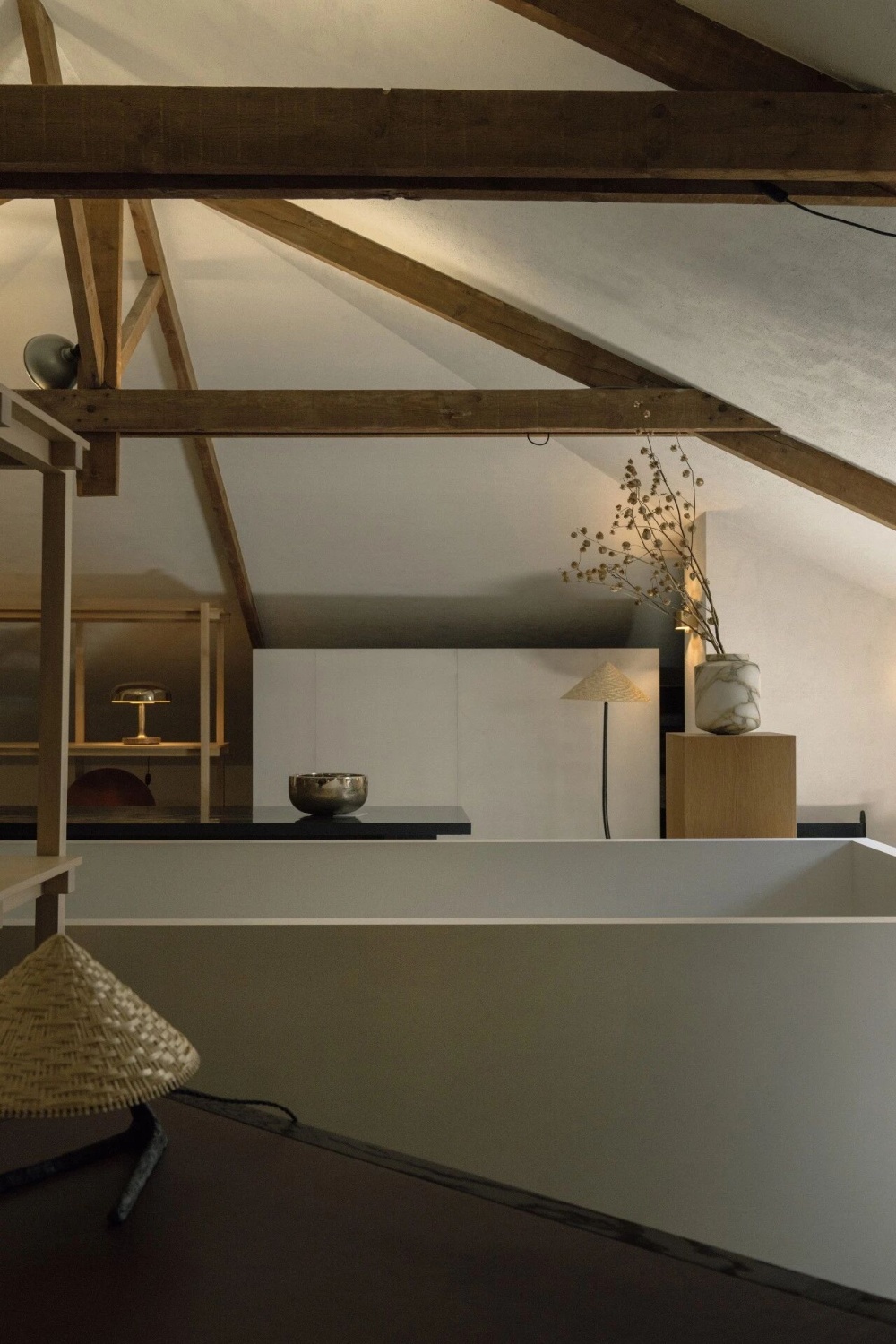
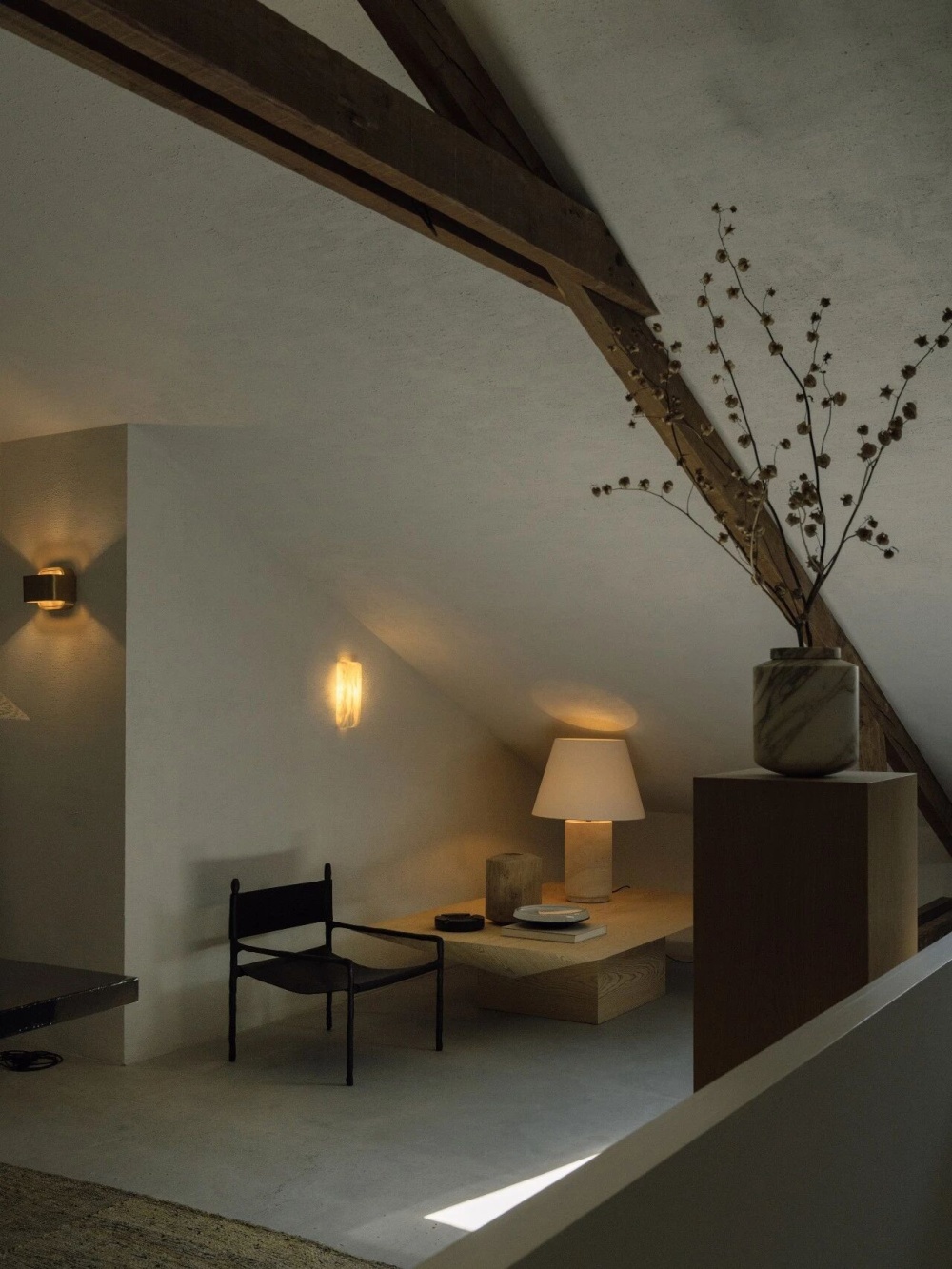
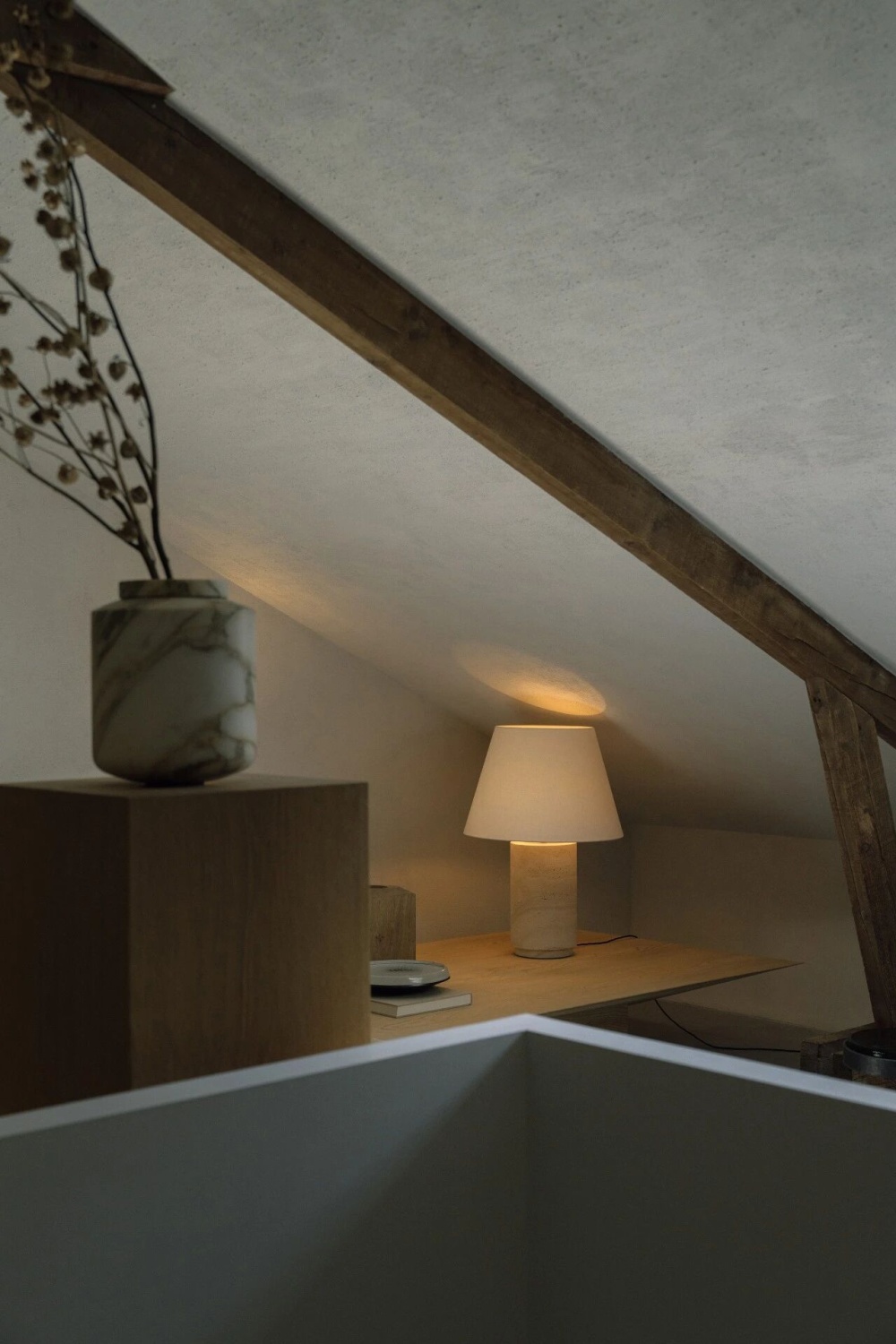
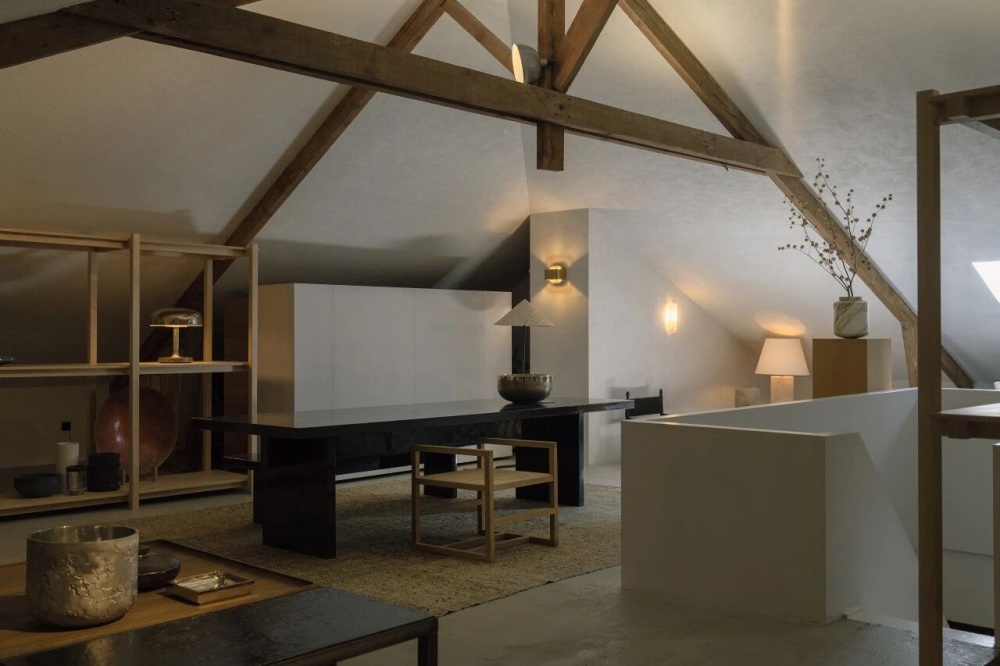
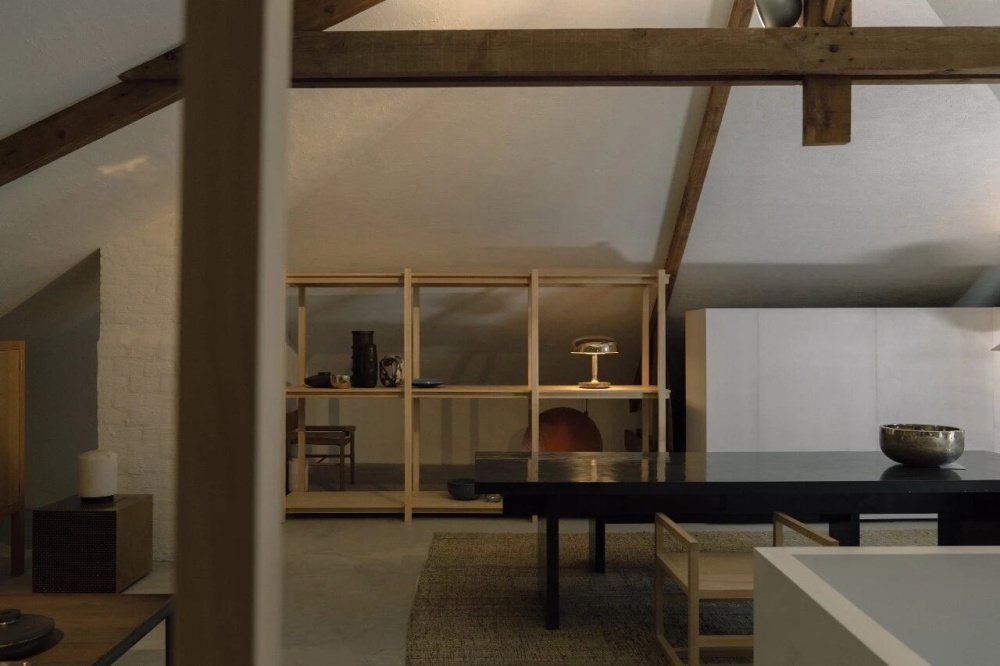
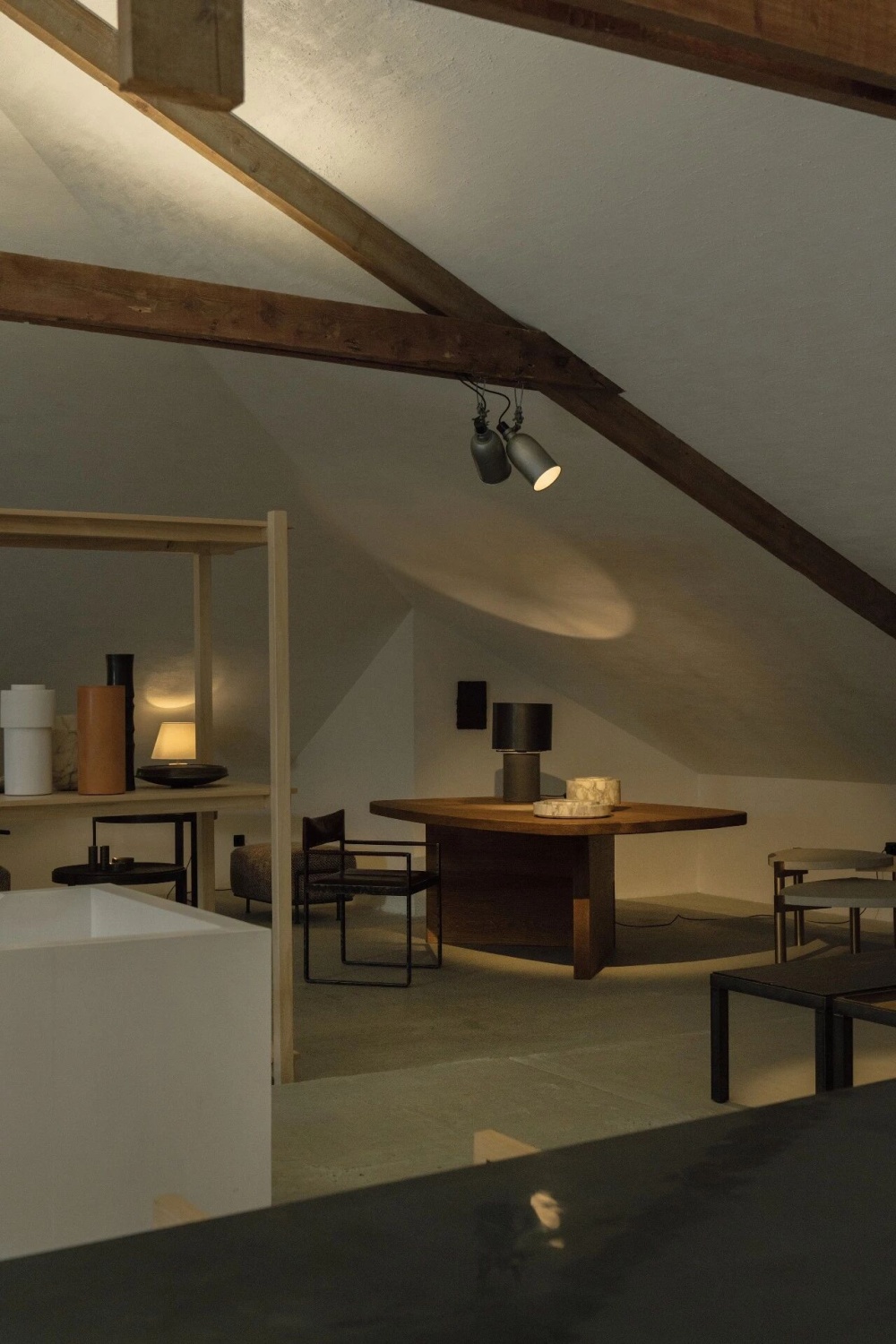
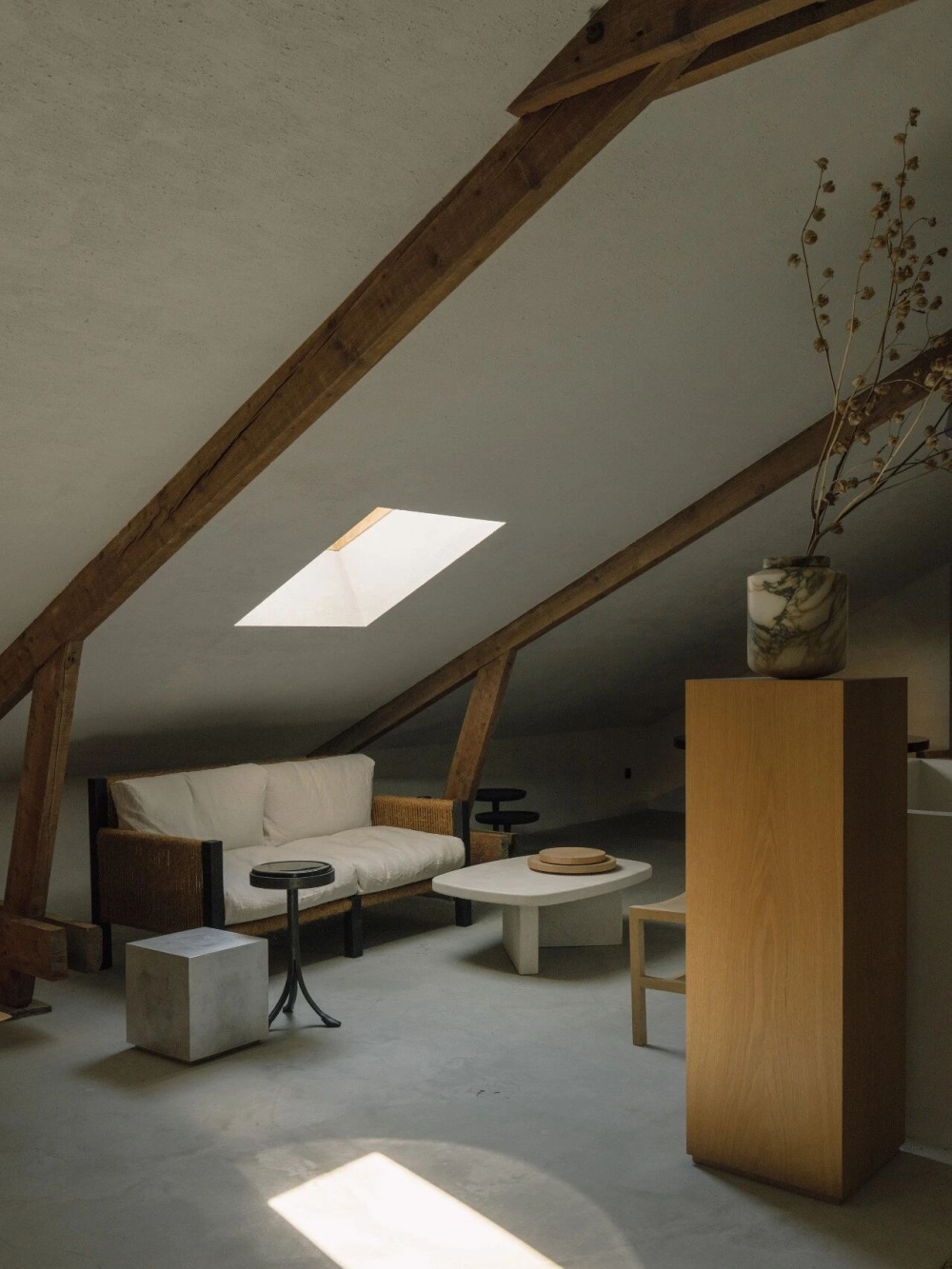
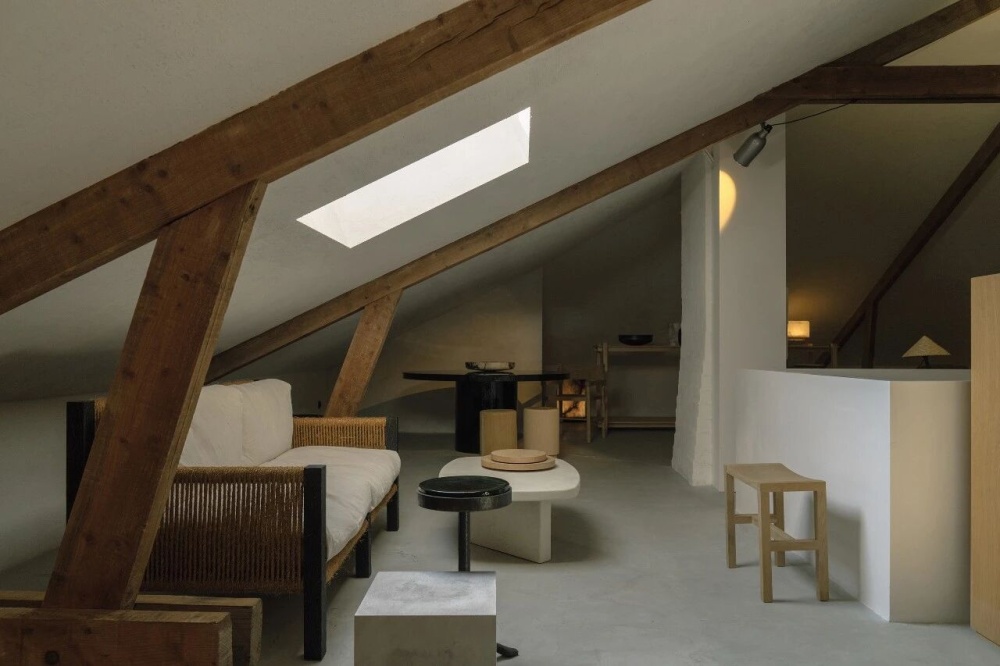
沿着白色台阶往上走,氛围悄然发生了变化。脚下那些关于工艺、组装与材料处理的痕迹,随着脚步渐渐退到身后;取而代之的,是一个被斜屋顶与木构架重新组织起来的上层空间。抬头望去,深色木梁、斜撑与立柱彼此咬合,在白色斜顶下勾勒出清晰的阁楼骨架。横梁拉开了空间的宽度,斜撑顺着屋顶走势压下——方向、尺度与停顿,都被准确地写进空间里。
Ascending white steps, atmosphere shifts almost imperceptibly. Traces of making—assembly, adjustment, material handling—gradually recede. In their place emerges an upper level reorganized by a sloping roof and timber structure. Looking up, dark beams, braces, and columns interlock beneath white incline, outlining geometry of loft. Horizontal members extend width, while diagonal supports follow slope downward—direction, scale, and pause clearly inscribed.
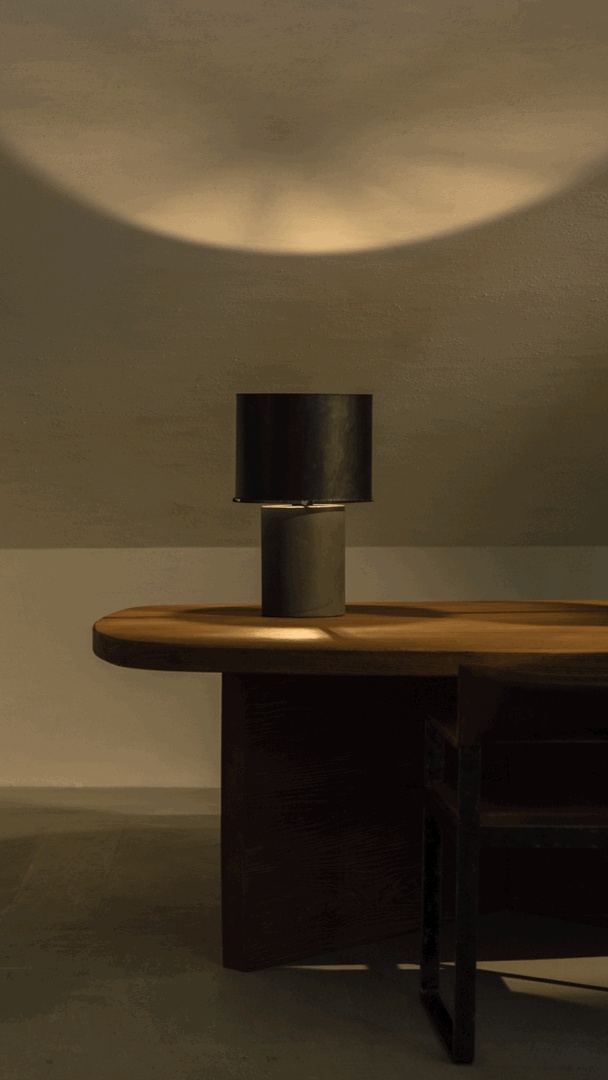
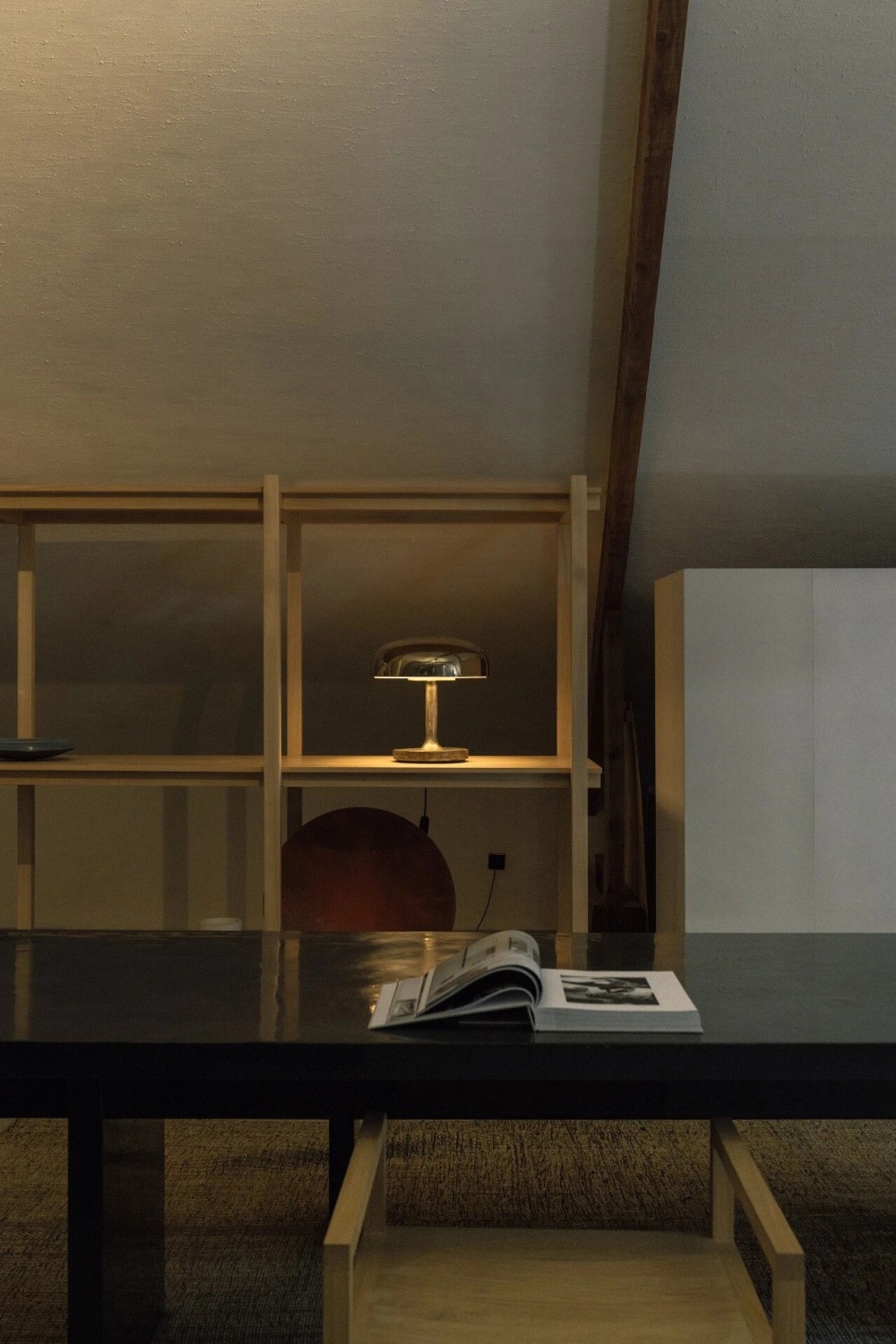
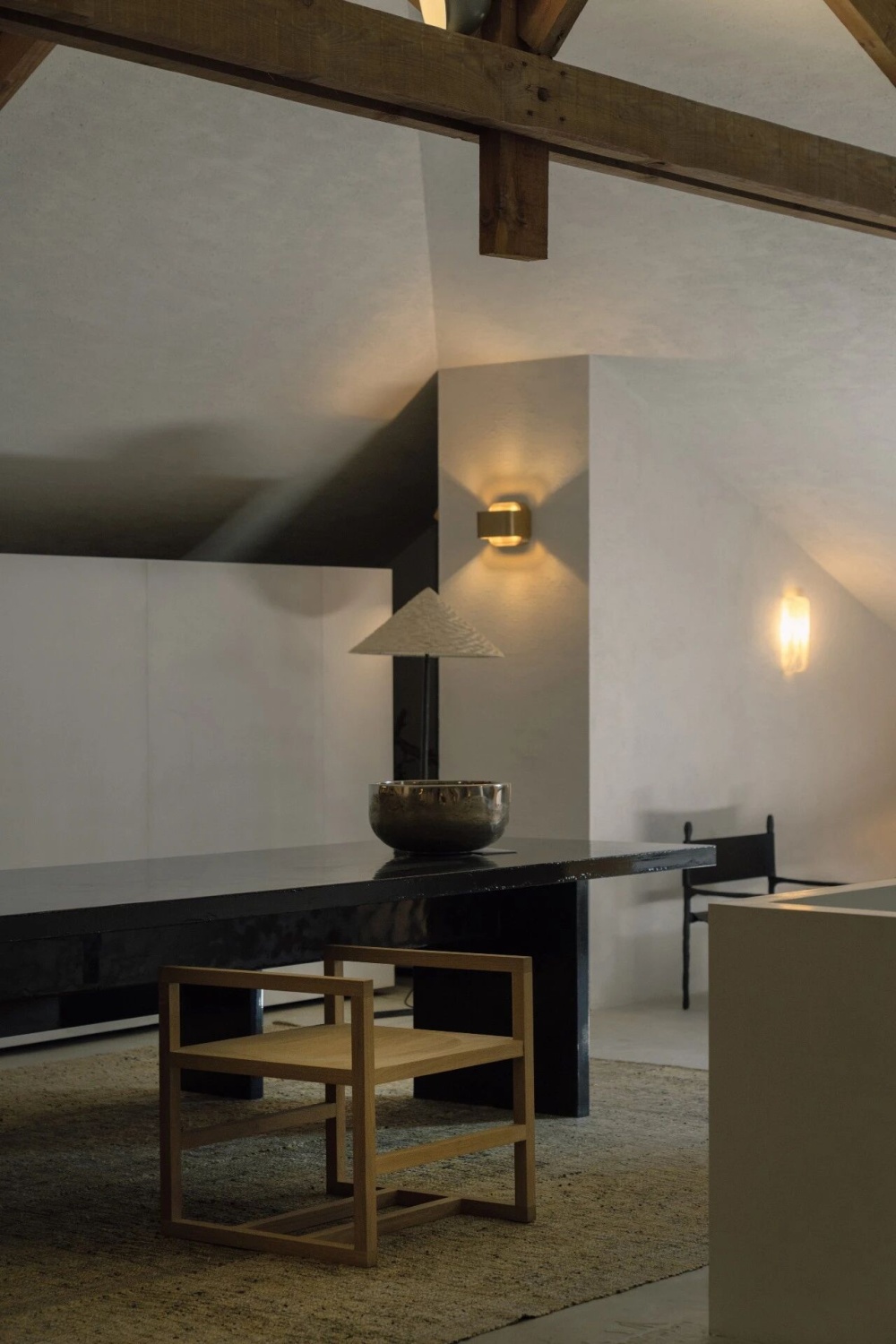
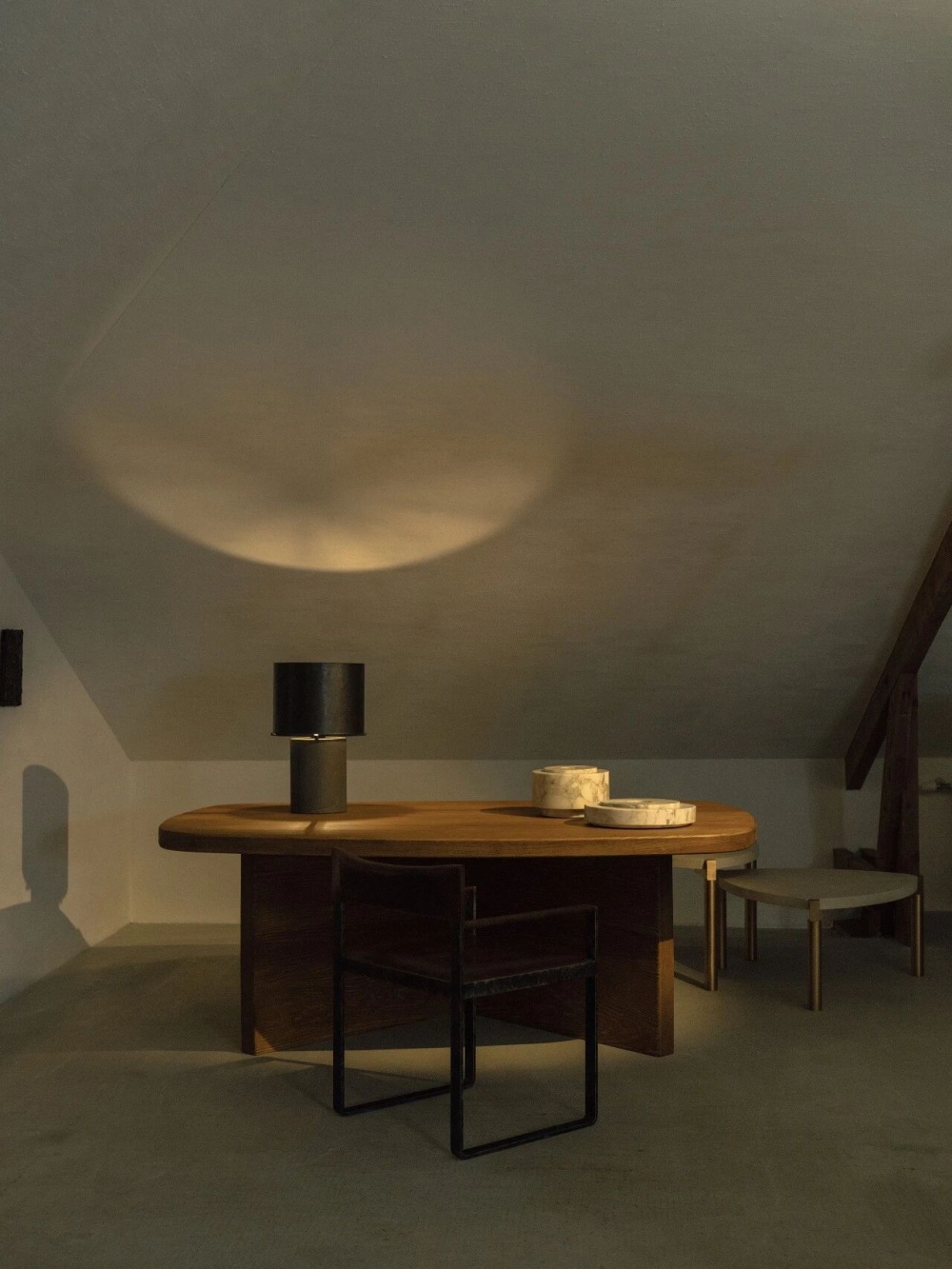
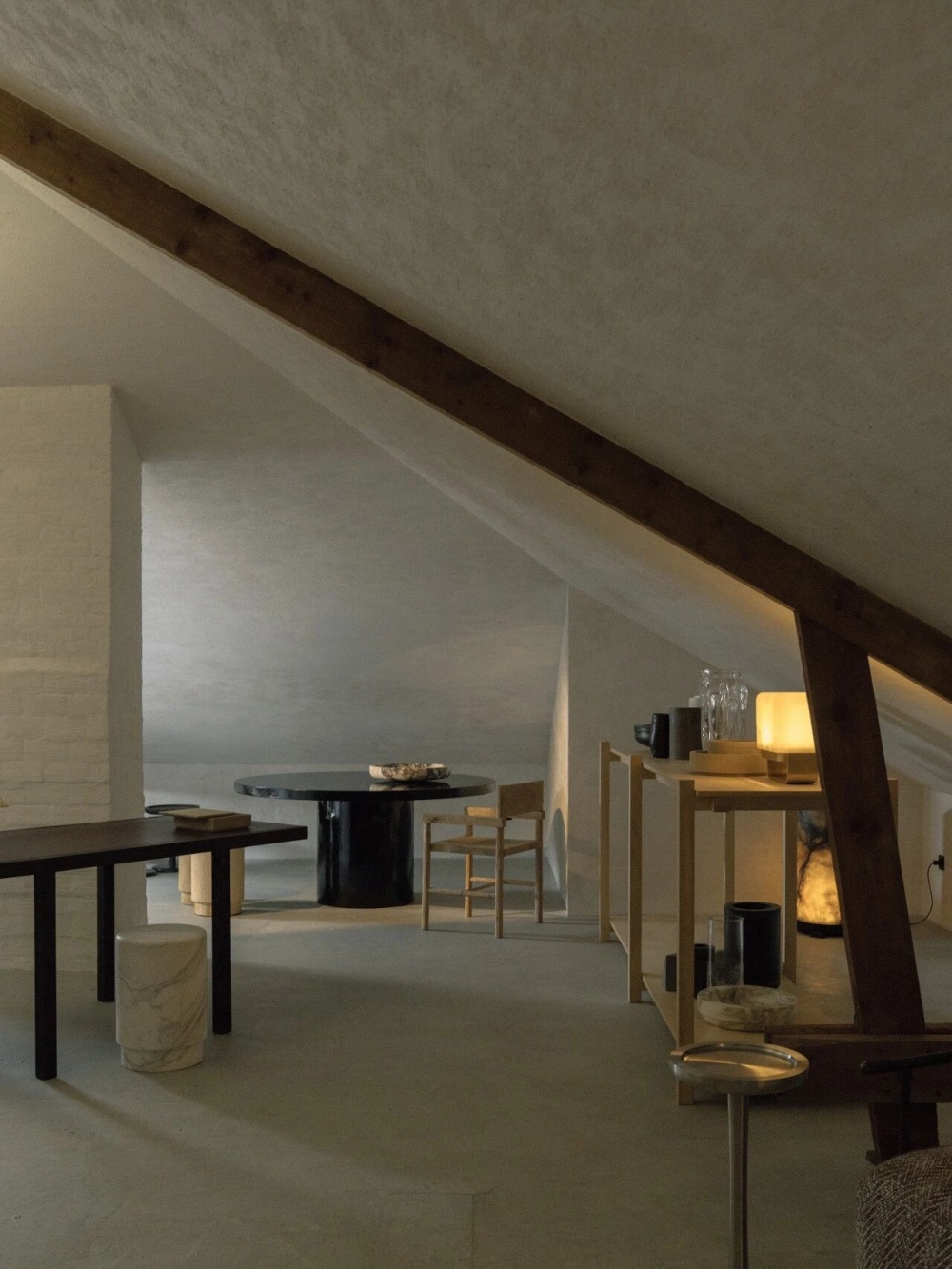
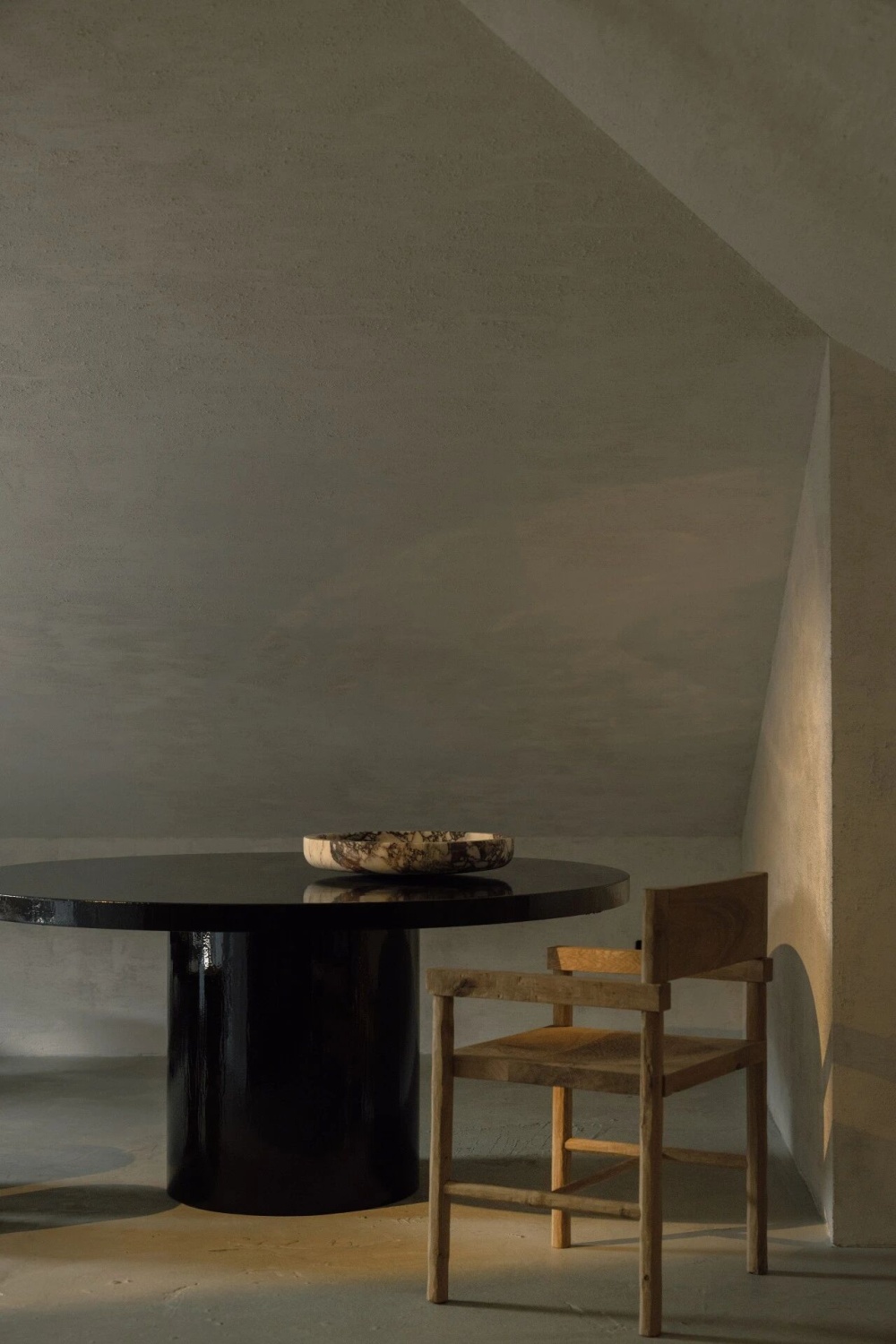
正对楼梯,一张深色长桌安静地置于屋架之下。我们第一眼就被它吸引:它不像楼下的工作台那样强调操作,而更像一个被安放进生活场景中的中心界面。桌面上留白很多,只放着少量器物与灯具,材料、比例和距离都显得格外清楚。站在这里,会自然地感受到二楼与一楼的区别——这里不再讲述“如何制作”,而是开始呈现“如何进入生活”。
Directly opposite stair, a long dark table rests beneath roof structure. It draws immediate attention. Unlike worktable below, it does not emphasize action, but acts as a central surface within a lived setting. Much of surface is left empty, holding only a few objects and lamps, making material, proportion, and distance distinctly legible. Standing here, difference between two levels becomes clear: downstairs speaks of how things are made; upstairs begins to suggest how they enter life.
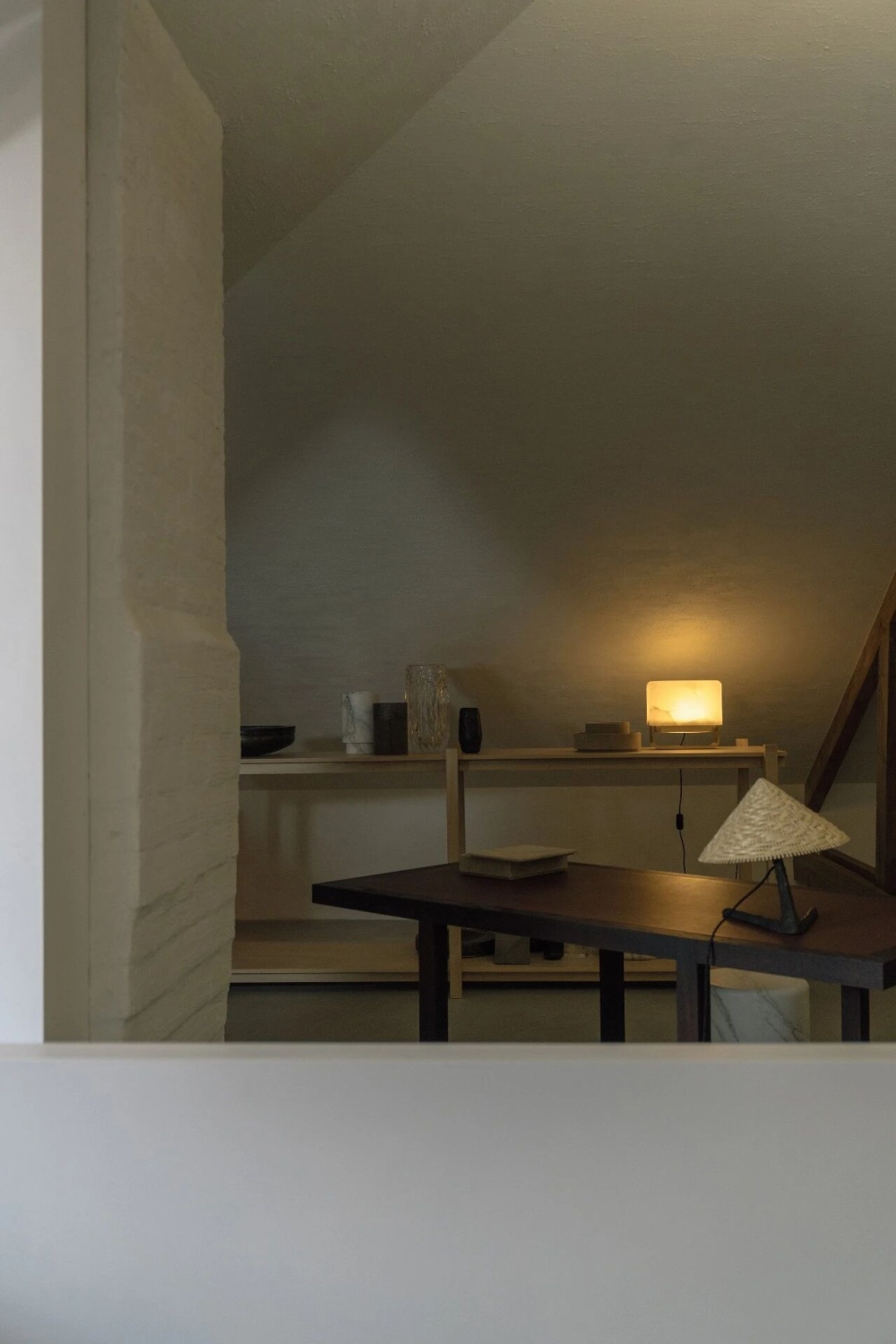
依次顺着左边的展示区走,浅木开放架、低矮圆桌、灯具与器物依序排布,像几个被轻轻组织起来的生活片段,沿着斜屋顶徐徐展开。架上的物件并不密集,却彼此呼应,在同一套克制的材料语言中显出层次——木的温润、石的冷静、金属的光泽、织物的柔软,都被放到恰到好处的距离中。
Moving along the display area to the left, open shelves in pale wood, low round tables, lighting, and objects are arranged in sequence—like fragments of everyday life, gently composed and unfolding along the slope of the roof. The objects are not densely placed, yet they respond to one another, revealing layers within a restrained material language: the warmth of wood, the calm of stone, the sheen of metal, the softness of textile—each held at a precise distance.
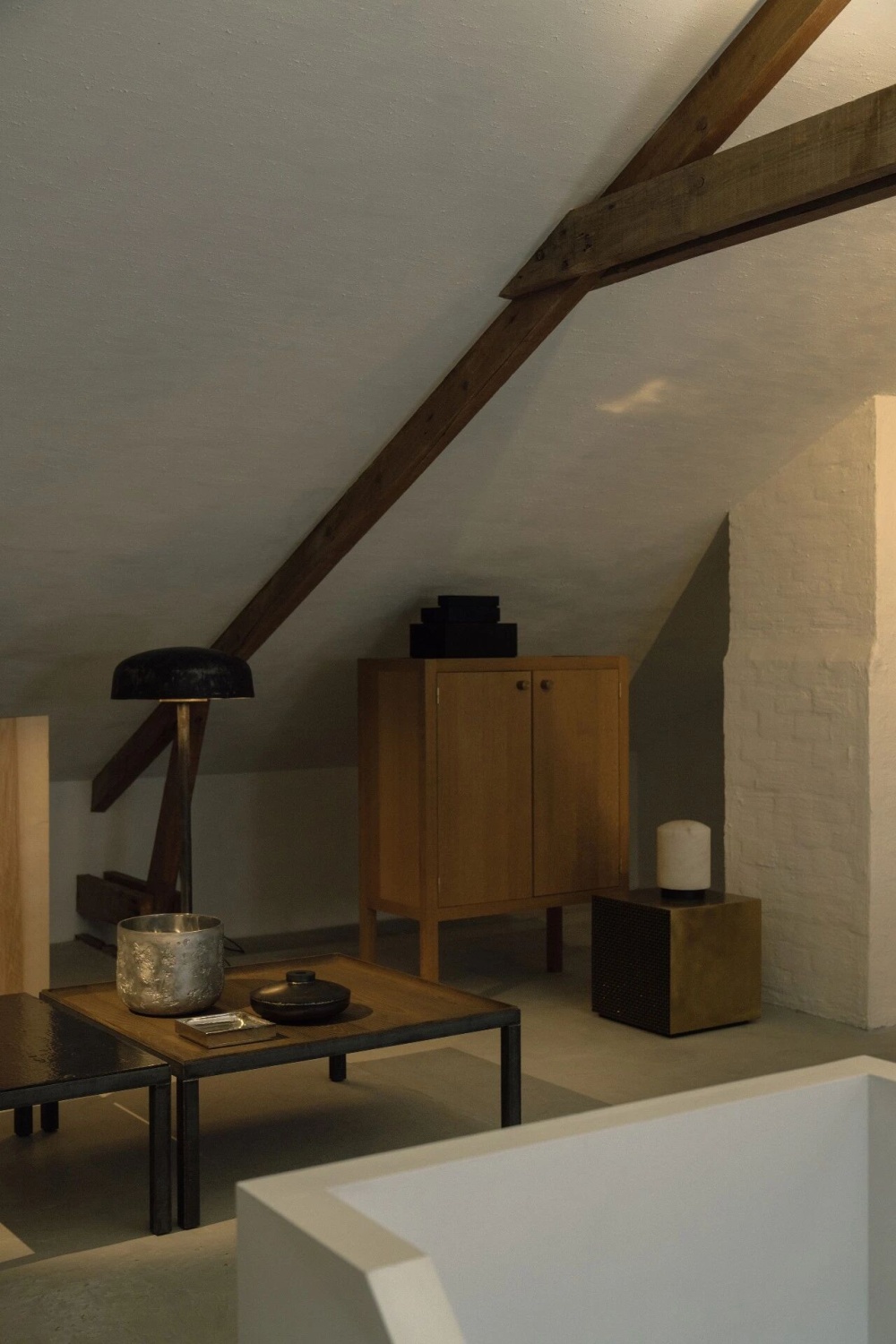
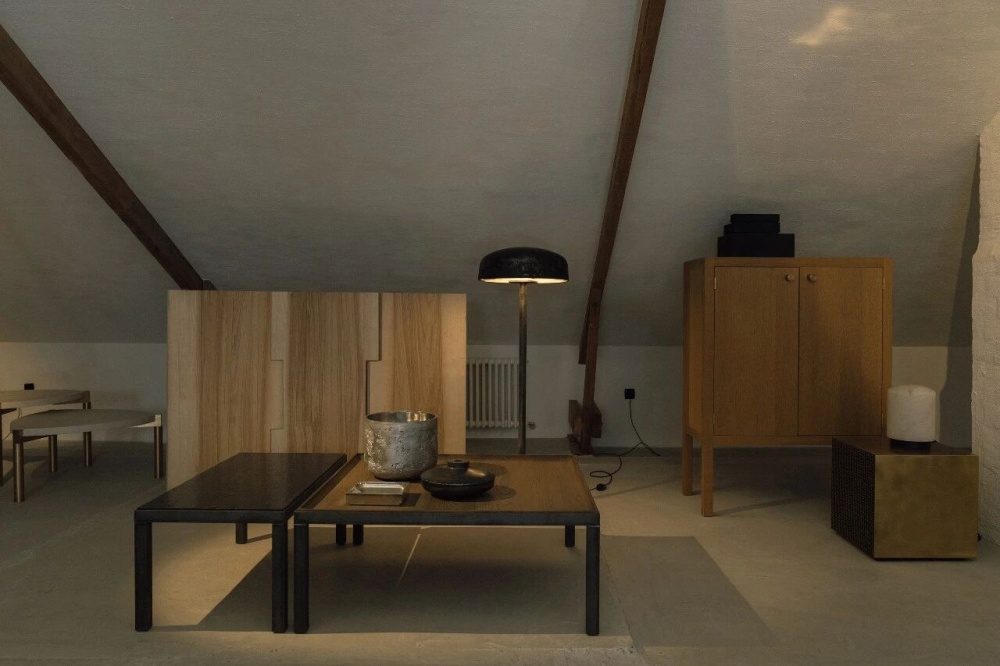
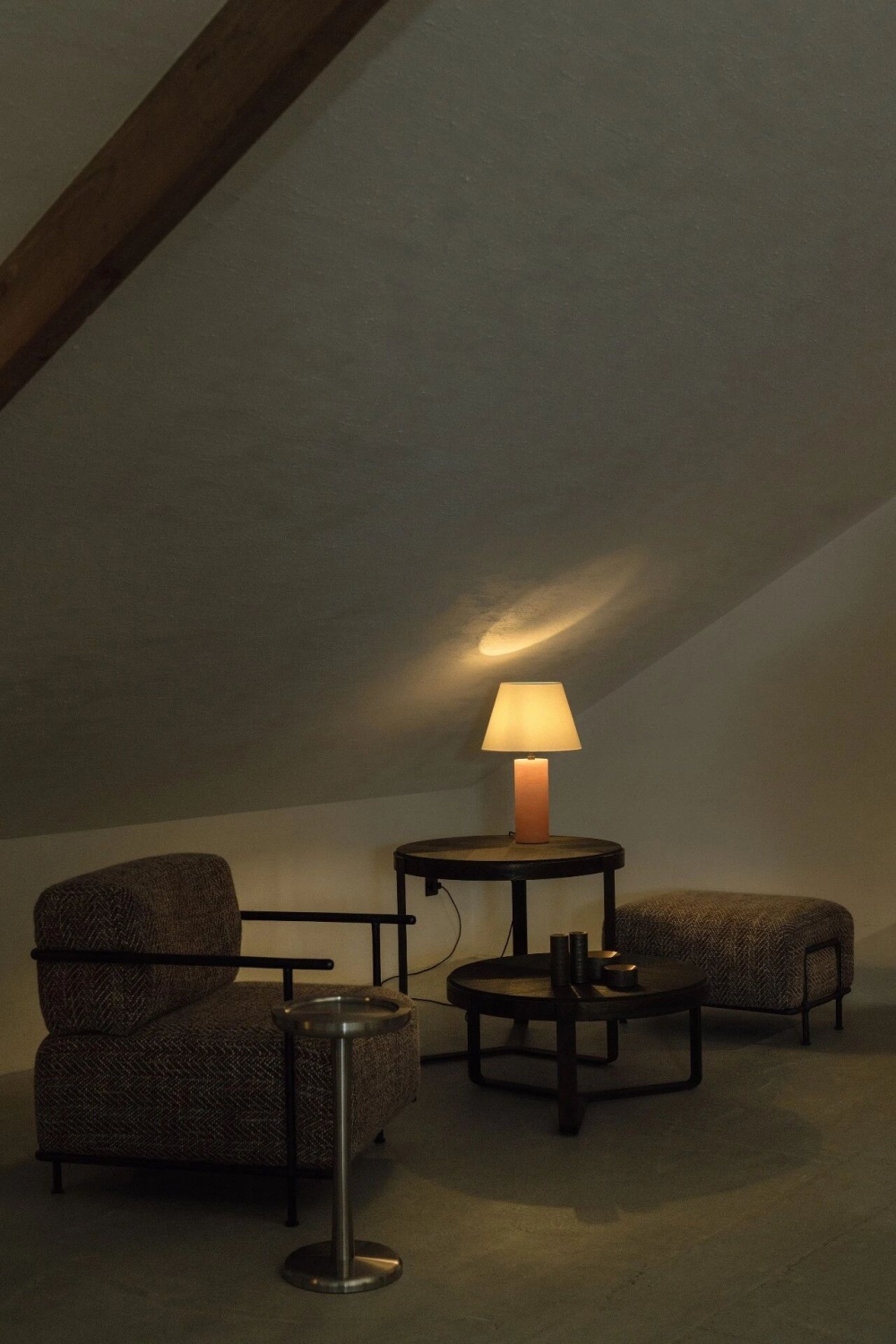
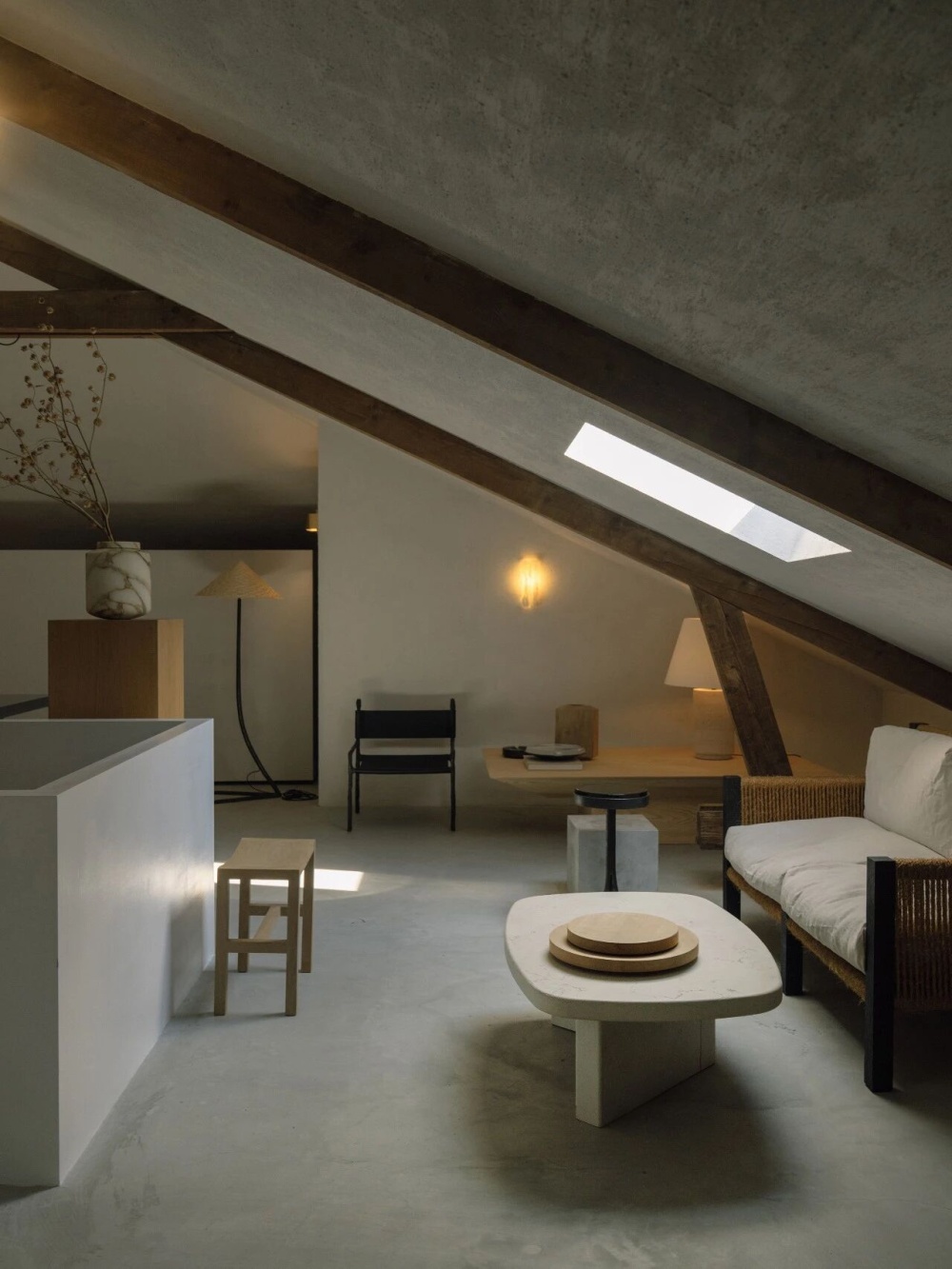
来到右边,这边的氛围更柔和。低矮沙发、边几、软垫与茶几围合出一种近似起居室的氛围。家具尺度顺着屋顶的下降自然压低,与空间融为一体。几盏暖色氛围灯被安放在角落与桌面上,光线不强,却把木、石、织物与金属的肌理一层层托出来。这一侧比展示区多了一分放松与停留的意味。
To right, atmosphere softens further. Low sofas, side tables, cushions, and a coffee table gather into a setting reminiscent of a living room. Scale of furniture lowers naturally with descending roof, merging seamlessly with space. Warm ambient lamps placed on tables and in corners gently draw out textures of wood, stone, fabric, and metal.
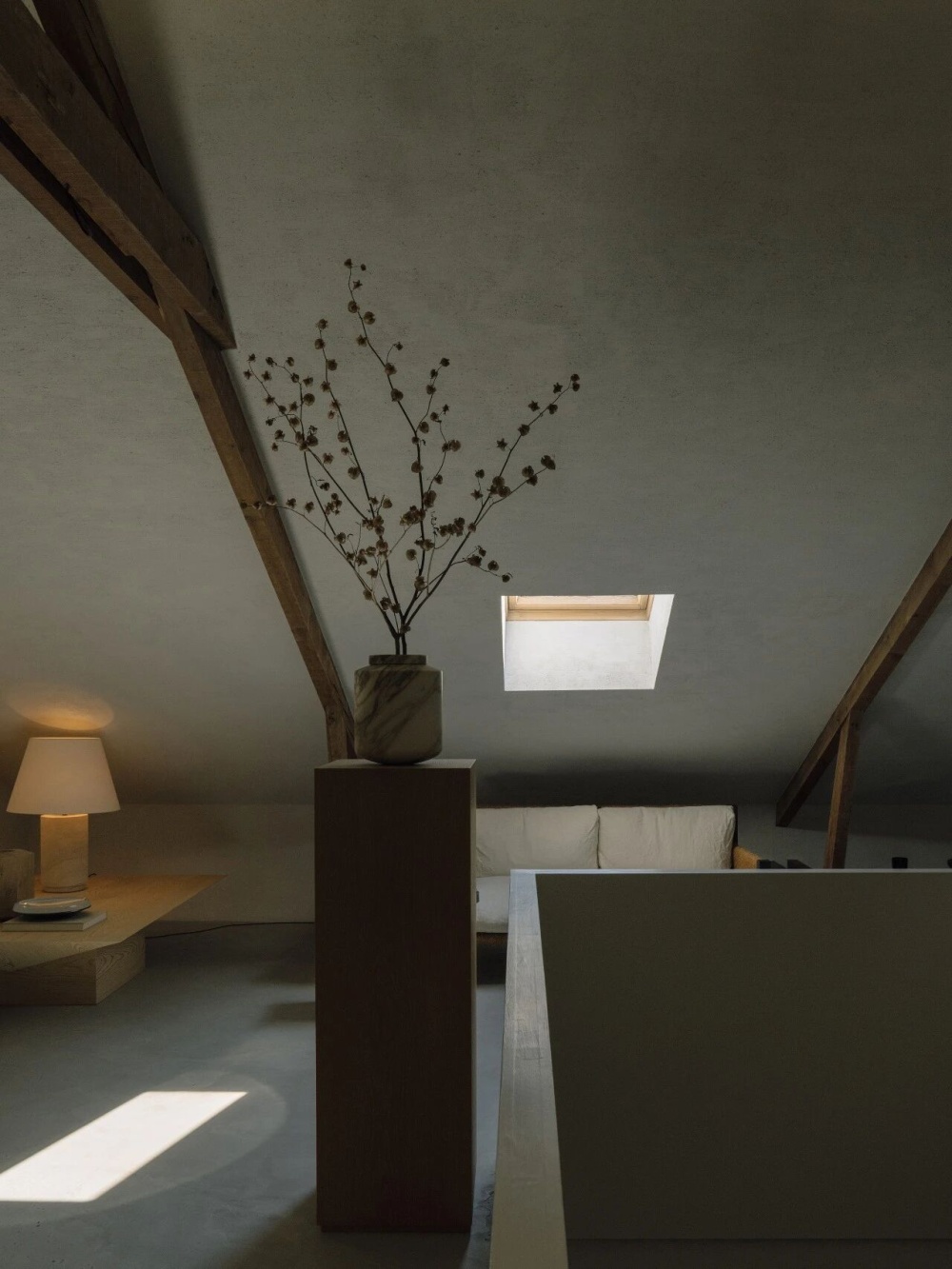
头顶的天窗让自然光从上方缓缓落下,沿着斜屋顶集中在这一小小的区域,休息区的织物表面都被温柔照亮。等到光线渐渐转弱的时候,这里变得很暗,低位的暖灯又接过空间的气氛,让整个二楼始终保持一种安静而连续的节奏。
Above, a skylight allows natural light to fall gently from above, concentrating along sloped roof and softly illuminating textiles in seating area. As daylight fades, space deepens into shadow, and low, warm lighting takes over—maintaining a quiet continuity throughout upper floor.
从楼下的工作间,到楼上陈列的生活想象,其实是一次从“怎么做”到“怎么使用”的转变。也让我们感受到,这座房子真正动人的,不只是作品本身,而是它如何让制作、展示与居住缓慢连成同一种生活。
From tangible labor of workshop to imagined life of showroom, transition unfolds as a movement from how things are made to how they are lived.At that moment, we suddenly understood that what truly moved us about this house was not just the works themselves, but the way it slowly wove making, displaying, and living into one continuous way of life.
|
|